Arizona Homeowners Near The Desert Are Replacing Bark Mulch With These Fire-Wise Native Plants
Bark mulch has been a landscaping favorite for years, but more property owners are starting to question whether it is the best choice for every part of the yard.
In areas close to open desert, concerns about maintenance, water use, and fire risk are pushing people to look at alternatives that do more than simply cover bare ground.
Native plants are becoming part of that conversation. Instead of relying on thick layers of mulch, some landscapes are using low-growing species to fill space, reduce exposed soil, and create a more natural appearance.
The result is a yard that stays attractive while requiring less replacement material over time.
Near desert areas in Arizona, this shift is becoming increasingly noticeable as homeowners search for practical ways to landscape with local conditions in mind.
Many native plants are already adapted to heat, drought, and challenging soils.
Several stand out for their ability to replace mulch while bringing additional benefits to the landscape.
1. Agave Stores Moisture And Thrives In Harsh Conditions
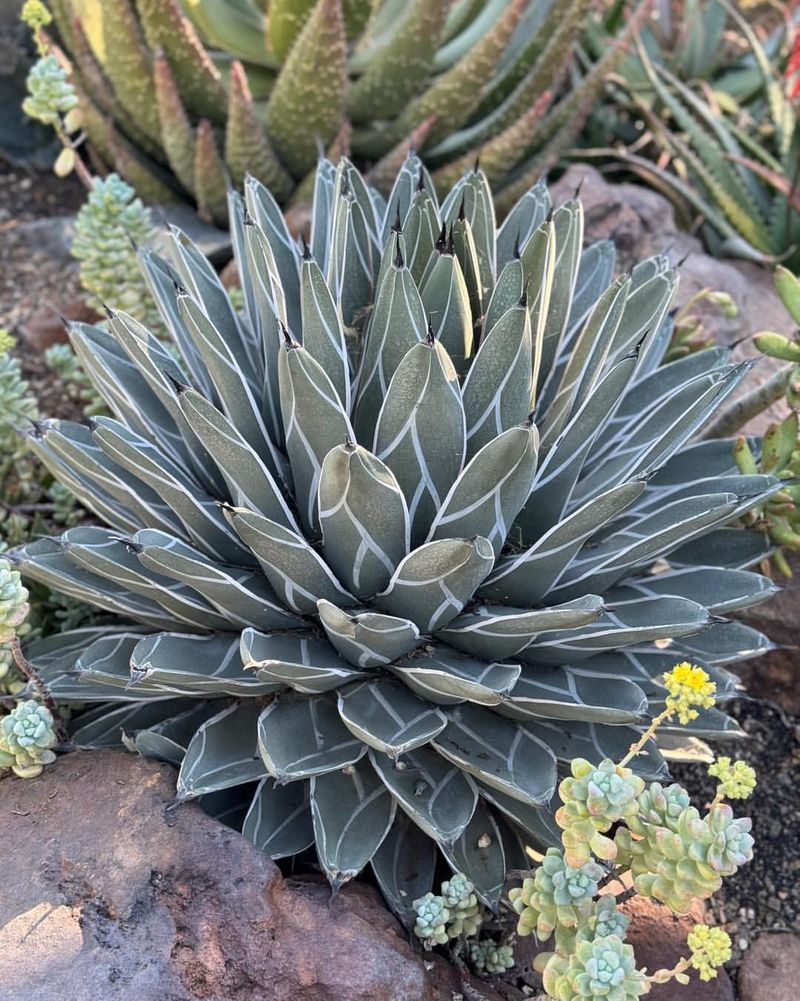
Agave is one of those plants that looks like it was designed specifically for the desert Southwest. Its thick, waxy leaves lock in moisture so well that it can go weeks without rain and never miss a beat.
That water-storing ability also makes it far less flammable than dry bark mulch sitting against your foundation.
Planted along a property edge or near a walkway, agave creates a bold visual statement without demanding anything back. No frequent watering, no fertilizer schedule, no fussing.
Once it settles into well-draining soil, it basically handles itself.
Agave grows slowly, which is actually a benefit in a landscape where you want long-term structure without constant replanting. Some varieties stay compact at two feet wide.
Others spread wider over many years. Either way, you get a plant that earns its space.
Gravel works well around the base instead of mulch. It keeps roots cool, reduces evaporation, and poses no fire risk.
Pair agave with boulders or low-growing ground covers for a clean, finished look that also respects fire safety guidelines. Neighborhoods near open desert land especially benefit from swapping mulch beds for agave-centered plantings.
It is a simple change with real protective value.
2. Prickly Pear Brings Year-Round Structure To The Landscape
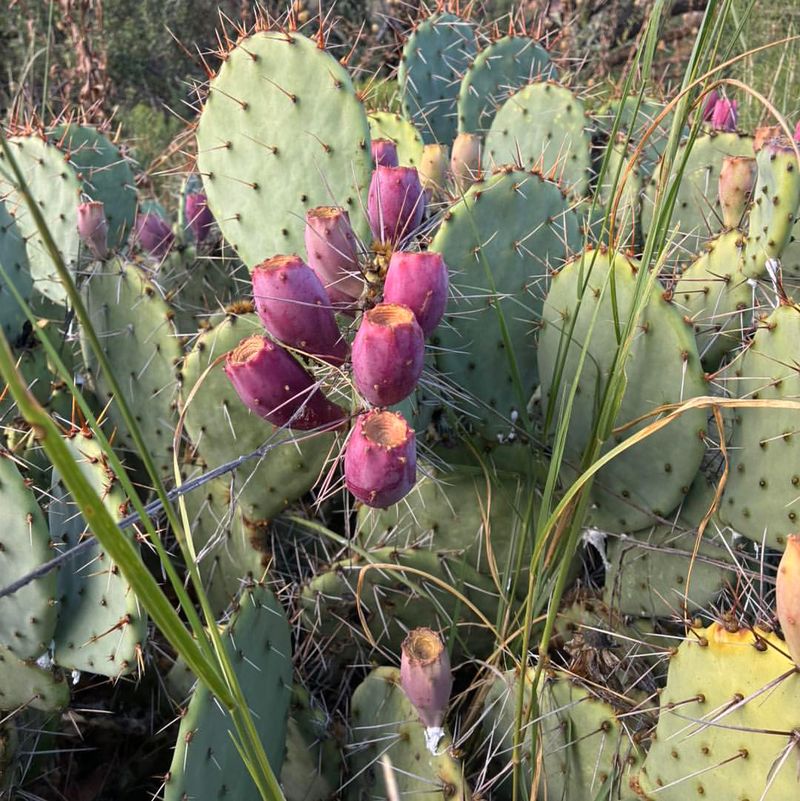
Few plants pull double duty quite like prickly pear. Spring brings vivid yellow, orange, or magenta blooms.
Summer produces deep red fruit that birds and wildlife love. The rest of the year, those flat green pads hold their shape and color without needing a drop of irrigation once established.
From a fire safety standpoint, prickly pear is a smart swap for bark mulch. Its pads are full of moisture.
They do not ignite easily, and they create a natural barrier that slows the spread of ground-level flames near structures.
Placement matters with this plant. Keep it a few feet from foot traffic areas since the spines are no joke.
Along a fence line, a dry wash edge, or a sloped front yard, it fits naturally without looking forced.
Your Arizona Garden Changes Every Week. Your Plan Should Too.
Gardening in Arizona changes quickly throughout the season. Every Friday you’ll receive a simple weekly plan showing exactly what to plant, prune, fertilize, harvest, and protect so you never miss the right timing.
Soil drainage is the one thing prickly pear really needs. Rocky or sandy soil works best.
Heavy clay can cause root problems over time, so amend or choose a raised planting spot if your yard tends to hold water after rain.
Decomposed granite mulch pairs well around the base. It reflects heat, keeps weeds down, and looks clean against the plant’s structure.
Prickly pear is one of the most recognizable desert natives, and once it is in the ground, it practically takes care of itself season after season.
3. Ocotillo Stands Out With Its Unique Desert Form
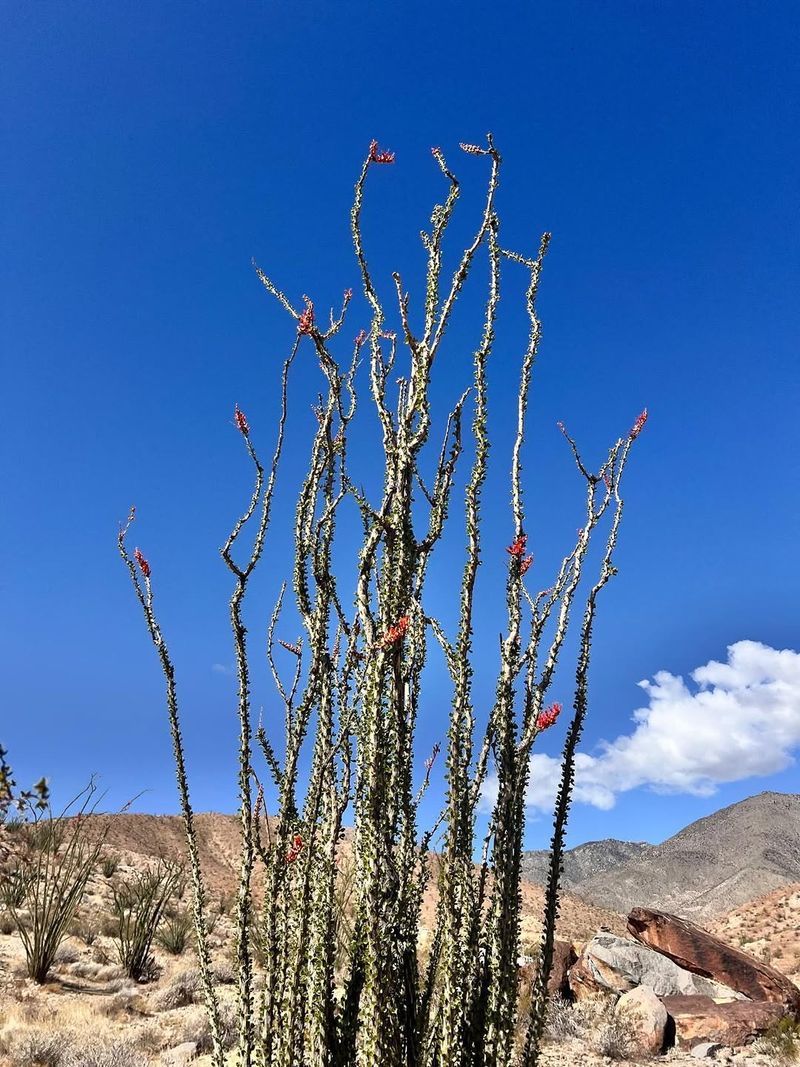
Nothing in the desert landscape looks quite like ocotillo. Its long, whip-like canes shoot straight up and fan outward, creating a silhouette that is immediately recognizable.
After a good rain, green leaves appear almost overnight along the stems. Then brilliant red blooms emerge at the tips, attracting hummingbirds from across the neighborhood.
Ocotillo is a standout choice for fire-wise landscaping. Its canes contain very little dry combustible material compared to a thick layer of bark mulch.
The plant stays relatively open and airy, which limits how much heat it can hold or transfer during a fire event.
Establishment takes patience. Ocotillo can look completely bare and lifeless for months after planting, especially during dry periods.
New growth typically resumes once rains arrive or irrigation is applied. Resist the urge to overwater during that waiting period.
Plant it where it gets full sun and excellent drainage. Sandy or rocky soil is ideal.
Avoid low spots in the yard where water pools after monsoon storms since standing water causes root problems quickly.
Ocotillo works beautifully as a living fence or property border. Planted in a row, the upright canes create a natural barrier that is both striking and functional.
It requires no pruning, no fertilizer, and almost no attention once it settles in. For homeowners near open desert land, it is a low-effort, high-impact planting choice.
4. Desert Willow Adds Seasonal Color Without Heavy Water Use
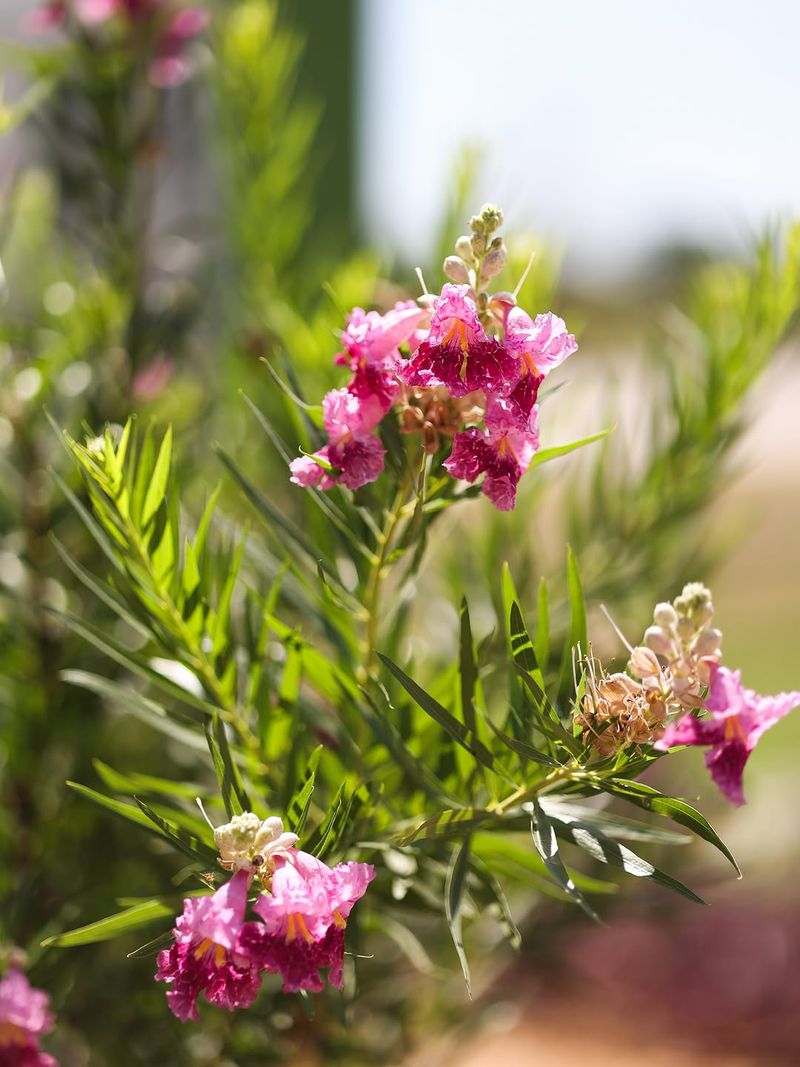
Bright pink and purple blooms on a plant that barely needs watering sounds too good to be true, but desert willow delivers exactly that. It blooms from late spring through early fall, producing tubular flowers that hummingbirds visit constantly.
Between bloom cycles, the narrow willow-like leaves keep the tree looking light and airy.
Unlike bark mulch that dries out and becomes a fire hazard, desert willow contributes moisture through its living tissue. Its canopy also shades the ground beneath it, reducing the dryness of surrounding soil and plant material.
That shade effect lowers fire risk in a small but meaningful way.
Desert willow reaches fifteen to twenty-five feet tall at maturity, depending on water availability and soil conditions. It works well as a small shade tree near a patio or along a property line.
Pruning in late winter keeps the shape tidy and encourages stronger bloom production the following season.
Water needs are low but not zero. Deep, infrequent irrigation during the first two years helps roots establish.
After that, natural rainfall handles most of the work in typical desert conditions. Supplemental water during extended dry stretches keeps it looking its best.
It grows in rocky or sandy soil without complaint. Pair it with low-growing native ground covers beneath the canopy for a finished, layered landscape that stays fire-wise and visually appealing across all four seasons in the desert region.
5. Fairy Duster Attracts Pollinators While Staying Desert Adapted
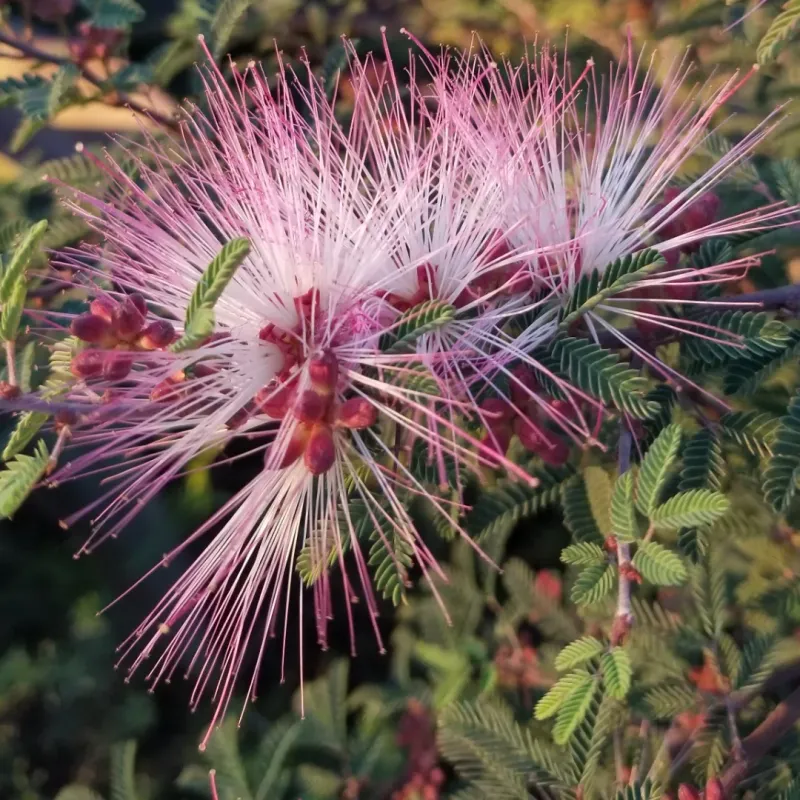
Soft, feathery pink blooms cover fairy duster almost all year long in warm desert climates. Bees, butterflies, and hummingbirds visit constantly.
Up close, each flower looks like a tiny burst of pink silk threads. It is one of the most visually rewarding native shrubs for a desert yard, and it asks for very little in return.
From a fire-safety perspective, fairy duster is a solid upgrade over bark mulch. Its low-growing, open structure does not trap heat or hold dry debris the way a thick mulch layer does.
Spacing plants naturally around the yard reduces fuel continuity, which is a key principle in fire-wise landscaping near desert areas.
Mature size stays manageable, typically two to four feet tall and wide. That compact scale makes it easy to use along walkways, near entries, or as a soft border between gravel sections.
It blends well with other native plants without overwhelming the space.
Soil drainage is important. Fairy duster handles drought well but struggles in consistently wet or heavy clay soil.
Plant it in a spot that dries out between waterings. Once established, it rarely needs supplemental irrigation except during the hottest, driest stretches of summer.
Light pruning after a bloom cycle encourages fresh growth and keeps the plant looking tidy. No heavy maintenance required.
Fairy duster is the kind of plant that rewards neglect with beauty, making it a natural fit for any low-water, fire-wise desert landscape design.
6. Jojoba Fits Low-Water Landscapes With Ease
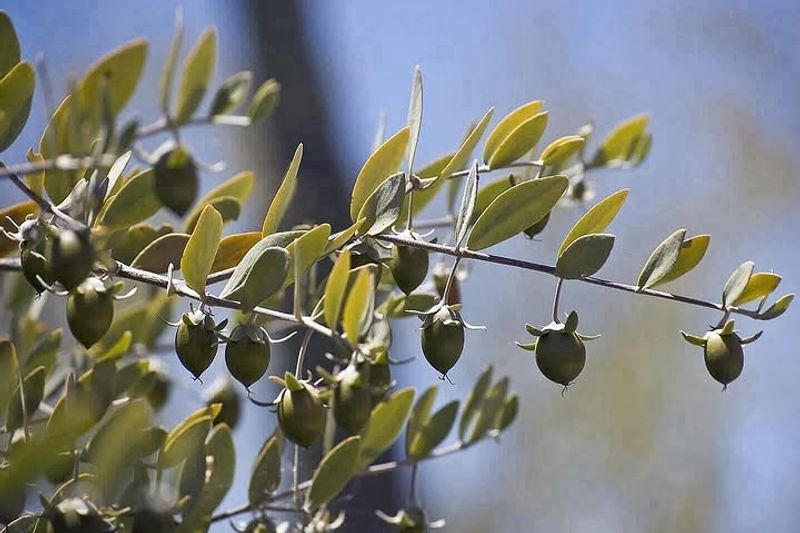
Jojoba has been growing wild across the Sonoran Desert for thousands of years, and there is a good reason it has lasted that long. Its waxy, leathery leaves reflect sunlight and lock in moisture better than almost any other native shrub.
Even during the most brutal summer stretches, jojoba stays green and holds its structure without irrigation.
That moisture-rich foliage also makes jojoba far less likely to ignite than dry bark mulch. Replacing mulch beds with jojoba hedges or groupings is one of the more practical fire-wise landscaping moves a homeowner near open desert land can make.
Jojoba grows slowly but steadily. Expect it to reach three to six feet tall over several years, depending on conditions.
Female plants produce small acorn-like seeds that wildlife eat readily. Male plants do not produce seeds but still provide the same dense, green coverage.
Pruning is optional. Left alone, jojoba grows into a full, rounded shrub with no help needed.
If you want a tidier shape for a formal entry or border, light trimming in early spring works well without stressing the plant.
Plant it in full sun with good drainage. Rocky or sandy soil suits it perfectly.
Avoid spots that stay wet after monsoon rain. Once established, jojoba is remarkably self-sufficient.
It is the kind of plant you put in the ground, step back, and let it do exactly what it has always done naturally in the desert landscape.
7. Chuparosa Supports Hummingbirds Through The Warm Season
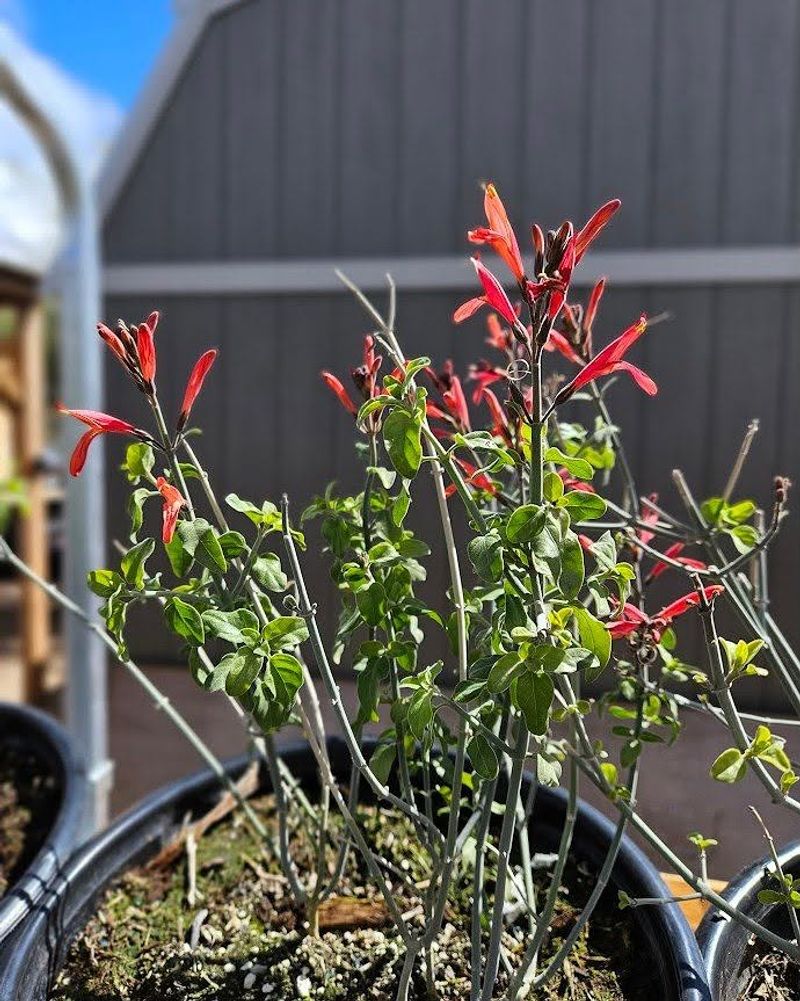
Chuparosa means hummingbird plant in Spanish, and that name tells you everything you need to know about what this shrub does best. Bright red tubular flowers bloom heavily from late winter through spring, right when hummingbirds need reliable nectar most.
Blooming can continue sporadically through the warm season with enough moisture.
Beyond its wildlife value, chuparosa earns its place in fire-wise landscaping. Its green, moisture-holding stems do not dry out and become brittle the way bark mulch does.
Planted near a home’s foundation or along a fence line, it creates a living buffer that is far safer than a thick layer of flammable organic material.
Chuparosa handles full sun and extreme heat without much trouble. It prefers well-draining soil and actually performs better in lean, rocky ground than in rich, amended soil.
Overwatering causes more problems than drought does with this plant.
Size stays moderate, typically three to five feet tall and wide. It works well as a filler shrub between larger natives or as a standalone planting near a window where you can watch hummingbird activity up close.
No deadheading required, and the plant naturally self-regulates its shape over time.
In the low desert region, chuparosa is one of the first plants to bloom after winter, giving pollinators an early food source before other flowers open.
Swapping even a small mulched bed for a chuparosa grouping brings both beauty and real fire-safety benefits to any desert yard.
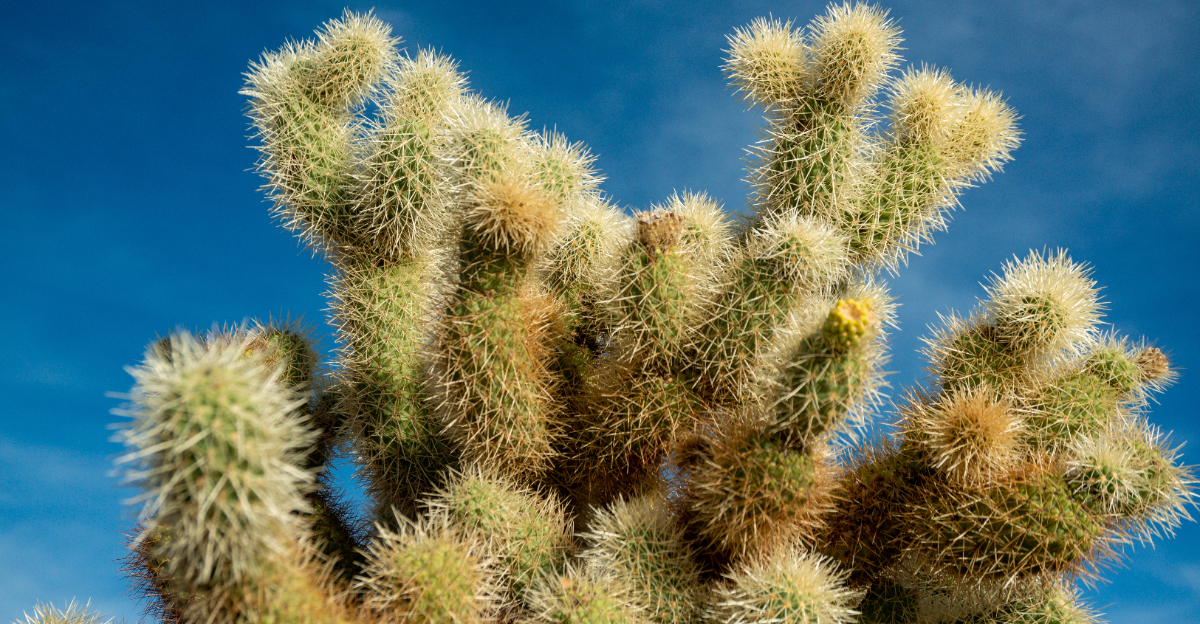
8. Cholla Handles Extreme Heat With Minimal Care
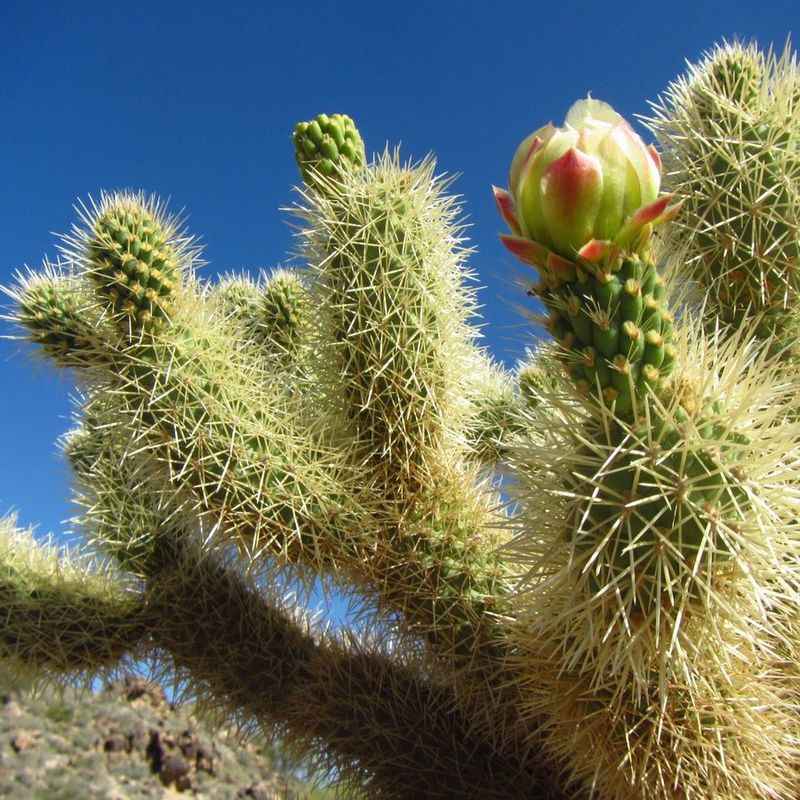
Cholla thrives where most plants give up. Extreme summer heat, rocky soil, zero irrigation, relentless sun — cholla takes all of it and keeps growing.
That kind of toughness is exactly what desert homeowners need when building a landscape that can handle the real conditions of living near open desert land.
Its cylindrical stems hold water efficiently, making it naturally fire-resistant compared to dried-out organic mulch. Embers that land near cholla have little to ignite.
That is a meaningful difference when strong winds push wildfire embers into residential neighborhoods.
Cholla comes in several varieties suited to different yard sizes. Teddy bear cholla stays relatively compact and works well in smaller spaces.
Staghorn cholla grows taller with a more open branching structure. Both provide texture and visual interest that bark mulch simply cannot offer.
Wildlife benefits too. Cactus wrens and other desert birds nest inside cholla branches, using the spines as natural protection.
That built-in habitat value makes cholla more than just a fire-wise choice. It actively supports the local ecosystem.
Keep foot traffic paths clear of cholla since detached segments can stick to shoes and clothing. Plant it in open areas where it has room to spread without creating a nuisance.
Gravel or crushed rock ground cover around the base keeps the area tidy and completes the fire-resistant landscape design effectively.