Why Arizona Saguaro Cacti Lean And When You Should Be Concerned
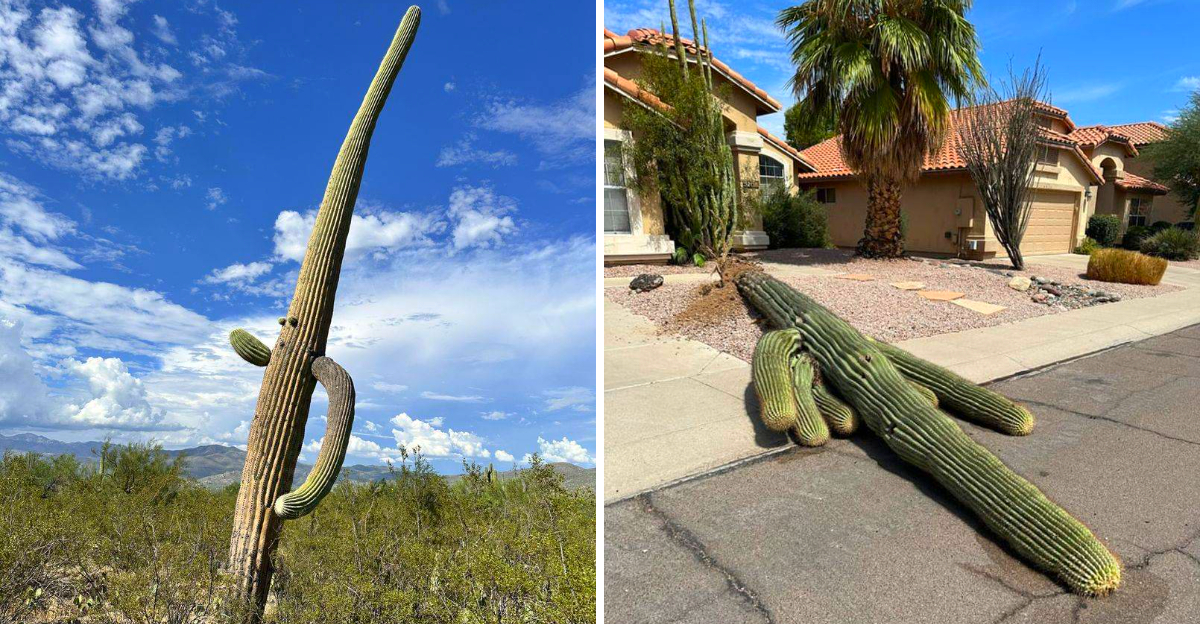
There’s something about a leaning saguaro that makes you stop whatever you’re doing and just stare at it for a minute. Maybe it’s the sheer size of the thing.
Maybe it’s the fact that it looks like it’s making a very slow, very deliberate decision about which direction to go.
Either way, if you’ve got a saguaro in your Arizona yard that’s developed a noticeable lean, you’re probably wondering whether to be concerned or just let it do its thing.
The honest answer is that it depends. Some saguaros have been leaning comfortably for decades without any issues whatsoever.
Others are telling you something worth paying attention to. Monsoon rain, shifting soil, root problems, and physical damage can all play a role in how these iconic desert giants stand over time.
Knowing the difference matters a lot.
1. A Slight Long-Term Lean May Be Stable
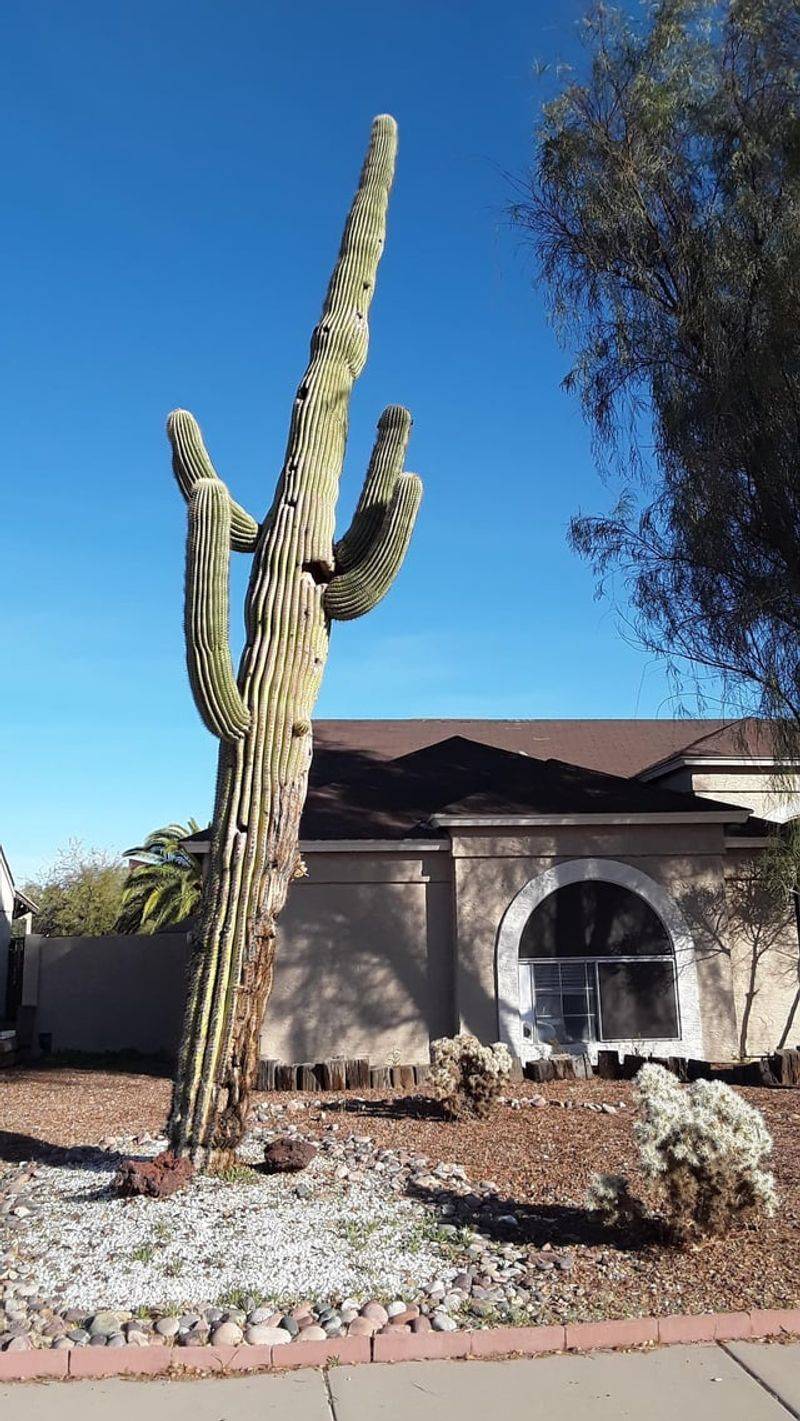
Walking past a saguaro every morning and noticing it has always tilted just a little to one side is actually a pretty common experience for Arizona homeowners.
Saguaros that have held the same lean for many years, without showing any signs of change, are often considered stable by cactus professionals.
The lean may have developed gradually during the plant’s early growth stages, when it was responding to sunlight, wind patterns, or slightly uneven soil.
In Arizona’s native desert landscape, it is not unusual to see mature saguaros with a noticeable tilt that has remained unchanged for decades. The key thing homeowners should pay attention to is whether the angle is staying the same or getting worse over time.
A lean that has not changed in years is a very different situation from one that seems to be increasing each season.
Taking a photo from the same spot every few months is a simple way to track any changes. If the lean appears consistent and the plant looks healthy, with firm green tissue and no soft or discolored spots, there may be little reason for immediate concern.
Monitoring regularly is still a smart habit for any Arizona homeowner with a large saguaro on their property.
2. Heavy Water Storage Can Shift The Balance
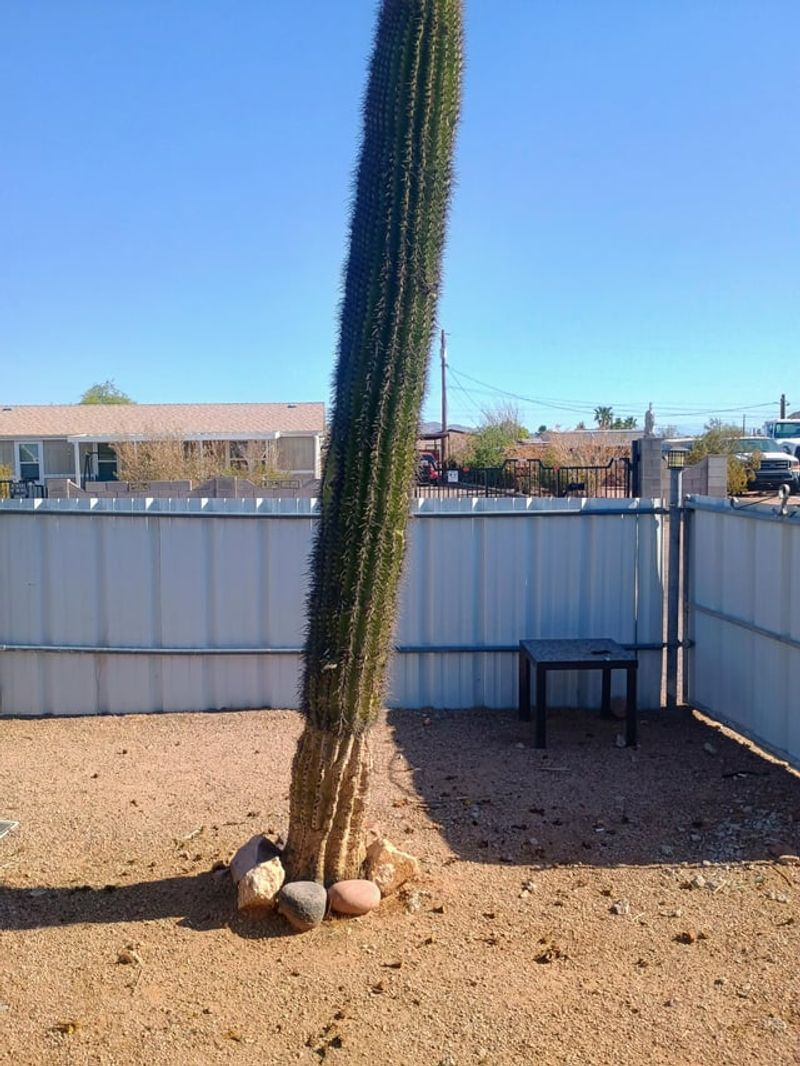
One of the most fascinating things about a saguaro is its ability to soak up hundreds of gallons of water during a single Arizona monsoon storm. The trunk expands like an accordion as the plant fills with moisture, and that extra weight can be significant.
A full, well-hydrated saguaro can weigh several thousand pounds, and that mass is not always evenly distributed throughout the plant.
When one side of the cactus has more arm growth or absorbs water unevenly, the center of gravity can shift. Over time, that imbalance can contribute to a gradual lean, especially if the soil beneath the roots has become soft or saturated from repeated heavy rain.
Arizona’s monsoon season, which typically runs from mid-June through September, brings the kind of intense rainfall that can affect how a saguaro sits in the ground.
Your Arizona Garden Changes Every Week. Your Plan Should Too.
Gardening in Arizona changes quickly throughout the season. Every Friday you’ll receive a simple weekly plan showing exactly what to plant, prune, fertilize, harvest, and protect so you never miss the right timing.
Homeowners may notice their saguaro looking fuller and slightly different in posture after a big storm.
That temporary swelling is normal, but if the lean seems more pronounced after heavy rain and does not return to its previous position, it may be worth watching closely.
Consulting a qualified cactus professional after monsoon season is a reasonable step if any noticeable shift occurs.
3. Shallow Roots Make Soil Stability Important
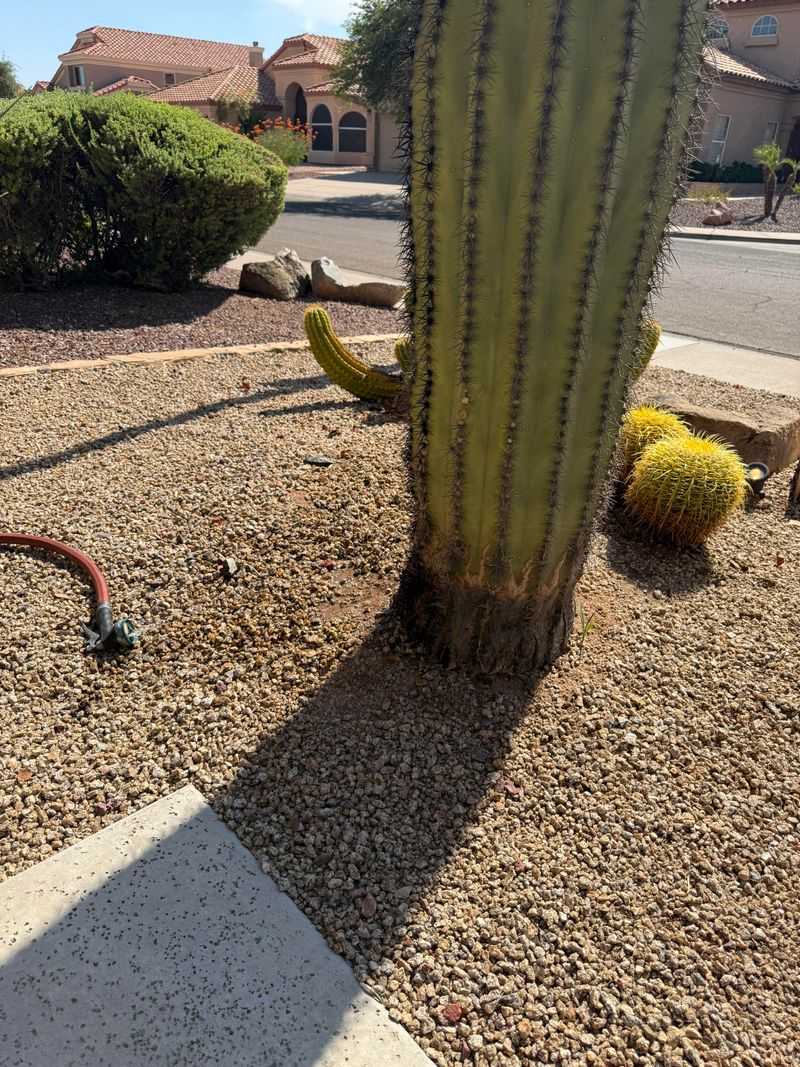
Most people assume a cactus as tall as a saguaro must have deep roots anchoring it firmly in place. In reality, saguaro roots spread outward in a wide, shallow network that rarely extends more than a few inches below the soil surface.
This horizontal root system works well in Arizona’s native rocky desert, where the ground provides natural resistance and drainage.
In residential yards, the soil conditions can be quite different. Amended garden soil, compacted clay, or areas that receive extra irrigation may not offer the same stability that a saguaro’s shallow roots rely on.
Loose or consistently wet soil can make it harder for those roots to grip, and that reduced anchorage can allow a lean to develop or worsen over time.
Homeowners who have saguaros growing near irrigated flower beds, lawn areas, or drip systems should pay close attention to the soil around the base of the plant. Soft, spongy, or waterlogged ground near the trunk is a sign that root stability may be compromised.
In Arizona’s desert-style landscapes, keeping the area around the base of a saguaro dry and well-drained is one of the most practical things a homeowner can do to support long-term stability.
4. Extreme Heat And Drought Can Weaken Saguaros
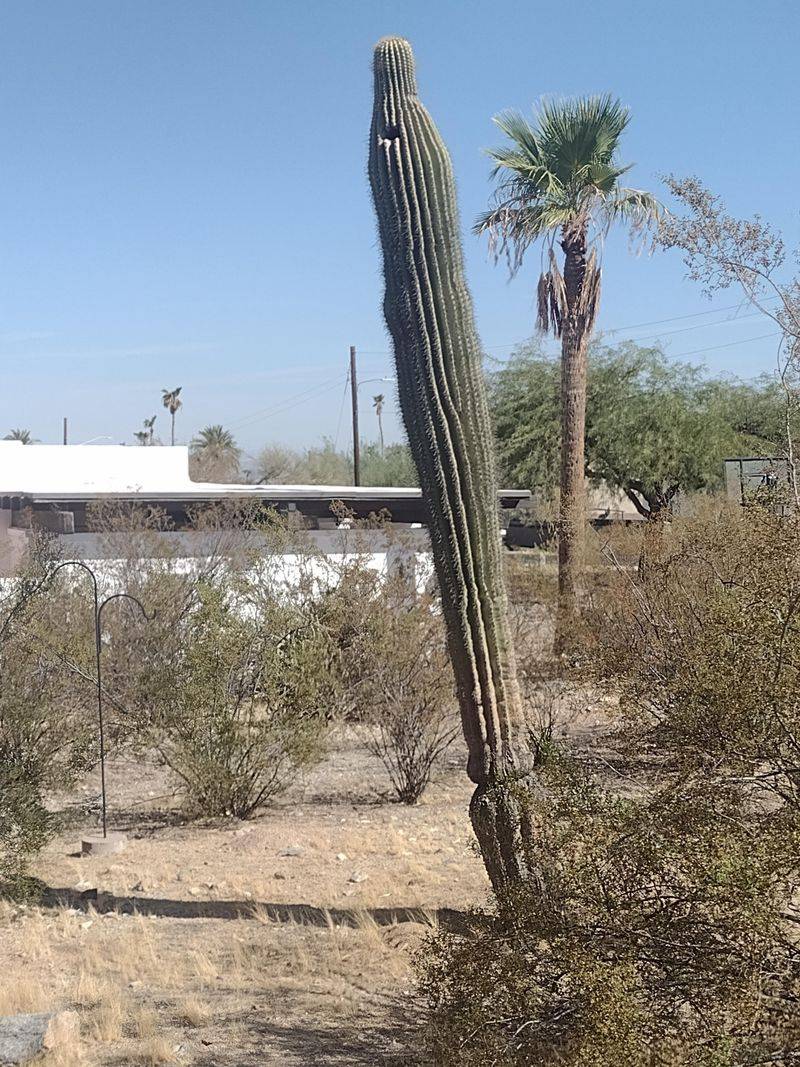
Arizona summers are no joke, and even a plant as tough as a saguaro can show signs of stress during extended periods of extreme heat and drought.
When temperatures stay well above 100 degrees for weeks at a time and rainfall is scarce, a saguaro may begin drawing down its stored water reserves.
As the trunk shrinks and the tissue loses some of its firmness, the structural strength of the plant can be temporarily reduced.
A saguaro under drought stress may develop a more pronounced lean as the tissue softens and the roots lose some of their grip in dry, cracked soil.
The accordion-like ribs on the trunk may appear more deeply folded or wrinkled than usual, which is one visible sign that the plant is using its reserves.
This is a natural survival response, but it does create a window of vulnerability for the plant’s overall stability.
Homeowners in Arizona who notice their saguaro looking thinner or more wrinkled during a dry spell should keep an eye on whether the lean changes at the same time.
Light, occasional deep watering during extended drought periods may help, but overwatering can cause its own set of problems.
Reaching out to a local cactus professional for guidance is always a sensible option when stress signs appear alongside a lean.
5. Too Much Water Near The Base Can Create Problems
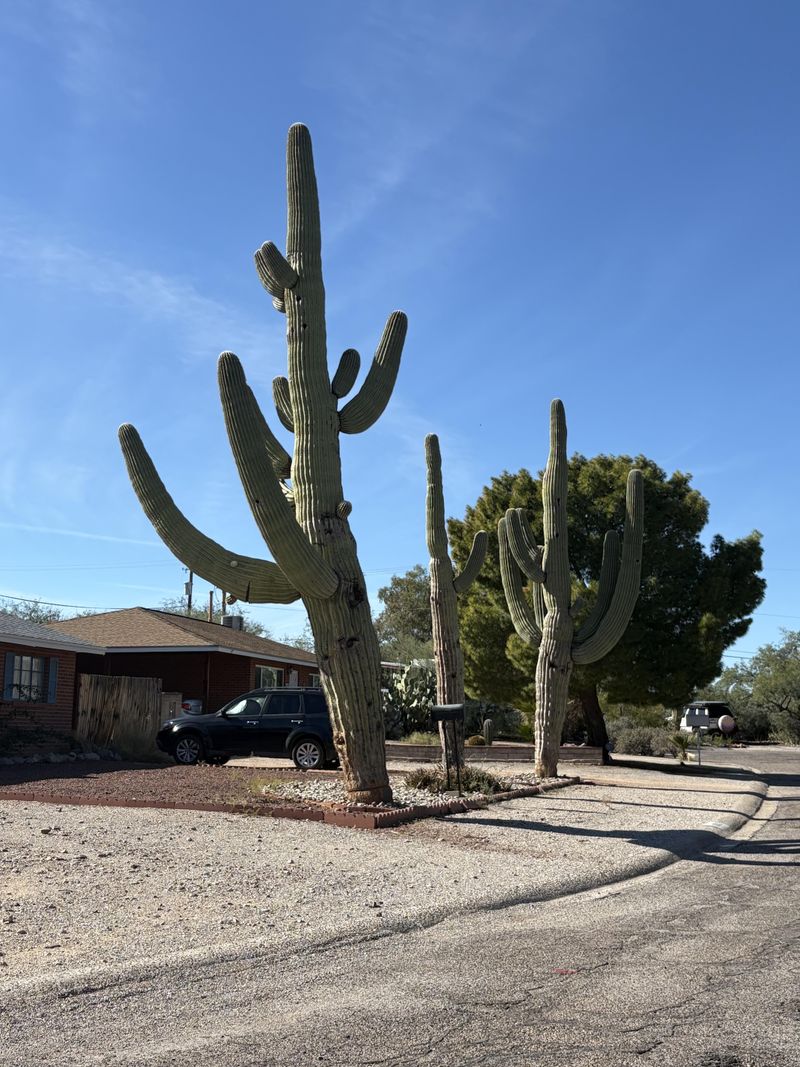
Standing water or consistently moist soil near the base of a saguaro is one of the more common issues seen in Arizona residential landscapes. Saguaros are built for periods of feast and famine when it comes to water, and they thrive in well-drained, fast-drying soil.
When irrigation systems, lawn sprinklers, or poor drainage keep the area around the base consistently wet, the roots and lower trunk tissue can begin to break down.
Soft or mushy tissue near the base of the trunk is a warning sign that excess moisture may be causing internal damage. This kind of deterioration can compromise the plant’s ability to support its own weight, making a lean more likely to develop or worsen.
In some cases, the base of the trunk may begin to look sunken, discolored, or smell slightly off, which indicates that something more serious may be going on beneath the surface.
Adjusting irrigation systems so that water is not directed toward a saguaro’s base is one of the most helpful changes Arizona homeowners can make.
Drip emitters should be placed well away from the trunk, ideally near the outer edge of the root zone.
If soft tissue or a worsening lean is already present, contacting a qualified cactus professional sooner rather than later is strongly recommended.
6. Improper Planting Depth Can Lead To Long-Term Trouble
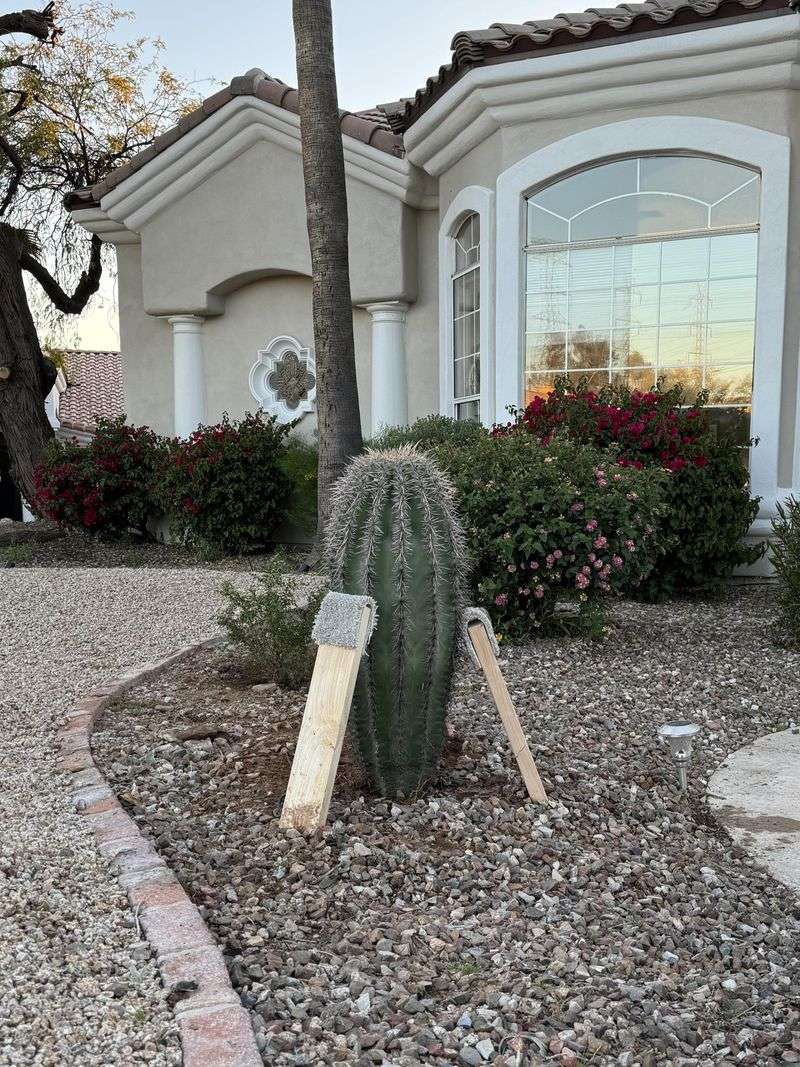
Transplanted saguaros are a fairly common sight in Arizona residential developments, where builders and landscapers sometimes relocate these protected cacti from construction sites to new yards.
When a saguaro is replanted too deeply, with the base of the trunk buried further than it was in its original location, the buried tissue can begin to break down over time.
That deterioration weakens the foundation of the plant and can lead to an increasing lean years after the transplant.
Planting a saguaro too shallowly presents a different challenge. Without enough soil contact around the root zone, the plant may not have sufficient anchorage to stay upright, especially during Arizona’s monsoon winds or after the soil becomes saturated.
Both scenarios can result in stability problems that may not become obvious until several years after the cactus was installed.
Homeowners who purchased a home with transplanted saguaros already in place may not know the history of how those plants were installed.
If a saguaro seems to be leaning more over time and was clearly transplanted rather than grown in place, improper planting depth is worth considering as a possible contributing factor.
A cactus professional or arborist familiar with saguaro transplanting practices in Arizona can assess the situation and offer guidance on what, if anything, can be done.
7. Bacterial Necrosis Is A Serious Warning Sign
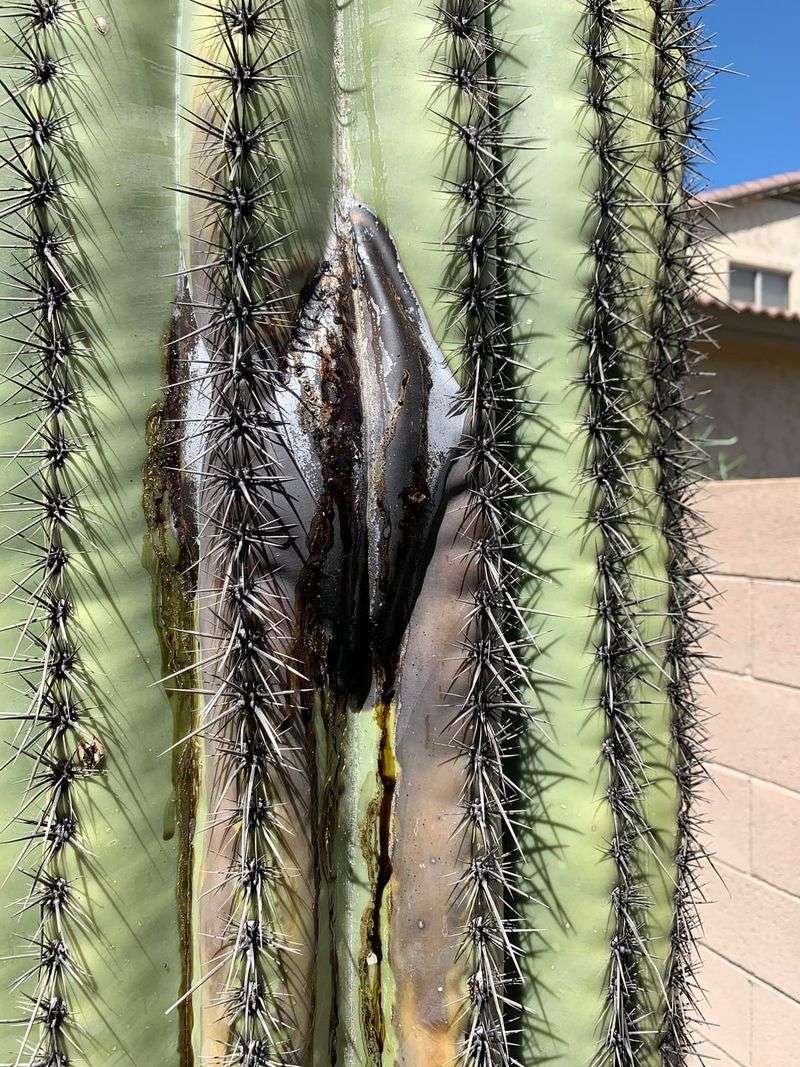
Dark, oozing spots on a saguaro’s trunk are not something to brush off or assume will clear up on their own. Bacterial necrosis is a disease caused by bacteria that enter the saguaro’s tissue, often through wounds made by birds, insects, or physical damage.
Once inside, the bacteria can spread through the soft internal tissue, causing it to liquefy and turn dark brown or black. The resulting damage weakens the plant from the inside out.
In Arizona, woodpecker holes and cactus wren nests are common entry points for the bacteria that cause this condition. A saguaro dealing with an active bacterial infection may begin to lean as the internal tissue loses structural integrity.
The outer skin of the cactus may look relatively normal in early stages, which is why any oozing, foul-smelling, or dark-stained areas on the trunk should be taken seriously rather than ignored.
Bacterial necrosis does not always spread rapidly, and some saguaros manage to wall off the damaged tissue over time.
However, when the infection is widespread or located near the base of the trunk, the risk to stability can be significant.
Arizona homeowners who notice leaning combined with oozing tissue or dark discoloration should contact a qualified cactus professional promptly to assess the extent of the damage.
8. Physical Damage Can Affect Stability
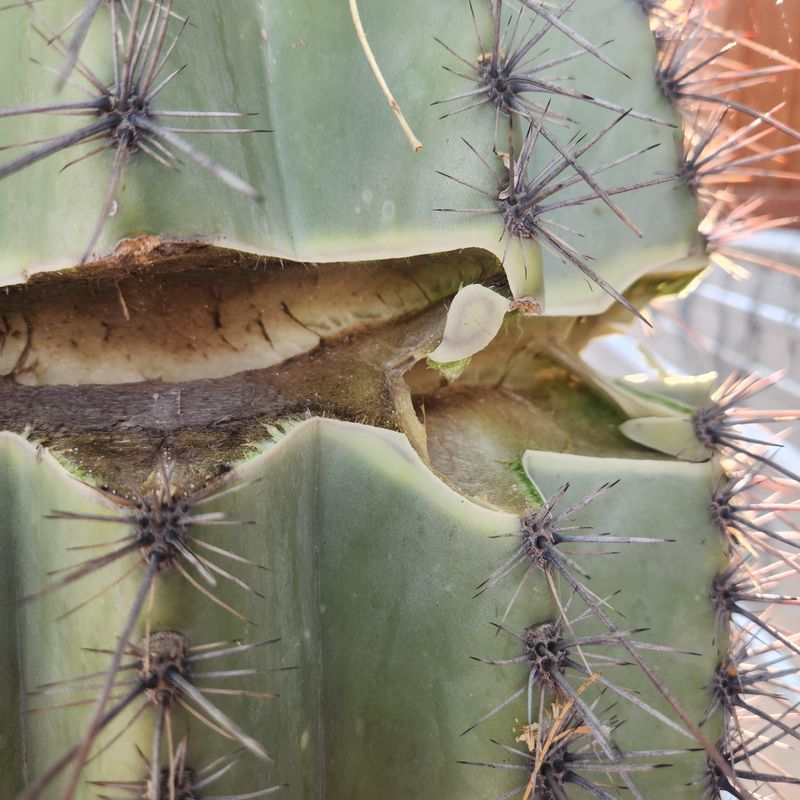
Vehicles backing into a saguaro, construction equipment brushing against the trunk, or even a large falling branch from a nearby tree can all cause physical damage that affects long-term stability.
Saguaros have a woody internal skeleton that provides structural support, and a hard enough impact can crack or shift that internal framework.
The damage may not look dramatic from the outside right away, but the structural consequences can show up gradually over time.
In Arizona neighborhoods where homes sit close to driveways, walls, or utility corridors, saguaros are sometimes more vulnerable to accidental contact than people realize.
Even damage that happened years ago can contribute to a lean that seems to appear out of nowhere.
Scarring, cracked skin, or areas where the outer tissue looks sunken or unusually flat are signs that past physical trauma may have left a mark on the plant’s structure.
Homeowners who are aware of any past damage to a saguaro on their property should factor that history into how they monitor the plant going forward.
If the cactus has since developed a lean near the damaged area, it is worth having a professional take a look.
Saguaros are heavy plants, and attempting to brace, push, or stabilize a large damaged one without proper expertise is not something homeowners should try on their own.
9. A New Or Increasing Lean Needs Professional Evaluation
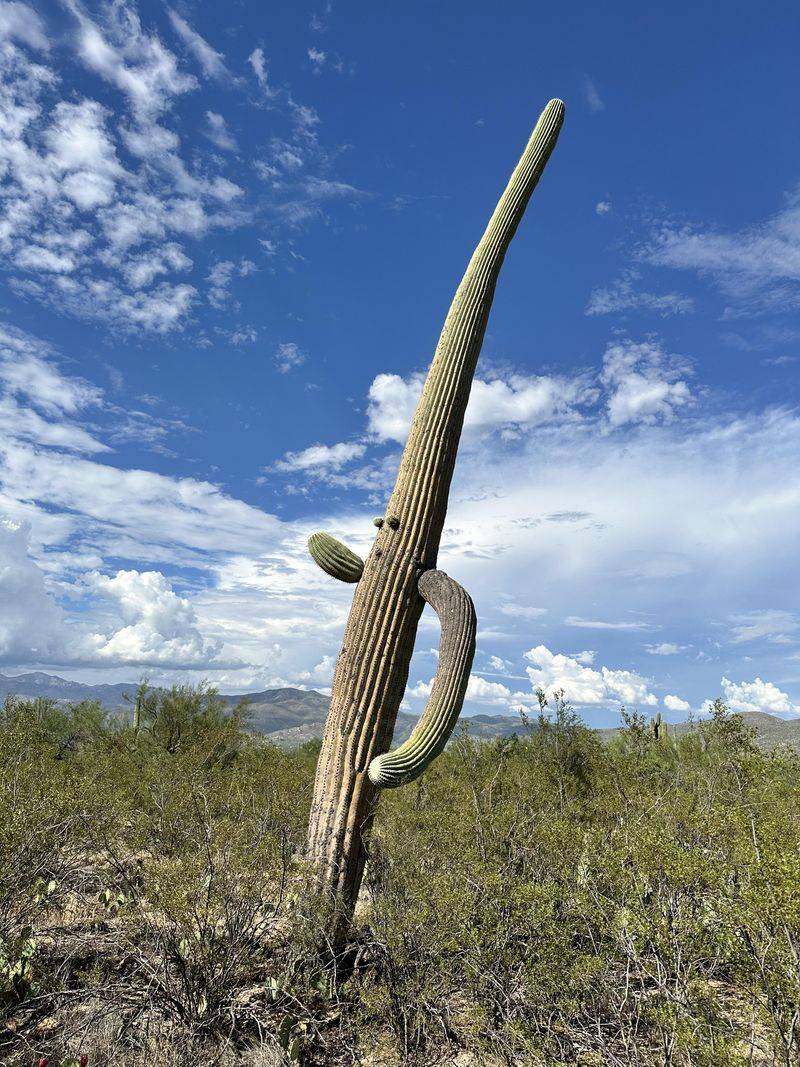
Noticing that a saguaro has started leaning when it was not before, or that an existing lean seems to be getting worse, is the kind of change that deserves prompt attention.
Unlike a stable, long-term lean that has remained consistent for years, a new or increasing lean suggests that something is actively changing within the plant or in the soil supporting it.
That shift can happen for many reasons, including root deterioration, tissue softening, soil saturation, or internal bacterial damage.
In Arizona, where monsoon season can bring rapid changes in soil moisture and wind load, a lean that develops or worsens during the summer months should be taken seriously.
A saguaro that is actively shifting may not give much warning before it falls, especially if the internal structure has already been weakened.
The consequences of a large saguaro falling near a home, vehicle, or area where people walk can be significant.
Reaching out to a qualified cactus professional or an arborist with experience in Arizona saguaro care is the right move when a new or increasing lean is noticed.
A trained eye can assess the tissue condition, root zone, soil stability, and surrounding environment to give a clearer picture of the risk level.
Homeowners should not attempt to prop, brace, or anchor a large leaning saguaro without expert guidance.
10. Location Determines How Urgent The Concern Is
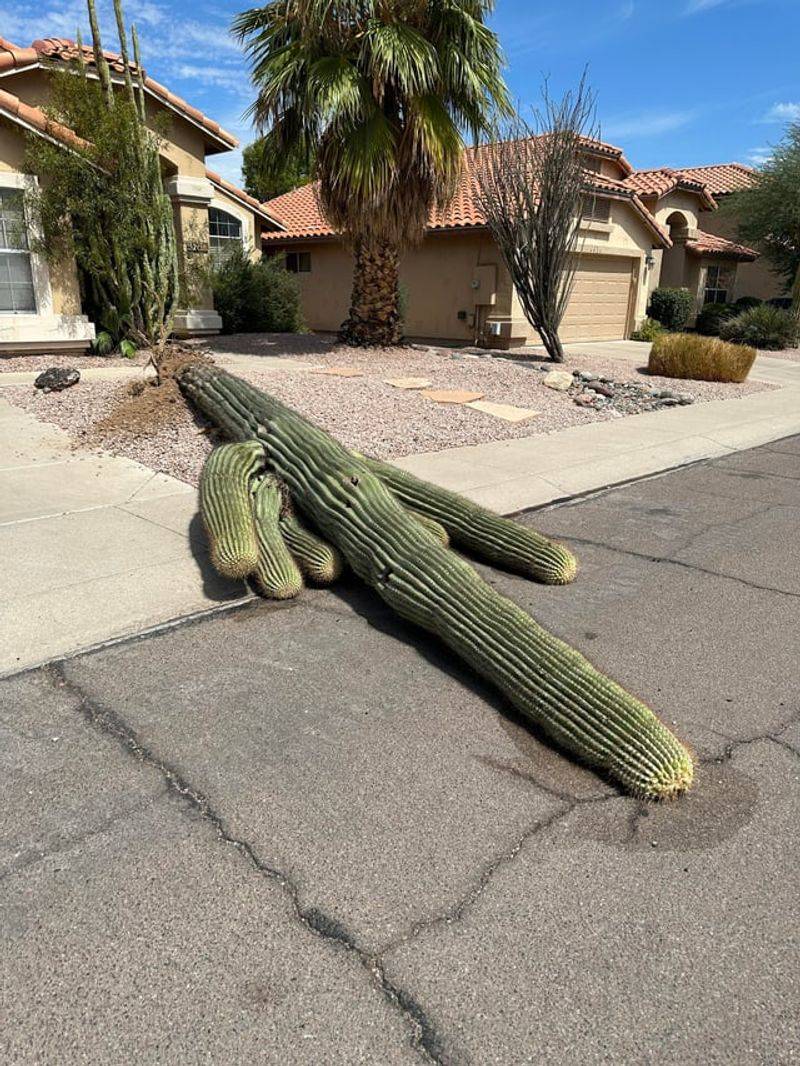
Where a saguaro is located on a property plays a big role in how urgently a lean should be addressed.
A saguaro leaning slightly in the middle of an open desert yard, far from structures, walkways, and high-traffic areas, presents a very different situation than one leaning toward a roofline, driveway, patio, or the path people use every day.
The potential consequences of a fall depend heavily on what or who might be in the way.
In Arizona’s residential landscapes, saguaros are sometimes planted or preserved quite close to homes, walls, and outdoor living spaces. That proximity can be beautiful, but it also means that any instability carries a higher level of concern.
A cactus that falls in an open yard is one thing, but a large saguaro coming down near a structure or a frequently used outdoor area is a much more serious matter.
Homeowners should think about the fall zone when evaluating any leaning saguaro. Considering the height of the plant, the direction of the lean, and what lies in the potential path of a fall helps determine how quickly professional input is needed.
In Arizona, where these protected plants can reach 40 feet or more, the combination of location and lean direction is often the most practical starting point for deciding whether to act quickly or simply monitor closely.