These Are The Plants Ohio Gardeners Can Add Near A Pond To Bring Great Blue Herons Into The Yard
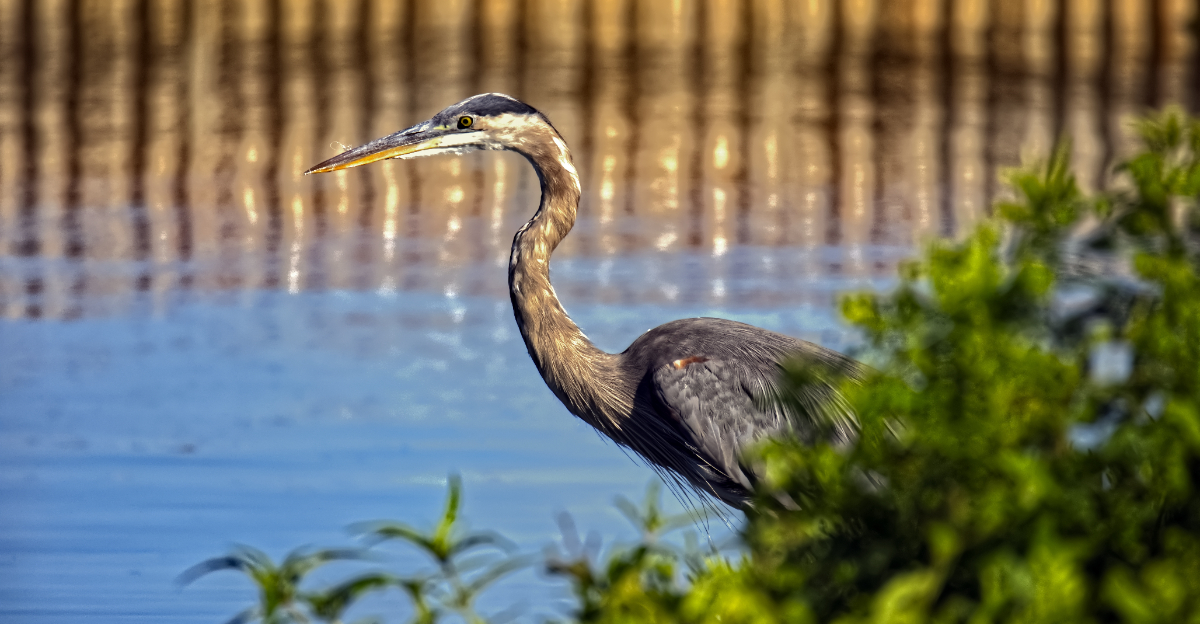
A great blue heron landing near a backyard pond is one of those moments that stops everything. That wingspan, that stillness, the way it stands motionless at the water’s edge like it owns the place.
Most Ohio pond owners see herons as occasional visitors they have no control over. But herons are not random.
They are looking for specific conditions and yards that provide them get return visits. Plant selection around a pond plays a bigger role in heron activity than most people expect.
The right emergent plants, the right shoreline structure, the right combination of cover and open water creates a habitat herons actively seek out.
Ohio ponds surrounded by the wrong plants or no plants at all get passed over for ones that look more like the wetland edges herons evolved to hunt in.
Your pond can become that place with a few smart additions to what grows around it.
1. Pickerelweed Builds Shallow Cover Where Pond Wildlife Gathers
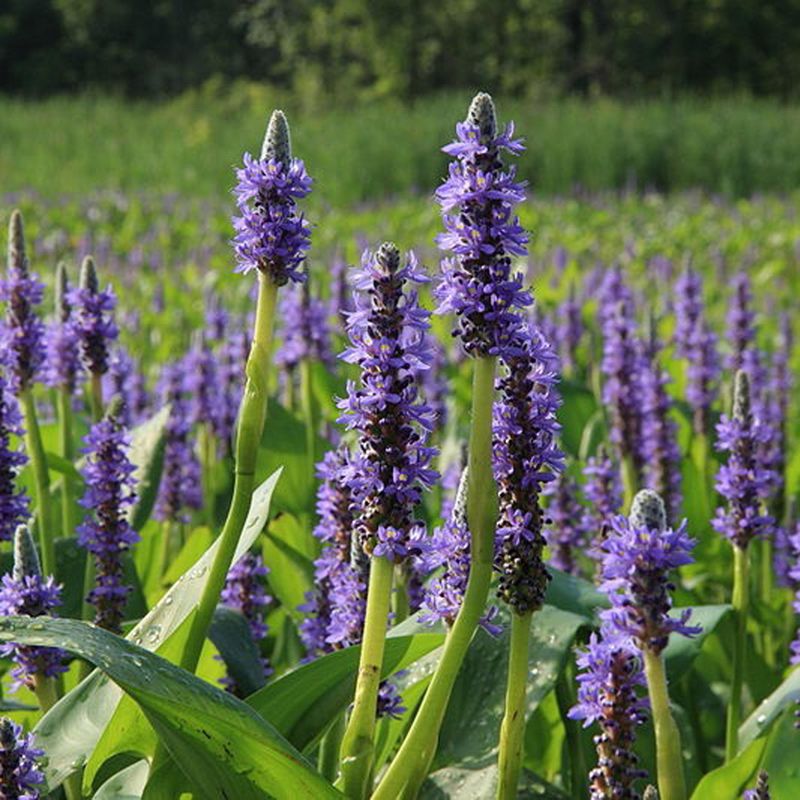
Few native aquatic plants look as at home in shallow water as pickerelweed. Its bold, arrow-shaped leaves rise cleanly above the surface.
In summer, spikes of violet-blue flowers draw in bees, butterflies, and small aquatic insects that form the base of a healthy pond food web.
Pickerelweed grows naturally along pond margins, slow streams, and wetland edges across this state. It prefers full sun and water that is roughly six to eighteen inches deep at the roots.
That makes it ideal for the shallow shelf zones found in many backyard ponds and water gardens. It spreads by rhizomes, so you will want to plant it in containers or defined zones to keep it from taking over a smaller pond.
The heron connection here is indirect but real. Shallow, vegetated margins support frogs, tadpoles, aquatic insects, and small fish, the exact prey great blue herons hunt.
A pond edge that looks alive and productive is far more appealing to a hunting heron than a bare concrete rim. Cornell Lab of Ornithology notes that herons favor shallow, calm water with nearby cover.
Pickerelweed helps create exactly that kind of habitat. Plant it in clusters for the best visual and ecological effect.
2. Blue Flag Iris Adds Native Structure Along Wet Pond Edges
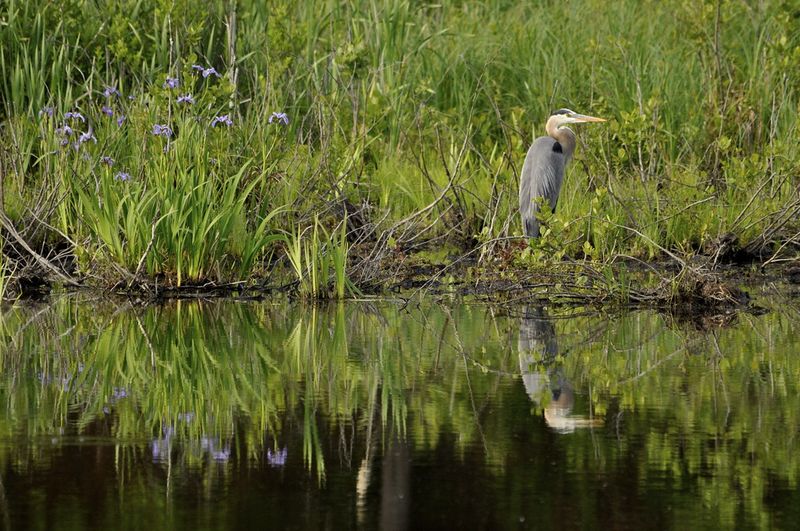
Before you reach for a bag of yellow flag iris at the garden center, stop. Yellow flag iris is considered invasive in many wetland areas and can outcompete native plants along pond edges.
The plant you want is blue flag iris, a true native that brings similar upright structure and far better ecological value to moist shorelines.
Blue flag iris grows naturally in wet meadows, pond margins, and low areas across this state. It thrives in full to partial sun and tolerates both standing shallow water and consistently moist soil at the pond’s edge.
Its upright, sword-like leaves add clean vertical texture without creating a tangled wall that blocks views or access to the water. The late spring blooms are a striking violet-blue, and pollinators visit them readily.
Your Ohio Garden Changes Every Week. Your Plan Should Too.
Gardening in Ohio changes quickly throughout the season. Every Friday you’ll receive a simple weekly plan showing exactly what to plant, prune, fertilize, harvest, and protect so you never miss the right timing.
For heron habitat, a planted shoreline matters more than bare mud. A stable, planted edge supports more frogs, insects, and small aquatic animals than an eroding bank does.
Blue flag iris can soften a hard transition between lawn and water, making the pond feel more like a natural wetland. Ohio State University Extension recommends native iris species for rain gardens and wet borders.
Plant it above the waterline in moist soil rather than submerged, and divide clumps every few years to keep them vigorous.
3. Buttonbush Turns Moist Banks Into Better Heron Habitat
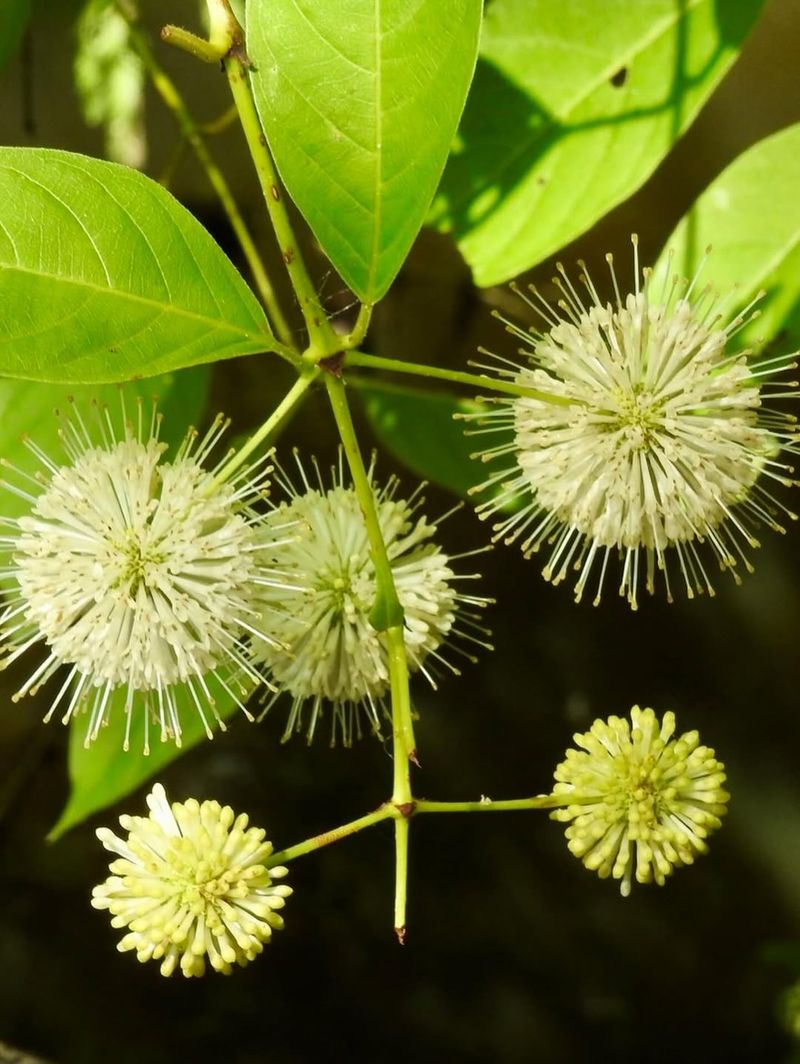
Buttonbush is one of those native shrubs that earns its space along a pond bank without asking for much in return.
It grows naturally in floodplains, wet thickets, and pond margins across the Buckeye State, tolerating flooded roots that would stress most other woody plants.
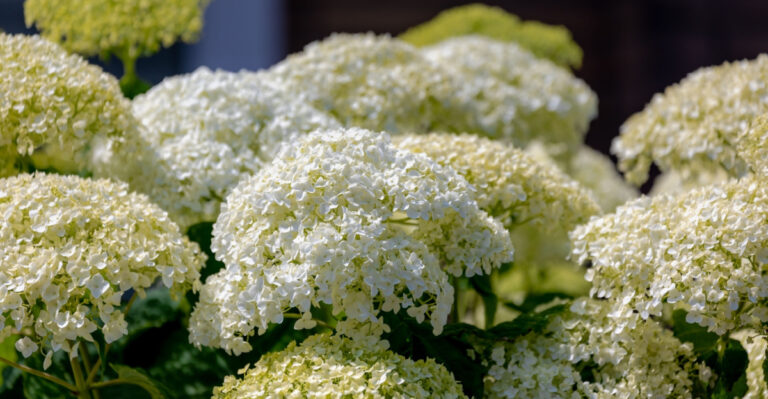
Its round, white flower clusters bloom in midsummer and attract a remarkable variety of bees, beetles, and butterflies.
For pond-edge design, buttonbush works well on moist banks where you want a taller, wildlife-friendly planting that will not need irrigation once established.
It can grow six to twelve feet tall and wide over time, so give it space and place it where it will not block your view of the water entirely.
A well-placed buttonbush on the far bank of a pond creates a natural backdrop without closing off the open water that herons need for landing and hunting.
The shrub does not feed herons directly, but a richer edge means more insects, frogs, and small animals in and around the water. Audubon lists buttonbush as a native plant that supports wildlife, including waterfowl and songbirds.
Avoid planting it on dry, sunny slopes where soil moisture is unreliable. On moist banks, it is one of the hardest-working native shrubs you can add to a pond planting.
4. Soft Rush Keeps Muddy Margins From Looking Bare
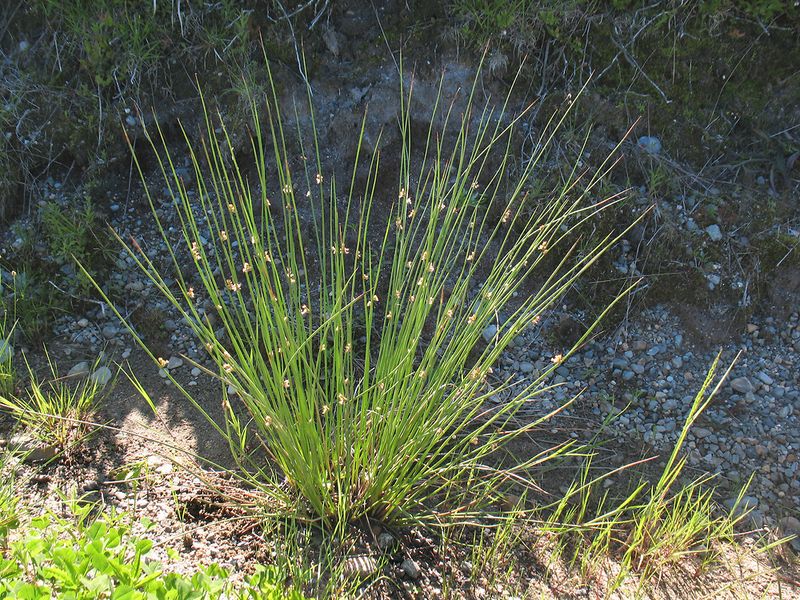
Muddy pond margins can look uninviting and feel ecologically empty, but soft rush changes that quickly. This native wetland plant produces round, upright green stems that stay attractive through most of the growing season.
It grows naturally in wet ditches, pond margins, and low wet areas across this state. It is well-suited to the messy, unpredictable zone between open water and dry ground.
Soft rush tolerates full sun to partial shade and prefers consistently wet or shallow-water conditions. It works well planted in clusters along the waterline, where it adds vertical texture and stabilizes soft mud.
It also creates microhabitat for aquatic insects, small frogs, and invertebrates that make up a big part of the pond food web. Keep in mind that rush can spread steadily, so monitor it in smaller ponds and remove excess growth each spring.
For heron-friendly design, the goal is a margin that feels alive rather than stripped bare. Soft rush supports that by creating a naturalized edge where small pond animals can shelter and move.
Cornell Lab of Ornithology notes that great blue herons are opportunistic hunters that work edges carefully. A rush-lined margin gives them something to work with.
Plant it in groups of three to five for the most natural look and the best wildlife value.
5. Swamp Milkweed Brings Pollinators To Sunny Pond Borders
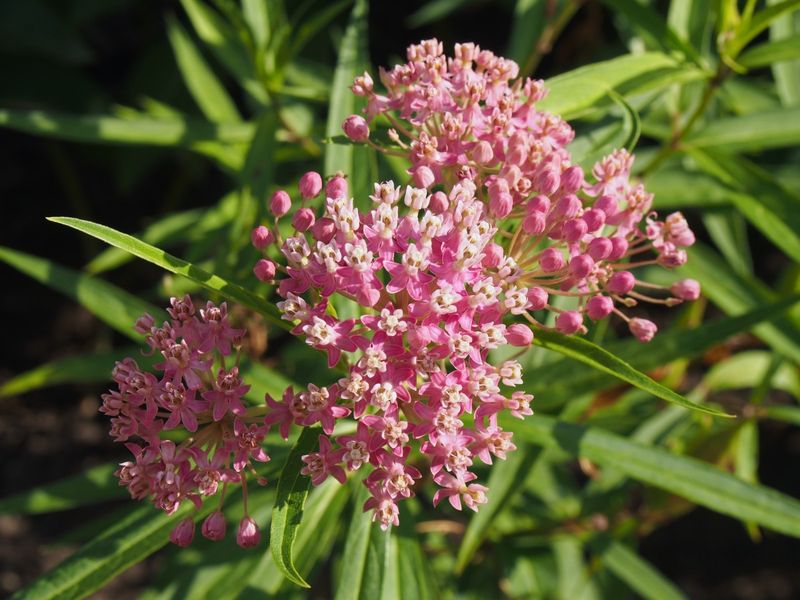
If you want color, pollinators, and ecological value along a sunny pond border, swamp milkweed delivers all three without demanding much from the gardener.
Unlike common milkweed, which spreads aggressively by underground runners, swamp milkweed stays in clumps and behaves well in moist garden borders.
It is a true native perennial found naturally in wet meadows, stream banks, and low wet areas across this state.
Swamp milkweed prefers full sun and consistently moist soil. It will not do well in dry upland beds or areas that dry out in summer.
Plant it above the waterline at the pond’s upper edge rather than in saturated or flooded soil. It blooms in midsummer with clusters of rose-pink flowers that monarchs, native bees, and other pollinators visit heavily.
The seed pods that follow are attractive in autumn and provide food for birds that feed on milkweed seeds.
The connection to heron habitat is real but indirect. Pollinators visiting swamp milkweed do not feed herons, but a diverse, planted pond border supports a richer and more complex yard ecosystem overall.
Ohioline and Ohio State University Extension both recognize swamp milkweed as a valuable native plant for moist garden sites. Pair it with cardinal flower or soft rush for a pond border that looks intentional, colorful, and genuinely wildlife-friendly.
6. Cardinal Flower Brightens Damp Edges Without Blocking The View
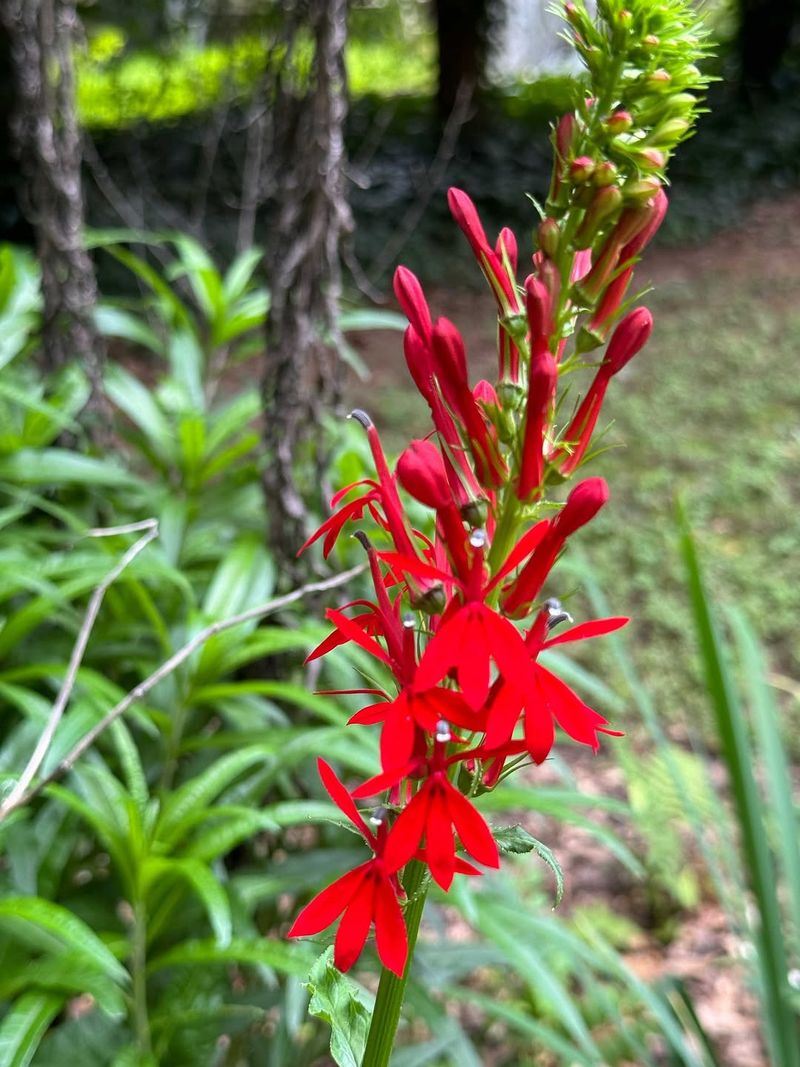
Cardinal flower has a quality that most shoreline plants lack: it draws attention without taking over. Its tall, slender spikes of brilliant red blooms rise above moist soil in late summer.
That makes it one of the most visually striking native perennials you can place near a pond. Ruby-throated hummingbirds are strongly attracted to those red flowers, and the plant earns its spot on the water’s edge for that reason alone.
This native perennial grows naturally along stream banks, pond margins, and shaded wet areas across this state.
It prefers consistently moist soil and can handle partial shade, which makes it useful on the shadier side of a pond where other flowering plants struggle.
Cardinal flower stays upright and relatively narrow, so it adds color and structure. It does this without creating a dense wall that blocks sightlines or makes the pond edge feel unsafe near children or pets.
For a heron-friendly planting scheme, the goal is a varied edge with open water still visible and accessible. Cardinal flower fits that role well.
It does not stabilize soil as aggressively as rush or sedge, so pair it with a more structural plant nearby. Avoid placing it in dry, hot spots or in raised beds far from moisture.
Keep the soil consistently damp through dry spells, especially during the first growing season while roots establish.
7. Native Sedges Help Hold The Shoreline In Place
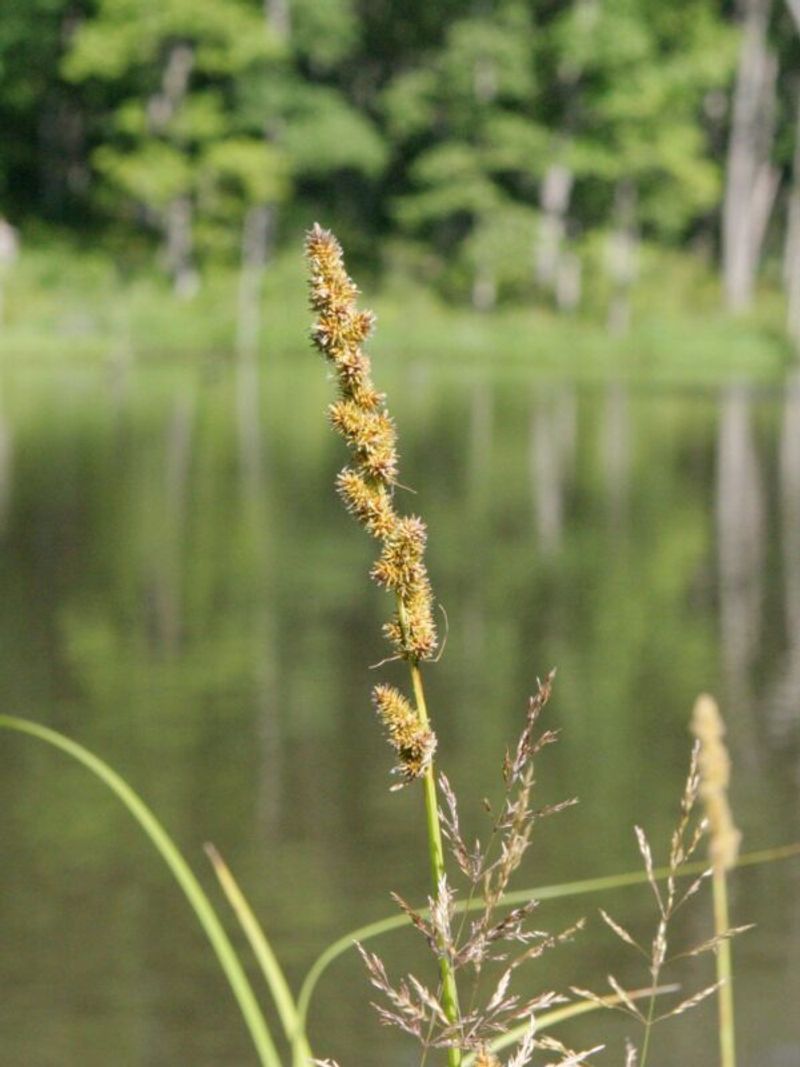
Sedges are the unsung workers of the pond edge. They lack the showy blooms of cardinal flower or the dramatic spikes of pickerelweed, but they do something just as important: they hold the shoreline together.
Their fibrous root systems grip damp, unstable soil and reduce the erosion that turns a pond bank into a muddy mess after heavy rain.
Several native sedge species are well-suited to moist shorelines across this state. Pennsylvania sedge works well on shadier banks.
Tussock sedge and lake sedge prefer wetter conditions and can handle standing water at the roots. Ohio State University Extension and Ohioline both support the use of native sedges in rain gardens and wet soil applications.
Choose your species based on sun exposure, soil moisture, and how close to the waterline you plan to plant.
For heron habitat, a stable shoreline matters more than most gardeners realize. Eroding banks wash sediment into the pond, cloud the water, and reduce the visibility herons rely on when hunting in shallow areas.
A planted, sedge-covered edge keeps the bank intact and supports the frogs, insects, and small invertebrates that live in the transition zone between land and water.
Plant sedges in drifts rather than single stems for the best soil-holding and visual effect along the shoreline.
8. Submerged Pond Plants Support The Prey Herons Actually Hunt
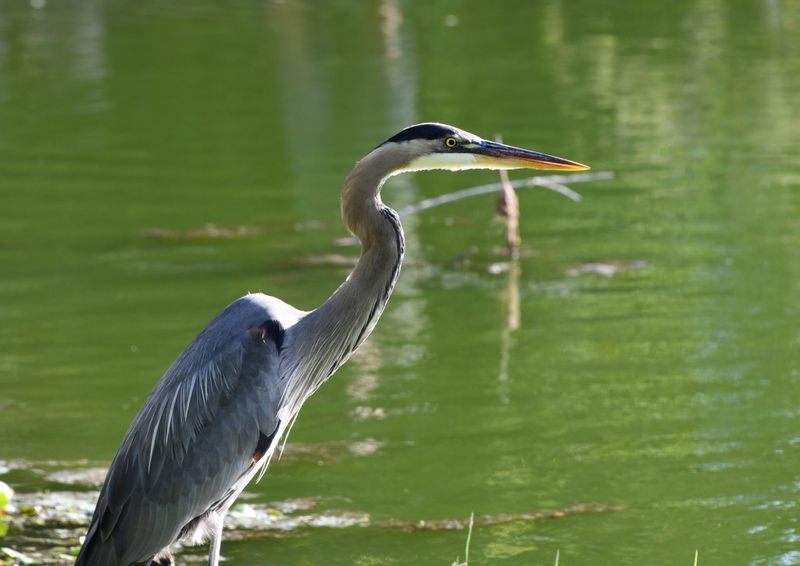
Every plant discussed so far grows at the edge of the water. This one grows inside it.
Submerged aquatic plants are rooted on the pond floor and grow entirely or mostly underwater. They may be the single most important habitat feature for supporting the prey that great blue herons actually hunt.
That prey includes small fish, tadpoles, aquatic insects, and other invertebrates.
Submerged plants oxygenate the water, provide cover for small fish and amphibian larvae, and support the aquatic insects that sit at the base of the food chain.
Native options such as wild celery and native pondweed species are worth researching for managed ponds in this state.
Avoid non-native or invasive species like Eurasian watermilfoil or hydrilla. They can take over a pond quickly and create serious problems for water quality and native aquatic life.
Before adding any submerged plants to a managed pond, consult your local Ohio State University Extension office or the Ohio Department of Natural Resources.
Ask for guidance on species selection, planting methods, and any permits that may apply.
If your pond holds fish you care about protecting, understand that a healthier, more habitat-rich pond may attract more herons. Cornell Lab of Ornithology confirms that herons select hunting sites based on prey availability.
A pond with thriving underwater life is exactly what they are looking for.