9 Compact Evergreen Shrubs That Bring Lasting Charm To Small Ohio Garden Spaces
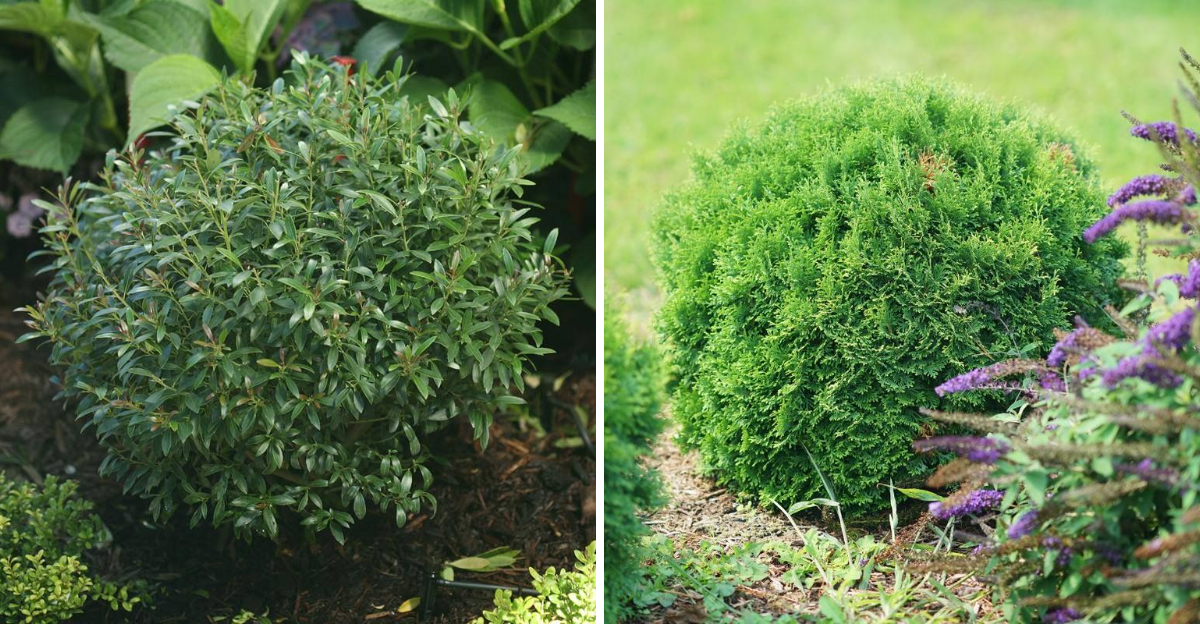
Small Ohio gardens do not have much room for wasted space. Every shrub has to earn its keep, and the ones that stay green all year can do a lot of the heavy lifting.
When winter strips everything else back and summer borders start looking crowded, a compact evergreen can keep the whole garden feeling neat, grounded, and full of life.
That is part of their charm. They bring structure without taking over, soften tight corners, and make even the smallest planting areas look more polished.
A good one can frame a path, anchor a front bed, or fill an awkward gap without turning into a pruning headache two years later.
For Ohio gardeners, that kind of staying power is hard to beat. The right compact evergreen shrubs can keep a small space looking attractive through every season while adding the sort of quiet beauty that never feels overdone.
1. Gem Box Inkberry Keeps Small Beds Looking Neat
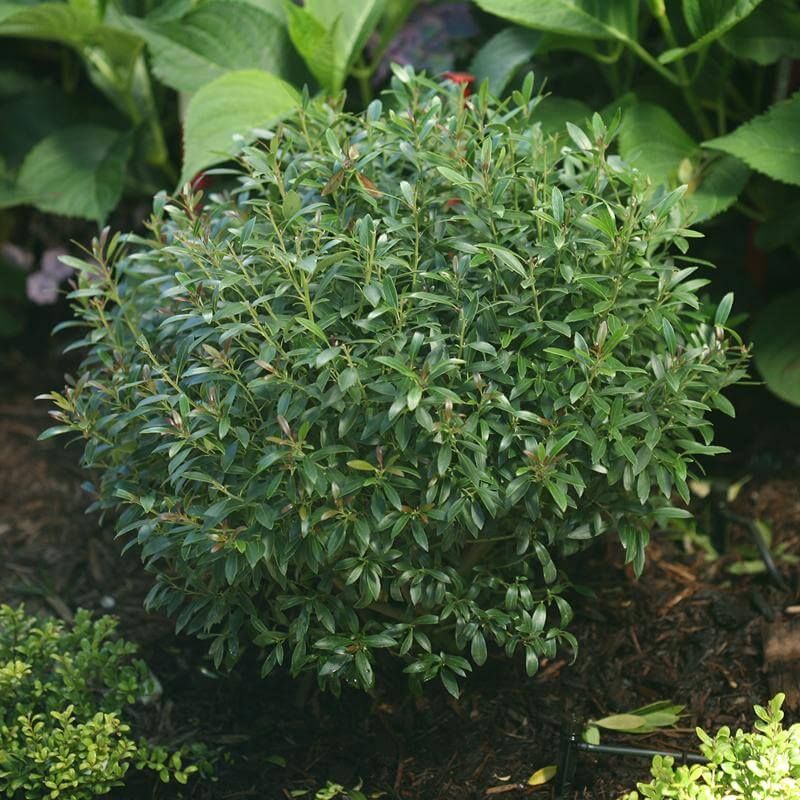
Glossy, deep green leaves and a naturally tidy shape make Gem Box inkberry one of those shrubs that looks like it was professionally trimmed even when it was not. This compact cultivar of native inkberry holly (Ilex glabra ‘SMNIGDD’) typically reaches about 2 to 3 feet tall and wide, which is a genuinely useful size for small Ohio garden beds.
It holds its rounded form without constant pruning, which is a real advantage in a tight space.
Gem Box is a native plant, meaning it supports local pollinators and wildlife while staying fully adapted to Ohio’s variable weather. It handles clay soil better than many shrubs, tolerates wet spots, and stays evergreen through Ohio winters without much winter burn.
That reliability is worth a lot when you want the bed to look sharp in February as well as June.
Plant it in full sun to part shade for the best results. It works beautifully as a low border, a foundation planting, or a repeated accent along a walkway.
The black berries that appear in fall add a subtle seasonal bonus. For small Ohio gardens that need structure and polish without drama, Gem Box earns its spot.
2. Little Giant Arborvitae Adds Easy Year-Round Form
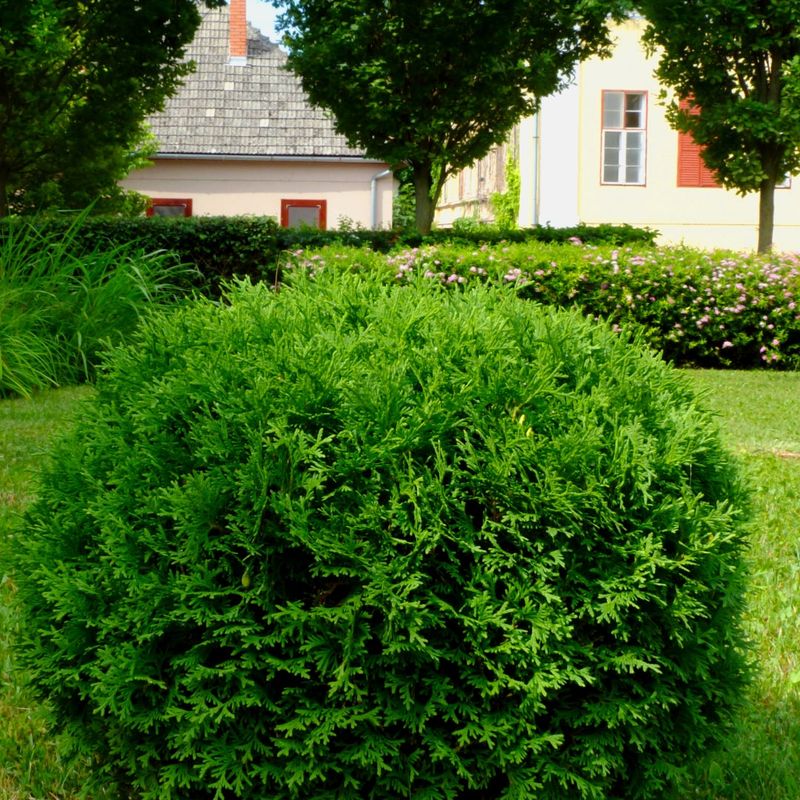
If you have ever planted an arborvitae only to watch it outgrow its spot in a few years, Little Giant (Thuja occidentalis ‘Little Giant’) is the answer you were looking for. This slow-growing, globe-shaped arborvitae stays compact, typically reaching 4 to 6 feet tall and wide over many years.
The rounded form holds naturally without shearing, which means you spend less time with hedge clippers and more time actually enjoying the garden.
The foliage is a rich, medium green that stays consistent through Ohio winters without the brownish tinge that affects some other arborvitae varieties. It performs well in full sun to light shade and adapts to average, well-drained Ohio soils.
Spacing a few of these along a foundation or walkway creates a clean, structured look that feels intentional and finished.
Little Giant does not need constant attention once established, but it does appreciate regular watering during its first growing season. It is cold-hardy through Ohio’s Zone 5 and 6 regions without issue.
Your Ohio Garden Changes Every Week. Your Plan Should Too.
Gardening in Ohio changes quickly throughout the season. Every Friday you’ll receive a simple weekly plan showing exactly what to plant, prune, fertilize, harvest, and protect so you never miss the right timing.
For small gardens where you want a dependable evergreen anchor that stays in bounds and looks good every single month of the year, this arborvitae delivers without any fuss.
3. Tater Tot Arborvitae Fits Tight Spaces Beautifully
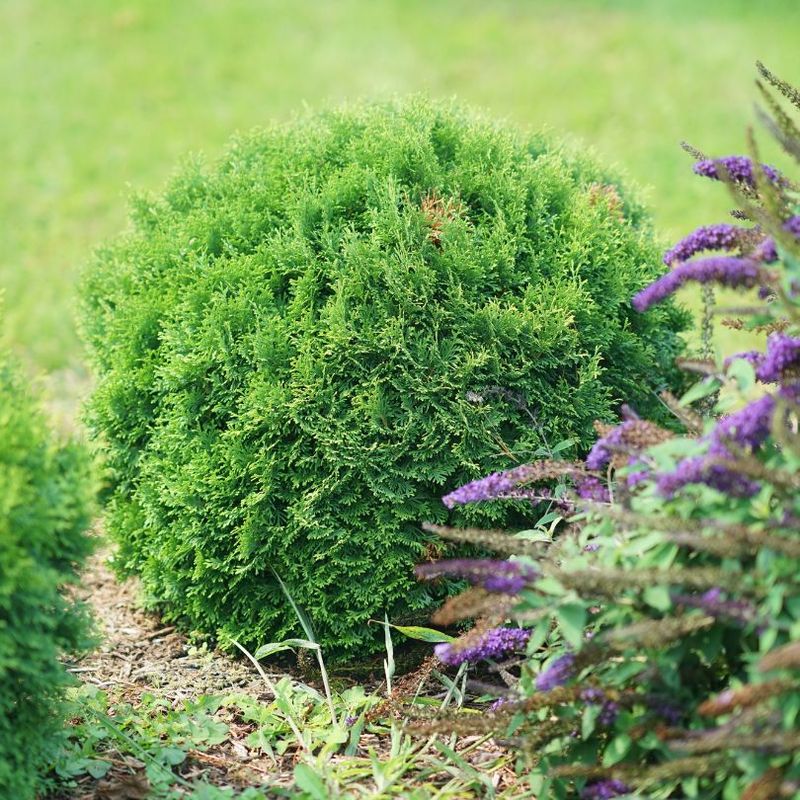
Small, round, and wonderfully well-behaved, Tater Tot arborvitae (Thuja occidentalis ‘Bobozam’) is exactly the kind of plant that makes a narrow foundation bed look intentional.
It typically grows to just 2 to 3 feet tall and wide over about ten years, making it one of the most genuinely compact arborvitae options available.
The foliage is a bright, cheerful green that holds well through cold Ohio winters without fading.
What makes Tater Tot so appealing for tight spaces is the way it keeps its shape naturally. You do not need to trim it into a ball because it already grows that way.
Planted along a short front walkway or tucked into a corner bed, it adds a polished, organized look without demanding much in return. A few planted together at equal spacing create a rhythmic, satisfying pattern that elevates even the most basic landscape layout.
Tater Tot arborvitae prefers full sun and well-drained soil. It is cold-hardy across Ohio’s growing zones and handles typical Ohio winters reliably.
Give it good drainage and adequate sunlight, and it will settle in without trouble. For gardeners working with very limited space who still want that clean, evergreen structure, Tater Tot is a consistently smart and practical pick.
4. Bird’s Nest Spruce Brings Texture Without Bulk
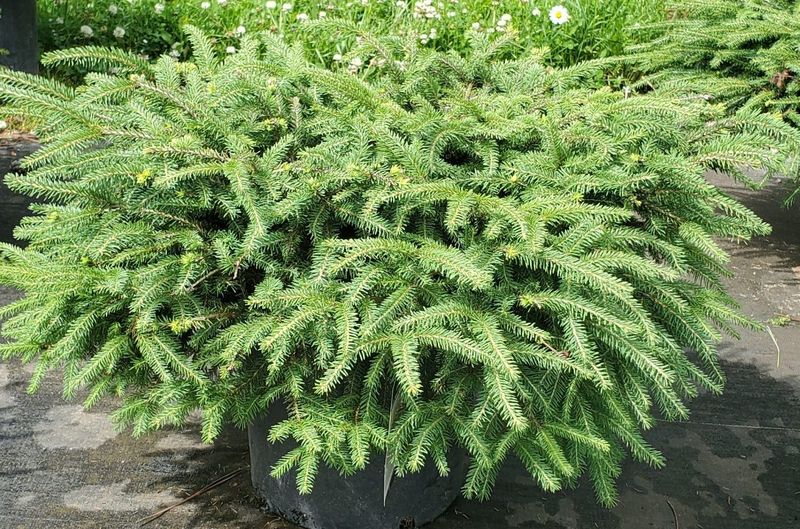
There is something almost sculptural about a well-grown Bird’s Nest spruce (Picea abies ‘Nidiformis’) sitting in a garden bed. The low, spreading form with a slight depression in the center gives it that signature nest-like look that makes it stand out without trying too hard.
It typically grows 3 to 4 feet tall and 4 to 5 feet wide over time, staying wide and low rather than tall and pointed like many spruces.
The texture is one of its best qualities. Short, dark green needles pack tightly along the branches, creating a dense, interesting surface that catches light differently depending on the time of day.
In a small Ohio garden where you want visual interest without adding height, that texture does a lot of work. It pairs well with broader-leaved shrubs like boxwood or rhododendron, adding contrast without competing for attention.
Bird’s Nest spruce performs best in full sun with well-drained soil and handles Ohio winters very well. It is a slow grower, which is actually a benefit in a compact space because it stays put for years without needing constant management.
Avoid planting it in low, wet areas where drainage is poor. For small gardens that need a grounded, textural evergreen presence, this spruce is a reliable and visually rewarding choice.
5. Ramapo Rhododendron Adds Evergreen Color And Spring Charm
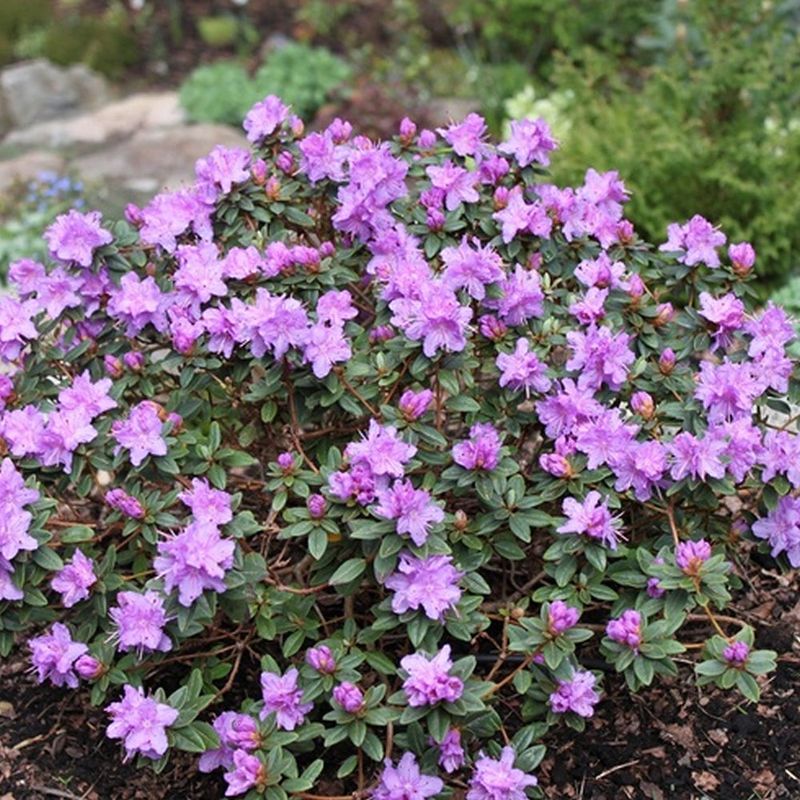
Every spring, Ramapo rhododendron puts on a show that stops people in their tracks. The clusters of violet-purple flowers that appear in mid-spring are vivid and plentiful, covering the compact plant in a way that feels almost extravagant for such a small shrub.
It typically grows 2 to 3 feet tall and wide, which keeps it well within bounds for smaller Ohio gardens.
Beyond the spring bloom, the foliage earns its keep year-round. The leaves are a blue-green color that looks attractive even in winter, and they hold up well through cold temperatures without significant damage.
Ramapo is considered cold-hardy to Zone 4, which makes it a solid performer across Ohio’s various growing zones. That kind of winter reliability matters when you are counting on a plant to hold the garden together through the colder months.
Plant Ramapo rhododendron in partial shade to filtered sun for the best results. It prefers acidic, well-drained, organically rich soil, so amending with compost or peat before planting is worth the effort in Ohio’s heavier soils.
Avoid full afternoon sun and waterlogged conditions. For small gardens that need both evergreen presence and a genuine seasonal moment of color, Ramapo rhododendron handles both roles with real style and reliability.
6. Dwarf Mugo Pine Keeps Small Gardens Looking Finished
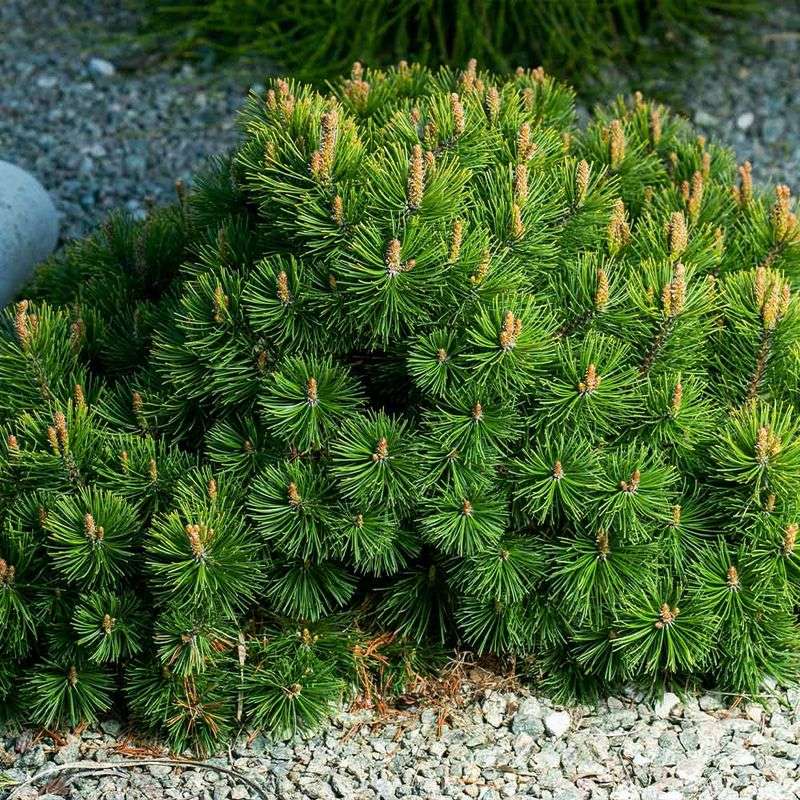
Few shrubs have the kind of rugged, timeless presence that Dwarf Mugo pine (Pinus mugo var. pumilio) brings to a small garden. The dense, dark green needles and low, spreading form give it a grounded, sturdy look that makes a garden feel finished and intentional.
It typically grows 3 to 5 feet tall and wide, though growth rates vary, and some selections stay even more compact over the years.
What sets Dwarf Mugo pine apart is its adaptability. It handles full sun, tolerates a range of soil types including sandy and rocky conditions, and shrugs off Ohio winters without complaint.
It is not a demanding plant once established, and it does not require shaping to look good. The naturally mounding habit holds up on its own, which is exactly what you want in a low-maintenance small garden design.
Candle pruning in late spring can help keep it even more compact if desired, but it is entirely optional. Avoid planting in poorly drained areas where standing water collects.
Dwarf Mugo pine pairs well with ornamental grasses, groundcovers, or flowering perennials that bring seasonal color while the pine holds steady structure.
For small Ohio gardens that need a reliable, year-round backbone, this pine delivers a polished, no-nonsense presence worth planting.
7. Dwarf Hinoki Cypress Softens The Whole Space
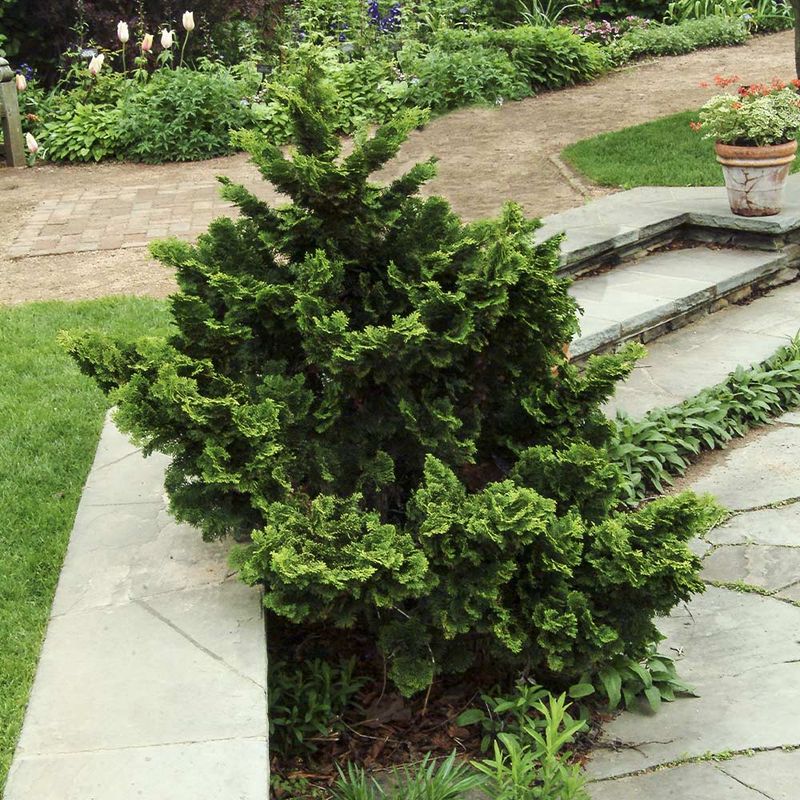
Walk past a well-placed Dwarf Hinoki cypress (Chamaecyparis obtusa ‘Nana Gracilis’) and you will likely slow down to look at it twice. The layered, fan-shaped foliage arranged in shell-like sprays creates a texture that feels unlike almost anything else in the garden.
It grows slowly into a conical form, typically reaching 4 to 6 feet tall over many years, making it a long-term investment in small-space beauty.
The rich, dark green color stays consistent through all four seasons, which is a quiet but important quality in an Ohio garden where winters can feel long and visually flat.
Placed near a front entrance, at a garden corner, or as a focal point in a small bed, it adds a sculptural element without overwhelming the space.
The slow growth rate means you are not constantly managing it or worrying about it crowding out neighboring plants.
Dwarf Hinoki cypress prefers full sun to partial shade and well-drained, moderately moist soil. It is cold-hardy across Ohio’s growing zones and generally trouble-free when sited correctly.
Avoid heavy clay or waterlogged spots. For small Ohio gardens that feel a little flat or lacking in visual depth, this cypress brings a layered softness and quiet architectural presence that genuinely elevates the whole planting scheme.
8. Golden Mop False Cypress Brightens Up Small Corners
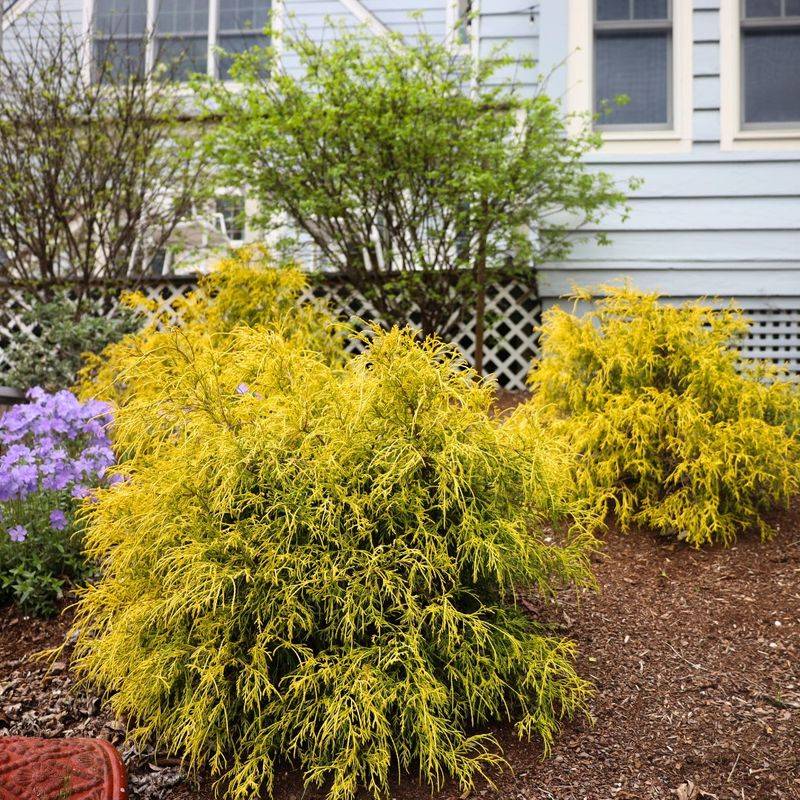
Some corners of a small garden just need a jolt of color, and Golden Mop false cypress (Chamaecyparis pisifera ‘Golden Mop’) delivers it without apology.
The cascading, thread-like golden foliage is eye-catching in any season, but it practically glows in winter when the rest of the garden has gone quiet and gray.
It typically grows 2 to 3 feet tall and 3 to 4 feet wide, staying nicely compact in most Ohio garden settings.
Beyond the obvious color appeal, the texture of the foliage adds a softness that balances well against the stiffer forms of nearby evergreens.
Planting it next to a dark green boxwood or a compact spruce creates a contrast that feels deliberately designed and visually satisfying.
It works especially well in corners, at the ends of borders, or as a repeating accent plant along a short driveway or walkway edge.
Golden Mop false cypress thrives in full sun, where the golden color is most vivid. In too much shade, the foliage tends toward a duller yellow-green.
It prefers well-drained, slightly moist soil and is cold-hardy across Ohio’s zones. Minimal pruning is needed, though light shaping in early spring keeps it tidy.
For small Ohio gardens that feel too dark or visually monotonous, this shrub is a genuinely bright and practical solution.
9. Green Velvet Boxwood Brings Classic Structure To Tiny Spaces
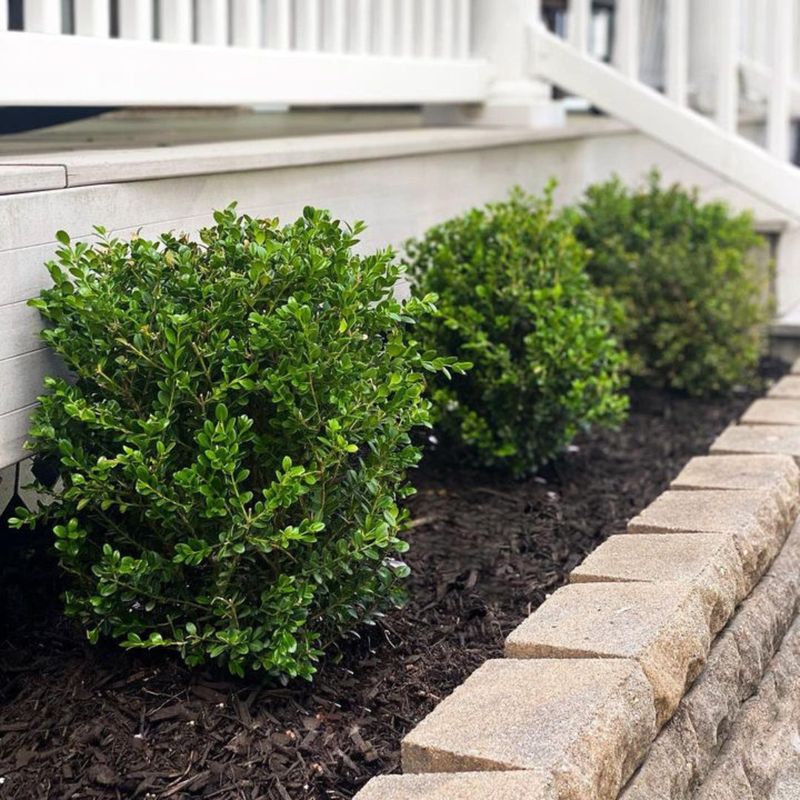
Classic is not always boring. Green Velvet boxwood (Buxus ‘Green Velvet’) has earned its reputation as a go-to structure plant because it simply does the job better than almost anything else in its size range.
The dense, dark green foliage stays rich and full year-round, and the naturally rounded form holds its shape without aggressive pruning. It typically grows 3 to 4 feet tall and wide, making it a proportionate fit for small Ohio garden spaces.
Boxwood blight is a real concern for boxwood growers in Ohio, and it is worth knowing that Green Velvet shows moderate resistance compared to some other cultivars.
Planting in a location with good air circulation and avoiding overhead watering helps reduce risk significantly.
The Ohio State University Extension recommends monitoring regularly and removing any affected material promptly to keep the plant healthy.
Green Velvet boxwood grows best in full sun to partial shade and prefers well-drained, fertile soil with a slightly alkaline to neutral pH.
It handles Ohio winters better than many English boxwood varieties, showing less winter bronzing and foliage damage in exposed spots.
For edging a small bed, anchoring a corner, or creating a low formal border along a short path, Green Velvet boxwood brings a tidy, enduring structure that small gardens genuinely benefit from all year.