Native Florida Plants To Replace Ligustrum With Before It Spreads Any Further
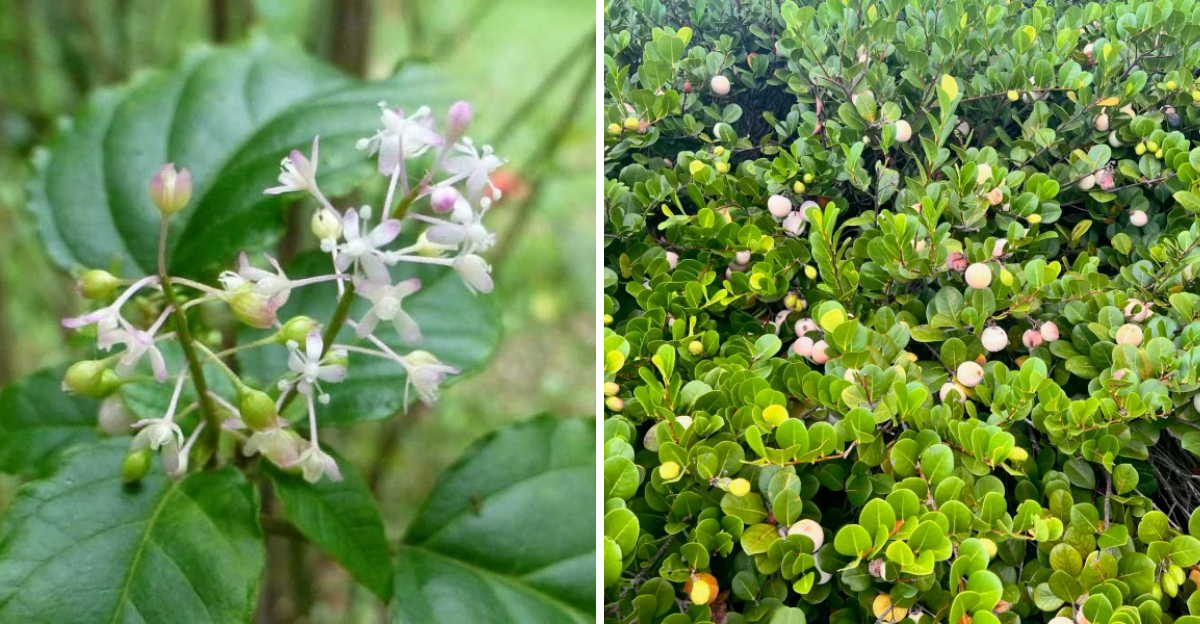
Ligustrum is one of those shrubs that seemed like a perfectly reasonable choice for decades. Fast growing, adaptable, easy to shape into a hedge.
Nobody warned anyone. Now it is one of the most aggressive invasive plants in Florida.
It spreads into natural areas through bird-dispersed seeds, crowds out native understory plants, and proves remarkably difficult to fully remove once established.
The frustrating part is how many Florida yards still have it, not because homeowners want an invasive hedge, but because nobody told them what they actually planted.
Ligustrum does not announce itself as a problem. It just grows, flowers, produces berries, and quietly expands well beyond your property line while looking completely unremarkable.
Native shrubs fill the same structural role in a landscape without any of that spread. Several of them make better hedges than ligustrum ever did and actually support the local ecosystem at the same time.
1. Plant Florida Privet For The Native Hedge Ligustrum Pretends To Be
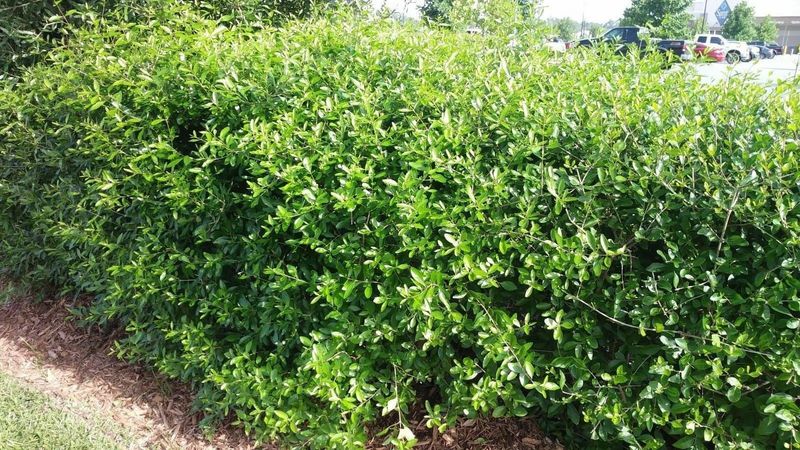
Wanting the privacy of a privet hedge without planting the problem is exactly the situation Florida privet was made for. Despite sharing a common name with invasive non-native privets, Florida privet is a completely different plant.
Its botanical name is Forestiera segregata, and that distinction matters enormously before you buy, plant, or remove anything from your yard.
According to UF/IFAS Gardening Solutions, Florida privet is a native shrub that can grow as a hedge, screen, or wildlife plant in many parts of the state. It produces small flowers that attract pollinators and dark berries that birds appreciate.
The foliage has a softer, more natural texture than a formal clipped ligustrum wall, so expect a looser, more relaxed look.
Florida privet handles salt spray and dry conditions reasonably well, making it a practical choice for coastal and inland sites alike. UF/IFAS notes it can be pruned but performs more naturally when allowed to grow with a gentle shaping hand rather than hard shearing.
Spacing plants three to five feet apart gives a screen that fills in over time.
Check with your local Extension office about cold hardiness and regional fit before planting. This native brings real wildlife value and genuine hedge function without carrying the invasive baggage that makes its non-native name-twin such a persistent problem.
2. Choose Myrsine For Clean Evergreen Screening Without The Invasive Baggage
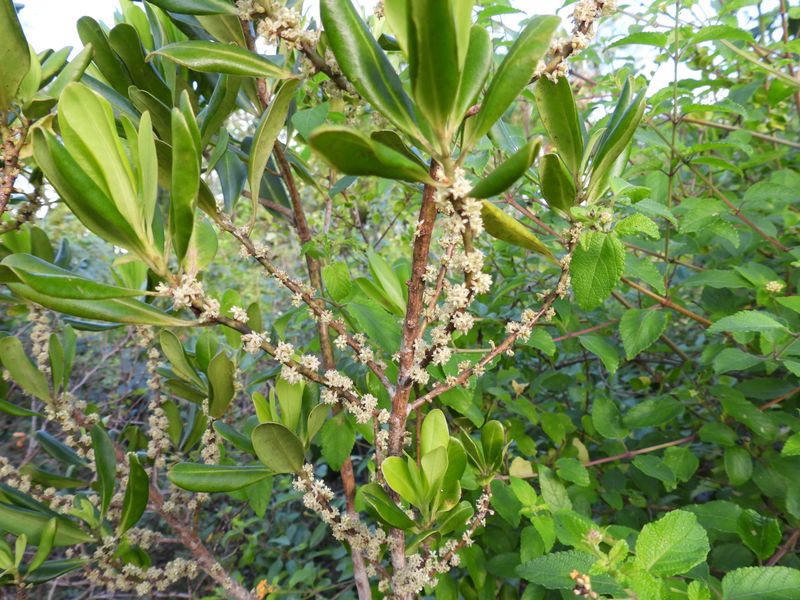
Picture pulling out a glossy invasive hedge and replacing it with something equally green, equally dense, and genuinely native. Myrsine, known botanically as Rapanea punctata or Myrsine cubana depending on the source, fits that vision surprisingly well.
It is an evergreen shrub that UF/IFAS recognizes as a useful native screening plant for warm-region landscapes.
The foliage stays clean and green year-round, giving it the reliable privacy screen quality that makes ligustrums so popular in the first place.
Unlike invasive privets, myrsine does not have a reputation for escaping into natural areas and displacing native vegetation.
That alone makes the swap worthwhile for homeowners who want a tidy green boundary without the ecological cost.
Your Florida Garden Changes Every Week. Your Plan Should Too.
Gardening in Florida changes quickly throughout the season. Every Friday you’ll receive a simple weekly plan showing exactly what to plant, prune, fertilize, harvest, and protect so you never miss the right timing.
Myrsine grows upright and can be shaped lightly, though it looks best with minimal shearing compared to a hard-clipped formal hedge.
Mature height varies, so check your source for the specific cultivar or regional ecotype available at your local native nursery.
Spacing and pruning decisions should reflect the mature size your plants are expected to reach.
Sun exposure, soil moisture, and drainage all affect how well myrsine establishes. Southern regions and warm coastal yards tend to be the best fit.
Confirm regional suitability with your county Extension office, and source plants from a reputable native nursery to make sure you get the right species.
3. Use Marlberry Where Shade Makes Ligustrum Seedlings Feel At Home
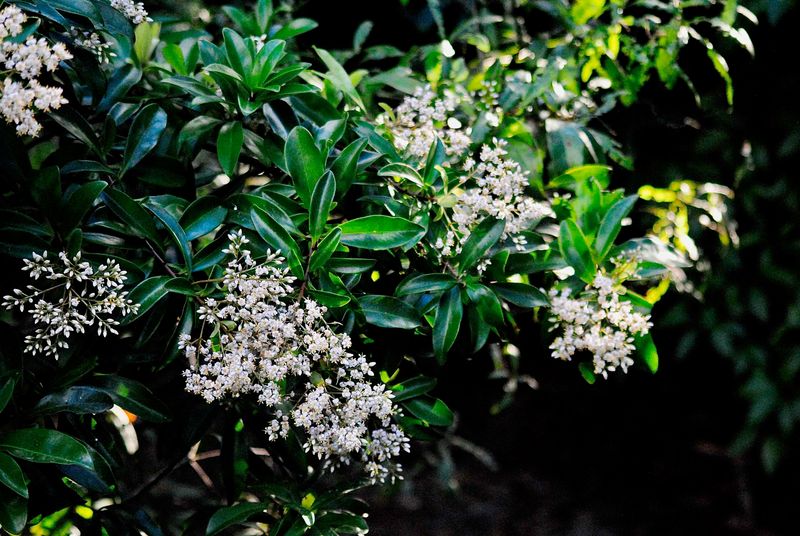
Seedlings keep popping up under the oak tree, along the shaded fence line, and in the corner beds where nothing else seems to want to grow.
That is exactly the kind of spot where invasive ligustrum thrives, and it is also where marlberry earns its place as a native alternative.
Marlberry, or Ardisia escallonioides, is a native shrub or small tree suited to shaded and partly shaded conditions in warm regions of the state.
UF/IFAS notes that marlberry produces glossy foliage, small white flowers, and dark berries that wildlife find attractive. That combination gives it real ecological value as a replacement in understory beds where a ligustrum was doing the work before.
The layered, lush appearance fits naturally into shaded garden spaces without looking forced or out of place.
Marlberry is not a statewide replacement. It is best suited to warmer southern regions and protected sites that match its natural range.
Attempting to grow it in colder northern regions or exposed inland sites is a gamble not worth taking. Check cold hardiness data from UF/IFAS or your county Extension office first.
After removing invasive shrubs from a shaded understory area, give the soil time to recover before planting. Marlberry establishes best with adequate moisture and some protection from harsh afternoon sun.
Source plants locally to improve establishment success and match the regional ecotype to your specific conditions.
4. Plant Wild Coffee For A Glossy Understory Replacement
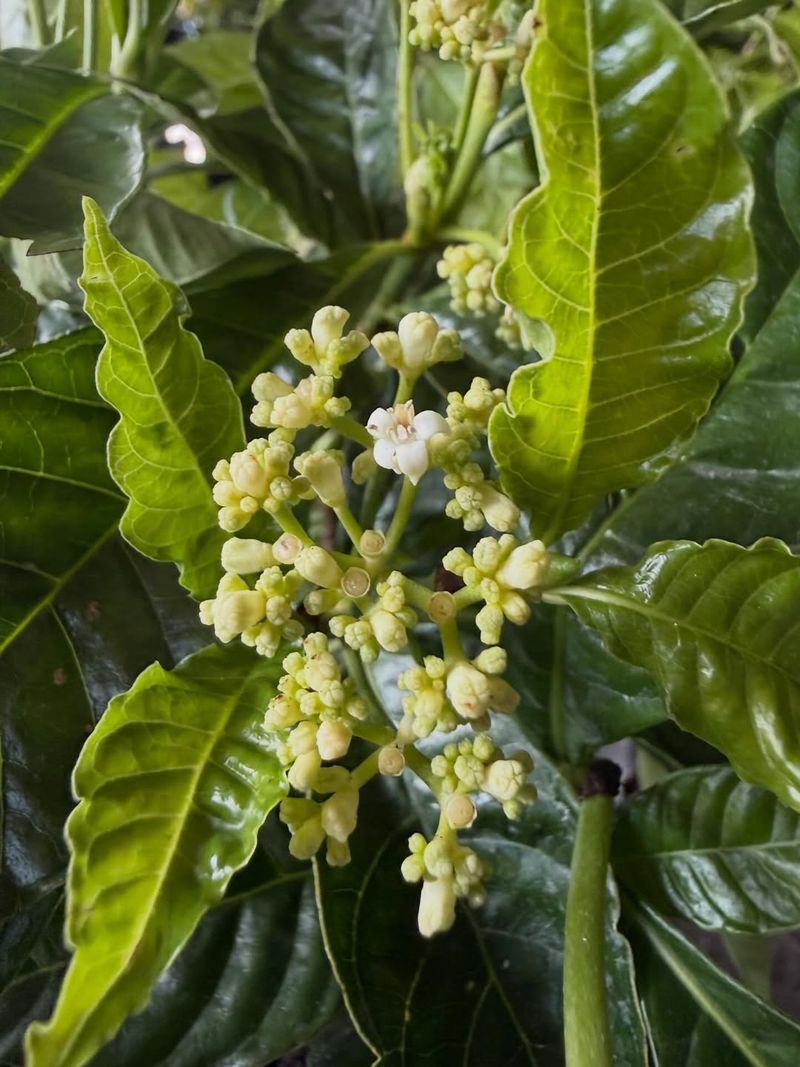
A shady side yard with bare soil and pulled-out ligustrum stumps has a lot of potential, especially with the right native shrub waiting to fill it.
Wild coffee, known botanically as Psychotria nervosa, brings glossy, deeply veined foliage and bright red berries to shaded beds.
It works well where a layered, intentional look is the goal. The rich texture of its leaves makes it one of the more visually striking understory options available to warm-region gardeners.
According to UF/IFAS, wild coffee produces small white flowers followed by the red fruit that gives it its common name. Birds are drawn to those berries, making it a genuine wildlife plant in addition to a good-looking landscape shrub.
The shade tolerance is real, which makes it a strong candidate for spots under tree canopies where few other shrubs perform well.
Wild coffee is better suited to warmer southern regions and protected microclimates than to colder or more exposed parts of the state. Do not present it as a cold-hardy statewide hedge or a full-sun driveway screen, because the sources do not support that use.
Check with your county Extension office or UF/IFAS EDIS for specific cold hardiness and sun exposure guidance before purchasing plants.
Spacing should reflect the mature size of the plants, typically three to six feet apart depending on the effect you want.
Give newly planted wild coffee consistent moisture during establishment, and avoid heavy foot traffic near the root zone while it settles in.
5. Choose Fiddlewood For A Fragrant Native Screen With More Character
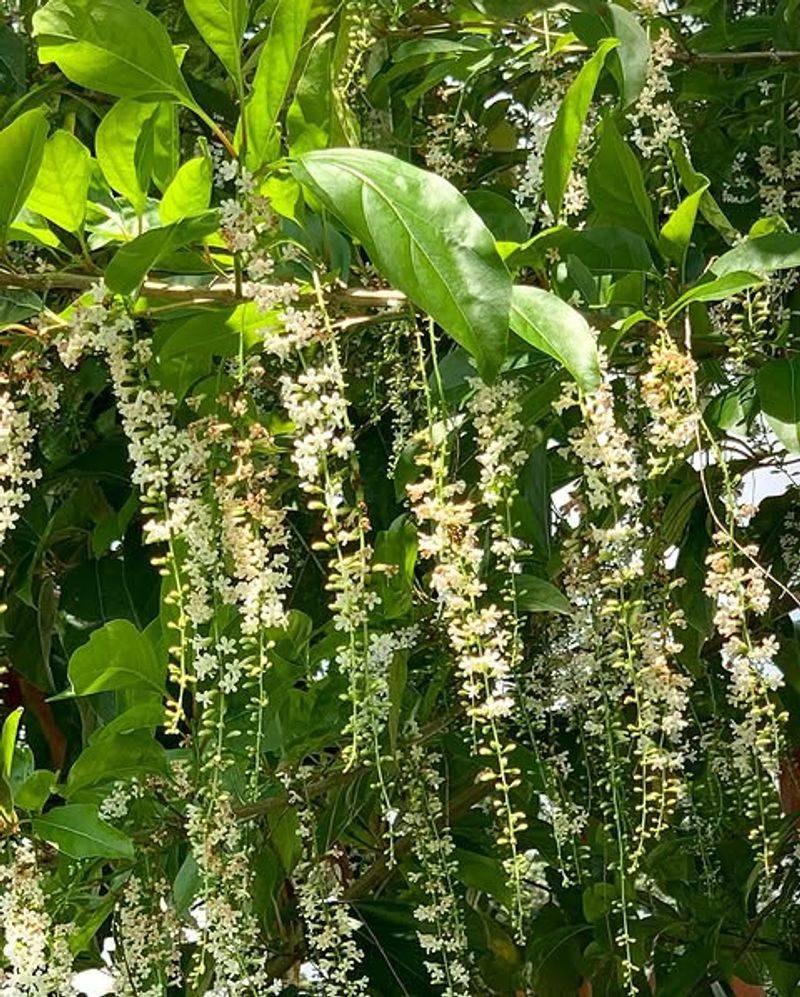
A flat green wall of clipped ligustrum does the privacy job, but it does not do much else. Fiddlewood, or Citharexylum spinosum, offers a native screen with fragrant white flowers, glossy foliage, and wildlife value that a sheared hedge simply cannot match.
The scent of fiddlewood flowers on a warm evening is reason enough to give it a spot along a roomy fence line or property edge.
UF/IFAS notes that fiddlewood can grow as a large shrub or small tree, which means it needs more room than a compact hedge plant.
Planting it too close to a narrow driveway, walkway, or structure without accounting for mature size is the most common mistake homeowners make with this species.
Give it space, and it rewards you generously.
Fiddlewood is better suited to warmer regions and protected coastal sites. Colder inland areas in northern regions carry frost risk that can set the plant back significantly.
Confirm cold hardiness with your county Extension office before committing to a full fence-line planting. The Florida Invasive Species Council does not list fiddlewood as a concern, which is a meaningful contrast to the ligustrums it can replace.
Birds and butterflies are drawn to fiddlewood, adding movement and life to a landscape that a clipped privet hedge would never provide.
For an informal or semi-formal mixed native screen, fiddlewood fits beautifully when the site has the room and the warmth to support it well.
6. Use Necklace Pod Where Sunny Coastal Hedges Need Color
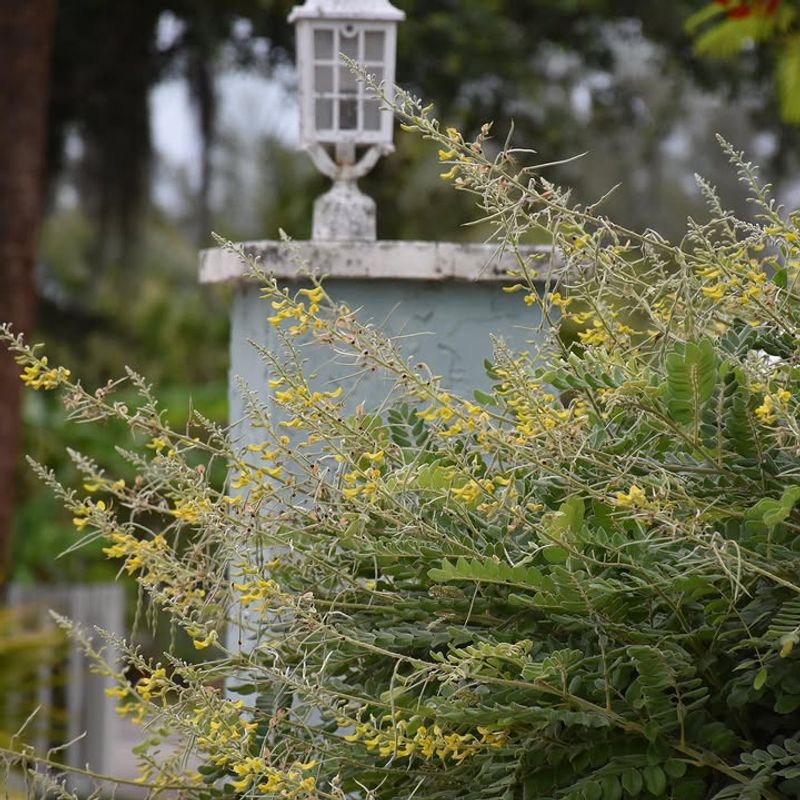
A sunny coastal hedge line stripped of invasive ligustrum can look bare and uninspiring for months. That is why necklace pod deserves serious consideration as a colorful native replacement.
Sophora tomentosa, commonly called necklace pod, brings bold yellow flower spikes to warm coastal landscapes. Most other hedge shrubs would struggle there with salt, heat, and sandy soil.
According to UF/IFAS, necklace pod handles salt spray and drought reasonably well. That makes it a practical fit for exposed coastal sites that are tough on less tolerant plants.
The flowers attract butterflies, including the cloudless sulphur, which adds real ecological value to a fence line or mixed native border. That kind of wildlife interaction is something invasive ligustrum never delivers in a meaningful way.
Necklace pod is not a tight, formal hedge plant. Expecting it to behave like a clipped ligustrum wall will lead to frustration.
It works better as part of a loose, informal screen or a mixed native border. In that setting, its flowering branches can spread naturally and attract pollinators without constant shearing fighting its growth habit.
Regional fit matters here. Necklace pod is best suited to warm coastal areas in southern and central regions.
Colder inland sites in northern regions are not ideal. Check with your local Extension office about cold tolerance and spacing before planting a full run along a property line.
Sourcing plants from a reputable native nursery helps ensure you get the coastal-adapted ecotype.
7. Plant Rouge Plant For A Softer Shrub Under Tree Canopies
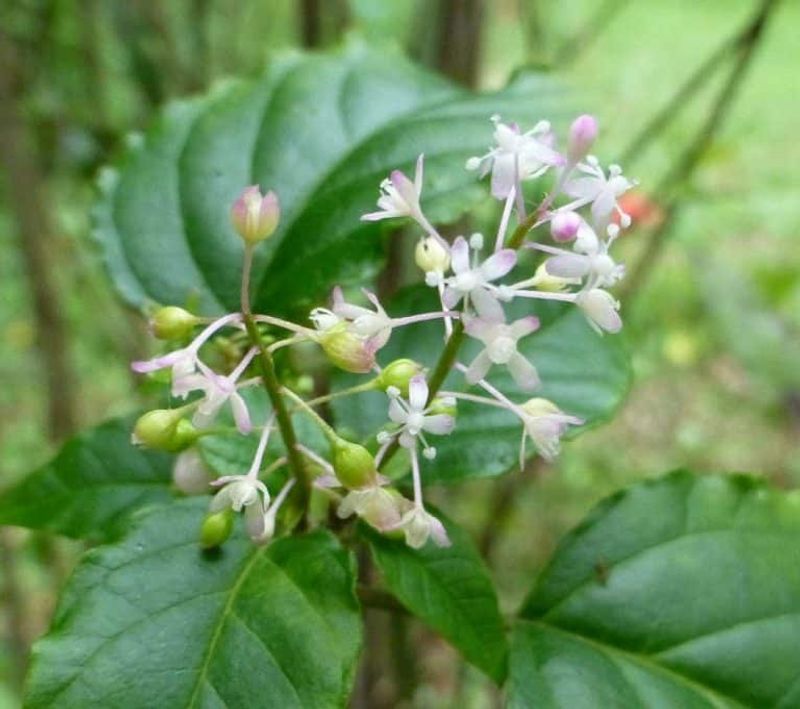
There is a quiet shaded corner in many yards where a hard-sheared hedge never looked right and an invasive privet just kept sending up seedlings. Rouge plant, or Rivina humilis, belongs in that kind of space.
Smaller and softer than ligustrum, it fits naturally into layered plantings, woodland edges, and naturalized understory beds. It works especially well where a gentler native presence is exactly what the spot needs.
UF/IFAS recognizes rouge plant as a native shrub that produces small white flowers and clusters of bright red berries that birds find appealing.
That berry production makes it a genuinely useful wildlife plant in shaded understory beds, not just a filler shrub chosen because nothing else would grow there.
The plant has a relaxed, low-growing habit that layers well with taller native understory trees above it.
Rouge plant is best suited to warmer regions and protected shaded sites. It is not a tall privacy wall replacement and should not be expected to function as a dense formal screen.
Its value is in adding native structure, color, and wildlife habitat to the lower layer of a shaded planting, especially after invasive shrubs have been cleared out.
Water newly planted rouge plant consistently through the first growing season. Once established, it is reasonably low-maintenance in the right site.
Check with your county Extension office for specific cold hardiness guidance if you are in a region that sees occasional frost. Cold exposure can affect how well it performs over time.
8. Choose Cocoplum For Dense Privacy In Southern Regions
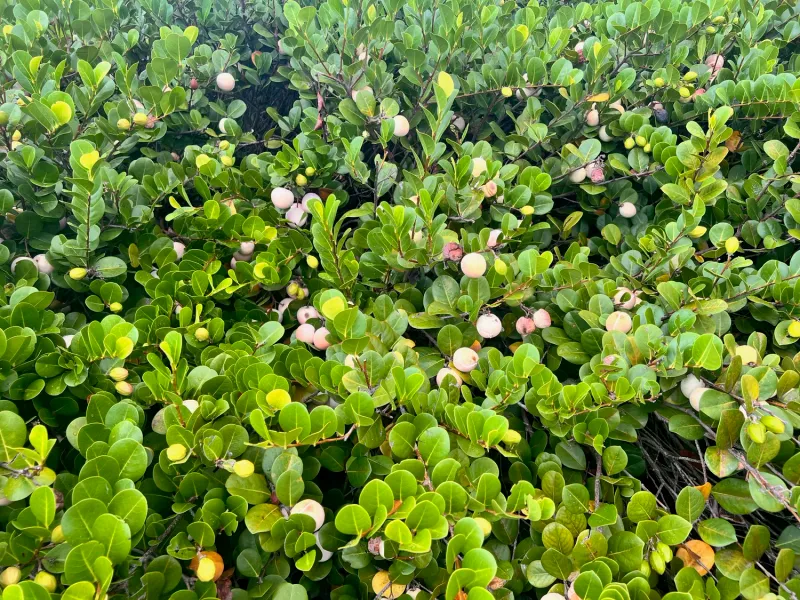
A warm coastal yard with a freshly removed problem hedge and a need for real privacy is exactly the situation cocoplum handles best. Chrysobalanus icaco, commonly called cocoplum, is one of the most reliable native hedging options for southern regions.
Its glossy foliage and dense branching habit can form a thick, formal-looking screen that genuinely competes with what ligustrum once provided.
According to UF/IFAS, cocoplum tolerates salt, wet soil, and the heat that comes with coastal southern landscapes.
It can be shaped into a formal hedge or allowed to grow as a more relaxed privacy screen depending on how much maintenance you want to commit to.
The edible fruit it produces adds an unexpected bonus for homeowners who enjoy foraging from their own yard.
Cold sensitivity is the most important regional limitation to understand. Cocoplum is a warm-region and warm-coastal plant.
Attempting to grow it in northern regions or areas with regular hard freezes is a risk that often ends in disappointment. Check UF/IFAS cold hardiness data first.
Confirm suitability with your county Extension office before planting a full hedge run.
Spacing cocoplum plants too closely near a narrow driveway or walkway creates maintenance problems as the hedge fills in and matures.
Allow enough room for the mature width your plants are expected to reach, and plan for periodic shaping if a formal clipped look is the goal.
Source plants from a local native nursery to get the right ecotype for your specific region and site conditions.