These 9 Oregon Container Plants Need Repotting Before Summer Stress Sets In
Container plants can look perfectly fine in spring, then struggle once hotter days arrive. Pots dry out faster than garden beds, and crowded roots can make that problem worse.
Oregon’s summer shift can be especially rough on plants that spent months growing in the same tight space. Repotting before the heat builds gives them a better chance to settle in.
It also helps fresh soil hold moisture more evenly. The signs are not always dramatic at first.
A plant may need water too often or stop putting on strong new growth. That is easy to miss until summer stress shows up.
Give the right container plants more room now, and they can reward you with steadier growth when the season gets tougher.
1. Tomatoes
Few things are more satisfying than picking a ripe tomato you grew yourself. But cramped roots in a small pot can slow everything down before summer even starts.
Tomatoes are heavy feeders, and they need plenty of space to push out strong growth.
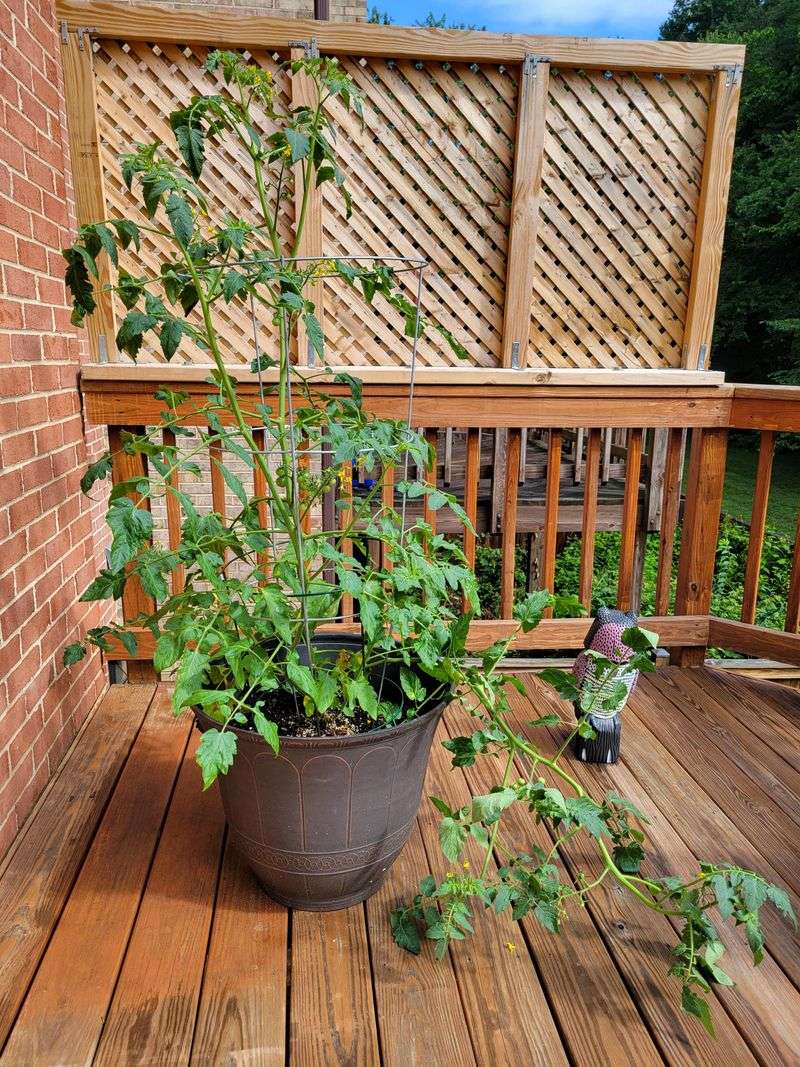
When roots start circling the bottom of the pot or poking out of drainage holes, that is your sign to move up a size. For most tomato varieties, a container that holds at least five gallons works best.
Larger determinate types do better in ten to fifteen gallons.
Fresh potting mix matters just as much as pot size. Use a high-quality mix that drains well but still holds moisture.
Add a slow-release fertilizer into the soil before planting so your tomato has nutrients ready from day one.
Repotting in late spring, before the heat arrives, gives roots time to settle in without stress. Water deeply after repotting and keep the soil consistently moist during the first week.
Avoid letting the pot dry out completely, especially once flowering begins.
Staking or caging your tomato at repotting time is also smart. It is much easier to set up support before the plant gets big and bushy.
A little planning now means fewer problems and a much better harvest when summer rolls in.
2. Peppers
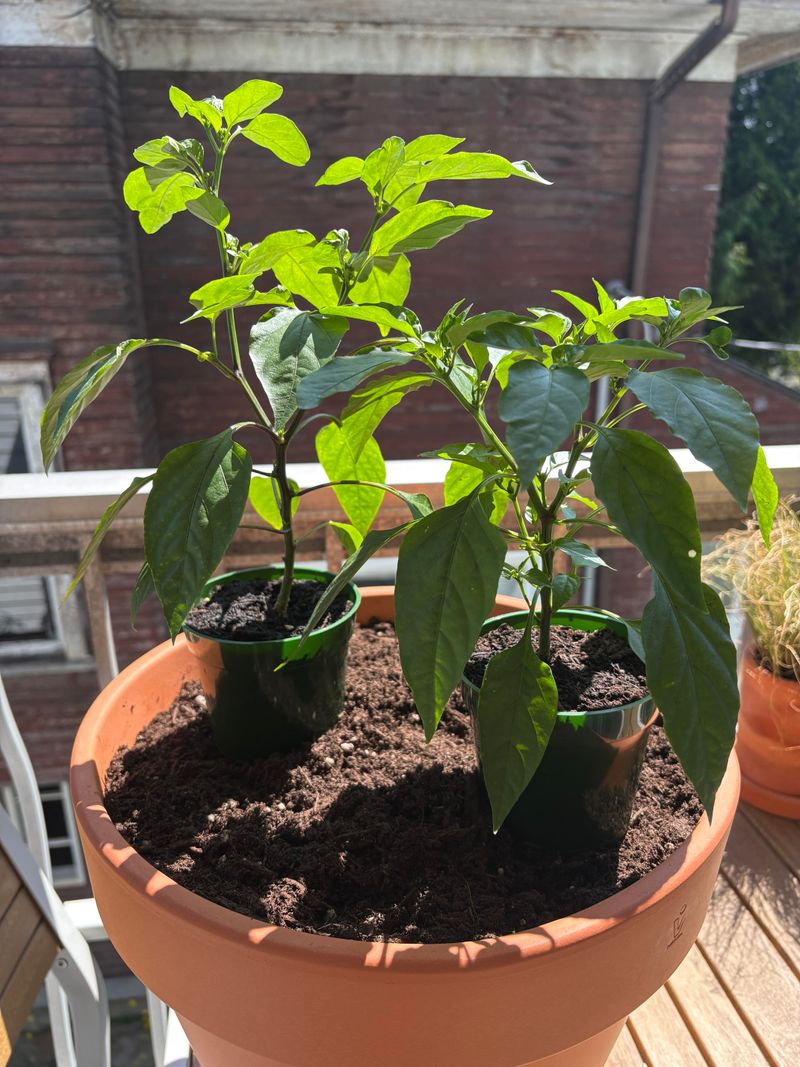
Peppers are sun lovers, and they absolutely thrive in containers when given enough room. The problem is that most gardeners start them in small nursery pots and forget to move them up before warm weather hits.
A root-bound pepper plant will struggle to set fruit no matter how much sun it gets.
Sweet bells and hot varieties alike need a pot that is at least twelve inches wide and deep. Anything smaller will limit root expansion and reduce your yield.
Moving them into a larger container now gives roots space to spread before the plant puts energy into flowering.
Use a well-draining potting mix and blend in a balanced fertilizer before you add your plant. Peppers prefer slightly acidic soil, so a mix formulated for vegetables works well.
Avoid using heavy garden soil in containers because it compacts and restricts drainage.
After repotting, place your pepper in the sunniest spot available. This state gets enough summer sunshine to keep peppers very happy once they are properly settled.
Your Oregon Garden Changes Every Week. Your Plan Should Too.
Gardening in Oregon changes quickly throughout the season. Every Friday you’ll receive a simple weekly plan showing exactly what to plant, prune, fertilize, harvest, and protect so you never miss the right timing.
Give them at least six to eight hours of direct light each day. Water consistently but do not overdo it. Peppers like moisture but hate soggy roots.
Check the soil an inch down before watering, and always make sure your container has drainage holes at the bottom.
3. Basil
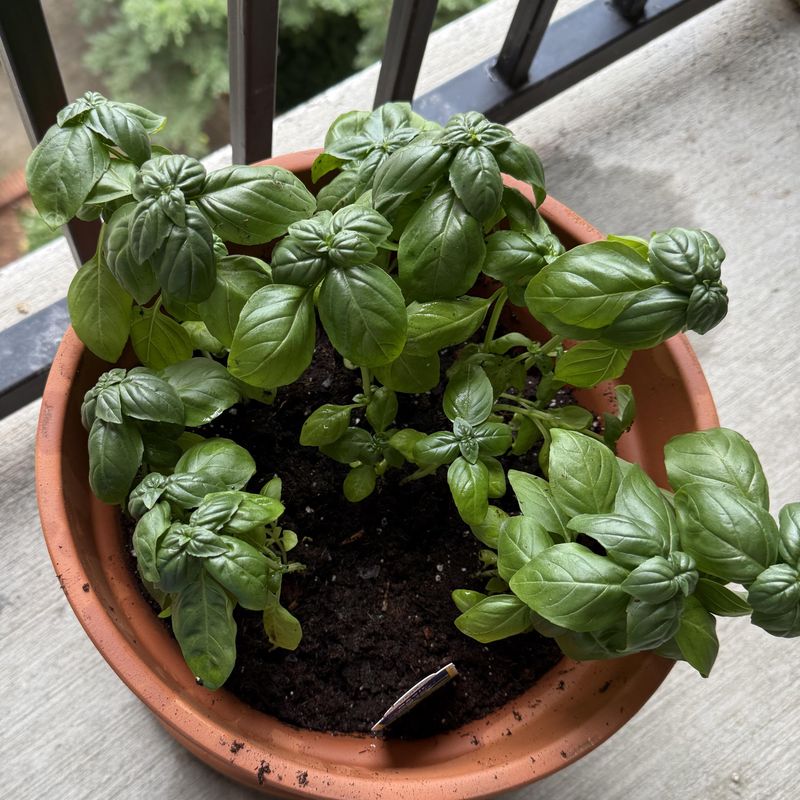
This is one of those plants that seems simple but has a few strong opinions about where it lives. It wants warmth, it wants sun, and it really wants room to breathe.
A cramped pot in cool spring soil is one of the fastest ways to stunt this herb before summer cooking season even starts.
Most basil bought from a grocery store or nursery comes in a tiny plastic pot with roots that are already tangled. Move it into something at least six to eight inches wide as soon as you bring it home.
This one small step makes a dramatic difference in how quickly it grows.
Fill the new pot with a light, well-draining potting mix. Basil does not like heavy, wet soil.
A mix made for herbs or vegetables works well. Add a little compost to give it an early nutrient boost without overwhelming its roots.
Keep basil in a warm, sunny spot. It needs at least six hours of direct sunlight each day.
On the coast or in wetter parts of the state, a south-facing wall or window can help trap extra warmth.
Pinch off flower buds as soon as they appear. This keeps the plant bushy and productive.
Once basil flowers, the leaves lose some of their flavor, so stay on top of it throughout the summer months.
4. Strawberries
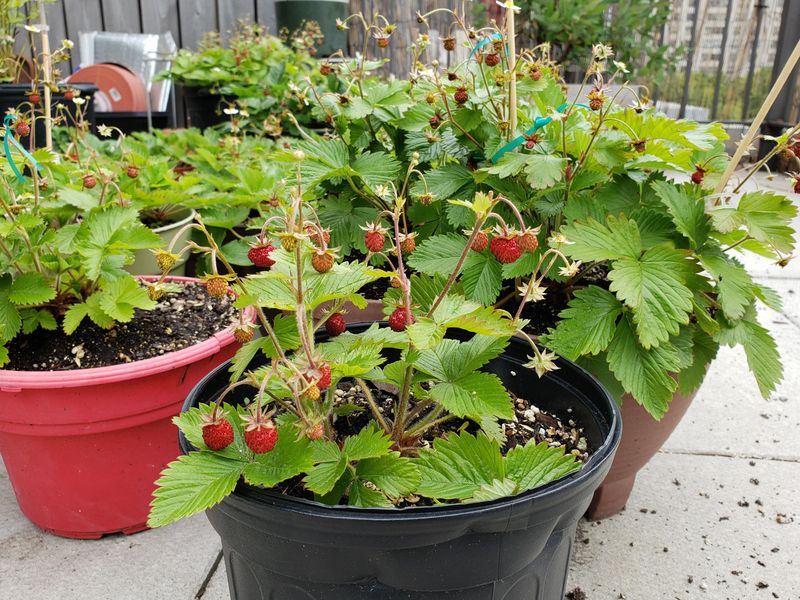
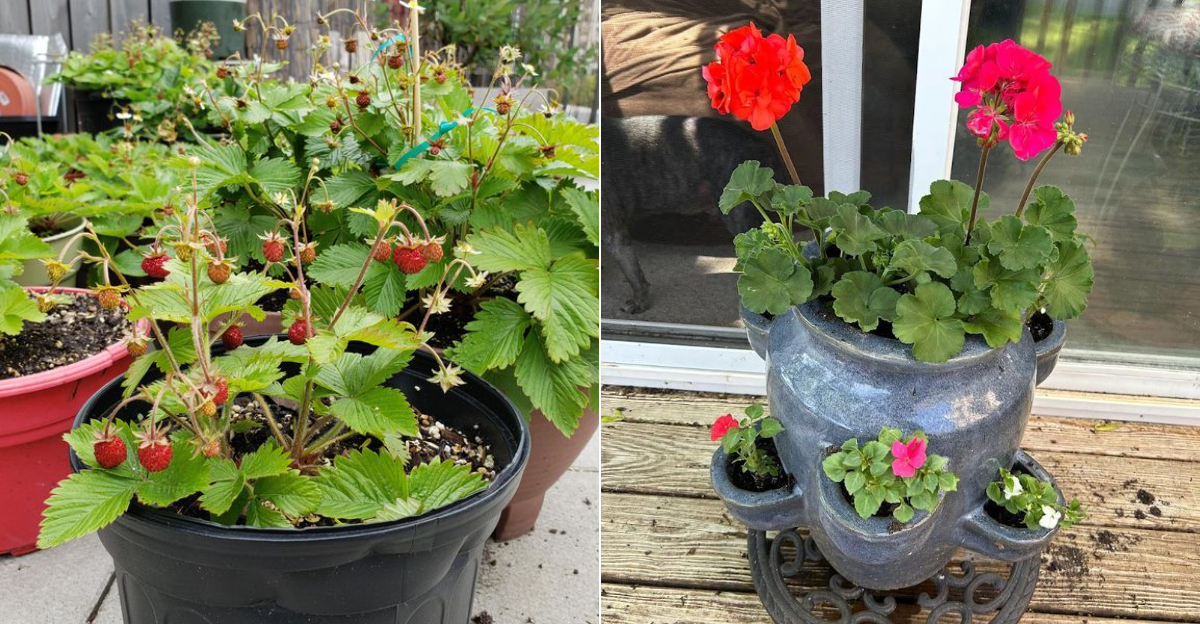
Strawberries in containers are one of the most rewarding things you can grow on a small patio or balcony.
They do not need much horizontal space, but they do need fresh soil and enough room for their roots to spread.
After a full growing season, the soil in a strawberry pot gets depleted fast.
Spring is the best time to refresh your strawberry setup. Lift the plants out carefully and shake off as much old soil as you can.
Trim any dead or damaged roots before placing them in their new container with fresh potting mix.
A wide, shallow pot works better than a deep one for strawberries. Their root systems spread outward more than downward.
Hanging baskets and strawberry towers are fun options, but make sure they hold enough soil to retain moisture between waterings.
Mix a slow-release berry fertilizer into the fresh soil before replanting. Strawberries are heavy feeders during the fruiting season, and they will drain nutrients from the soil quickly.
A good fertilizer foundation keeps them producing longer into summer.
After repotting, water well and place the container in a spot with at least six hours of sun. Runners will start appearing once the plant settles in.
You can trim them off to keep the plant focused on fruit, or pot them up to grow new plants for next year.
5. Lettuce Bowls
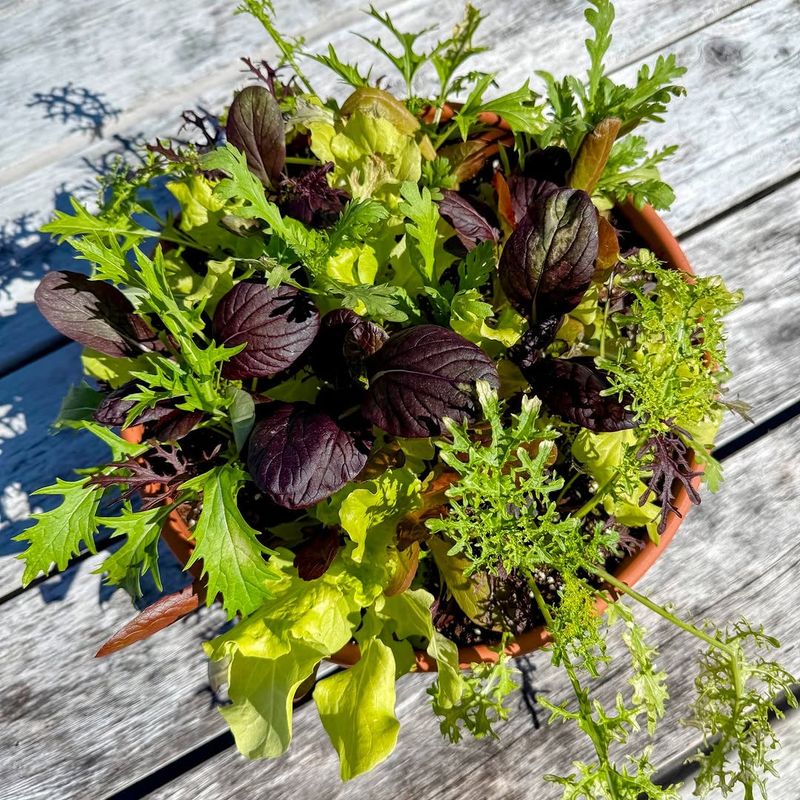
Lettuce is one of the easiest crops to grow in containers, and it does especially well in our mild spring climate.
But when the same bowl gets reused season after season without fresh soil, growth slows down and the plants tend to bolt faster than usual in summer heat.
Refreshing your lettuce bowl before summer arrives is a simple task that pays off quickly. Empty out the old soil, rinse the container, and refill it with a rich, moisture-retaining potting mix.
Lettuce has shallow roots, so almost any wide, low container works perfectly.
Mix in a nitrogen-rich fertilizer or a bit of worm castings before planting. Lettuce needs nitrogen to push out those big, leafy greens.
Without it, leaves can look pale and growth will stall even in good conditions.
Choose heat-tolerant varieties for summer bowls. Varieties like Buttercrunch, Black Seeded Simpson, or Oak Leaf hold up better in warmer weather.
Place the bowl in a spot with morning sun and afternoon shade to slow down bolting.
Water lettuce bowls consistently since shallow soil dries out quickly. Check the soil daily during warm spells.
Mulching the top of the container with a thin layer of straw can help retain moisture and keep roots cooler as temperatures climb through the season.
6. Hanging Fuchsias
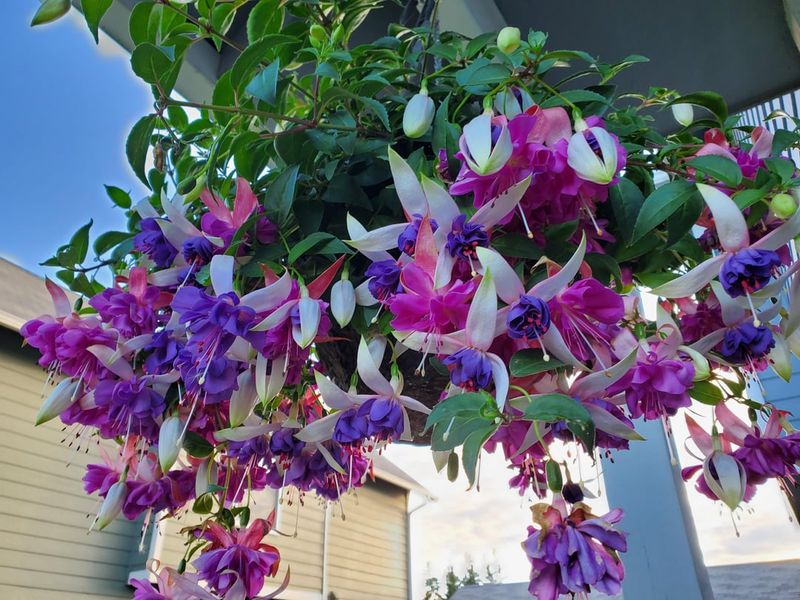
There is something almost magical about a full, blooming fuchsia basket swaying on a covered porch.
This state is actually one of the best places in the country to grow fuchsias because of the cool, moist climate they love.
But they need a little help heading into summer to keep that magic going.
Hanging baskets dry out incredibly fast compared to ground containers. As summer heat builds, a fuchsia can need watering twice a day.
If the basket is also root-bound, the soil holds even less water, and the plant wilts within hours of the sun hitting it.
Repot your fuchsia into a larger hanging basket before summer. Remove the plant carefully, loosen the roots, and place it in a basket with fresh, moisture-retaining mix.
A coconut coir liner helps hold water longer than traditional plastic liners.
Add a water-retaining gel or crystals to the potting mix. This simple addition can cut your watering frequency and protect the plant during unexpected heat waves.
Fuchsias are sensitive to heat stress, and even one bad afternoon can set them back weeks.
Feed with a liquid fertilizer high in potassium once flowering begins. This encourages more blooms rather than just leafy growth.
Deadhead spent flowers regularly to keep the basket looking full and encourage continuous blooming throughout the summer season.
7. Geraniums
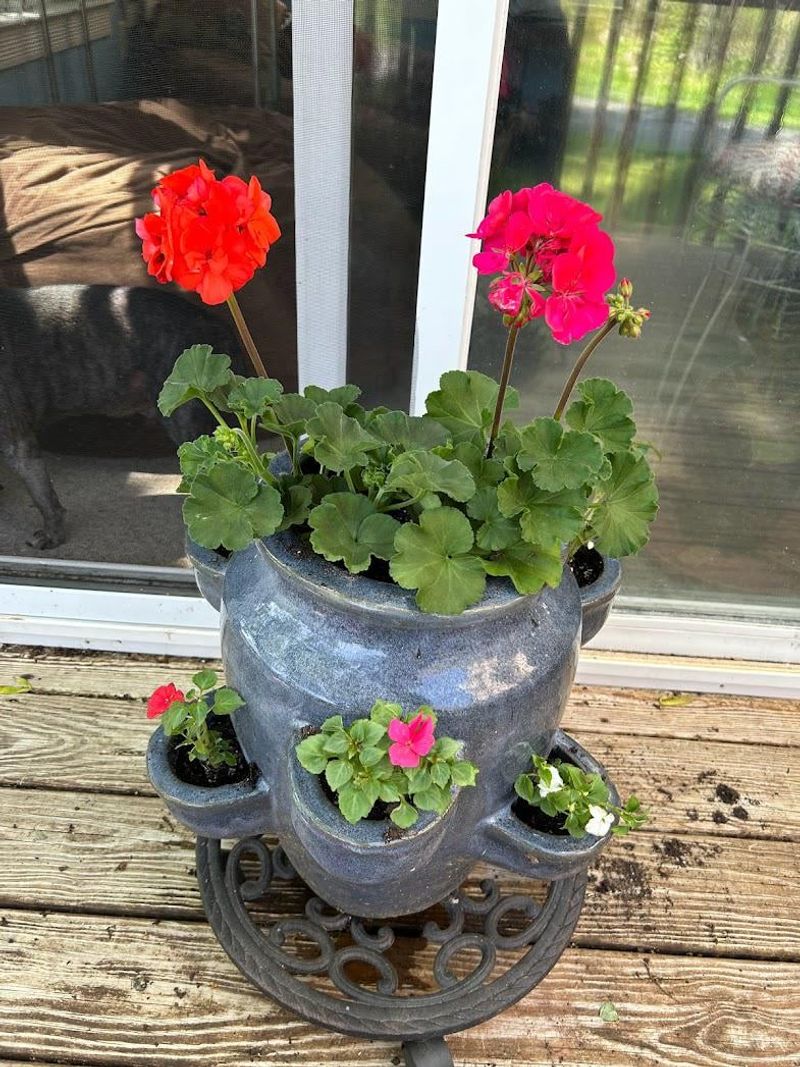
These flowers have been a patio favorite for generations, and it is easy to see why. They bloom reliably, handle dry spells better than most flowering plants, and look stunning in terracotta pots lined up on a sunny step.
But even tough plants like these need a refresh before summer pushes them to their limits.
If your geraniums overwintered indoors or in a sheltered spot, their soil is likely exhausted. Old potting mix compacts over time and loses its ability to drain properly.
Compacted soil holds too much moisture around the roots, which can cause problems just when you want your plant to thrive.
Move your geraniums into a pot one size up from what they were in. A container that is about ten to twelve inches wide gives them room without being so large that the excess soil stays wet.
Use a fast-draining potting mix made for containers.
Work a balanced, slow-release fertilizer into the fresh soil before planting. Geraniums do not need heavy feeding, but a steady supply of nutrients keeps the blooms coming all season long.
Avoid high-nitrogen formulas, which push leafy growth at the expense of flowers. Place repotted geraniums in full sun. They love at least six hours of direct light each day.
Once settled, they are relatively low-maintenance and reward you with color from late spring all the way through fall.
8. Petunias
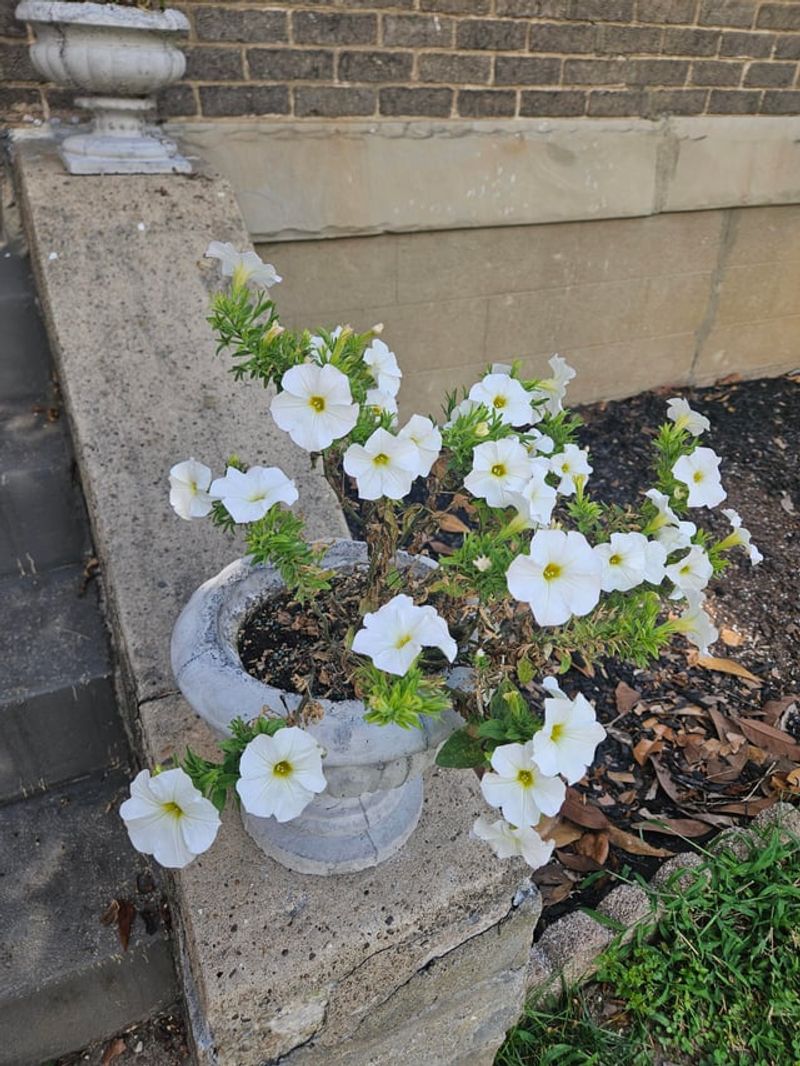
Wave petunias are one of the most popular container flowers for a reason. They spread fast, bloom nonstop, and fill a pot with color in just a few weeks.
But they are also heavy feeders that burn through soil nutrients quickly, making repotting before summer a smart move.
Most petunias sold at nurseries in spring come in small four-inch or six-inch pots. Transplanting them into a larger container right away gives their roots room to run.
A wide, deep pot allows the trailing stems to cascade beautifully over the sides as the plant grows.
Use a high-quality potting mix with added perlite for drainage. Petunias hate sitting in wet soil and can develop root rot if drainage is poor.
Make sure every container you use has at least one good-sized drainage hole at the bottom.
Mix a slow-release fertilizer into the soil at planting time. Then follow up every two weeks with a liquid bloom booster once the plant is actively flowering.
This combination keeps petunias looking full and vibrant rather than sparse and stretched out.
Deadheading spent blooms encourages the plant to keep producing flowers. Some wave varieties are self-cleaning, but most benefit from a light trim every few weeks.
Cutting them back by about one-third midseason also helps refresh leggy plants and push out a fresh round of blooms.
9. Rosemary
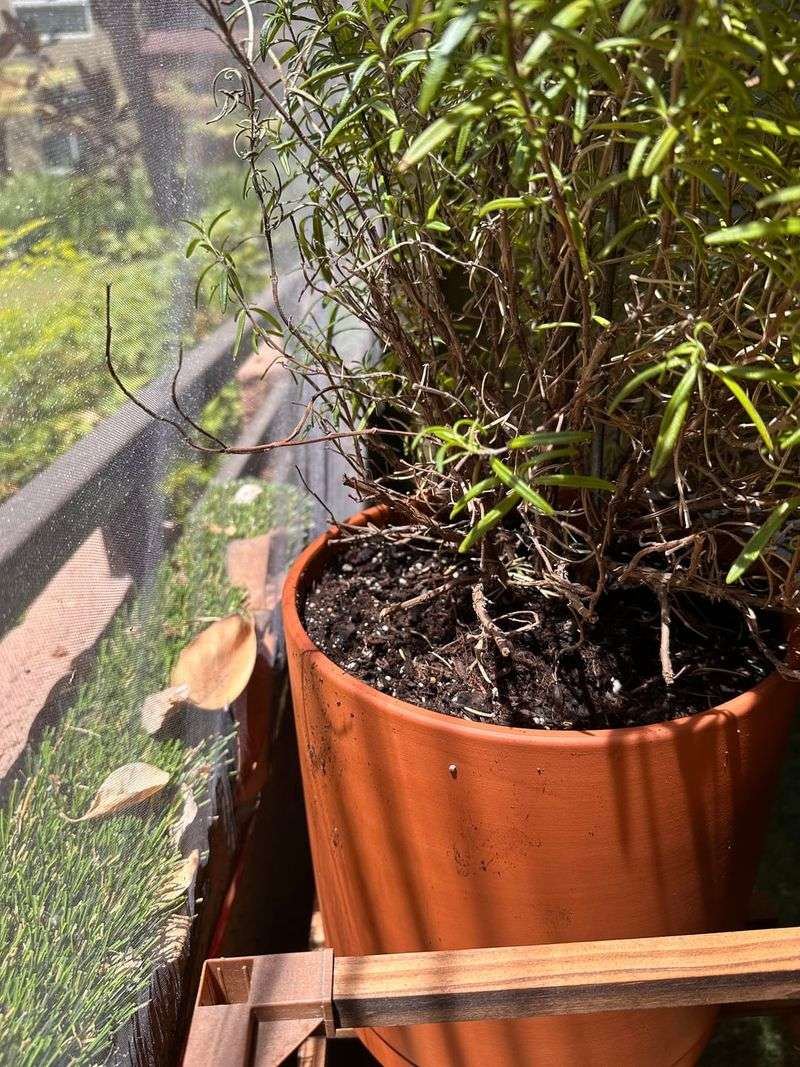
Rosemary is one of the toughest herbs you can grow, but tough does not mean it never needs attention.
After a year or two in the same container, rosemary roots can fill every inch of the pot, leaving no room for water or nutrients to reach where they are needed most.
A root-bound rosemary plant will start showing signs of stress before summer even peaks. Leaves may yellow at the base, growth slows down, and the plant dries out almost immediately after watering.
These are all signs that it is time for a bigger home. Choose a terracotta pot that is two to three inches wider than the current one.
Terracotta breathes well, which is perfect for rosemary since this herb strongly prefers dry conditions over wet ones.
Never use a container without drainage holes for this plant.
Fill the new pot with a well-draining mix designed for herbs or succulents. You can also blend regular potting mix with coarse sand or perlite to improve drainage.
Rosemary roots need air as much as they need moisture. After repotting, hold off on watering for a day or two to let any disturbed roots settle.
Then water deeply and allow the soil to dry out almost completely before watering again.
In this state, summer fog and humidity can trick you into thinking the plant needs less water than it actually does between dry spells.