These Are The Signs Your Ohio Boxwood Has Blight And What To Do Immediately
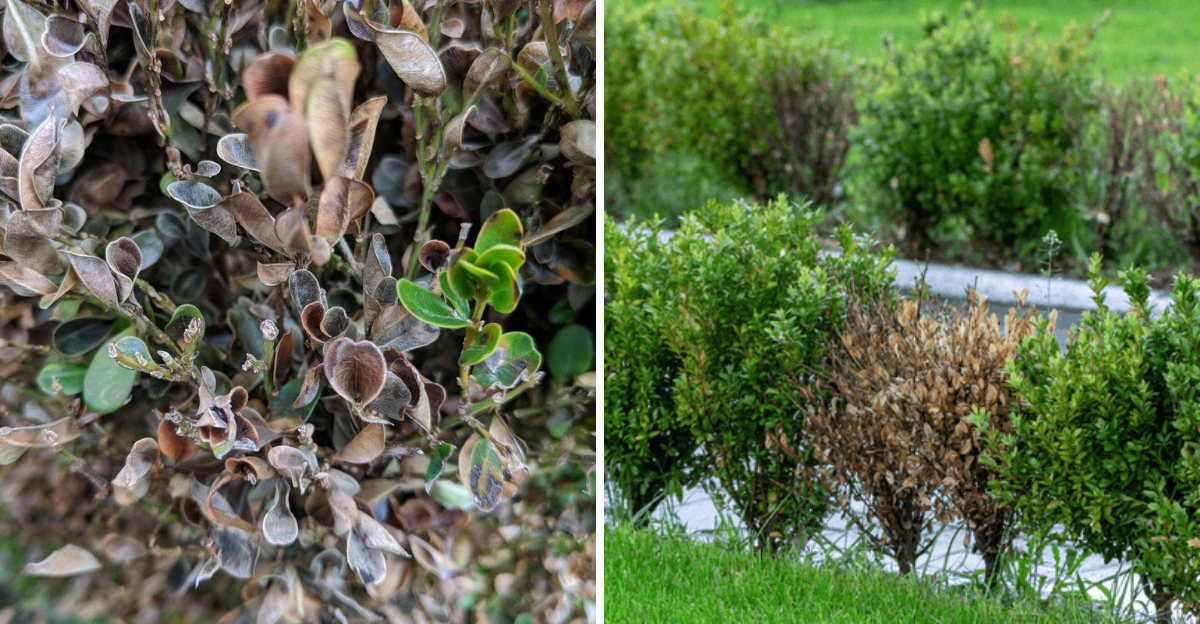
Your boxwood looked fine last week. Now something is clearly wrong and it is moving fast.
Brown patches spreading across branches that were perfectly healthy a few days ago. Leaves dropping when nothing about your care routine changed.
That uneasy feeling that this is not going to fix itself. Boxwood blight is showing up in more Ohio yards every season and the tricky part is how much it looks like other common problems at first glance.
Drought stress. Winter damage.
A watering issue. Most people spend a week or two trying fixes that do not work while the real problem keeps spreading through the plant.
Time is the one thing boxwood blight does not give you. So before you try another round of guesswork, here is exactly what to look for and what to do the moment you figure out what you are dealing with.
1. Dark Leaf Spots Signal The First Boxwood Blight Warning
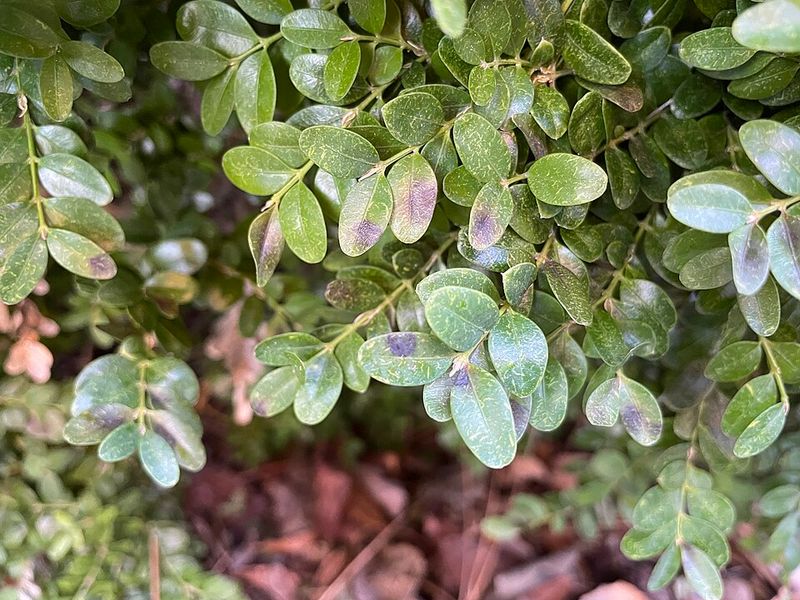
Spotting something wrong on your boxwood leaves is usually the first clue that a bigger problem may be developing.
Boxwood blight can produce dark brown to black circular spots on leaves, sometimes with lighter tan or straw-colored centers depending on how far along the infection is.
These spots may appear first on lower or inner foliage where air circulation is poor and humidity lingers longer after rain.
Inspect your shrubs carefully by parting the branches and looking deep into the interior canopy. Take clear, close-up photos of the spots before touching anything, and avoid brushing through wet foliage while you check.
Wet leaves can carry spores on your hands, clothing, or tools if a disease is present.
Leaf spots alone do not confirm boxwood blight. Several other problems, including Volutella blight, winter injury, drought stress, and mite damage, can also produce discolored or spotted leaves on boxwoods.
A single symptom is rarely enough to make a firm call. Contact Ohio State University Extension or your local county Extension office if spots appear alongside other warning signs.
Getting a proper diagnosis protects both your plants and your neighbors’ plantings.
2. Rapid Leaf Drop Means The Problem Needs Fast Attention
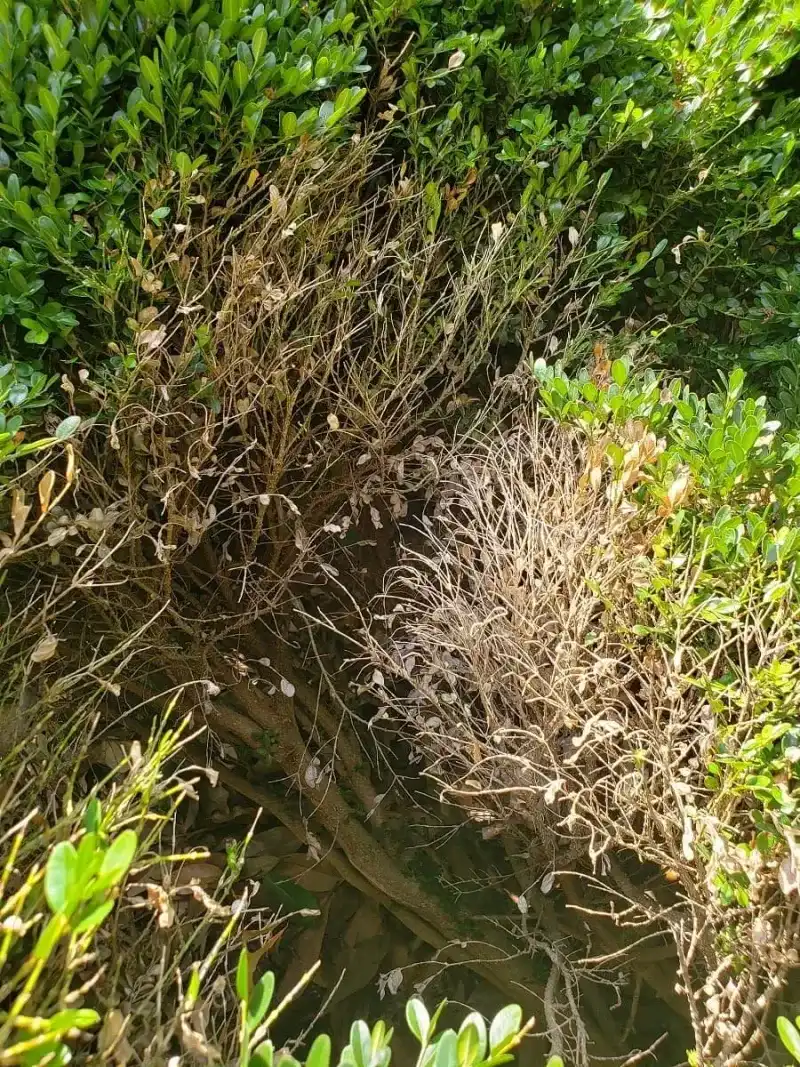
One of the most unsettling features of boxwood blight is how fast a shrub can shed its leaves. A plant that looked full and green last week can appear stripped and bare within days when conditions are right for disease spread.
That speed is what makes this particular problem different from slower-moving issues like winter injury or drought stress.
Sudden leaf drop becomes more alarming when it shows up alongside leaf spots and dark stem streaks. Any one of those symptoms on its own might not mean much, but the combination of all three is a serious warning that deserves immediate attention.
Do not wait and watch for weeks if you see all three signs together.
Resist the urge to rake or blow fallen leaves carelessly through the bed or across the yard. If boxwood blight is present, moving infected debris spreads the problem to clean areas.
Your Ohio Garden Changes Every Week. Your Plan Should Too.
Gardening in Ohio changes quickly throughout the season. Every Friday you’ll receive a simple weekly plan showing exactly what to plant, prune, fertilize, harvest, and protect so you never miss the right timing.
Gently collect fallen leaves using a bag or tarp, and keep people and pets from walking through the area until you know what you are dealing with.
Reach out to Ohio State University Extension for guidance on next steps before doing any major cleanup or pruning work around suspect plants.
3. Black Streaks On Stems Point To A Serious Infection
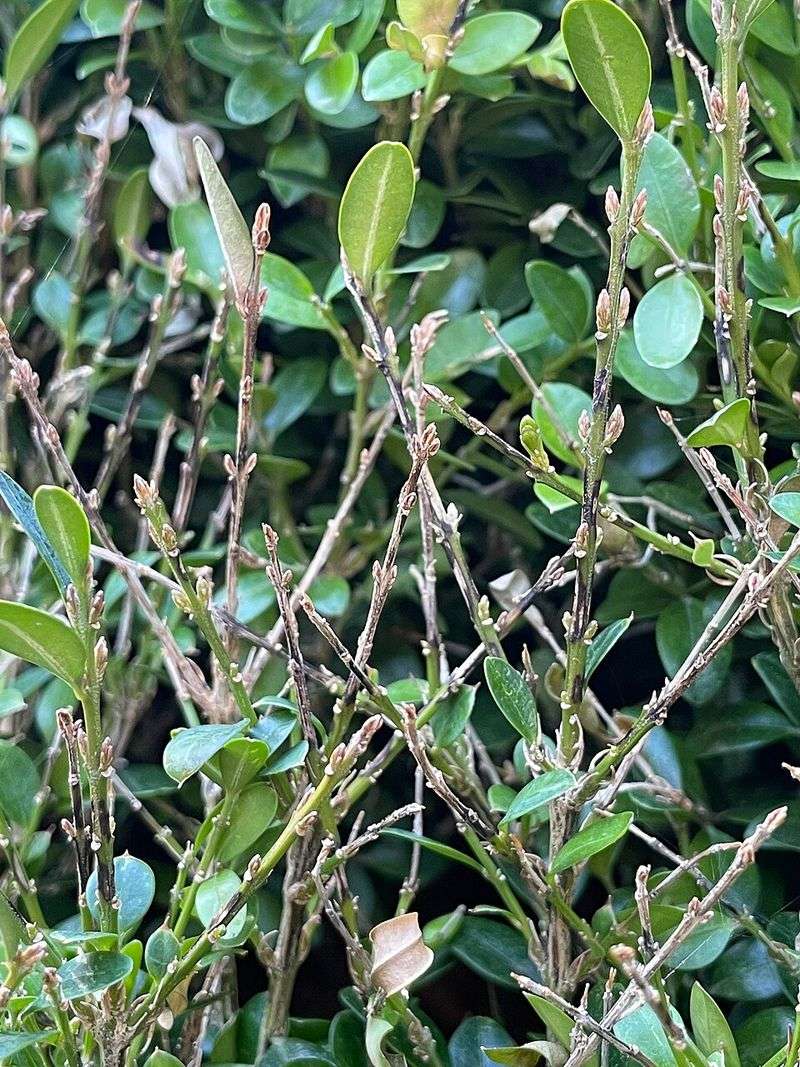
Dark streaking on the green stems of a boxwood is one of the most telling clues associated with boxwood blight, and it is worth knowing how to find it. Part the branches gently and look at the inner stems, especially in areas where leaves have already dropped.
Black or very dark brown streaking along the stem surface is sometimes described as cankers. It is a symptom that sets boxwood blight apart from some of the lookalike problems that affect these shrubs.
Volutella blight is another common boxwood disease in local landscapes. It tends to produce salmon-colored spore masses rather than the dark stem streaking linked to boxwood blight.
That difference matters because the management steps are not always the same. Confusing one for the other can lead to actions that do not address the actual problem.
If you see black stem streaking combined with leaf spots and rapid defoliation, treat the situation seriously and stop all pruning until you can get expert input. Contact Ohio State University Extension, your local county Extension office, or the C.
Wayne Ellett Plant and Pest Diagnostic Clinic at Ohio State for confirmation. Do not move clippings or suspect plant material to other parts of the property while waiting for a diagnosis.
4. Bare Lower Branches Can Reveal Blight Moving Through The Shrub
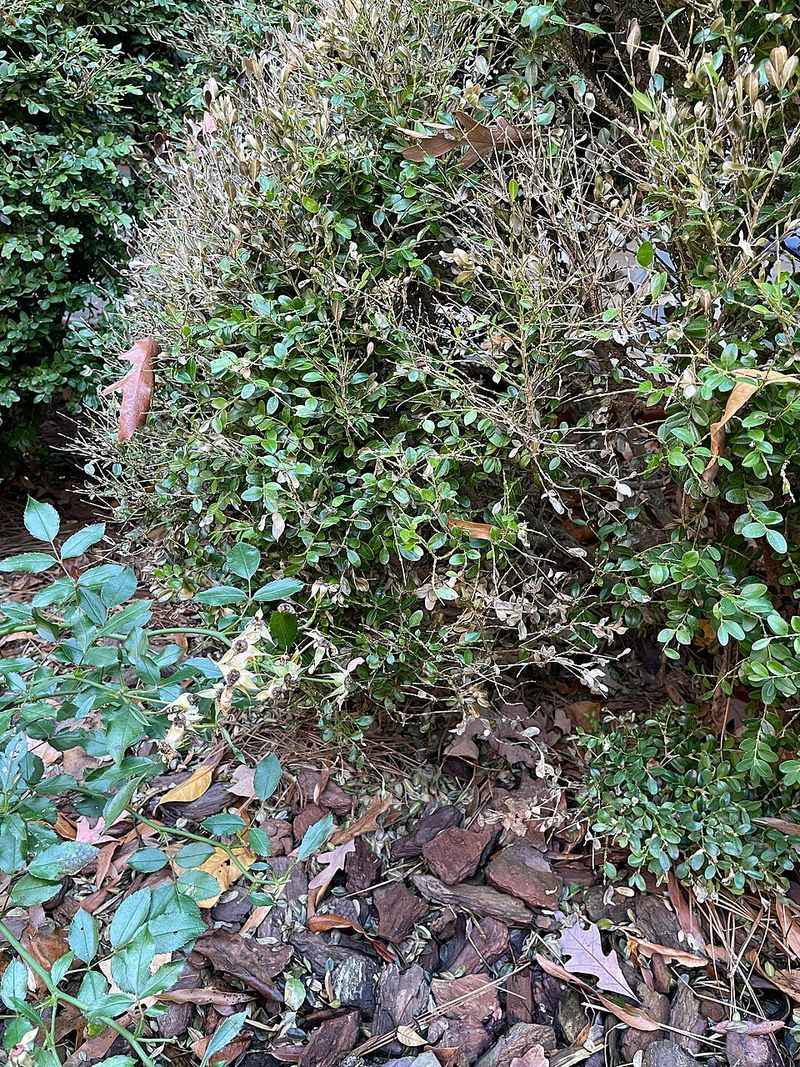
Lower branches going bare on a boxwood can be easy to overlook at first, especially when the top of the shrub still looks full. Boxwood blight tends to develop where foliage stays wet, shaded, or crowded.
The lower canopy is exactly that kind of environment in many foundation plantings and hedges across this state. Bare lower stems, patchy thinning through the interior, and visible deceased zones near the base of the shrub are signs worth taking seriously.
Dense plantings make this worse. When boxwoods are planted close together, air circulation drops and moisture lingers on leaves and stems much longer after rain or irrigation.
Those wet conditions are favorable for disease spread, which is why tightly spaced hedges can decline quickly once a problem takes hold in one plant.
Stop overhead watering immediately if you suspect a disease problem. Switch to drip irrigation or water at the base of the plant to keep foliage as dry as possible.
Keep children, pets, and foot traffic away from suspect shrubs to reduce the chance of moving anything on shoes or clothing.
Improving airflow around boxwoods is a long-term step worth considering, but right now, reducing moisture on leaves is the most urgent move you can make.
5. Wet Weather Makes Boxwood Blight Spread Faster
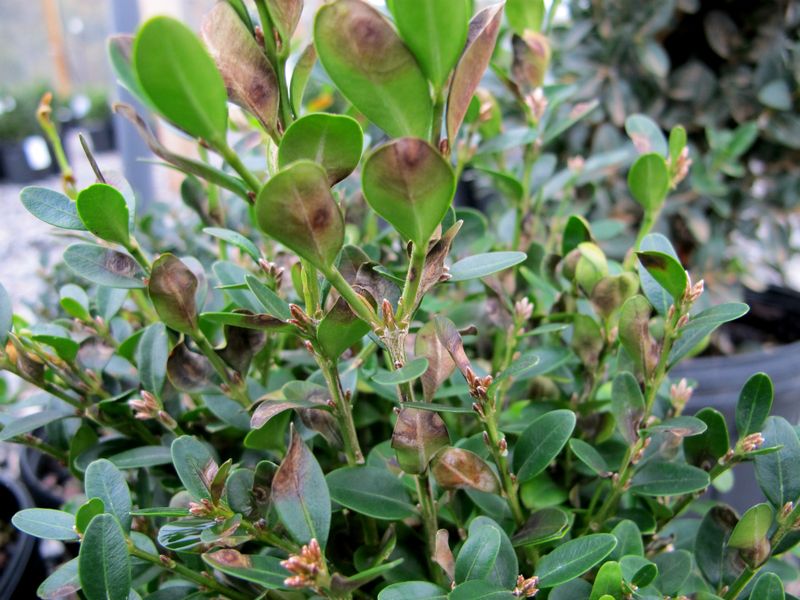
Rain, humidity, and wet foliage create the kind of environment where boxwood blight thrives.
The fungal pathogen responsible for the disease spreads through water splash, meaning rain hitting infected leaves or soil can move spores to nearby healthy plants.
Extended periods of wet weather, which are common in Ohio from spring through early summer, can push a small problem into a large one surprisingly fast.
Working around wet boxwoods when disease is suspected is one of the easiest ways to spread the problem without realizing it. Spores can hitch a ride on pruning shears, gloves, boots, tarps, and even clothing.
Postpone any pruning, shaping, or inspection work until foliage has dried completely. Change clothes before moving to other parts of the landscape after working near suspect shrubs.
Overhead irrigation is another way to keep foliage wet longer than necessary. If your irrigation system sprays water onto boxwood leaves, adjust the heads to water at the base instead.
Timing matters too. Watering in the morning gives foliage a chance to dry before evening, which is better than watering late in the day.
Reducing the hours that leaves stay wet is one practical step you can take right now, regardless of whether a diagnosis has been confirmed.
6. Sanitizing Tools Helps Keep The Disease From Moving
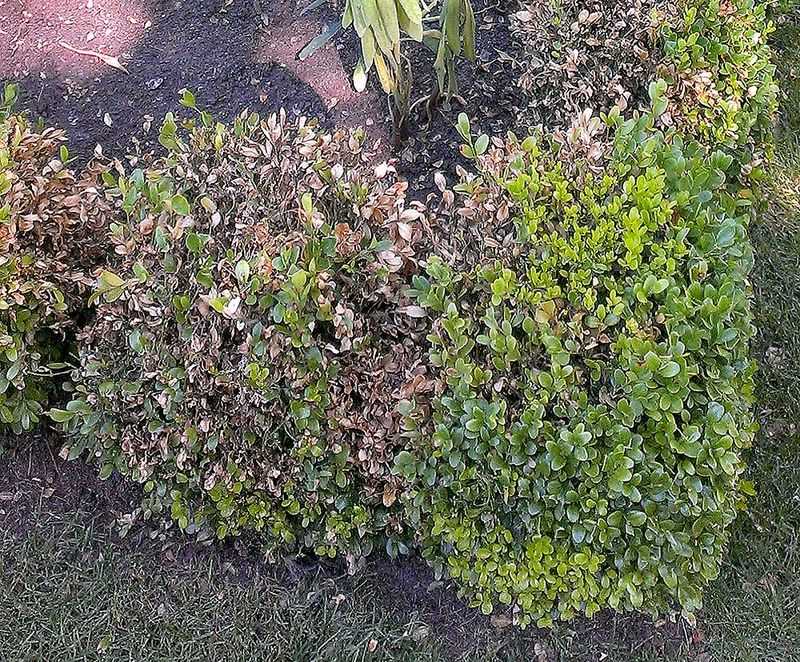
Pruning shears, loppers, hand saws, and even a tarp used to catch clippings can carry contaminated plant material from one shrub to another. They can do this without any visible sign that anything is wrong.
Sanitation is one of the most practical defenses available when boxwood blight is suspected, and it costs almost nothing to do correctly. The key is cleaning tools between shrubs, not just at the end of the job.
Ohio State University Extension and other reliable Extension sources recommend using an appropriate disinfectant solution. Use it to clean tools between cuts when working near potentially infected plants.
Follow the label directions for the product you choose, and pay attention to contact time. A quick wipe is not the same as a proper disinfection.
Let tools air dry before moving to the next shrub.
Gloves, boots, and clothing deserve the same attention as your tools. Rinse boots with a disinfectant solution before leaving the area, and wash work clothes separately from other laundry after working near suspect shrubs.
Bag all clippings and fallen debris in heavy-duty bags before moving them, and do not shake or dump the bags in other parts of the landscape. Keeping debris contained from the start is far easier than trying to address spread after the fact.
7. Removing Fallen Leaves Reduces Spores Around The Plant
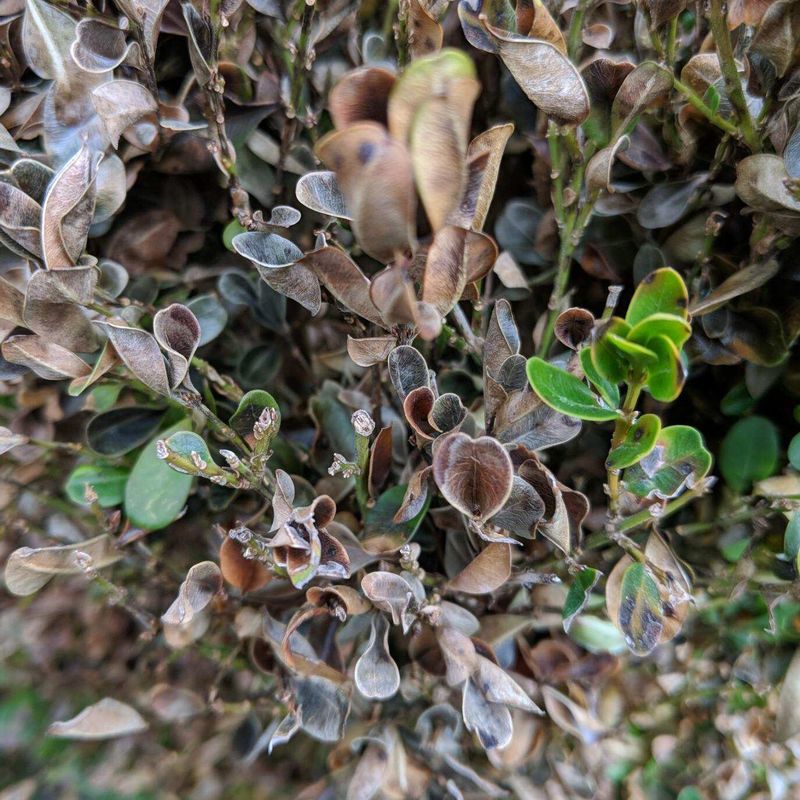
Fallen leaves sitting under a sick boxwood are not harmless. If boxwood blight is the problem, those leaves can hold spores that splash back onto the plant during rain or irrigation.
That can keep the cycle going even after the shrub is treated or removed. Cleaning up fallen debris carefully is one of the most important steps you can take once you suspect a serious disease problem.
Avoid using a leaf blower around suspect boxwoods. Blowing debris moves it across the yard, potentially spreading the problem to clean areas or neighboring properties.
Hand-collect fallen leaves using gloved hands or a gentle raking motion, and place everything directly into a heavy-duty bag. Work slowly and deliberately so you do not scatter debris further into the bed or onto surrounding turf.
Do not compost suspect boxwood leaves or stems unless current Extension guidance specifically says it is safe to do so. Home compost piles typically do not reach temperatures high enough to break down fungal pathogens reliably.
Bag the material and follow local disposal guidelines for diseased plant waste. Contact your county Extension office or local waste management program if you are unsure how to dispose of the bags.
Keeping the area under suspect shrubs as clean as possible is an ongoing task, not a one-time fix.
8. Avoiding New Boxwoods Nearby Gives The Area Time To Recover
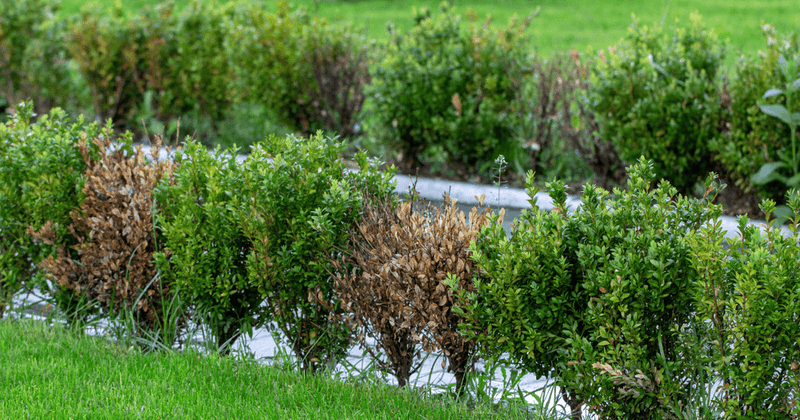
After dealing with a serious boxwood disease problem, the instinct is often to replace the plants as quickly as possible. Rushing to fill the empty space with new boxwoods before the area is ready is one of the most common mistakes Buckeye State gardeners make.
Infected debris left in the soil or nearby beds can still harbor the pathogen. A fresh planting in a contaminated area may develop the same problems within a season or two.
Confirm your diagnosis first through Ohio State University Extension, a county Extension office, or the C. Wayne Ellett Plant and Pest Diagnostic Clinic.
Do that before making any replanting decisions. Once you have a confirmed answer, clean the area thoroughly.
Remove as much infected plant material and surface debris as possible, and give the site time before replanting anything.
Some boxwood cultivars have shown less susceptibility to boxwood blight in research trials, but no cultivar is fully immune.
If you choose to replant with boxwood, look for guidance from Ohio State University Extension on current cultivar recommendations.
Do not rely on nursery claims alone. For areas with repeated or severe disease pressure, consider switching to non-boxwood alternatives.
Options include inkberry holly, dwarf yaupon, or native shrubs that offer similar structure without the same disease risk. A change in plant selection may be the most practical long-term solution available.