What To Do With Your Florida Mandevilla In June So It Blooms All Summer Without Stopping
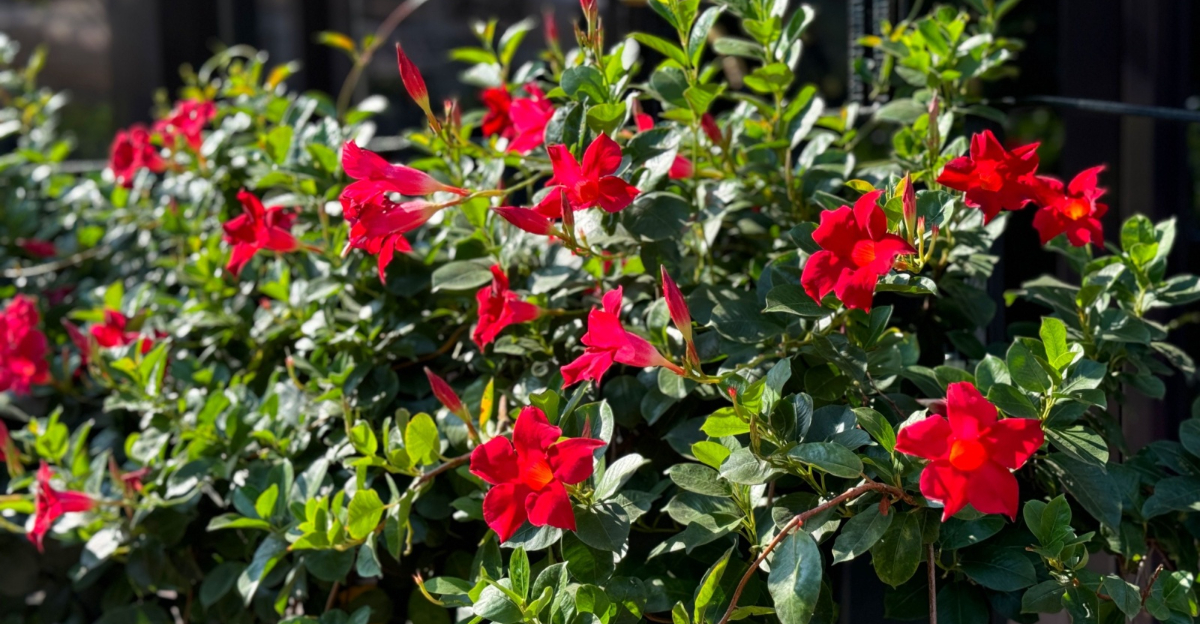
There is something really satisfying about watching a mandevilla take off in June. One week it looks promising and the next it is climbing, blooming, and doing exactly what you hoped it would do when you brought it home.
June in Florida sets the stage perfectly for this kind of tropical vine moment. The heat is building, rainy season is finding its rhythm, and warm humid nights give mandevilla exactly the kind of environment it was made for.
The good news is that turning all that natural energy into a long, colorful bloom season does not require a complicated routine.
A solid mix of the right sun exposure, good drainage, smart watering, timely fertilizer, and a sturdy support structure is really all it takes to keep this vine happy and blooming well into summer.
1. Give It Full Sun For Better Flowering
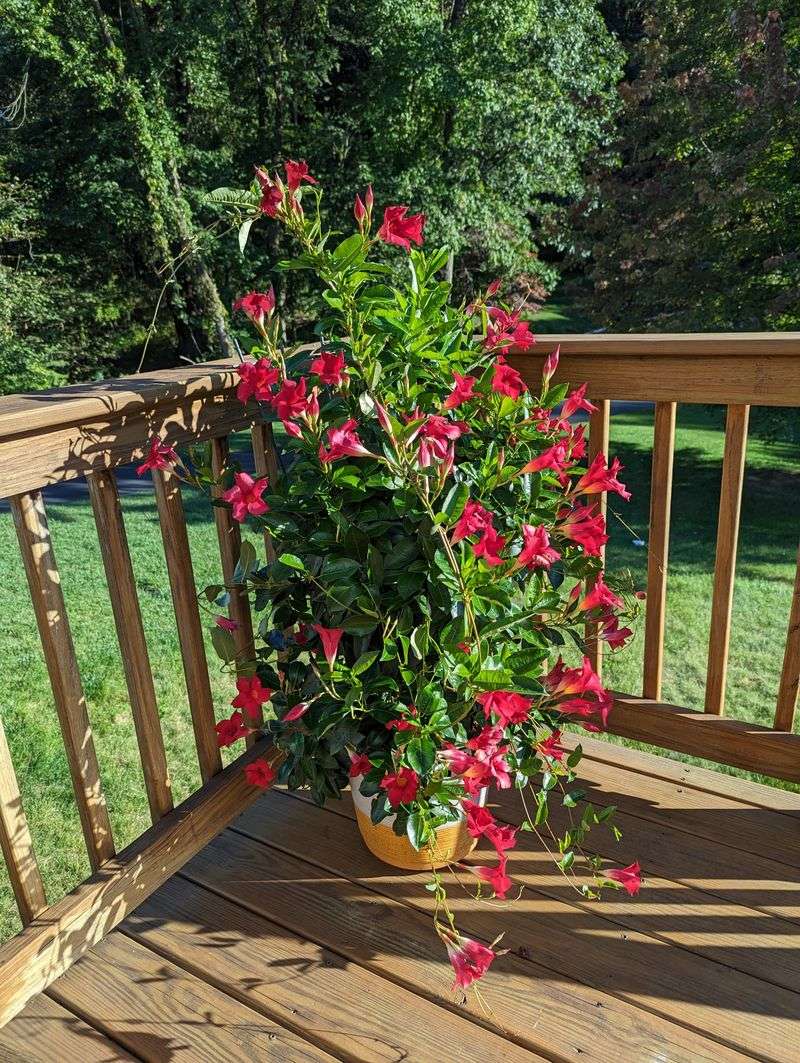
Bright Florida mornings are practically made for mandevilla. This tropical vine thrives when it receives full sun, meaning at least six hours of direct sunlight each day.
Spots along sunny fences, south-facing walls, mailboxes, pergolas, and open patios tend to give mandevilla the light exposure it appreciates most.
When a plant gets moved to a shadier corner of the yard or patio, the flowering response often slows down noticeably. Leaves may still look green and healthy, but fewer buds form when light levels drop.
Brighter placement can support better blooming, though results will vary depending on the plant’s overall health, container size, and watering routine.
June brings intense sun that can feel overwhelming, but mandevilla is built for that kind of heat. If your plant has been sitting in partial shade, try gradually moving it to a sunnier location over a week or two rather than shifting it all at once.
A slow transition helps the plant adjust without extra stress. South-facing or west-facing spots near walls or fences often work well for container mandevilla in Florida landscapes.
Check that nearby trees or structures are not blocking afternoon light, since shade creep can sneak up on gardeners between spring and summer as trees fill out with new growth.
2. Keep The Soil Well Drained
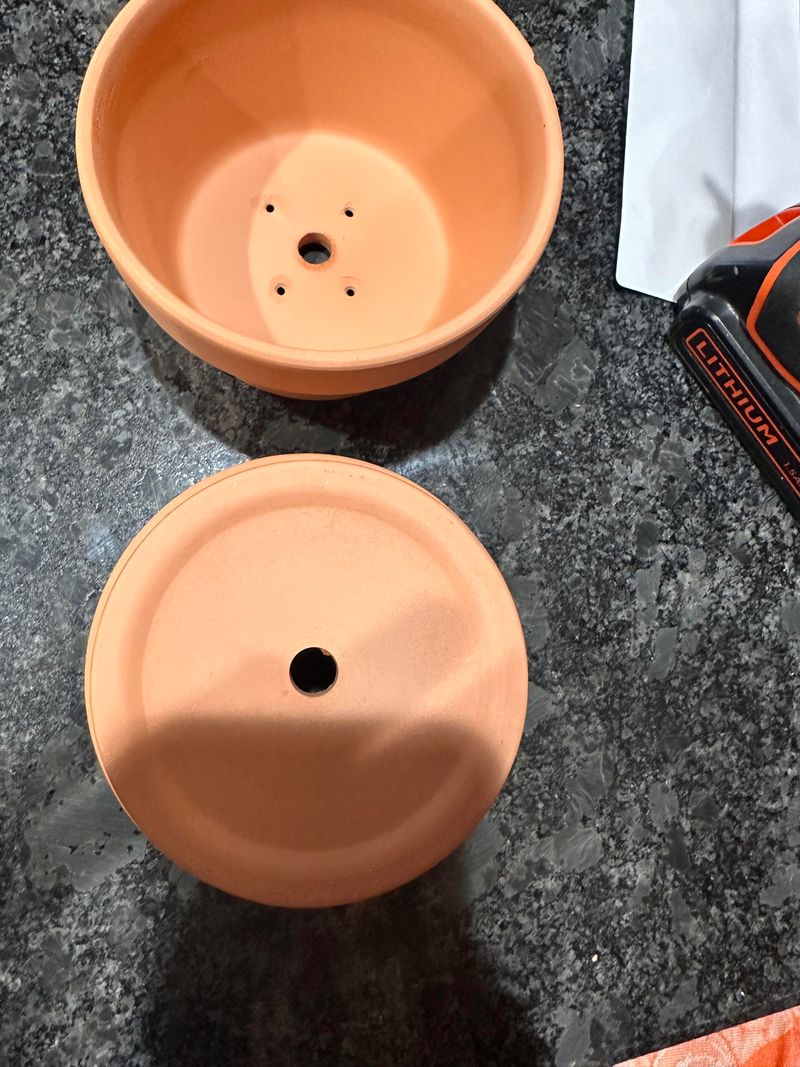
Soggy roots are one of the fastest ways to stress a mandevilla, and Florida’s rainy season makes drainage more important than ever in June. These plants can grow in a range of soil types as long as water moves through freely and does not sit around the roots for long.
In containers, drainage holes are not optional – they are essential.
For potted plants, a well-draining potting mix designed for tropical plants or container gardens tends to work well.
Avoid heavy garden soils that compact easily in containers, since compaction slows drainage and can hold excess moisture during heavy summer rains.
If you notice water pooling on top of the soil after watering or rain, that is a sign the mix may need refreshing or the drainage holes may be blocked.
In-ground mandevilla planted in Florida landscapes should be placed in raised beds or areas where water does not collect after storms.
Your Florida Garden Changes Every Week. Your Plan Should Too.
Gardening in Florida changes quickly throughout the season. Every Friday you’ll receive a simple weekly plan showing exactly what to plant, prune, fertilize, harvest, and protect so you never miss the right timing.
Sandy soils drain quickly, which often suits mandevilla well, but low-lying spots can become waterlogged during heavy June downpours.
Check that your planting area or container drains within a reasonable time after rain.
Elevating containers slightly off the ground using pot feet or a saucer with pebbles can also help air circulate under the pot and prevent drainage holes from becoming blocked over time.
3. Water Regularly Without Keeping It Soggy
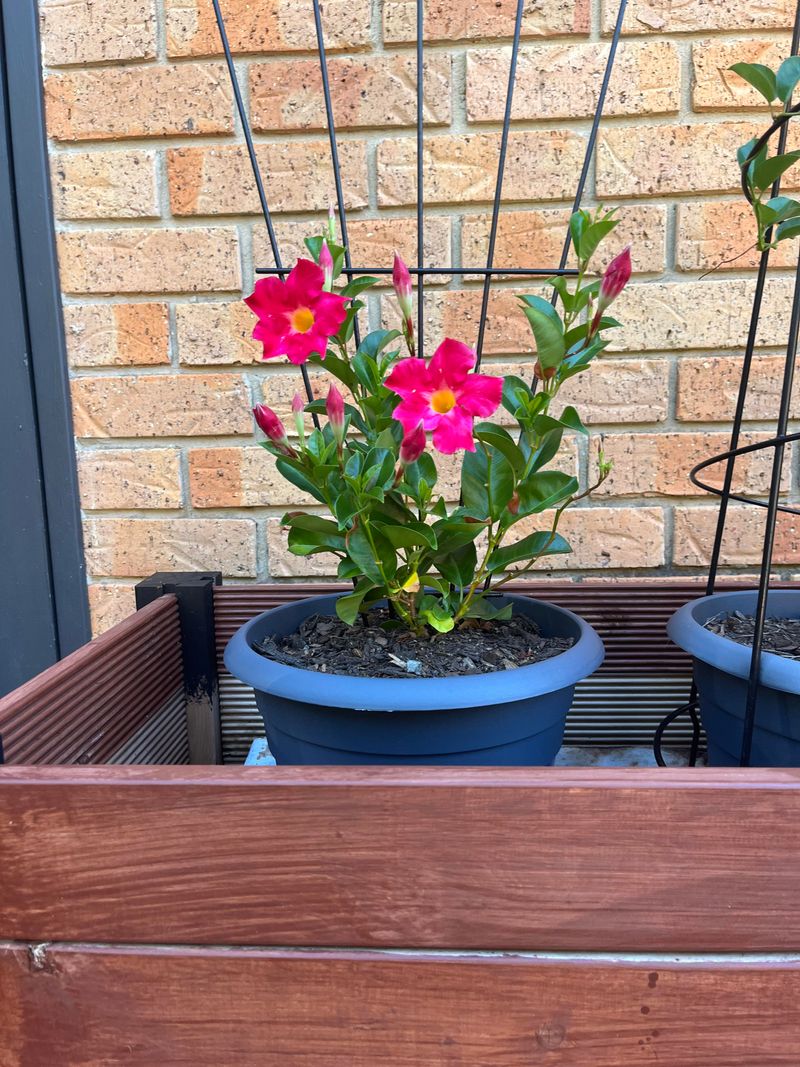
June rain in Florida can fool even experienced gardeners into thinking their mandevilla is getting enough water on its own.
Some days bring afternoon downpours that soak the soil, while other days stay dry and breezy, pulling moisture out of containers faster than expected.
Checking the soil before watering on autopilot is one of the smartest habits you can build this month.
A simple finger test works well – press your finger about an inch into the potting mix. If it feels dry at that depth, watering is likely needed.
If it still feels moist, hold off for another day. Mandevilla appreciates consistent moisture but does not want to sit in wet soil for extended periods, especially during warm and humid summer nights when root stress can develop more quickly.
Container plants generally need more frequent watering than in-ground plants because pots dry out faster in the sun. Smaller containers dry out especially quickly during hot June days.
Deep watering that moistens the full root zone is more helpful than light surface watering that barely reaches the roots.
Try watering in the morning so excess moisture on leaves and soil surfaces has time to evaporate during the day, which can reduce the chance of fungal issues during humid Florida summers.
Adjust your routine as rain patterns shift through the month.
4. Fertilize Regularly During Active Growth
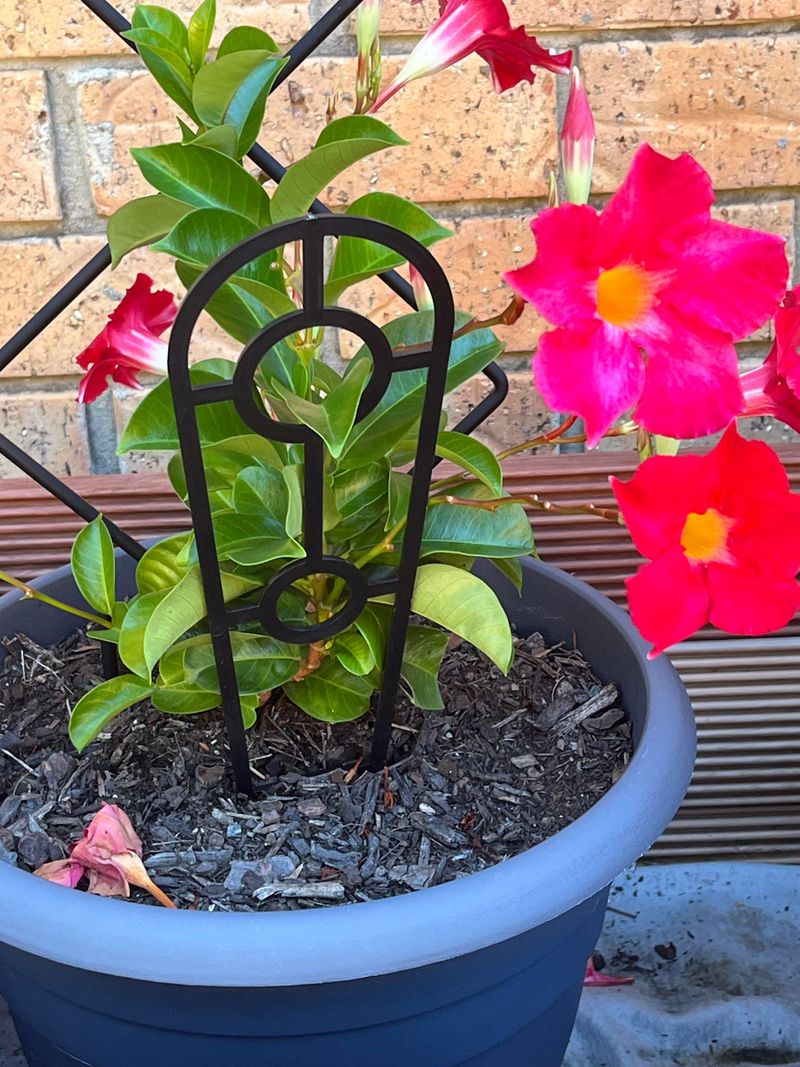
June is prime growing season for mandevilla in Florida, and a plant that is actively pushing out new stems and buds has a real appetite for nutrients.
Regular fertilizing during this period can help support healthy foliage and continued flowering, though results will vary based on the plant’s overall condition, container size, and how much rain has been flushing nutrients out of the soil.
A balanced fertilizer or one slightly higher in phosphorus is commonly recommended for flowering vines. Always follow the label directions carefully, since over-fertilizing can cause problems just as easily as under-fertilizing.
Container plants are especially prone to nutrient loss because watering and rain leach nutrients out of the pot more quickly than from in-ground beds.
Slow-release granular fertilizers applied at the start of the month can provide steady nutrition over several weeks, while water-soluble fertilizers give a quicker boost and can be adjusted more easily as the season changes.
Some gardeners use a combination of both approaches during the summer growing season.
Watch your plant’s response over time – pale or yellowing leaves despite adequate water can sometimes suggest a nutrient issue worth addressing.
Adjust your fertilizing schedule if the plant seems to be responding well or if heavy rainfall has been washing through the container soil frequently during Florida’s active rainy season.
5. Train Stems Onto A Trellis Or Support
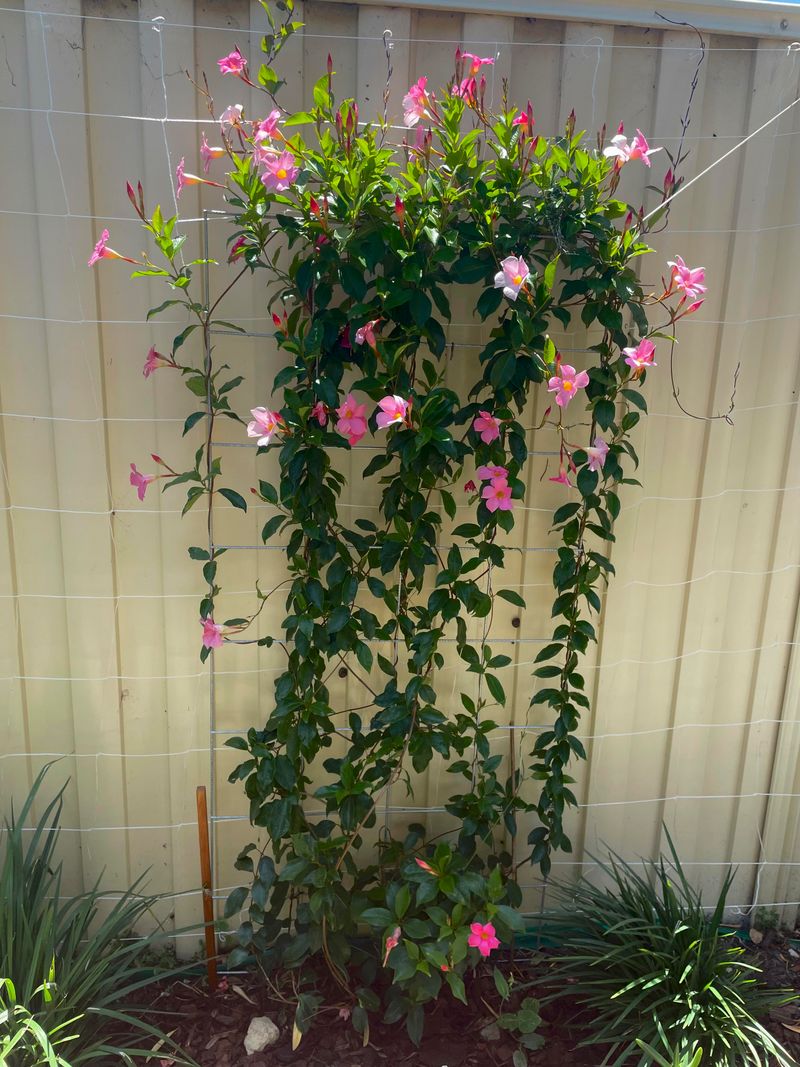
Watching a mandevilla vine reach out and grab onto a trellis with its twining stems is one of the more satisfying parts of growing this plant in a Florida garden.
Mandevilla is a woody, twining vine that naturally wants to climb, and giving it a proper support structure encourages upward growth, better air circulation, and easier access for maintenance tasks like watering, fertilizing, and pest checks.
Trellises, arbors, pergolas, mailboxes, obelisks, and sturdy wire frames all work as support options depending on your space and how large you want the plant to grow.
Container mandevilla on patios and porches does well with a small trellis inserted directly into the pot.
Larger in-ground plants can be guided along fences or up pergola posts over the summer months.
June is a good time to check that existing supports are still sturdy enough to handle the new growth coming in. Florida summer storms can put pressure on trellises and frames, so making sure posts are secure before the heaviest rain weeks arrive is a practical step.
Gently guide new stems toward the support as they grow and loosely tie any stems that are not catching on their own, using soft garden ties that will not cut into the vine.
Avoid wrapping stems too tightly, since mandevilla stems need a little room to thicken as the plant matures through the season.
6. Pinch New Shoot Tips For Fuller Growth
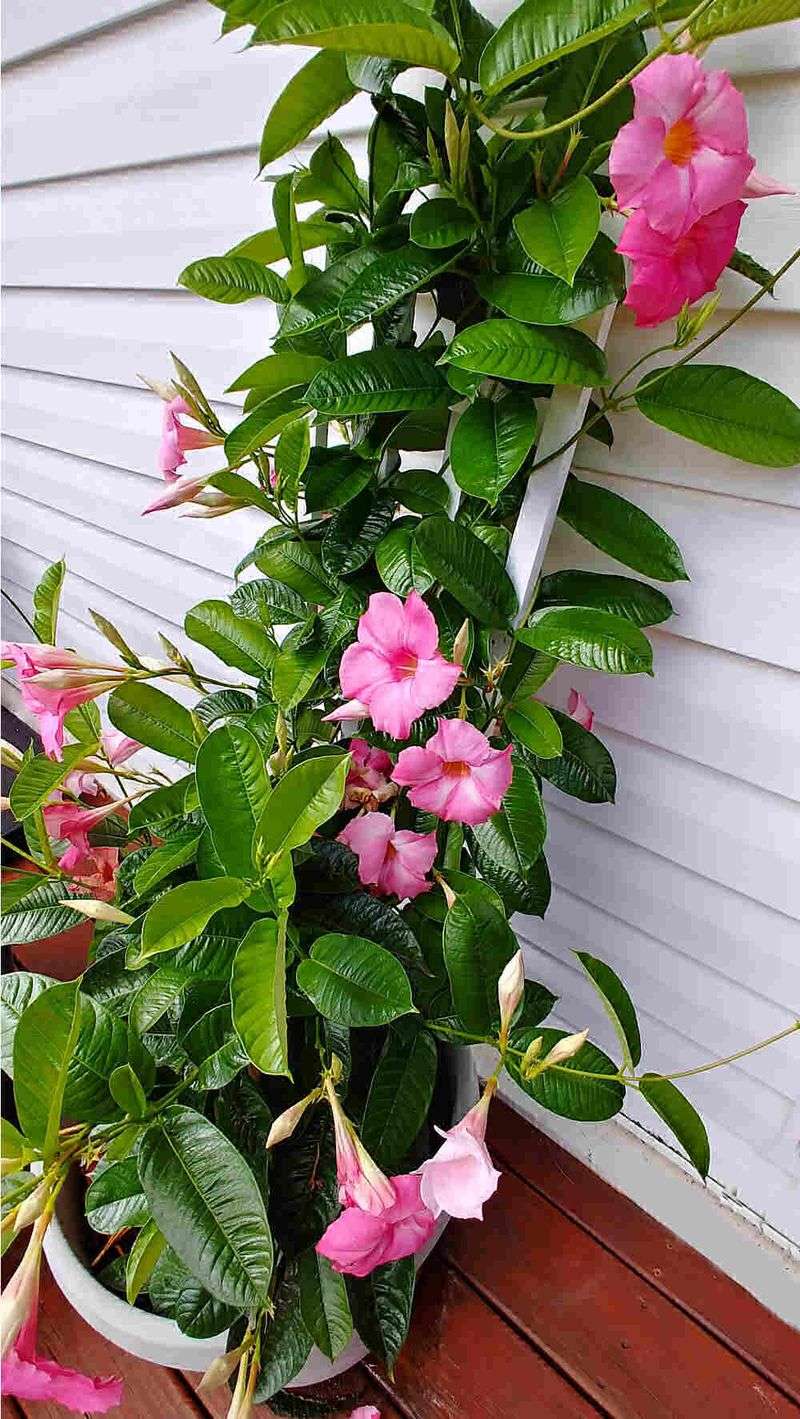
One of the easiest things you can do for a mandevilla in June costs nothing and takes only a few minutes – pinching back new shoot tips. This simple technique encourages the plant to branch out rather than just stretching one long stem upward.
More branches generally mean more potential flowering sites later in the summer, which is exactly what most Florida gardeners are hoping for.
Pinching is not the same as heavy pruning. You are only removing the very tip of a new shoot, usually just the top inch or two of soft new growth.
This signals the plant to send energy into side shoots rather than continuing to extend the main stem. The result over time is a fuller, bushier plant with more growing points spread across the vine.
The best time to pinch is when you notice a new shoot extending beyond the rest of the plant’s growth. Young, soft stem tips are easy to remove with clean fingers or small pruning snips.
Avoid pinching stems that already have buds forming, since removing those would reduce the current flowering cycle. Focus on vegetative shoots that are growing without bud development.
In warm June conditions, mandevilla rebounds from pinching fairly quickly, and new branching often becomes visible within a couple of weeks. This technique works well for both container plants and trellised vines growing in Florida landscapes.
7. Watch For Milky Sap When Pruning
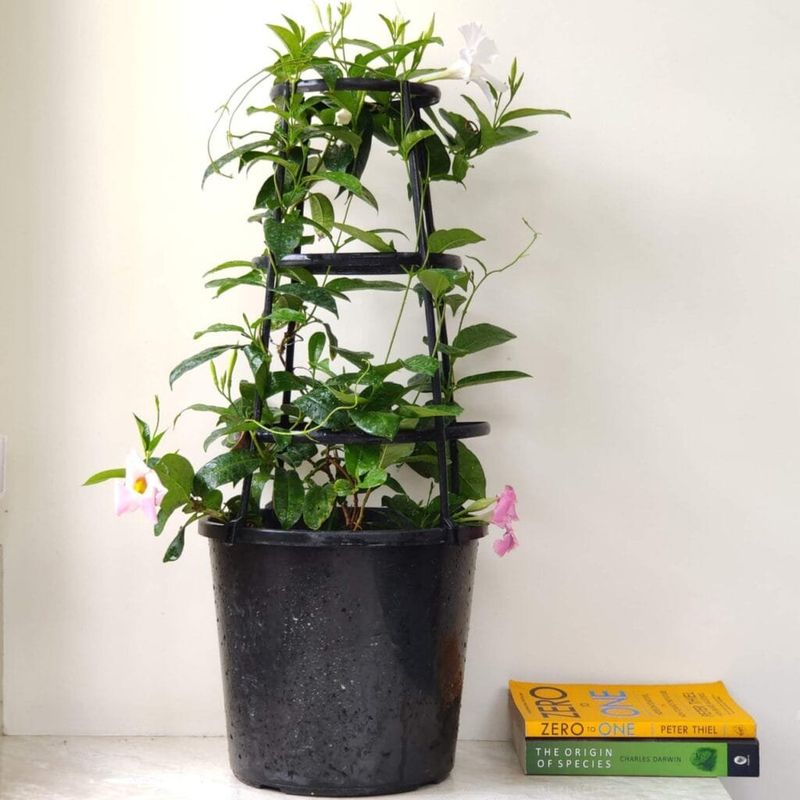
Pruning or pinching a mandevilla stem for the first time can catch gardeners off guard – the plant releases a thick, white milky sap from any cut surface.
This sap is a normal characteristic of mandevilla, but it is worth knowing about before you start snipping stems on a warm June afternoon without any hand protection.
The milky sap can irritate skin in some people, especially those with sensitive skin or latex sensitivities.
Wearing gloves while pruning is a sensible precaution that keeps the sap off your hands and prevents it from spreading to your eyes or face if you happen to touch your face while working.
Washing hands thoroughly after handling the plant is also a good habit, even if you wore gloves during the task.
Beyond skin contact, the sap and other plant parts of mandevilla can be harmful if ingested by children or pets.
Keeping pruned stems, leaves, and cuttings out of reach and disposing of them carefully is a reasonable step for any Florida household with young children or animals that spend time outdoors.
This is not a reason to avoid growing mandevilla – it is simply a plant characteristic worth being aware of. Many popular Florida landscape plants share similar traits.
Handling the plant thoughtfully and cleaning up clippings after pruning sessions makes the whole experience safer and more enjoyable for everyone in the yard.
8. Check For Scale And Mealybugs
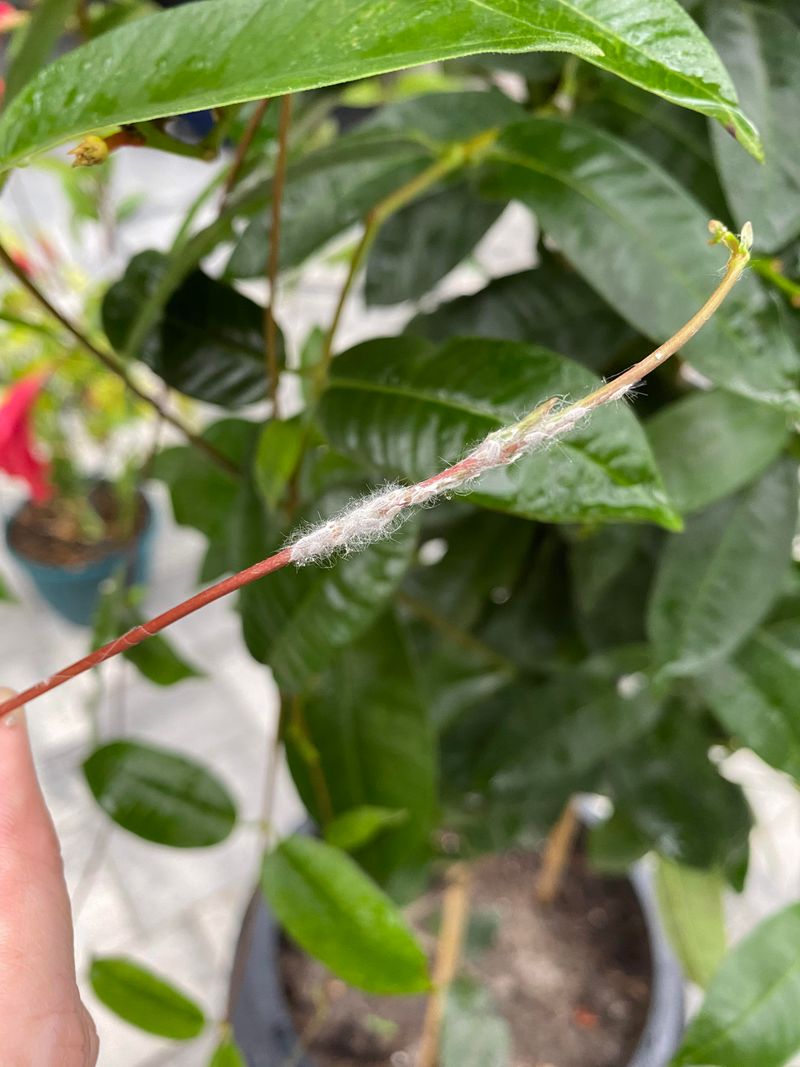
Mandevilla is not usually a magnet for pests, but scale insects and mealybugs are two visitors worth watching for during Florida’s warm and humid summer months.
Both tend to show up on stems, leaf undersides, and new growth, where they feed on plant sap and can gradually weaken a vine if left unchecked for too long.
Scale insects often look like small, flat, brownish bumps attached to stems or leaves. They can be easy to overlook because they blend in with the plant material.
Mealybugs are a bit easier to spot – they tend to cluster in cottony white masses near stem joints and leaf bases. A quick check during your regular watering or fertilizing routine is usually enough to catch early activity before it spreads.
If you spot either pest, start by wiping accessible areas with a damp cloth or using a steady stream of water to dislodge clusters.
For more persistent infestations, horticultural oils or insecticidal soaps are commonly used options, but always check the product label for directions and make sure the treatment is appropriate for the plant and situation.
Avoid treating during the hottest part of a Florida summer day, since some products can stress plants under intense heat.
Checking your mandevilla regularly through June and into the rest of summer gives you the best chance of catching any pest activity early and responding before the problem grows.