Native California Plants To Grow Instead Of Nandina Along Fence Lines
Nandina may be common along fence lines, but it is not always the best choice for a California garden. Many yards need plants that feel more at home in the local climate.
A fence can be a perfect place to show them off. Native plants can soften hard edges and bring more life to a narrow space.
They can also create a better look with less fuss once they settle in. The key is picking options that fit the light, soil, and room you have.
Go too big, and the fence line can feel crowded fast. Choose well, and that plain strip can become one of the most useful parts of the yard.
California natives offer plenty of beauty without relying on nandina, and a few may surprise you.
1. California Redbud
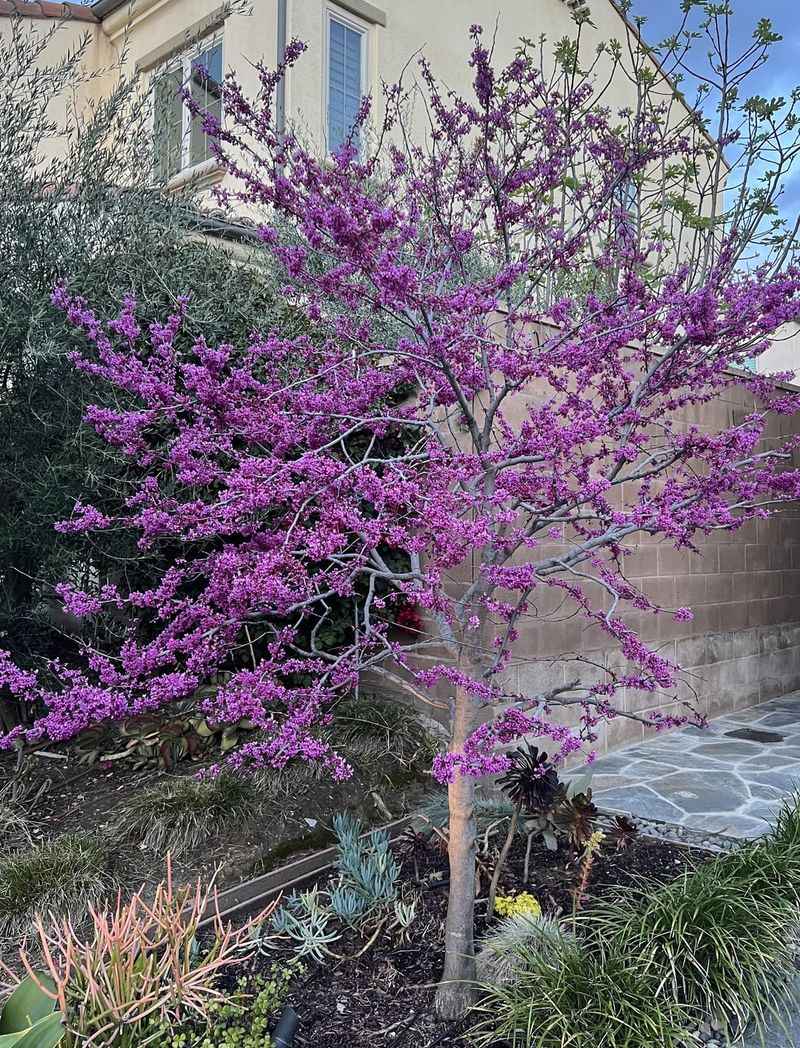
Few plants stop people in their tracks quite like a Redbud in full bloom.
Every spring, this native tree explodes with clusters of bright magenta-pink flowers directly on its bare branches, creating a jaw-dropping display before a single leaf appears.
It is one of the most dramatic early-season shows in any garden. Along a fence line, Redbud works beautifully as a mid-sized shrub or small tree. It grows anywhere from six to twenty feet tall depending on how you prune it.
The heart-shaped leaves that follow the blooms are a fresh, bright green that turns golden-yellow in fall. You get color in three seasons without much effort at all.
Native bees absolutely love the flowers, and hummingbirds visit them regularly. After the blooms fade, flat seed pods hang on the branches and add a subtle visual interest.
Birds sometimes nibble on the seeds too, making this plant a full-service habitat plant.
Redbud grows best in full sun to part shade and prefers well-drained soil. Once established, it handles drought well and needs very little supplemental water.
It thrives across a wide range of our state, from coastal foothills to the Sierra Nevada foothills.
Plant it along a fence and let it grow into a natural, living screen that puts on a show every single year.
2. Desert Willow
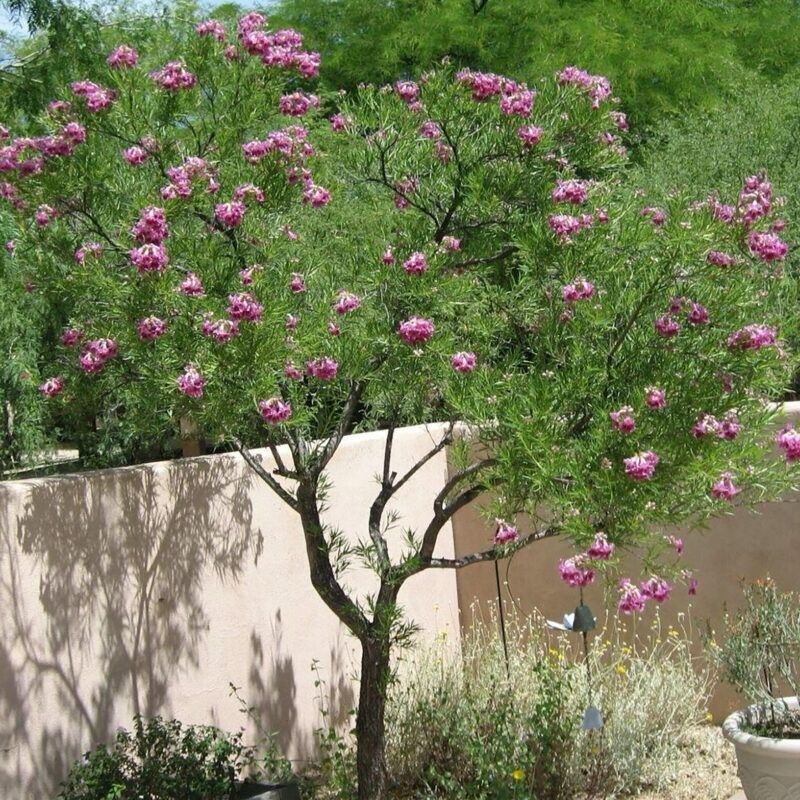
There is something almost tropical-looking about Desert Willow, even though it is perfectly built for dry, hot conditions.
Its long, slender leaves flutter in the breeze, and its trumpet-shaped flowers come in shades of pink, purple, lavender, and white.
Blooms appear from late spring all the way through fall, giving you months of color.
Along a fence line, this plant works as a tall, airy screen. It can reach fifteen to thirty feet in height, but it stays narrow enough to fit comfortably in tight spaces.
The open branching structure lets light pass through, so it does not make a yard feel closed in. It adds height and drama without overwhelming the space.
Hummingbirds are wild about the flowers. Bees and butterflies visit constantly during the long blooming season.
In winter, the plant goes dormant and drops its leaves, giving you a clean, sculptural look along the fence until spring arrives again.
Your California Garden Changes Every Week. Your Plan Should Too.
Gardening in California changes quickly throughout the season. Every Friday you’ll receive a simple weekly plan showing exactly what to plant, prune, fertilize, harvest, and protect so you never miss the right timing.
Desert Willow thrives in full sun and sandy or gravelly, well-drained soil. It is extremely drought-tolerant once established and needs minimal care.
It is an excellent choice for hot, inland areas of our state where summer temperatures are intense.
Give it room to stretch, and it will reward you with one of the most colorful and wildlife-friendly fence lines in the neighborhood.
3. Cleveland Sage
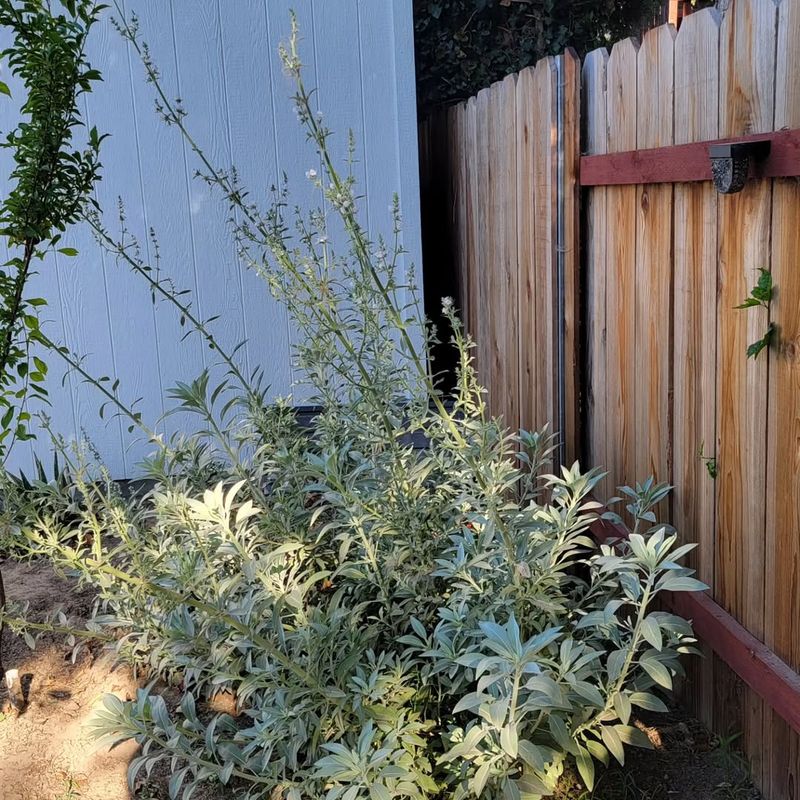
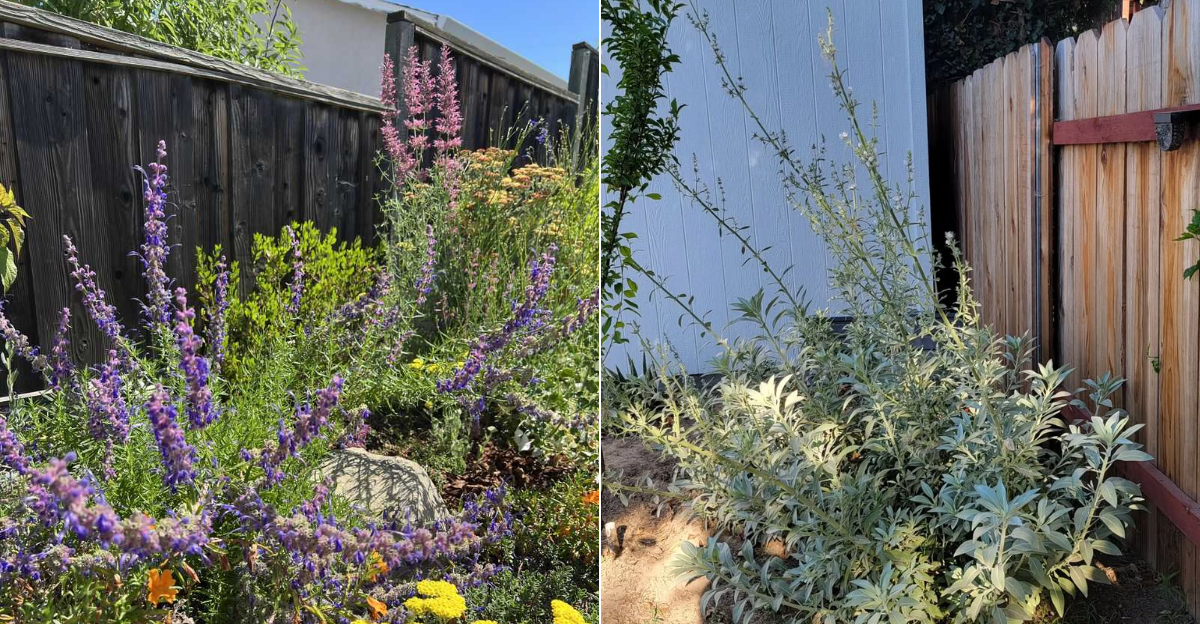
Walk past a Cleveland Sage on a warm afternoon and the air suddenly smells incredible. This native sage releases a rich, herby fragrance that many people find deeply calming and refreshing.
It is one of those plants that engages more than just your eyes, making your garden feel like a full sensory experience.
As a fence-line plant, Cleveland Sage brings a lot to the table. It grows into a rounded shrub about three to five feet tall and wide, forming a tidy, natural hedge.
In spring and early summer, whorls of violet-blue flowers stack up along upright stems, creating a striking vertical display. The blooms last for weeks and attract a steady parade of bees and hummingbirds.
The gray-green leaves look attractive year-round and stay on the plant even during dry summers. Cleveland Sage is one of the most drought-tolerant plants you can grow in our state.
Once established, it rarely needs watering beyond what nature provides, even through long dry spells.
Plant it in full sun with fast-draining soil, and it will thrive with almost no fuss. Trim it lightly after flowering to keep the shape tidy and encourage fresh growth.
It pairs beautifully with other native plants along a fence and creates a habitat corridor that local wildlife will use all season long. This is a plant that earns its place in any native garden.
4. White Sage
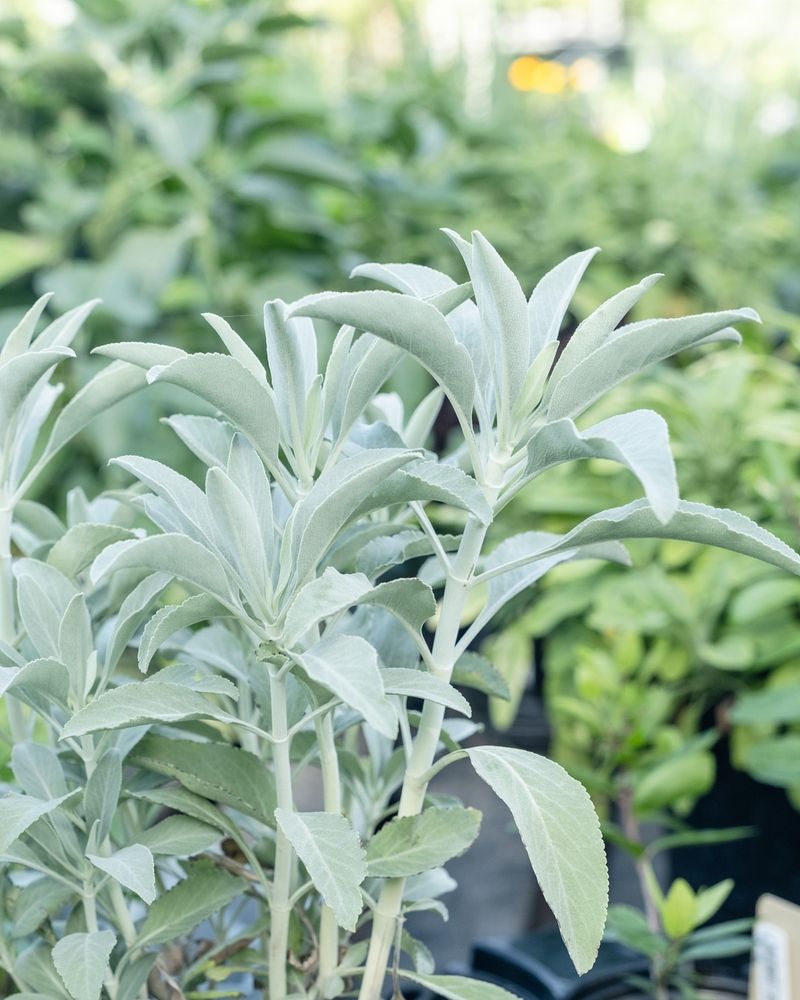
Silvery, ghostly, and deeply aromatic, White Sage is one of the most iconic native plants of our state.
Its pale, woolly leaves practically glow in the afternoon sun, giving any fence line a striking, almost otherworldly appearance.
Gardeners who grow it often say it becomes the centerpiece of the entire yard.
Beyond its looks, White Sage has deep cultural significance to many Indigenous communities across the region. It has been used for centuries in ceremony, medicine, and cooking.
Growing it in your garden is a way to honor that heritage while also supporting local pollinators.
Bees, especially native bees, swarm the tall flower spikes that rise up in spring and early summer.
Along a fence line, it forms a dense, low-growing mound about two to four feet tall. The upright flower stalks can reach six feet, adding dramatic vertical interest.
After blooming, the seed heads dry beautifully and continue to provide food for birds through the summer and fall months.
White Sage demands full sun and excellent drainage. It absolutely does not tolerate wet soil or overwatering, so plant it in a spot where water drains away quickly.
Once established, it is incredibly drought-hardy and thrives in the hot, dry conditions common across much of our state. Avoid planting it near lawn sprinklers or drip zones.
Give it dry feet and plenty of sun, and it will flourish for many years.
5. Woolly Bluecurls
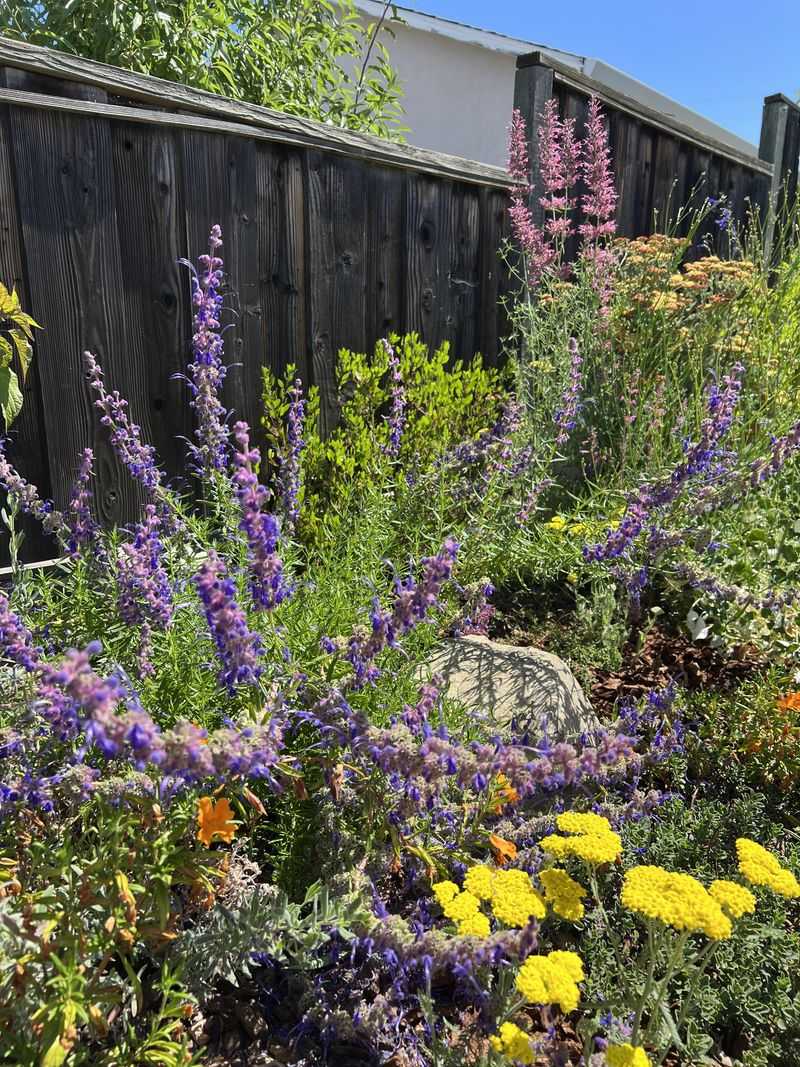
Few native plants are as visually electric as Woolly Bluecurls. The curved, intensely blue-purple flowers look almost unreal, like something out of a fantasy garden.
Add in the soft, woolly white stems and the powerful, resinous fragrance, and you have a plant that is truly unforgettable once you have seen it in person.
Growing along a fence line, this shrub reaches about three to five feet tall and wide. It blooms from late spring through fall, offering one of the longest flowering seasons of any native shrub.
Hummingbirds visit the flowers constantly, and the plant is a top nectar source for many native bee species as well.
Woolly Bluecurls is native to coastal sage scrub habitats in our state, particularly in southern regions. It thrives in full sun, rocky or sandy soil, and very dry conditions.
Overwatering is the biggest challenge for this plant, so plant it somewhere that dries out completely between waterings. Good drainage is absolutely essential.
Once established, it requires almost no care. A light trim after the main bloom period helps keep it compact and encourages a fresh flush of flowers.
It pairs wonderfully with White Sage, Cleveland Sage, and California Buckwheat along a fence.
Together, these plants create a habitat-rich, drought-smart planting that looks spectacular and supports an enormous variety of local wildlife throughout the year.
6. California Sagebrush
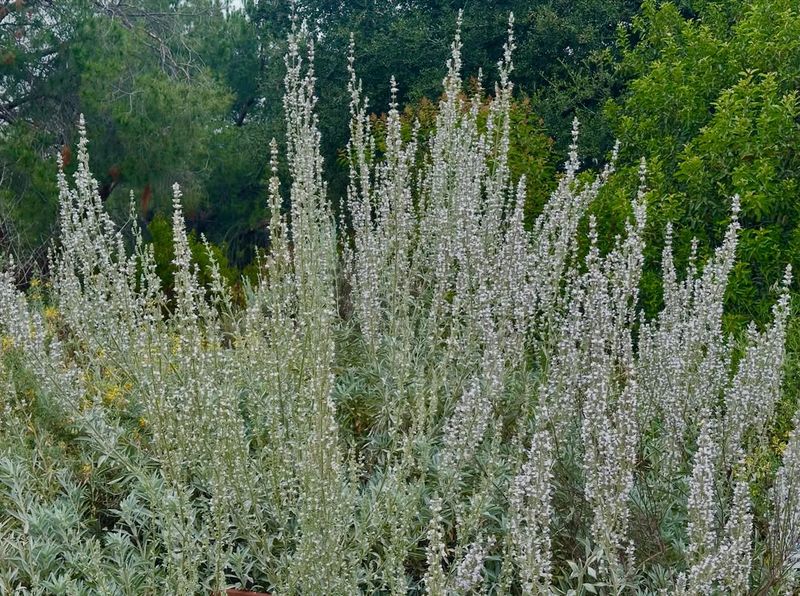
Sometimes a plant does not need flashy flowers to be impressive. California Sagebrush earns its place in the garden through its stunning silvery-gray foliage and its incredible value to local wildlife.
The finely textured, feathery leaves shimmer in sunlight and release a clean, earthy scent that many people find deeply pleasant and grounding.
Along a fence line, it grows into a soft, mounding shrub about two to five feet tall. The texture contrasts beautifully with bolder-leafed plants nearby.
In late summer and fall, small yellow flower clusters appear, providing a late-season nectar source for pollinators. Birds use the dense branching structure as shelter and nesting cover throughout the year.
One of the most important roles this plant plays is as a host plant for several native butterfly species.
The California Sagebrush Moth and various brush-footed butterflies depend on it during parts of their life cycle.
Planting it along your fence literally helps keep local butterfly populations going strong.
This shrub thrives in full sun and dry, well-drained soil. It is perfectly suited to coastal and inland areas of our state and handles drought with ease once established.
Water it occasionally during the first year, and then you can mostly leave it alone. Trim it lightly in late winter to keep it tidy and promote healthy new growth. It is an unsung hero of the native plant world.
7. California Buckwheat
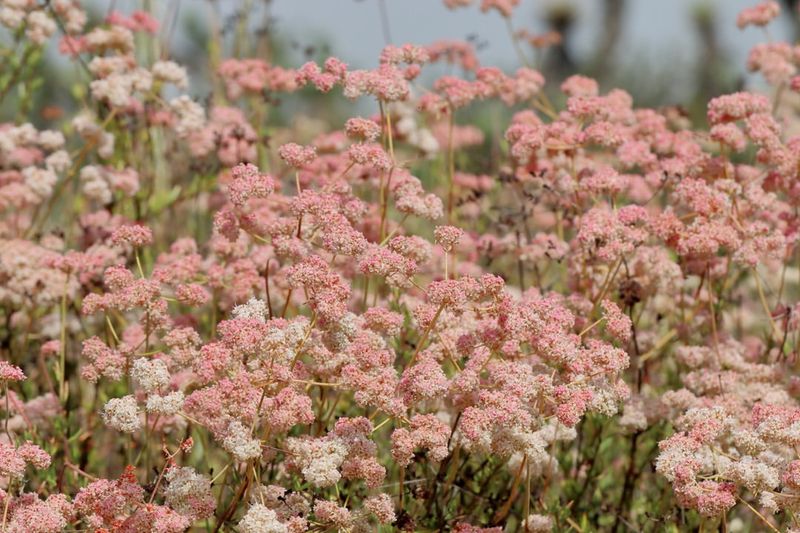
Tough, beautiful, and beloved by pollinators, California Buckwheat might be the hardest-working native plant you can grow along a fence line.
From late spring through summer, it covers itself in clusters of tiny white flowers that slowly turn a rich, rusty-pink as they age and dry.
The effect is like watching a painting change color over the course of a season.
Bees go absolutely wild for the flowers. Studies have shown that California Buckwheat supports more native bee species than almost any other plant in our state.
Butterflies, including the Acmon Blue and the Square-spotted Blue, use it as a host plant. If you want a fence line that buzzes with life all season, this is the plant to grow.
It forms a rounded shrub about two to four feet tall and spreads a bit wider. The small, dark green leaves have a slightly woolly texture underneath and stay on the plant year-round.
The dried flower heads persist through winter and look attractive even after the blooms have faded, giving you visual interest in the off-season.
Full sun and excellent drainage are the main requirements. Once established, it needs almost no supplemental water. It grows well in sandy, rocky, or clay soils across a wide range of climates in our state.
Pair it with sages, sagebrush, or Woolly Bluecurls for a low-water, high-impact fence planting that thrives with minimal maintenance every single year.
8. Quailbush
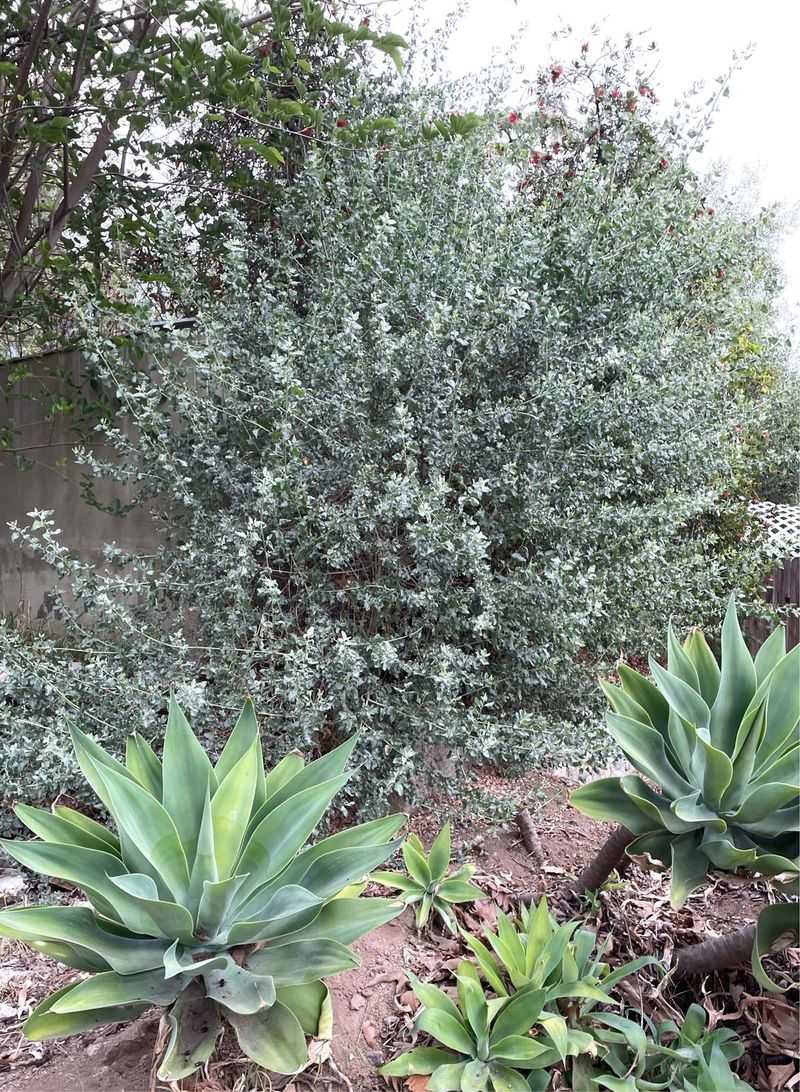
Named for the quail that shelter beneath it, Quailbush is one of those quietly remarkable plants that does everything right.
It might not dazzle with showy flowers, but it makes up for that with its toughness, its wildlife value, and its ability to thrive in conditions that would stress most plants.
Along a fence line, Quailbush forms a dense, sprawling shrub that can reach four to ten feet tall and even wider.
The silvery-gray leaves have a salty, slightly rough texture, reflecting the plant’s natural habitat in alkaline flats and desert washes.
That silver color catches the light beautifully and gives the fence line a cool, almost metallic glow on bright days.
California Quail, doves, and sparrows use the thick branches as nesting and roosting cover. The small, papery fruits that form after flowering provide food for birds and small mammals.
Few plants give as much back to local wildlife while asking so little from the gardener.
Quailbush handles poor soil, salty soil, drought, and heat without complaint. It grows best in full sun and tolerates alkaline or clay soils that many other plants struggle in.
Water it occasionally during the first season to help it get established, and then you can step back and let it do its thing. It is an outstanding choice for challenging fence-line spots where other plants have failed.
9. Bladderpod
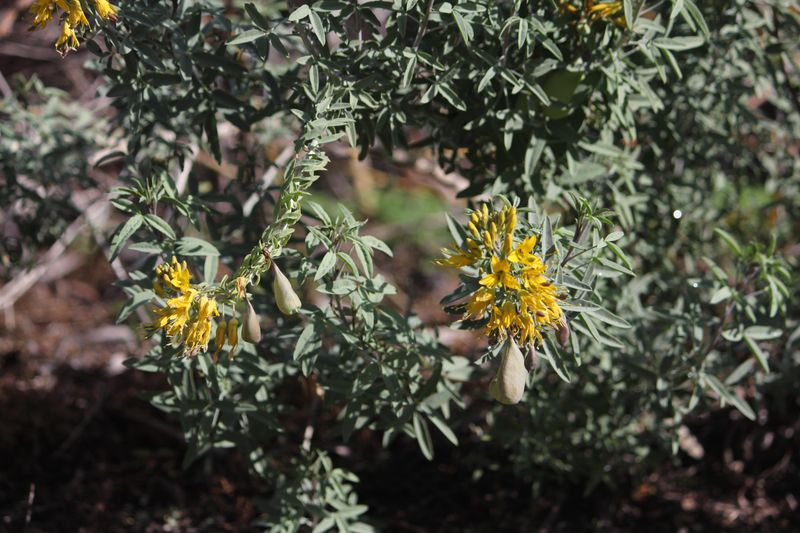
Not many plants can claim a name as memorable as Bladderpod, and once you see the puffy, inflated seed pods that give it that name, you will never forget it.
Beyond the fun name, this native shrub brings genuine beauty and serious toughness to any dry, sunny fence line in our state.
Bright yellow flowers bloom from late winter through spring, lighting up the fence line at a time when most other plants are still waking up.
The flowers are a valuable early-season food source for native bees and other pollinators that are hungry after winter.
After the blooms fade, the inflated seed pods take over and add a quirky, eye-catching texture to the plant.
Bladderpod grows into a rounded shrub about three to six feet tall and wide. The gray-green leaves have a slightly pungent scent when crushed, which helps deter browsing by deer.
It is a great option for gardeners who struggle with deer pressure along their fence lines and need a plant that can hold its own.
This shrub thrives in full sun and sandy, rocky, or gravelly, well-drained soil. It is extremely drought-tolerant and handles the hot, dry summers common in many parts of our state with ease.
Water it sparingly once established and avoid soggy soil at all costs. Plant it alongside other natives like Quailbush or California Buckwheat for a fence-line planting that is bold, tough, and full of character.