How California Gardeners Prune Jasmine Without Cutting Off Future Blooms
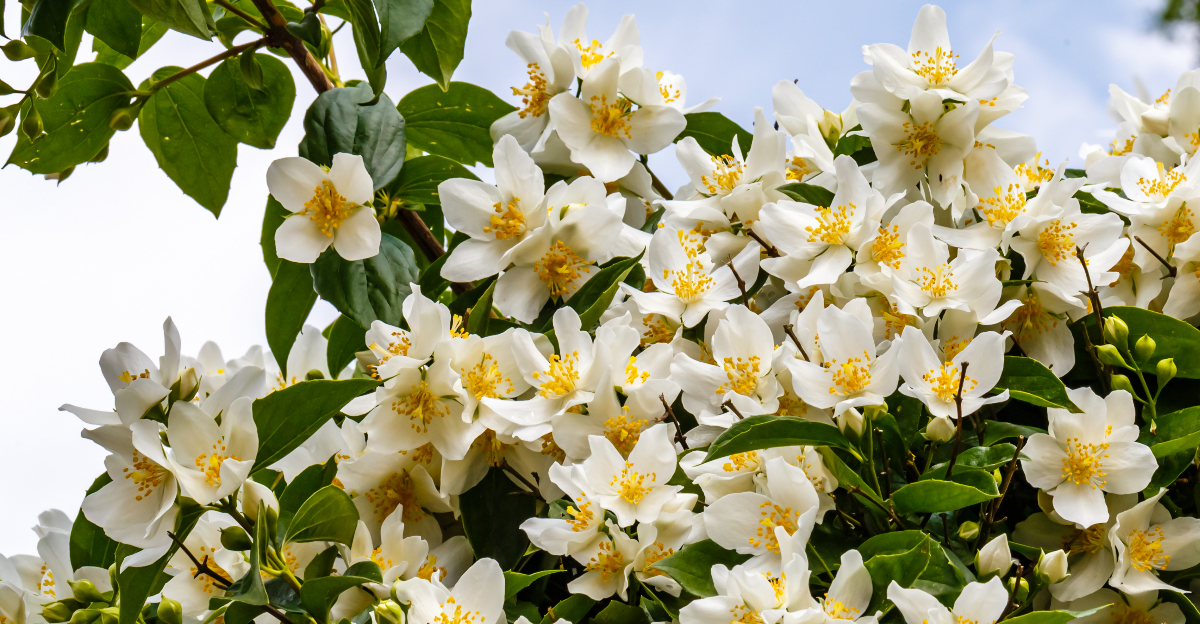
Jasmine is one of those plants that makes a California garden feel complete. That sweet, heady fragrance drifting over a fence on a warm evening is hard to beat.
Once jasmine gets comfortable in the right spot, it grows with real enthusiasm. Which is exactly where things can go sideways.
Many gardeners who end up with a jasmine that barely blooms are not doing anything obviously wrong. They water it. They fertilize it. They prune it when it starts looking overgrown. However, that last part is usually where the problem quietly begins.
Jasmine has a very specific relationship with pruning, and the timing matters far more than many people realize.
Cut at the wrong moment, and the plant looks fine, grows fine, and then produces almost nothing come spring. The blooms that should have been there simply never show up.
So before the pruners come out, it helps to know what the plant is really doing. Jasmine has a rhythm, and once you catch it, the whole job becomes much easier.
1. Prune Star Jasmine Right After The Main Bloom
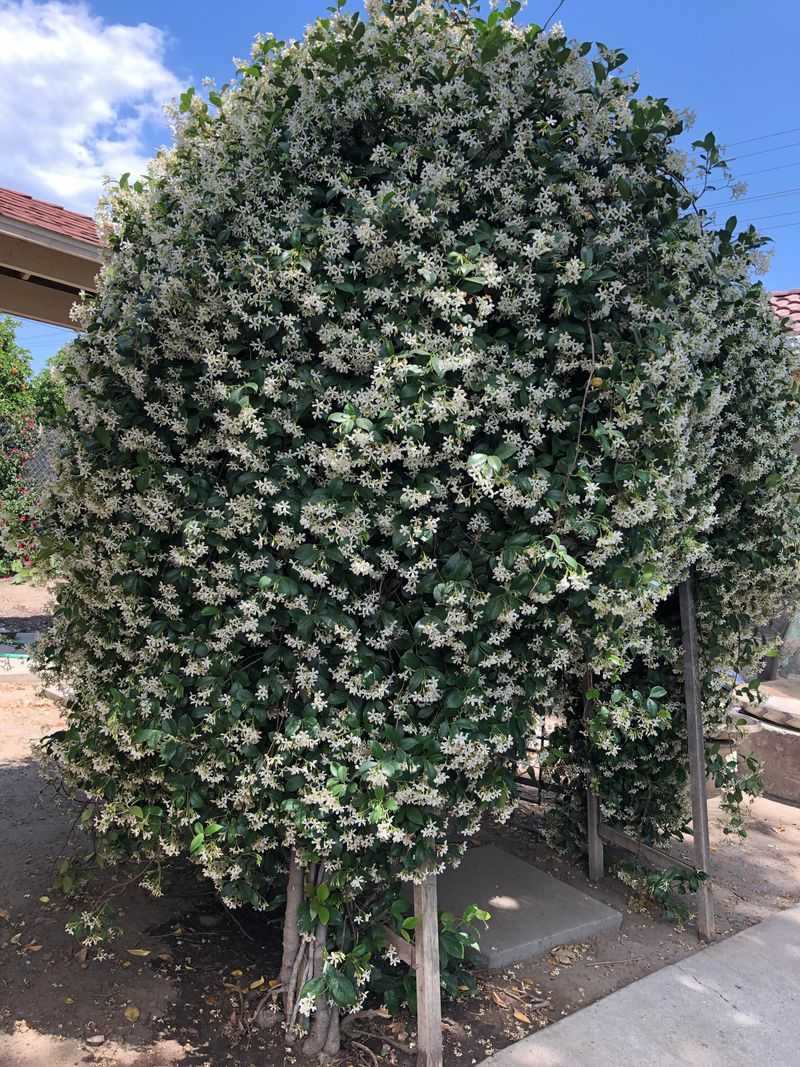
Here is the moment many gardeners miss. Star jasmine finishes its big flower show, and the plant suddenly looks a little messy. The white blooms fade, the stems stretch, and the whole vine seems ready for a reset. That is your best pruning window.
Right after the main bloom is usually the safest time to shape star jasmine. In many California gardens, this happens from late spring into early summer.
Coastal gardens may run a little later. Warmer inland gardens may finish earlier. So watch the plant, not just the calendar.
When most blooms have faded or dropped, the jasmine has finished its main performance. Now it can put energy into fresh stems. Those new stems help set up the next round of flowers.
If you wait too long, the timing gets trickier. The plant needs warm months to grow and mature before cooler weather returns. Late pruning can interrupt that rhythm.
Start with a calm look at the whole plant. Where is it too long? Where is it too thick? Where has it wandered farther than you wanted?
Then make selective cuts. Trim back stems that are out of place. Shorten long runners to a side branch or leaf node. Avoid cutting the whole plant into a flat wall.
Think of this as a jasmine jam session. You are not stopping the music. You are helping the plant find its next verse.
Do not rush after the first faded flower. Wait until the main flush is mostly done. That way, you enjoy the fragrance first and shape the vine second.
A well-timed trim can leave the plant neater, lighter, and ready to grow again. That is the sweet spot: after the show, before the next secret starts.
2. Remove Long Stray Vines Before They Tangle
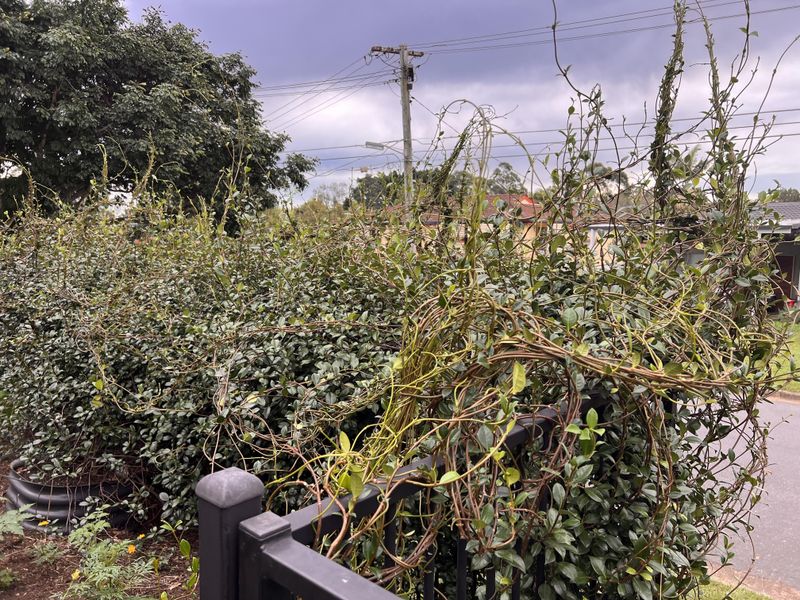
Jasmine has a charming habit of reaching for everything. A trellis? Yes. A fence? Why not. A nearby shrub, gutter, chair, or forgotten garden ornament? Also apparently fair game.
Your California Garden Changes Every Week. Your Plan Should Too.
Gardening in California changes quickly throughout the season. Every Friday you’ll receive a simple weekly plan showing exactly what to plant, prune, fertilize, harvest, and protect so you never miss the right timing.
Those long, stray vines may look harmless at first. But if you leave them alone, they can twist back into the plant and create a dense knot. Once that happens, pruning becomes a puzzle with leaves. The better move is to catch wanderers early.
Walk around your jasmine every few weeks during the growing season. Look for stems that are stretching far beyond the main shape. If one is heading into a path or wrapping where it should not, trace it back.
Do not just chop the end off randomly. Follow the stem to a natural branching point. Then snip there with clean pruners. That keeps the plant looking natural. It also prevents a blunt, stubby look.
This kind of pruning is more like editing than downsizing. You are removing the sentences that ramble. The story still stays full.
Avoid shearing the whole vine just because a few stems are misbehaving. That can take away too much healthy foliage at once. It can also make the plant look stiff instead of graceful.
Selective cuts keep the best stems in place. They also let the jasmine keep growing without turning into a leafy maze.
If your jasmine grows on a trellis, guide good stems back onto the support. Use soft ties if needed. Loose loops are better than tight knots.
Think of stray vine care as a little jasmine management meeting. You are saying, “Great energy, wrong direction.” A few quick cuts now can spare you a major untangling later.
3. Shorten Stems Lightly Instead Of Shearing Hard
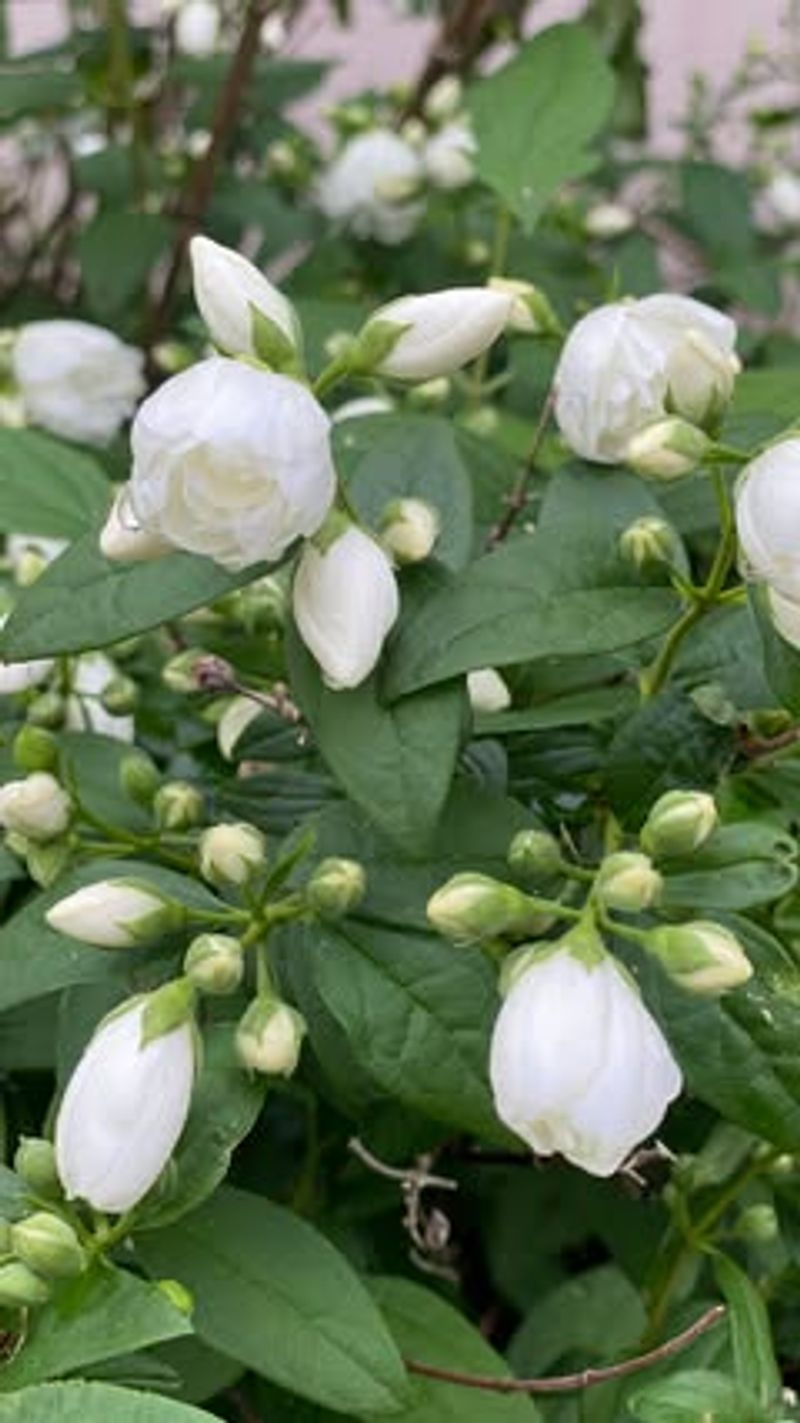
It is easy to look at a shaggy jasmine and think, “This needs a serious cut.” The hedge shears start looking tempting. One big trim seems faster. A flat, tidy shape may sound like the goal. But jasmine usually looks better with a lighter hand.
Hard shearing can leave the plant boxy and unnatural. It can also remove too much tip growth at once. That matters because the newest growth often plays a role in future flowering.
Instead, shorten stems lightly. Aim to take off about one-third of a stem at most, unless you are correcting a specific problem. Cut just above a leaf node or side branch. That encourages branching without stripping the plant back too far.
Step back often as you work. This keeps you from over-pruning one section. Jasmine can look different from three feet away than it does with your face in the foliage.
Use hand pruners for most of the job. They give you better control than hedge shears. You can choose each cut instead of flattening the whole plant.
This approach keeps the vine soft and layered. It also helps preserve healthy leaves, which the plant uses to fuel new growth.
If your jasmine covers a wall or fence, trim the longest stems first. Then shape the edges. Finally, thin any crowded spots. Do not chase perfect symmetry. A little natural movement makes jasmine look better.
Think of it as a trim, not a total vine makeover. You are freshening the shape, not turning it into a green rectangle. That is the jasmine jive: light cuts, better rhythm, more bloom potential.
A gentle pruning session may take a bit more attention. But it often leaves the plant looking healthier, fuller, and much more like jasmine.
4. Keep Healthy New Growth For The Next Flower Flush
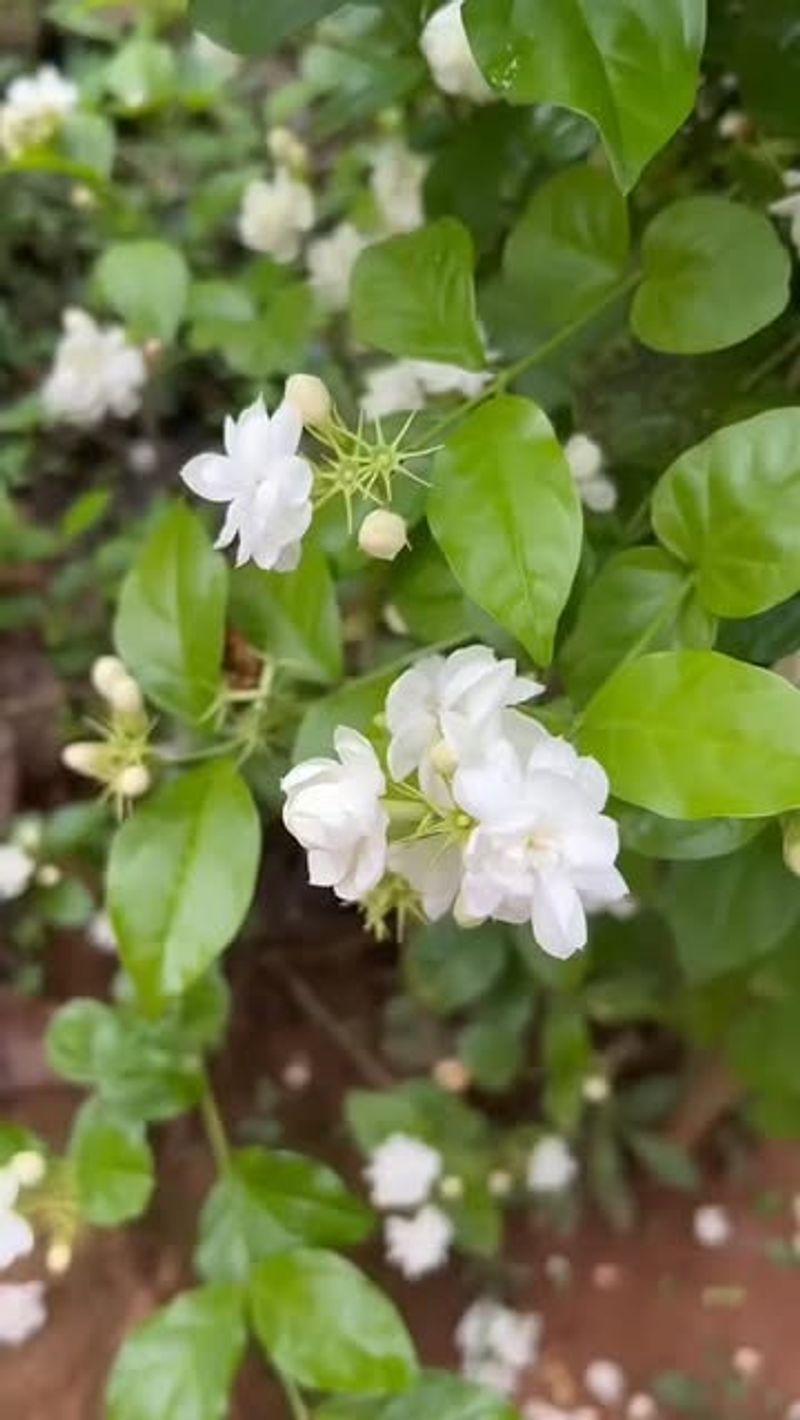
Here is the part that surprises many gardeners. The fresh green growth after bloom is not just extra vine. It may be part of next season’s flower story.
After you prune star jasmine, the plant often pushes new stems through summer. Those stems need time to grow, firm up, and prepare for the next bloom cycle.
Cut too much of that growth later in the season, and you may reduce the flower display you were hoping for.
So after your post-bloom shaping, pause. Let the plant grow for a while. Watch the new stems stretch, leaf out, and settle into the support. This is not untidiness. It is the plant building its next act.
Of course, you can still manage obvious problems. If one stem shoots across a walkway, trim that one. If another tries to wrap around a nearby plant, redirect or shorten it.
But avoid a big shaping session from mid-summer onward. That is when restraint becomes good gardening.
If you are unsure, ask yourself one question before cutting. Is this stem causing a real problem, or do I just want the plant to look extra neat today? If it is only a small cosmetic issue, waiting may be wiser.
California’s long growing season can make jasmine look active for months. That can be misleading. Active growth does not mean every season is a good pruning season. Let the vine carry enough new growth into fall and winter. That gives it more material for future flowers.
Think of those fresh stems as bloom savings. Every healthy shoot is a little deposit toward next spring’s fragrance.
This is where the pun practically prunes itself: do not cut your future short. A little patience now can make the next flower flush much more rewarding.
5. Cut Crowded Interior Stems To Improve Airflow
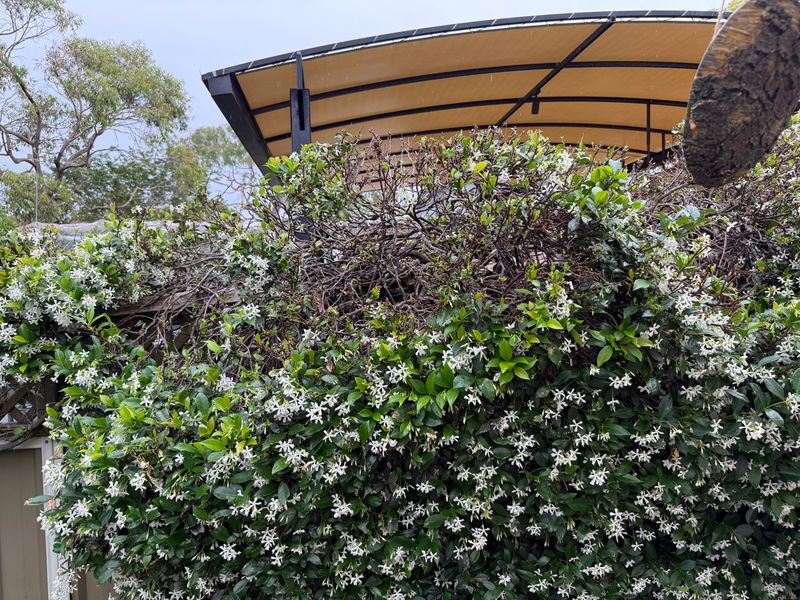
A mature jasmine can look lovely on the outside and crowded inside. Peek beneath the surface and you may find crossing stems, tangled vines, and shaded inner growth. That hidden congestion can make the plant less airy than it should be.
Good pruning is not only about the outer shape. Sometimes the smartest cuts happen inside the plant.
Start by lifting a few outer stems gently. Look into the middle. Are branches crossing and rubbing? Are stems growing inward instead of outward? Is light struggling to reach the center? Those are the areas to thin.
Use hand pruners, not shears. You need precision here. Remove one crowded stem at a time, cutting it back to a side branch or base point. Step back after every few cuts. Interior thinning should open the plant, not hollow it out.
Better airflow can help the foliage stay healthier. It may also make the plant easier to manage after rain, marine layer, or humid spells.
This can be especially useful in coastal California gardens, where damp mornings may linger. In warmer inland areas, better airflow can also help the plant handle heat more comfortably.
Do not remove every older stem. The goal is balance. Keep strong, well-placed growth and remove stems that create crowding.
If you see dry twiggy bits inside the plant, trim them out too. They can make the vine look messy and block airflow.
Think of this as giving your jasmine a little breathing vine-room. Not a drastic renovation. Just enough space for air and light to move through.
When done well, the plant still looks full from the outside. But inside, it is cleaner, brighter, and easier to care for. That is jasmine with better inner vine-peace.
6. Train Vines Onto Supports Before Trimming The Shape
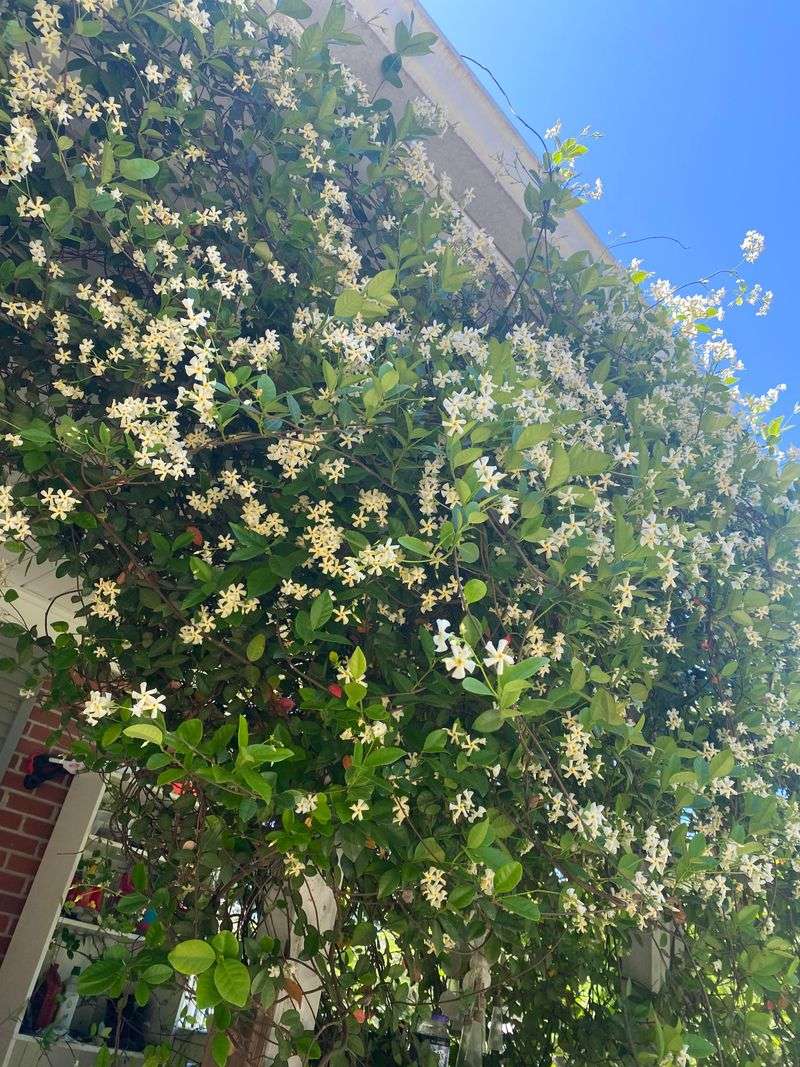
Pruning jasmine without training it first can feel chaotic. The stems go everywhere. Some wrap around each other. Some seem to be headed for another zip code.
So, before you start cutting, organize the vine. Training gives the plant a framework. It also helps you see which stems are useful and which ones are simply wandering.
Start by finding the main stems. These are the stronger vines that create the plant’s structure. Gently guide them onto the trellis, fence, arbor, or wire support.
Use soft garden ties, twine, or flexible clips. Tie loosely so stems can expand as they grow. A tight tie can rub or pinch the vine later.
Space the main stems evenly if possible. This helps the plant fill the support without creating a thick knot in one area.
Once the framework is in place, pruning becomes much clearer. Now you can trim side shoots, shorten stray ends, and shape the outline without removing important structure.
This is especially helpful in California gardens, where jasmine can grow quickly through a warm season. A few untrained stems can become a tangle faster than you expect.
If your plant is already established, you can still improve the framework. Untie any loose or awkward stems. Redirect them gently. Cut only what cannot be guided into place.
Do not force stiff older stems too far. They may not bend easily. Work with the plant’s natural direction instead of against it.
A trained jasmine is easier to prune, easier to water around, and easier to enjoy. It also tends to look more elegant on the structure.
7. Refresh Overgrown Jasmine In Small Stages
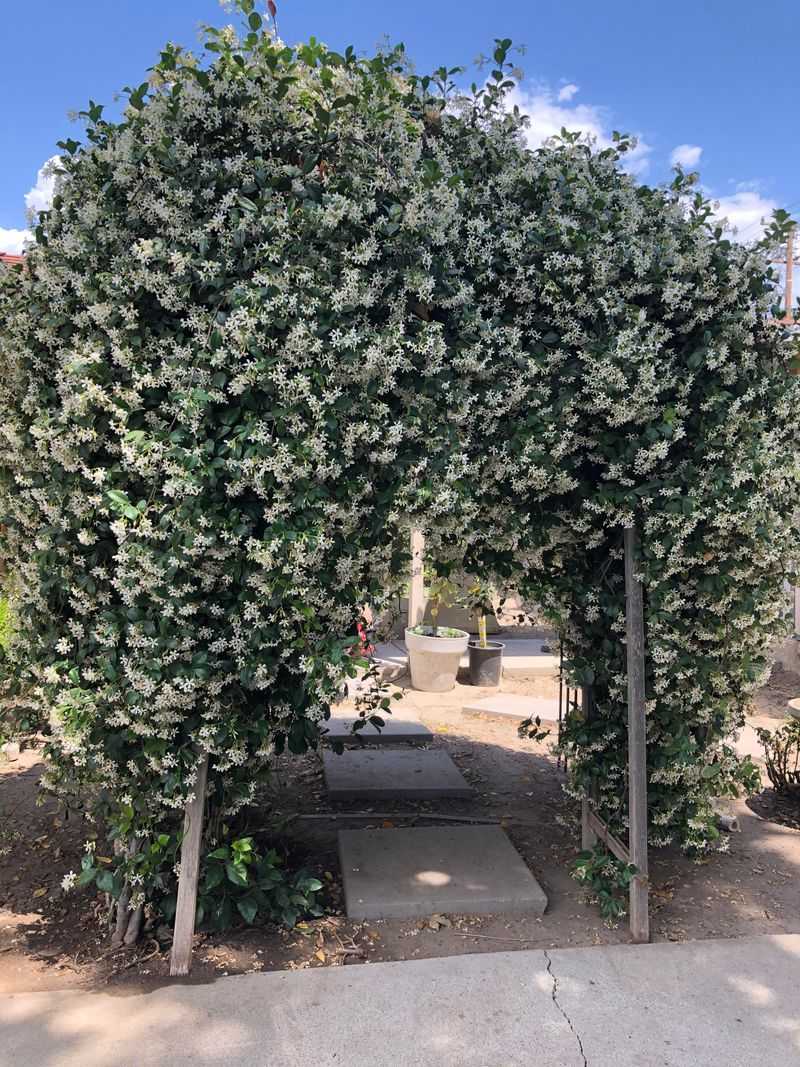
Sometimes jasmine gets ahead of you. One season gets busy. Then another. Suddenly, the vine is thick, heavy, and blooming only around the outer edges.
At that point, the urge to cut everything back hard can be strong. But jasmine usually responds better to a staged refresh.
Instead of tackling the whole plant at once, divide it mentally into sections. Work on one section at a time. Leave the rest of the plant mostly intact so it can keep supporting growth.
Start with the oldest, thickest, most tangled area. Remove some of the least useful stems first. Cut them back to a healthy side branch or near the base if needed. Then stop.
Give the plant time to respond before moving to the next section. In California’s mild climate, jasmine often regrows steadily when treated with patience.
This gradual method keeps the plant looking better during the process. It also helps avoid sudden bare patches.
If the vine covers a fence or wall, refresh one-third of the area first. The next season, move to another section. Large plants may need a year or two to look fully renewed. That is not a problem. It is a strategy.
While refreshing, keep training new shoots onto supports. Do not let them tangle into the same old pattern. The goal is not just smaller jasmine. The goal is better jasmine.
After each section is pruned, add steady care. Water during dry stretches. Mulch the root zone lightly. Avoid heavy feeding that pushes soft, messy growth.
Think of this as jasmine rehab, not a vine ambush. Slow refreshes often create stronger structure and better bloom coverage later. You get control back without shocking the whole plant. That is the power of taking it one step at a time.
8. Avoid Late Summer Cuts That Remove Next Season’s Buds
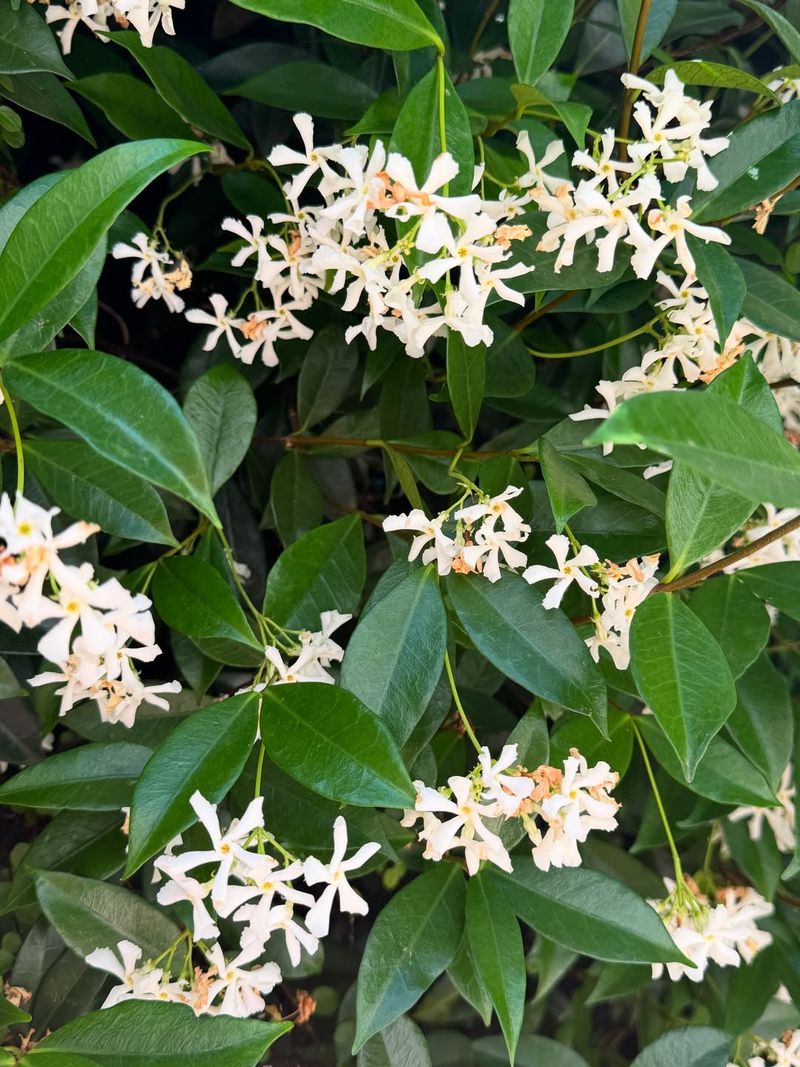
Late summer can make gardeners itchy for cleanup. Your jasmine seems like it could use a tidy little trim? Be careful here.
A light snip of one wayward stem is usually fine. A major late-summer shaping session can be a problem.
By this point, the plant may already be preparing growth that supports future flowers. Those stems are easy to remove without realizing what they are carrying. That is why timing matters so much.
The safer window for meaningful pruning is right after the main bloom ends. That gives jasmine time to regrow and mature before the next flowering cycle.
Late summer pruning can shorten that process. It may leave the plant looking neat now, but less impressive later.
If your jasmine looks messy in August or September, focus on restraint. Remove only what blocks a path, grabs another plant, or heads somewhere truly inconvenient.
Leave the rest alone until the next post-bloom window. This can feel hard, especially if you like a tidy garden. But jasmine rewards patience.
If you need help remembering, mark your pruning window on a calendar. Write “prune after bloom,” not “prune when shaggy.” The plant’s cycle matters more than your cleanup mood.
Coastal gardeners may find this especially confusing because jasmine can look active into fall. But visible growth does not always mean it is pruning time. Let the future flowers stay tucked in place. Give the plant time to finish its work.
That way, when the next bloom season arrives, your jasmine can bring the fragrance, the flowers, and the full vine finale.