Stop Making These 9 Mistakes With Your Climbing Clematis
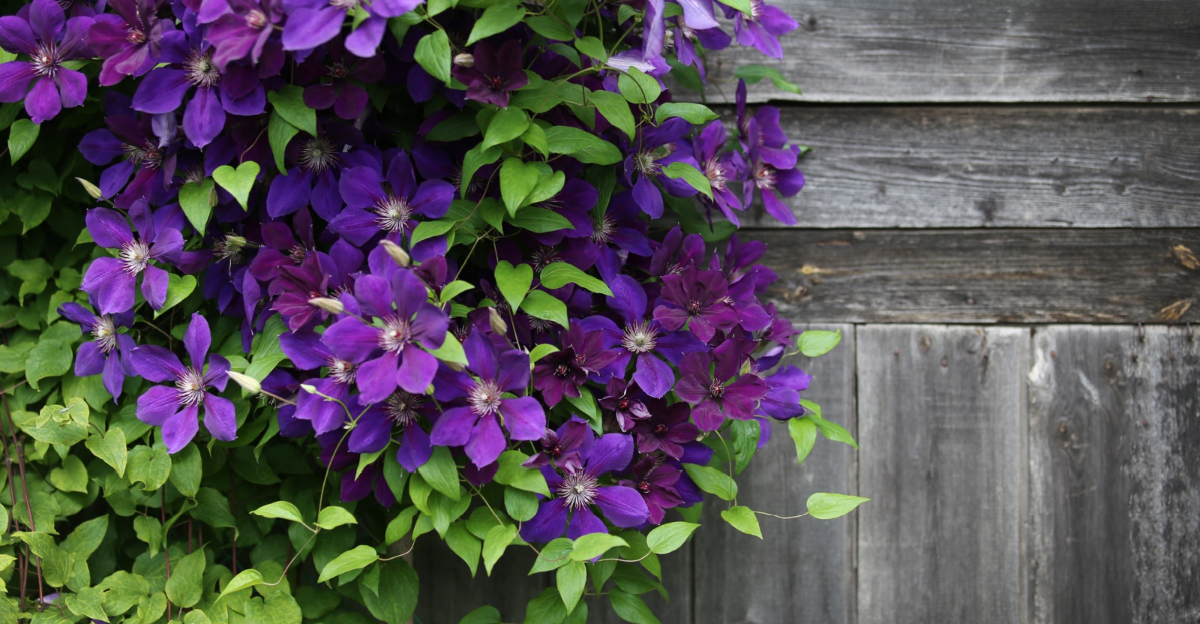
Clematis stopped me cold in my Virginia garden the first spring I grew it. The vine sat bone-still for six weeks, neither thriving nor growing, just staring back at me like a challenge.
That quiet stubbornness turned out to be the best gardening lesson I ever received.
Across Virginia and beyond, this plant has a reputation for punishing impatience and rewarding those who bother to understand its quirks.
Root placement, pruning timing, soil depth are each a quiet deal-breaker that nobody mentions at the garden center. Skip the basics and the vine sulks.
Respect them and it climbs like it has something to prove. The truth is, clematis does not ask for much. It asks for the right things.
Most struggles trace back to a short list of avoidable missteps that happen long before the first flower bud forms. Know the missteps. Own the bloom.
1. You Didn’t Provide Any Support Structure
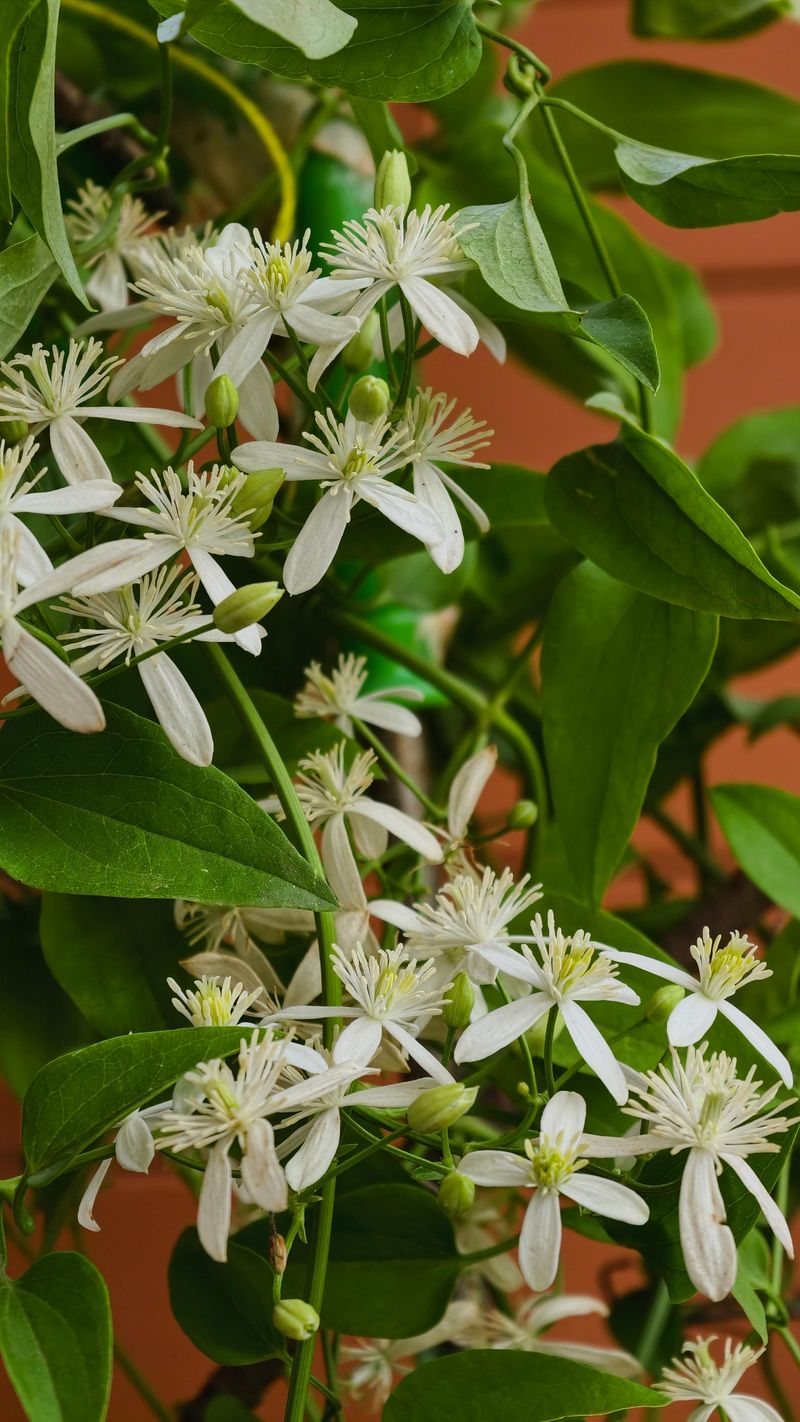
A vine with nowhere to go is a vine going nowhere. Bare stems flopping on the ground is one of the more discouraging sights in a garden.
Clematis is a natural climber, but it cannot grip thin air. Without something to wrap around, your vine will tangle into a hopeless mess or spread across the soil where it stays weak and vulnerable. Clematis climbs by twisting its leaf petioles around a support.
Those little leaf stems need something narrow to grab, like wire, twine, or thin wooden stakes. A smooth brick wall or a wide wooden post gives the plant absolutely nothing to work with.
Installing a simple trellis, wire grid, or even a bundle of bamboo stakes before you plant makes a massive difference. The structure does not need to be fancy or expensive.
Even a few pieces of garden twine stretched between two posts will give your clematis the launch pad it needs. Think of the support as your plant’s personal ladder.
Set it up early, position it close enough for stems to reach, and your clematis will start climbing almost immediately. Getting this one thing right sets the entire season up for success.
2. The Support Structure Is Too Thick To Grip
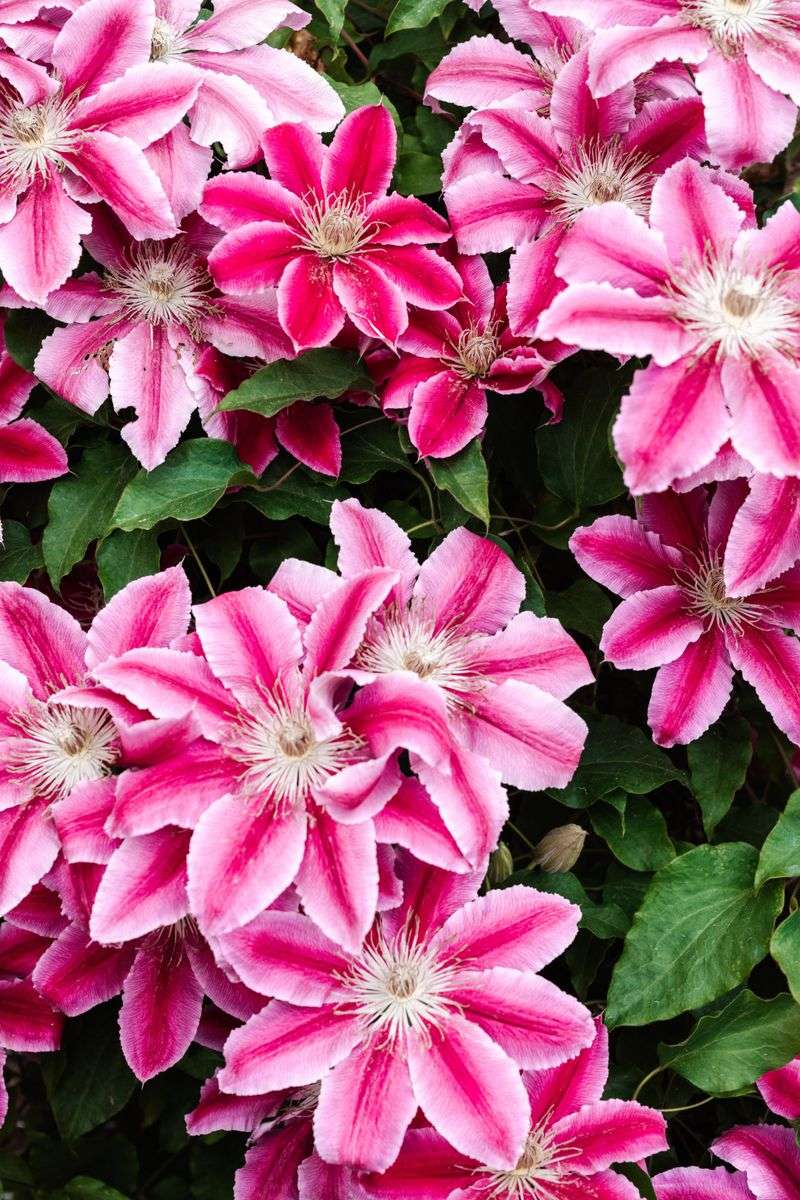
Not every trellis is actually useful to a climbing clematis. Most gardeners assume any trellis will do the job, and that assumption causes more frustration than almost anything else.
The leaf petioles that clematis uses to climb are delicate. They simply cannot wrap around anything thicker than about half an inch.
A chunky wooden pergola post or a wide metal pipe looks sturdy and supportive, but your clematis will ignore it completely.
The vine needs something slender to coil around, like wire, thin rope, or narrow wooden dowels. Thick supports are basically invisible to the plant.
An easy fix is to attach a wire mesh or jute netting directly to the surface of your existing structure. This creates a web of thin attachment points the plant can actually use.
You can find expandable wire trellis panels at most garden centers for just a few dollars. Once you swap out bulky supports for slender ones, you will notice your clematis reaching and grabbing within days.
It almost feels like the plant was waiting for permission to climb. Give it the right grip, and watch it take off with surprising speed and energy.
3. Slats And Wires Are Spaced Too Far Apart
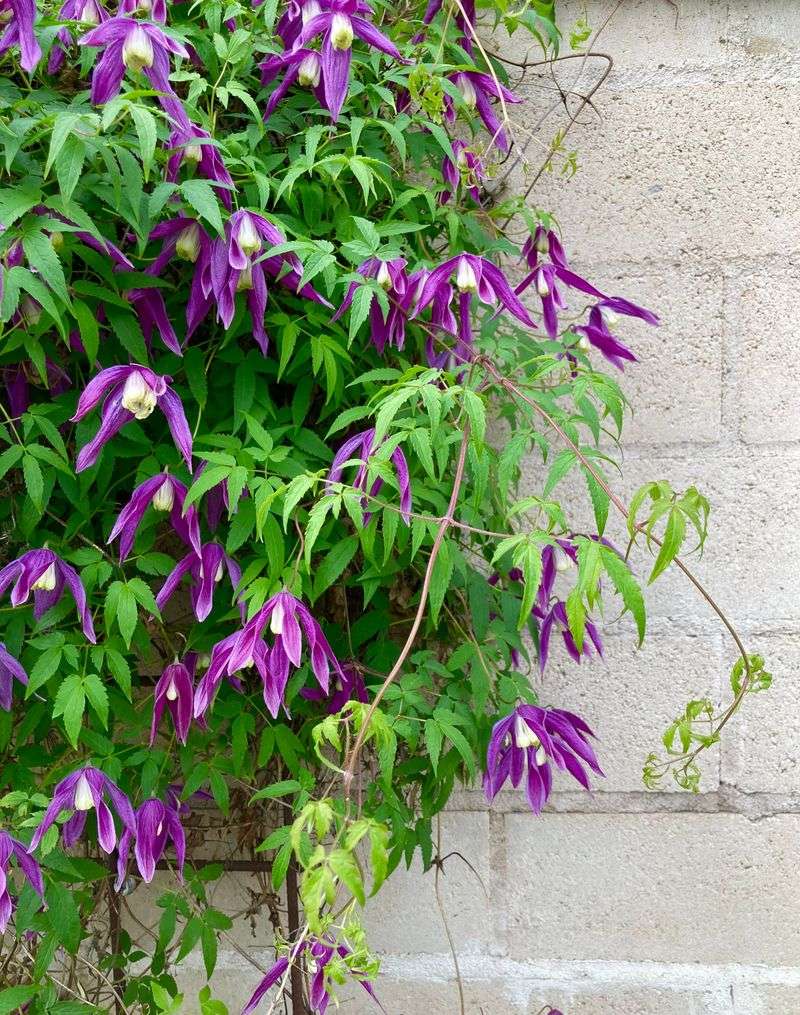
Spacing matters more than it looks like it should. As a general guide, gaps wider than four to six inches can make it harder for your vine to find its next handhold, though this varies by variety.
Growth will stall out fast when the next grip point is out of reach. Clematis does not leap between supports the way a Hollywood hero leaps between buildings.
It moves slowly, coiling one leaf stem at a time. When the next rung is too far away, the plant simply stops and the stems droop awkwardly. Retrofitting a wide-spaced trellis is easier than replacing it entirely.
You can weave horizontal lines of garden twine between existing slats to cut the gap in half. Zip ties and thin wire also work well for adding extra rungs without dismantling the whole structure.
Tighter spacing creates a continuous ladder the plant can climb without interruption. You will see new growth reaching upward instead of hanging sideways or looping back on itself.
A well-spaced support transforms a struggling clematis into a confident, upward-moving vine almost overnight.
4. The Trellis Is Too Short For The Variety
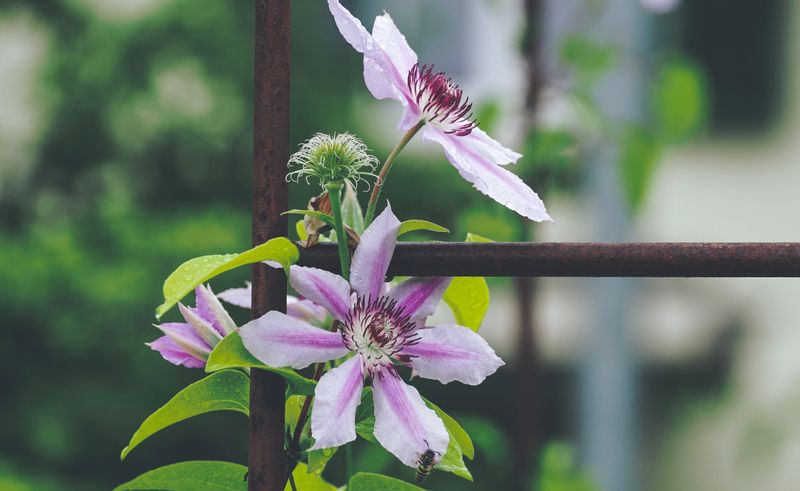
A trellis that fits today can become a problem by August. Clematis ranges from four feet to twenty, and that gap matters enormously.
A short trellis will be completely engulfed before summer even peaks. Once your vine runs out of vertical real estate, it does not politely stop growing.
It flops over the top, cascades back down, and creates a tangled curtain that blocks airflow and traps moisture. That dampness invites powdery mildew and other fungal problems.
Before you purchase a trellis, look up the expected height of your specific clematis variety. That information is usually printed on the plant tag or available with a quick online search.
Match your support height to the mature size of the plant, not to what looks good at the garden center.
If you already have a short trellis in place, you can extend it upward with additional wire or a second trellis panel attached above the first.
A little planning now saves a lot of untangling later. Give your climbing clematis the vertical space it was born to fill.
5. You Didn’t Train The Vine Early Enough
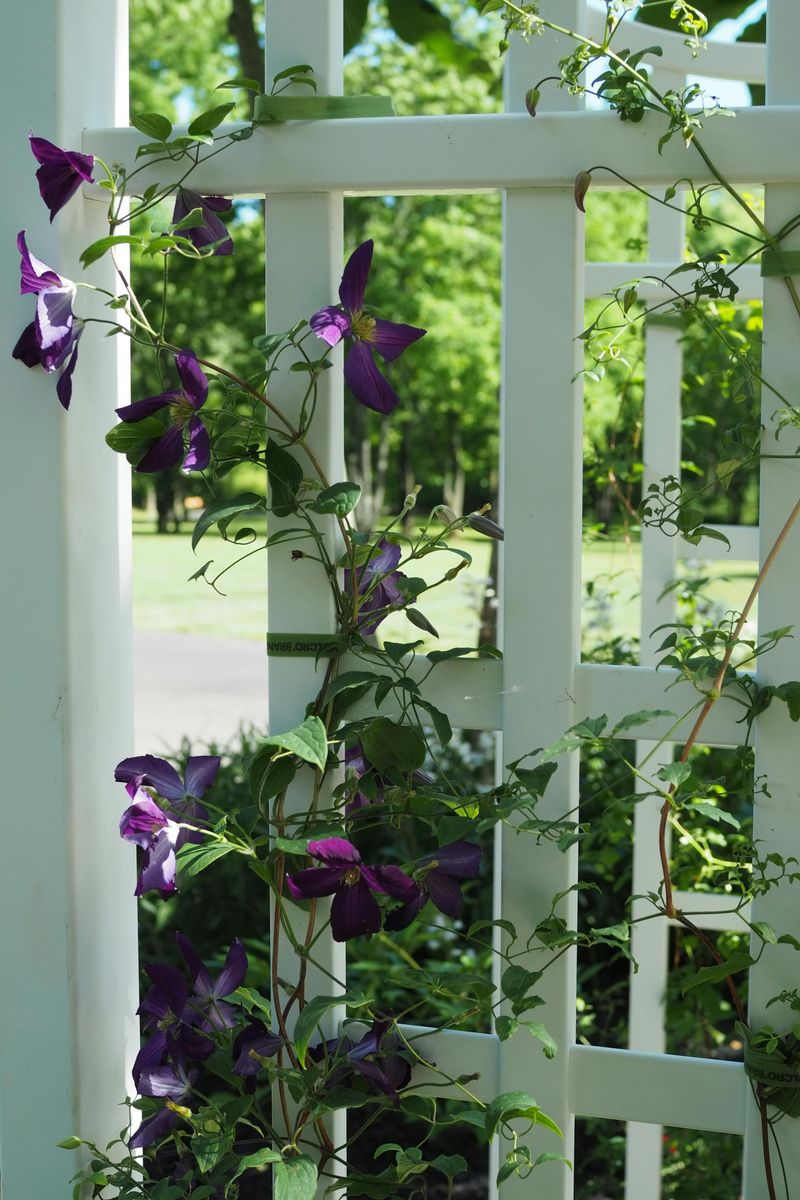
Young clematis stems have a short window of cooperation. As the season progresses, stems gradually stiffen and become less flexible.
Trying to redirect them too late in the season can put them at risk of snapping, so earlier is always better.
Training means guiding the young flexible stems toward your support structure and loosely securing them with soft ties.
You are essentially showing the plant which direction to go. Left to its own instincts, a young clematis might spiral around itself or head in completely the wrong direction.
Check on new growth every few days during the active growing season. When you spot a stem reaching outward or downward, gently redirect it toward the trellis and fasten it loosely.
Soft rubber plant ties or strips of old pantyhose work perfectly and will not cut into the stem. Early training shapes the entire future of the plant.
A well-guided clematis in its first season develops an even, attractive framework that supports lush growth for years to come.
Spend ten minutes a week on this task and you will never have to wrestle with a tangled mess again.
6. The Plant Is Getting Too Much Shade
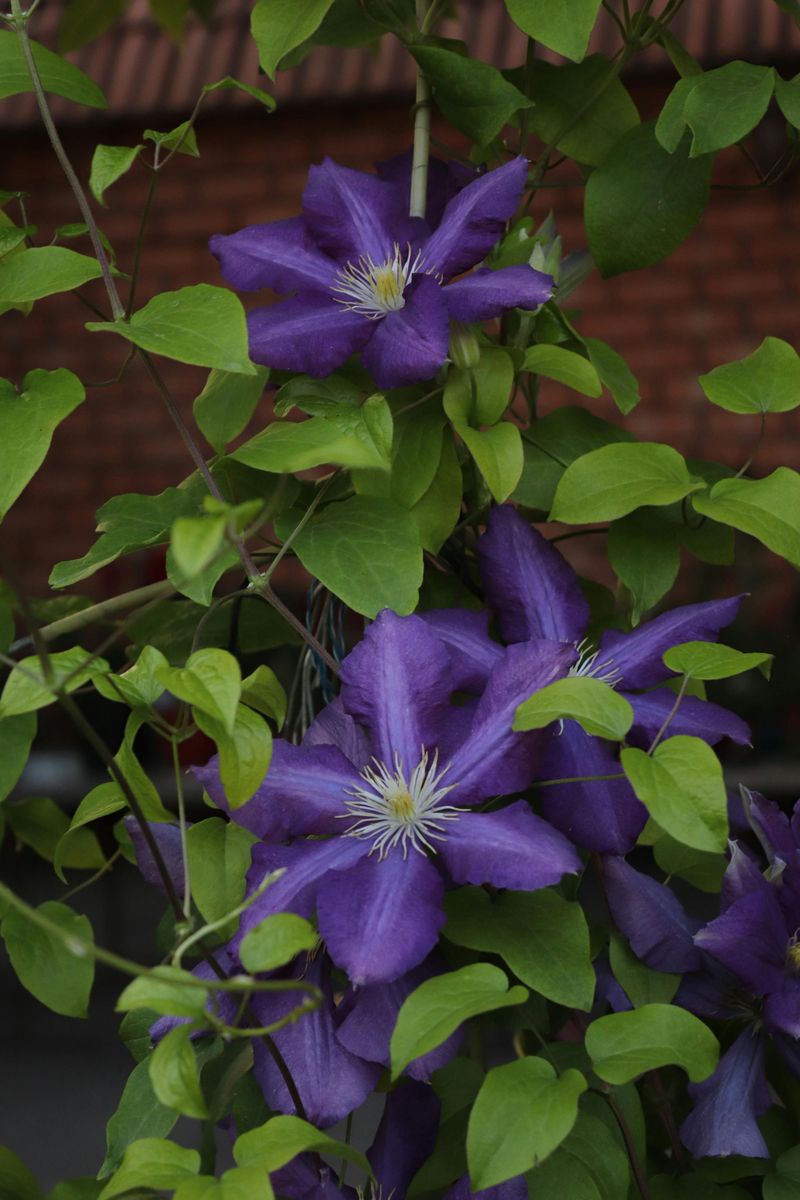
Sunlight is not optional for a clematis that actually blooms. This plant has a famous saying attached to it: head in the sun, feet in the shade.
Most gardeners remember the second half but forget the first. Without at least six hours of direct sunlight per day, a climbing clematis will produce very few flowers and grow weakly.
Shade slows everything down for this plant. The foliage looks sparse, the stems stay thin, and blooms either never appear or drop off quickly after opening. If your vine looks like it is just going through the motions, low light is often the culprit.
Take a look at your planting spot throughout the day and count how many hours of direct sun actually hit the vine.
If nearby trees, fences, or buildings are blocking light for more than half the day, it may be time to consider moving the plant or trimming back the shade source.
Relocating an established clematis is not as scary as it sounds. The best time to move one is in early spring before new growth starts.
Plant it in a sunnier spot, keep the roots cool with a layer of mulch, and watch the transformation unfold across the season.
7. The Soil Has Poor Drainage
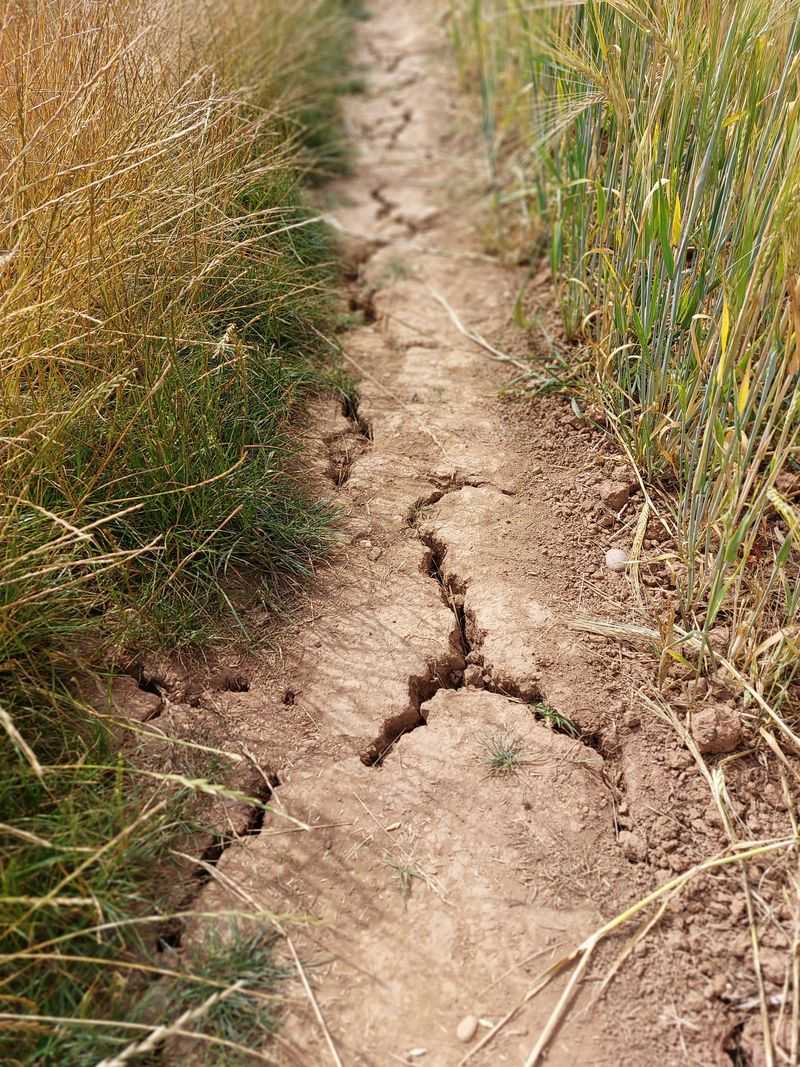
Waterlogged soil can be an easy problem to overlook. Above-ground growth sometimes looks fine while the roots are quietly struggling beneath the surface.
This plant absolutely needs well-draining soil to stay healthy. Sitting in waterlogged ground puts clematis at serious risk of root rot, which becomes much harder to address the longer it goes unnoticed.
Clay-heavy soil is the most common offender. It holds onto moisture long after rain stops, keeping the root zone saturated for days.
Even a plant that looks fine above ground may be struggling badly beneath the surface. Improving drainage does not always require a major overhaul.
Mixing generous amounts of compost, perlite, or coarse grit into the planting area before you install the vine makes a noticeable difference.
Raised beds are another excellent option if your native soil is especially dense or compacted.
A simple test can tell you a lot about your drainage situation. Dig a hole about twelve inches deep, fill it with water, and check how long it takes to drain.
If water is still sitting there after an hour, your soil needs amendment before a climbing clematis will ever truly thrive there.
8. Stems Are Getting Broken By Wind Or Improper Ties
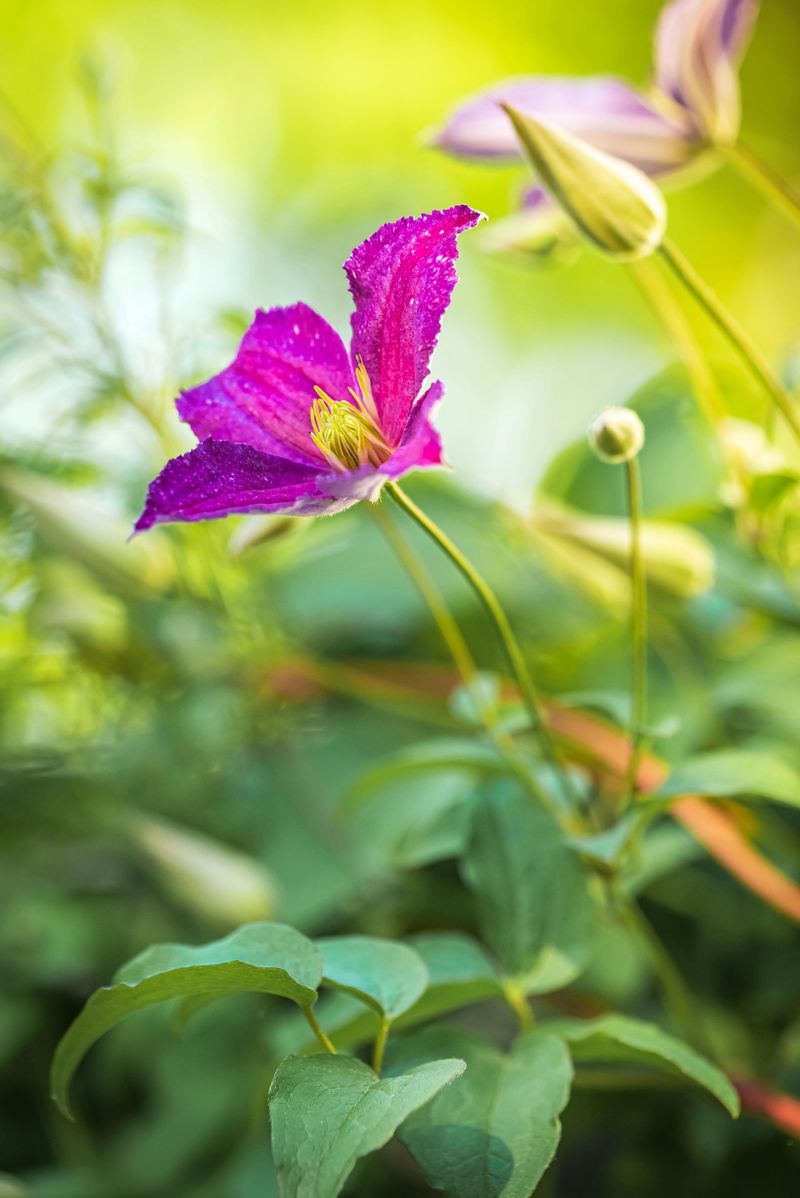
One snapped stem can quietly erase weeks of progress. Young stems are fragile, and wind or tight ties are usually to blame.
Either one can set back months of steady progress surprisingly quickly. Wire ties and zip ties are the usual suspects when it comes to stem damage.
They look secure, but as the stem grows thicker, those rigid ties can gradually restrict the stem as it expands and thickens.
The stem swells, the tie bites in, and the whole thing weakens at that point. Always use soft, flexible materials to secure your clematis.
Figure-eight loops of garden twine, silicone plant ties, or torn strips of soft fabric give the stem room to expand naturally.
Leave a little slack in every tie so growth is never restricted. Wind protection is equally important, especially for newly planted vines.
A temporary windbreak made from burlap or shade cloth on the exposed side of the plant can protect a lot of new growth during spring storms.
Once your climbing clematis matures and toughens up, it handles breezy conditions with much more confidence.
9. You Chose A Non-Vining Variety By Mistake
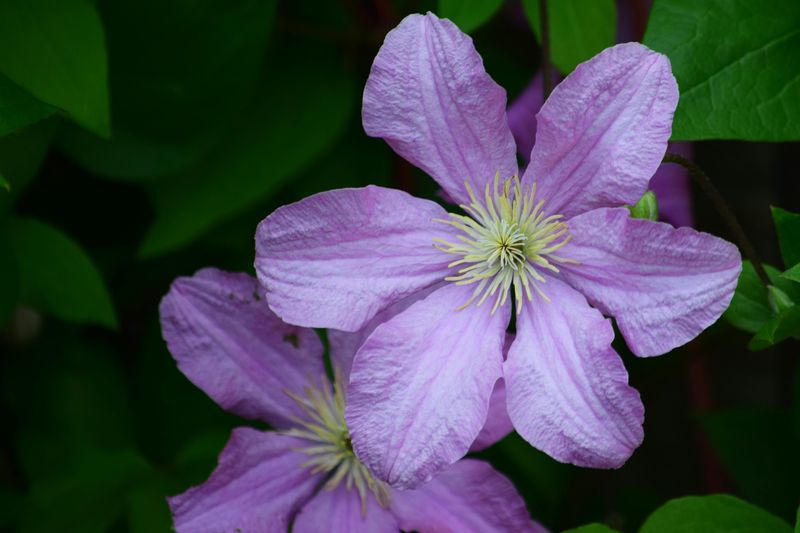
Not every clematis actually climbs, and that surprises more gardeners than it should. Many assume the whole genus behaves the same way.
Buying the wrong type and expecting it to scale a trellis leads to confusion, disappointment, and a plant that never does what you imagined.
Clematis integrifolia, for example, is a beautiful herbaceous type that grows as a shrub or ground cover. It has no climbing mechanism at all.
No matter how perfect your trellis is, this variety will simply flop outward and refuse to ascend. Before purchasing, read the label carefully or look up the variety name online.
True climbing clematis species and hybrids will be described as vining, climbing, or twining. If the tag says herbaceous or bush-type, that plant belongs in a border bed, not against a wall.
If you already have a non-vining type in the ground, do not be discouraged. Those varieties shine as groundcovers or in mixed borders.
And now that you know the difference, your next purchase of a climbing clematis will go exactly the way you planned.