Native Georgia Plants That Support The Bees Most Gardeners Have Never Thought About
Tiny bees are busy in Georgia gardens every day, yet most of them go completely unnoticed.
Most people never notice them because they are small, easy to overlook, and rarely get the attention given to honey bees or bumblebees.
Despite their size, these lesser known pollinators play an important role throughout the growing season. Many visit flowers that other bees ignore, and some have surprisingly close relationships with certain native plants.
Without them, gardens would be far less active than they appear at first glance.
Pollinator gardening continues to grow in popularity, but much of the attention still goes to a handful of familiar species.
Native plants can support a much wider range of bees, including some that many gardeners have probably never heard of before.
Those overlooked connections are one reason certain plants deserve a closer look than they usually receive.
1. Buttonbush Covers Its Flowers With Visiting Bees
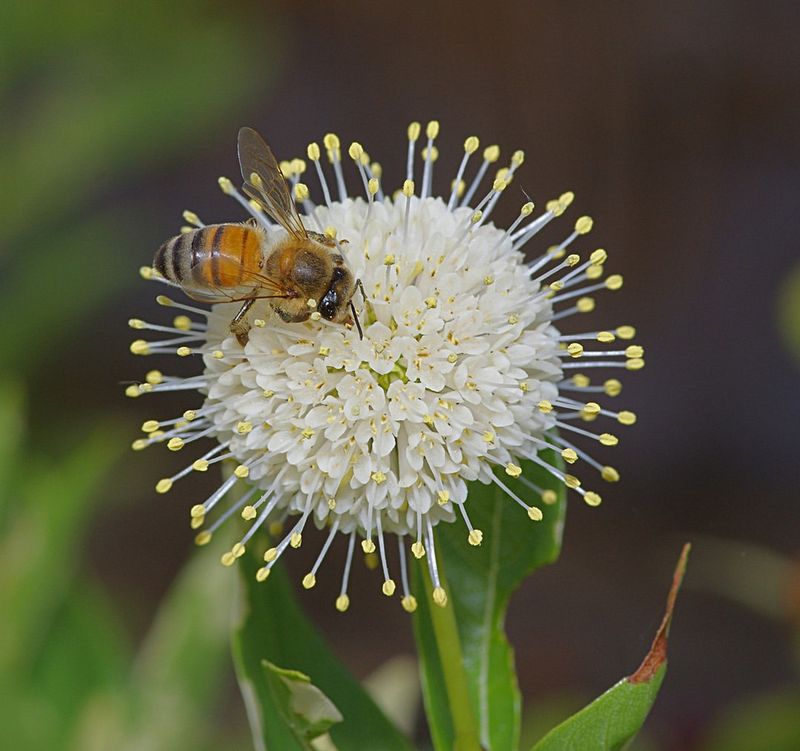
Round, white, and covered in bees the moment it opens, Buttonbush is one of the most productive shrubs you can plant near water. Its pincushion-shaped blooms appear in midsummer and attract an almost constant stream of visitors.
Bumble bees, honeybees, and native sweat bees all work these flowers hard. The nectar is highly accessible, which is why so many different bee species show up at once.
Few plants match this level of activity during the hottest weeks of summer.
Buttonbush naturally grows along stream banks, pond edges, and low-lying wet areas. In a home garden, it handles wet clay soil and occasional flooding without complaint.
Plant it where water tends to collect and it will reward you every summer.
Shrubs typically reach six to twelve feet tall, so give them room. Pruning right after bloom keeps the shape manageable.
Buttonbush is native to much of the eastern United States and grows well in a variety of conditions. It may not look as flashy as some ornamental shrubs.
Once the flowers open and pollinators arrive, though, it quickly becomes a standout.
2. Partridge Pea Supports Pollinators During The Hottest Months
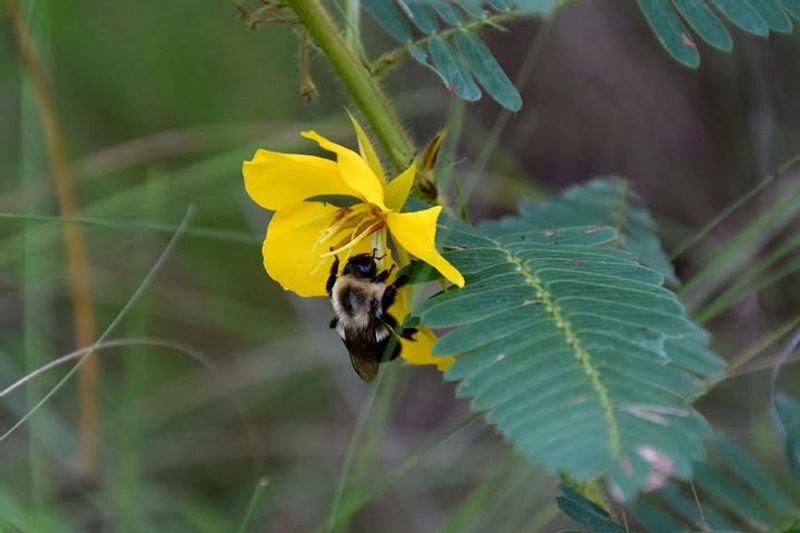
Bumble bees absolutely love Partridge Pea. Watch a patch of it in July or August and you will likely see several bumble bee species working the flowers at the same time.
Not many plants deliver that kind of activity in the brutal heat of a Southern summer.
Partridge Pea is an annual that reseeds freely. Plant it once and it tends to come back on its own each year.
It grows fast, handles poor dry soil, and does not need fertilizer or irrigation once established.
What makes it especially useful is that it blooms when many other plants have stopped. Midsummer through early fall is a tough time for bees in a typical garden.
Partridge Pea fills that gap reliably and without much effort from the gardener.
Bumble bees use a technique called buzz pollination to collect pollen from Partridge Pea flowers. Standard honeybees cannot do this, so the plant is particularly valuable for supporting native bumble bee populations.
It grows well in full sun and tolerates sandy or rocky ground. Scatter seeds in a bare, sunny patch and let it do its thing.
Your Georgia Garden Changes Every Week. Your Plan Should Too.
Gardening in Georgia changes quickly throughout the season. Every Friday you’ll receive a simple weekly plan showing exactly what to plant, prune, fertilize, harvest, and protect so you never miss the right timing.
Few plants are this easy and this productive for pollinators.
3. Blazing Star Becomes One Of The Busiest Stops In The Garden
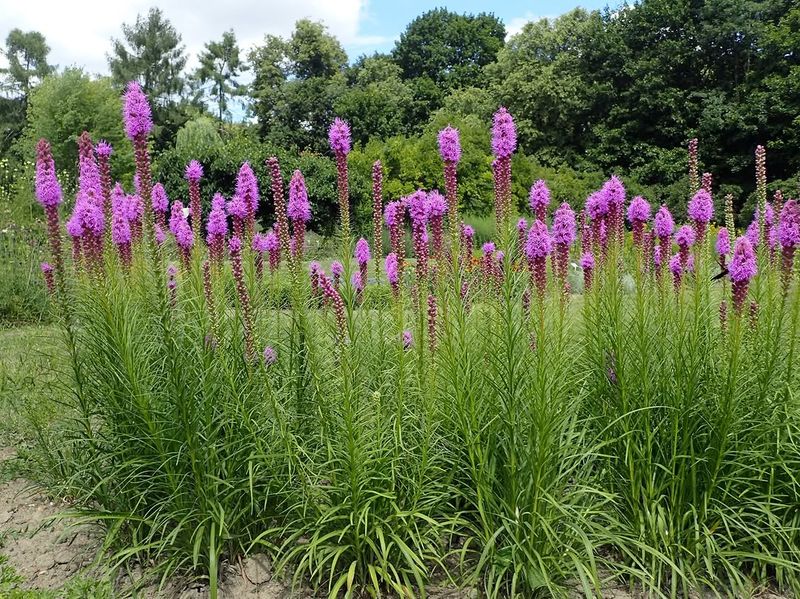
Purple spikes covered in bees and butterflies at the same time, Blazing Star earns its reputation fast. Once a clump gets established, late summer becomes its moment to shine in any native garden.
Bees work the flowers from the top of each spike downward as blooms open in sequence. That means the plant stays productive over several weeks rather than peaking and fading quickly.
Honeybees, bumble bees, and long-tongued native bees all feed here regularly.
Liatris species are native to the southeastern United States and handle heat and humidity well. They prefer well-drained soil and full sun.
Wet, heavy clay can cause the corms to rot, so drainage matters more than soil richness.
Blazing Star is also one of the most visually striking plants in a pollinator garden. The bold vertical form contrasts well with lower, spreading plants.
Gardeners often overlook it because it looks like a specialty plant, but it is genuinely tough and low maintenance once the corms are settled in. Plant in fall or early spring.
Space clumps about a foot apart. Within two seasons, a healthy patch will attract more bee activity than almost anything else in the same garden bed.
4. Swamp Milkweed Provides A Reliable Summer Nectar Source
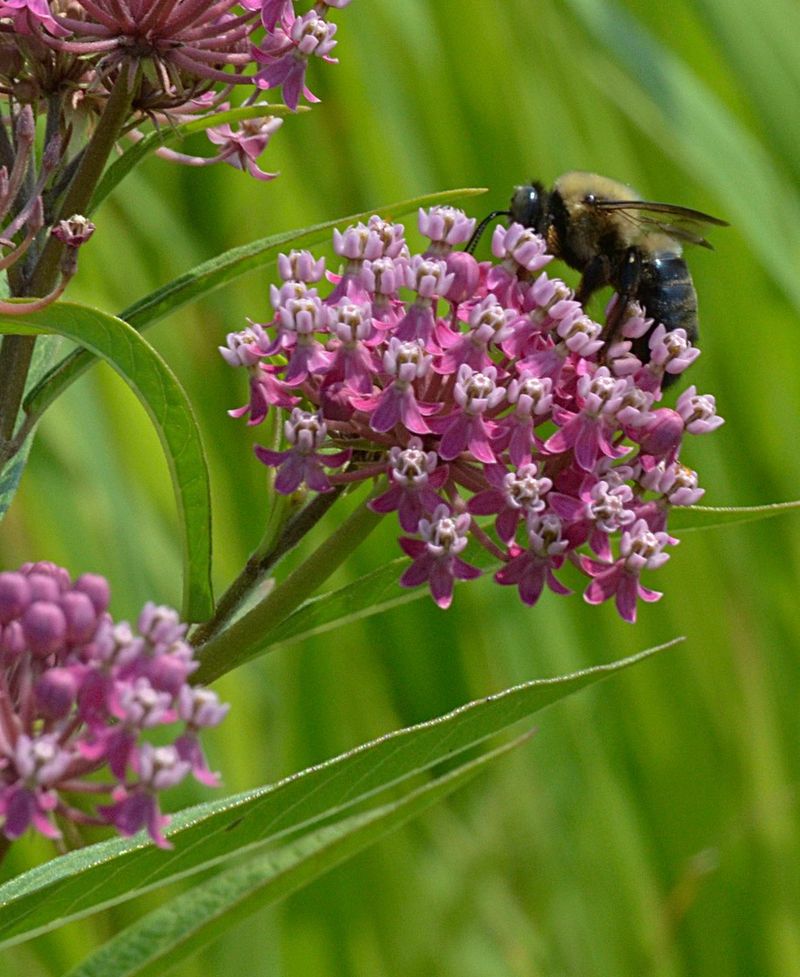
Most people know milkweed for monarch butterflies, but bees show up just as often. Swamp Milkweed produces dense clusters of pink flowers packed with nectar, and bees work them from morning until the heat of afternoon slows things down.
Unlike common milkweed, Swamp Milkweed stays upright and does not spread aggressively by underground runners. It clumps neatly and reaches about three to four feet tall.
That makes it much easier to manage in a home garden bed.
Wet or consistently moist soil suits it best. Rain gardens, low spots near downspouts, and pond edges are all ideal placements.
It handles clay soil well and tolerates short periods of standing water without issue.
Bloom time runs from June through August, hitting squarely in the middle of the summer nectar gap that many gardens struggle with. Honeybees, bumble bees, and several specialist native bees all use the flowers.
The foliage also supports monarch caterpillars, which makes it one of the most multi-functional native plants available to southeastern gardeners. Cut spent flower heads back after bloom to encourage a second flush of flowers before fall sets in.
It is a dependable, hardworking plant that earns its space every single season.
5. False Indigo Gives Early-Season Bees Something To Forage
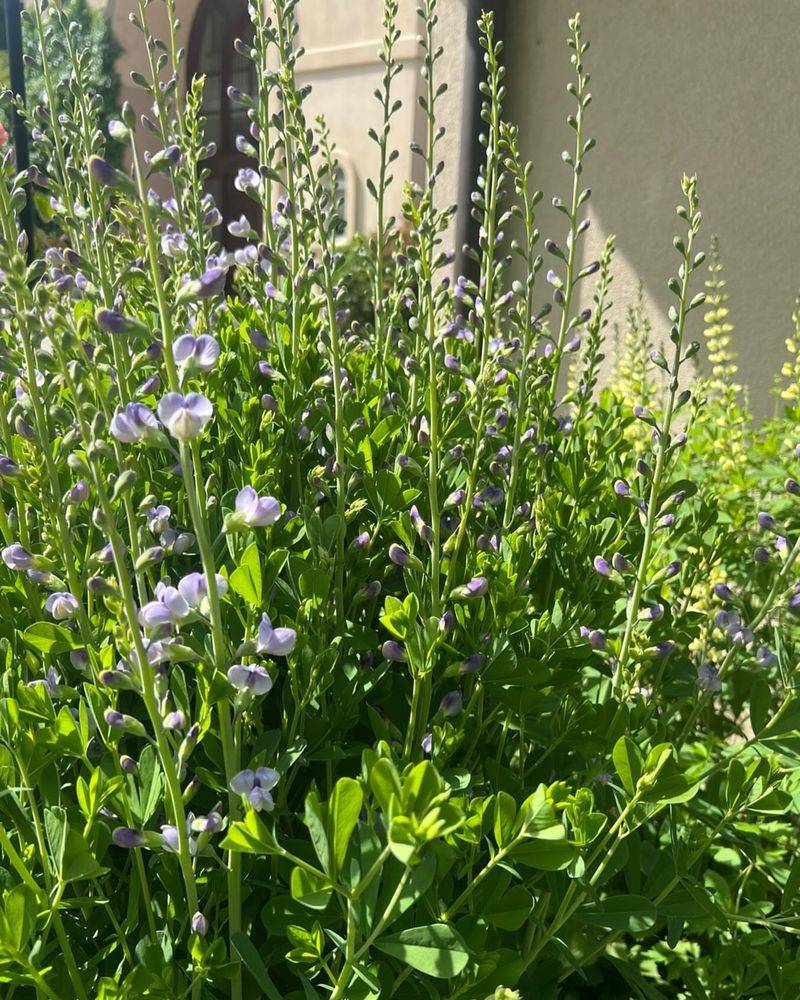
Early spring bees need food fast, and False Indigo delivers when almost nothing else is ready. Blooming in April and May, it catches the first wave of bumble bees and native bees right as they become active after winter.
Baptisia australis produces tall spikes of deep blue-purple flowers that look stunning and function brilliantly for pollinators. Bumble bees are especially drawn to it.
They are strong enough to force open the pea-shaped flowers and reach the pollen and nectar inside.
Once established, False Indigo is remarkably self-sufficient. The deep taproot makes it drought-tolerant and long-lived.
Established clumps can persist for decades with almost no attention. Do not try to transplant a mature plant; the taproot does not take well to being disturbed.
Plant it in full sun to light shade with well-drained soil. It grows slowly at first but becomes a substantial, shrub-like clump over several years.
The inflated seed pods that follow the flowers rattle in the wind and add fall interest. False Indigo is one of those plants that rewards patient gardeners.
Give it two or three seasons to settle in, and it will become a permanent, productive anchor in any native planting. Few early-spring plants match its combination of beauty and bee value.
6. Narrowleaf Mountain Mint Draws An Unusual Variety Of Pollinators
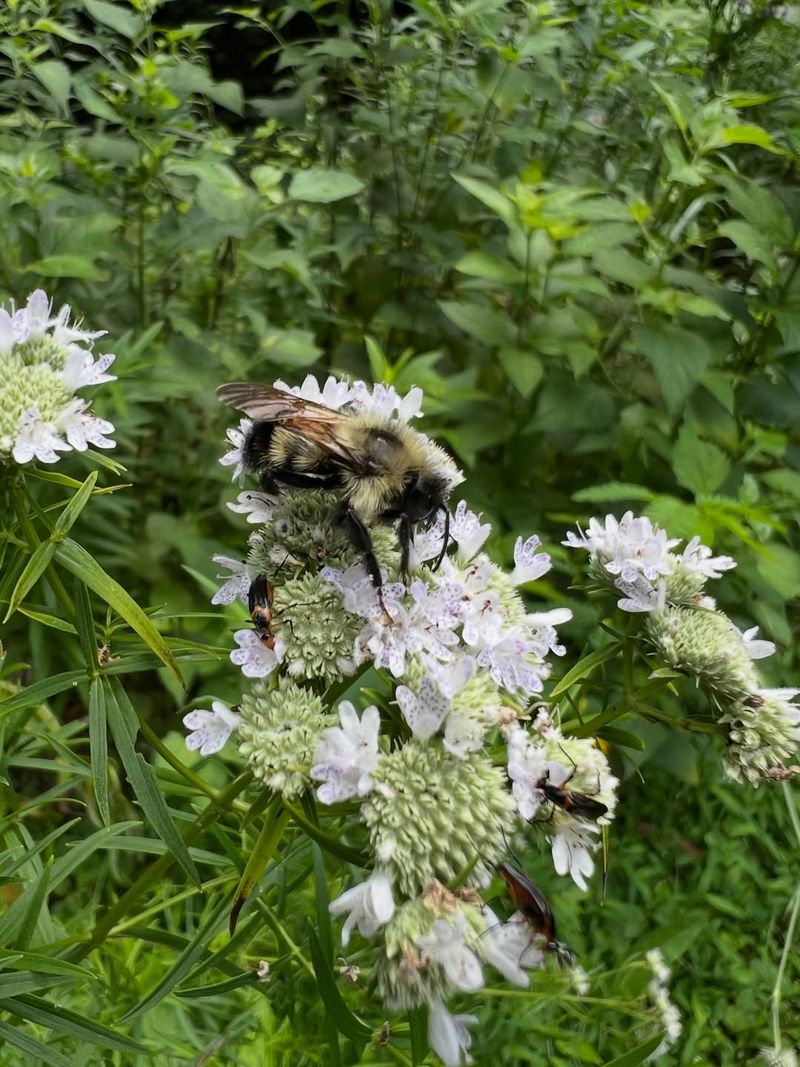
Walk past a patch of Mountain Mint in full bloom and the sound alone will stop you. The hum of activity around it is unlike almost anything else in a native garden.
Dozens of different insect species use it at once, and bees make up a huge portion of that crowd.
Narrowleaf Mountain Mint produces clusters of tiny white flowers with silvery bracts that reflect light and make the plant glow in summer sun. Bloom time runs from June through August.
The nectar is extremely accessible, which explains the diversity of visitors it attracts.
Pycnanthemum species attract more than 60 bee species, including many small native bees that are not commonly seen on other garden plants. If you want to support lesser-known native bee populations, this plant is one of the best options available.
Full sun and well-drained soil produce the best results. It spreads by rhizomes and can expand into a wide patch over several seasons, so plan for that or use edging to keep it contained.
Height stays around two feet. The minty fragrance from crushed leaves is pleasant and helps deter some garden pests.
Few native plants deliver this level of pollinator diversity in such a compact, easy-to-grow package. It is genuinely underused in southeastern gardens.
7. Ironweed Stands Out As A Late-Summer Bee Magnet
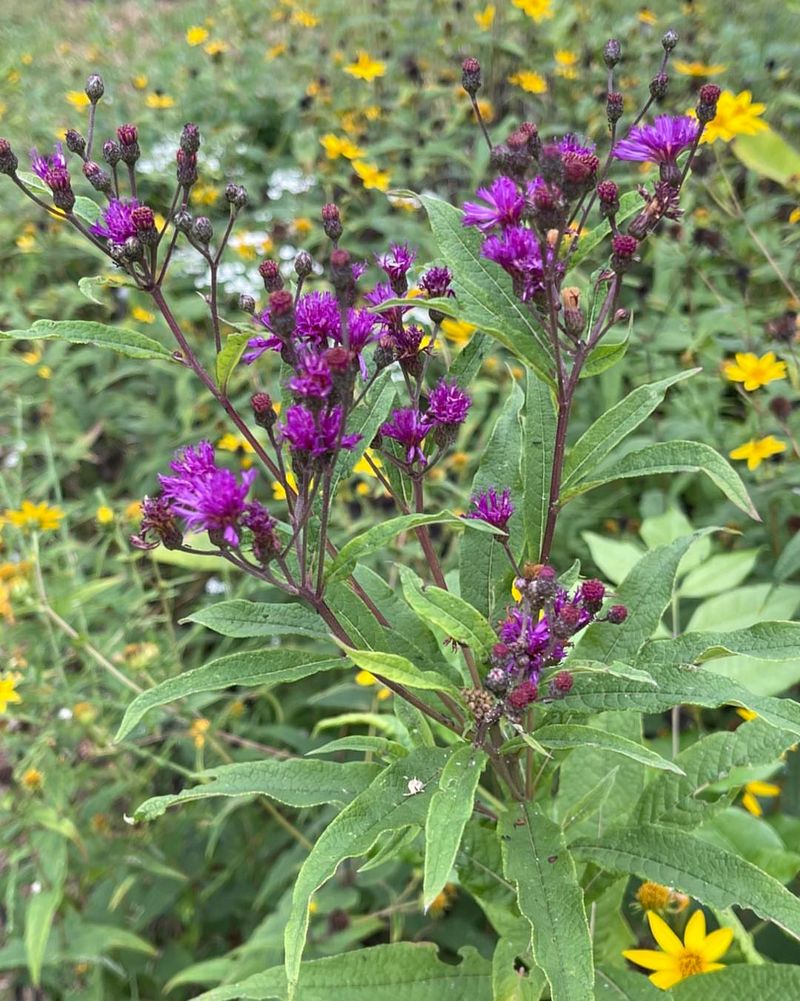
Bold, tall, and almost shockingly purple, Ironweed is hard to miss in late summer. It blooms in August and September when many plants are winding down, and bees show up in force to take advantage of the timing.
Vernonia species produce clusters of vivid magenta-purple flowers that are packed with nectar. Bumble bees are especially active on them.
Long-tongued native bees, honeybees, and several butterfly species also visit regularly throughout the bloom period.
Ironweed gets tall. Depending on the species and growing conditions, stems can reach five to eight feet.
That height makes it a background plant or a bold focal point at the back of a garden bed. It handles moist to average soil and tolerates some shade, though full sun produces the most flowers.
Some gardeners cut stems back by half in early summer to reduce final height without losing bloom time. This technique keeps plants more compact and prevents flopping in exposed spots.
Ironweed spreads by seed and can self-sow into nearby areas, so deadhead after bloom if spreading is a concern. Established plants are tough, long-lived, and require almost no inputs once settled in.
For late-summer bee support across the Southeast, few natives match its combination of visual impact and genuine pollinator productivity.
8. Georgia Aster Blooms When Many Nectar Sources Are Fading
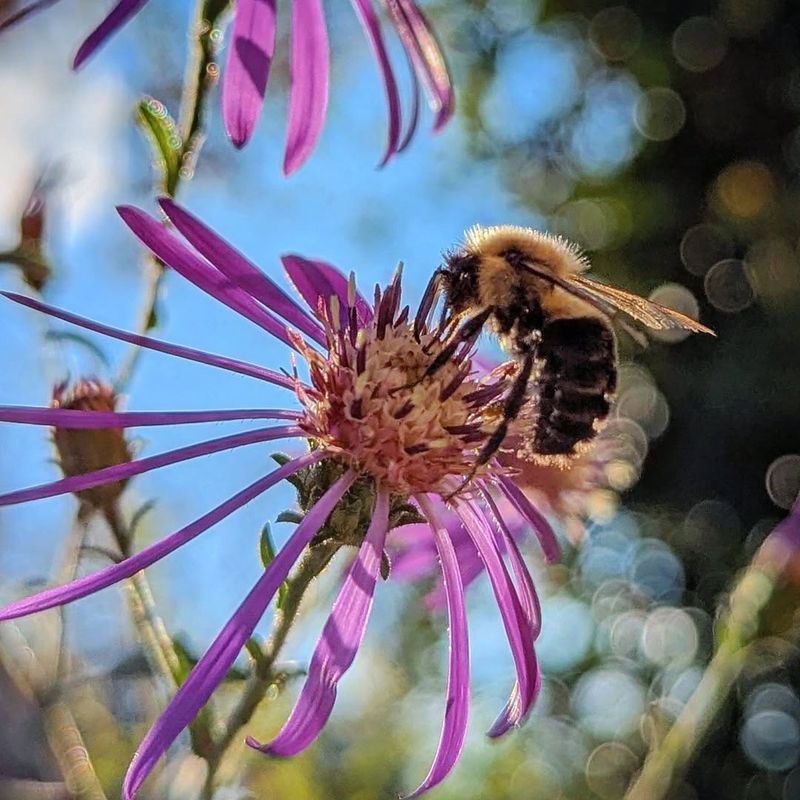
Named for the state where it grows natively, Georgia Aster blooms in October and November when most of the garden has gone quiet. Bees rely on late-season plants like this to keep foraging before winter sets in.
Bright purple, daisy-like flowers appear on stems that reach two to three feet tall. The yellow centers are rich in pollen and nectar, and both honeybees and bumble bees visit them heavily.
On warm fall afternoons, a blooming clump can be remarkably busy.
Georgia Aster is actually a rare species in the wild, which makes growing it in gardens genuinely meaningful. Habitat loss has reduced wild populations significantly, and cultivated plants help support pollinators while preserving a plant worth protecting.
It prefers well-drained, sandy or loamy soil in full sun. Heavy clay can be challenging unless amended or raised slightly.
Plants spread slowly by rhizomes and form tidy clumps over time. Pair it with other fall natives like goldenrod or ironweed for a late-season pollinator combination that extends bee foraging into November.
Nurseries specializing in southeastern natives usually carry it. Once established, it is a reliable, low-maintenance bloomer that fills a critical gap in the fall garden calendar.
It earns permanent status in any serious pollinator planting.
9. Blue Mistflower Keeps Feeding Activity Going Into Fall
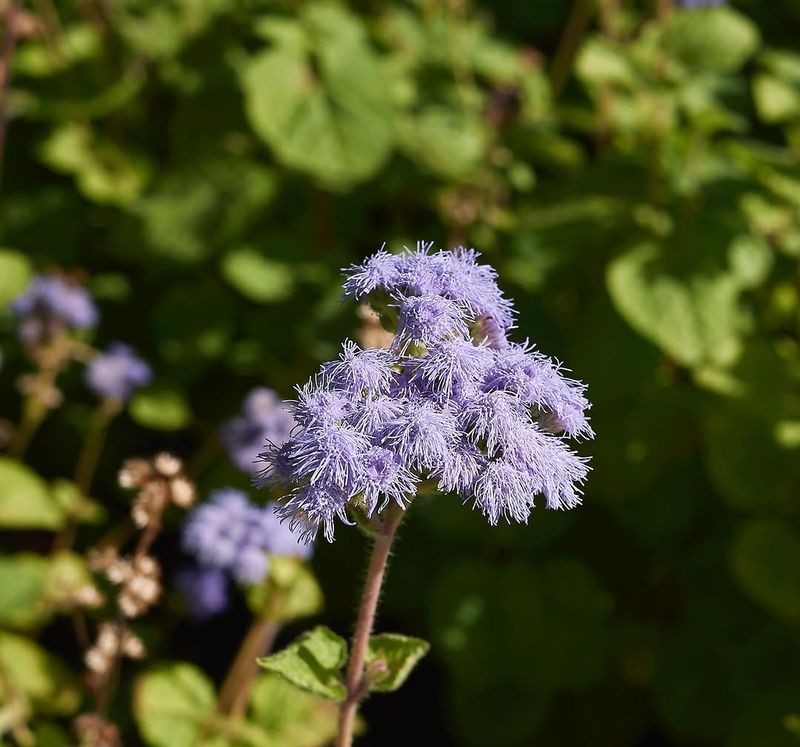
By the time October arrives, most flowering plants have finished. Blue Mistflower ignores that trend entirely.
It blooms heavily in fall, right when bees are scrambling to build up their last reserves before cold weather arrives.
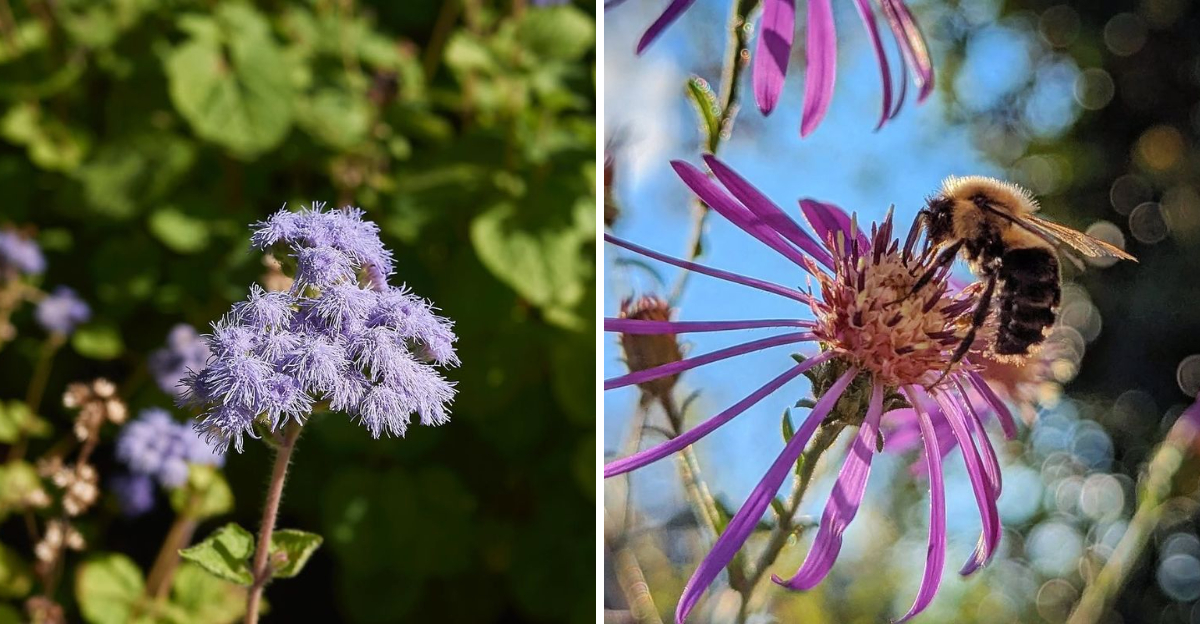
Fuzzy blue-purple flower clusters appear from late August through October depending on location and conditions. Native sweat bees, small carpenter bees, and bumble bees all visit regularly.
The flowers are small but produced in large numbers, making them collectively quite productive.
Blue Mistflower grows naturally in moist, partly shaded spots along stream banks and forest edges. In a garden setting, it tolerates light shade to full sun as long as moisture is available.
It spreads by underground runners, so give it space or contain it with edging.
Height stays modest at one to two feet, which makes it useful as a ground-level filler beneath taller natives. The blue-purple color is unusual in fall-blooming plants and adds real visual interest to late-season gardens.
Pair it with goldenrod or Georgia aster for a fall combination that keeps bees active well into autumn. Established plants are tough and require almost no care.
Cutting them back hard in late winter encourages fresh, full growth the following season.