These 8 Tomato Problems All Start With Wrong Watering
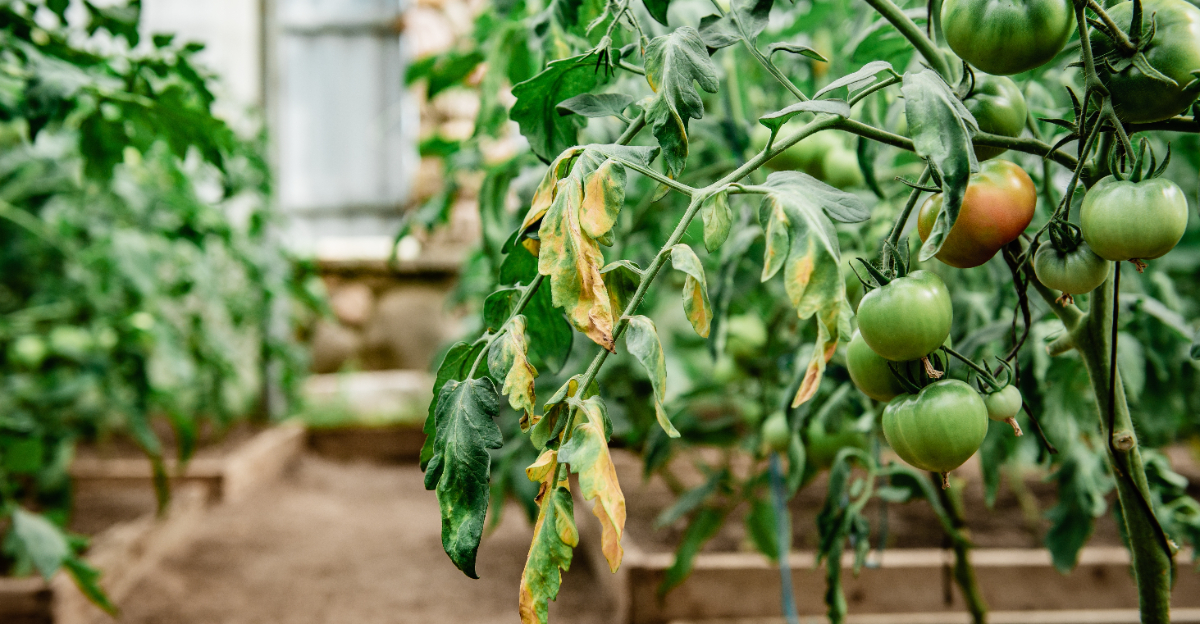
You watered your tomatoes every day, maybe even twice. So why do they look worse than your neighbor’s plants that barely get any attention?
Watering mistakes are the most common reason tomato plants struggle. The tricky part is that too much and too little water often look identical from the outside.
That cracked fruit, those yellow leaves, the wilt you noticed this morning, none of it started at the surface. It started at the root zone, days ago, long before anything looked wrong.
Tomatoes are unforgiving when their water supply is inconsistent. By the time the damage shows up, it has usually been building for a while.
The eight problems below cover the full range of what wrong watering does to a tomato plant, from the roots up to the fruit. Work through the list and you will likely find exactly what went wrong in your garden.
1. Blossom End Rot
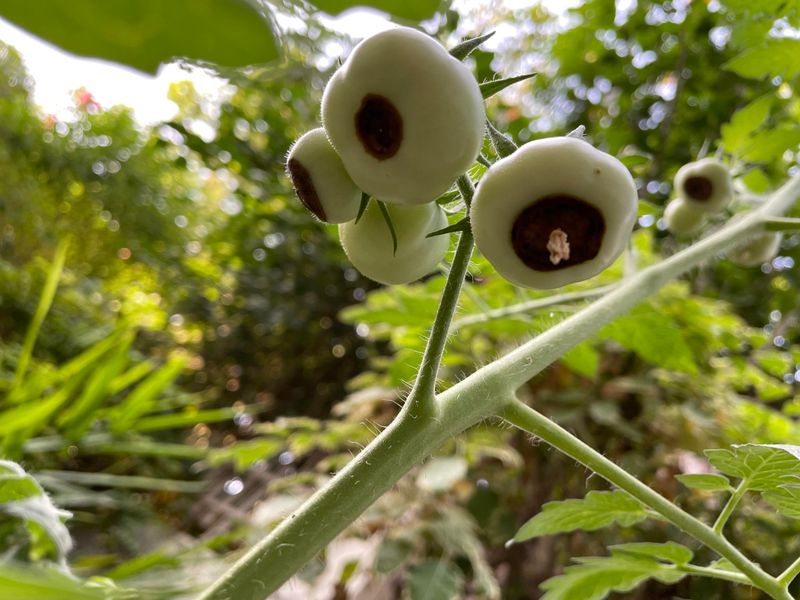
That dark, sunken patch on the bottom of your tomato is not a disease. It looks scary, but blossom end rot is actually a calcium deficiency triggered by wrong watering habits.
Tomato plants pull calcium through their roots using water as the delivery system. When watering is inconsistent, that pipeline breaks down fast.
Dry spells followed by heavy soaking confuse the plant completely. It cannot absorb calcium properly when moisture levels swing wildly from one extreme to the other.
Here is the frustrating part: your soil might have plenty of calcium already. The plant just cannot access it without steady, reliable moisture moving through the root zone.
Fixing this starts with a consistent watering schedule. Aim for deep, even moisture rather than quick daily splashes that barely reach the roots below the surface.
Mulching around your plants helps lock in soil moisture between watering sessions. A thick layer of straw or wood chips makes a noticeable difference almost immediately.
Drip irrigation tends to help gardeners who struggle with blossom end rot. It delivers water slowly and steadily right where the roots need it most.
Once a tomato shows that black patch, it will not recover on the same fruit. But fixing your watering routine now protects every tomato that comes after it.
Consistent moisture is the single most powerful tool against this problem. Your next harvest depends on how steady your watering hand can be going forward.
2. Fruit Cracking
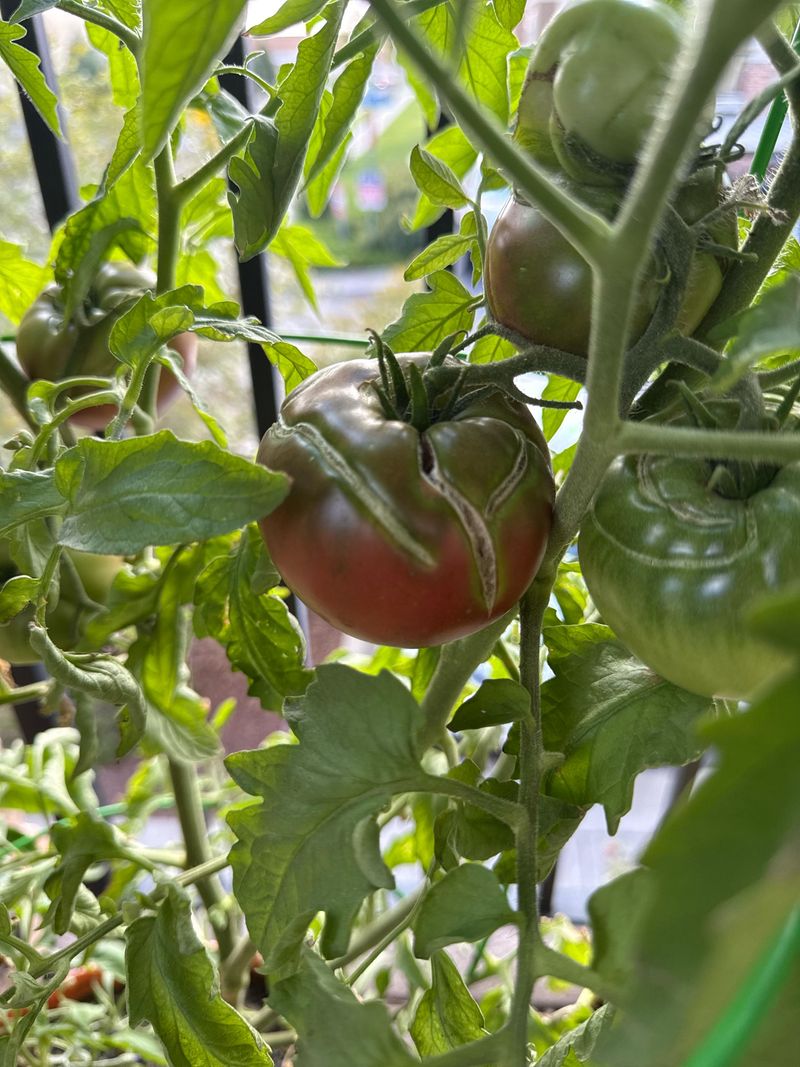
You wait all summer for a perfect tomato, and then it splits wide open right before harvest. Fruit cracking is one of the most heartbreaking wrong watering problems in the garden.
It happens when a dry spell is followed by a sudden flood of water. The inside of the fruit swells faster than the skin can stretch to keep up.
Radial cracks run from the stem down the sides of the fruit. Concentric cracks circle around the top near the stem in a ring pattern.
Both types are caused by the same thing: uneven moisture reaching the plant at the wrong time. The fruit simply cannot handle the rapid change in water pressure inside.
Hot weather makes this worse because plants lose moisture faster on scorching days. Then one big rainstorm or heavy watering session sends the plant into overdrive.
Keeping soil moisture steady throughout the growing season is the best prevention. Watering deeply and consistently trains roots to reach down instead of waiting for surface splashes.
Mulch plays a huge role here too. A good layer of organic material buffers the soil against dramatic moisture swings after rain or irrigation.
Picking tomatoes slightly before full ripeness also helps. The skin is a bit more flexible when the fruit is not completely ripe yet.
Cracked tomatoes are still edible if you catch them quickly. But steady watering means fewer cracks and more perfect fruits making it to your table.
3. Leaf Roll
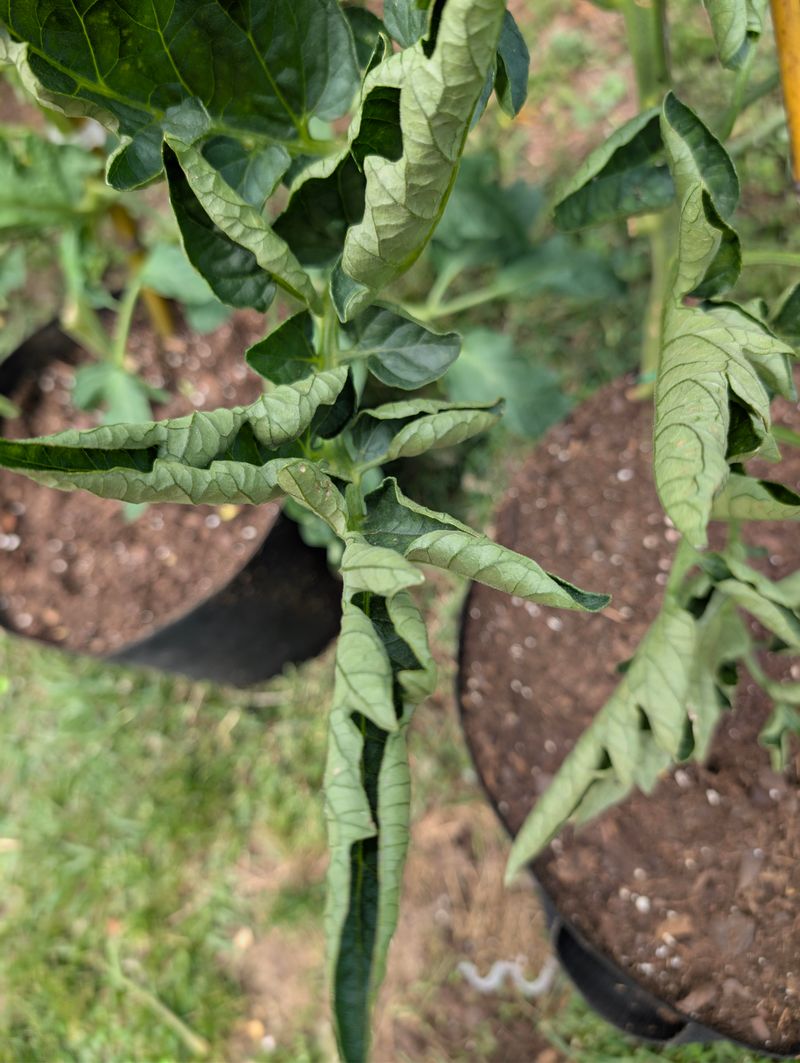
Rolled-up leaves on a tomato plant look alarming the first time you see them. Your first instinct might be to reach for a spray bottle, but the culprit is usually water.
Physiological leaf roll is a stress response triggered by overwatering or extreme heat combined with inconsistent moisture. The plant curls its leaves to reduce surface area and slow water loss.
This is actually the tomato protecting itself. It is not a disease or pest problem, which is why spraying something on it will not solve anything at all.
Overwatered plants roll leaves because waterlogged roots cannot deliver oxygen efficiently. Without oxygen, root function drops and the plant signals distress through the foliage above.
Underwatered plants roll for the opposite reason. The leaves curl inward to conserve whatever moisture is left inside the plant tissue before things get worse.
Checking your soil before watering is the simplest fix available. Push a finger two inches into the ground and water only when that depth feels dry to the touch.
Raised beds and containers are especially prone to leaf roll because they dry out faster than in-ground gardens. These setups need more frequent monitoring throughout the week.
Good drainage matters just as much as regular watering. Soil that holds water too long suffocates roots even when you are not technically overwatering the plant.
Leaf roll usually resolves on its own once watering becomes more balanced. Watch the plant closely and adjust your schedule based on what the soil actually tells you.
4. Yellowing Leaves
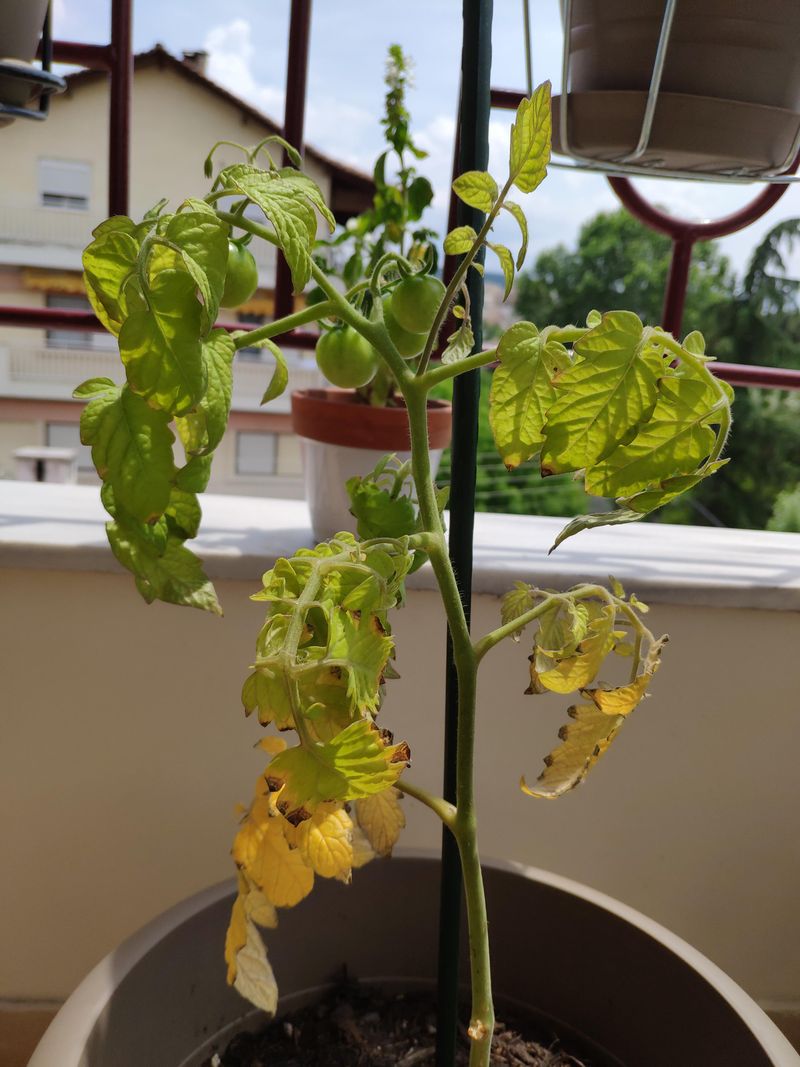
Yellow leaves on a tomato plant send most gardeners straight to the fertilizer aisle. But before you spend money on nutrients, check how you have been watering first.
Overwatering is one of the leading causes of yellow foliage on tomato plants. When roots sit in soggy soil, they struggle to absorb the nutrients already present around them.
Nitrogen deficiency shows up as yellowing that starts at the bottom leaves and moves upward. But if the soil is waterlogged, adding more nitrogen will not fix the root cause.
Underwatering causes yellowing too, especially when plants experience repeated dry-out cycles. Stressed roots cannot pull magnesium and iron efficiently, and the leaves pay the price for it.
The pattern of yellowing gives you clues about what is happening underground. Uniform yellowing across the plant often points to a watering issue rather than a nutrient problem.
Checking drainage is a smart first step when you notice yellow leaves appearing. Water should drain through the soil within a few hours, not pool on the surface overnight.
Sandy soils drain too fast and cause drought stress even with frequent watering. Adding compost improves water retention and gives roots a more stable environment to work in.
Clay soils hold water too long and create the opposite problem entirely. Amending with perlite or coarse sand helps break up heavy soil and improve drainage.
Balanced, consistent moisture keeps leaves green and plants productive all season long. Fix the watering first, and the yellowing often clears up without any other intervention needed.
5. Root Rot
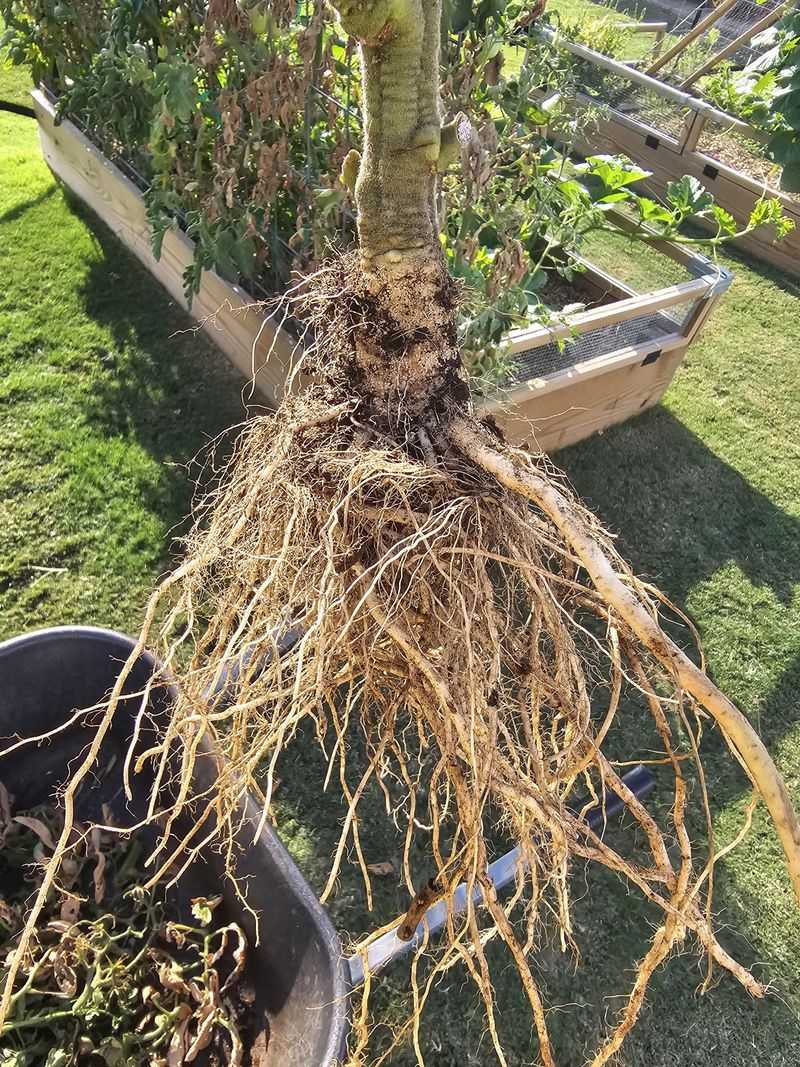
Root rot is the silent destroyer of tomato plants. By the time you see symptoms above the soil, the damage below has already been building for a while.
Overwatering is the number one cause of root rot in tomatoes. Saturated soil creates the perfect oxygen-free environment where harmful fungi and bacteria absolutely thrive.
Pythium and Phytophthora are two common root rot culprits found in overly wet garden beds. These organisms spread fast once moisture levels stay consistently too high for too long.
Roots need oxygen just as much as they need water. When soil stays waterlogged, roots suffocate and begin breaking down from the tips inward toward the main stem.
A plant with root rot looks wilted and sad even when the soil is soaking wet. That is a major red flag that something underground has gone seriously wrong.
Pulling an affected plant reveals brown, mushy roots instead of the firm white ones a healthy plant should have. The roots may have an off, earthy odor.
Prevention starts with well-draining soil and containers with proper drainage holes. Never let a tomato plant sit in standing water, even for a short period of time.
Raised beds are one of the best defenses against root rot in heavy clay soils. Elevating the root zone keeps water moving through rather than pooling around tender roots.
Catching it early gives you a fighting chance to save the plant. Trim affected roots, improve drainage, and cut back on watering immediately to stop further spread.
6. Fungal Diseases
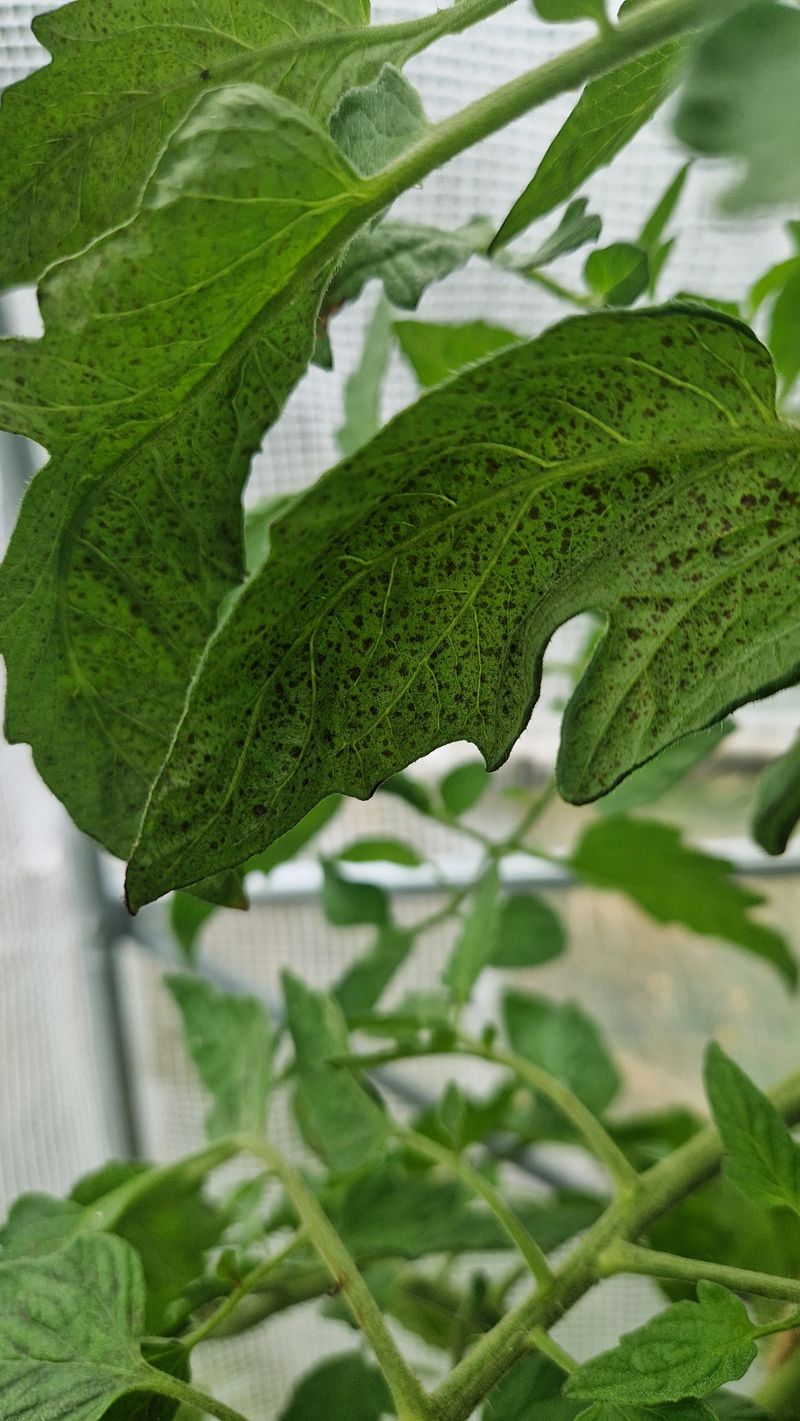
Wet leaves are an open invitation to fungal disease. Most gardeners blame the weather, but their own watering habits are often making the problem significantly worse.
Early blight, late blight, and gray mold all thrive in moist conditions. When you water overhead and leave foliage wet overnight, you are basically setting the dinner table for fungi.
Wrong watering creates two problems at once. Overwatering keeps humidity high around the plant, and wet leaves give spores the moisture they need to germinate and spread.
Early blight shows up as brown spots with yellow rings on lower leaves first. It spreads upward quickly when conditions stay consistently warm and wet around the plant canopy.
Septoria leaf spot looks similar but creates smaller, more circular lesions across the leaf surface. Both spread rapidly when overhead watering keeps foliage damp for extended periods.
Switching to drip irrigation or soaker hoses is one of the most effective prevention strategies. Water goes directly to the root zone, largely keeping leaves dry.
Morning watering is smarter than evening watering for the same reason. Any moisture that does land on leaves has the entire day to dry before nighttime humidity kicks in.
Spacing plants properly improves air circulation through the canopy. Good airflow dries out leaves faster and creates a less hospitable environment for fungal spores to settle.
Removing affected leaves quickly stops the spread before it overtakes the plant. Pair that habit with better watering technique, and fungal problems drop dramatically season after season.
7. Hollow Fruit
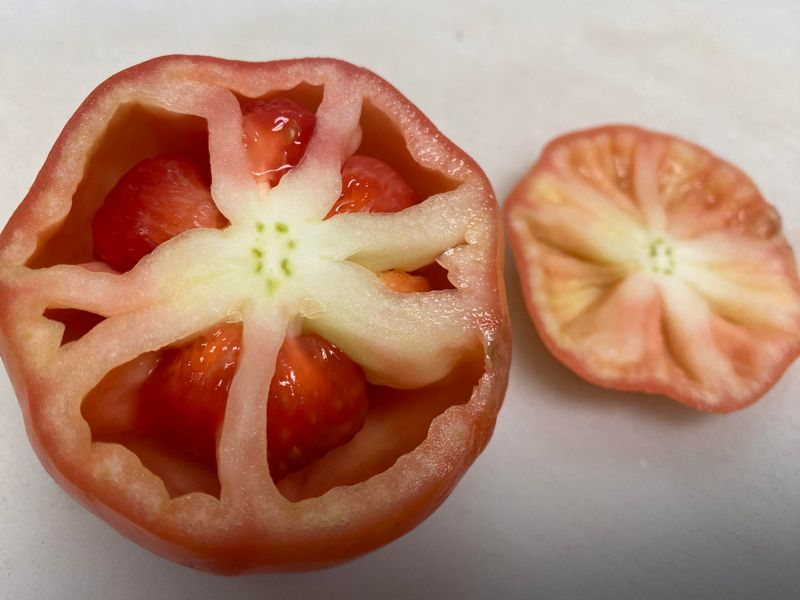
Slice open a tomato and find mostly air inside, and you will understand the disappointment immediately. Hollow fruit is one of the most frustrating results of inconsistent watering all season.
Tomatoes develop internal structure during a specific window of growth. When water supply is irregular during that window, the fruit forms outer walls but lacks the flesh to fill them.
The plant prioritizes survival over fruit development when moisture is unreliable. It sends available resources to the most critical functions first, and filling fruit walls is not at the top of that list.
Pollination issues can also cause hollow fruit, but watering stress is a major contributing factor. Stressed plants produce fewer viable seeds, and seed development plays a role in internal flesh growth.
Hot, dry spells during flowering and early fruit set are especially risky. Keeping moisture steady through those stages gives the developing fruit its best chance at full, meaty flesh.
Over-fertilizing with nitrogen makes hollow fruit more likely too. Lush leafy growth gets priority over fruit filling when plants have too much nitrogen and not enough consistent water.
Deep, infrequent watering encourages roots to grow further down into the soil. Deeper roots access more stable moisture, which keeps the plant hydrated even between your watering sessions.
Smaller tomato varieties are generally less prone to hollow fruit than large beefsteak types. But any variety can develop the problem under stressful and inconsistent watering conditions.
A consistently watered plant builds better fruit from the inside out. That first satisfying slice of a fully fleshed tomato makes every careful watering session completely worth it.
8. Wilting Despite Wet Soil
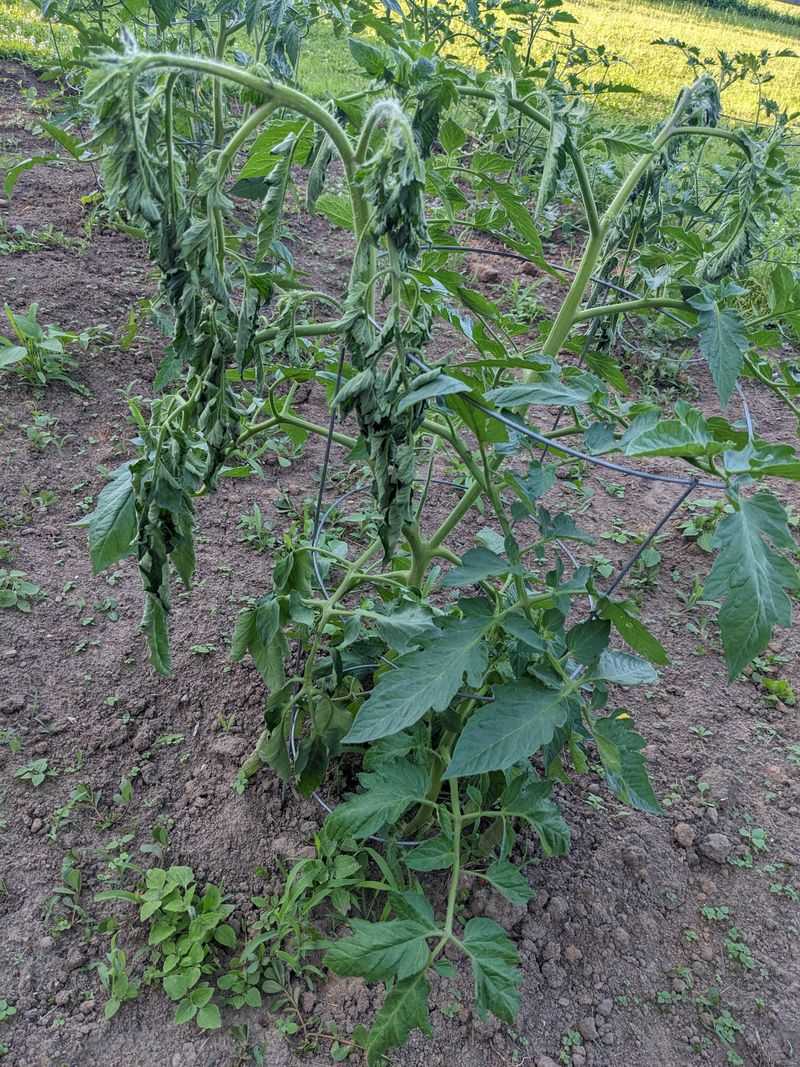
Wilting plants usually mean one thing to most gardeners: grab the hose. But when the soil is already wet and the plant still droops, more water is the last thing it needs.
This confusing symptom is a classic sign of overwatering damage. Roots that sit in saturated soil for extended periods may begin to break down and lose their ability to function properly.
Wrong watering creates a frustrating cycle here. The plant wilts because damaged roots cannot move water upward, so you water more, which makes root conditions even worse than before.
Bacterial wilt is another cause of this symptom and spreads through contaminated soil. But overwatering weakens plants and makes them far more vulnerable to bacterial infections in the first place.
The key diagnostic step is checking the soil before reaching for the hose. If the top two inches feel moist, hold off and look for other signs of what is going wrong.
Gently digging near the base of a wilting plant can reveal a lot. Healthy roots are white and firm, while overwatered roots turn brown, soft, and sometimes smell off.
Improving soil drainage is the most important long-term fix for this problem. Adding organic matter and ensuring containers have adequate drainage holes prevents future saturation issues entirely.
Letting the soil dry out slightly between watering sessions gives damaged roots a chance to recover. Oxygen returning to the root zone is the first step toward plant recovery.
These 8 tomato problems all start with wrong watering, and this one is the most misdiagnosed of them all. Trust the soil, not just what your eyes see above ground.