Native Georgia Alternatives To Green Giant Arborvitae That Don’t Outgrow Every Space They’re Planted
Green Giant Arborvitae became popular for a reason. Fast growth, year round privacy, and a neat appearance made it an easy choice for property lines, backyard screens, and landscape borders.
Garden centers sold plenty of them, and homeowners planted them with the best intentions.
Years later, some of those same plantings are creating a very different conversation.
A shrub that looked perfectly sized when it went into the ground can eventually demand far more room than expected.
Suddenly there is more pruning, more crowding, and more concern about what happens if it keeps growing.
That experience has left many homeowners thinking differently about long term landscape choices. Georgia offers native shrubs that bring structure, screening, and beauty to a yard without creating the same worries later.
Finding the right fit from the beginning can make a landscape much easier to live with for years to come.
1. Eastern Redcedar Provides Year-Round Evergreen Cover
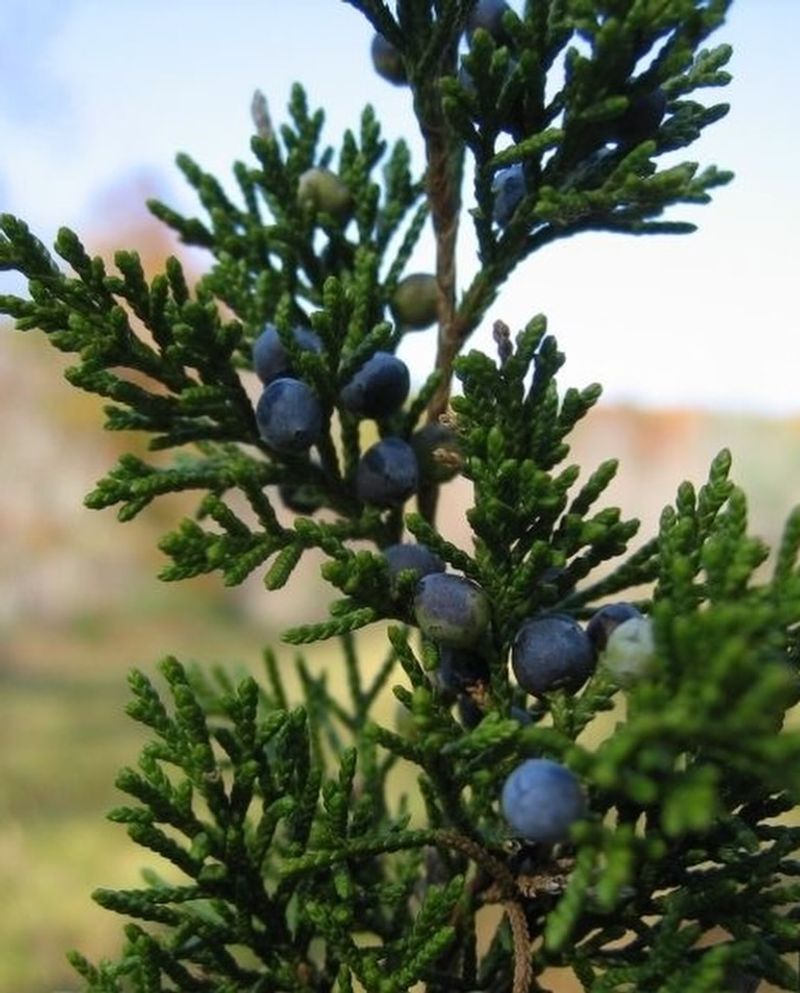
Few native trees pull off year-round screening as reliably as Eastern Redcedar. It stays green through cold snaps, dry spells, and humid summers without much fuss.
Unlike Green Giant Arborvitae, Redcedar can be managed with selective pruning to stay within a reasonable height range.
Left alone, it typically reaches 30 to 40 feet, but planted in rows and trimmed regularly, most homeowners keep it under 20 feet without stressing the tree.
Birds absolutely love it. Cedar waxwings, mockingbirds, and robins flock to the small blue berries that appear on female trees each fall.
That wildlife connection is something no non-native arborvitae can replicate.
It handles poor, rocky, or clay-heavy soil better than most evergreens. Drought tolerance is strong once established, which matters a lot during dry summers in the Southeast.
One thing to keep in mind: Redcedar is a host plant for cedar-apple rust, which can affect nearby apple and crabapple trees. Avoid planting them close to those species.
For tight spaces, columnar varieties like ‘Taylor’ or ‘Brodie’ stay narrower and are much easier to manage. They provide solid screening without spreading wide.
Redcedar is a dependable, low-maintenance native option that earns its place in almost any landscape where evergreen cover is the goal.
Newly planted trees benefit from regular watering during the first year, but once established, Eastern Redcedar typically requires very little supplemental care.
2. Yaupon Holly Maintains A More Manageable Size
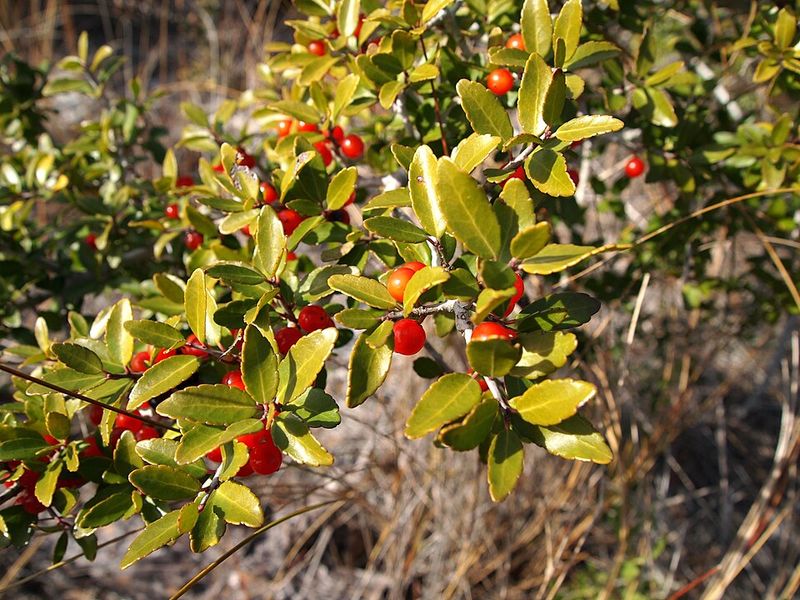
Yaupon Holly might be the most underused native shrub in the Southeast. It tolerates wet soil, dry soil, salt spray, and heavy shade without skipping a beat.
Standard Yaupon typically reaches 15 to 20 feet, but dwarf forms like ‘Schillings’ or ‘Nana’ stay under 5 feet with almost no pruning. That makes it a genuinely practical choice for foundation plantings, low hedges, and tight corners where larger plants cause problems.
Red berries appear on female plants in fall and persist through winter. They feed birds for months and add color to an otherwise dull winter landscape.
Pairing one male plant with several females ensures reliable berry production.
Yaupon is also one of the few native plants that contains caffeine. Indigenous peoples brewed it for ceremonial use long before coffee arrived in North America.
Your Georgia Garden Changes Every Week. Your Plan Should Too.
Gardening in Georgia changes quickly throughout the season. Every Friday you’ll receive a simple weekly plan showing exactly what to plant, prune, fertilize, harvest, and protect so you never miss the right timing.
That bit of history makes it a surprisingly interesting conversation piece in a garden.
Pruning is easy and forgiving. Yaupon bounces back quickly from hard cuts, so shaping it into a formal hedge or leaving it natural are both realistic options.
It does not sulk after trimming the way some shrubs do.
In Georgia landscapes, Yaupon performs across a wide range of conditions. Few plants offer this level of flexibility.
It earns its spot as a top-tier native alternative to oversized arborvitae.
3. American Holly Creates Long-Term Structure
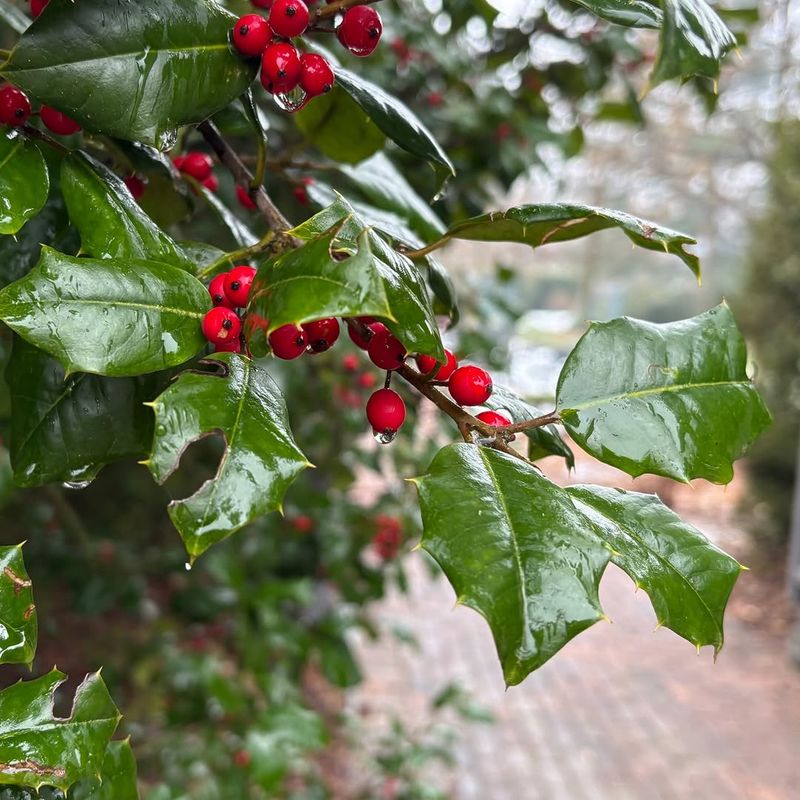
American Holly is a serious long-term investment in your landscape. It grows slowly, develops a strong pyramidal shape, and eventually becomes a focal point that no fast-growing arborvitae can match in character.
Height at maturity typically falls between 15 and 30 feet, depending on site conditions. That range is far more manageable than a Green Giant pushing 50 or 60 feet against a fence or roofline.
Glossy, spiny leaves stay on the tree year-round. Red berries ripen in fall and hold through winter, creating a food source for mockingbirds, cedar waxwings, and other species during the months when food is scarce.
Male and female plants are separate, so berry production requires at least one male within pollination range of your female trees. Most nurseries carry named male varieties specifically for this purpose.
Check with your local native plant nursery for reliable pairings.
American Holly tolerates a range of soils but performs best with consistent moisture and good drainage. Avoid compacted areas with standing water, as root health can decline under those conditions over time.
Pruning is optional but easy. Natural form is attractive without any intervention.
If you want a tighter hedge, light annual trimming after the new growth hardens keeps the shape neat. It responds well to shaping and rarely looks butchered after a careful trim.
Patience with this plant always pays off.
4. Wax Myrtle Responds Well To Regular Pruning
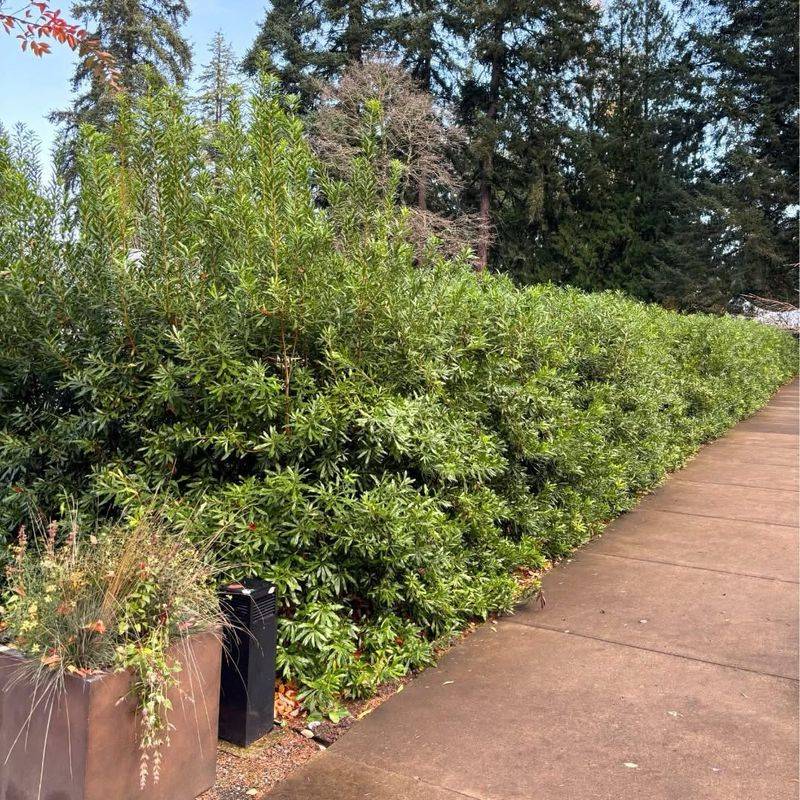
Wax Myrtle grows fast, and that is honestly its best and most challenging trait at the same time. Left alone, it can push 15 feet or more.
Pruned consistently, it holds whatever shape and height you set for it.
Aromatic foliage is one of its most distinctive features. Crushing a leaf releases a sharp, pleasant scent that most people find immediately recognizable.
That fragrance also seems to discourage deer browsing, which matters in suburban areas with heavy deer pressure.
It fixes nitrogen through root symbiosis, which means it actually improves soil quality over time. That is a genuinely useful trait in depleted urban soils where most plants struggle to establish without heavy amendment.
Birds flock to the small, waxy, blue-gray berries that cover female plants from late summer through winter. Yellow-rumped warblers are especially fond of them and depend on Wax Myrtle in coastal areas during migration and overwintering.
Pruning twice a year, once in late winter and once in midsummer, keeps it dense and tight without stressing the plant. Skipping a season or two will require a harder cutback, but Wax Myrtle handles that without much visible setback.
Salt tolerance is strong, making it practical near coastal properties or roads treated with deicers. For fast, flexible, native screening that responds to regular maintenance without complaint, Wax Myrtle is one of the most practical choices available in the Southeast.
5. Sweetbay Magnolia Stays More Compact At Maturity
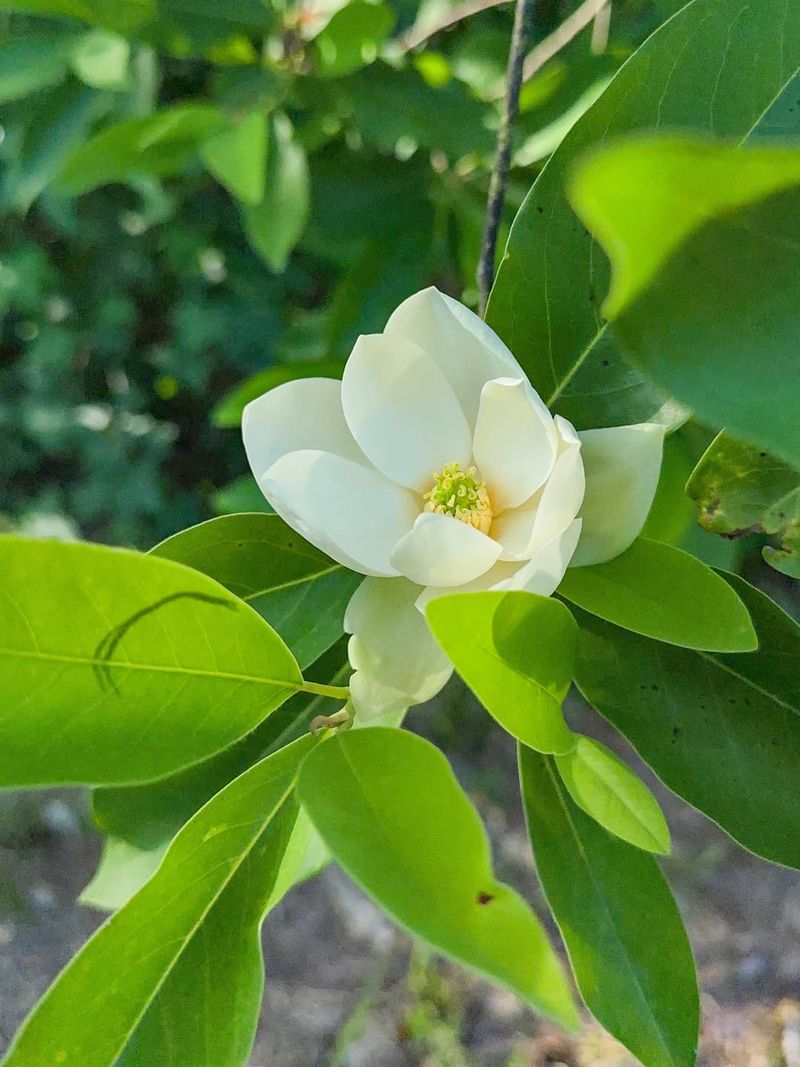
Sweetbay Magnolia earns attention the moment it blooms. Creamy white flowers open from late spring through summer, releasing a strong vanilla-lemon fragrance that carries across a yard on warm evenings.
Unlike its larger cousin, Southern Magnolia, Sweetbay stays between 10 and 20 feet in most landscape settings. In colder parts of the region it behaves more deciduously, but in the warmer zones across the Southeast it holds most of its leaves through winter.
Wet soils are not a problem. Sweetbay grows naturally along stream banks and in low-lying areas where drainage is poor.
That tolerance makes it valuable in spots where most other screening plants fail to establish reliably.
Seed pods split open in fall to reveal bright red seeds that attract birds. The display is small but genuinely attractive, especially against the backdrop of fading fall foliage in surrounding trees.
Multi-stem forms are common and create a more shrubby, wide-spreading habit. Single-trunk specimens grow more upright.
Both forms work well depending on the available space and the visual effect you want to create in the planting area.
Growth rate is moderate, not the explosive pace of Wax Myrtle or Green Giant. That slower pace means less pruning and fewer surprises as the plant matures.
For gardeners who want fragrant, semi-evergreen structure without constant size management, Sweetbay is a genuinely satisfying long-term choice that rewards patience.
6. Possumhaw Holly Fits Areas Too Small For Large Hedges
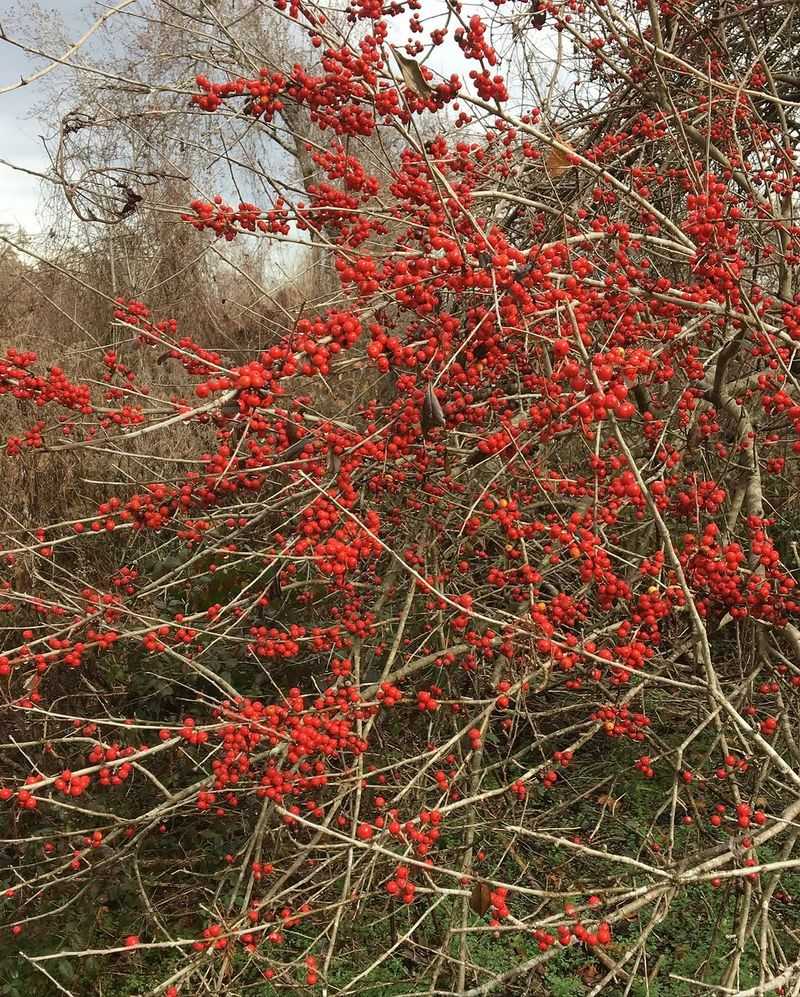
Winter is when Possumhaw Holly absolutely steals the show. After leaves drop in fall, the branches load up with bright red or orange berries that last well into February, sometimes longer in mild winters.
It tops out between 7 and 12 feet in most landscape settings. That size range slots it perfectly into spaces where a taller hedge would crowd a fence, block a window, or eventually push against a structure.
Deciduous habit surprises some buyers who want year-round screening. But the winter berry display is so striking that many gardeners consider it a feature rather than a drawback.
Combine it with an evergreen backdrop and the visual effect is genuinely impressive.
Soil flexibility is broad. Clay, sandy loam, and even occasionally wet soils are all workable.
Drought tolerance builds steadily after the first growing season, making it a reliable low-input plant once it settles in.
Like other hollies, Possumhaw needs a nearby male for berry production. Named varieties like ‘Warren’s Red’ and ‘Council Fire’ are widely available and have strong track records in southeastern landscapes.
Ask your nursery which male pollinators they stock alongside these cultivars.
Birds eat the berries heavily during late winter when other food sources run thin. Robins, bluebirds, and cedar waxwings are frequent visitors.
For small spaces that need seasonal interest, wildlife value, and a manageable footprint, Possumhaw Holly is a hard plant to beat.
7. Dwarf Palmetto Fits Smaller Landscape Spaces
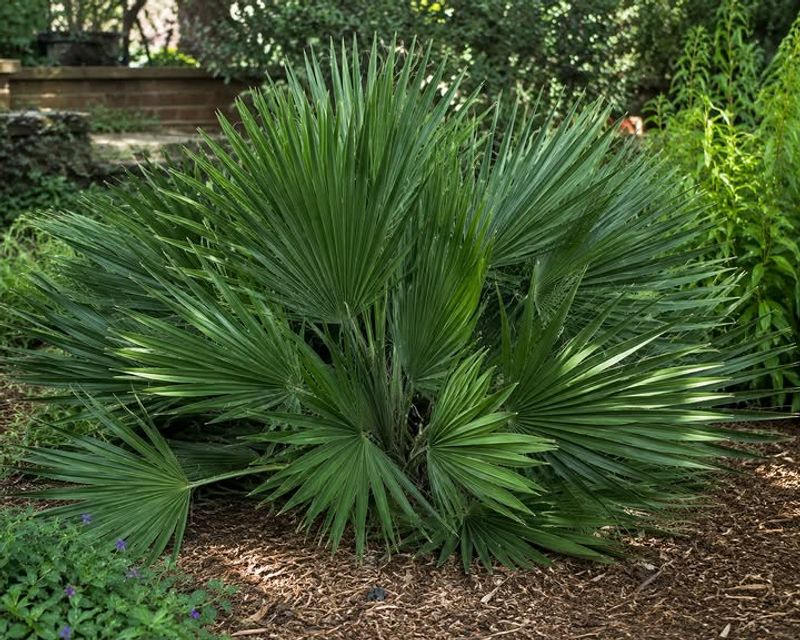
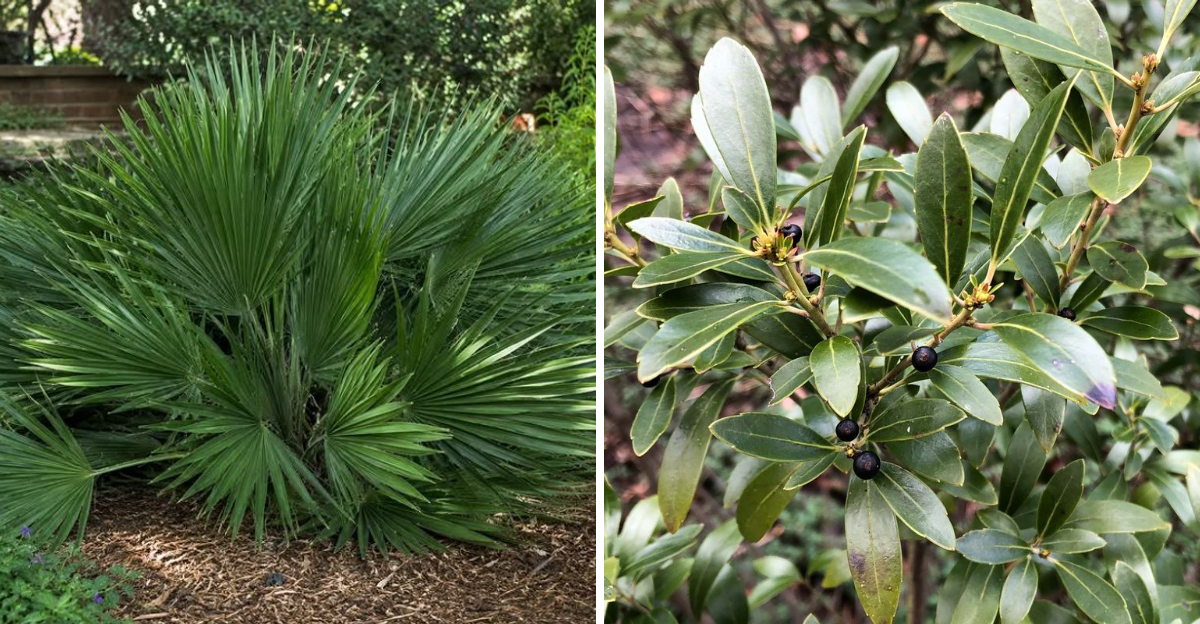
Dwarf Palmetto brings a completely different texture to a native landscape. Fan-shaped fronds spread 4 to 6 feet wide while the trunk stays at or below ground level for many years.
It rarely exceeds 6 feet in height, and growth is genuinely slow. That combination makes it one of the few plants on this list that almost never outgrows a carefully chosen spot, even after a decade of establishment.
Shade tolerance is exceptional. Dwarf Palmetto grows naturally under forest canopies and performs well in spots where most evergreens struggle to stay healthy.
Deep shade under mature oaks or pines is not a problem for this plant.
Wildlife value is solid too. Flowers appear in early summer and attract pollinators.
Small dark fruits follow and provide food for birds and mammals heading into fall.
One thing to plan for: transplanting established Dwarf Palmetto is difficult. Root systems go deep and wide, so choose the planting location carefully from the start.
Container-grown plants establish more reliably than field-dug specimens.
Cold hardiness extends well into USDA Zone 7b, covering most of the Southeast comfortably.
It handles heat and humidity without complaint, which makes it a genuinely durable choice for low-maintenance evergreen structure in smaller beds and shaded garden corners where nothing else seems to stay in bounds.
Once established, Dwarf Palmetto generally needs little pruning beyond the occasional removal of older fronds.
8. Inkberry Forms Dense Evergreen Growth
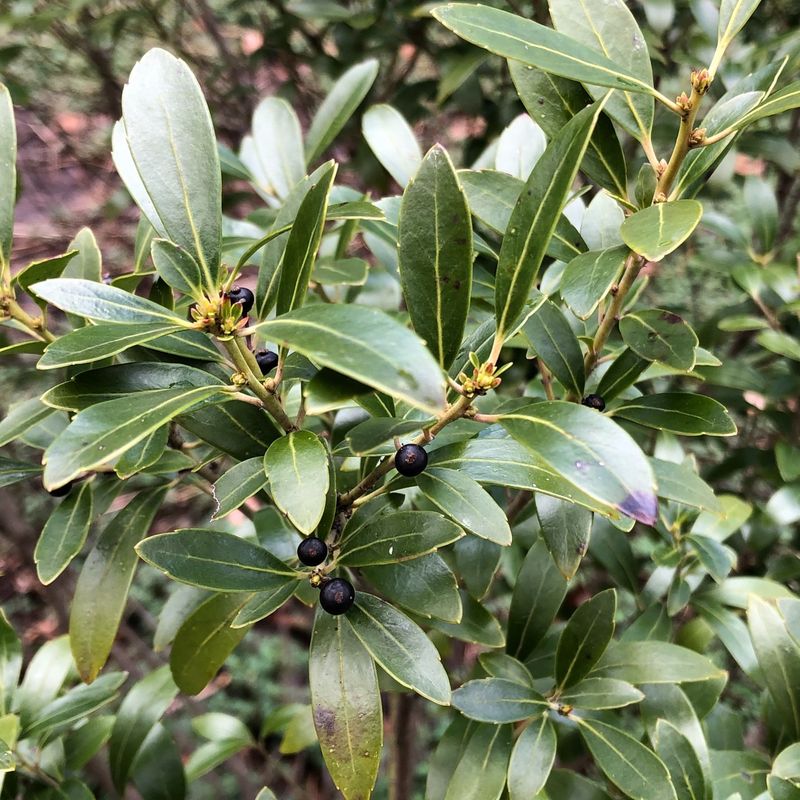
Inkberry is built for the wet spots that most evergreens refuse to tolerate. Low areas, poorly drained beds, and spots near downspouts are exactly where this shrub thrives.
It grows 5 to 8 feet tall in most conditions, making it a realistic choice for screening without the bulk of a full-sized tree. Compact varieties like ‘Shamrock’ or ‘Gem Box’ stay even smaller and hold their shape without aggressive pruning.
The foliage is a clean, glossy dark green that looks polished year-round. Black berries ripen in late summer and attract a wide range of native birds, including bluebirds and catbirds, through fall and winter.
Unlike many broadleaf evergreens, Inkberry handles full sun and partial shade without much difference in performance. That flexibility is genuinely useful when working with tricky landscape spots that shift between light levels throughout the day.
One honest note: Inkberry does spread by root suckers over time. In open beds, that spreading can fill gaps nicely.
In formal plantings, you may need to pull suckers occasionally to keep the footprint contained.
Soil adaptability is one of its strongest selling points. Sandy soil, clay soil, and boggy areas are all workable.
For anyone dealing with drainage problems and needing consistent evergreen coverage, Inkberry solves two problems at once without growing into a maintenance nightmare over time.