Florida Native Perennials To Grow Instead Of Hydrangeas
Hydrangeas are beautiful. No argument there.
But Florida and hydrangeas have a complicated relationship, and the plant almost always loses. The heat wears them down, and the soil fights them.
Keeping them looking anything close to magazine-worthy in a Florida yard takes more effort than most people bargain for. At some point, you have to ask what you are actually working so hard for.
Florida’s native perennials do not need that kind of coddling. They are built for this climate and come back reliably year after year.
Several of them also deliver that same lush, full, show-stopping look that draws people to hydrangeas in the first place. You do not have to settle for tough over pretty.
That is the whole point of this list. These natives bring real visual impact without the constant intervention hydrangeas seem to demand every single season.
1. Wild Blue Phlox Brings Soft Color To Shady Beds
Shaded beds in this state can feel bare and lifeless for most of the year. That is especially true in spring, when gardeners wish for something soft and colorful without the fuss of finicky imports.
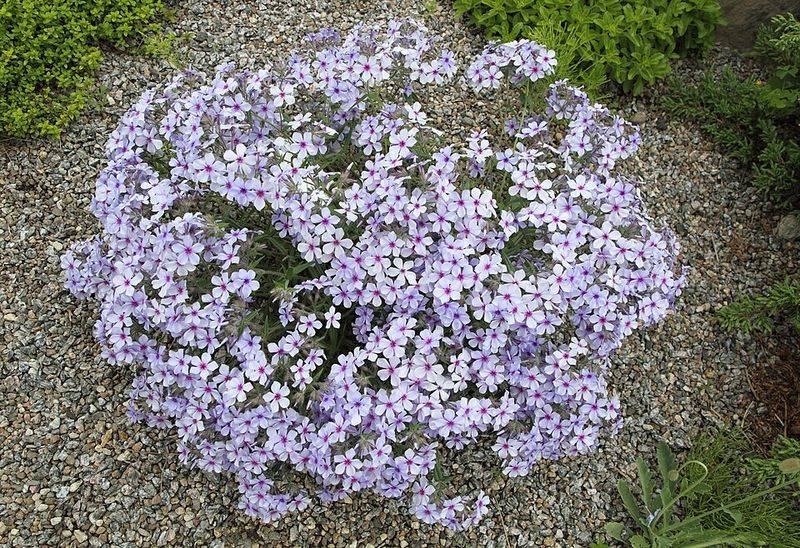
Wild blue phlox, known botanically as Phlox divaricata, fills that gap with a woodland charm that feels right at home under oaks and tall shrubs.
Native to eastern North America and found in northern regions of our state, this low-growing perennial reaches about six to eighteen inches tall.
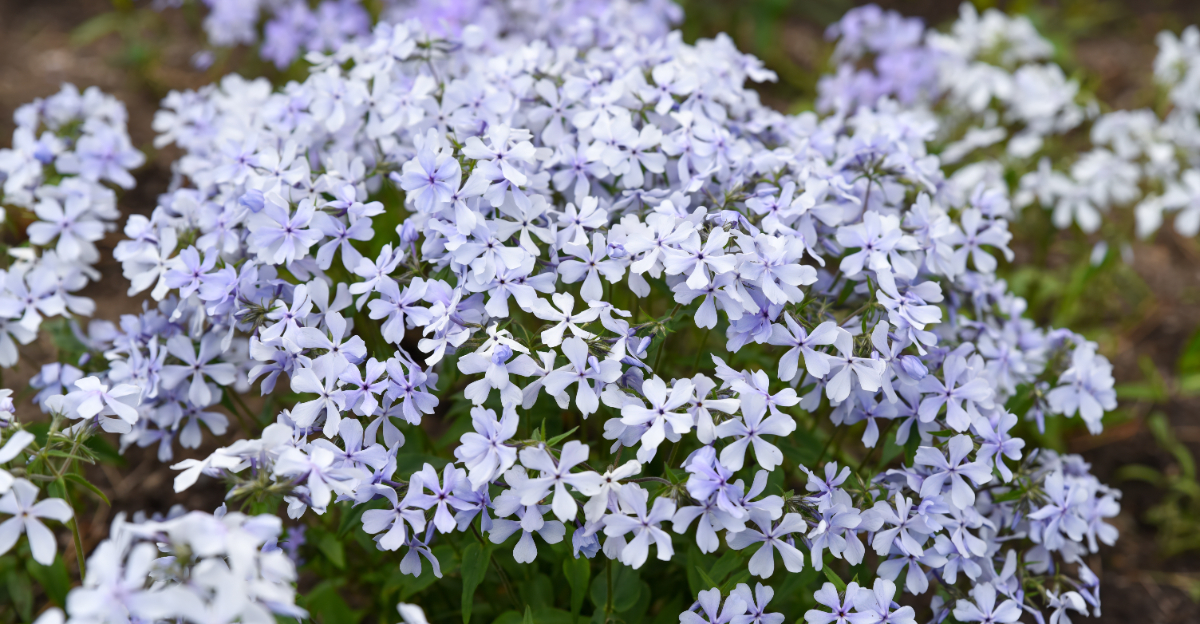
In spring, it produces loose clusters of fragrant, sky-blue to pale lavender flowers that drift across the ground layer like a gentle haze.
That soft, cloudlike effect can echo some of the visual lightness that draws gardeners to hydrangeas, even though the scale is completely different.
Pollinators, including native bees and butterflies, visit the blooms readily. Plant it in partial to full shade with moist, well-drained, organically rich soil for best results.
It is not well suited to the heavy heat and dry sandy soils of southern regions, so it performs most reliably in northern and some central areas of the state.
Wild blue phlox is not a shrub replacement. Think of it as a ground-level accent that softens the base of taller plantings and brings a brief but lovely flush of spring color to spots where little else blooms.
It pairs well with ferns, native violets, and other woodland perennials.
2. Stokes’ Aster Gives Borders Big Bloom Energy
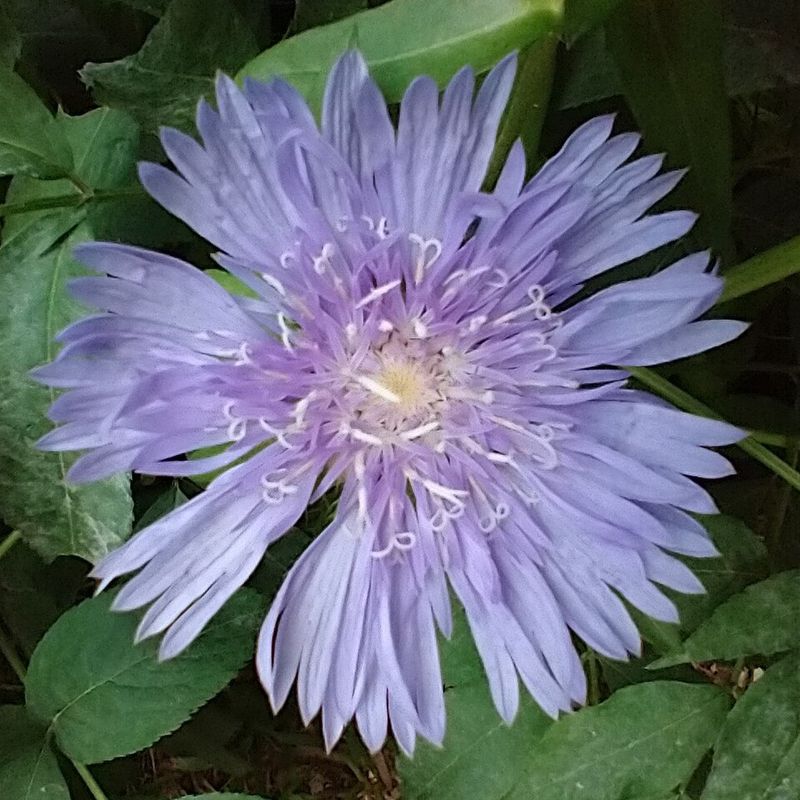
Some gardeners want a native plant that actually stops visitors in their tracks, and Stokes’ aster delivers exactly that kind of presence.
Stokesia laevis is native to the southeastern United States, including our state, and it produces some of the showiest flowers in the native perennial world.
Blooms reach two to four inches across and come in shades of lavender-blue, purple, white, or soft pink depending on the cultivar. They appear from late spring through summer on stems that rise about one to two feet above a rosette of strap-like leaves.
Your Florida Garden Changes Every Week. Your Plan Should Too.
Gardening in Florida changes quickly throughout the season. Every Friday you’ll receive a simple weekly plan showing exactly what to plant, prune, fertilize, harvest, and protect so you never miss the right timing.
That bold, open flower face gives sunny and partly sunny borders a visual punch that can substitute for the eye-catching role hydrangeas often play in a mixed planting.
Bees and butterflies are drawn to the blooms consistently, making it a reliable pollinator plant for home gardens. Well-drained soil is important because Stokes’ aster does not tolerate soggy roots.
Sandy soils with good drainage suit it well, which is an advantage in many parts of this state where drainage is naturally quick.
It is not a woody shrub and will not give you the height or structure of a hydrangea. What it offers instead is a strong, reliable floral display.
It works beautifully in naturalistic borders, cottage-style beds, and pollinator gardens across much of the state. Regular trimming encourages continued blooming through the season.
3. Blue Mistflower Creates A Cloudy Hydrangea Feel
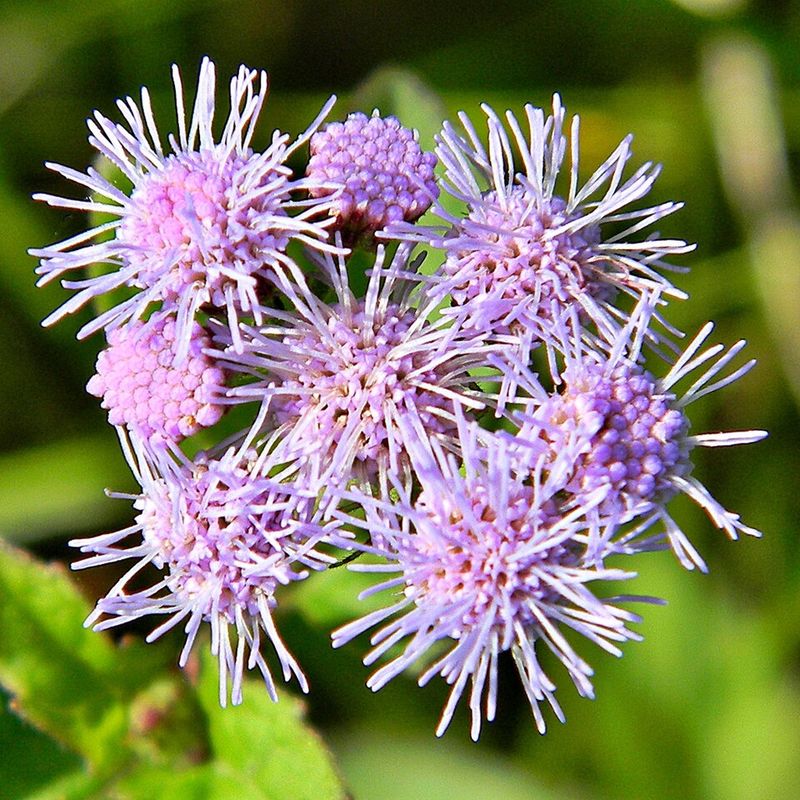
If the soft, hazy color of hydrangea blooms is what you love most, blue mistflower might be the closest native match you will find in this state.
Conoclinium coelestinum produces dense, rounded clusters of tiny fuzzy blue-purple flowers that sit atop upright stems.
They create a remarkably cloud-like effect in late summer and fall.
That timing is actually a strength. Most showy perennials wind down by late summer in the heat, but blue mistflower hits its stride right when the garden needs a color refresh.
Native across much of the eastern United States and found in various regions of our state, it thrives in moist to wet soils in full sun to partial shade.
Pollinators absolutely flock to it. Butterflies, especially skippers and sulphurs, visit the blooms in impressive numbers during fall migration season.
The Florida Wildflower Foundation lists it as a strong nectar source, which makes it especially useful in wildlife-focused yards.
One honest caveat: blue mistflower spreads. In moist, favorable conditions it will expand by rhizomes and self-seeding, sometimes more than you planned.
Give it space, or plant it inside a defined bed edge where spreading can be managed. It is not a shrub and will not replicate the height or woody structure of a hydrangea.
What it does replicate is that soft, rounded bloom cluster feeling, just lower to the ground and with far more pollinator activity buzzing around it.
4. Cardinal Flower Turns Moist Shade Into A Showstopper
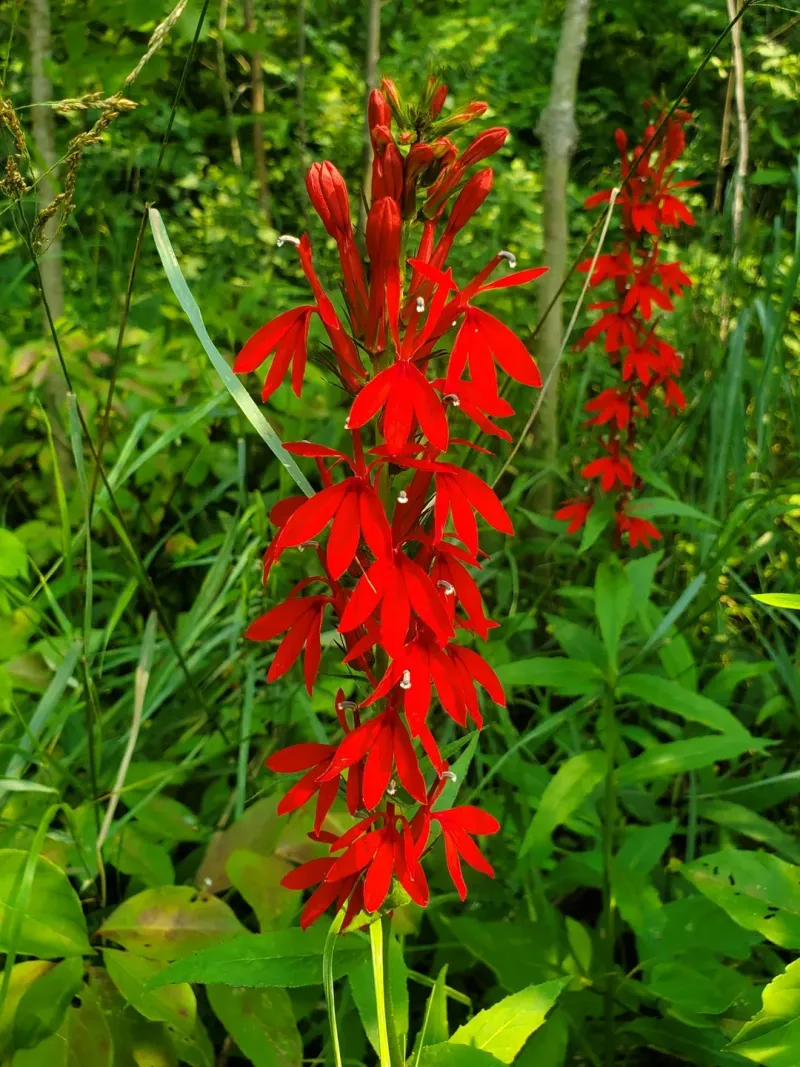
Few native plants command attention the way a well-placed cardinal flower does. Lobelia cardinalis sends up bold spikes of vivid scarlet blooms that can reach three to five feet tall, cutting through the green of a shaded wet garden like a lit torch.
Gardeners who plant hydrangeas in moist, partly shaded spots often do so for drama, and this native delivers that same energy in a completely different way.
Native across eastern North America and present in our state, it thrives in consistently moist to wet soils with partial shade to filtered sun. Streambanks, rain gardens, pond edges, and low spots that stay damp through the rainy season are ideal.
Without reliable moisture, it struggles, so dry sandy beds are not a good match.
Hummingbirds are strongly attracted to the red tubular flowers, making cardinal flower one of the top native perennials for hummingbird gardens in this state.
The blooming period runs from summer into fall, which aligns well with hummingbird activity in our region.
It behaves as a short-lived perennial but self-seeds readily in suitable conditions, which helps it persist in the right spot.
The tall, vertical flower spike creates a completely different silhouette than a hydrangea, but the wow factor is absolutely comparable.
Plant it in groups of three or more for the strongest visual impact, and pair it with blue mistflower or native ferns for a layered, natural look.
5. Scarlet Hibiscus Delivers Drama Where Soil Stays Damp
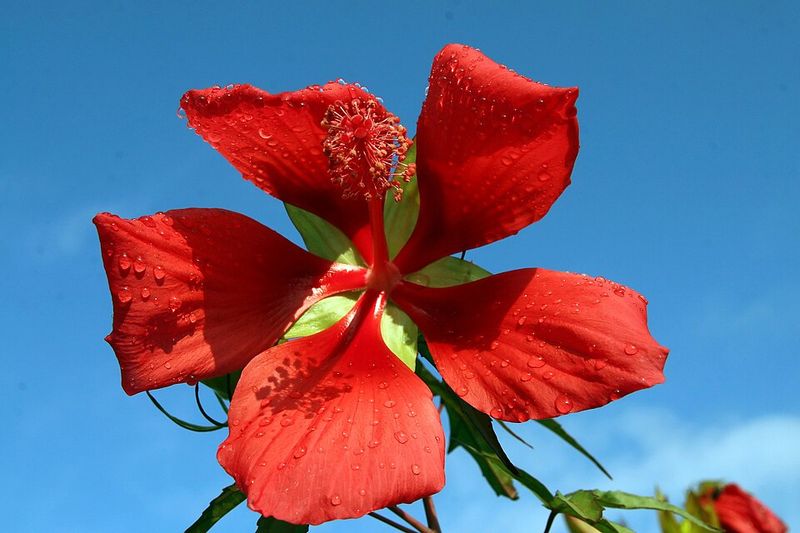
Bold, architectural, and undeniably striking, scarlet hibiscus is the kind of plant that makes neighbors stop and ask what it is. Hibiscus coccineus is a native perennial that can reach six to eight feet tall in a single growing season.
It is topped with enormous red flowers that can measure five inches or more across. For gardeners who want a true focal point instead of a hydrangea, this is a serious contender.
It is native to wetlands and moist areas of the southeastern United States. That makes it naturally suited to the wet spots, pond margins, and rain garden basins that are common in this state’s landscapes.
Full sun to part sun produces the best flowering. In heavy shade, blooming drops off noticeably.
The seasonal rhythm is different from hydrangeas. Scarlet hibiscus spends spring growing rapidly from the ground up, then blooms heavily in summer, and retreats to the roots in winter.
That dormant period can surprise gardeners who expect year-round foliage. It helps to plant it alongside evergreen companions that hold visual interest through the cooler months.
Pollinators and hummingbirds visit the flowers regularly. The deeply lobed, almost palm-shaped leaves add texture even before the blooms open.
This plant does not work in dry sandy sites, and it is not a woody shrub like a hydrangea. In the right wet or moist location, though, few natives match its combination of height, flower size, and seasonal impact across this state’s warm landscapes.
6. Spiderwort Keeps Part Sun Plantings Fresh And Easy
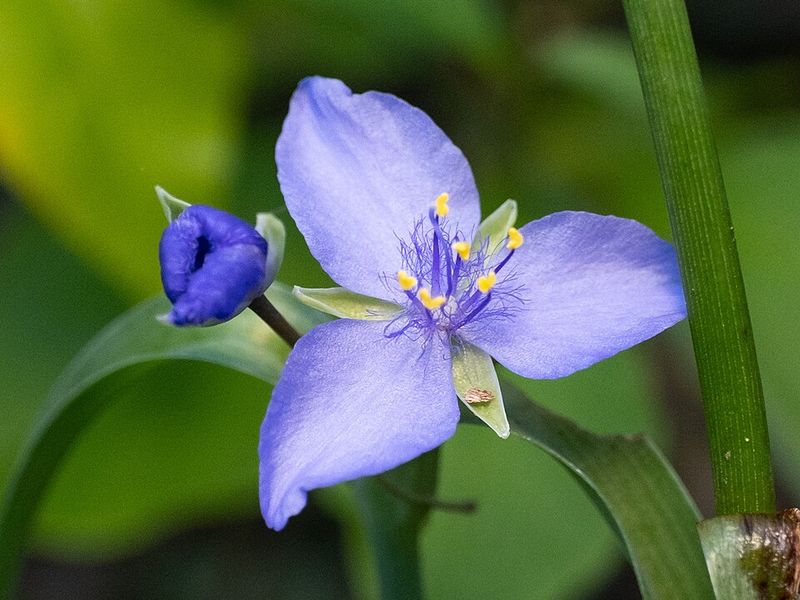
Not every garden bed needs a showstopper. Sometimes what a planting really needs is an easy, reliable native that keeps color moving through the seasons without demanding much attention.
That is exactly where native spiderwort earns its spot.
Tradescantia ohiensis produces clusters of three-petaled flowers in shades of purple, blue-violet, and occasionally pink. Other Florida-native Tradescantia species can do the same.
Blooms open in the morning and close by afternoon, a habit that gives the plant a casual, naturalistic quality that suits informal plantings beautifully.
Stems reach one to three feet tall depending on conditions, and the strap-like foliage has a soft, slightly grassy texture.
In this state, spiderwort performs best in part sun to light shade with moderate moisture. It tolerates a range of soil types, including sandy soils, which gives it flexibility in yards where other perennials struggle.
Spring is the peak bloom period, though some flowering continues into early summer before the plant goes semi-dormant in the heat.
Native bees visit the flowers regularly, adding pollinator value to beds where it grows. Spiderwort works best as a filler, groundcover accent, or naturalistic edge plant rather than a formal centerpiece.
It spreads gently by seed and clumping, which helps it fill in over time in the right setting. Think of it as the relaxed, unpretentious member of the native garden crew, the one that quietly holds things together while showier plants take center stage.
7. Lyreleaf Sage Adds Low Color Under Taller Natives
Ground-level color is one of the hardest things to achieve in a native planting, especially under taller shrubs or trees where bare mulch tends to take over.
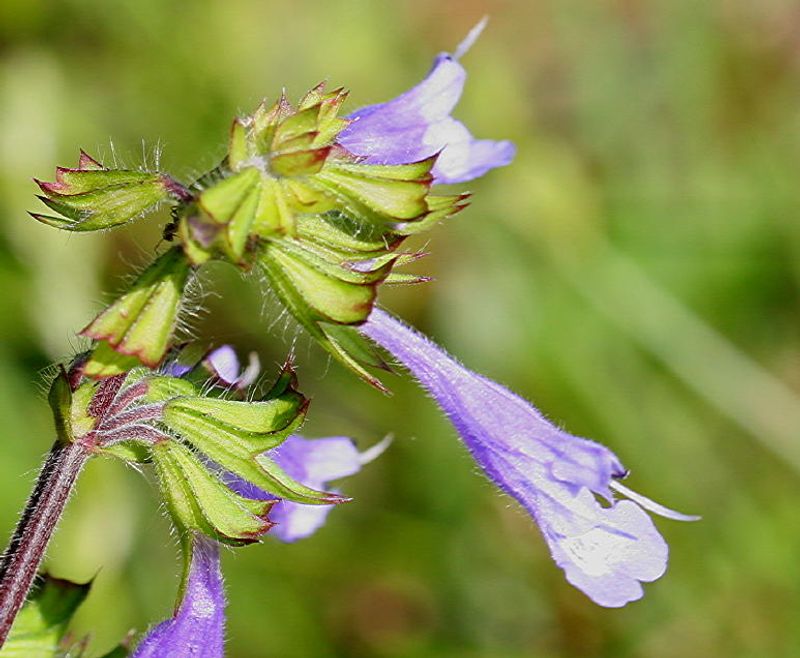
Lyreleaf sage steps into that gap with quiet confidence, offering purple-blue flower spikes and attractive basal rosettes that hold the ground layer with genuine style.
Salvia lyrata is native to the eastern United States and grows naturally in open woodlands, roadsides, and disturbed areas across much of our state. It is a low perennial, typically reaching only one to two feet in flower.
That makes it well suited to the front of beds or the spaces beneath taller native plantings where hydrangeas might have once been used to fill visual gaps.
Spring brings the main flush of bloom, with slender spikes of tubular purple-blue flowers that are visited by native bees and other pollinators.
The basal foliage often has attractive purplish or mottled markings, adding visual interest even when the plant is not in bloom.
It tolerates a range of soil conditions, including dry sandy soils, and handles both sun and partial shade reasonably well.
Lyreleaf sage is not a hydrangea substitute in terms of size or flower mass. Its role is different: it fills the ground layer, softens edges, and adds subtle seasonal color where taller focal plants need low companions.
It self-seeds modestly, which helps it naturalize gently across suitable areas without becoming a nuisance in most garden settings.
8. Frogfruit Softens Edges With Pollinator Friendly Blooms
Bed edges, path borders, and the sunny low spots around larger plantings often get overlooked in garden planning, but they are some of the most visible parts of a yard.
Frogfruit handles those spaces with a low, spreading habit and a surprising amount of pollinator activity packed into a very small plant.
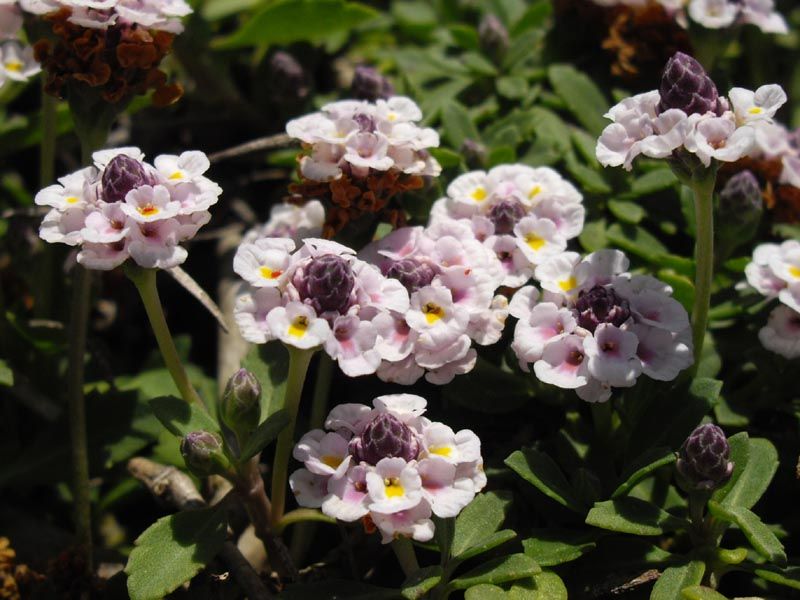
Phyla nodiflora is a native groundcover perennial that creeps along the ground, rooting at nodes and forming a dense, low mat that rarely exceeds a few inches in height.
Tiny rounded flower heads produce small white and pink blooms nearly year-round in warm conditions, which is a remarkable trait in a groundcover.
It grows in full sun to light shade and handles a range of soil moisture, including dry and occasionally wet conditions.
Pollinators love it out of proportion to its size. Butterflies, native bees, and other beneficial insects visit the blooms consistently.
That makes frogfruit one of the most ecologically productive groundcovers available for this state’s landscapes. It is also a larval host plant for several butterfly species, including the white peacock and phaon crescent.
Frogfruit does not replace the tall, showy bloom mass of a hydrangea. Its role is to cover the ground layer around larger focal plants, soften hard edges, and stitch together the low spaces in a planting.
In that supporting role, it genuinely outperforms most alternatives, native or otherwise, and it does it with almost no fuss once established in a suitable sunny spot.