These Oregon Privacy Plants Can Cause Problems If Planted Too Close To A Fence
Planting along a fence for privacy is one of those ideas that sounds completely straightforward right up until it isn’t. Oregon yards have a way of adding complications that nobody warned you about at the garden center.
The same wet winters that make this state so lush and green can push certain plants into aggressive, fence-swallowing growth before you have had a chance to intervene.
Dry summer stretches then stress everything crowded into narrow side yards.
Wood fences take the worst of it, quietly rotting behind dense foliage where air cannot circulate and moisture gets trapped. None of these plants are automatically a terrible choice, but size, spread, and placement matter enormously here.
Get it wrong and what started as a simple privacy screen becomes a project you did not sign up for.
1. Running Bamboo Sends Rhizomes Beyond The Fence Line
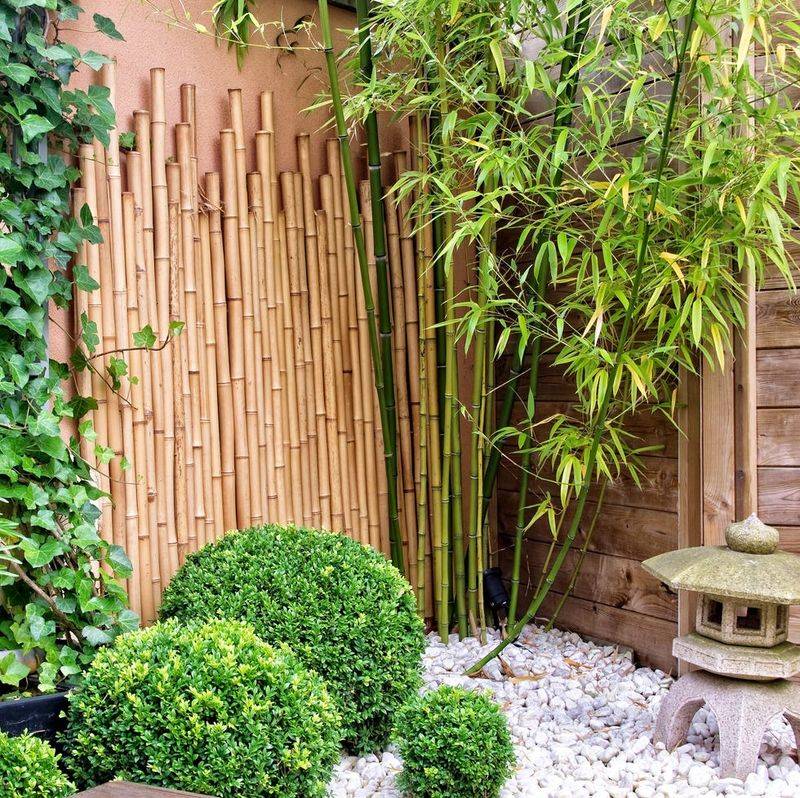
Tight fence strips and running bamboo are a combination that Oregon homeowners often regret a few seasons in. Running bamboo spreads through underground stems called rhizomes, which can travel several feet in a single growing season.
Once those rhizomes reach beneath a fence, they can pop up on the neighbor’s side without much warning.
In Oregon’s mild, wet winters, running bamboo tends to spread more aggressively than many people expect. The dense canes can press against a fence, and the rhizomes working beneath the surface can eventually shift or lift fence posts over time.
A narrow planting strip offers very little room to intercept that spread before it becomes a bigger problem.
Containment is possible with root barriers, but those barriers need to be installed correctly and checked regularly. Many homeowners plant bamboo first and add barriers later, which rarely works as well.
If bamboo is the goal for privacy in Oregon, clumping varieties tend to be a much safer choice near a fence line, as they spread slowly and stay much closer to where they were originally planted.
2. English Ivy Hides Fence Problems Behind Thick Growth
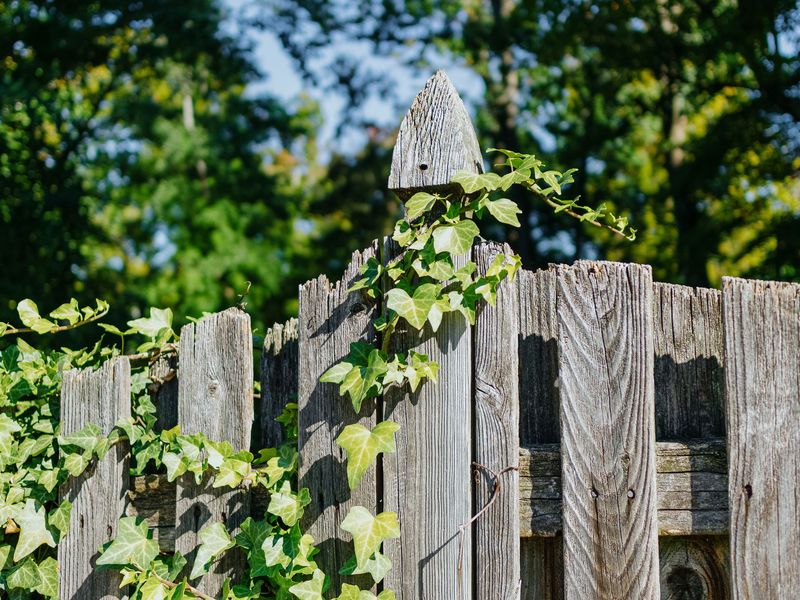
Few plants disguise fence problems as effectively as English ivy, and that is not a compliment. Once it establishes along a fence in Oregon, the thick mat of vines can completely hide rotting boards, loose posts, or gaps that need repair.
By the time a homeowner notices the damage, the fence may need significant work.
English ivy is also listed as an invasive plant in Oregon, which means it can spread beyond the yard into natural areas nearby. It climbs readily, and the added weight of dense growth can stress fence boards and fasteners over time.
Wet Oregon winters keep the vines damp for long stretches, which can hold moisture against wood surfaces and accelerate decay.
Removing established English ivy from a fence is genuinely hard work. The vines grip tightly, and any small pieces left behind can resprout.
Many Oregon counties and cities have guidance on managing English ivy because of its invasive nature.
For a fence-side privacy screen, there are far less problematic evergreen options available that provide coverage without the hidden damage and invasive spread that English ivy tends to bring.
Your Oregon Garden Changes Every Week. Your Plan Should Too.
Gardening in Oregon changes quickly throughout the season. Every Friday you’ll receive a simple weekly plan showing exactly what to plant, prune, fertilize, harvest, and protect so you never miss the right timing.
3. Cherry Laurel Can Outgrow A Narrow Fence Strip
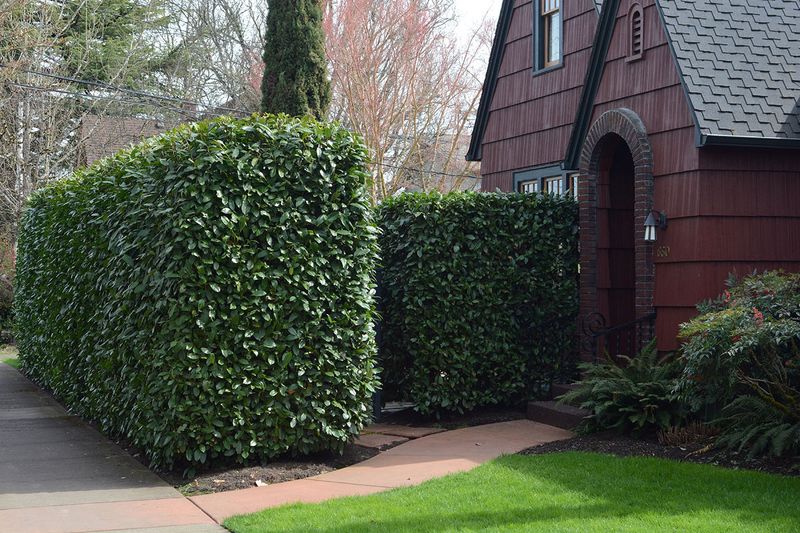
Cherry laurel is one of the most popular privacy hedge plants in Oregon, and for good reason. It grows quickly, stays evergreen, and produces a dense screen that blocks sight lines well.
The problem comes when it is planted in a narrow strip right along a fence and left to grow without much management.
English laurel, the most common type used here, can reach heights of 20 feet or more and spread considerably wider than many homeowners plan for. In Oregon’s wet climate, it tends to grow fast during the rainy season.
A plant that looks modest in a nursery pot can become a towering hedge that crowds the fence, limits access for repairs, and shades out everything nearby within a few years.
Portuguese laurel is a somewhat smaller alternative, but it still needs adequate room to reach its mature size comfortably. Both types can also spread from bird-dispersed seeds into nearby natural areas, which has raised concerns in parts of Oregon.
Giving cherry laurel enough space from the fence line, and committing to regular pruning to manage its size, makes a big difference in how well it works as a long-term privacy planting.
4. English Holly Turns A Hedge Into A Tree
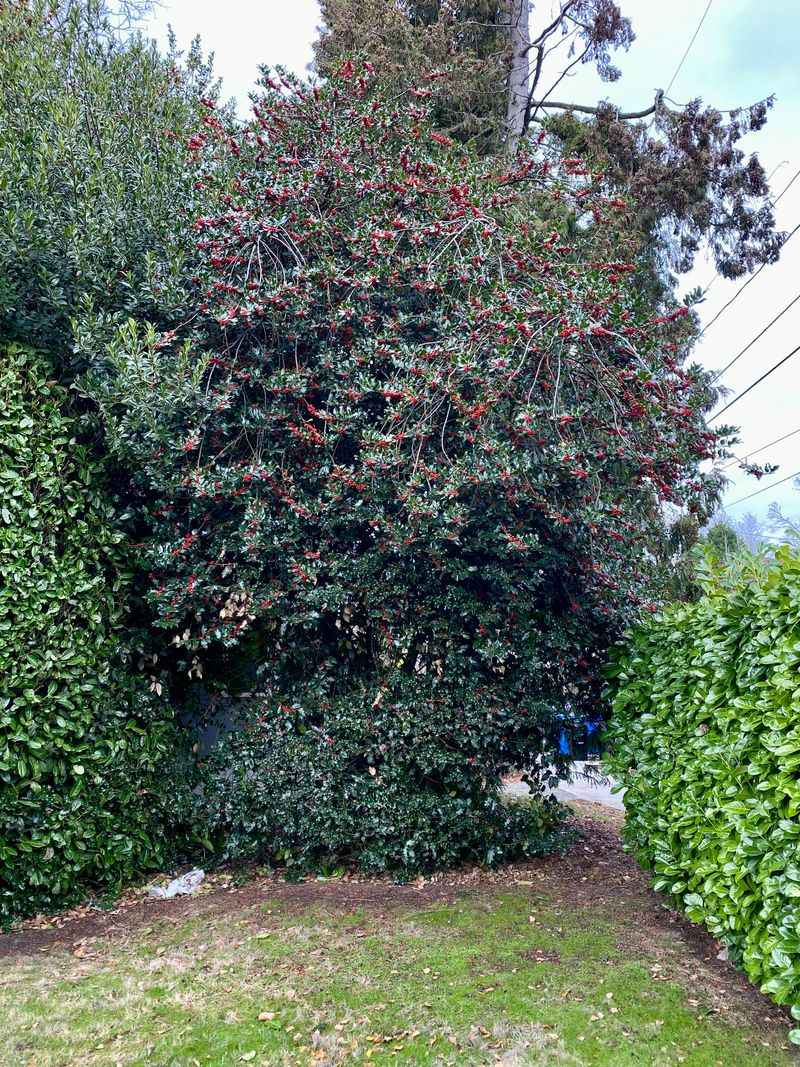
English holly shows up in a lot of Oregon landscapes as a tidy hedge plant, but it has a habit that catches many homeowners off guard. Given enough time and space, English holly can grow from a manageable shrub into a tree-sized plant that reaches 30 feet or more.
What starts as a neat fence-side hedge can slowly become something much harder to control.
The spiny leaves make pruning an uncomfortable job even in the best conditions. When English holly is planted close to a fence, getting in to trim the interior or access the fence itself becomes genuinely difficult.
The plant also produces berries that birds carry into natural areas, which is why English holly is considered invasive in parts of the Pacific Northwest, including Oregon.
Moisture tends to collect inside a dense holly hedge, and that trapped dampness can work against a wood fence over time. The roots, while not typically as aggressive as some plants on this list, still need room to expand as the plant matures.
If holly is part of an Oregon privacy plan, keeping it well away from the fence and maintaining a clear pruning lane on both sides helps avoid the crowding and access problems that come with planting it too close.
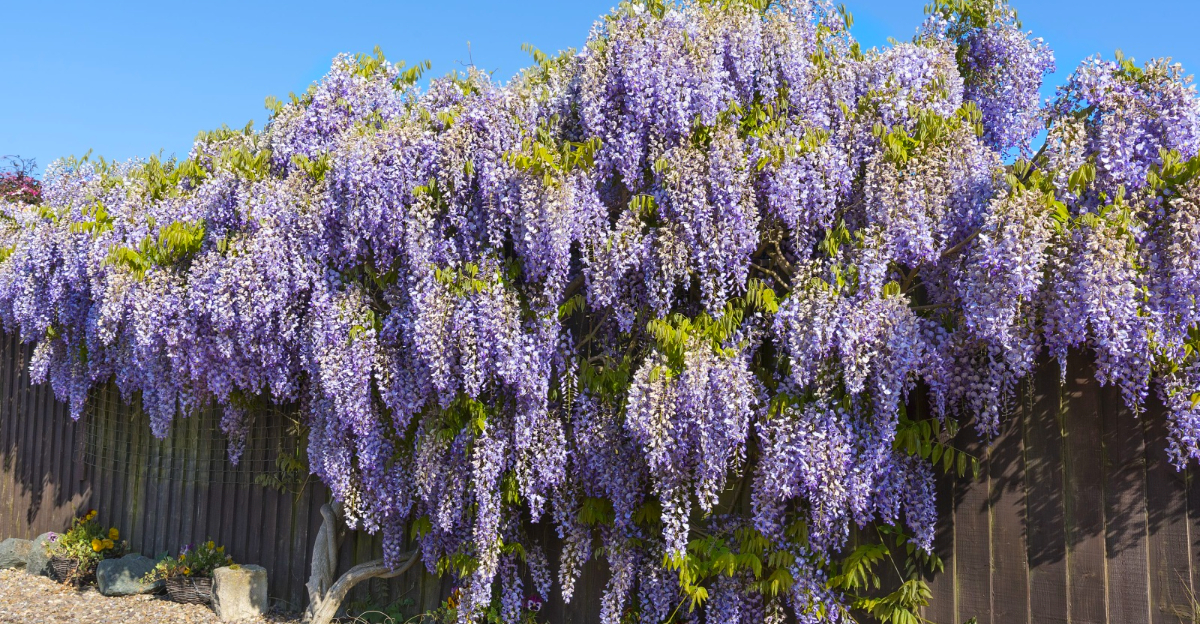
5. Wisteria Gets Too Heavy For Many Fences
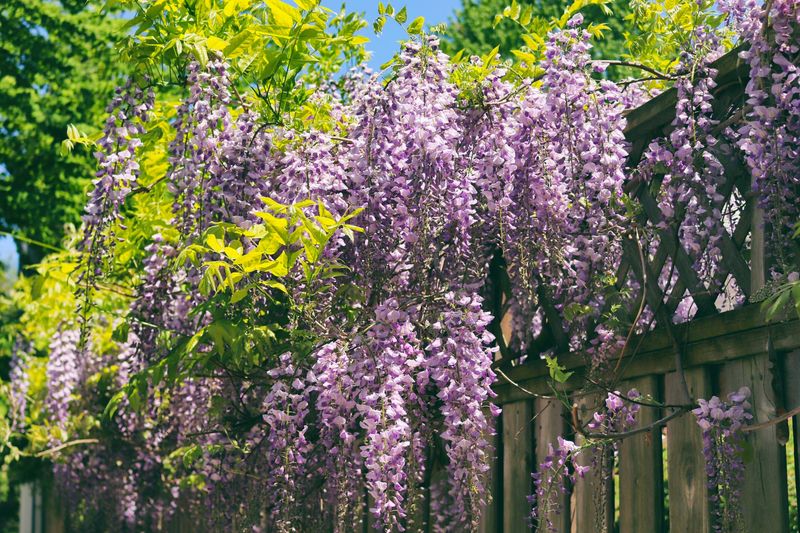
Wisteria is one of the most visually striking vines you can grow in Oregon, with its long clusters of purple or white flowers drawing attention every spring.
That beauty comes with a serious trade-off, though, especially when it is trained along a standard wood or lightweight metal fence.
The woody stems of mature wisteria can become extremely heavy, and most residential fences are simply not built to carry that load over many years.
As wisteria ages, the main stems thicken and become almost tree-like in their weight and strength. A fence that holds up fine in the early years may start to lean, warp, or pull apart as the vine matures and adds more mass.
Oregon’s wet winters add extra weight through water-saturated growth, which puts even more stress on fence structures that were not designed for it.
Wisteria also needs regular and sometimes aggressive pruning to stay in bounds. In a tight fence-side planting, that pruning becomes harder to do safely and thoroughly.
The vine can also send out long shoots that reach neighboring spaces quickly. For Oregon gardens where wisteria is wanted, a purpose-built pergola or sturdy arbor provides much better long-term support than a standard fence.
6. Western Red Cedar Needs More Room Than A Fence Edge
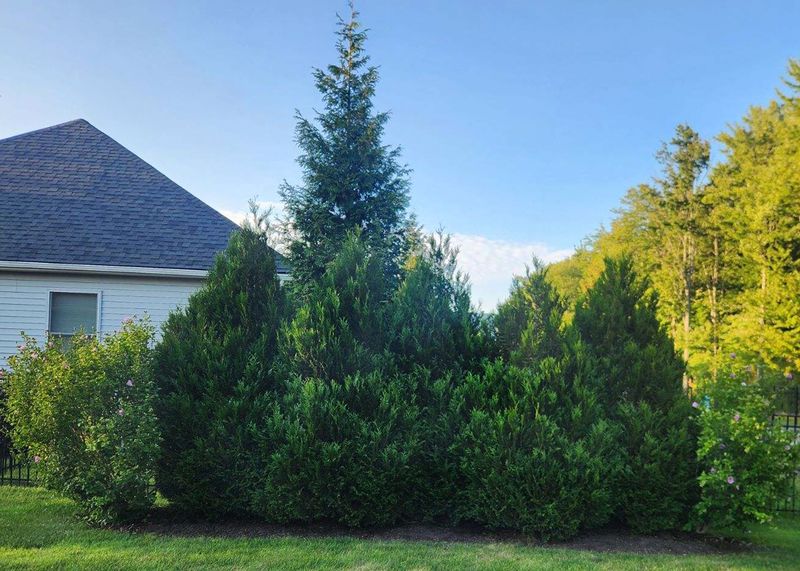
Western red cedar holds a special place in Oregon’s landscape, and it can serve as a beautiful natural screen when given the right conditions. The challenge near a fence is that full-size western red cedar trees are simply too large for a tight fence-side planting strip.
These trees can grow well over 50 feet tall and spread considerably wide, which is far more than most backyard fence lines can accommodate.
Smaller cultivars exist and are sometimes marketed for hedge use, but even those need thoughtful spacing. Planting a western red cedar too close to a fence can lead to branches pressing against and over the fence as the tree fills out.
The lower branches may also create a shaded, damp zone right along the fence boards, which is not ideal for wood longevity in Oregon’s rainy climate.
Root systems on western red cedar can also expand as the tree matures, and a fence post sitting directly in that root zone may shift over time.
This is a native Oregon tree that deserves a proper planting location where it can reach its natural size without crowding structures.
Giving it several feet of clearance from any fence, and choosing a compact variety when space is limited, makes it a much more manageable privacy option.
7. Arborvitae Can Crowd The Fence Side Fast
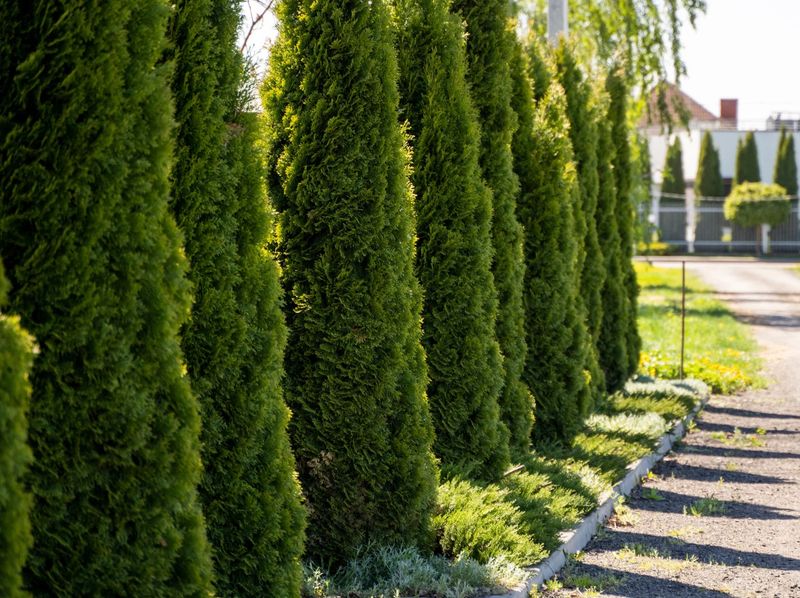
Arborvitae is probably the most commonly planted privacy screen in Oregon neighborhoods, and it is easy to see why. It grows quickly, stays green year-round, and creates a solid visual barrier without much fuss in the early years.
The issue comes when homeowners plant it right against a fence without accounting for how wide some varieties can get.
Emerald Green arborvitae stays relatively narrow, but other popular varieties like Green Giant can spread 12 feet wide or more at maturity.
When several of these are lined up along a fence with limited spacing, the growth presses into the fence boards, reduces airflow, and makes it nearly impossible to inspect or repair the fence without removing branches.
Oregon’s wet winters mean that moisture gets trapped in those tight spaces for months at a time.
Arborvitae planted too close together also tends to lose lower branches over time as the interior shades out. This can leave bare patches along the fence line that defeat the purpose of the privacy screen.
Spacing plants correctly from the start, and giving them a foot or two of clearance from the fence itself, keeps airflow moving and leaves room for the occasional fence board replacement without major disruption to the planting.
8. Photinia Gets Too Dense Without Pruning Space
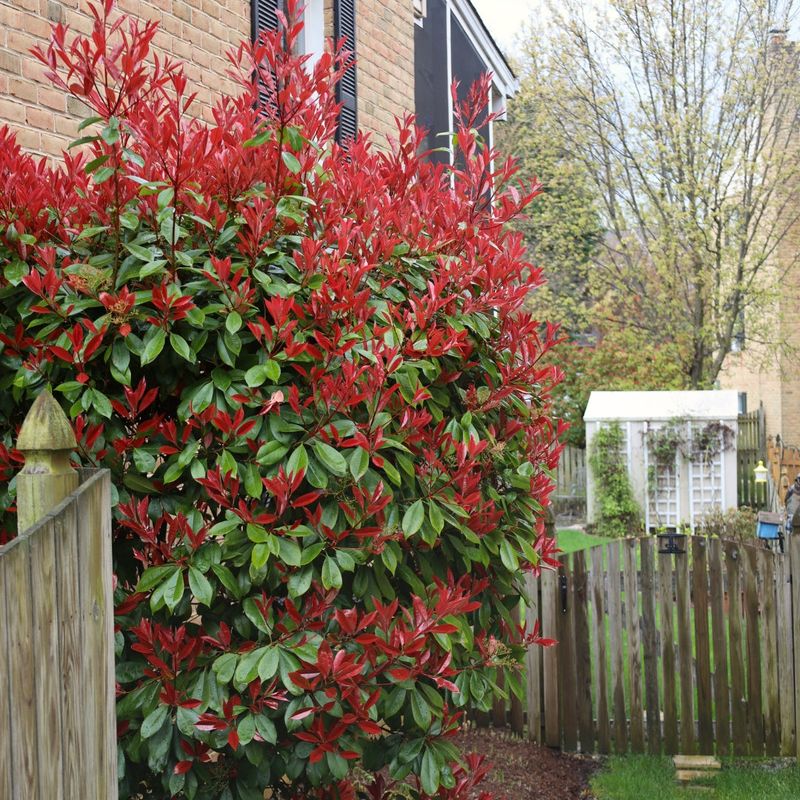
Red tip photinia is a familiar sight in Oregon yards, valued for its bright red new growth and its ability to form a thick, tall hedge fairly quickly.
It works well as a privacy screen in open areas, but along a fence line it can become more of a burden than a benefit if it is not given adequate room and regular pruning attention.
Photinia can grow 10 to 15 feet tall and nearly as wide without pruning, and in Oregon’s wet climate it tends to push that growth during the rainy months.
A dense photinia hedge planted close to a fence traps moisture between the foliage and the fence boards, which can accelerate wood decay over time.
It also makes accessing the fence for repairs or painting nearly impossible without cutting back significant growth first.
Photinia is also somewhat prone to fungal leaf spot in humid conditions, which Oregon’s climate encourages. Good airflow around the plant helps reduce that problem, but tight fence-side planting works against that airflow.
Pruning photinia regularly keeps it in shape and healthier overall, but doing that pruning safely and thoroughly requires enough space to move around the plant. Giving it at least a few feet from the fence makes long-term care significantly easier.
9. Pyracantha Makes Fence Work Painful And Tight
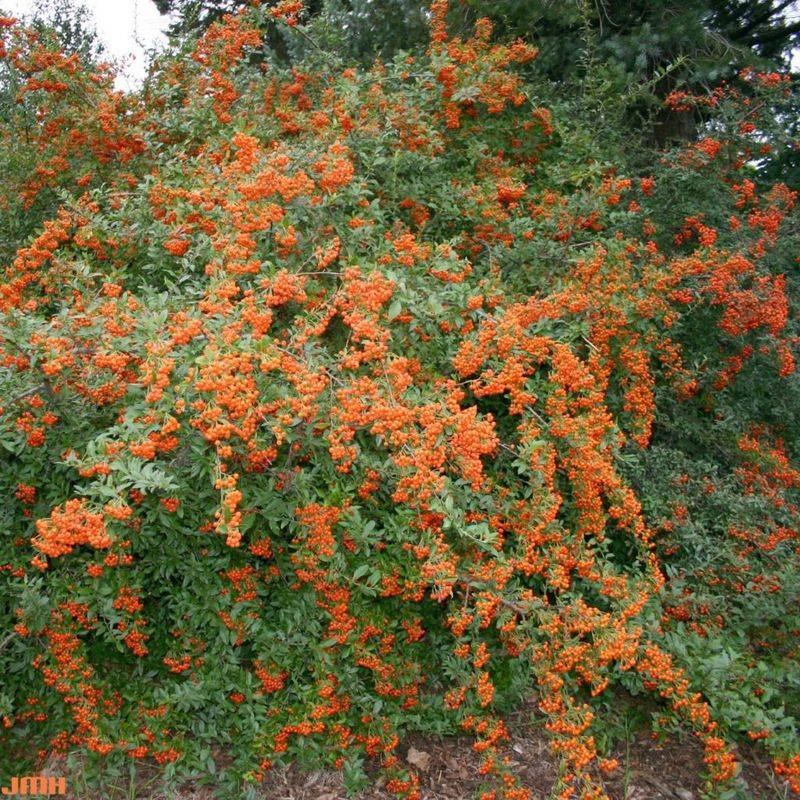
Pyracantha, also called firethorn, earns its common name honestly. The long, sharp thorns on this shrub can make any fence-side task genuinely uncomfortable, from pulling weeds at the base to replacing a fence board that has seen better days.
When it is planted right against a fence, those thorns become an obstacle every single time the fence needs attention.
Beyond the thorns, pyracantha grows into a large, dense shrub that can reach 10 to 15 feet tall and spread just as wide. In Oregon, it tends to put on strong growth during the wet season, and without regular pruning it can quickly overwhelm a fence strip.
The branches lean into and over the fence, and the weight of heavy berry clusters in fall adds extra stress to the canes pressing against fence boards.
Pyracantha does have real value in Oregon gardens. Its berries feed birds through the fall and winter, and the dense structure provides good wildlife cover.
As an espalier against a wall or a standalone shrub with room to spread, it can be a rewarding plant.
Close to a fence in a narrow strip, though, the combination of sharp thorns, dense growth, and significant mature size makes routine fence maintenance something most homeowners will avoid for as long as possible.
10. Leyland Cypress Can Overwhelm Small Fence Lines
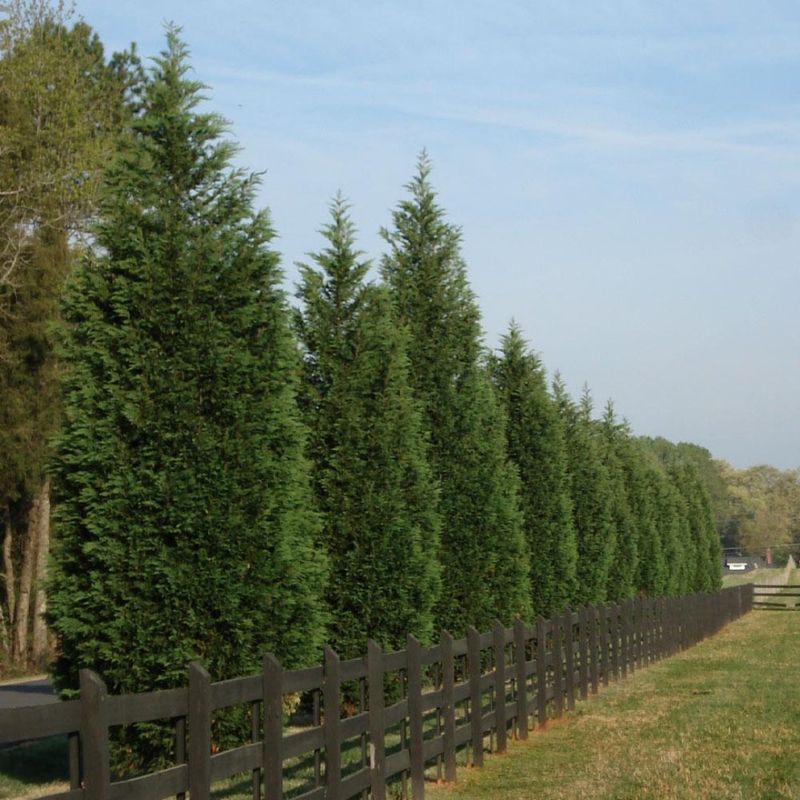
Leyland cypress became one of the most popular fast-growing privacy trees in Oregon for a stretch of years, and the early appeal is easy to understand. It grows quickly, stays evergreen, and forms a solid green wall in a relatively short time.
The problem that many homeowners discovered later is just how large these trees get when left to reach their natural size.
Leyland cypress can grow 60 to 70 feet tall under favorable conditions, and it puts on several feet of height each year when young.
Planted along a fence line in a standard backyard, that growth rate means the tree can outpace a privacy screen purpose within just a few years and start becoming a looming structure that shades neighboring properties and overwhelms the fence below.
Oregon’s mild, wet climate tends to encourage that fast growth.
Keeping Leyland cypress at a manageable hedge height requires consistent and fairly aggressive pruning, which is labor-intensive on tall trees. If pruning is skipped for a season or two, catching up becomes a much bigger project.
The trees also develop a large root system as they mature, which can affect fence posts and nearby hardscape.
For smaller Oregon fence lines and urban lots, there are narrower, slower-growing evergreen options that provide privacy without the same long-term size concerns.