Why Pinching Mums In Early July Matters For Illinois Gardens And What Happens If You Wait

Drive through any small town in Illinois come October. You’ll spot them on porch steps everywhere.
Mounds of chrysanthemums so dense and round they look almost fake, like someone dropped a colored cloud right there on the steps.
Nobody tells you the trick happens months earlier, quietly, with a pair of fingers and a little nerve. Pinching mums in early July feels wrong the first time you try it.
You’re removing healthy growth from a plant that looks perfectly happy, and every instinct says leave it alone.
But that one small act forces the plant to branch out instead of shooting straight up, and branching is exactly what turns a scraggly stem into a flower-packed dome.
Illinois summers give you a narrow window for this, and missing it shows up later as gaps, floppy stems, and blooms clustered awkwardly at the top. Get the timing right now, and autumn does the rest of the work for you.
Encourages Bushier, Fuller Plant Growth

Picture a plant that spreads wide, blooms thick, and looks like it came straight from a garden center display. That is exactly what early pinching can do for your mums.
When you pinch the growing tip of a mum stem, the plant responds by sending out two new shoots from just below the cut. Each of those shoots can be pinched again, creating four stems where one existed before.
This branching effect is the foundation of a full, rounded plant shape. Without it, a mum tends to grow straight up like a single green spike, which is not the look anyone wants in a fall garden bed.
Pinching mums in early July gives the plant enough warm weeks to push out all those side branches before the days start shortening. Once days shorten, the plant shifts its energy toward making flower buds instead of new stems.
If you miss that window, you simply do not get the same branching response. The plant may still bloom, but it will look more like a handful of stems than a lush mound.
The good news is that pinching is genuinely easy. You just use your fingers or small scissors to snip off the top inch or two of each stem.
Do this every two to three weeks from late spring through early July for the best results. A bushier plant also holds itself up better in wind and rain. That structural strength starts right here, with one simple pinch.
Delays Flowering Until Proper Fall Bloom Time

Timing is everything in a fall garden, and mums are no exception. Pinching mums in early July is the most reliable way to push that bloom window right into peak fall season.
Chrysanthemums are photoperiodic plants, meaning they start forming flower buds when the days get shorter. In the Midwest, that shift typically happens in mid to late summer.
If your plant has already been pinched and is still growing stems in early July, it will not start budding up until that light change triggers it. That delay is actually a gift, because it lines up blooms with October color season.
Your Illinois Garden Changes Every Week. Your Plan Should Too.
Gardening in Illinois changes quickly throughout the season. Every Friday you’ll receive a simple weekly plan showing exactly what to plant, prune, fertilize, harvest, and protect so you never miss the right timing.
An unpinched mum, on the other hand, may start forming buds as early as August. By the time your neighbors are decorating for fall, your flowers could already be fading.
Gardeners who nail this timing get weeks of overlapping color right when pumpkins hit the porch. That synced-up display is what makes a yard look intentional and well-planned.
The trick is understanding that pinching does not just shape the plant. It resets the bloom clock by removing early bud sites and pushing the plant back into a vegetative growing phase.
Think of it like snoozing an alarm. You are not canceling the bloom, just nudging it to a better hour.
Late September through mid-October is prime time for mum flowers in most parts of the state. Patience plus one simple cut equals a spectacular fall payoff.
Prevents Leggy, Weak Stems Later On

Nobody wants a mum that flops over after the first rainstorm. Leggy stems are one of the most common complaints from gardeners who skipped pinching, and the fix is surprisingly straightforward.
When a mum is allowed to grow without any intervention, it puts most of its energy into vertical height. The stems get tall fast, but they stay thin and weak because the plant is not investing in structural strength.
Pinching redirects that energy. Instead of racing upward, the plant builds outward, creating shorter, thicker stems that can support the weight of large blooms without bending or breaking.
Think of it like pruning a tree. When you cut back the lead branch, the tree fills out sideways and grows stronger overall. The same principle applies to your fall mums.
Leggy stems also expose the center of the plant, leaving a bare, woody base surrounded by a few tall stalks. That look is not flattering in a garden bed or a container arrangement.
By early July, you have one last good opportunity to shape the plant before it locks into its bloom cycle.
After that, pinching removes flower buds you actually want to keep. Sturdy stems mean flowers stay upright through September wind and October rain.
That resilience is the difference between a mum that dazzles for weeks and one that needs staking just to survive a breezy afternoon. Strong stems start with an early, well-timed pinch.
Promotes Stronger Root And Branch Development

Below the soil, something powerful is happening every time you pinch a mum stem. Root development and above-ground branching are more connected than most gardeners realize.
When you remove a growing tip, the plant temporarily slows its upward push. That pause allows the root system to catch up, spreading wider and anchoring more firmly into the surrounding soil.
A stronger root system means the plant can pull in more water and nutrients. More resources available to the plant means more energy for building thick, healthy branches throughout the growing season.
This root-to-branch relationship is especially important in the Midwest, where summer heat can stress plants quickly. A well-rooted mum handles drought and heat spikes far better than one with a shallow or underdeveloped root zone.
Pinching in early July gives the plant several weeks, often eight to ten depending on variety and conditions, to build that underground strength before blooming season kicks in.
That window is just long enough to make a real difference in overall plant health. Gardeners who plant mums in spring rather than buying them in fall already blooming have the biggest advantage here.
Spring-planted mums have months to establish roots, and pinching supercharges that process. Branch development above ground mirrors what is happening below.
More branches mean more flower sites, and more flower sites mean a denser, more colorful display come September. Pinching mums in early July is essentially an investment in both the roots and the blooms at once.
Plants Often Bloom Too Early, Sometimes By August

Blooming in August is a common frustration for mum growers. You see those flowers pop open, feel a little rush of excitement, and then realize fall is still six weeks away.
Unpinched mums frequently bloom too early because nothing has reset their internal clock. The plant forms buds on its natural schedule, which in many garden varieties means flowers by mid to late August.
That timing can be misleading, since Illinois fall color season peaks in late September and October. By then, those August blooms are brown, spent, and long past their best days.
Early blooming also means the plant has burned through its flowering energy before the season even arrives. Mums do not rebloom the way some other perennials do, so once the show is over, it is over.
Pinching prevents this by removing the earliest bud sites before they can develop. The plant is essentially forced to start over with new growth, pushing the bloom date forward by several weeks.
For gardeners who want their yards to look festive alongside pumpkins and hay bales, that delay is critical. A mum blooming in October feels seasonal and intentional.
A mum blooming in August is simply out of sync with the season. The early bloom problem is most common with garden mums purchased from big box stores.
These plants are often already budded when you buy them, making pinching even more necessary if you want fall timing. Skip the pinch, and August flowers are almost guaranteed.
Flowers Fade Before Fall Color Season Arrives

It’s a common letdown when mums fade just as everyone else’s are peaking. Faded flowers during prime fall season are the direct result of blooming too soon.
Once a mum flower opens, it generally stays at its best for a few weeks, though this varies with weather and variety. Hot, dry conditions can shorten that window even further.
If blooms open in August, simple math tells you they will be spent by early September at the latest. That leaves your plant looking ragged right when fall entertaining season kicks into high gear.
Fall color season in the Midwest is a real thing, and it has a rhythm. Leaves turn, temperatures drop, and people start decorating. Your garden should be peaking at the same time, not recovering from an early bloom.
Pinching mums in early July pushes that bloom date into alignment with the season everyone actually wants to celebrate.
The goal is flowers in late September or early October, not during the dog days of summer. Faded flowers also affect the plant structurally.
Spent blooms attract mold and disease in wet fall weather, which can spread to healthy parts of the plant if not removed promptly. A well-timed mum can often hold its color through Halloween, frost permitting.
That extended display is worth every second of the pinching effort you put in back in July. Timing your bloom window right means never watching your flowers fade too soon again.
Stems Grow Tall And Floppy, Needing Support

Staking a mum is not exactly anyone’s idea of a fun Saturday project in an Illinois backyard. Yet that is exactly where you end up when stems grow too tall and too weak to support themselves.
Depending on the variety, unpinched mums can grow anywhere from one to three feet tall by late summer, and Illinois gardens see this problem often. Those stems look impressive at first, but they are not built to carry the weight of large flower clusters at the top.
Wind is the first test, and tall mums often fail it, especially with the open, gusty conditions common across Illinois. A single gusty afternoon can send stems sprawling sideways, snapping at the base or bending in ways that never quite straighten back out.
Rain adds weight to open flowers, which compounds the problem. A stem that looked borderline stable in dry weather can collapse under a good downpour, leaving blooms bent over and touching the ground.
Staking works, but it is labor-intensive and rarely looks graceful. Wire cages, bamboo sticks, and twine can prop up a floppy mum, but the plant still looks supported rather than naturally strong.
Pinching prevents all of this by keeping stem length in check from the beginning. Shorter stems with more branching points are inherently sturdier, even without any external support.
A compact, well-pinched mum stands on its own through wind, rain, and the variability of fall weather.
That self-sufficiency is one of the best arguments for pinching mums in early July. Save yourself the extra staking work and just pinch on time.
Overall Plant Looks Sparse Instead Of Full
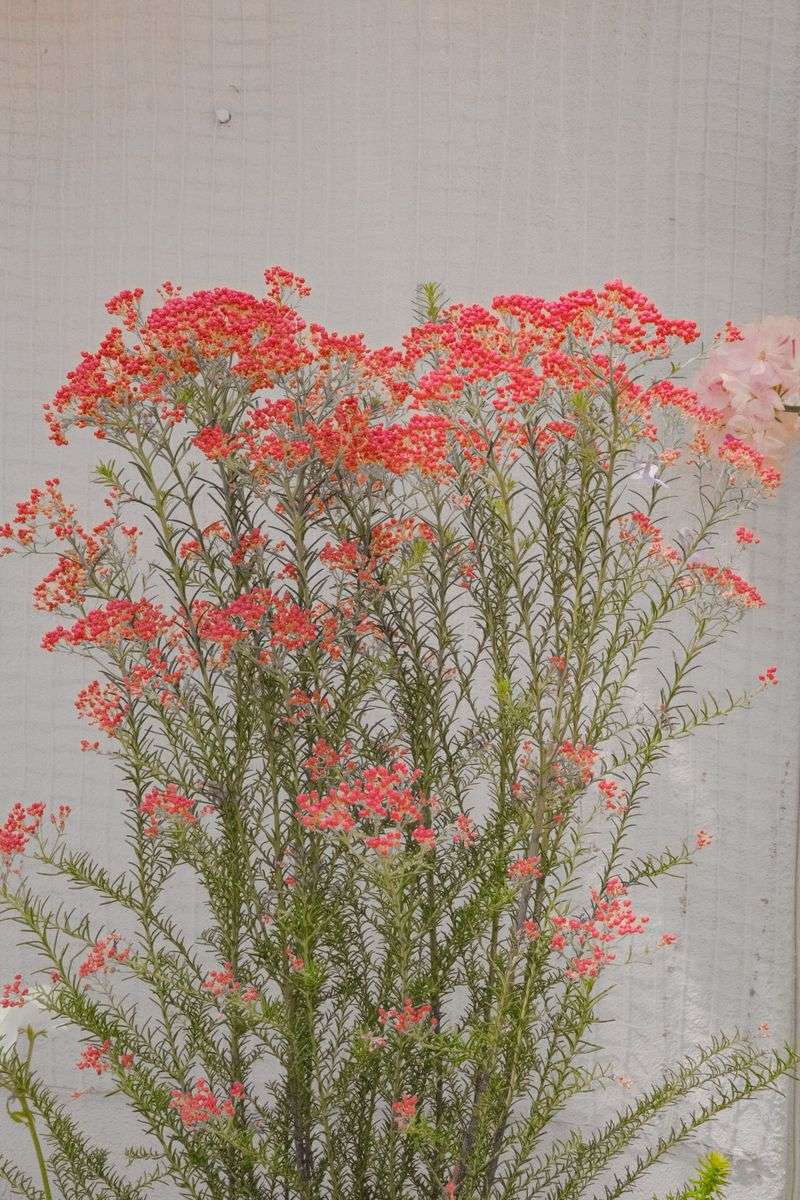
A sparse mum looks noticeably underdeveloped compared to a full one. There is something there, but it clearly did not reach its potential.
Without pinching, mums tend to develop just a few main stems that reach upward without branching out.
The result is a plant that looks thin and underwhelming, especially when placed next to a well-pinched neighbor. Sparse plants also show more of the bare, woody base of the stem.
That exposed center is not attractive, and it becomes more obvious once the plant starts blooming and all the visual interest is concentrated at the tips.
Fullness in a mum comes from having many short, branching stems all working together to create a rounded mound shape.
That shape only develops when pinching encourages consistent lateral growth throughout the season.
Gardeners sometimes try to compensate for sparse plants by planting more of them close together.
That strategy can help visually, but it does not fix the underlying issue and can create crowding problems down the line.
The best container displays and garden bed arrangements rely on full, dense mums to create that lush, abundant fall look. Sparse plants simply cannot carry the same visual weight.
Pinching mums in early July is the single most effective step for achieving that full, rounded shape everyone admires in fall garden displays.
One small effort in midsummer translates directly into a plant that looks twice as impressive by October. Fuller plants are always worth the pinch.