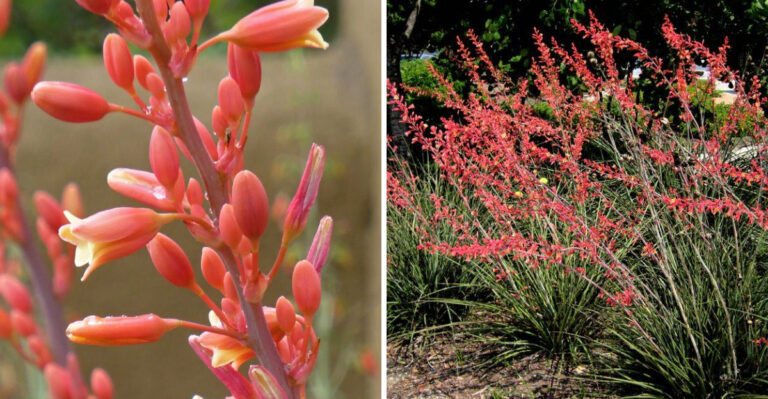
The Meaning Behind Seeing A Painted Bunting In Your Texas Garden For The First Time
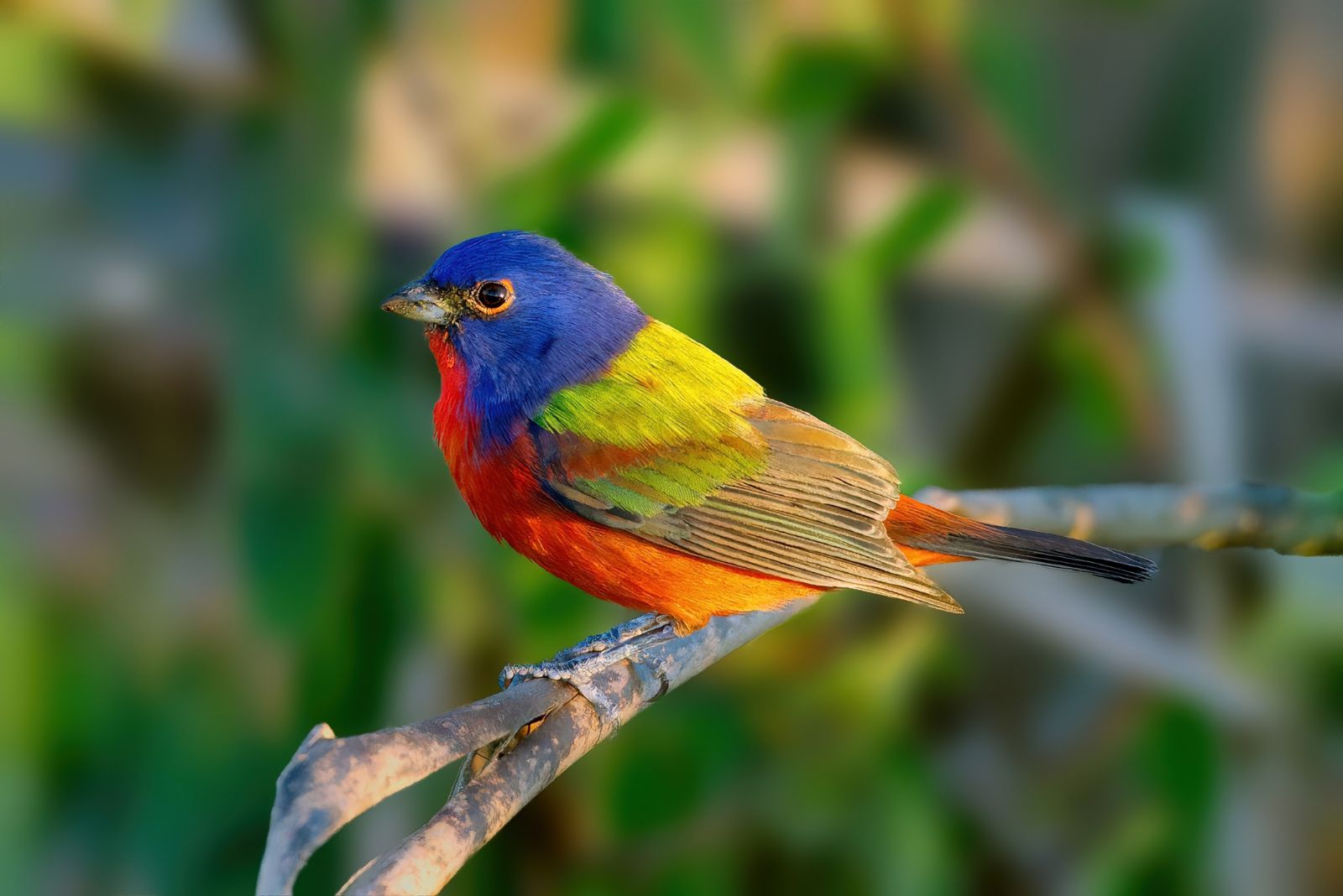
There are bird sightings that are pleasant, and then there are bird sightings that genuinely stop you in your tracks. Seeing a painted bunting for the first time falls firmly into the second category.
The colors on this bird are so vivid and unexpected that most people’s first reaction is to question whether what they’re seeing is even real. That electric blue head, the brilliant red chest, the lime green back.
It looks like something that belongs in a tropical rainforest, not a Texas garden. But there it is.
For many Texans, a first painted bunting sighting carries a feeling that’s hard to explain. Something between wonder and a quiet sense that the moment means something.
And they’re not wrong to feel that way. These birds have carried deep symbolism and folklore for generations, and their striking appearance has made them the subject of stories and beliefs across many cultures.
Here’s what people believe about seeing a painted bunting and why this little bird feels so special.
1. A Rainbow Has Landed
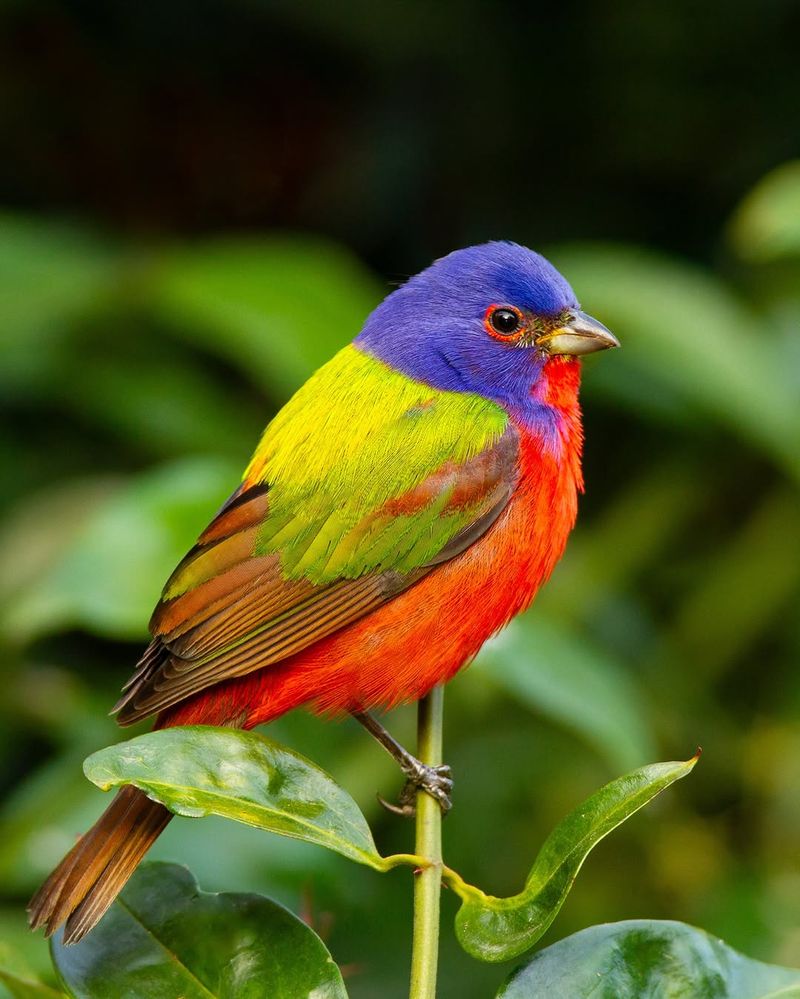
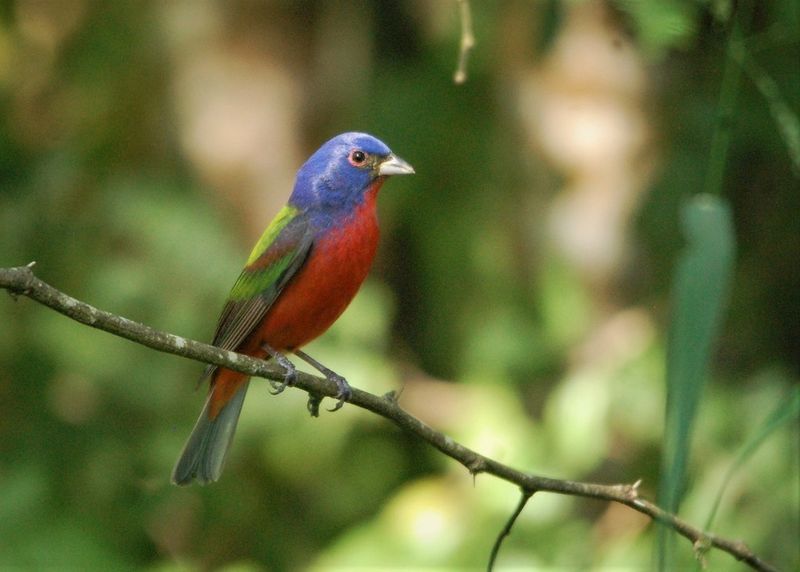
Few moments in a Texas garden are as jaw-dropping as seeing a male Painted Bunting for the very first time. His blue head catches the light like a jewel.
His green back almost glows. His red underparts look like someone dipped him in paint, which is exactly how this bird got its name.
The male is considered one of the most colorful birds in all of North America. No other songbird in Texas combines so many bold, vivid colors on such a small body.
He is only about five inches long, roughly the size of a large sparrow, yet he stands out like a tiny tropical flag perched among your garden branches.
Not every Painted Bunting you spot will look this dramatic, though. Female Painted Buntings and young birds are bright green with a pale eye-ring and a lighter belly.
At first glance, they may look like a plain little bird, but that bright green is still quite lovely and distinctive once you know what to look for.
Young males go through a slow color change over their first two years, gradually picking up the bold blues, reds, and greens of a fully mature adult. So a first sighting might be a dazzling male or a softer green female, and both are equally worth celebrating.
Either way, once you see one, you never forget it. Birdwatchers, gardeners, and nature lovers across Texas describe the Painted Bunting sighting as a magical moment. Keep your binoculars nearby, because once one finds your yard, others may follow.
2. A Sign Your Garden Feels Wild
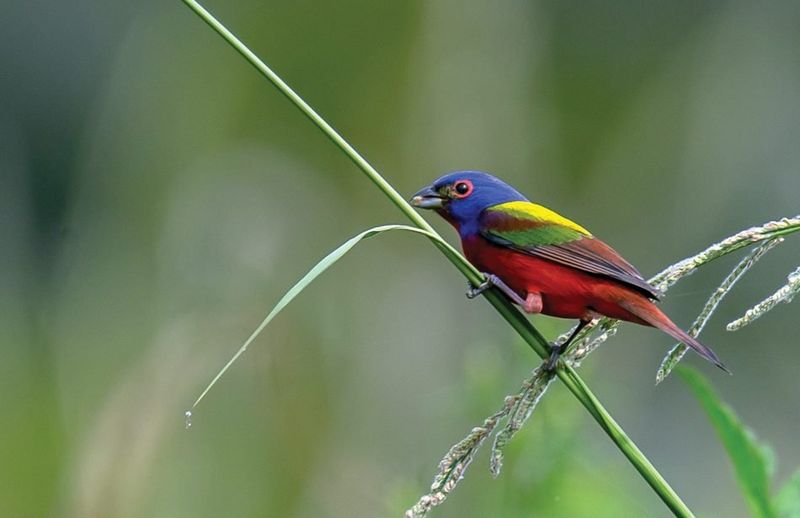
When a Painted Bunting shows up in your yard, it is sending you a pretty clear message: your garden has something wild going on, and that is a very good thing.
These birds are not drawn to wide-open, manicured lawns. They prefer places with texture, layers, and a bit of organized chaos.
Painted Buntings love dense brush, thickets, forest edges, and areas with low-growing shrubs and ground cover. In Texas, they are especially fond of streamside vegetation, cedar thickets, and shrubby field edges where they can slip in and out of cover quickly.
Your Texas Garden Changes Every Week. Your Plan Should Too.
Gardening in Texas changes quickly throughout the season. Every Friday you’ll receive a simple weekly plan showing exactly what to plant, prune, fertilize, harvest, and protect so you never miss the right timing.
A yard with hedges, native shrubs, or even a slightly overgrown corner can be enough to attract them.
Think of your garden as a layered habitat. Birds like the Painted Bunting feel safe when they have places to hide, perch, and forage close to the ground.
If your yard has a mix of tall plants, medium shrubs, and low ground cover, you are already creating the kind of space these birds appreciate.
Leaving a section of your yard a little less trimmed can make a big difference. Native grasses, wildflowers, and berry-producing shrubs all add to the appeal.
A brush pile in a quiet corner might seem messy to a neighbor but feels like a luxury hotel to a Painted Bunting.
Your garden does not need to be a wilderness preserve to attract these birds. Small changes, like reducing pesticide use or planting a native hedge, can shift the whole feel of your outdoor space and welcome more wildlife than you ever expected.
3. A Seasonal Texas Hello
Timing matters a lot when it comes to Painted Buntings, and your first sighting is almost certainly connected to the seasons. These birds are migratory, meaning they travel long distances between their winter and summer homes.
Texas sits right in the middle of that journey and also serves as a breeding ground for many of them.
Painted Buntings generally begin returning to Texas as early as late March, with the main wave arriving from April through mid-May. During this window, male birds often show up first to scout territory, followed by females a short time later.
If you spot one in spring, you are likely catching an early arrival or a bird settling in for the breeding season.
The Texas breeding season for Painted Buntings can stretch from late March all the way into late August. During this time, females build small cup-shaped nests tucked low in dense shrubs or vines.
They lay three to four eggs and raise multiple broods in a single season, which means the same pair might nest in or near your yard several times.
After breeding, many Painted Buntings begin moving south again in late summer and fall, heading to wintering grounds in Central America, southern Florida, and the Caribbean.
Some birds linger in southern Texas through the winter months, so a sighting is not impossible even in cooler weather.
Knowing the seasonal rhythm helps you plan ahead. Setting out millet feeders in early April and keeping your yard tidy but natural gives these birds the best chance of stopping by and maybe even staying a while.
4. A Quiet Visitor, Not A Pet Bird
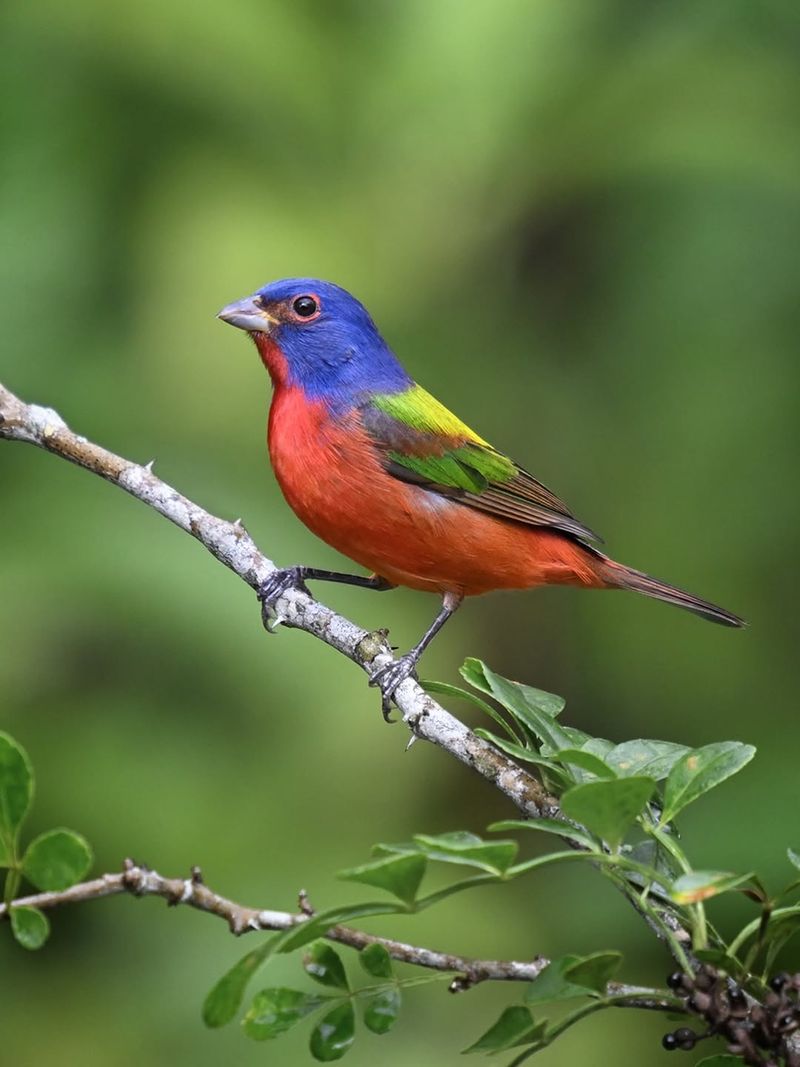
Seeing a Painted Bunting for the first time can honestly make you do a double take. The colors are so vivid, so perfectly arranged, that many people immediately wonder if it escaped from someone’s birdcage.
It looks like something you would see in a pet store display, not hopping around a Texas backyard feeder.
But here is the truth: the Painted Bunting is a completely wild, native North American songbird. It belongs here.
Texas Parks and Wildlife notes that Painted Buntings are actually fairly common across much of Texas, especially in brushy habitats. The reason so many people have never seen one is simple: these birds are expert hiders.
Painted Buntings spend most of their time deep in dense vegetation, foraging quietly along the ground or low in shrubs. Even the brilliantly colored male can vanish into a tangle of branches faster than you would believe.
They are not shy in a fearful way; they are just naturally cautious and prefer the cover of plants over open spaces.
Because of their extraordinary appearance, Painted Buntings have historically been trapped and sold illegally as cage birds in some parts of the world, particularly in Mexico and parts of the Caribbean.
In the United States, they are protected under the Migratory Bird Treaty Act, which makes it illegal to capture, keep, or harm them in any way.
So if one visits your yard, resist any urge to get too close or try to tame it. The best thing you can do is watch quietly, appreciate the wild beauty right in front of you, and let the bird go about its business on its own terms.
5. A Message To Keep Things Natural
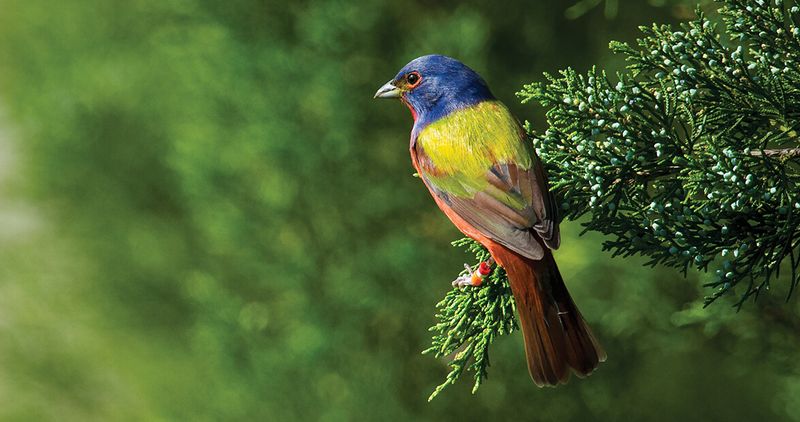
Some people like to think of a Painted Bunting sighting as a sign from nature, a little nudge saying your yard is doing something right.
Whether you believe in that kind of symbolism or not, there is real practical truth behind the idea. A Painted Bunting showing up means your outdoor space is genuinely supporting wildlife.
Painted Buntings eat mostly seeds for the majority of the year, with a strong preference for small grass seeds and millet. White proso millet is widely considered the best seed to offer at feeders if you want to attract them.
A low platform feeder or a tube feeder placed near dense shrubs is the most effective setup, since these birds feel safer feeding close to cover.
During breeding season, they also eat a significant number of insects, including beetles, grasshoppers, caterpillars, and spiders. Insects provide the protein that growing chicks need to develop quickly.
A yard that supports insects, through native plants and reduced pesticide use, is a yard that supports Painted Buntings and many other birds.
Native plants are the backbone of a bird-friendly garden. Plants like native grasses, sunflowers, beautyberry, and cedar elm provide seeds, fruits, and insects all in one package. They also offer natural shelter and nesting material, which is just as important as food.
Water is another key element. A shallow birdbath kept clean and filled with fresh water can be just as attractive to a Painted Bunting as a full feeder.
Small, consistent efforts to keep your yard natural and welcoming can turn a one-time sighting into a regular seasonal visit year after year.
6. A Moment Worth Protecting
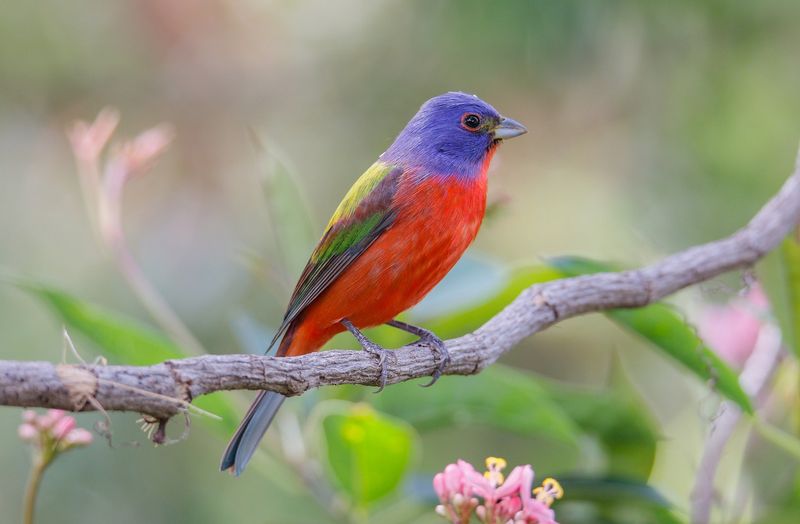
Watching a Painted Bunting in your garden is one of those moments you want to hold onto. There is something quietly powerful about standing a few feet away from one of the most beautiful wild birds in North America, knowing it chose your yard as a safe place to rest or feed.
That feeling comes with a small but real responsibility. Painted Buntings face ongoing pressure from illegal trapping for the cage-bird trade.
While this practice is more common in parts of Mexico and the Caribbean than in the United States, it has contributed to population declines in some areas, particularly among eastern populations that winter in Florida.
The western population, which includes birds that breed in Texas, is considered more stable but still warrants attention and care.
In the United States, Painted Buntings are fully protected under the Migratory Bird Treaty Act. Trapping, keeping, selling, or harming them in any way is a federal offense.
Still, the best protection any wild bird can have is a healthy, undisturbed habitat and a community of people who genuinely care about its survival.
You can help by keeping cats indoors, reducing window collisions with decals or screens, avoiding pesticides that remove the insects birds depend on, and planting native species that support the full food web.
Sharing photos and encouraging neighbors to create bird-friendly yards multiplies the impact of your own garden.
Citizen science programs like eBird, run by the Cornell Lab of Ornithology, let you log your sightings and contribute real data to bird research and conservation efforts.
Every sighting you report helps scientists track Painted Bunting populations and protect the places these birds need most.