The Pacific Flatheaded Borer Oregon Fruit Tree Growers Should Watch This Summer
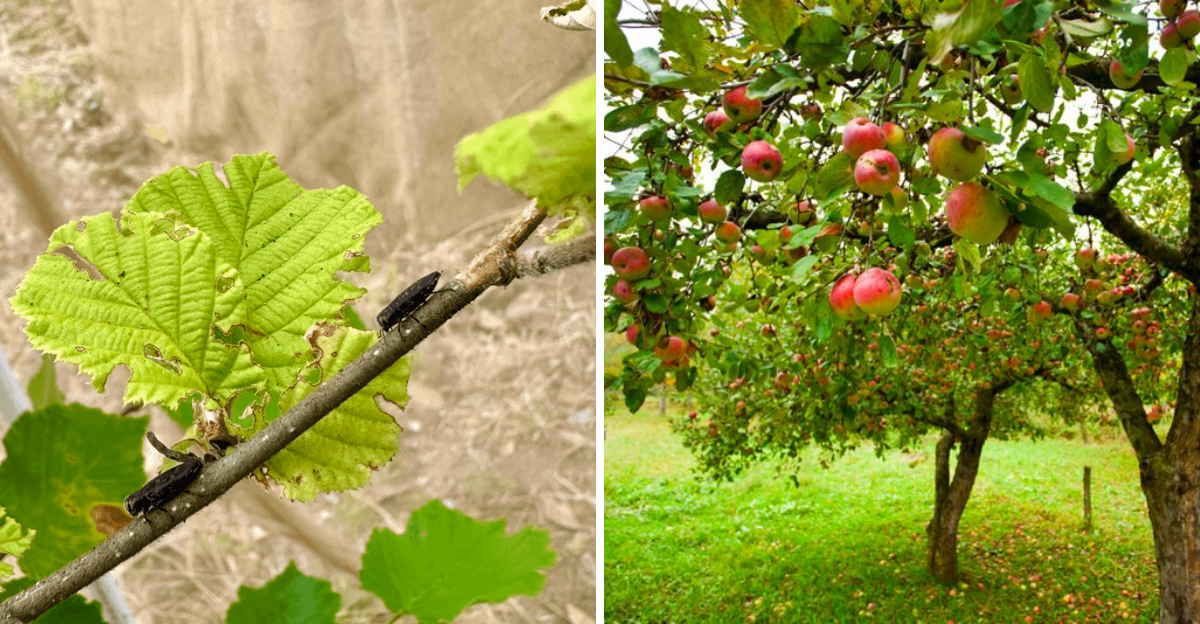
Oregon fruit trees have a way of looking perfectly fine on the outside while something entirely unhelpful is going on just beneath the bark. That is the frustrating thing about the Pacific flatheaded borer.
It is not a pest that announces itself with dramatic visible damage right away.
It moves quietly, targets trees that are already dealing with stress, and by the time most backyard growers notice something is genuinely wrong, the beetle has had a pretty productive season.
Summer heat, drought stress, sunscald on exposed trunks, and recently planted trees that have not fully established yet are all situations where this pest sees an opportunity.
The good news is that knowing what makes trees vulnerable in the first place puts Oregon growers in a much stronger position to protect their fruit trees before problems develop.
1. Pacific Flatheaded Borer Targets Stressed Fruit Trees
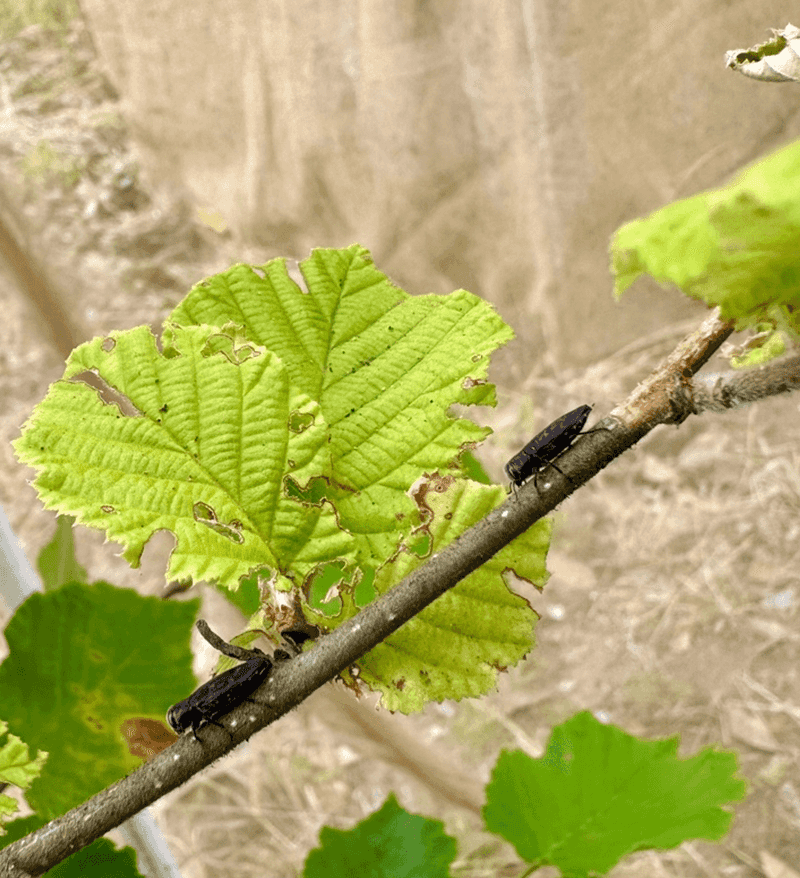
Beneath the bark of a struggling apple or cherry tree, a small but damaging larva can be quietly working its way through the wood.
The Pacific flatheaded borer is a wood-boring beetle whose larvae feed in the layer just under the bark, disrupting the flow of water and nutrients through the tree.
Fruit trees that are already dealing with stress from heat, poor soil, or inconsistent watering tend to attract this pest more readily than vigorous, well-established trees.
Oregon orchards face a combination of summer heat and occasional drought conditions that can weaken trees faster than growers might expect.
Young trees, recently transplanted stock, and trees growing in challenging spots along orchard edges or in rocky soil are often the first to show signs of borer activity.
The pest is drawn to trees that are already struggling rather than thriving ones.
Understanding this connection between tree stress and borer vulnerability is one of the most useful things an Oregon grower can learn.
When trees are growing in suitable conditions with steady moisture and healthy soil, they tend to be far less attractive to this pest.
Reducing stress is not just good general advice – it is one of the more practical ways to lower the risk of borer problems in Oregon fruit tree plantings.
2. Young Orchard Trees Face The Highest Risk
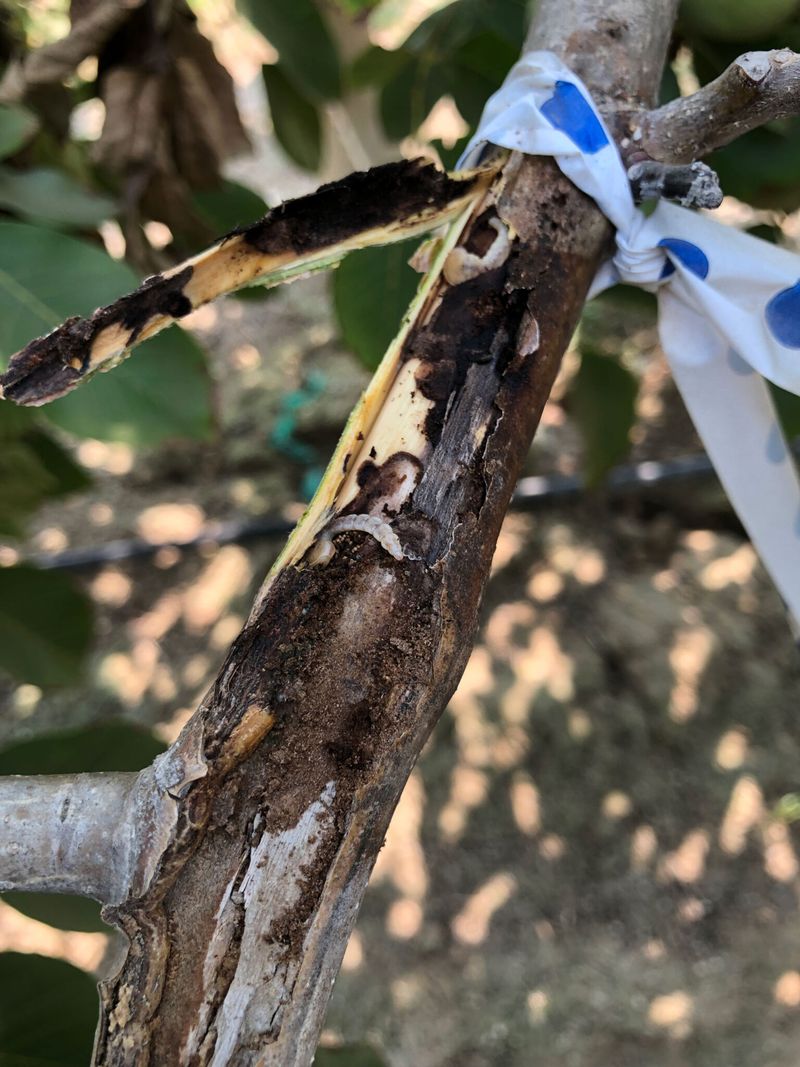
Newly planted fruit trees have a lot going against them during their first few summers in the ground.
Their root systems are still getting established, their trunks are often thin and smooth, and they have not yet built up the resilience that older trees develop over time.
In Oregon, where summer temperatures can climb quickly and irrigation schedules may not always keep up with demand, young trees can experience stress that makes them more noticeable to egg-laying beetles.
The Pacific flatheaded borer tends to target trees that are already under some kind of pressure.
For young orchard trees, that pressure can come from transplant shock, sun exposure on unshaded trunks, or inconsistent watering during the first growing season.
Nursery-grown trees moved into open orchard ground can go through an adjustment period where they are especially exposed.
Your Oregon Garden Changes Every Week. Your Plan Should Too.
Gardening in Oregon changes quickly throughout the season. Every Friday you’ll receive a simple weekly plan showing exactly what to plant, prune, fertilize, harvest, and protect so you never miss the right timing.
Growers planting apples, cherries, pears, plums, or prunes in Oregon should plan ahead for the first few summers, when trees need the most support.
Providing consistent moisture, protecting trunks from direct sun, and avoiding bark injuries during planting and early care can all help reduce the risk.
Giving young trees a strong start is one of the most reliable ways to keep borer pressure low during those vulnerable early years.
3. Summer Sunburn Makes Bark More Vulnerable
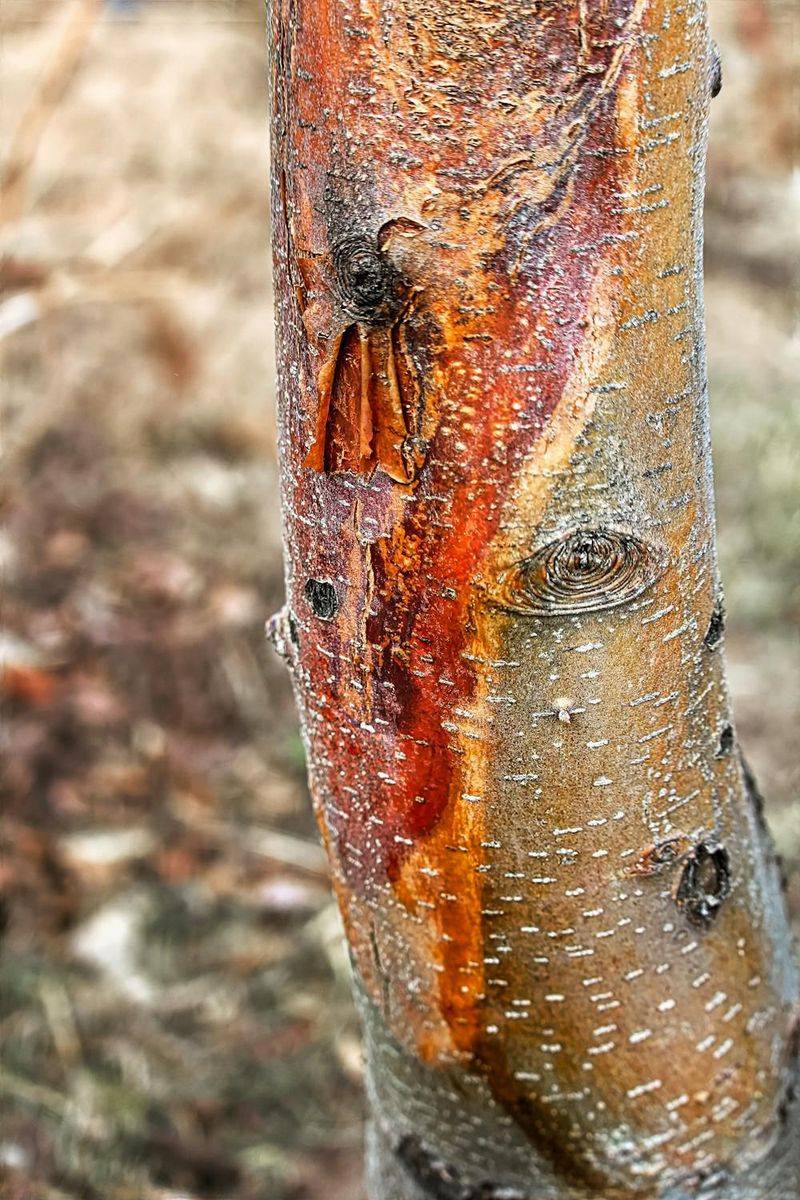
Sun-exposed bark on fruit trees can crack, discolor, and dry out during Oregon summers, especially on the southwest-facing side of the trunk where direct afternoon sun hits hardest.
This kind of bark injury, often called sunscald or sunburn, creates an entry point that the Pacific flatheaded borer and similar flatheaded borers find attractive for egg laying.
Healthy, intact bark is much harder for beetles to target successfully.
When bark becomes damaged by sun exposure, the tissue beneath it weakens. Egg-laying adult beetles tend to prefer injured or stressed bark surfaces, and sunburned areas fit that description well.
In Oregon’s warmer growing regions and during unusually hot summers, this kind of bark damage can show up on trees that might otherwise be in decent health.
Protecting the trunk from direct summer sun is a practical step that many experienced Oregon fruit tree growers already take.
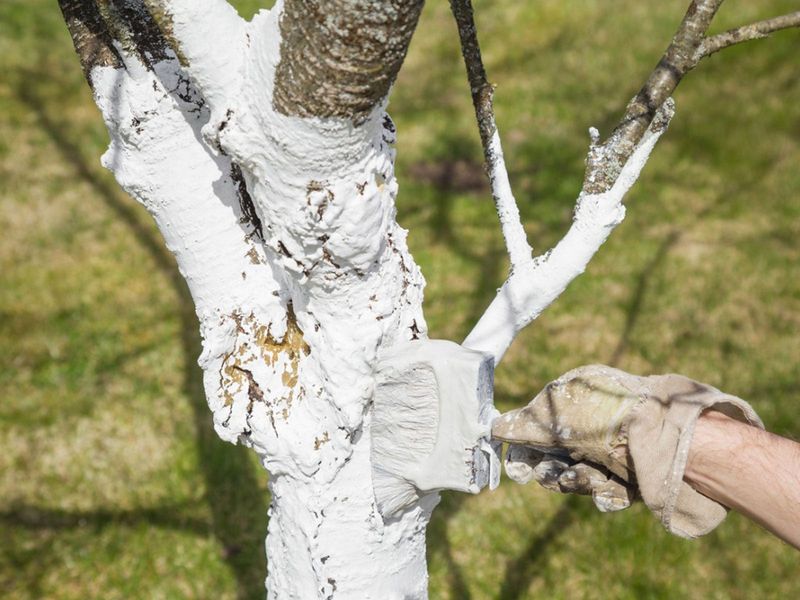
Whitewashing the trunk with a diluted interior latex paint solution – a practice sometimes called trunk painting – can help reflect sunlight and reduce bark temperature.
Tree guards or wraps designed for sun protection may also help when applied correctly. Keeping the bark intact and healthy through summer is one of the more straightforward ways to make fruit trees less inviting to this pest during warm Oregon months.
4. D-Shaped Exit Holes Can Signal Borer Activity
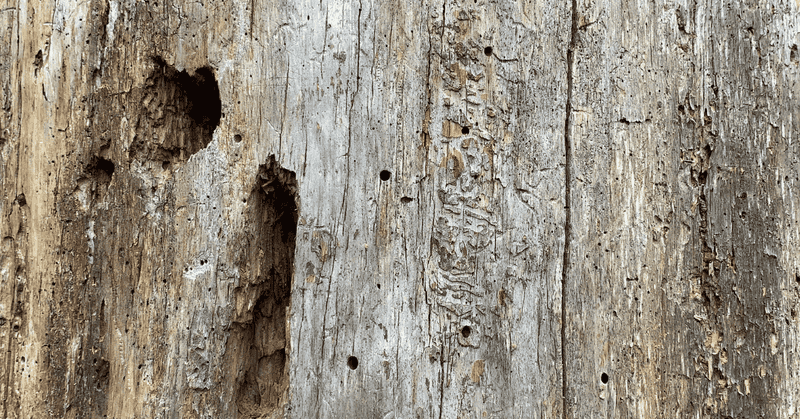
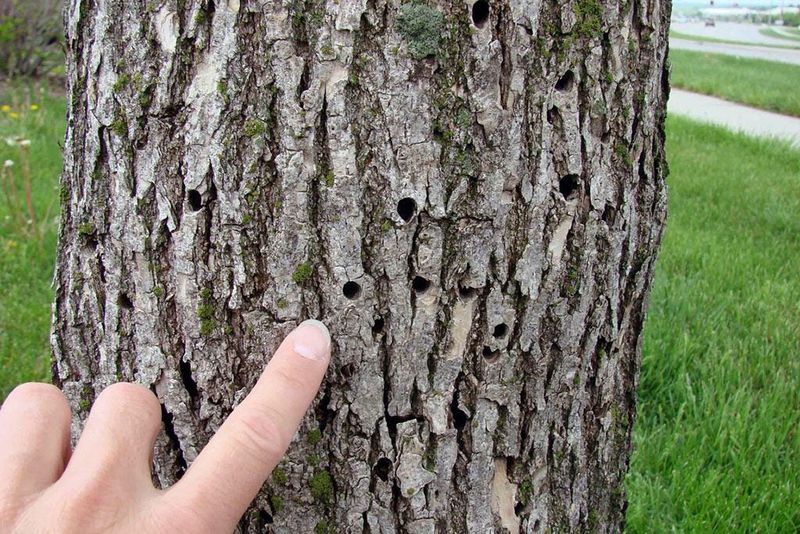
One of the more telling signs that a flatheaded borer has completed its development inside a tree is the exit hole it leaves behind.
Unlike round holes from some other wood-boring insects, the Pacific flatheaded borer leaves a hole that is distinctly flattened on one side – sometimes described as D-shaped.
Spotting this shape on the bark of a fruit tree trunk is worth taking seriously.
Many growers walk past exit holes without recognizing what they are looking at, especially when the holes are small or partially hidden by rough bark.
Checking trunks carefully during and after summer – particularly on trees that have shown signs of stress – can help catch borer activity that might otherwise go unnoticed for another season.
A magnifying glass can be useful for getting a clearer look at the shape of holes in the bark.
Finding a D-shaped exit hole does not always mean a tree is in immediate trouble, but it does suggest that at least one adult beetle has developed inside that wood. Multiple exit holes, especially on a stressed or young tree, deserve more careful attention.
Consulting a local Oregon extension resource or a certified arborist can help growers decide whether additional action is needed based on what they find during a trunk inspection.
5. Frass Near The Trunk Deserves A Closer Look
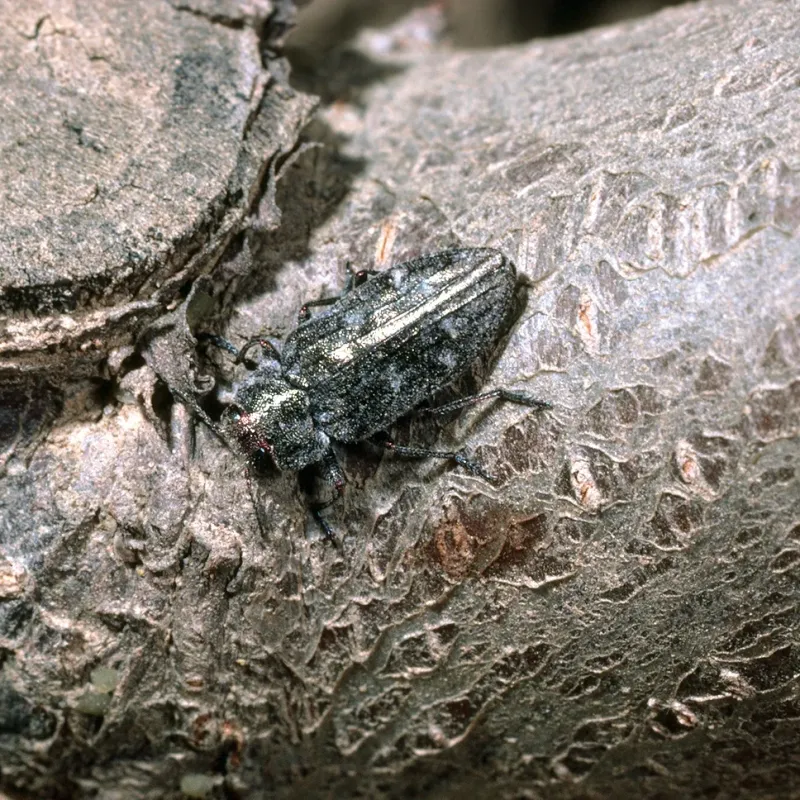
Sawdust-like material collecting near the base of a fruit tree trunk can catch a grower’s attention during a routine orchard walk. This material, called frass, is a mix of chewed wood fiber and waste left behind by borer larvae feeding beneath the bark.
Noticing it near the soil line or in bark crevices can be an early signal worth investigating further.
One thing to keep in mind is that frass from flatheaded borers does not always make it to the outside of the tree. Larvae sometimes pack their galleries tightly, and the material may stay hidden inside the wood rather than falling visibly to the ground.
Because of this, the absence of visible frass does not necessarily mean a tree is free from borer activity. Other signs, including discolored bark, sunken areas, or D-shaped exit holes, should be considered alongside any frass you do or do not find.
When frass is spotted on an Oregon fruit tree during summer, the next step is to gently probe the area to see whether the bark feels loose or whether there are signs of larval galleries just beneath the surface.
Peeling back a small piece of loose bark can sometimes reveal winding tunnels that confirm borer feeding.
Early observation gives growers more options for managing the situation before further damage occurs.
6. June And July Are Key Egg-Laying Months
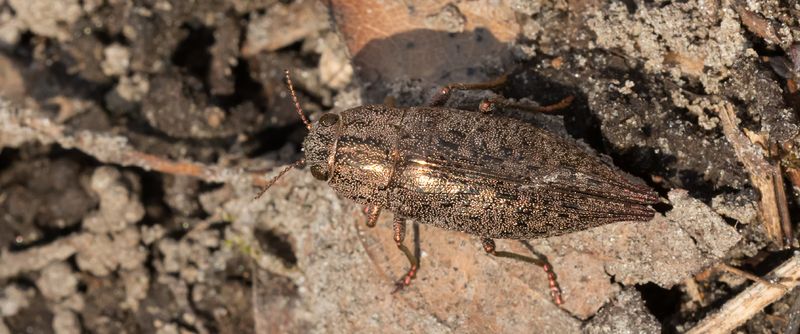
Adult Pacific flatheaded borers are active fliers during warm months, and June and July tend to be the period most associated with egg laying on stressed or sun-damaged fruit trees.
Adult emergence can begin in late spring and extend into summer, so the window for potential activity is broader than just those two months.
However, the combination of peak summer heat and stressed trees during June and July makes this period especially worth monitoring in Oregon orchards.
Female beetles tend to seek out bark that has been warmed by direct sun, injured by tools or equipment, or weakened by drought stress.
Once eggs are laid in bark crevices or under loose bark, the larvae hatch and begin feeding in the cambium layer just beneath the surface.
By the time visible symptoms appear, the larvae may already be well established inside the wood.
Growers who check their trees during late spring and early summer are in a better position to catch problems early.
Looking for adult beetles on warm, sunny days – especially on the south and southwest sides of trunks – can provide useful information about whether egg-laying activity is occurring.
Keeping notes from year to year about when and where activity appears can help Oregon growers build a clearer picture of borer timing in their specific location and orchard conditions.
7. Drought Stress Can Make Trees More Attractive
Water is one of the most important factors in keeping Oregon fruit trees resilient during summer. When irrigation is inconsistent or rainfall falls short during dry spells, trees begin to show stress in ways that are not always immediately visible.
Leaves may curl slightly, growth may slow, and the bark can begin to dry out – all signs that the tree is working harder than it should be to stay healthy.
Drought-stressed trees tend to be more attractive to the Pacific flatheaded borer because their natural defenses are reduced.
A healthy, well-watered tree can sometimes push back against insect activity through resin or other responses, but a tree that is already struggling has fewer resources available.
Oregon summers can bring extended dry periods, especially in inland valleys and areas with sandy or well-draining soils, making irrigation management an important part of borer prevention.
Keeping a consistent watering schedule through the warmest months of summer is one of the more practical things a grower can do to support tree health.
Deep, infrequent watering tends to encourage deeper root growth and better moisture retention than frequent shallow watering.
Applying mulch around the base of trees also helps retain soil moisture between irrigation cycles, reducing stress during hot, dry stretches that are common across many parts of Oregon in summer.
8. Trunk Protection Helps Reduce Summer Damage
Protecting fruit tree trunks during summer is a step that experienced Oregon growers often take as a matter of routine.
Whitewashing the lower trunk with a diluted interior white latex paint is a widely recommended practice that helps reflect sunlight, lower bark temperature, and reduce the kind of sunburn that can make bark more attractive to egg-laying beetles.
It is a low-cost step that can provide meaningful protection when done correctly before the hottest months arrive.
Tree guards and wraps are another option, though they need to be used carefully. Some wraps can trap moisture or heat if not properly ventilated, which could create different problems.
Choosing products designed specifically for fruit trees and following application guidelines helps avoid unintended issues. Physical guards can also help protect against equipment damage and animal injury along the lower trunk.
Avoiding bark injuries during mowing, cultivation, and general orchard maintenance is just as important as any protective product. Even small scrapes or nicks from string trimmers can create entry points that beetles may find attractive.
Oregon growers who are careful around young trunks and who take trunk protection seriously during summer tend to see fewer borer-related issues over time.
Combining trunk protection with good irrigation and soil care gives trees a much better chance of staying healthy through the season.
9. Infested Wood Should Not Stay Near Healthy Trees
Leaving infested or borer-damaged wood near healthy trees is a common mistake that can extend pest pressure in an orchard. Once larvae have completed their development inside a branch or section of trunk, adult beetles emerge and can fly to nearby trees.
Keeping that infested material on-site – even in a brush pile at the orchard edge – gives developing larvae a chance to finish their cycle and potentially move to other trees.
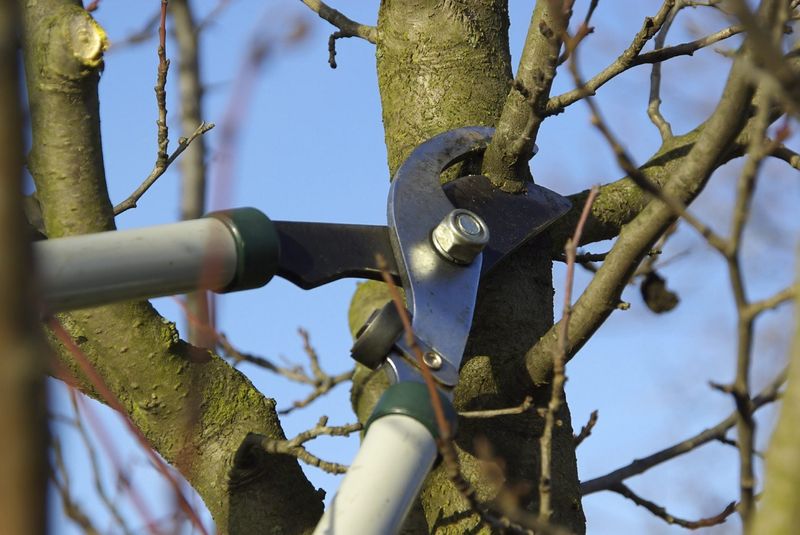
When pruning out damaged wood or removing a tree that has experienced significant borer activity, the material should be chipped, burned where allowed, or removed from the property as soon as practical.
Simply moving it to another part of the property may not be enough if adults have not yet emerged.
Oregon growers should check local regulations regarding burning, as rules vary by county and season.
Orchard sanitation is one of those practices that does not always get enough attention but can make a real difference over time. Removing infested material reduces the number of adults available to lay eggs on nearby trees the following season.
For small backyard orchards and larger plantings alike, keeping the area around trees clean and free from damaged or deteriorating wood is a straightforward habit that supports the overall health and long-term productivity of Oregon fruit trees.
10. Healthy Trees Are The Best First Defense
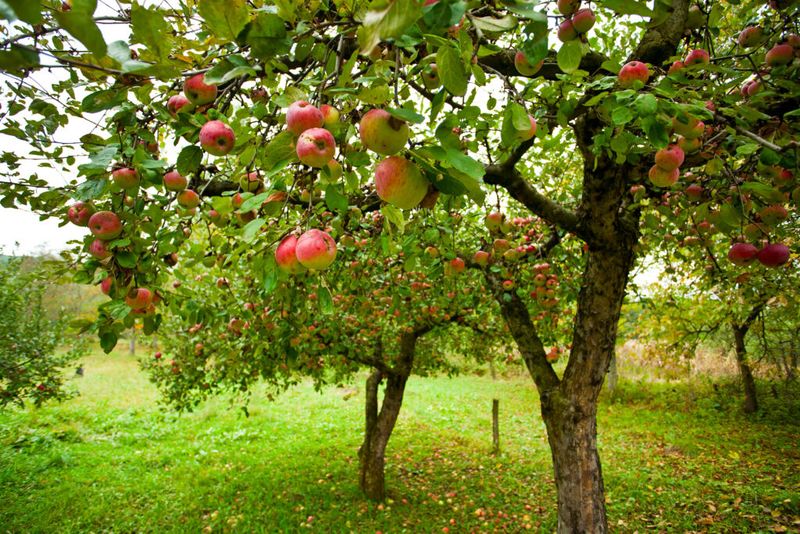
When it comes to the Pacific flatheaded borer, the strongest protection a grower can offer is a tree that is already in good shape.
Vigorous, well-established fruit trees growing in suitable soil with consistent moisture and minimal bark injuries tend to be far less attractive to this pest than stressed, neglected, or poorly planted ones.
Building tree health from the ground up is not a guarantee against borer activity, but it shifts the odds considerably in the grower’s favor.
Good planting practices matter from the very beginning.
Choosing a well-suited location, preparing the soil properly, planting at the right depth, and watering regularly through the first few growing seasons all contribute to the kind of root development and trunk strength that helps trees handle summer stress.
Mulching around the base of trees – keeping mulch away from direct contact with the trunk – helps maintain moisture and moderate soil temperature.
Ongoing care through each season also plays a role. Avoiding unnecessary trunk injuries, monitoring for early signs of stress, and staying on top of irrigation during dry Oregon summers all add up to trees that are better equipped to handle challenges.
Borer problems tend to be most serious when multiple stress factors stack up at once, so reducing each one individually makes a meaningful difference over the long run for Oregon fruit tree growers.