Michigan Yards That Flood After Rain Often Have These 8 Same Problems In Common
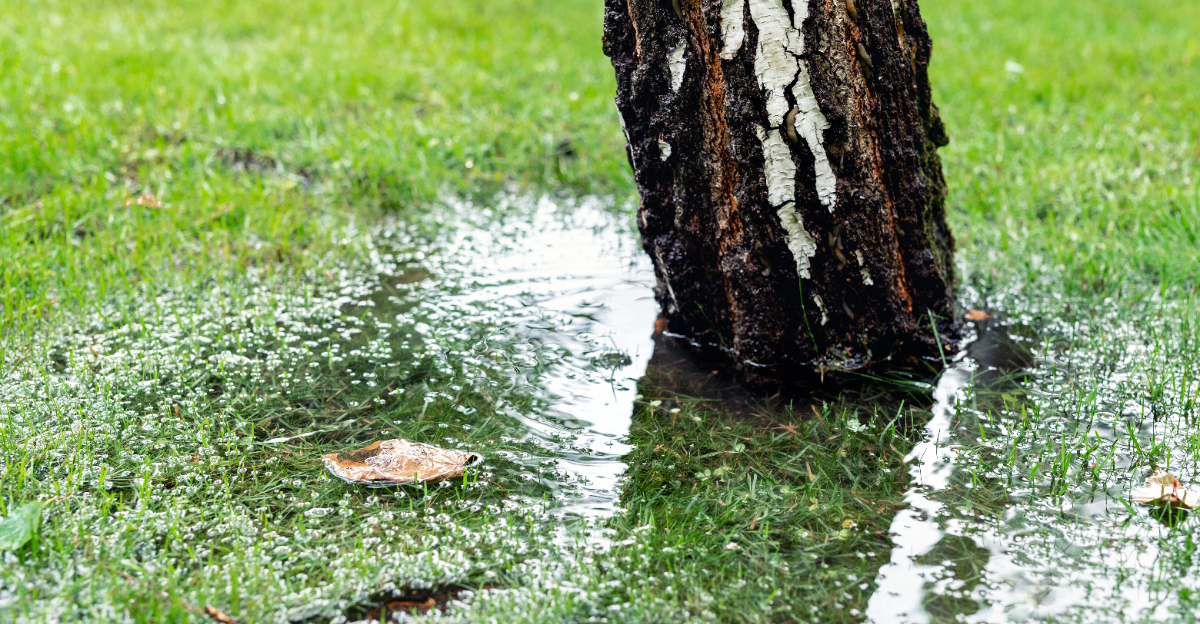
After heavy rain, the same Michigan yards flood. Same spots. Same duration. Same frustrated homeowners standing at the window watching water pool where it has no business pooling.
The thing is, most of those yards are not dealing with unusual weather or bad luck. They share a specific set of conditions that almost guarantee water ends up where it should not.
The problems are consistent enough that a drainage specialist could walk into most of these yards and identify the same issues within ten minutes.
Do you know what your yard actually does with water during a heavy rainstorm? Not what you assume it does. What it actually does.
Many homeowners have never watched their property during a real rain event. They see the aftermath, the puddles, the soggy lawn, the muddy patches, but they miss the part where the problem originates.
Flooded Michigan yards follow patterns. The same eight conditions show up repeatedly across the state, in neighborhoods old and new, on flat lots and sloped ones alike.
Luckily, most of them are fixable once they are correctly identified.
1. Compacted Soil Keeps Water On Top
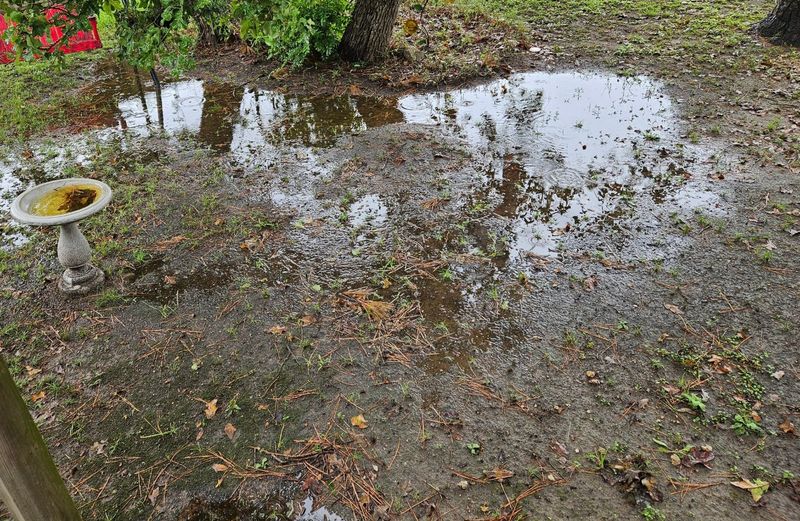
Every footstep, every parked car, every pass of heavy equipment does something invisible to your yard. It squeezes the soil tighter.
Over months and years, those tiny air pockets that normally let water soak through simply disappear. The ground stops absorbing and starts shedding.
You can test this in thirty seconds. Push a screwdriver into the soil. If it resists or barely moves, compaction is your answer. That soil is essentially acting like pavement during a rainstorm. Water has nowhere to go but sideways.
Michigan soils are already prone to this, especially in older neighborhoods or anywhere construction equipment spent time rolling over the same ground repeatedly. The problem compounds quietly until a rainstorm makes it impossible to ignore.
Core aeration is the most practical fix available to most homeowners. A rented aerator pulls small plugs of soil from the ground, reopening the channels that compaction closed.
Fall is a good timing window for this in Michigan. After aerating, top-dress with compost to gradually improve soil structure from the surface down.
Redirecting foot traffic matters too. Stepping stones and mulched paths protect the areas that get walked most often. Without that protection, the same zones compact again within a season or two.
Loose, healthy soil can absorb about an inch of rain per hour. Compacted soil cannot absorb much at all.
Your yard is not flooding because it rains too hard. It is flooding because the ground stopped listening.
2. Downspouts Dump Water In The Wrong Spot
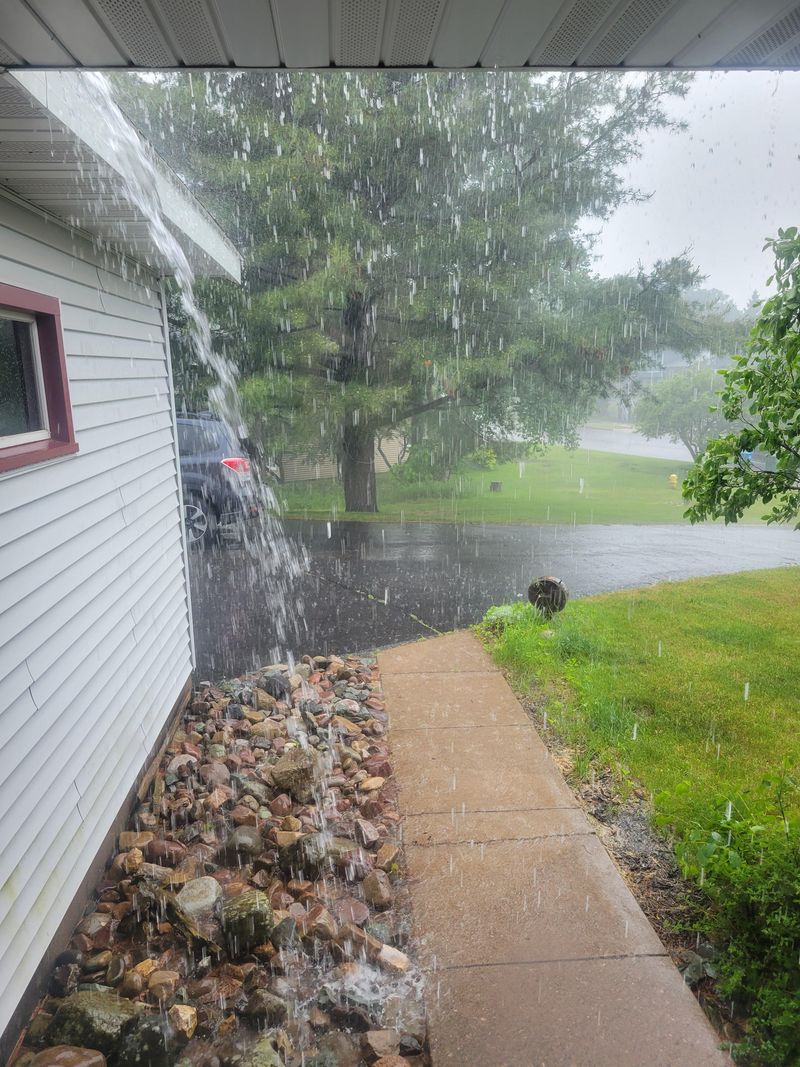
Walk outside during a heavy rain and stand near your downspout for a minute. Watch where the water actually goes.
There is a reasonable chance it is landing within two feet of your foundation, pooling, and heading exactly where you do not want it.
A typical thousand-square-foot roof sheds more than 600 gallons of water from just one inch of rain. That is not a drip. That is a delivery. And most standard downspouts drop all of it in one concentrated spot where the ground cannot possibly keep up.
Your Michigan Garden Changes Every Week. Your Plan Should Too.
Gardening in Michigan changes quickly throughout the season. Every Friday you’ll receive a simple weekly plan showing exactly what to plant, prune, fertilize, harvest, and protect so you never miss the right timing.
Extending downspouts at least six feet away from the foundation is the starting point. Flexible plastic extensions are inexpensive and attach in minutes. This single change reduces both surface flooding and basement moisture risk significantly.
A smarter long-term solution directs that flow somewhere useful. A rain garden positioned to receive downspout water can absorb it slowly.
A dry creek bed guides it across the yard without erosion. A vegetated swale spreads it out and filters it naturally as it moves.
Splash blocks help but they rarely solve the problem on their own. The volume coming off a roof during a Michigan storm is simply more than a splash block was designed to manage.
The observation exercise is worth doing in actual rain, not just on a dry afternoon. You will spot things from your boots in a storm that are invisible on a sunny Saturday.
The roof was just doing its job. The downspout decided to make it everyone else’s problem.
3. Low Spots Hold Runoff Too Long
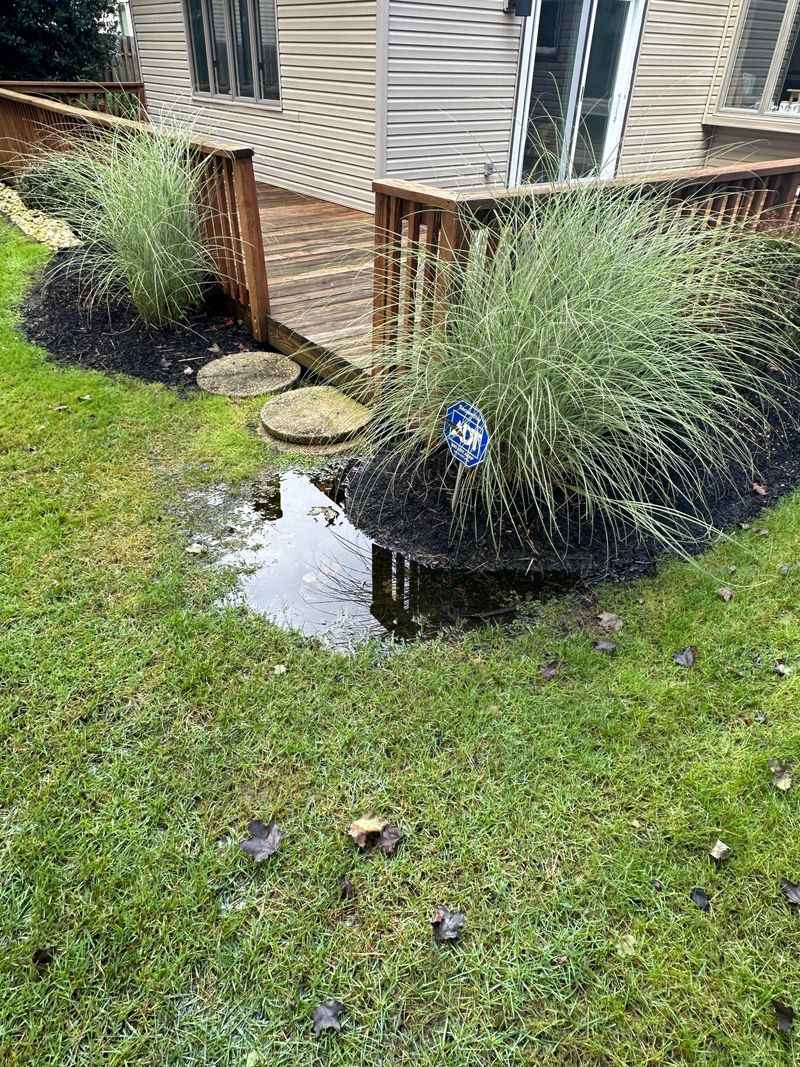
Standing water that is still there 24 to 48 hours after rain has stopped is not normal. It is a symptom. Your yard has a low spot that is collecting runoff from surrounding areas with nowhere to send it.
These depressions form gradually and quietly. Soil settles after construction. Tree roots break down underground and leave soft, sunken pockets.
A garden border accidentally creates a small bowl that nobody noticed until summer. Michigan’s freeze-thaw cycles shift soil enough each winter to create or worsen these low areas without any other cause.
The grass in these spots struggles. Roots need oxygen as much as water, and waterlogged soil delivers very little of either for extended periods. Mosquitoes, meanwhile, treat persistent standing water as premium real estate.
Regrading is the most direct solution. Filling depressions with topsoil and establishing at least a two percent slope away from structures directs water where it belongs.
Two percent means roughly two inches of drop for every ten feet of horizontal distance. That is not dramatic, but it is enough.
For low spots in the middle of a large lawn where regrading is impractical, a French drain or dry well moves water underground and away from the surface.
It involves digging, perforated pipe, and gravel, but for genuinely persistent soggy patches it is one of the most reliable long-term solutions.
Does your yard have a spot that is always last to dry out? That spot is telling you something. It has been trying for a while.
4. Bare Soil Lets Rain Move Fast
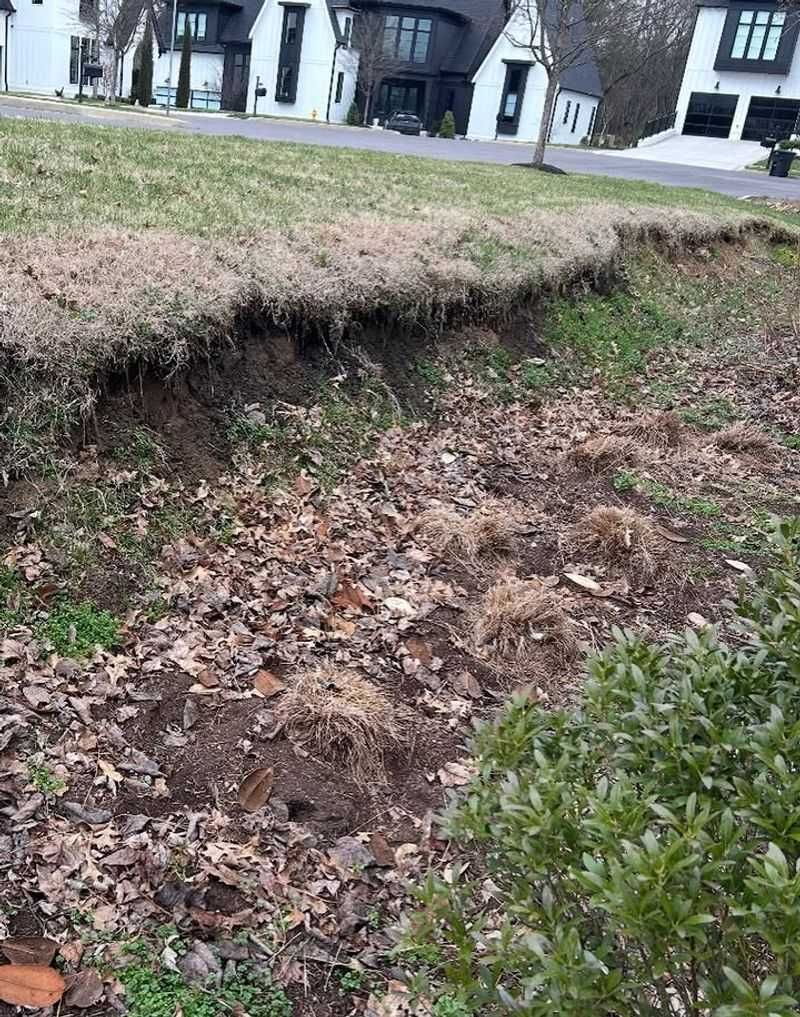
When a raindrop hits bare soil, it does two things. It breaks the surface apart, sending small soil particles moving with the water. Then it seals that surface with a thin crust that subsequent water cannot easily penetrate.
That process is called surface erosion and it is happening across every unprotected patch of ground in your yard every time it rains.
Bare lawns with thin or patchy grass, freshly graded slopes, and garden beds left uncovered through Michigan winters are all producing runoff faster than the same areas would if covered.
Research consistently shows that vegetated or mulched ground absorbs and slows rainfall far more effectively than any exposed soil surface.
The fastest short-term fix is two to three inches of shredded wood mulch or straw over bare areas. This breaks the impact of individual raindrops before they can seal the surface. It holds moisture in and gives any new plantings time to establish roots.
For slopes specifically, erosion control fabric or biodegradable netting stabilizes soil while plants get established. The goal is something living or protective covering the surface before the next heavy storm arrives.
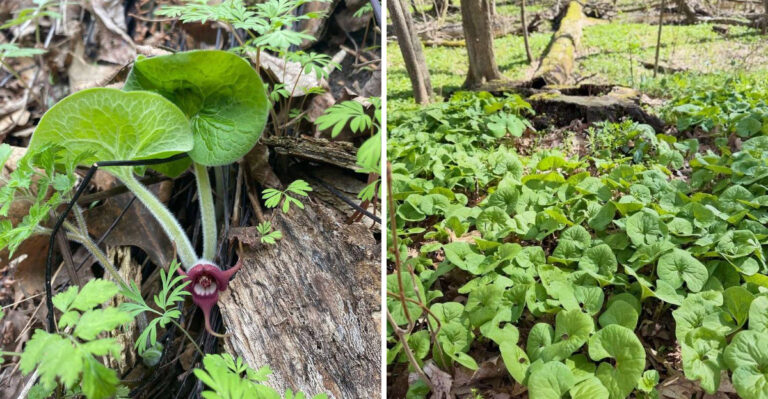
Longer term, native Michigan plants like wild ginger, creeping phlox, and Pennsylvania sedge form dense ground-covering mats that protect soil reliably while requiring minimal ongoing maintenance.
Bare soil and Michigan rain are a predictable combination. The yard does not win that matchup without some help from the gardener.
5. Clay Soil Needs A Smarter Plan
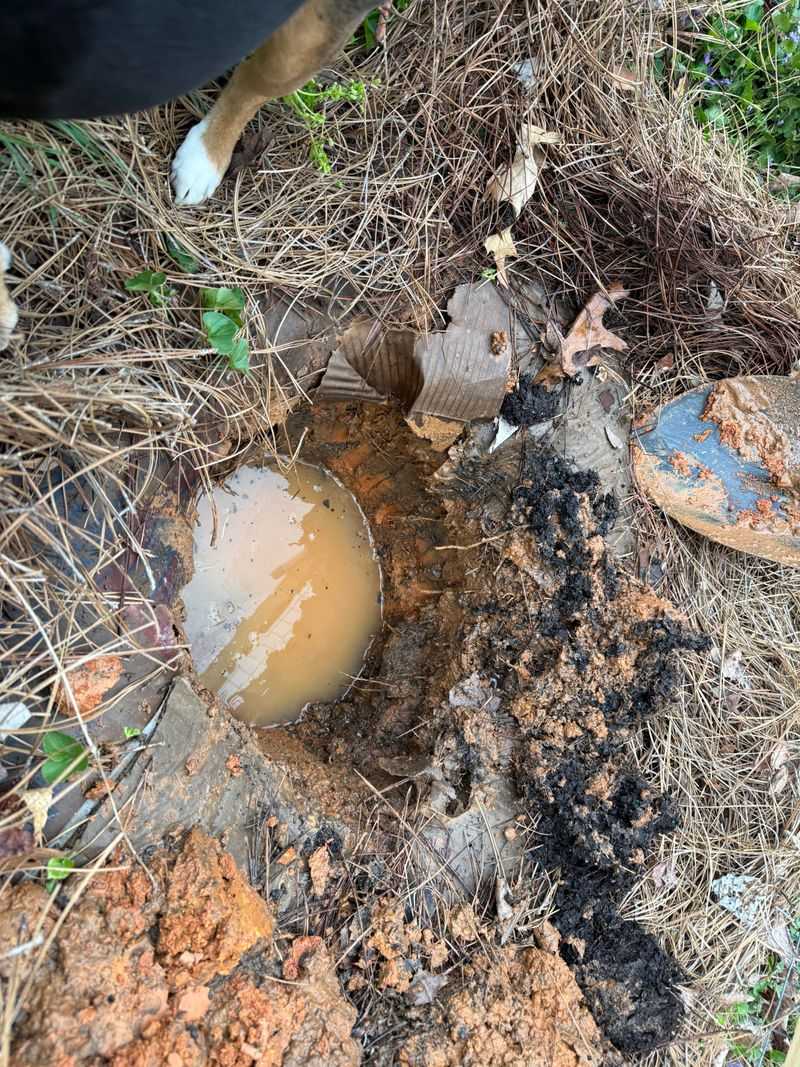
A significant portion of Michigan sits on heavy clay soil. Clay has legitimate strengths. Fast drainage is genuinely not one of them.
Clay particles are extremely fine and pack together tightly, leaving minimal space for water to move through at any meaningful speed.
After a substantial rainstorm, clay soil can stay saturated for days. Grass roots struggle. Yards feel spongy and unpleasant for a week at a time.
Here is the thing many homeowners try first: adding sand. It sounds logical. It usually makes the situation worse by creating a dense, almost concrete-like mixture that drains even less effectively than pure clay. Skip that approach.
The productive path is organic matter. Compost, aged wood chips, and leaf mold worked into clay over time gradually open the soil structure and encourage soil biology that naturally improves drainage.
It takes seasons rather than days, but the improvement compounds each year.
Plant selection changes the experience entirely in clay-heavy yards. Native Michigan species like swamp milkweed, blue flag iris, Joe-Pye weed, and buttonbush are adapted to wet, clay-rich conditions.
Raised beds sidestep the clay problem for vegetable gardens entirely. A mix of quality topsoil and compost in a raised structure gives plants the environment they need regardless of what sits underneath.
Clay soil is not a problem to solve in a weekend. It is a condition to work with intelligently over several seasons.
Has anyone tried explaining that to clay soil? It remains unconvinced.
6. Slopes Send Water Toward The House
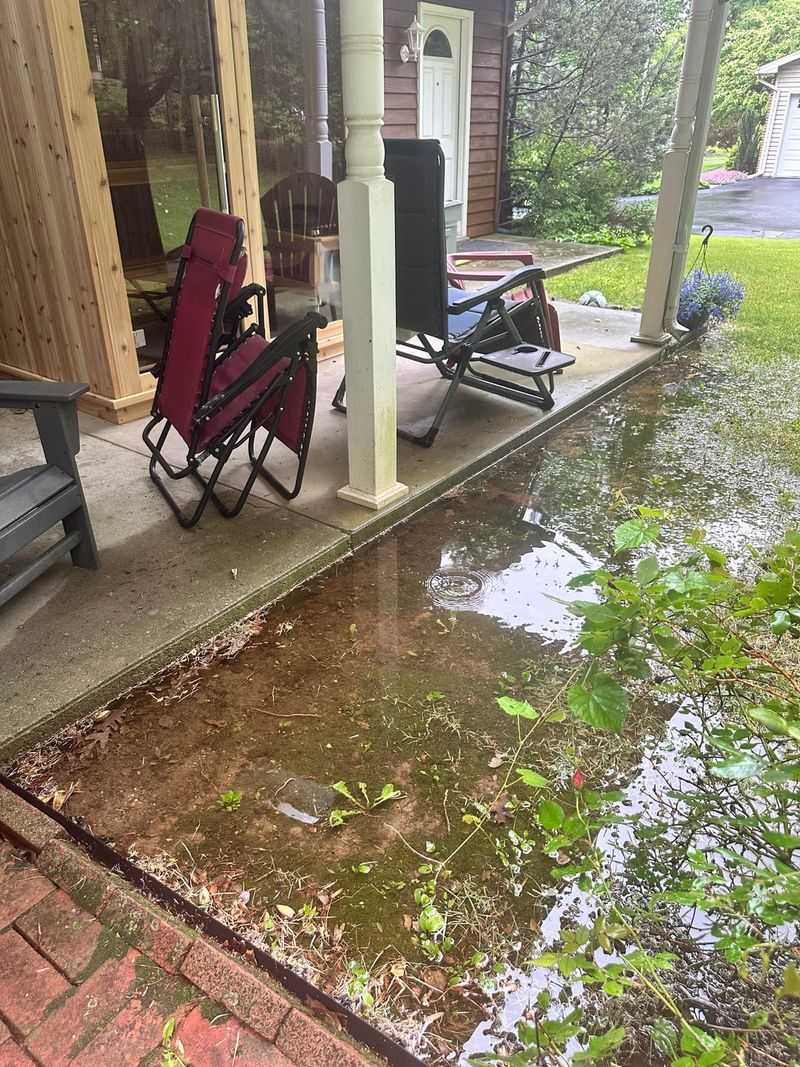
Water follows gravity without any opinion about where it ends up. If your yard slopes even slightly toward the house, every rainstorm is quietly delivering water to the foundation year after year.
Many Michigan homeowners discover this connection only after noticing basement moisture or persistent wet spots along the base of exterior walls. By that point, the water has been making the same trip for a long time.
The diagnostic step is free and requires no equipment. During a moderate rainstorm, put on boots and walk the property.
Watch where water flows, where it gathers, and which direction sheet flow moves near the house. Pay particular attention to the ten feet immediately surrounding the foundation.
The ground should slope away from the house at roughly six inches of drop over the first ten feet. That is the standard most drainage professionals reference for basic foundation protection.
Regrading problem areas is the most permanent correction. It is not always a straightforward DIY project on established properties, but for significant slopes the investment pays back in avoided foundation repairs.
For gentler grade problems, berms intercept runoff before it reaches the house. A berm is simply a raised mound of soil positioned to redirect sheet flow toward a safer discharge point. A planted swale accomplishes the same thing with a slightly different aesthetic.
The house did not ask for a moat. The slope built one anyway.
7. Poor Plant Choices Struggle In Wet Patches
Putting a plant in a spot that does not match its needs produces a predictable outcome.
The plant struggles. The gardener tries harder. The plant continues to struggle. This cycle runs quietly in soggy Michigan yards across the state every single season.
Waterlogged soil creates an oxygen problem for roots. Roots need air as much as water, and soil that stays saturated for extended periods after rain provides very little of either.
Plants not suited to those conditions show the consequence through yellowing leaves, stunted growth, and root problems that no amount of fertilizer or attention can fully address.
The mistake is almost always well-intentioned. A bare, wet corner of the yard gets filled with whatever looked appealing at the garden center.
Most nursery plants are bred for well-drained conditions. The soggy corner was never going to work for them.
The more productive approach is observation before purchase. Watch the spot after rain. If water clears within 24 hours, moderate moisture-tolerant plants will perform well there. If water persists longer, the site calls for genuine wet-soil specialists.
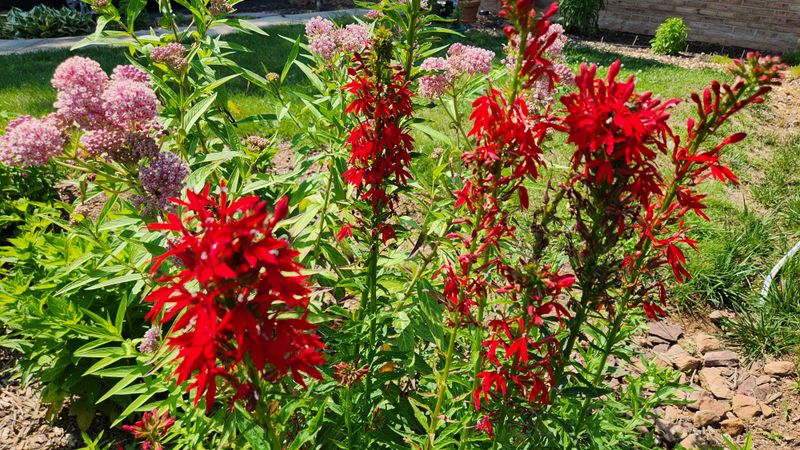
Michigan has excellent native options for these conditions. Swamp rose, cardinal flower, marsh marigold, and native willows all perform naturally in consistently moist or periodically flooded spots.
They manage the excess water as part of their normal function and simultaneously support birds and pollinators.
Matching plant to place is not a compromise. It is the strategy that actually works.
The soggy corner is not a problem to solve. It is a habitat waiting for the right residents.