The Ohio Yard Plants That Are Quietly Sheltering Ticks All Season Long
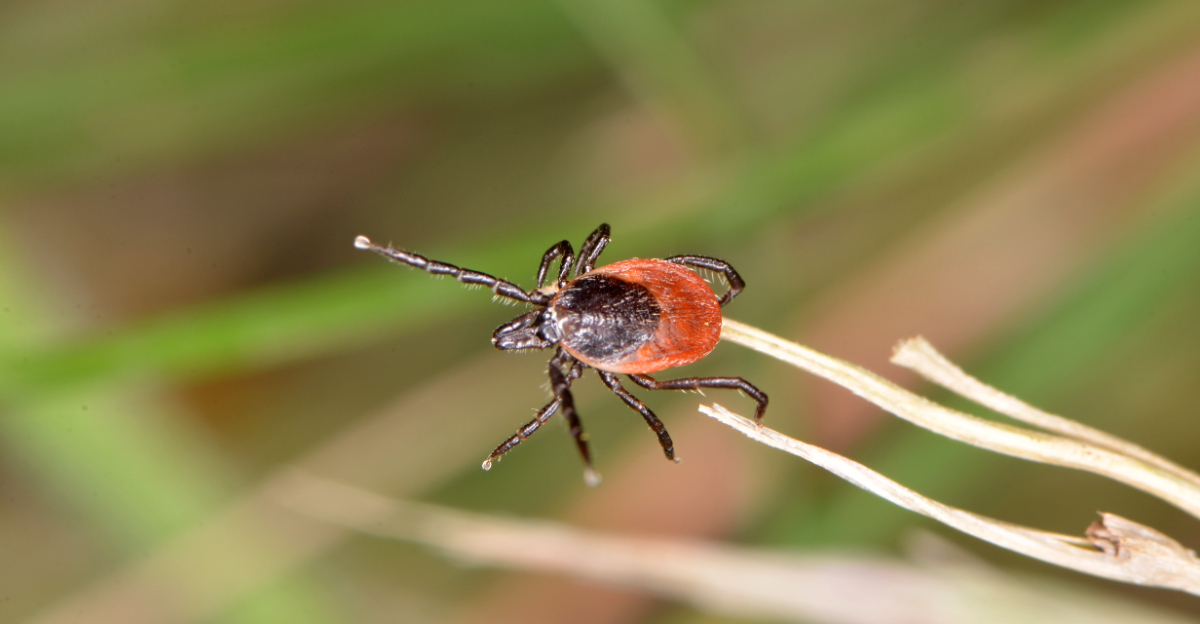
Ticks do not materialize out of thin air. They need specific conditions to survive, including certain humidity levels and amounts of shade.
They also need specific kinds of cover to wait out the heat while they look for a host. Some of the most common plants in Ohio yards are delivering exactly that, all season long, without anyone realizing it.
This is not about ripping out your entire garden. Most of the plants on this list are ones Ohio homeowners have grown for years, completely unaware of the hospitality they were accidentally extending.
Knowing which plants create prime tick habitat changes how you think about placement and maintenance. It also changes what goes right up against your patio, your walkway, or the spots where your kids and pets spend the most time.
A few smart adjustments can make a real difference. But first you need to know which plants in your yard have been working against you.
1. Remove Japanese Barberry Before It Becomes Tick Cover
A thorny hedge can look completely harmless until it quietly turns into a sheltered tunnel for small animals, pets, and wildlife moving through your yard.
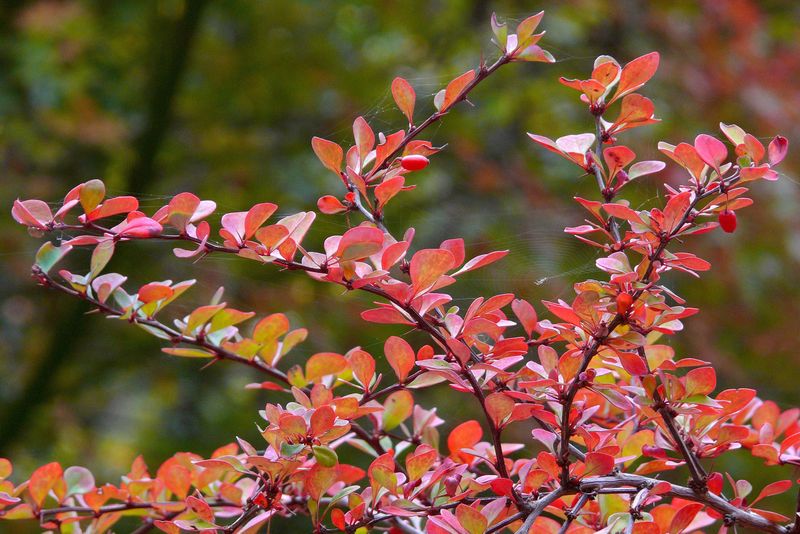
Japanese barberry, known scientifically as Berberis thunbergii, is one of the most studied invasive shrubs in this state when it comes to tick-friendly conditions.
Research from multiple university extension programs has connected barberry thickets to higher tick populations in yards and woodland edges.
The shrub forms dense, low-growing mounds with arching branches that trap leaf litter underneath and hold moisture close to the soil.
That combination of cool shade, humidity, and protected ground cover is exactly what ticks prefer when waiting for a passing host.
Deer, mice, and other small mammals often move through barberry thickets, which also increases the chance of ticks being carried into those areas.
Barberry is considered invasive in Ohio and is listed on the Ohio Invasive Plants Council’s watch list. Removing it is not always easy because the thorns make handling it uncomfortable and it can resprout from roots if not fully addressed.
Wearing thick gloves, cutting stems close to the ground, and treating regrowth promptly can help you get control. Replacing barberry with native shrubs like spicebush or native viburnums gives you a yard plant that supports local wildlife.
It does not create the same dense, humid tick cover.
2. Cut Back Amur Honeysuckle That Creates Dense Shade
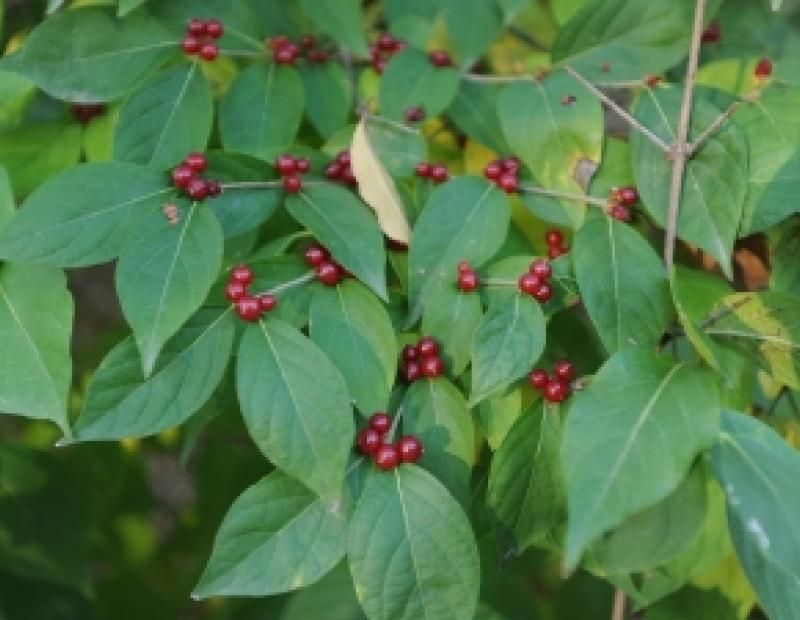
Walking along the back edge of a yard in early spring, it is hard to miss Amur honeysuckle. It leafs out earlier than almost anything else and holds its leaves later into fall, giving it a long season to shade out everything growing beneath it.
Lonicera maackii is widely considered one of the most problematic invasive shrubs across this state. It spreads readily along fences, woodland edges, and disturbed ground near homes.
The real concern for tick habitat is how Amur honeysuckle behaves once it matures. Dense, overlapping branches create a canopy that shades the soil, reduces airflow, and traps leaf litter underneath.
Your Ohio Garden Changes Every Week. Your Plan Should Too.
Gardening in Ohio changes quickly throughout the season. Every Friday you’ll receive a simple weekly plan showing exactly what to plant, prune, fertilize, harvest, and protect so you never miss the right timing.
That shaded, humid microclimate at ground level is the kind of environment ticks actively seek out during warm months. Small mammals and deer also use those brushy corridors regularly, which means ticks have a steady supply of hosts moving through the area.
Control takes patience because Amur honeysuckle resprouts aggressively after cutting. Removing it during late fall or early spring when it stands out from native plants makes identification easier.
Repeated cutting at the base, combined with stump treatment following local extension guidelines, gives the best long-term results.
Native shrubs like buttonbush, native elderberry, or gray dogwood can fill in the same edge spaces with better ecological value.
They do that without creating the same dense, moisture-trapping cover that supports tick activity.
3. Clear Multiflora Rose Thickets Along Yard Edges
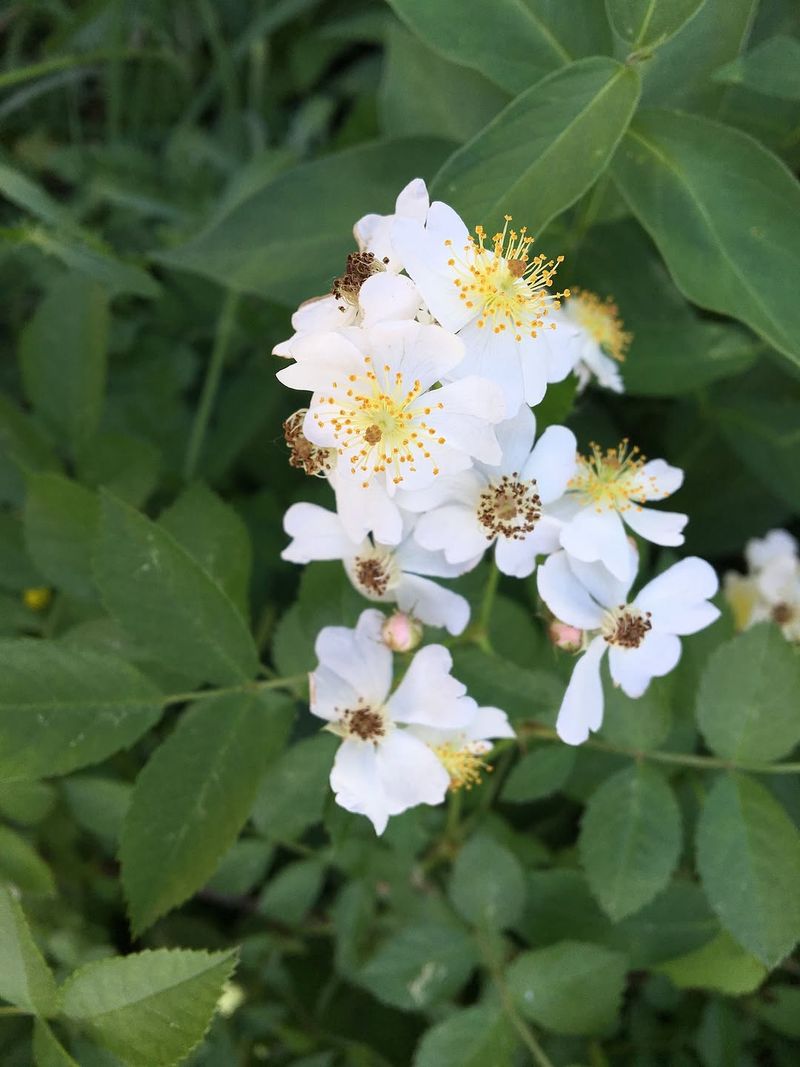
Few yard problems are as frustrating as a corner of the property taken over by thorny, arching canes that seem to grow back no matter what you do. Multiflora rose, Rosa multiflora, has that reputation for good reason.
It was once promoted for erosion control and wildlife cover. But it quickly became one of the most widespread invasive shrubs across this state, spreading into fence lines, woodland edges, and neglected corners of home gardens.
Those tangled thickets create conditions that ticks find very comfortable. The arching canes trap fallen leaves inside the thicket, reducing airflow and keeping the interior shaded and damp even during dry stretches.
Deer, rabbits, and small rodents all use multiflora rose thickets as travel corridors and cover, which brings tick-carrying hosts right into those areas. The dense growth also makes it hard to inspect the ground or spot any issues along the edge of your yard.
Tackling multiflora rose requires thick leather gloves, long sleeves, and follow-up attention because cut stems resprout readily. Cutting canes close to the ground and removing as much root material as possible during late fall helps reduce regrowth.
Ohio State University Extension recommends repeated mechanical removal combined with monitoring for new sprouts each season.
Native alternatives like native hawthorn or wild plum provide similar edge structure for wildlife without the same invasive spread or tick-friendly thicket conditions.
4. Watch Japanese Honeysuckle Vines Along Fences
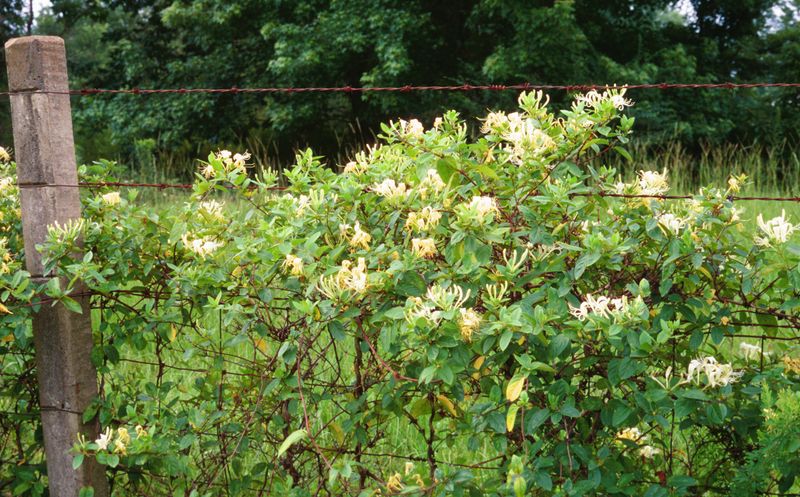
A vine that drapes itself over a fence can look soft and almost romantic in early summer. But Japanese honeysuckle has a habit of turning that casual sprawl into a serious management problem.
Lonicera japonica is an invasive vine that climbs fences, scrambles through shrubs, and spreads along the ground. It forms dense mats in shaded or partially shaded areas of home gardens across this state.
The way this vine grows is what creates tick-friendly conditions. Once it covers a fence or climbs into a shrub, it shades the soil beneath it and traps debris and leaf litter.
It also makes the area underneath much harder to inspect or clean out. Those damp, shaded pockets under a vine mat are exactly the kind of microhabitat ticks prefer when waiting for a host to pass by.
Pets that brush against a vine-covered fence or explore beneath it can pick up ticks without you realizing where the exposure happened.
Cutting Japanese honeysuckle back to the base and pulling up rooted sections along the ground gives you a head start. But this vine regrows quickly and needs follow-up attention through the season.
Avoid letting it climb into shrubs where it becomes much harder to remove. Native alternatives like native coral honeysuckle, Lonicera sempervirens, provide a well-behaved climbing option with attractive flowers.
They support pollinators without the invasive spread or dense cover problems.
5. Thin Common Privet Before It Forms Damp Thickets
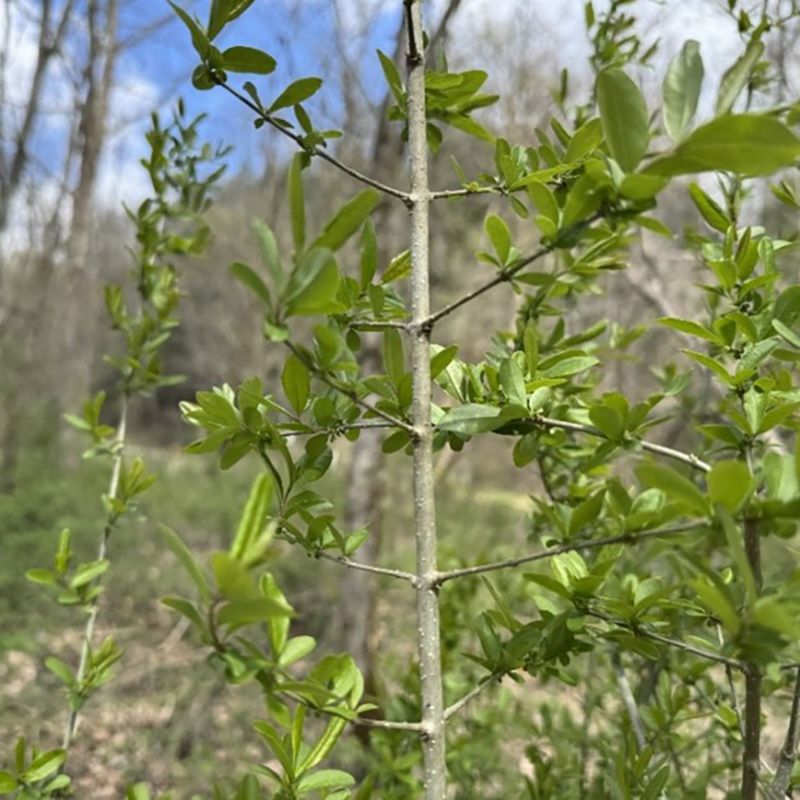
Privet hedges have been a neighborhood staple for decades, planted as a fast-growing screen along property lines and driveways. Common privet, Ligustrum vulgare, does exactly what it is planted to do, and then some.
Left unpruned, it quickly grows from a tidy hedge into a crowded multi-stemmed thicket. It shades out everything beneath it and spreads into nearby natural areas through bird-dispersed seeds.
The tick connection here is about conditions rather than the plant itself doing anything unusual. When privet is allowed to grow dense and untrimmed, the interior becomes shaded and poorly ventilated.
Leaf litter accumulates under the canopy and stays damp longer than it would in a more open area. That combination of shade, moisture, and protected ground cover creates the kind of microenvironment that ticks prefer.
Small animals and wildlife also use dense privet hedges as travel corridors, which can bring ticks into those areas repeatedly through the season.
Regular thinning makes a real difference. Removing older crowded stems from the base of the plant and raking out accumulated leaf litter reduces the shelter that privet thickets can provide.
Keeping the ground underneath as open as possible helps too. Where privet has spread beyond the yard into natural areas, more thorough removal is worth the effort.
Native alternatives like native inkberry, Ilex glabra, or American beautyberry offer screening value with regional ecological benefits and a more manageable growth habit.
6. Manage Autumn Olive Where It Crowds Woodland Edges
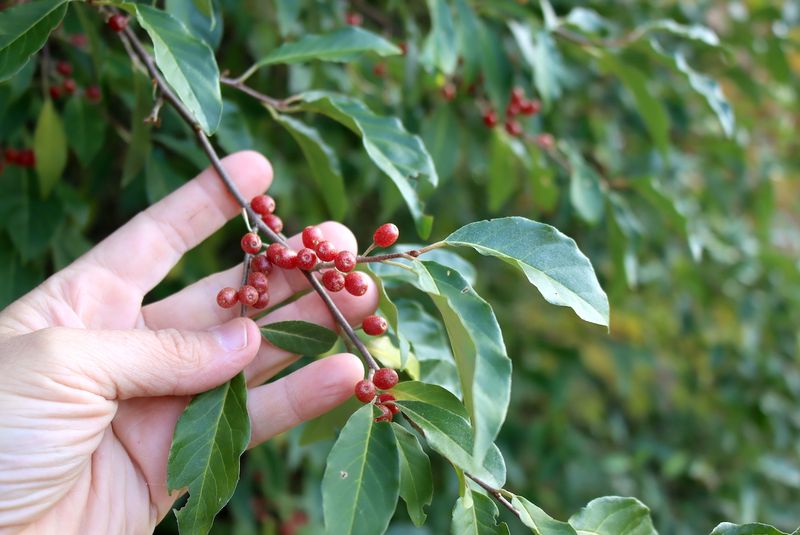
Silvery leaves and clusters of small red berries might make autumn olive look like an interesting landscape plant. But Elaeagnus umbellata is one of the more persistent invasive shrubs in this state.
It was originally introduced for wildlife habitat and erosion control. Since then, it has spread widely along roadsides, field edges, woodland borders, and the back edges of many home properties in rural and suburban areas.
Autumn olive grows fast and forms dense, spreading thickets that can reach over ten feet tall. Those brushy masses create exactly the kind of edge habitat that ticks find useful.
The shrub shades the ground beneath it, traps leaf litter, and provides cover for deer, rodents, and other small mammals that serve as tick hosts.
When autumn olive grows along the boundary between a yard and a woodlot or field, it essentially creates a wildlife-friendly corridor.
That corridor sits right next to the spaces where families and pets spend time outdoors.
Control is possible but takes consistency. Cutting autumn olive at the base during late summer or fall and following up on regrowth each season keeps it from reestablishing.
The Ohio Department of Natural Resources lists it as an invasive species. Local extension offices can provide guidance on removal approaches suited to the size of the infestation.
Replacing cleared areas with native shrubs like native wild rose, hazelnut, or native dogwood species helps stabilize the edge. It also reduces the brushy cover that makes those boundaries tick-friendly.
7. Keep Tall Fescue From Turning Into Tick Habitat
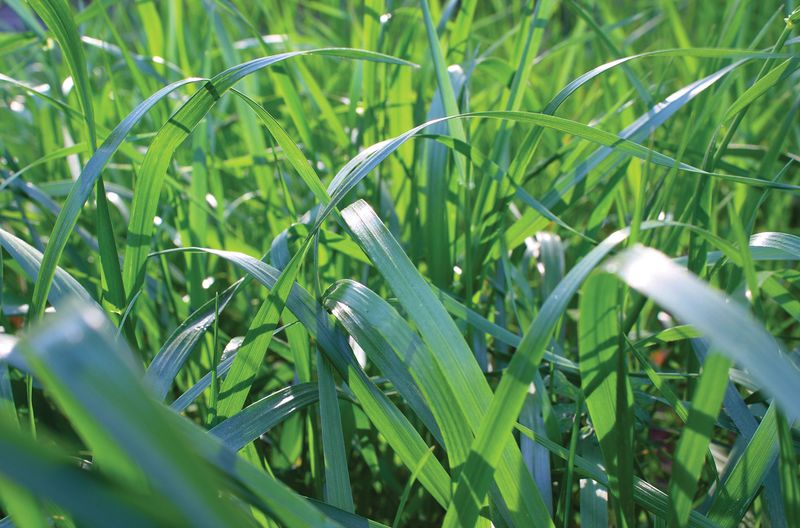
A neatly mowed lawn is not really a tick problem. The issue shows up when sections of tall fescue, Schedonorus arundinaceus, are left unmowed.
That often happens along fence lines, around outbuildings, or in corners that do not get regular attention. Those patches of dense, tall grass become something very different from a lawn once they grow past a few inches.
Tall grass creates a humid microclimate right at ground level. The blades trap moisture from dew and rain, shade the soil, and give ticks a sheltered place to wait for a passing host.
Ticks do not jump or fly, they climb to the tips of grass blades and low vegetation and latch onto anything that brushes past. A child running along a fence line or a dog exploring the edge of the yard near a patch of tall grass has a much higher chance of contact.
Someone walking across a well-maintained lawn faces less risk.
Keeping tall fescue mowed to a reasonable height, especially within nine to ten feet of play areas, paths, and pet routes, makes a practical difference. Defining clear edges between lawn and any naturalized areas helps too.
A sharp boundary reduces the chance of ticks moving from taller cover into maintained spaces. If tall grass areas serve a purpose for pollinators or ground-nesting birds, keep them away from high-traffic zones.
That is a reasonable compromise that balances habitat value with everyday safety for your household.
8. Stop English Ivy From Hiding Leaf Litter
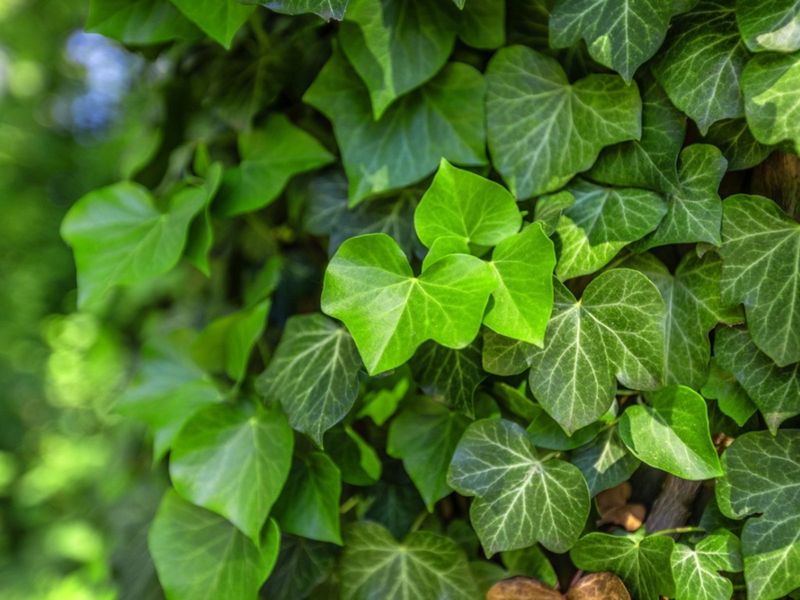
English ivy looks tidy from a distance, which is part of why it became such a popular groundcover for shaded beds, slopes, and foundation plantings.
Hedera helix forms a thick, evergreen mat that covers bare soil and stays green through winter, but underneath that mat is a very different story.
Leaf litter, debris, and moisture accumulate beneath the dense canopy in a way that stays hidden from view and from regular yard cleanup.
That hidden layer of damp, decomposing material is exactly what makes dense ivy a tick-friendly environment. Ticks prefer cool, moist conditions close to the ground, and a thick ivy mat near a foundation or shaded fence provides just that.
The problem is compounded by the fact that ivy is hard to rake or clean without pulling up the entire planting. What looks like a low-maintenance solution can actually be creating a zone that is difficult to monitor and manage effectively.
Thinning ivy beds significantly or removing them in high-traffic areas near doors, pathways, and play zones is worth serious consideration. Where ivy covers a slope that genuinely needs erosion control, native groundcovers can provide similar coverage.
Try wild ginger, native pachysandra, or Pennsylvania sedge for less of the dense, debris-trapping mat. Keeping a clear gap between any groundcover planting and your home’s foundation makes it easier to spot problems.
It also reduces the sheltered conditions that make those areas attractive to ticks season after season.