The Set-And-Forget Native Shrubs Thriving In Ohio’s August Heat
August in Ohio sorts shrubs into two categories fast. The ones demanding attention and the ones that have not noticed the heat at all.
The second group is smaller than it should be in most yards, mostly because the plants that belong in it never get the shelf space at the garden center that the higher maintenance options do. Ohio native shrubs that thrive in August heat are not just surviving it.
They are performing through it. Holding color, supporting pollinators, looking intentional at a point in the season when everything around them has gone quiet or started showing stress.
These are not rare finds. Several are available at good native plant nurseries right now.
They just require someone to look past the familiar options and ask what actually belongs in an Ohio landscape when August stops being polite. The answer is more interesting than the standard shrub aisle suggests.
1. New Jersey Tea Keeps Its Cool
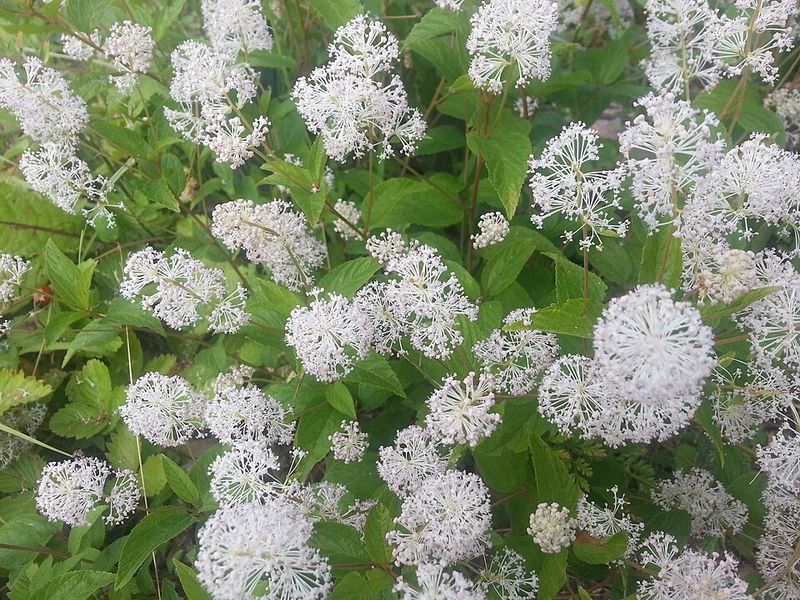
A tight, sunny strip along a driveway or a dry slope near the foundation can be a tough spot to fill. Compact shrubs that stay tidy without constant irrigation are rare, but New Jersey tea, Ceanothus americanus, fits that description well.
It typically reaches two to four feet tall and about three to five feet wide, forming a rounded mound that suits borders where a large hedge would feel out of place.
The fluffy clusters of small white flowers appear in late spring to early summer and draw in bees and butterflies reliably. Its deep, woody root system is the real reason it handles dry summers so well.
Those roots reach down far enough to access soil moisture that shallower plants cannot tap into.
Keep in mind that the same deep root system makes established plants very difficult to transplant. Choose its location carefully before planting, because moving it later is not practical.
Well-drained to dry soil is ideal. Avoid any spot that collects standing water or stays soggy after rain.
A prairie-style border, a pollinator garden, or a dry, sunny foundation edge all work well. During its first growing season, water regularly to help it establish.
After that, it handles summer heat with much less attention, though a deep soak during an extended dry stretch is still a good idea.
2. Fragrant Sumac Shrugs Off The Scorch
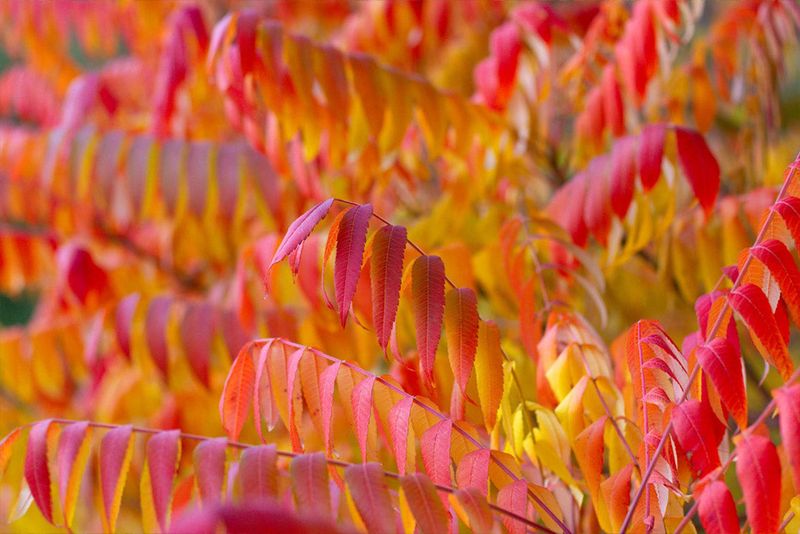
Hot, exposed slopes where other shrubs wilt and thin out are exactly where fragrant sumac steps up. Rhus aromatica is a low-growing, spreading shrub that typically reaches two to six feet tall and can spread six to ten feet wide.
That mounded, rambling form makes it a practical choice for covering difficult ground without a lot of fuss.
Tiny yellow flowers appear in early spring before the leaves emerge. Red fruit follows in summer and attracts birds.
The aromatic leaves turn shades of orange and red in fall, giving the plant a second season of visual interest. Its tolerance for dry, rocky, or infertile soil is well documented, and it handles full sun to partial shade without complaint.
Your Ohio Garden Changes Every Week. Your Plan Should Too.
Gardening in Ohio changes quickly throughout the season. Every Friday you’ll receive a simple weekly plan showing exactly what to plant, prune, fertilize, harvest, and protect so you never miss the right timing.
Because it spreads through its natural growth habit, give it room to do that without crowding a walkway or a smaller neighboring plant. In a tight bed, the spread can become a maintenance issue.
On a wide, open bank or a naturalized border, that same spread is exactly what you want for erosion control and ground coverage.
Fragrant sumac is not related to poison sumac, which grows in wet habitats and has white fruit. Regular watering is still needed during the establishment period.
Once rooted in, it handles summer heat and dry soil with impressive consistency, making it one of the more reliable choices for tough, sun-baked sites.
3. Ninebark Brings Beauty Without The Fuss
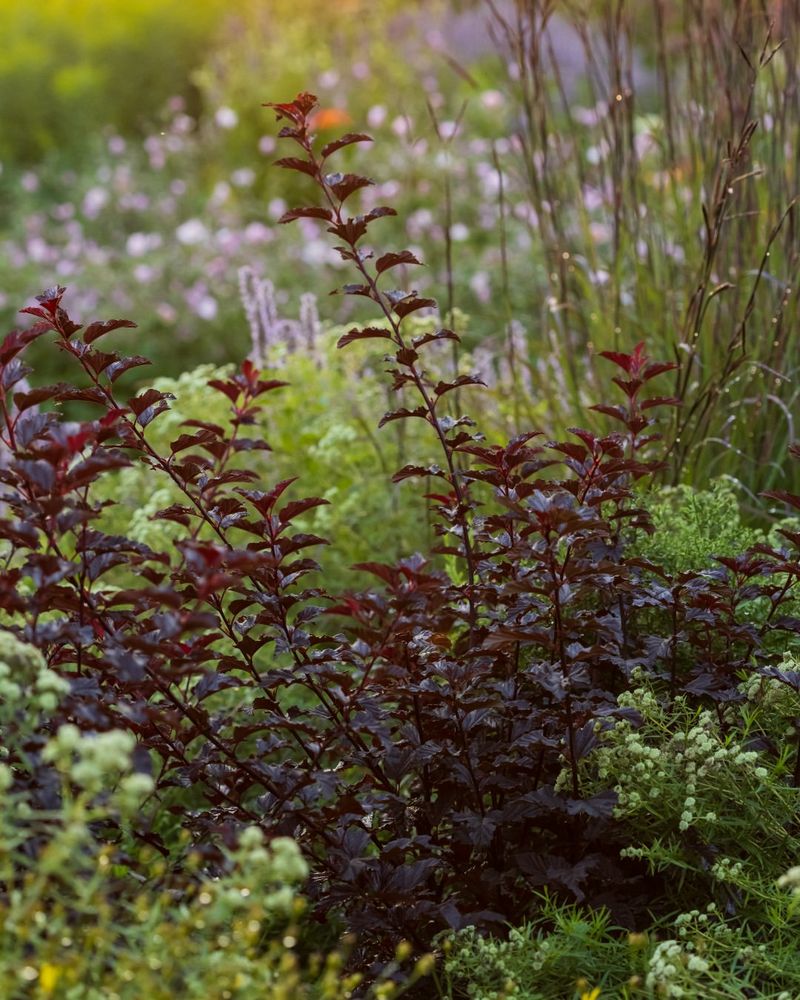
A wide foundation bed or a loose privacy border that needs reliable structure can be a challenge to fill without committing to constant pruning.
Common ninebark, Physocarpus opulifolius, offers an arching, layered form that earns its space without demanding much in return.
The straight native species can reach six to ten feet tall and spread just as wide, so measuring your space before planting matters.
Clusters of small white flowers appear in late spring and attract Ohio native bees and other pollinators. After the flowers fade, reddish seed capsules develop and add texture through the summer.
The peeling, cinnamon-colored bark becomes a notable feature in winter when the branches are bare.
Full sun tends to produce denser growth and stronger flowering, though the plant tolerates partial shade as well. Soil adaptability is one of its practical strengths.
It handles clay, loam, and moderately dry conditions once established, though it prefers decent drainage over soggy ground.
Avoid shearing it into a tight geometric shape. That removes the natural arching form that gives ninebark its character and also cuts off the following season’s flower buds.
Major pruning is best done right after flowering. Many nurseries sell compact cultivars, but those selections may differ from the native species in size, leaf color, and ecological value.
If supporting local wildlife is a priority, the straight native species is the better choice.
4. Smooth Sumac Powers Through Peak Summer
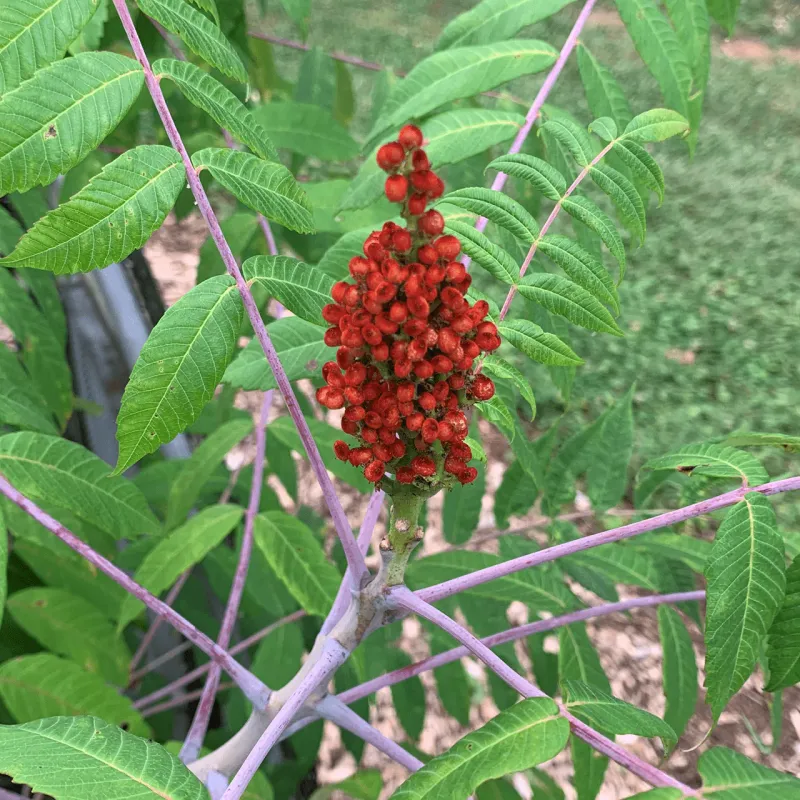
Picture a bare, sun-scorched corner at the back of the property where the soil is thin, compacted, and dry. Most ornamental shrubs would struggle there.
Smooth sumac, Rhus glabra, actually performs well in exactly those conditions. It typically grows six to fifteen feet tall with an open, upright branching structure.
Its bold compound leaves give it a tropical-looking texture despite its toughness.
Upright clusters of red fruit form in summer and persist well into fall and winter. Those fruit clusters attract birds and other wildlife during seasons when food sources are limited.
Fall foliage turns vivid shades of orange, red, and yellow, making it one of the more colorful Ohio native shrubs for autumn interest.
The most important thing to know before planting smooth sumac is its spreading habit. It spreads through underground shoots and can form a broad colony over time.
On a large naturalized slope or an open erosion-prone bank, that colony is an asset. In a small formal bed or a tightly controlled foundation planting, the spreading will become a management problem.
Place it where the colony can expand without pushing into a lawn, a path, utilities, or neighboring plants you want to keep. New plants need regular watering through the first season.
Established plants handle dry soil and full sun well, though a deep watering during a severe drought is still worthwhile.
5. Gray Dogwood Handles Heat Like A Pro
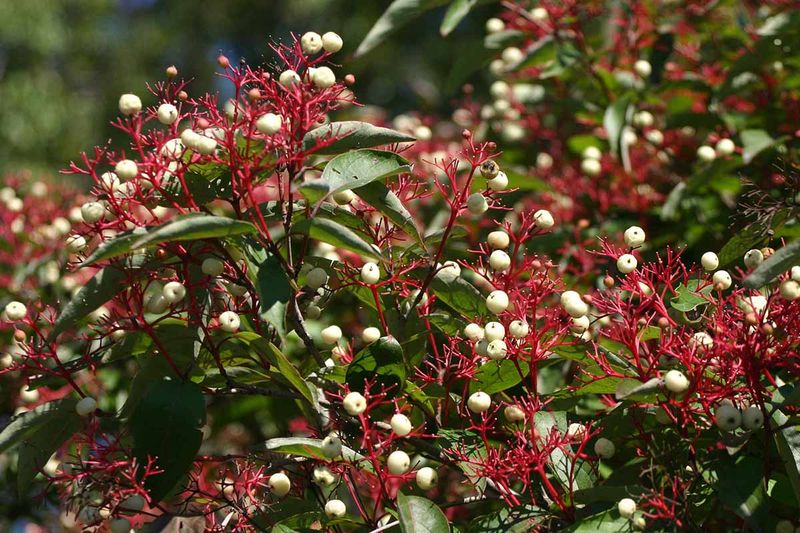
Along a property line, at the edge of a woods, or in a transition zone between lawn and a wilder area, a dense and dependable shrub can do a lot of work. Gray dogwood, Cornus racemosa, fits that role well.
It typically grows six to ten feet tall and spreads freely through suckers, forming a dense thicket over time.
Clusters of small white flowers appear in late spring and attract a range of pollinators. The pale white fruit that follows in late summer is a well-documented food source for birds.
The bright red fruit stalks remain showy even after the fruit is taken. Fall foliage turns shades of purple and red, extending the plant’s seasonal interest.
Gray dogwood tolerates a fairly wide range of conditions. It handles full sun to partial shade and adapts to clay, loam, and moderately dry soils once established.
It is not a drought-loving plant, but it copes with summer dry spells better than many shrubs of similar size.
Its suckering habit is important to understand before choosing a planting site. In a naturalized screen or a wide wildlife border, the spreading colony fills in bare ground and provides excellent bird cover.
In a small ornamental bed, that same habit will require regular removal of new shoots. Give it space, avoid confusing it with other dogwood species, and it will reward you with reliable seasonal performance year after year.
6. Shrubby St. John’s Wort Glows Through August
By August, a lot of spring-blooming shrubs have gone quiet. Borders that looked full and colorful in May can feel flat and green by midsummer.
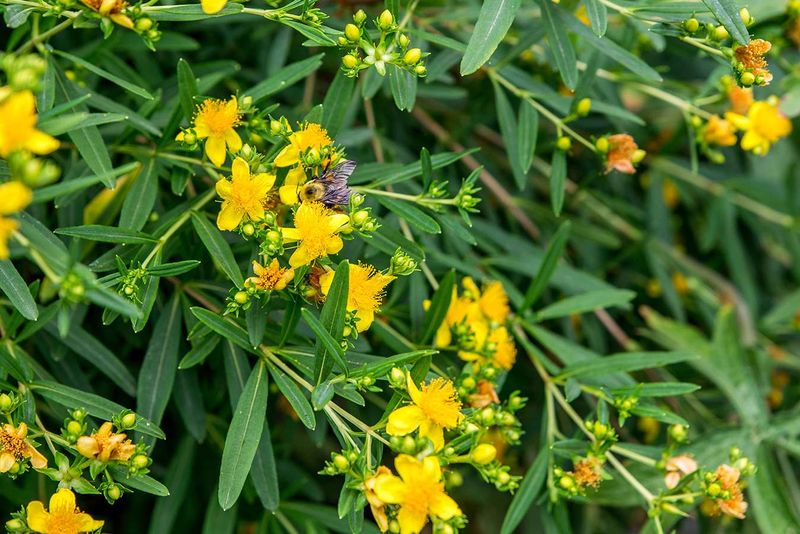
Shrubby St. John’s wort, Hypericum prolificum, fills that gap with cheerful yellow flowers that bloom from midsummer into late summer, right when that color is most needed.
The plant stays compact, typically reaching two to four feet tall and two to four feet wide. That manageable size works well in a front border, a pollinator planting, or a low informal hedge where a large shrub would overwhelm the space.
The bright yellow flowers have prominent, showy stamens that give them a distinctive look and attract Ohio native bees reliably.
Good drainage is a firm requirement. Shrubby St. John’s wort will not perform well in soil that stays wet or collects standing water after rain.
Rocky, sandy, or well-drained loam suits it much better. Full sun encourages the best flowering, though it can tolerate some light shade.
This is a woody native shrub and should not be confused with common St. John’s wort or other Hypericum species sold for medicinal purposes. No health claims are made here.
New plants need consistent moisture through their first season. Established plants handle summer heat and drier conditions with minimal intervention.
Light pruning in early spring can tidy the shape, but it does not require heavy maintenance to look good through the summer months.
7. American Hazelnut Stays Strong In The Sun
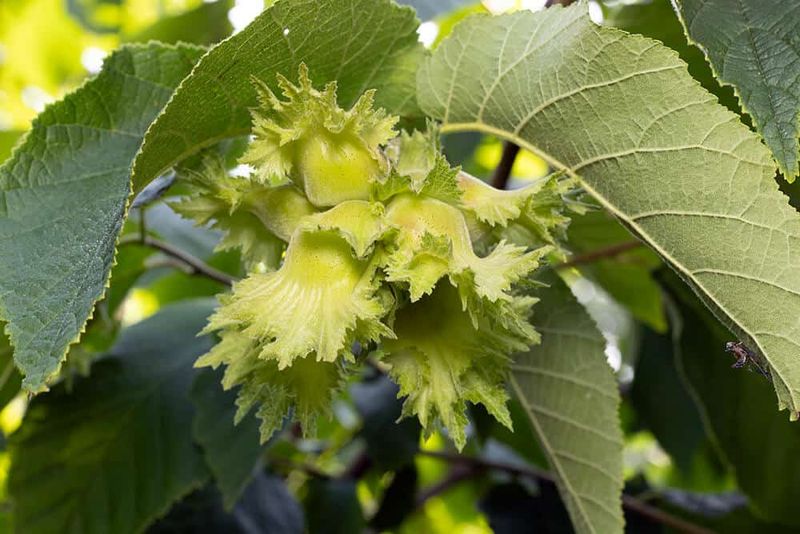
A loose privacy screen that also feeds birds, small mammals, and the occasional determined gardener is a rare find. American hazelnut, Corylus americana, can deliver on all of those fronts.
It grows as a multi-stemmed, suckering shrub that typically reaches six to twelve feet tall. It spreads six to twelve feet wide, forming a broad, rounded thicket over time.
In late winter, dangling catkins appear before the leaves and add subtle early-season interest. The nuts ripen in late summer and are eagerly sought by squirrels, deer, turkeys, and a range of other wildlife.
Planting two or more genetically different plants improves cross-pollination and tends to support better nut production. Still, wildlife competition means a guaranteed harvest for people is never certain.
American hazelnut handles full sun to partial shade and adapts to a range of soil types, including clay and loam. Established plants tolerate summer dry periods reasonably well, but adequate moisture during nut development improves the crop.
Do not expect strong nut production during a severe drought without supplemental watering.
The suckering habit means the shrub will gradually spread outward. Plan for a mature spread of at least six feet, and avoid planting it in a spot where that expansion will crowd a path, a smaller plant, or a structure.
Fall foliage turns yellow to orange-red, adding one more reason to give it a prominent place in a larger yard or naturalized border.
8. Blackhaw Viburnum Thrives When Temperatures Climb
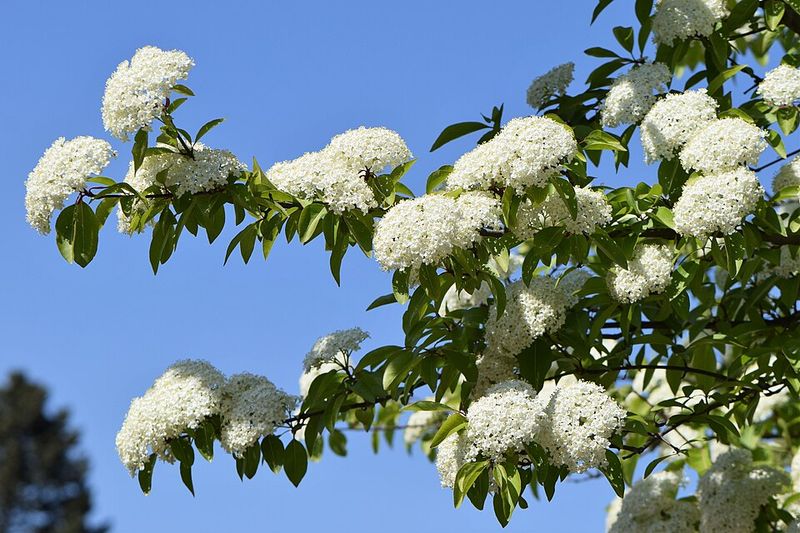
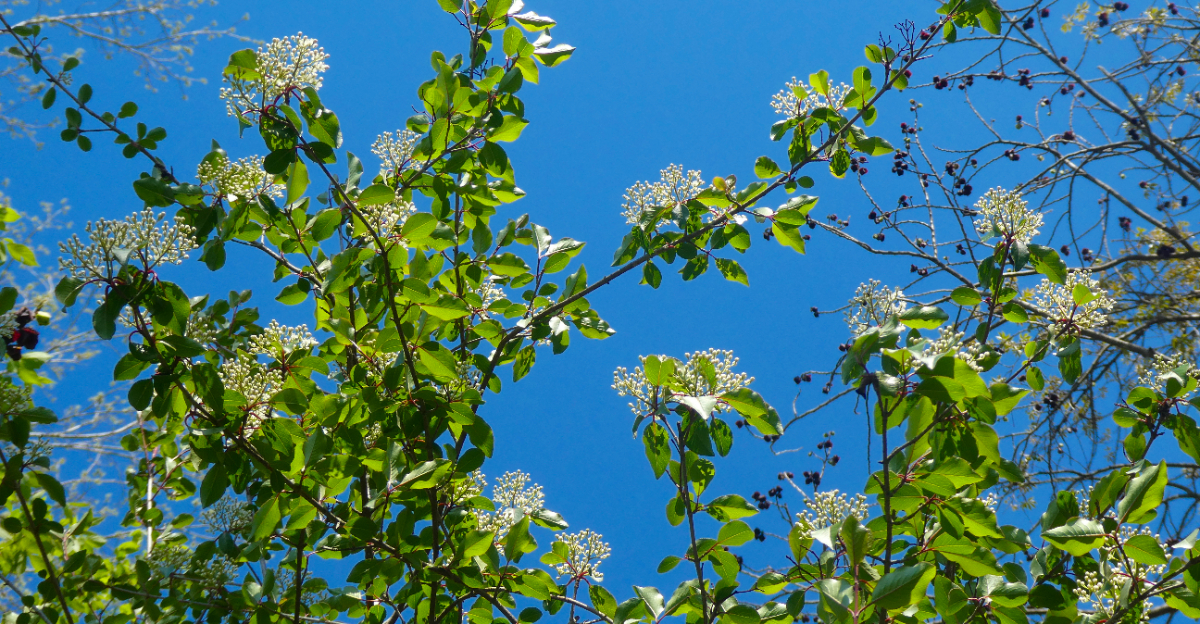
A larger Ohio yard that needs a substantial anchor plant, a natural screen, or a small understory tree has a strong candidate in blackhaw viburnum. Viburnum prunifolium can reach twelve to fifteen feet tall and spread eight to twelve feet wide.
It may grow as a large multi-stemmed shrub or gradually take on a small tree form, depending on how it is trained and where it is placed.
Flat clusters of white flowers open in spring and attract pollinators. Blue-black fruit develops through summer and ripens in fall, providing food for birds and other wildlife.
The foliage turns shades of red and purple in autumn, giving the plant strong visual interest across multiple seasons.
Blackhaw viburnum adapts to full sun and partial shade and handles a range of soil types. It also shows reasonable tolerance for dry conditions once it has developed a healthy root system.
That combination makes it a practical choice for a sunny border or a partly shaded woodland edge. Do not place it where reflected heat from pavement or walls creates an extreme microclimate without also providing adequate soil moisture.
Before selecting a planting site, account for its mature size. A narrow foundation bed, a compact urban garden, or a spot near a utility line will not give it the room it needs.
Space it away from walkways and structures, and water it consistently through the first season. It will settle into a reliable, low-attention presence that earns its space every August and beyond.