Why Texas Native Plants Aren’t One-Size-Fits-All, And What To Grow Where You Live
The plant tag said Texas native. That should have been enough information. It was not.
Texas native covers more ecological ground than many gardeners ever stop to consider. The state stretches across ten distinct ecoregions, from pine forests that receive over fifty inches of rain a year to desert stretches that barely see eight.
The soil shifts from deep black clay to limestone rubble to coastal sand within a few hours of driving. The temperature swings, the wind patterns, the humidity levels, none of it resembles anything consistent enough to shop from a single plant list.
Do you actually know which part of Texas your garden belongs to?
Not the city. Not the county. The ecoregion. The specific ecological context that determines what rainfall, soil chemistry, and seasonal extremes your plants will face year after year.
Many Texas gardeners buy plants based on what they saw in someone else’s yard. That yard might be four hundred miles away in completely different conditions.
The mismatch is quiet at first. Then it is not.
1. The East Texas Plants That Belong In The Piney Woods And Not A Mile Further West
A flowering dogwood covered in white blooms looks stunning in a nursery photo. Someone in Midland buys one, pictures it against their fence, and plants it with genuine optimism.
One season later, the leaves are scorched and the branches bare.
East Texas sits in a humid subtropical zone where annual rainfall can reach fifty inches or more. Plants from that region evolved expecting consistent moisture, rich acidic soils, and filtered shade under a forest canopy.
West Texas averages fewer than twelve inches of rain per year, has alkaline soils, and bakes under relentless sun for months.
Those are not similar environments with minor variations. They are completely different worlds that happen to share a state border.
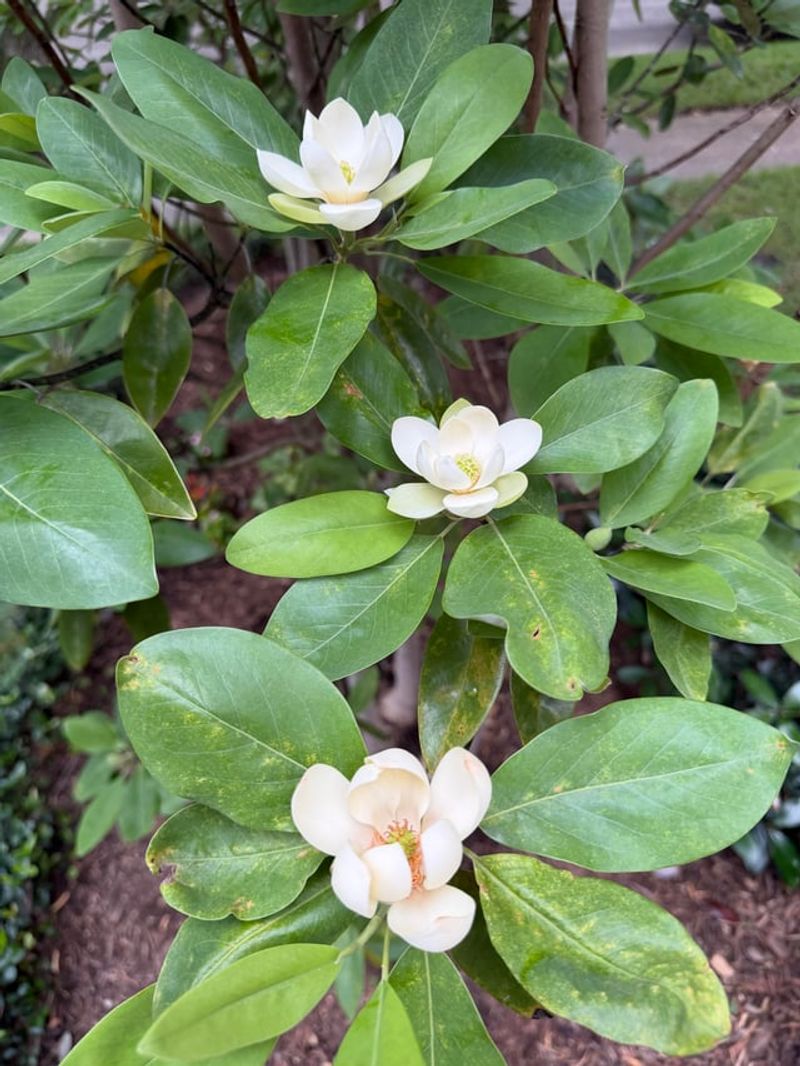
Native azaleas, sweetbay magnolia, and Virginia willow are genuinely beautiful plants, well suited to the Piney Woods and entirely wrong for El Paso or San Angelo.
Matching a plant to its native ecoregion is the single most reliable predictor of long-term success in any Texas landscape.
Climate mismatch is not a watering problem. No irrigation schedule compensates for a fundamental incompatibility between a plant’s evolutionary history and its current zip code.
Knowing your ecoregion before walking into a nursery saves money, time, and the particular frustration of watching something fail that looked so promising at the start.
Texas native is not a single category. It is nine or ten very different ones, and the tag does not tell you which one matters for your yard.
2. The Best Native Plants To Grow In The Texas Piney Woods
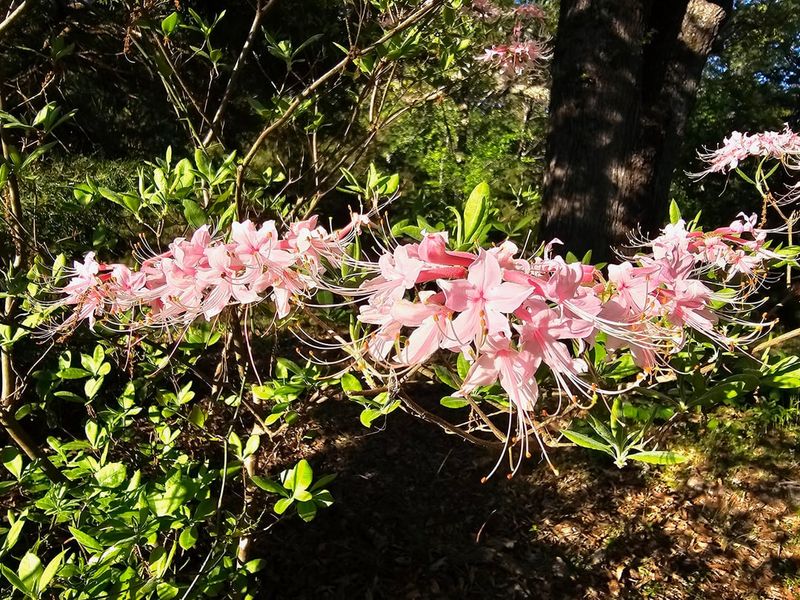
Few places in Texas feel as lush in spring as the Piney Woods. The air is heavy with humidity, the soil holds moisture like a sponge, and the forest canopy creates layered light that shade-loving plants work with rather than against.
Longleaf pine is a standout native for this region. It historically covered millions of acres before logging reduced its range dramatically.
Your Texas Garden Changes Every Week. Your Plan Should Too.
Gardening in Texas changes quickly throughout the season. Every Friday you’ll receive a simple weekly plan showing exactly what to plant, prune, fertilize, harvest, and protect so you never miss the right timing.
Planting it helps restore a piece of an ecosystem while giving the landscape a stately, long-lived tree that earns its place over decades.
For color, native azaleas like Rhododendron canescens bloom in soft pink shades each spring and pull pollinators in impressive numbers.
Oakleaf hydrangea fills the understory beautifully, producing large white flower clusters that dry to papery tan in fall and provide visual interest across multiple seasons.
Wild ginger and mayapple spread slowly under trees where grass consistently underperforms. Spiderwort adds cheerful purple along woodland edges and reseeds reliably year after year without becoming invasive.
Soil pH deserves attention in this region. Many Piney Woods natives prefer slightly acidic conditions, and pine bark mulch helps maintain that acidity while keeping roots cool and moist through long humid summers.
Plants here suit USDA zones 7b through 8b across most of East Texas, though the region can still see hard freezes in winter and those matter for planting decisions.
Gardening in the Piney Woods is less about fighting the forest and more about joining it. That turns out to be considerably more enjoyable than fighting it.
3. What Native Plants Are Worth Growing In Texas Blackland Prairie Clay
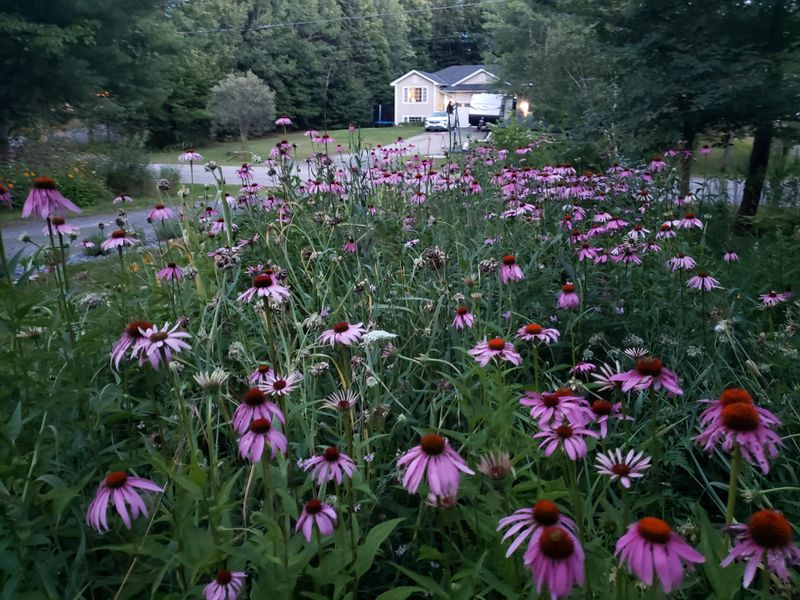
The Blackland Prairie runs in a narrow arc from the Red River down through Dallas, Waco, and San Antonio. The dark clay soil beneath it is among the most fertile and most challenging in the state.
It cracks in summer, floods in spring, and adheres to boots with impressive commitment. Plants that succeed here have genuinely earned their place.
Purple coneflower is practically built for this region. It handles clay, tolerates drought once established, and provides seed heads that goldfinches return to through winter.
Black-eyed Susan performs with similar reliability and blooms from early summer well into fall without demanding much in return.
For grasses, little bluestem is one of the most dependable choices available in this ecoregion. It turns a beautiful russet red in autumn and provides nesting material for birds across multiple seasons.
Inland sea oats work well in shadier corners of a prairie garden and move gracefully with any wind that comes through.
Maximilian sunflower can reach eight feet tall, which makes it a back-of-border plant rather than a front-row specimen. Position it where height becomes a feature and it delivers reliably across the season.
One practical benefit of planting deep-rooted prairie natives in Blackland clay is what those roots do underground.
Over seasons, they break up compaction, improve drainage, and build organic matter without any help from a shovel or tiller.
Clay soil and native prairie plants have a relationship that goes back thousands of years. The plants are very clear about being on the winning side of it.
4. The Native Plants That Actually Belong On Hill Country Limestone
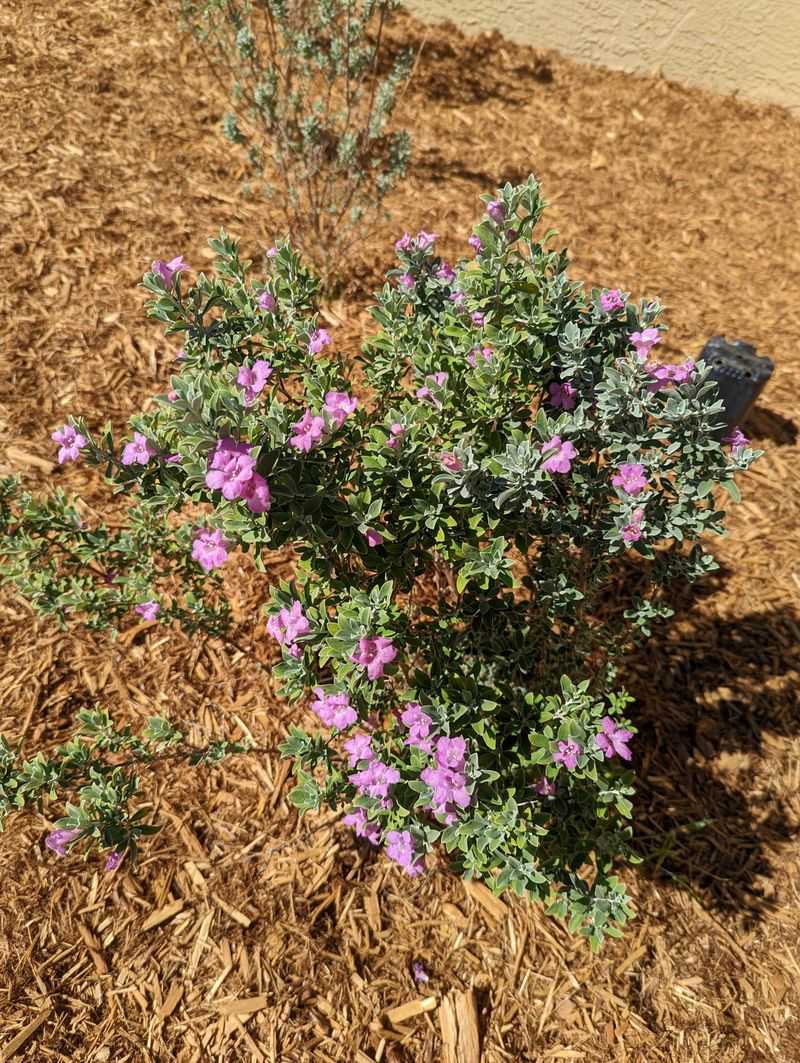
Gardening in the Hill Country sometimes feels like working on a pile of limestone rubble. That assessment is not far off.
The Edwards Plateau sits on shallow, rocky, alkaline soil that drains fast and holds almost no organic matter. Summers are relentless. Rainfall arrives unpredictably. And yet the wildflower displays here rank among the most spectacular in North America.
Texas sage, known locally as cenizo, is one of the most iconic shrubs in this landscape. It blooms purple after rain events, functioning almost like a living weather indicator, and rarely needs supplemental water once established.
Agarita is another reliable workhorse with spiny leaves that discourage deer and bright red berries that bring birds in consistently.
Bluebonnets are the obvious showstopper but they are annuals that reseed when conditions cooperate. For more dependable color across seasons, prairie verbena spreads low and wide with purple blooms from spring through fall.
Mexican buckeye is a small native tree that produces pink flowers in early spring before most other plants have started. Flame acanthus draws hummingbirds from considerable distance with its tubular red-orange flowers.
The important restraint in Hill Country gardens is resisting the urge to amend soil aggressively. Many natives here perform better in lean, rocky conditions than in enriched beds. Too much water or fertilizer causes more problems than the wrong planting location.
Rocky limestone and minimal water. Most plants would decline. Hill Country natives heard that description and called it home.
5. The Native Plants Built For South Texas Brush Country Conditions
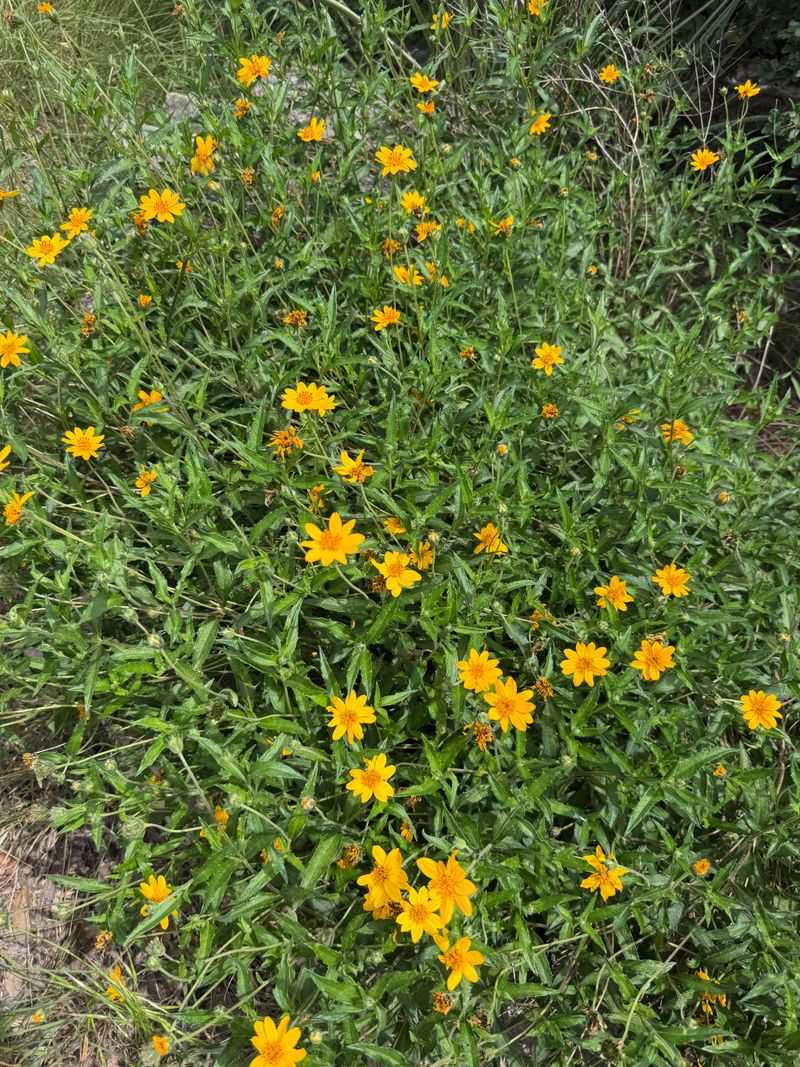
South Texas does not offer gentle gardening conditions.
The region known as the Tamaulipan Thornscrub receives between sixteen and twenty-five inches of rain annually, but that rainfall arrives in bursts followed by months of dry heat.
Plants here did not simply adapt to drought. They organized their entire biology around it.
Texas ebony is one of the most valuable native trees for this region. Growth is slow but the plant lives for centuries, provides dense shade, and produces seeds that local wildlife depend on heavily.
Guajillo is a sprawling shrub with fragrant white flowers that open in late winter, making it among the first nectar sources available to pollinators when alternatives are scarce.
Huisache, a small tree in the acacia family, erupts in golden puffball flowers in February and releases a honey-like fragrance that is genuinely unforgettable on a warm morning.
Wedelia texana is a tough yellow-flowering perennial that blooms through most of the year with almost no maintenance requirement.
Turk’s cap produces red lantern-shaped flowers that hummingbirds and butterflies both seek out consistently, and it handles shade and dry conditions with equal ease.
Many South Texas natives develop deep taproots that access water far below the surface. Establishment takes patience and consistent watering through the first two summers. After that, the plants become remarkably self-sufficient.
The brush country looks harsh from the highway. The plants growing in it have a very different perspective entirely.
6. West Texas Plants That Thrive On Neglect
There is a particular freedom that comes with West Texas native gardening. Once established, most of these plants prefer to be left alone.
No irrigation schedules, no fertilizer applications, no intervention of any kind. The Chihuahuan Desert shaped these plants over thousands of years to be self-sufficient in ways that standard garden plants simply cannot approach.
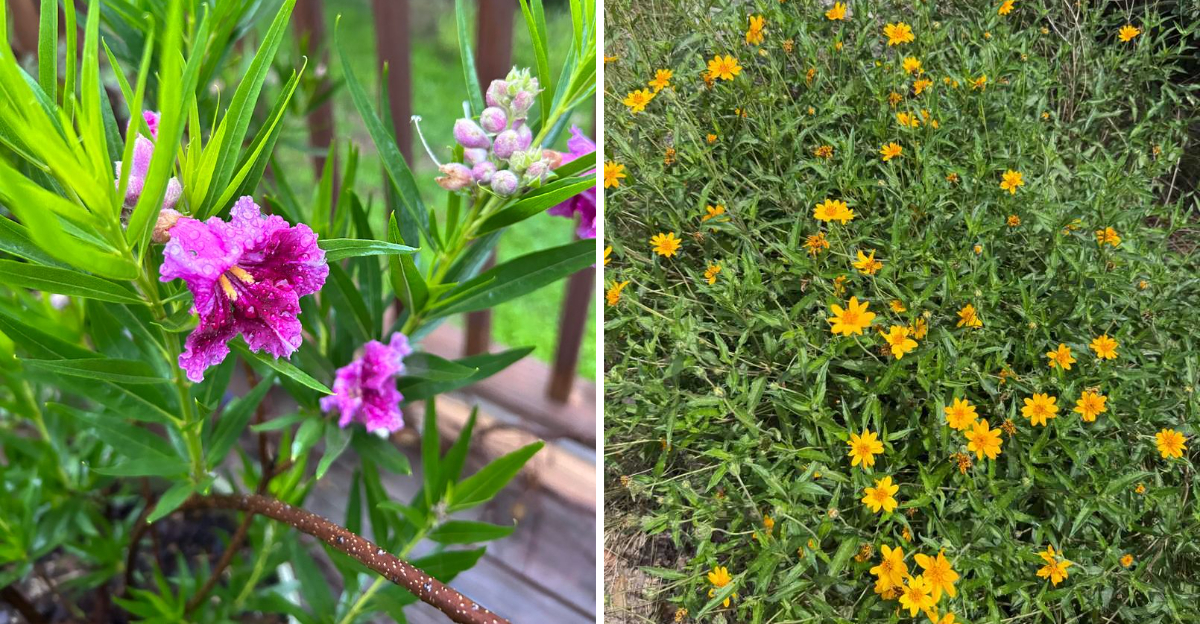
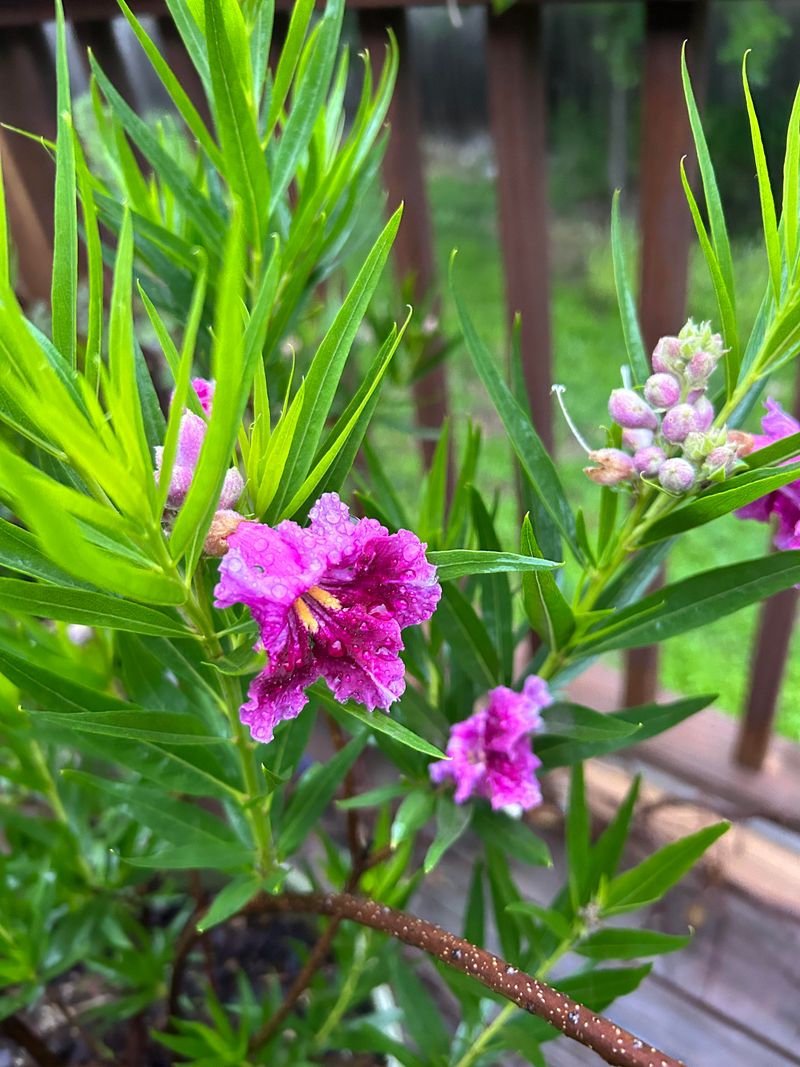
Desert willow is one of the most rewarding native trees for this region. Despite the name, it is not a true willow and requires no water beyond what falls naturally.
It produces trumpet-shaped flowers in pink, white, and purple throughout summer, and hummingbirds visit it with predictable consistency.
Ocotillo looks like a bundle of thorny sticks through most of the year. After rain, it leafs out within days and tops each stem with a brilliant red flower spike that is one of the more dramatic sights in the American Southwest.
Lechuguilla agave forms the structural backbone of Chihuahuan Desert plant communities. Candelilla produces waxy stems that catch and reflect strong sunlight in ways that make the plant visually distinctive across seasons.
For perennial color at lower elevations, scarlet sage blooms reliably without supplemental water and requires minimal management once established.
Overwatering is the most consistent problem with West Texas desert natives. Root damage from excess irrigation is considerably more common than drought stress in plants that spent millennia developing the opposite problem.
Less is more out west. The plants figured this out long before the gardeners did.
7. Coastal Natives That Tolerate Salt And Wind
Coastal gardening in Texas means accepting conditions that would challenge most plants within a single weekend.
Salt spray, sandy soil with minimal nutrient-holding capacity, wind that never fully stops, and periodic flooding from storm surge create a growing environment where toughness is the baseline requirement. The plants that belong here adapted to all of it simultaneously rather than individually.
Sea oats are the most recognizable coastal native and earn that recognition. Root systems stabilize dunes, seed heads feed migratory birds, and the plant stands up to wind and salt without visible stress.
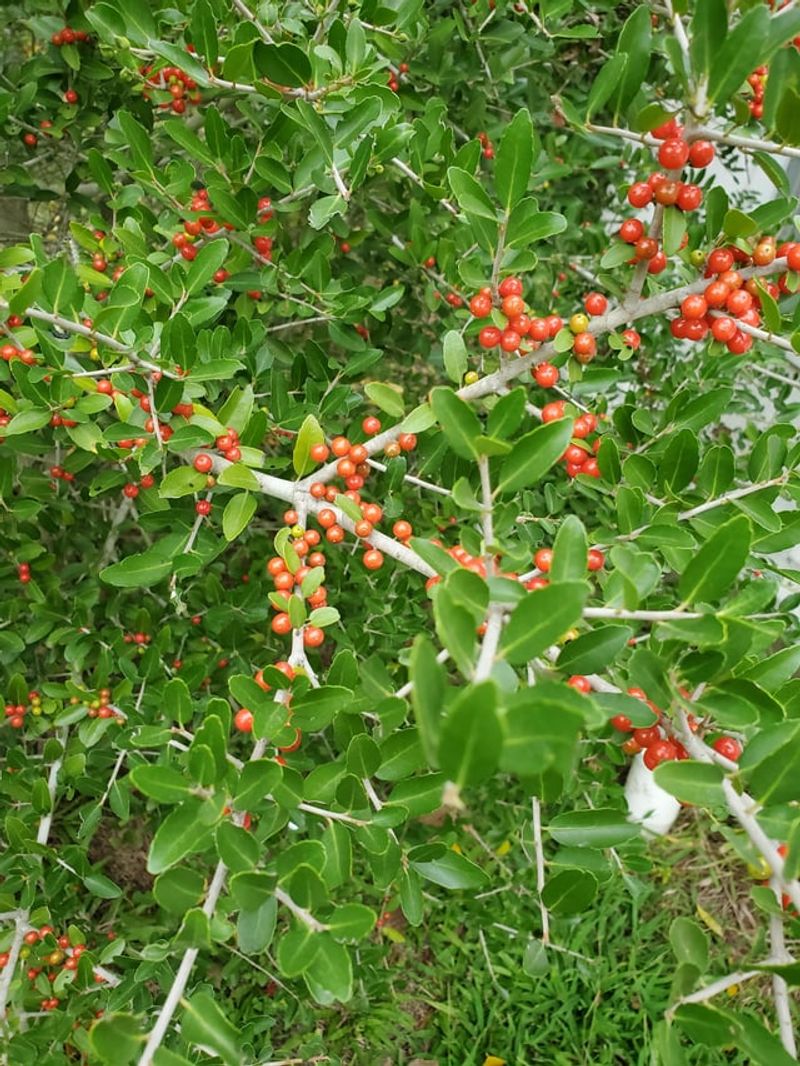
Yaupon holly is a coastal powerhouse that tolerates salt, sand, flooding, and drought with equal indifference.
Red berries persist through winter and bring cedar waxwings in numbers that make the plant worth planting for that reason alone.
Gulf muhly grass produces spectacular pink plumes in fall that make it immediately noticeable in any coastal garden.
Clumps reach about three feet tall and wide, handle salt spray consistently, and require no maintenance once established.
Beach morning glory spreads across sandy ground, holds soil in place, and produces purple blooms without demanding anything in return. Eastern red cedar provides tall structure and works effectively as a windbreak along coastal properties.
Coastal plant communities are among the most ecologically sensitive in Texas. The plants that belong there are doing more than looking good.
They are holding the coast together, which is a resume most ornamental imports cannot match.
8. The Mistake That Explains Why Your Texas Native Plants Are Not Thriving
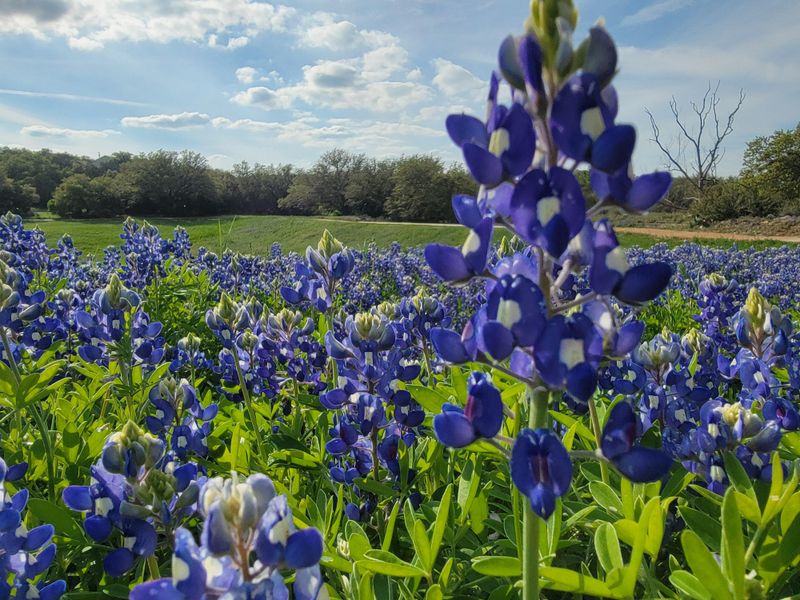
Bluebonnets appear everywhere in Texas in April. Painted on mailboxes, printed on coffee mugs, photographed along roadsides from Amarillo to Corpus Christi.
When a gardener in El Paso plants them and gets almost nothing, the frustration is understandable. Bluebonnets are native to the Blackland Prairie and Edwards Plateau, not to the Chihuahuan Desert. That gap explains the outcome entirely.
The most consistent mistake Texas gardeners make is choosing plants based on what worked somewhere else in the state rather than what belongs in their specific ecoregion.
Social media accelerates this pattern considerably. A successful garden post from Austin gets shared broadly, and within days gardeners in Amarillo and Brownsville are buying the same plants with no awareness that the growing conditions are fundamentally different.
Native status alone does not guarantee success outside a plant’s home range. The label confirms where the plant originated.
It does not confirm that the plant will perform well in different rainfall, soil, and temperature conditions across the state.
Planting species that belong to a specific ecoregion supports the local insects, birds, and soil organisms that co-evolved with those plants.
A cedar elm in Dallas provides resources for species that a live oak from San Antonio cannot replicate in the same location. The ecological relationships are specific, not interchangeable.
Researching the local ecoregion takes roughly fifteen minutes and completely changes how a Texas gardener shops for plants.
That is fifteen minutes the bluebonnets in El Paso wish someone had taken.