These Georgia Native Shrubs Stay Lush All Summer With Zero Extra Watering
Summer has a way of exposing which plants truly belong in a landscape. Some begin demanding more attention as temperatures rise, while others seem perfectly content carrying on as if nothing has changed.
That difference becomes much more noticeable when weeks go by without significant rainfall.
Nobody starts a garden hoping to spend the hottest part of the year dragging hoses around the yard. The appeal of a beautiful landscape has always been finding plants that give something back without constantly asking for more in return.
When a shrub stays full, green, and healthy through difficult conditions, it tends to earn a permanent place in the landscape.
That is one reason native plants continue gaining attention. Georgia’s climate can be challenging during summer, but certain native shrubs are already adapted to those conditions.
Once established, they can maintain a lush appearance while needing very little help from the gardener.
1. Oakleaf Hydrangea Keeps Its Full Look Through Summer
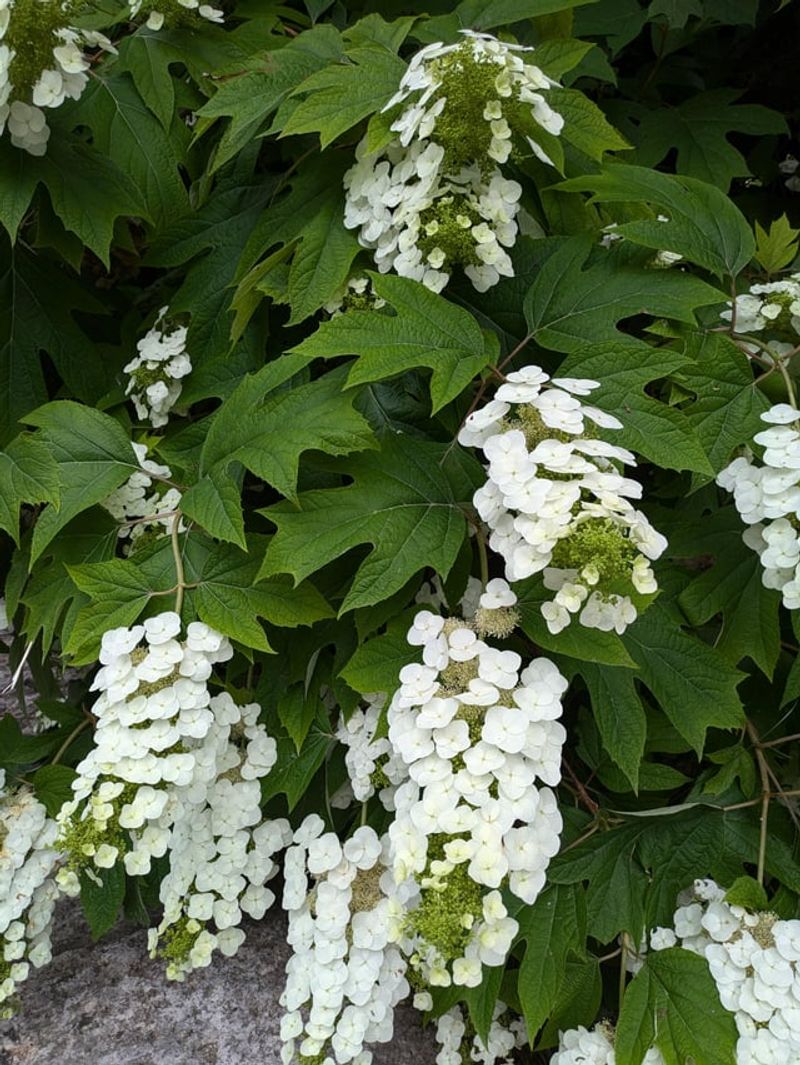
Big, bold, and completely unbothered by summer heat, Oakleaf Hydrangea earns its spot in any low-water garden. Its large, cone-shaped flower clusters open creamy white in late spring and slowly shift to a pinkish tan as summer moves along.
That color change keeps it looking interesting for months without any help from you.
Unlike some hydrangeas that need constant moisture, this one handles dry stretches surprisingly well once it gets established. Roots go deep after the first season, letting the plant pull moisture from the soil long after the surface has dried out.
Sandy or clay soils both work fine as long as drainage is decent.
Partial shade is where it really thrives. A spot under a tall tree canopy keeps the leaves from scorching on the hottest afternoons.
Full sun is possible in cooler areas, but afternoon shade is your best bet in most parts of the Southeast.
Peeling cinnamon-colored bark adds winter interest after the leaves drop, so this shrub earns its space year-round. It spreads slowly by suckers, forming a natural clump over time.
Pruning is rarely needed, and skipping it usually results in a more impressive bloom the following year.
Established plants can remain attractive through long periods of summer heat without needing a regular watering schedule.
Plant it once, step back, and let it do its thing.
2. American Beautyberry Handles Dry Weather With Ease
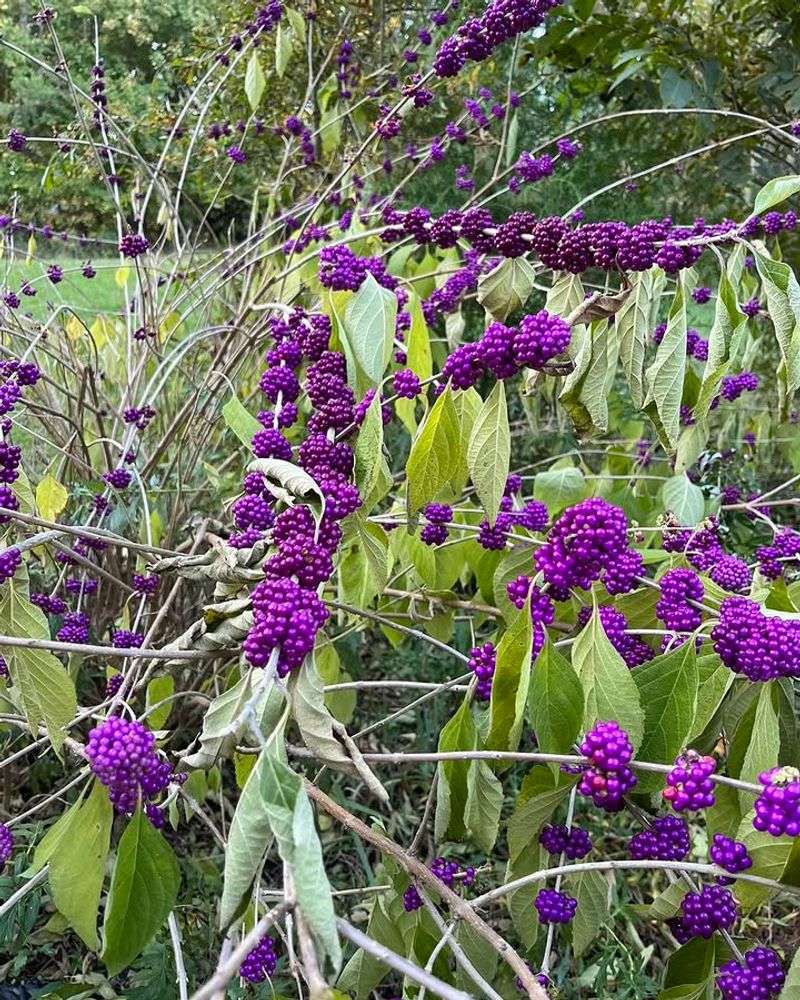
Nothing in the late-summer garden stops people in their tracks quite like American Beautyberry. Clusters of electric purple berries line every arching stem in August and September, creating a display that looks almost too vivid to be real.
Birds love them, and the show keeps going well into fall.
Through the hot, dry months before those berries appear, the plant holds its foliage without complaint. Established plants rarely need watering even during extended dry spells.
Coarse, slightly rough leaves help reduce moisture loss, and the root system spreads wide enough to tap into soil moisture other plants can not reach.
Pruning hard in late winter actually improves berry production. Cutting stems back to about a foot from the ground encourages vigorous new growth, and that new growth is exactly where the berries form.
Your Georgia Garden Changes Every Week. Your Plan Should Too.
Gardening in Georgia changes quickly throughout the season. Every Friday you’ll receive a simple weekly plan showing exactly what to plant, prune, fertilize, harvest, and protect so you never miss the right timing.
Skip the pruning and the plant still performs, just with a slightly looser shape.
Deer browse the foliage occasionally, but the plant bounces back fast. It grows in full sun or partial shade, though berry clusters tend to be more impressive with at least a few hours of direct light each day.
Average garden soil is all it needs. No fertilizer, no irrigation schedule, no fuss.
Beautyberry belongs in more yards across the region, and once you plant one, you will likely want several more.
3. Virginia Sweetspire Stays Attractive Beyond Spring
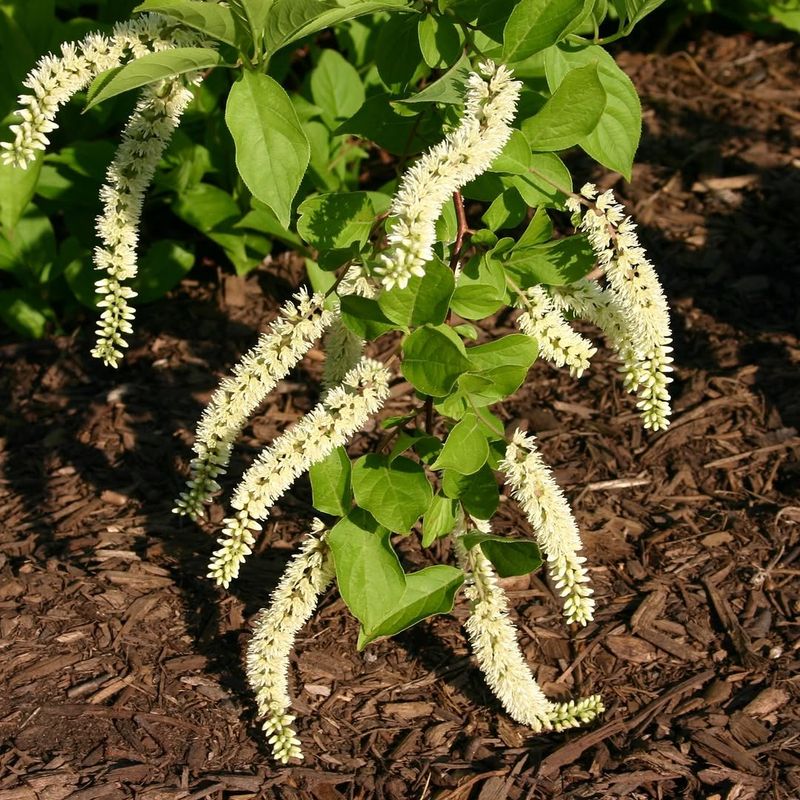
Most flowering shrubs burn bright in spring and then fade into the background. Virginia Sweetspire refuses to follow that pattern.
White bottlebrush flower spikes appear in late spring, carrying a light, sweet fragrance that drifts across the garden on warm evenings. That bloom alone would justify the space, but the plant keeps giving long after the flowers fade.
Foliage turns brilliant shades of red, orange, and burgundy in autumn, often holding color longer than most other native shrubs. Even during the hottest part of summer, leaves stay glossy and full without supplemental watering.
Established plants handle dry periods without dropping leaves or looking stressed.
Wet spots are no problem either. Sweetspire grows naturally along streambanks and in low-lying areas, so it tolerates both drought and occasional flooding better than most landscape shrubs.
That flexibility makes it useful in spots where drainage is unpredictable.
Spreading slowly by underground stems, it forms a dense colony over several years. Spacing plants three to four feet apart creates a solid mass planting that fills in nicely.
Partial shade suits it best, though full sun works in moist locations. No serious pest or disease problems tend to show up.
Low maintenance does not begin to cover it. Virginia Sweetspire is one of those plants that quietly outperforms everything planted near it season after season.
4. Wax Myrtle Maintains Dense Evergreen Growth
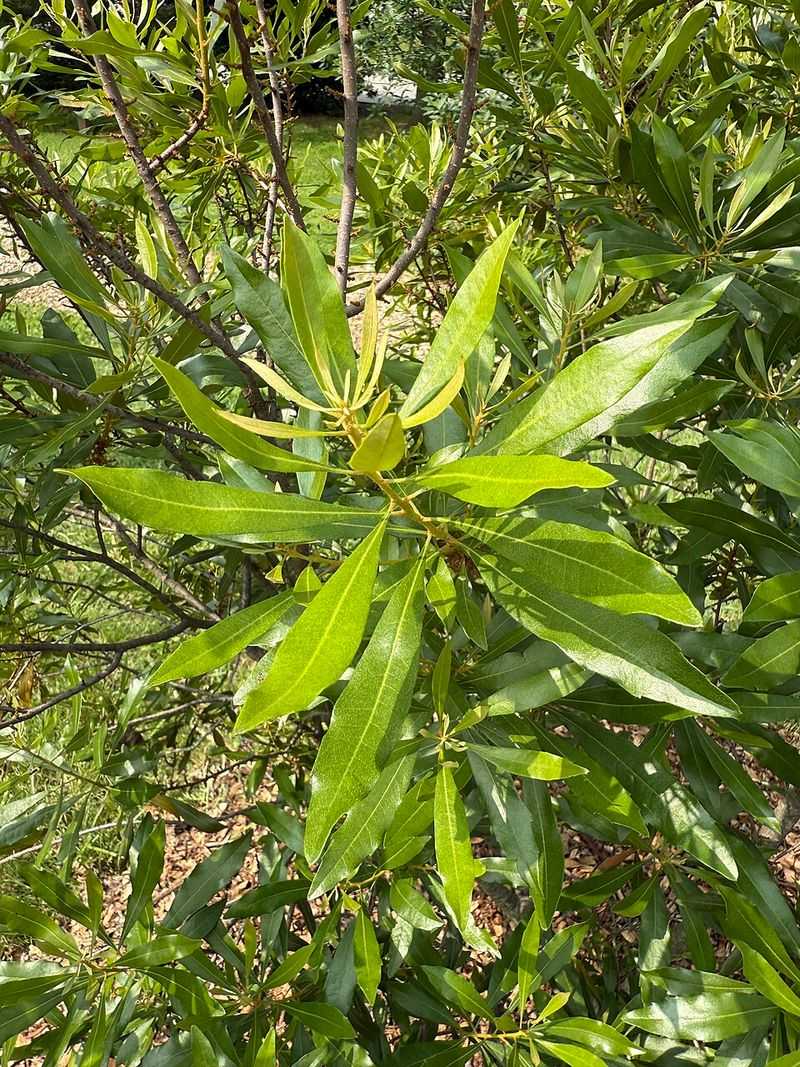
Fast growth and year-round green make Wax Myrtle one of the hardest-working native shrubs in any Southern landscape. New plants can put on three to five feet of growth in a single season under good conditions.
Within two or three years, a small transplant becomes a dense privacy screen that stays full from top to bottom.
Summer heat does not slow it down at all. Aromatic leaves release a pleasant scent when brushed, and the gray-blue berry clusters that appear on female plants attract warblers and other songbirds through fall and winter.
Wildlife value and landscape function come in one package.
Salt spray, poor sandy soils, and waterlogged ground are all conditions Wax Myrtle handles without issue. That tolerance makes it a go-to choice in coastal areas and low spots where other shrubs struggle.
Inland gardens benefit just as much, especially in areas with heavy clay or compacted soil.
Pruning into a formal hedge shape is possible, though a more natural multi-stemmed form requires almost no maintenance. Hard pruning every few years keeps older plants from getting leggy.
Nitrogen-fixing root nodules let it pull nutrients from the air, so fertilizer is rarely necessary. Plant it where you need a quick, reliable screen and then forget about it.
Wax Myrtle handles the rest on its own through every season.
5. Yaupon Holly Holds Up Through Hot Conditions
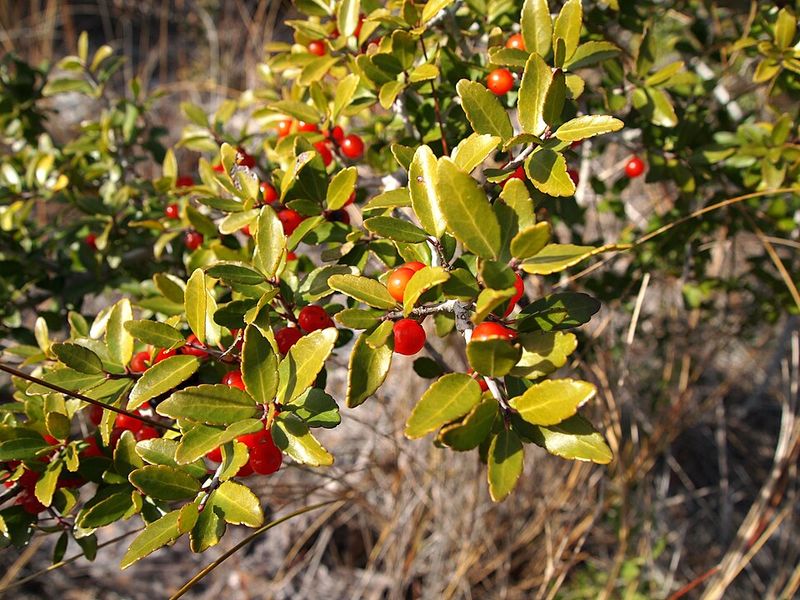
Yaupon Holly might be the toughest native shrub growing across the Southeast right now. Heat, drought, salt, poor soil, heavy clay, standing water, deep shade, full sun.
Name the tough condition and Yaupon handles it without missing a beat. Few plants match that range of tolerance.
Bright red berries cover female plants from fall through winter, feeding cedar waxwings, mockingbirds, and dozens of other bird species. Male plants are needed nearby for berry production, but even without berries, the dense evergreen foliage makes a handsome landscape plant year-round.
Leaves stay small, glossy, and deep green through the hottest months.
Growth habit varies widely depending on the variety. Wild-type plants grow into large multi-stemmed shrubs or small trees reaching fifteen feet or more.
Compact cultivars stay under three feet and work well as low hedges or foundation plants. Weeping forms add a sculptural element to mixed borders.
Choosing the right form for your space matters more than any care decision.
Pruning is optional. Yaupon tolerates aggressive shearing into formal shapes, but natural forms need almost no attention.
Established plants need no irrigation even during extended dry summers. No fertilizer program is required.
Pest and disease problems are essentially nonexistent in most garden settings. Georgia gardeners have relied on this shrub for decades, and the reasons are obvious once you see it push through a brutal July without a drop of extra water.
6. Farkleberry Adapts To Drier Garden Sites
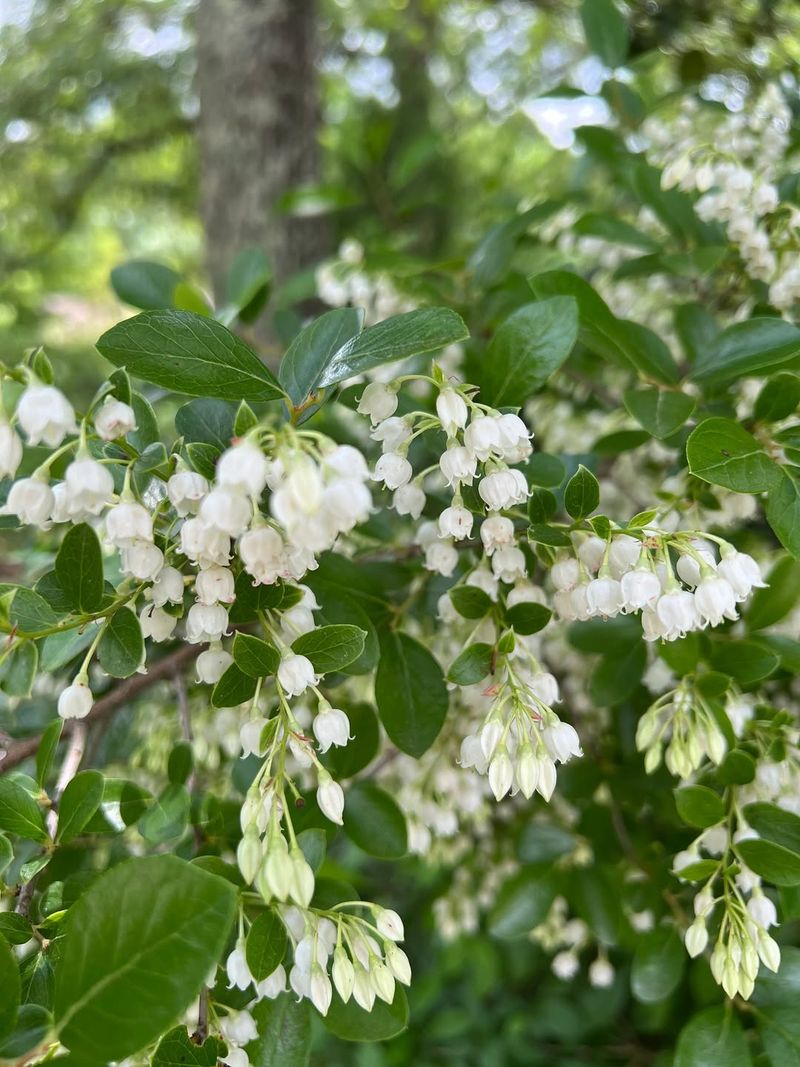
Dry, rocky slopes and sandy ridgelines are where Farkleberry feels most at home. Most shrubs planted in those conditions look stressed by midsummer, but Farkleberry keeps its small, glossy leaves without any sign of trouble.
It has spent thousands of years adapting to exactly those tough spots.
Small white urn-shaped flowers appear in spring, similar to blueberry blooms, which makes sense since the two plants are close relatives. Small black berries follow in late summer and persist into winter.
Wildlife eats them readily, though the flavor is too astringent for most people to enjoy fresh.
Slow growth is the main trade-off with this plant. Expect a few inches per year rather than the rapid spread of something like Wax Myrtle.
Patience pays off though, because mature plants develop attractive gnarled stems with flaking bark that adds real character to a naturalistic garden design.
Acidic, well-drained soil is a firm requirement. Heavy clay or poorly drained spots will cause problems that better conditions would avoid entirely.
Sandy loam, rocky soil, and even gravelly fill work well. Once established, the root system goes deep enough to find moisture during dry stretches that would stress most other shrubs.
Farkleberry rarely shows up in garden centers, so sourcing from a native plant nursery is usually necessary. Worth the extra effort.
Few shrubs offer this combination of drought tolerance, wildlife value, and four-season structure in challenging sites.
7. Possumhaw Performs Well With Limited Water
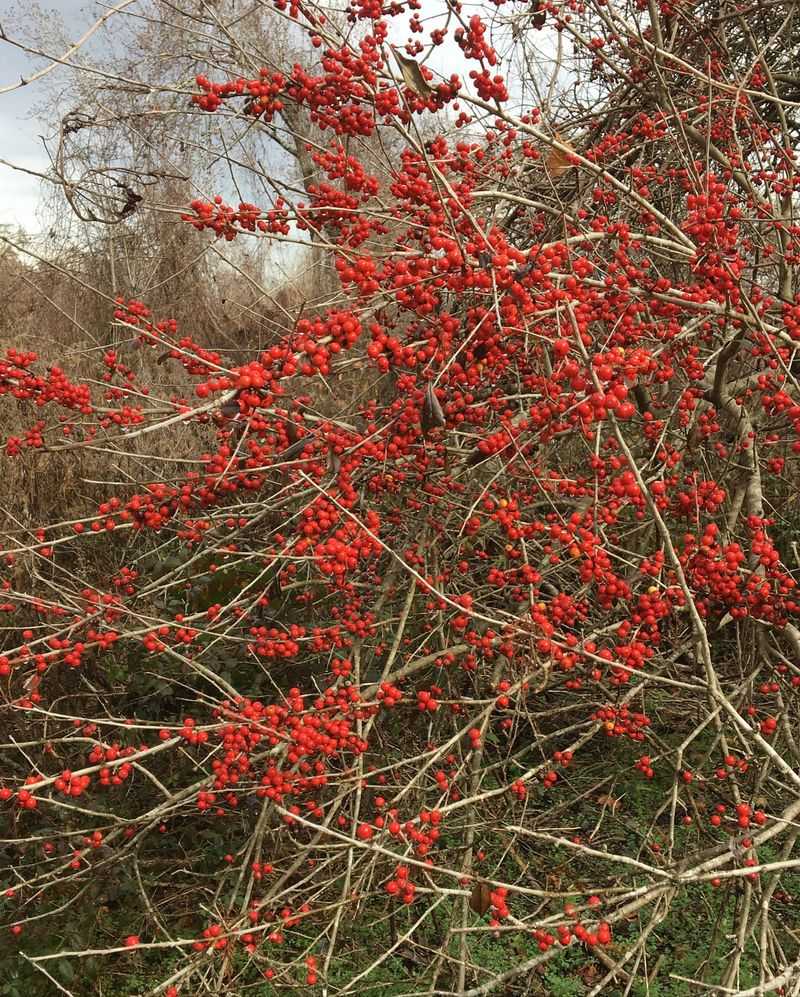
Possumhaw puts on its best show after the leaves drop. Bare gray branches loaded with red or orange berries stand out sharply against a winter sky, and that display can last for months if birds do not strip the plant clean first.
Mockingbirds and cedar waxwings treat it like a buffet once cold weather arrives.
Getting to that winter display requires surviving a Southern summer, and Possumhaw does that without much help. Established plants handle dry periods well, pulling moisture from deep in the soil profile.
Leaves stay attached and healthy through the hottest months without irrigation in most typical garden settings.
Wet conditions suit it just as well. Possumhaw grows naturally along creek edges and in floodplains, so occasional waterlogging causes no lasting harm.
That dual tolerance for wet and dry makes placement decisions much easier than with fussier shrubs.
Full sun produces the most berries, but partial shade is acceptable. Berry color varies from bright red to deep orange depending on the individual plant or cultivar.
Named cultivars like Sentry and Council Fire offer reliable, heavy berry production if a specific look matters to you. Wild-collected plants vary more but often carry their own charm.
Pruning is rarely needed beyond shaping. Suckers can spread the planting over time, which works well in naturalized areas but may need managing in tighter spaces.
Overall, Possumhaw asks for very little and delivers a lot across multiple seasons.
8. Fragrant Sumac Stays Resilient During Summer Dry Spells
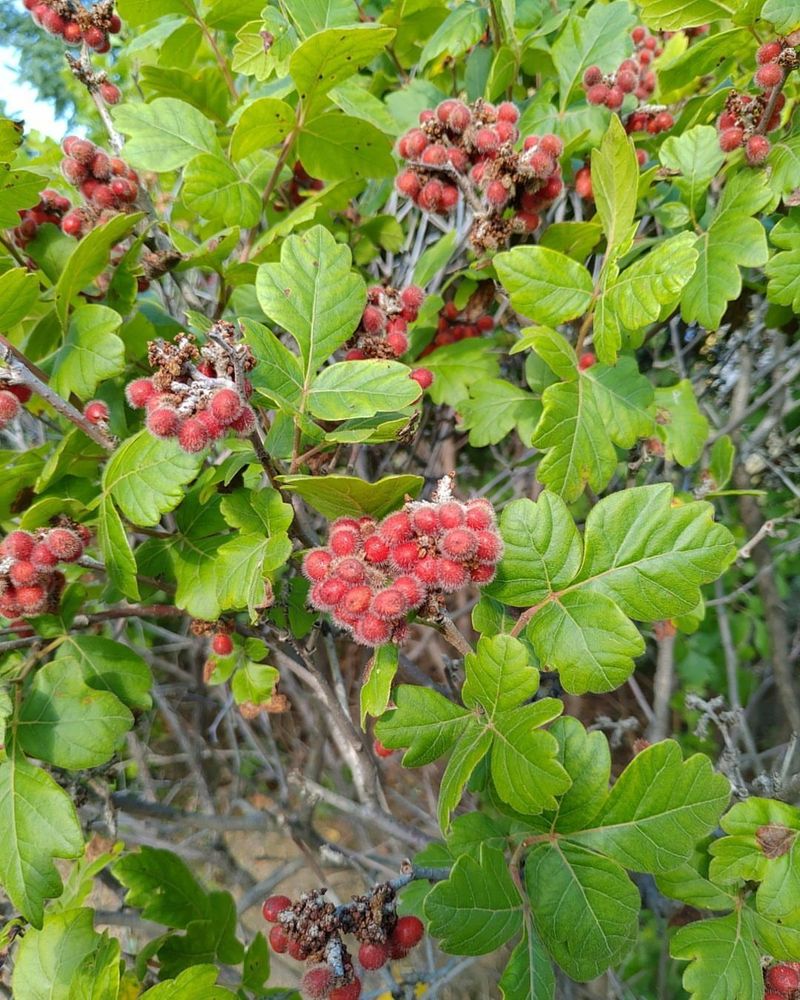
Fragrant Sumac is one of the most reliable native shrubs for landscapes that receive little supplemental water. Once established, it handles hot weather and extended dry periods with very little attention.
While some shrubs begin looking stressed when rainfall becomes scarce, Fragrant Sumac continues producing dense foliage and maintaining a healthy appearance throughout the growing season.
Small yellow flowers appear in early spring before the leaves fully emerge. Female plants can later develop clusters of red berries that attract birds and add another layer of seasonal interest.
Even when it is not flowering or fruiting, the shrub maintains an attractive, natural form that blends easily into both formal and informal landscapes.
A deep and extensive root system helps Fragrant Sumac perform well during dry conditions. Those roots reach moisture below the soil surface, allowing the plant to remain vigorous when shallow-rooted shrubs begin struggling.
Sandy soils, rocky locations, and slopes are all places where it performs particularly well. The strong root system also helps stabilize soil, making it a useful choice for erosion-prone areas.
Full sun encourages the strongest growth, although partial shade is also suitable. Very little pruning is needed beyond occasional shaping.
Established plants rarely require fertilizer and generally adapt well to challenging growing conditions. Wildlife benefits from the shelter provided by the dense branching structure, while birds frequently visit plants that produce berries.