This Is The Tiny Pest Destroying Texas Crape Myrtles From The Inside Out This Summer
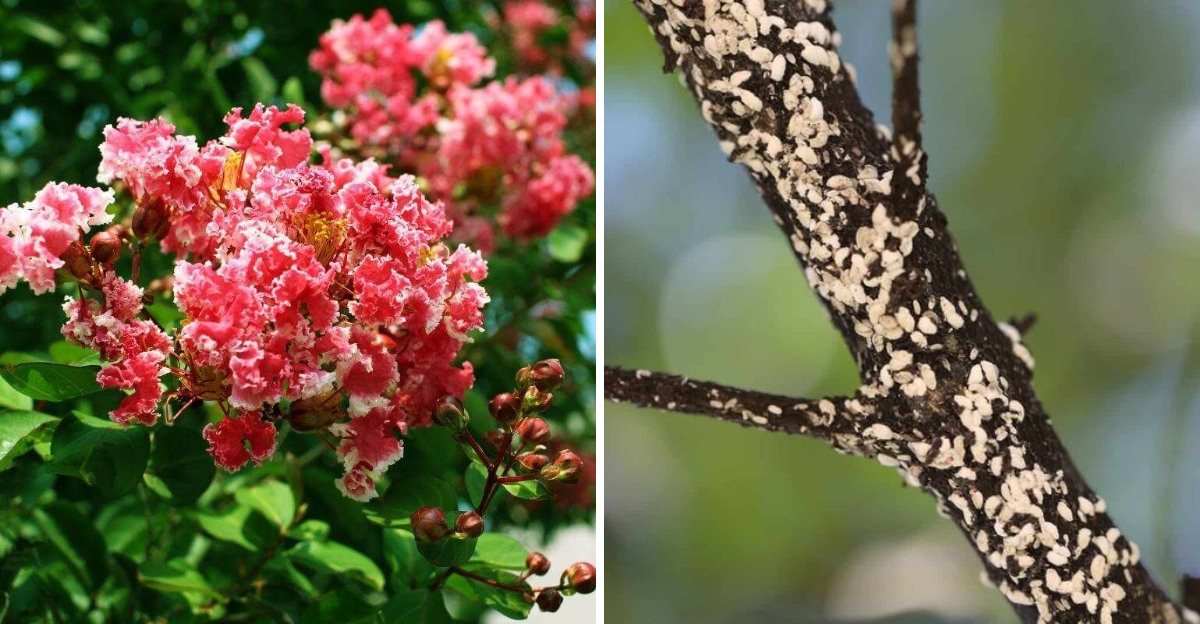
Crape myrtles are supposed to be the easy win of the Texas summer landscape. Bold color, reliable growth, minimal fuss.
And yet lately, homeowners across the state have been walking outside to find sticky patios, darkened bark, and trees that look genuinely stressed during what should be their best months of the year.
What is going on?
Meet crapemyrtle bark scale, a tiny pest that has been quietly making its way through Texas landscapes and causing a whole lot of frustration along the way.
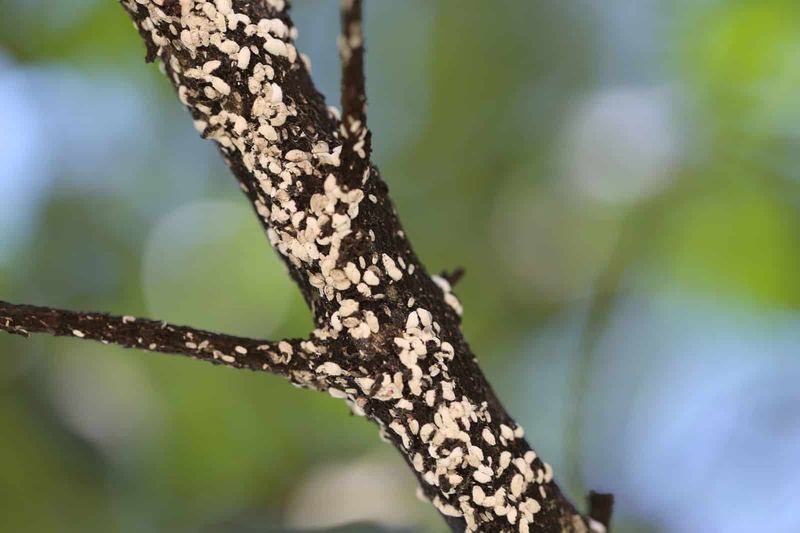
Those white felt-like bumps coating trunks and branches are its calling card, and the sticky honeydew it leaves behind eventually turns into black sooty mold that makes everything look terrible.
The good news is that understanding exactly what you’re dealing with is the first and most important step toward getting your trees looking great again.
1. White Felt-Like Bumps Are The First Clue
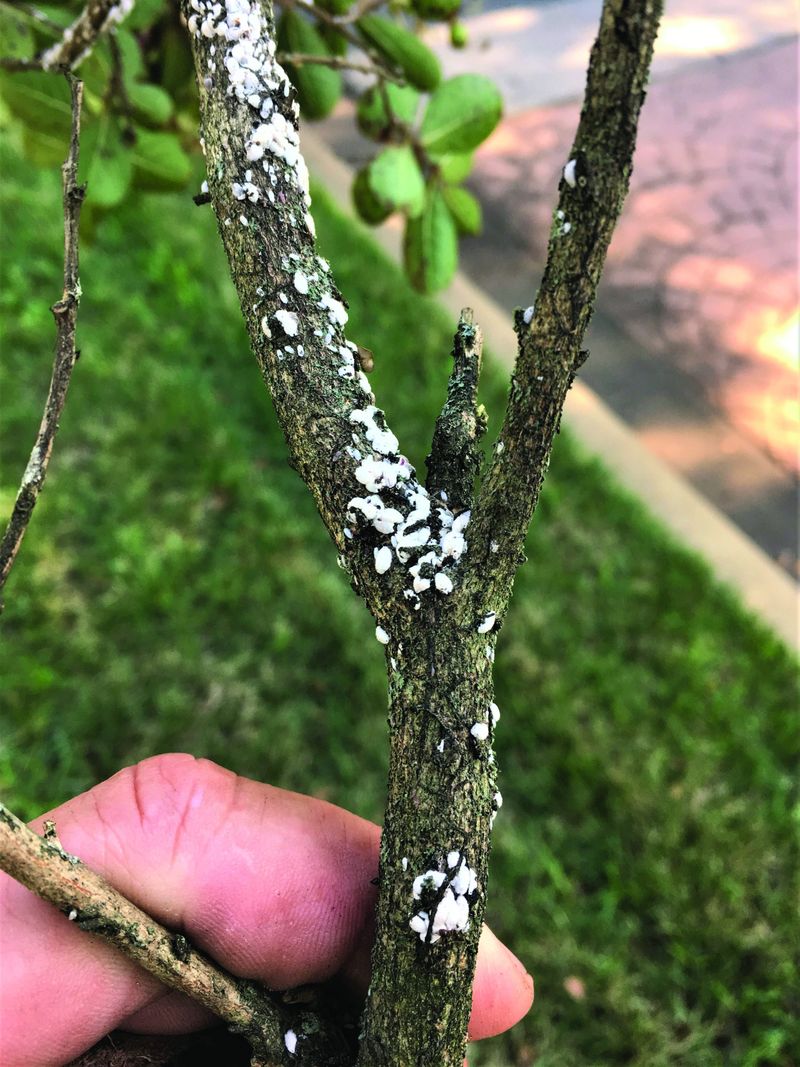
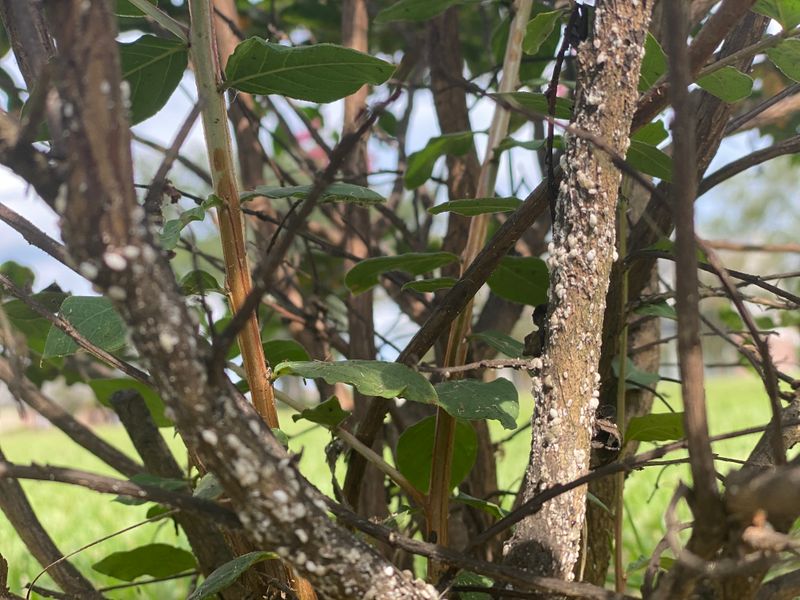
Spotting small white or gray bumps clustered along the bark of a crape myrtle is often the first sign that something is off. These bumps are not a fungus or a mineral deposit from irrigation water.
They are crapemyrtle bark scale insects, and they attach themselves firmly to bark, feeding on the tree while protected under a waxy, felt-like coating.
The bumps can appear on trunks, main branches, and smaller stems throughout the canopy. In Texas summers, when trees are actively growing and putting out new foliage, the scale can spread quickly if conditions favor a buildup.
A single branch may show only a few clusters at first, but over weeks the coverage can expand noticeably.
Up close, the bumps look almost cottony or powdery. If you press one gently, a pink or reddish fluid may appear, which is a reliable indicator that crapemyrtle bark scale is the culprit rather than another type of scale or harmless bark texture.
Catching this early makes managing the infestation much more straightforward before the population spreads to surrounding branches and neighboring trees.
2. Branch Crotches And Pruning Cuts Hide The Pest
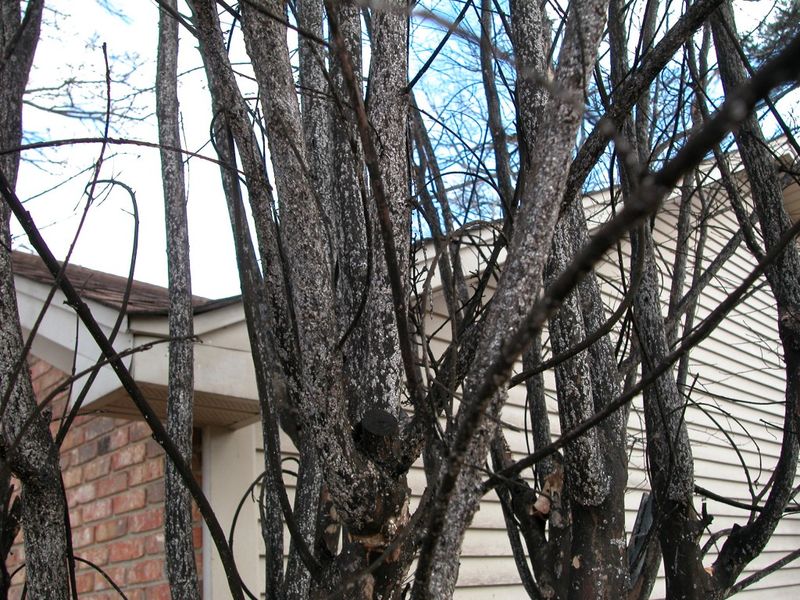
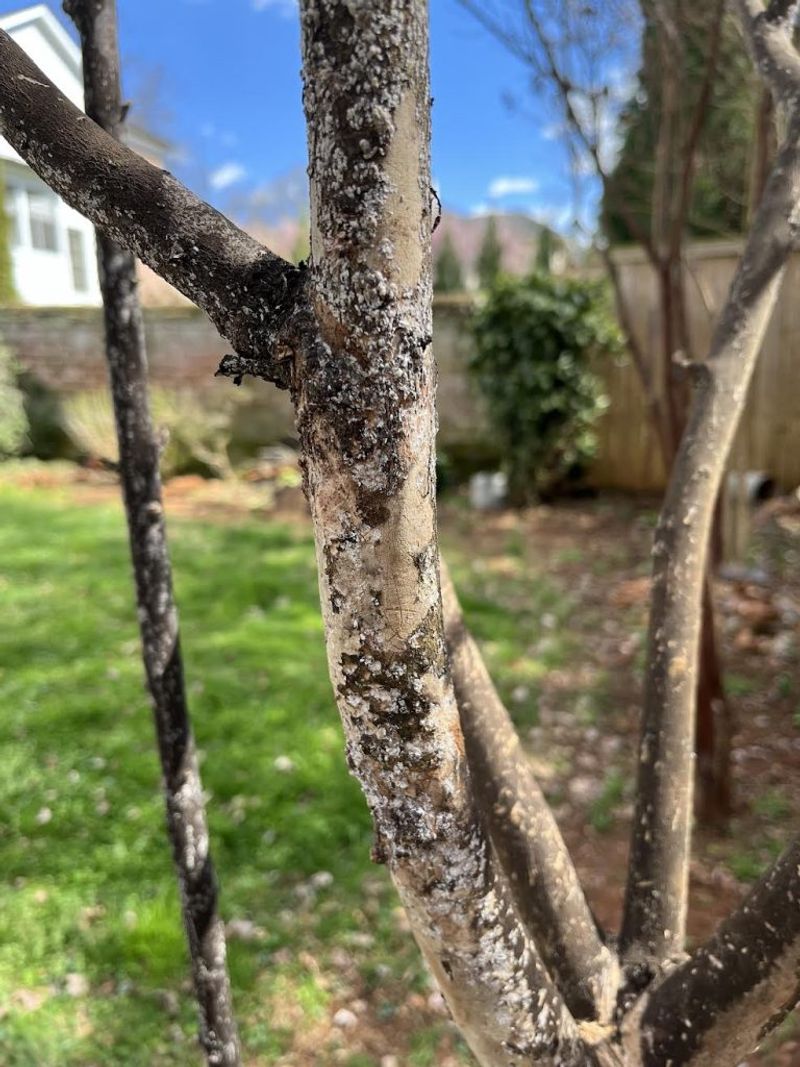
One of the trickiest things about crapemyrtle bark scale is where it tends to gather. Branch crotches, the tight angles where two limbs meet, and old pruning cuts are favorite hiding spots for scale colonies.
These areas offer shelter from weather and natural predators, giving the pest a comfortable place to settle and feed.
Many Texas homeowners prune their crape myrtles heavily each spring, a practice sometimes called “crape murder” by horticulturists.
Those fresh cuts and rough stubs create extra surface area where scale insects can establish themselves before the tree even has a chance to push out new growth.
Over time, heavy pruning combined with scale pressure can leave trees looking worn and struggling.
When inspecting a crape myrtle, pay close attention to where branches fork and where old cuts have left rough or uneven bark. Scale colonies in these spots can be easy to miss during a quick glance from the sidewalk.
Getting close to the tree and looking at the bark from multiple angles gives a much clearer picture of how widespread the infestation may be before deciding on a management approach.
Your Texas Garden Changes Every Week. Your Plan Should Too.
Gardening in Texas changes quickly throughout the season. Every Friday you’ll receive a simple weekly plan showing exactly what to plant, prune, fertilize, harvest, and protect so you never miss the right timing.
3. Sticky Honeydew Leads To Black Sooty Mold
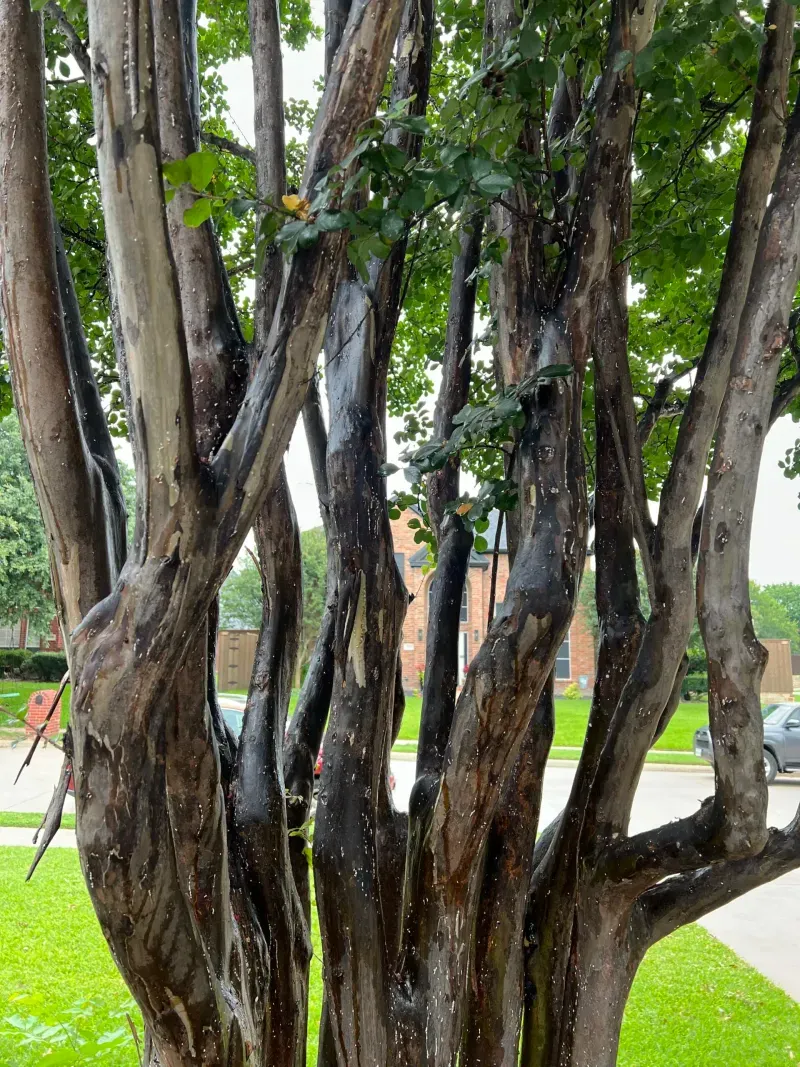
A sticky patio or driveway beneath a crape myrtle is a familiar frustration for many Texas homeowners during summer. That stickiness comes from honeydew, a sugary liquid that scale insects excrete as they feed on the tree.
It drips onto surfaces below, including patio furniture, sidewalks, and parked cars.
Once honeydew coats bark and leaves, a sooty black fungus called sooty mold begins to grow on top of it. The mold itself does not directly feed on the tree, but it can coat leaf surfaces and reduce the amount of sunlight the foliage absorbs.
Over time, a heavily coated tree can look dark, grimy, and far less vibrant than it should during peak summer bloom season.
In Texas, where summer heat and humidity can create ideal conditions for both pest activity and fungal growth, sooty mold can spread across an entire canopy if the scale population goes unmanaged.
Addressing the scale infestation is the key step, because once honeydew production slows down, the sooty mold gradually weathers away on its own.
Washing bark and foliage with water can help speed up the process on smaller trees.
4. Heavy Infestations Can Reduce Crape Myrtle Blooms
Faded, sparse, or delayed blooms on a crape myrtle during the height of a Texas summer are worth paying attention to.
While drought stress and improper pruning can also affect flowering, a significant scale infestation can put enough pressure on a tree to reduce its blooming potential over time.
Crapemyrtle bark scale feeds on the phloem, the layer of tissue just beneath the bark that moves sugars and nutrients through the tree.
When large numbers of scale insects are feeding simultaneously, the tree may redirect energy toward managing that stress rather than producing the full flush of summer flowers that Texas gardeners look forward to each year.
It is worth noting that bloom reduction from scale alone may not be dramatic in mild cases, but trees dealing with both scale pressure and other stressors like poor soil, limited water, or heavy pruning may show more noticeable effects on flowering.
Keeping an eye on bloom quality from one season to the next can help homeowners detect problems earlier.
A crape myrtle that blooms less vigorously than it used to, alongside darkened bark or sticky residue, is a good reason to look more closely at the trunk and branches.
5. Aphids Can Cause Similar Sooty Mold Problems
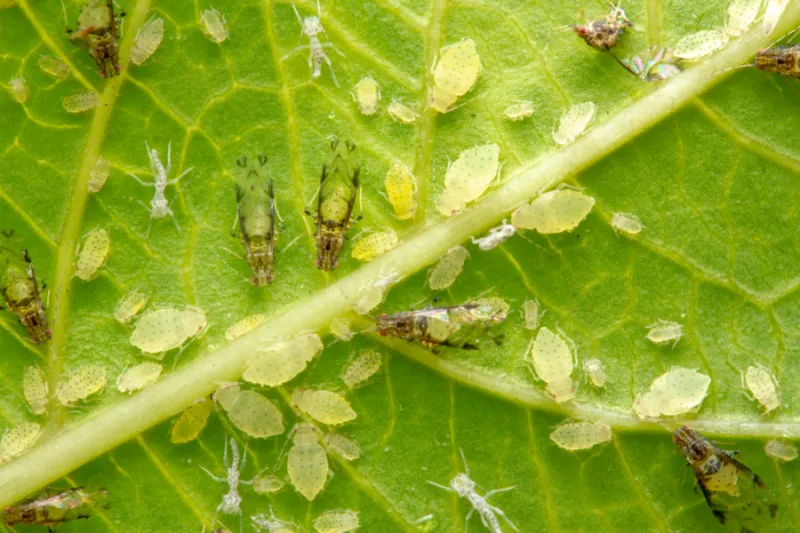
Not every case of sooty mold on a crape myrtle points to bark scale. Aphids are another common culprit, and they tend to show up on the softest, newest growth at the tips of branches during warm months.
Like scale insects, aphids feed on plant sap and produce honeydew that leads to sooty mold buildup.
Crape myrtle aphids are small, pale yellow-green insects that cluster in large groups on tender stems and the undersides of leaves.
A quick look at the newest growth, especially in late spring and early summer when aphid populations tend to spike, can confirm whether aphids are contributing to the sticky mess and dark coating showing up on the tree.
Both aphids and bark scale can sometimes be present on the same tree at the same time, which is why identifying the specific pest before choosing a treatment matters.
Aphid populations are often managed by natural predators like ladybugs and lacewings, and a heavy-handed pesticide response can actually reduce those beneficial insects.
Checking the bark separately for the felt-like white bumps of scale while also examining new growth for aphid colonies gives the clearest picture of what is actually going on in a Texas yard.
6. Checking The Bark Helps Confirm The Issue
Before reaching for any treatment, taking a few minutes to inspect the bark carefully can save a lot of time, money, and effort.
Walking up to the crape myrtle and looking closely at the trunk, main branches, and branch crotches gives a much more accurate read of what is actually happening than a quick glance from the driveway.
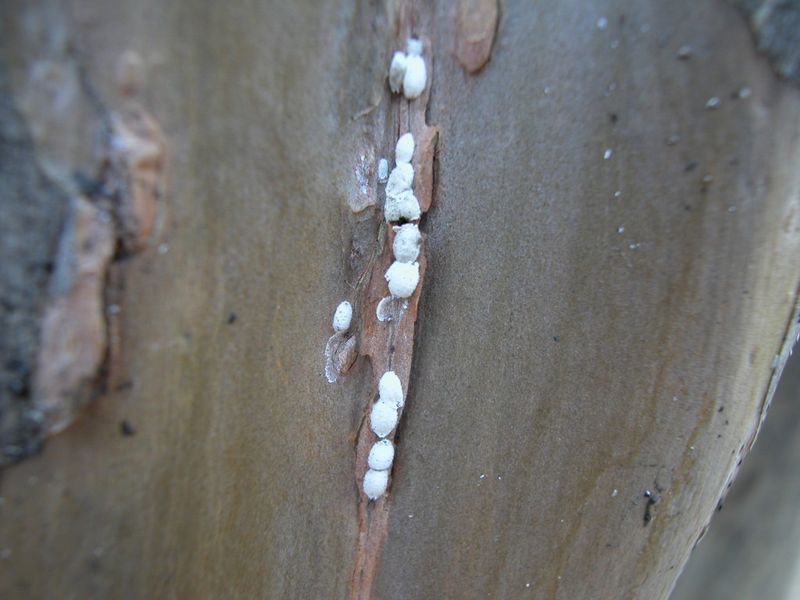
Look for white or grayish felt-like patches or bumps pressed tightly against the bark surface. Run a fingernail lightly over a suspicious spot.
If the bump smears a pinkish or reddish color, that is a strong indicator of crapemyrtle bark scale.
If the bumps are hard and more shell-like without any pink fluid, a different type of scale insect may be involved, which could call for a slightly different management approach.
Also check for the presence of ants on the trunk and branches. Ants are drawn to honeydew and will sometimes protect scale colonies from natural predators in exchange for access to that sugary resource.
Noticing ants moving up and down the trunk is another helpful clue that a honeydew-producing pest is active.
In Texas, where warm weather extends the pest season well into fall, early identification gives homeowners the best window for effective management.
7. Scrubbing Small Infestations Can Help
Catching a bark scale infestation early, when the population is still limited to a few branches or a small section of trunk, opens the door to a more hands-on approach before reaching for chemical treatments.
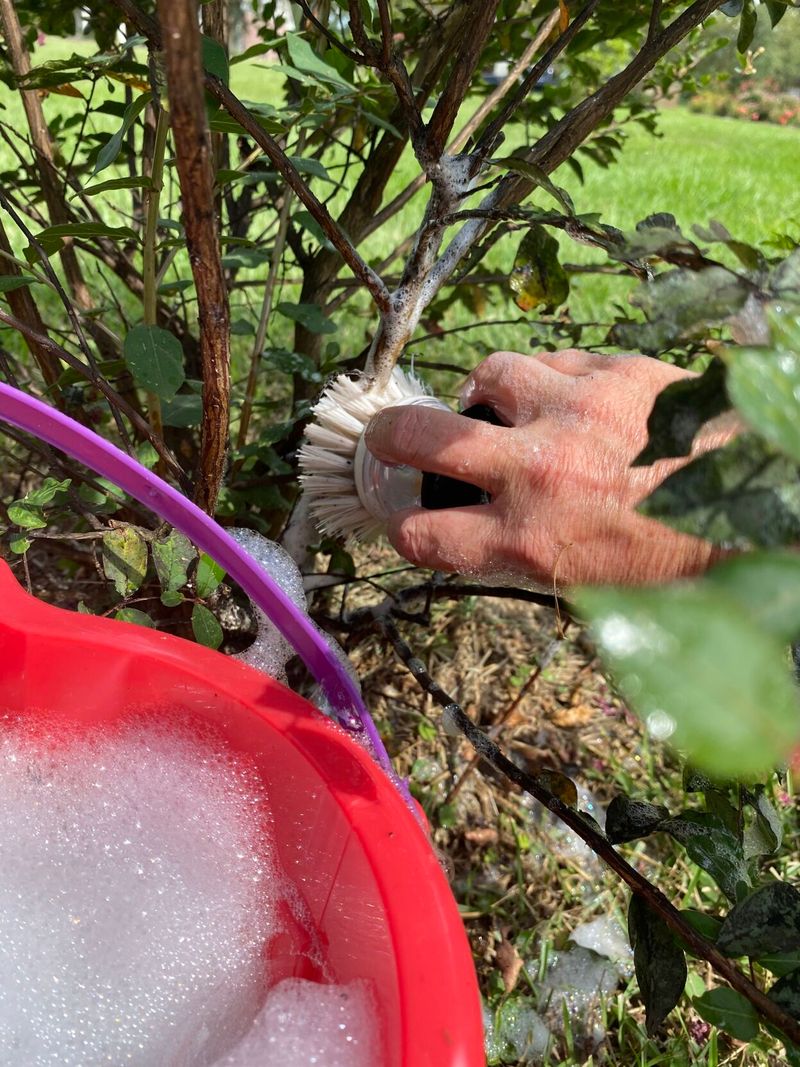
Physical removal using a soft brush and a mild soapy water solution can reduce scale numbers on accessible areas of the tree.
Scrubbing gently along the bark dislodges the waxy protective coating and the insects beneath it. Rinsing the area afterward with clean water helps wash away the loosened material.
This method works best on smaller trees or on the lower trunk sections of larger trees where branches are within easy reach without a ladder.
Repeated scrubbing sessions throughout the growing season may be needed because scale populations can rebound if any insects survive the initial treatment. Combining physical removal with monitoring for new activity gives the best results.
It is also worth removing any heavily encrusted bark or damaged wood where scale colonies have built up over multiple seasons, since those areas can serve as a reservoir for reinfestation.
For Texas homeowners who prefer to limit pesticide use in front yards or near pollinator gardens, this method offers a reasonable starting point before moving to other options.
8. Dormant Oil Works Best During Winter
Horticultural oil, sometimes called dormant oil when applied during the dormant season, is one of the more widely recommended tools for managing crapemyrtle bark scale.
Applying it during late winter, after the tree has dropped its leaves and before new growth begins in spring, allows thorough coverage of the bark without risking damage to tender new foliage.
The oil works by smothering scale insects and their eggs, disrupting their ability to breathe and survive on the bark surface.
Getting full coverage of the trunk, main branches, and branch crotches is important because any missed spots can allow the population to recover once temperatures warm up.
A second application within a few weeks can improve results if the first pass did not reach all affected areas.
In Texas, the window for dormant oil application typically falls somewhere between late December and late February, depending on local weather patterns.
Applying oil when temperatures are expected to dip below freezing within a day or two is generally not recommended, as it may affect the tree.
Reading product labels carefully and following application rates helps ensure the treatment is used safely and effectively.
Dormant oil alone may not eliminate a heavy infestation but can meaningfully reduce population levels heading into the growing season.
9. Systemic Treatments Need Careful Timing
Systemic insecticides, particularly those containing imidacloprid, are sometimes used for more severe crapemyrtle bark scale infestations.
These products are applied as a soil drench around the base of the tree, where roots absorb the active ingredient and carry it throughout the plant’s vascular system.
Scale insects feeding on the bark then ingest the treated plant tissue.
Timing matters a great deal with systemic treatments. Applying them when crape myrtles are actively blooming raises concerns about potential exposure to pollinators, including bees, that visit the flowers.
For this reason, many extension horticulturists suggest applying soil drench treatments in fall after bloom has ended, or in early spring before the tree begins to flower, to reduce the risk of pollinator impact.
Systemic treatments may take several weeks to move through the tree and reach effective concentrations in the bark tissue, so patience is part of the process. A single application may not clear a heavy infestation within the same season.
In Texas, where scale pressure can persist through a long warm season, following up the next dormant period with a horticultural oil application can help keep population levels down.
Always read and follow label directions, since pesticide labels carry legal weight and provide critical safety guidance.
10. Healthy Tree Care Supports Recovery
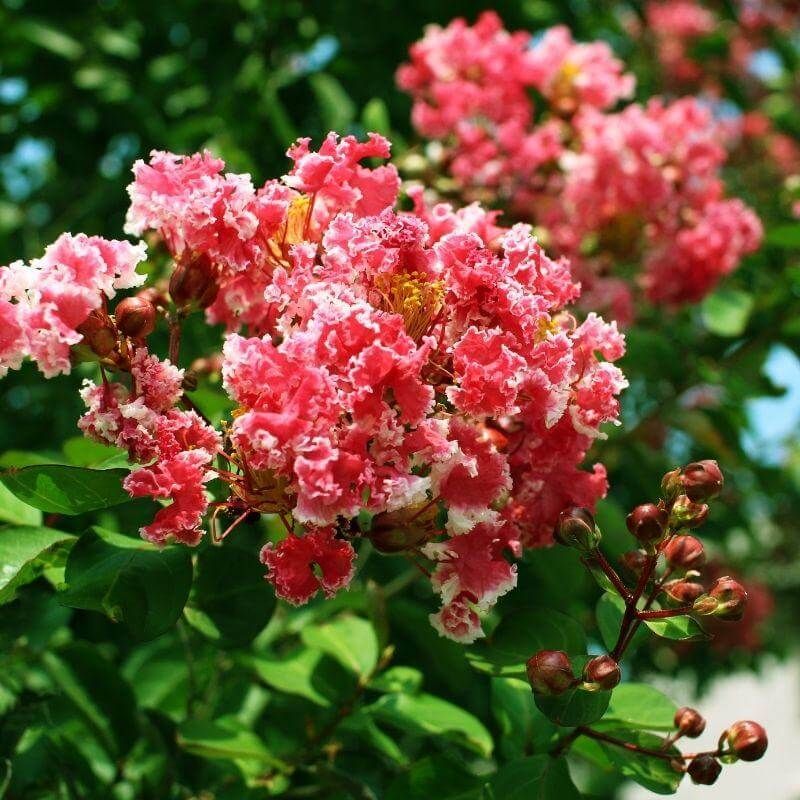
A crape myrtle that is otherwise healthy has a much better chance of bouncing back from a bark scale infestation than one already dealing with drought stress, compacted soil, or poor nutrition.
Supporting the tree’s overall health is not a replacement for pest management, but it works alongside treatment to help the tree recover and maintain its vigor through a Texas summer.
Watering deeply and consistently during dry stretches helps crape myrtles handle the added stress of pest pressure.
Applying a layer of mulch around the base of the tree, keeping it a few inches away from the trunk, helps retain soil moisture and moderate soil temperature during the hottest weeks of the year.
Avoiding heavy or improper pruning reduces the number of fresh wound sites where scale insects tend to establish.
Fertilizing should be done thoughtfully, since excessive nitrogen can push out a flush of soft new growth that attracts more aphids and scale activity. A soil test can help determine whether the tree actually needs supplemental nutrients.
Over time, crape myrtles that receive steady, sensible care tend to show fewer pest problems overall.
Keeping up with regular bark inspections through the season means catching any new scale activity early, before it has a chance to build into a larger problem.