Signs Your Michigan Apple Tree Has Fire Blight And What To Do Before It Destroys The Branch
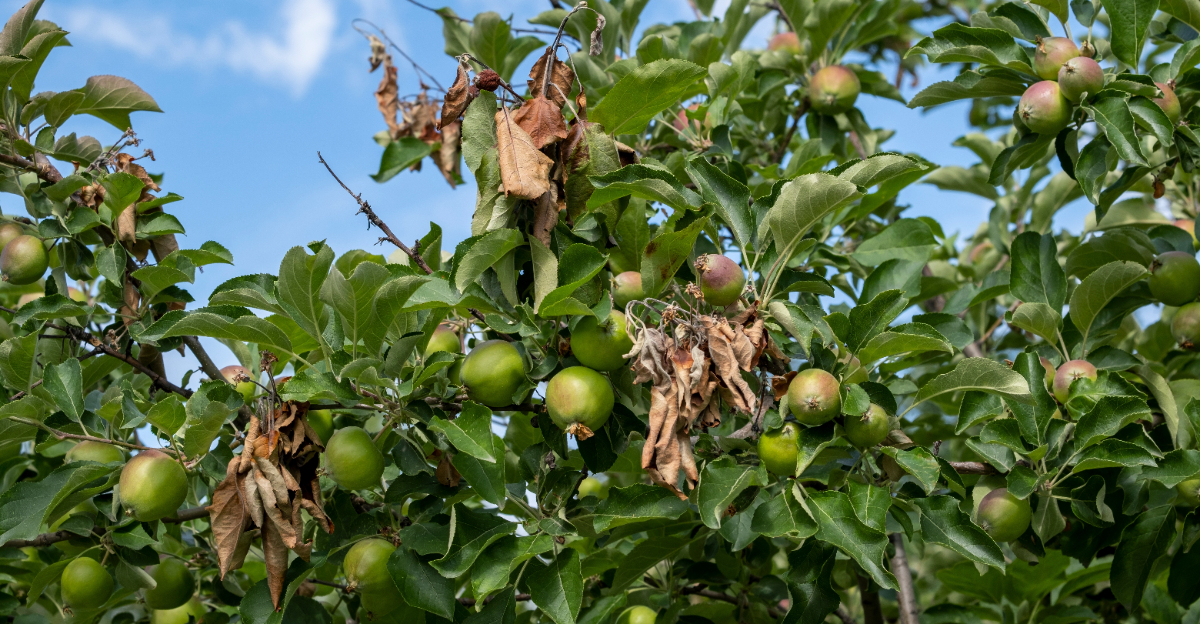
Fire blight has a way of appearing almost overnight, and by the time most Michigan gardeners recognize what they are looking at, it has already moved further into the tree than it appears on the surface.
The bent, blackened shoot tips that give this disease its name are just the most visible part of a problem that travels fast through branches and can reach the main structure of the tree if nothing is done quickly.
Michigan’s wet springs create near-perfect conditions for fire blight to spread, which means knowing how to spot it early and respond correctly is genuinely important for anyone growing apple trees.
Acting at the right moment with the right technique is what keeps a manageable problem from turning into a much more serious one.
1. Wilting Shoots With Shepherd’s Crook Shape
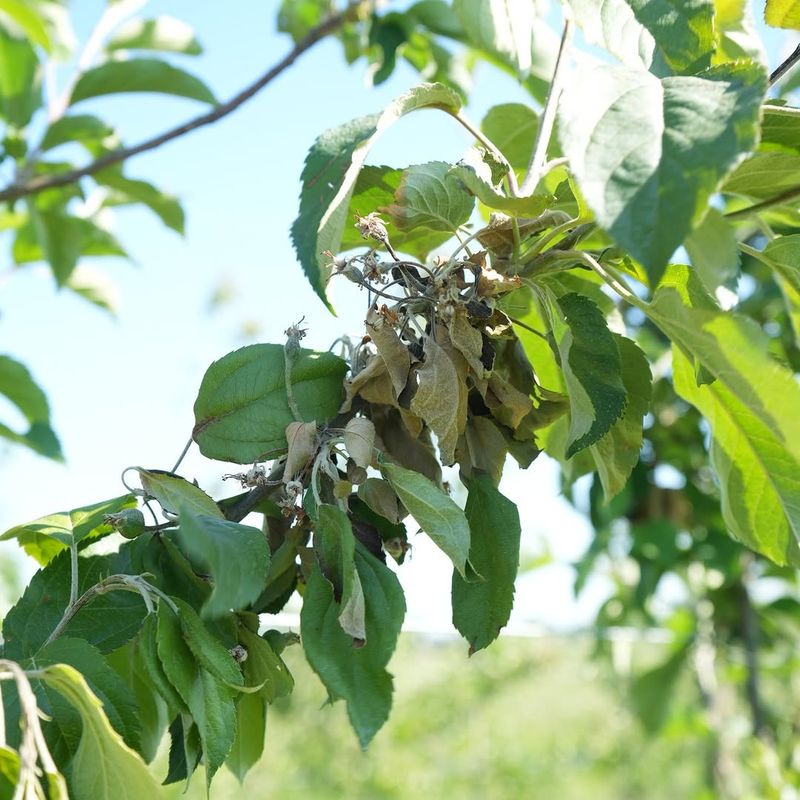
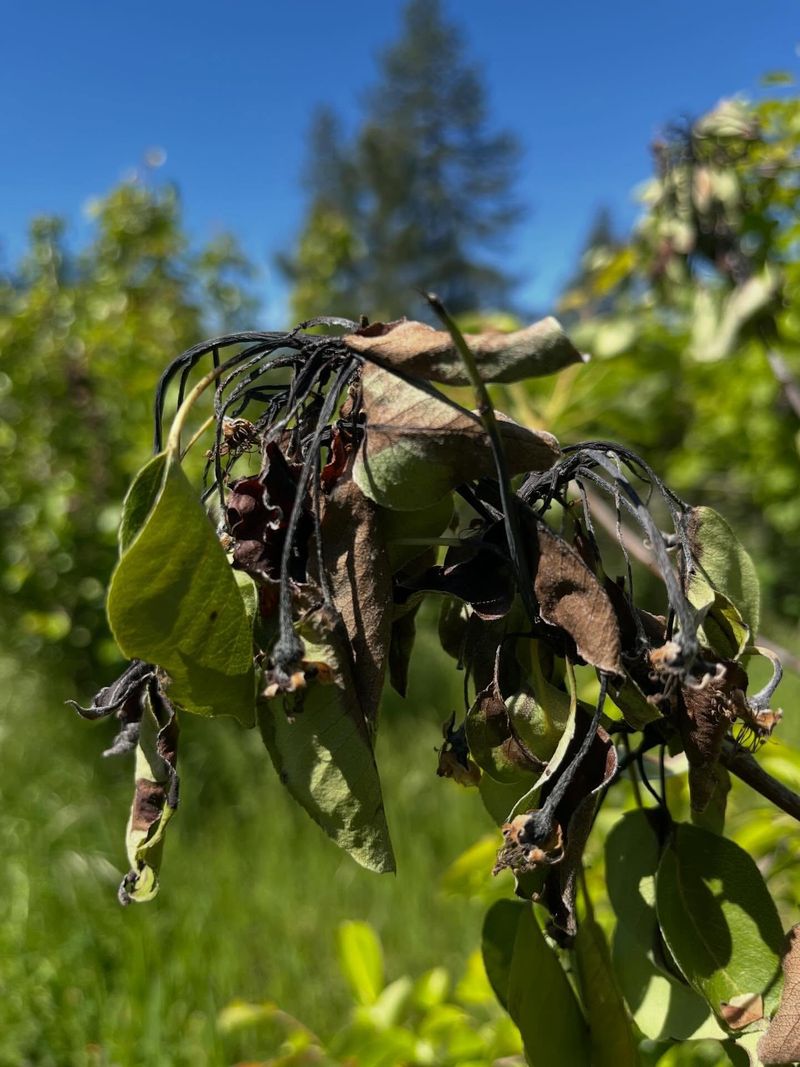
Picture the tip of a healthy green shoot suddenly bending downward like a walking cane. That curled, drooping shape is one of the earliest and most recognizable signs of fire blight on Michigan apple trees.
It happens because the bacterium Erwinia amylovora moves into young, tender tissue and disrupts the flow of water and nutrients almost immediately.
Young shoots are especially vulnerable during spring when new growth is soft and the weather turns warm and wet. Once the bacteria enter through natural openings or tiny wounds, they travel down the shoot rapidly.
The tip wilts and curves before you even notice anything else is wrong.
Acting fast at this stage makes a huge difference. Prune the affected shoot at least 8 to 12 inches below where the crook begins, cutting into healthy wood.
Always sterilize your pruning shears with a 70 percent isopropyl alcohol solution or a 10 percent bleach solution between every single cut. Bag and remove the pruned material from your yard entirely rather than leaving it on the ground.
Catching this symptom early, before the infection moves further down the branch, is truly your best opportunity to stop the spread and protect the rest of your tree.
2. Brown Or Blackened Leaves Still Attached To The Branch
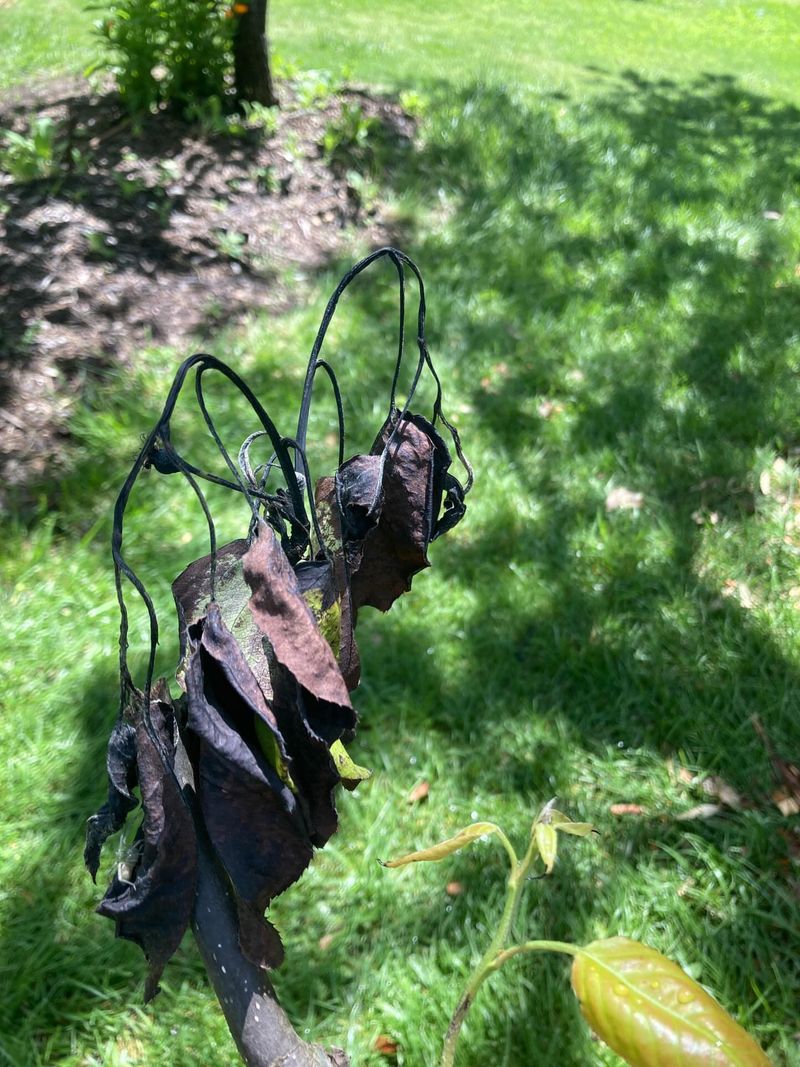
Normally, leaves fall off when something goes wrong with a tree. Fire blight breaks that rule in a striking way.
Infected leaves turn brown or black but stay stubbornly attached to the branch, clinging on even as they wither completely. That persistent, scorched appearance is a major clue that separates fire blight from other problems like frost damage or leaf scorch.
Michigan springs are unpredictable, with late frosts and sudden warm spells creating confusion for growers.
Frost-damaged leaves tend to turn pale or translucent before dropping off, while drought scorch usually starts at the leaf edges and progresses slowly.
Fire blight browning is faster, darker, and concentrated on shoots that were actively growing when infection hit.
Walk your orchard or backyard regularly during bloom season and the weeks right after. Look specifically for clusters of blackened leaves that remain on the branch rather than falling.
If you find them alongside wilted shoot tips, that combination strongly points to fire blight. Remove affected branches promptly, cutting well below the visible browning into clean, healthy wood.
Your Michigan Garden Changes Every Week. Your Plan Should Too.
Gardening in Michigan changes quickly throughout the season. Every Friday you’ll receive a simple weekly plan showing exactly what to plant, prune, fertilize, harvest, and protect so you never miss the right timing.
Sterilize your tools after every cut without exception. Leaving infected material on the tree only gives the bacteria more time and opportunity to advance further into the branch structure.
3. Oozing Cankers On Twigs And Stems
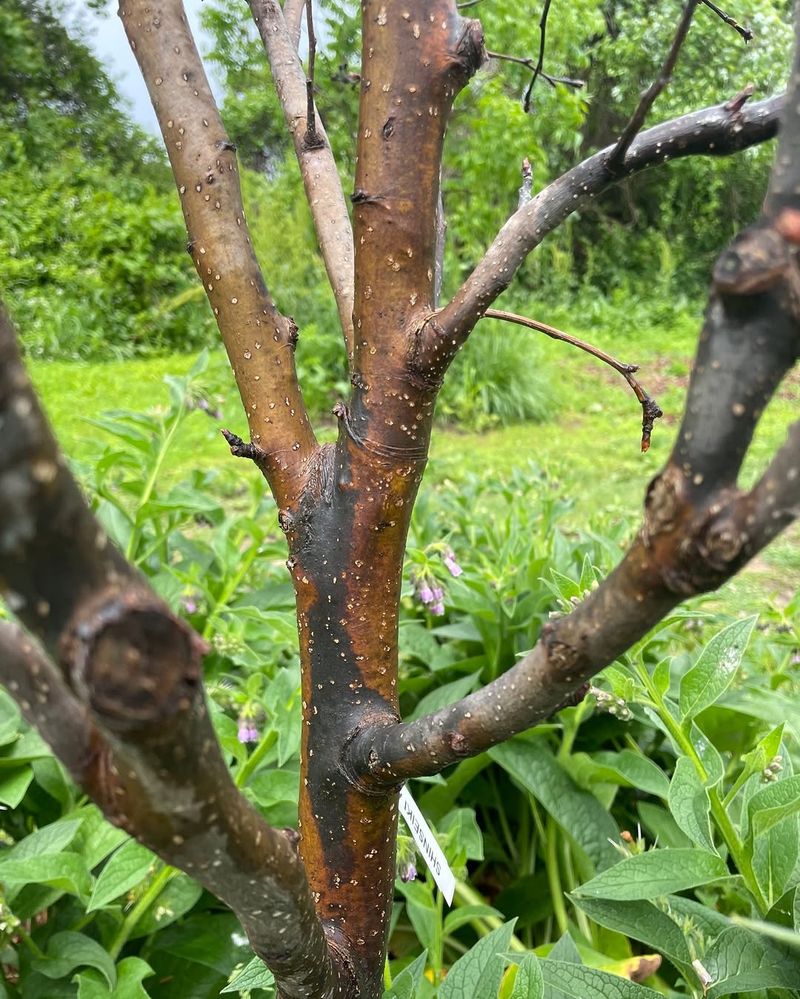
There is something almost alarming about seeing liquid seeping from tree bark, and for good reason.
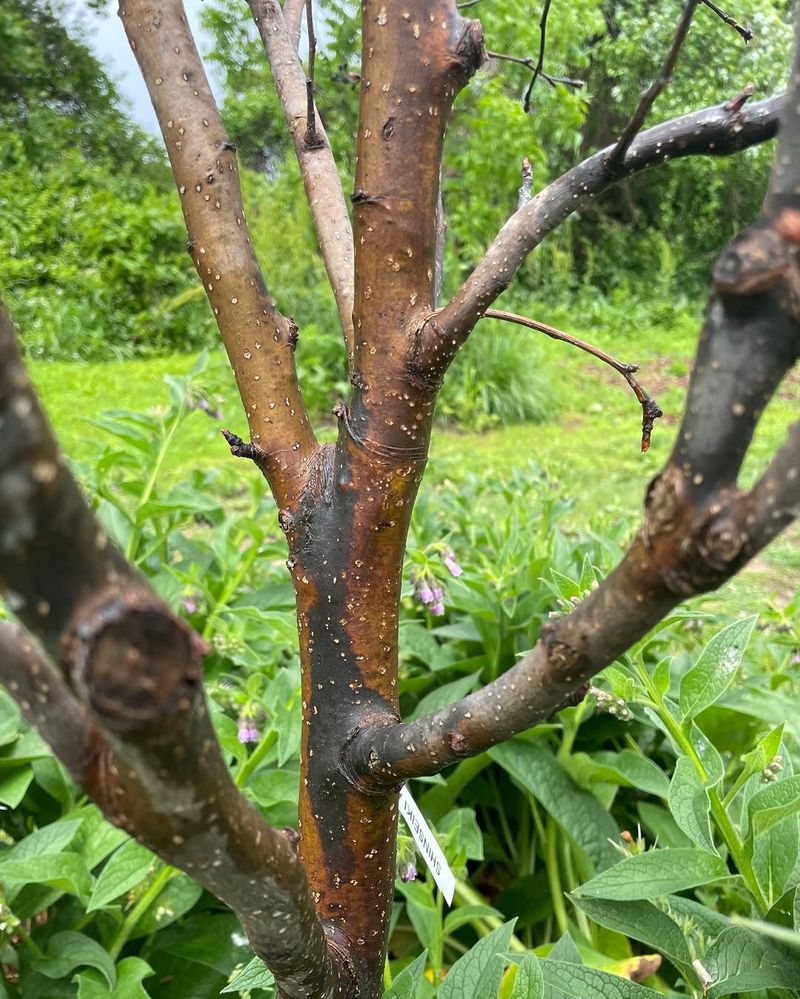
Bacterial cankers caused by fire blight often produce a watery, amber-colored ooze on the surface of infected twigs and stems, particularly during warm and wet spring weather.
This ooze is packed with active bacteria, making it one of the most dangerous stages of the disease from a spread perspective.
Cankers appear as sunken, discolored areas on the bark, often with a water-soaked look at the edges. Rain, insects, and even pruning tools can carry the ooze from one part of the tree to another or spread it to neighboring trees.
In Michigan, the combination of spring rains and temperatures between 65 and 86 degrees Fahrenheit creates ideal conditions for canker development and bacterial activity.
Spotting a canker early allows you to take action before it girdles the entire branch. Prune back at least 8 to 12 inches below the visible canker margin, cutting into wood that looks and smells healthy.
Sterilize your cutting tools between every single cut using alcohol or a diluted bleach solution. Dispose of all infected wood away from your garden area.
Copper-based bactericide sprays applied during early symptom development can also help limit the spread when used alongside careful pruning practices.
4. Blossom And Fruit Infection Signs
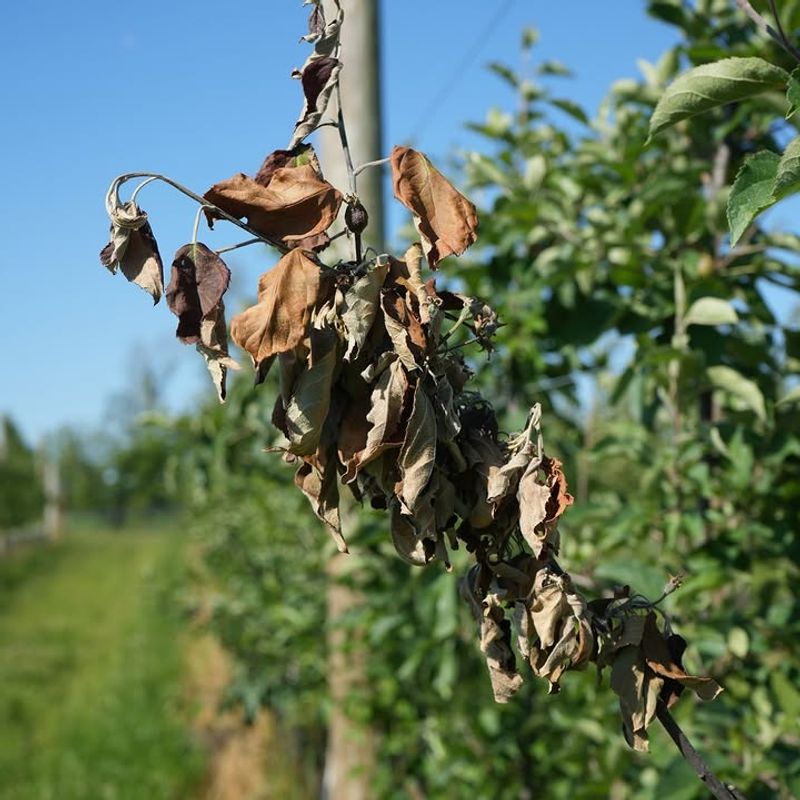
Bloom season is one of the most exciting times in any apple orchard, but it also opens a window of serious vulnerability.
Fire blight bacteria enter apple blossoms through the flower’s natural openings, and once inside, they can move quickly into the fruiting spur and beyond.
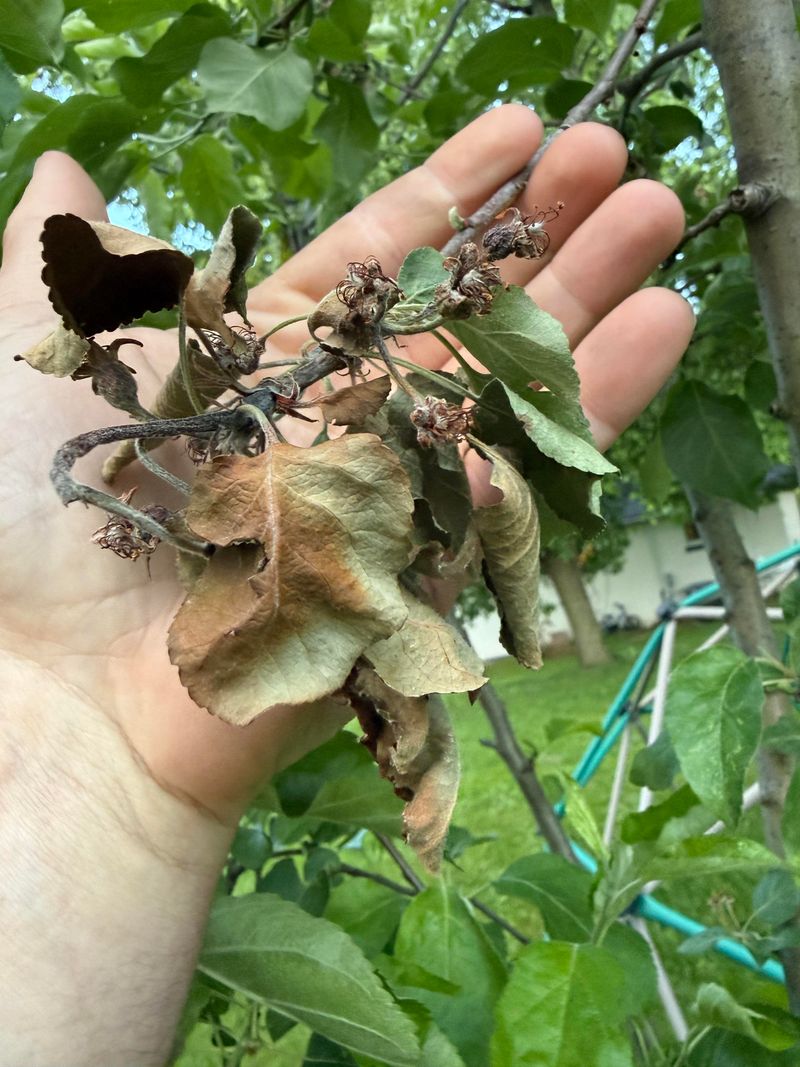
Infected blossoms turn water-soaked, then brown, then almost black, collapsing entirely while still attached to the branch.
Young fruitlets are equally susceptible. Small developing apples may turn dark and shrivel up, often remaining attached to the tree through summer, creating what growers sometimes call mummies.
These infected fruits and blossoms are not just cosmetic problems. They serve as active reservoirs for bacteria that can reinfect the tree during wet weather.
Michigan bloom season typically runs from late April through May depending on the variety and location. During that window, inspect your trees every few days, especially after rain.
Remove any blossoms or young fruits showing signs of browning or wilting as soon as you spot them. Clip the entire infected spur back to healthy wood and sterilize your tools each time.
Applying a copper-based bactericide or fixed copper spray at early pink bud stage through petal fall, following Michigan State University Extension guidelines, adds an important protective layer during this high-risk period for your trees.
5. Rapid Spread During Warm And Humid Conditions
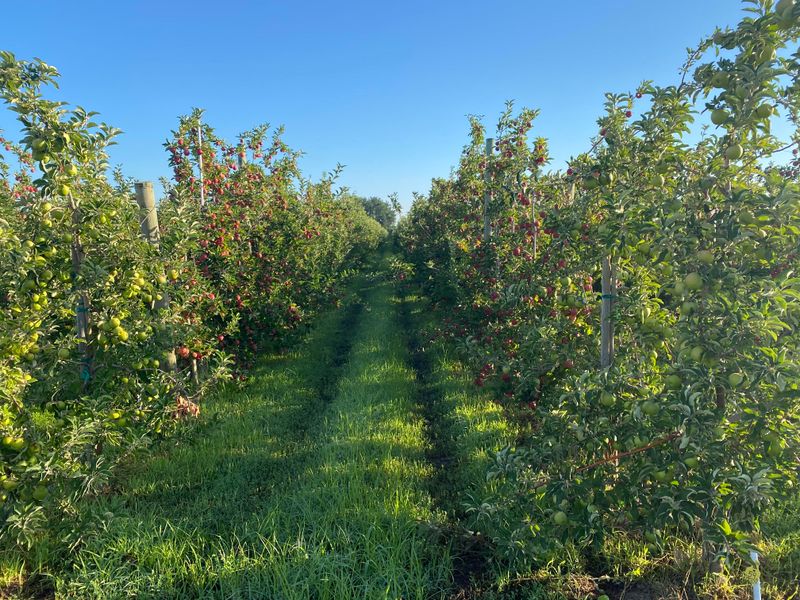
Fire blight does not move slowly. Under the right conditions, it can race through an apple tree and jump to neighboring trees within days.
Michigan’s spring weather, with its mix of warm temperatures, heavy rains, and high humidity, creates almost perfect conditions for Erwinia amylovora to multiply and spread aggressively.
Temperatures between 65 and 86 degrees Fahrenheit combined with wet surfaces are all this bacterium needs to thrive.
Insects, especially bees and other pollinators, can unknowingly carry bacteria from infected blossoms to healthy ones as they move through your orchard. Wind-driven rain splashes ooze from cankers onto fresh tissue.
Even your own hands and tools can spread the pathogen if you are not careful during routine maintenance tasks.
Staying proactive during warm, rainy stretches is genuinely one of the most effective things you can do. Check your trees every two to three days when temperatures are warm and the weather stays wet.
Pay close attention to new shoot growth and open blossoms, since these are the entry points bacteria prefer. Keep your pruning tools clean and ready, and avoid overhead irrigation that keeps foliage wet for extended periods.
Reducing tree stress through proper watering and mulching also helps the tree maintain stronger natural defenses against bacterial invasion during these high-risk weather windows throughout Michigan’s spring season.
6. Prune Infected Branches Immediately
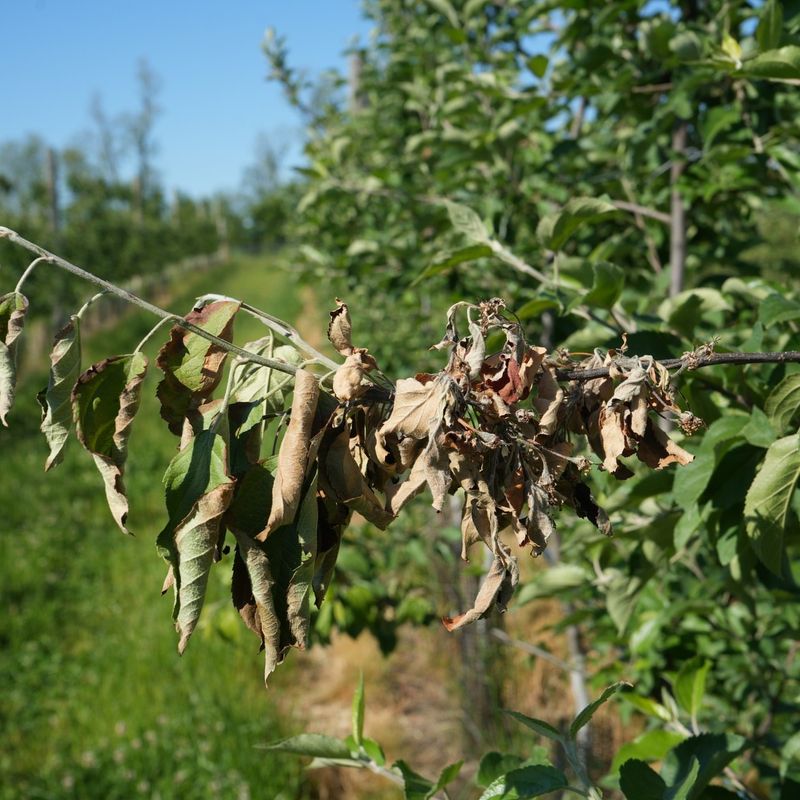
When fire blight takes hold of a branch, waiting is not an option. Pruning infected wood promptly and correctly is the single most effective physical action you can take to stop the disease from advancing further into the tree.
The key is cutting at least 8 to 12 inches below the lowest point where you can see any discoloration or wilting in the wood, always cutting into clean, white, healthy tissue.
Sterilizing your tools between every cut is absolutely non-negotiable. A solution of 70 percent isopropyl alcohol or a mixture of one part household bleach to nine parts water works well for wiping down blades.
Skipping this step even once can drag bacteria from an infected cut directly into healthy wood, spreading the problem instead of solving it. Some growers keep a small spray bottle of sterilizer clipped to their belt for convenience.
Timing matters too. Pruning during dry weather reduces the risk of spreading bacteria through moisture.
Avoid heavy pruning during bloom, since fresh wounds during that period are highly susceptible to new infection. Once you have removed infected material, place it in a sealed bag and dispose of it away from your property entirely.
Do not compost infected wood. Following these practices consistently gives your apple tree a genuine fighting chance to recover and continue producing well into future seasons.
7. Avoid Excess Nitrogen Fertilization
Here is something many home growers do not realize: feeding your apple tree too much nitrogen actually makes it more vulnerable to fire blight.
High nitrogen levels push the tree into producing fast, soft, succulent new growth, and that tender tissue is exactly what the fire blight bacterium targets most aggressively.
More lush growth sounds like a good thing, but in this case it creates an open invitation for infection.
Michigan soils vary widely, and many homeowners apply general-purpose fertilizers without testing whether their trees actually need extra nitrogen.
A simple soil test through Michigan State University Extension can tell you exactly what your soil contains and what your trees genuinely need.
Balanced fertilization that supports steady, moderate growth is far healthier for fire blight resistance than pushing rapid flushes of new shoots.
Switching to a low-nitrogen or balanced fertilizer formula in early summer, after the main flush of spring growth, helps slow down the production of soft tissue at the most vulnerable time of year.
Organic options like compost applied as a top dressing around the root zone provide nutrients more slowly and steadily, supporting strong root health without triggering excessive shoot growth.
Mulching around the base of the tree also helps regulate soil moisture and temperature, reducing overall tree stress and supporting a more balanced, disease-resistant growth pattern through the season.
8. Apply Approved Bactericides At The Right Time
Timing a bactericide application correctly can make the difference between protecting your blossoms and watching an infection take hold.
Copper-based sprays and fixed copper products are among the most widely recommended options for home orchards in Michigan, particularly when applied at the pink bud stage before blossoms fully open.
Streptomycin, a commonly used antibiotic bactericide, requires a pesticide license for commercial use in Michigan but may be available to home growers through specific retail channels.
Check current Michigan Department of Agriculture guidelines before purchasing. Applications work best when made just before or during warm, wet conditions that favor bacterial spread.
Spraying after rain has already started an infection cycle is far less effective than getting ahead of it.
A second application at petal fall can provide additional protection as young fruitlets begin developing. Always read and follow label directions carefully, since over-application can cause its own problems including phytotoxicity on foliage.
Protective sprays are not a substitute for pruning and sanitation, but they add a meaningful layer of defense when timed well.
Rotating between copper products and other approved materials, where label directions allow, reduces the risk of bacterial resistance developing over time.
Keeping a simple spray log with dates and weather conditions helps you build a more effective program year after year and makes it easier to spot patterns in when your trees are most at risk.
9. Monitor Surrounding Trees And Orchards
Fire blight rarely stays in one tree. If one apple tree in your yard shows symptoms, the chances are strong that nearby apple, pear, or crabapple trees are already at risk or showing early signs of their own.
Making a habit of inspecting all susceptible trees in your yard, and even checking what neighbors have growing nearby, gives you a much broader picture of what you are dealing with.
Crabapple trees are especially common in Michigan neighborhoods and landscapes, and they are highly susceptible to Erwinia amylovora.
Many homeowners plant them for their ornamental beauty without realizing they can serve as a source of infection for nearby fruit trees.
A crabapple with fire blight symptoms in a neighboring yard can spread bacteria through insects and rain to your apple trees within the same season.
Walk your entire property at least once a week during spring and early summer. Note which trees show symptoms and how quickly the infection appears to be progressing.
Keeping a simple written log with dates and observations helps you track patterns and make smarter management decisions each year.
Sharing what you observe with neighbors encourages community-wide awareness, which genuinely helps limit the spread across multiple properties.
Early detection across your whole landscape, rather than focusing on just one tree, is what separates growers who manage fire blight successfully from those who struggle with repeated outbreaks season after season.