The Native Texas Alternatives To Crape Myrtles That Birds And Pollinators Actually Love
Crape myrtles are everywhere in Texas, and they deliver reliably on the things most homeowners are looking for, summer color, heat tolerance, and a manageable size that fits residential landscapes without too much intervention.
What they do not deliver particularly well is ecological value. Birds pass them by, and the pollinators that visit are a fraction of what the same space planted with native alternatives would support.
Texas has a genuinely impressive roster of native trees and large shrubs that provide everything crape myrtles offer visually while doing something far more meaningful for the local wildlife that depends on native plants to complete their life cycles.
The birds that nest and forage in Texas yards, and the pollinators that keep gardens productive, are calibrated to native plants in ways they simply are not to ornamentals introduced from other parts of the world.
Choosing natives over crape myrtles in the spots where both would work is one of the more impactful upgrades a Texas yard can get.
1. Texas Redbud
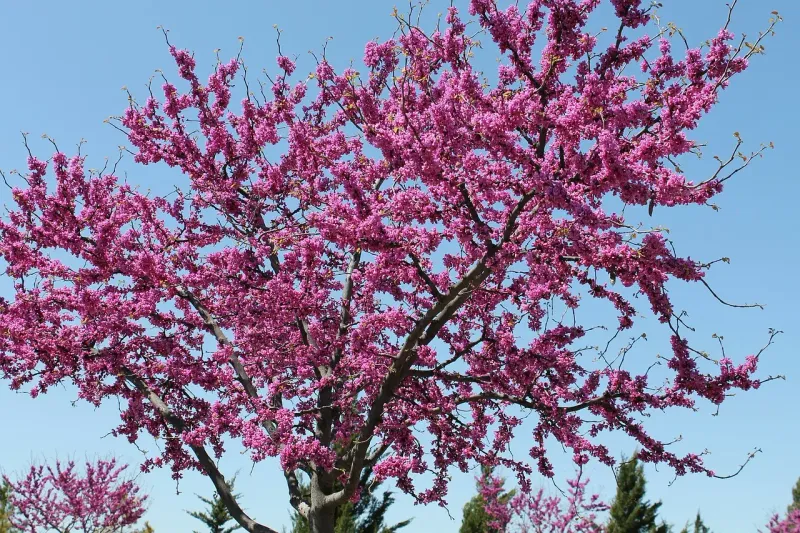
Before the leaves even show up, the Texas Redbud puts on one of the most stunning flower shows in the entire state. Every spring, its bare branches burst into clouds of bright pink-purple blooms that seem almost too beautiful to be real.
It is the kind of tree that makes neighbors stop their cars and stare. Hummingbirds arrive early in spring and make a beeline for those blossoms. Bees and butterflies are not far behind.
The flowers are actually edible and have a slightly sweet, tangy taste that humans enjoy too. Native bees especially love this tree because it blooms so early in the season when not much else is available.
Texas Redbud is a smaller tree, usually growing between 12 and 20 feet tall, which makes it a great fit for most home yards. It handles Texas heat and drought much better than its eastern cousin because it evolved right here.
The heart-shaped leaves that follow the flowers are attractive all summer long and turn yellow in fall.
Planting one near a window or patio means you get a front-row seat to all the wildlife action. It grows well in rocky or clay soils and does not need much fertilizer or fussing.
Give it well-drained soil and a sunny to partly shaded spot, and it will reward you for decades. This tree is proof that native plants can be just as showy as anything from a garden catalog, while doing far more good for the world around them.
2. Mexican Plum
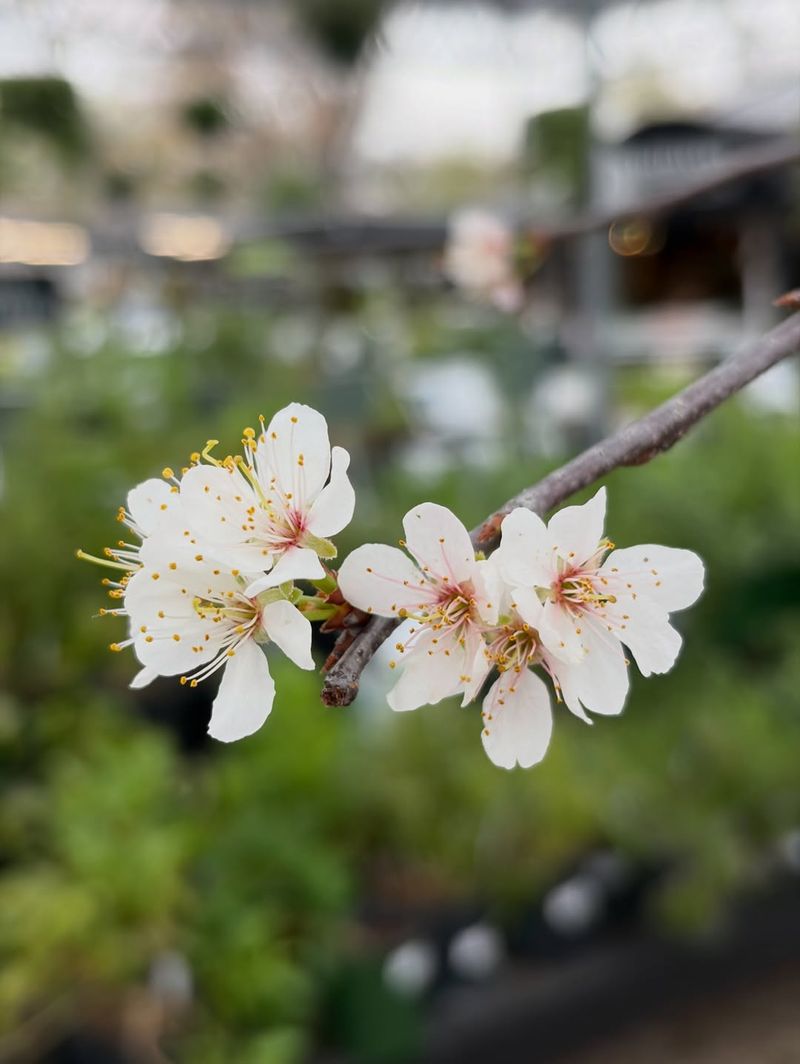
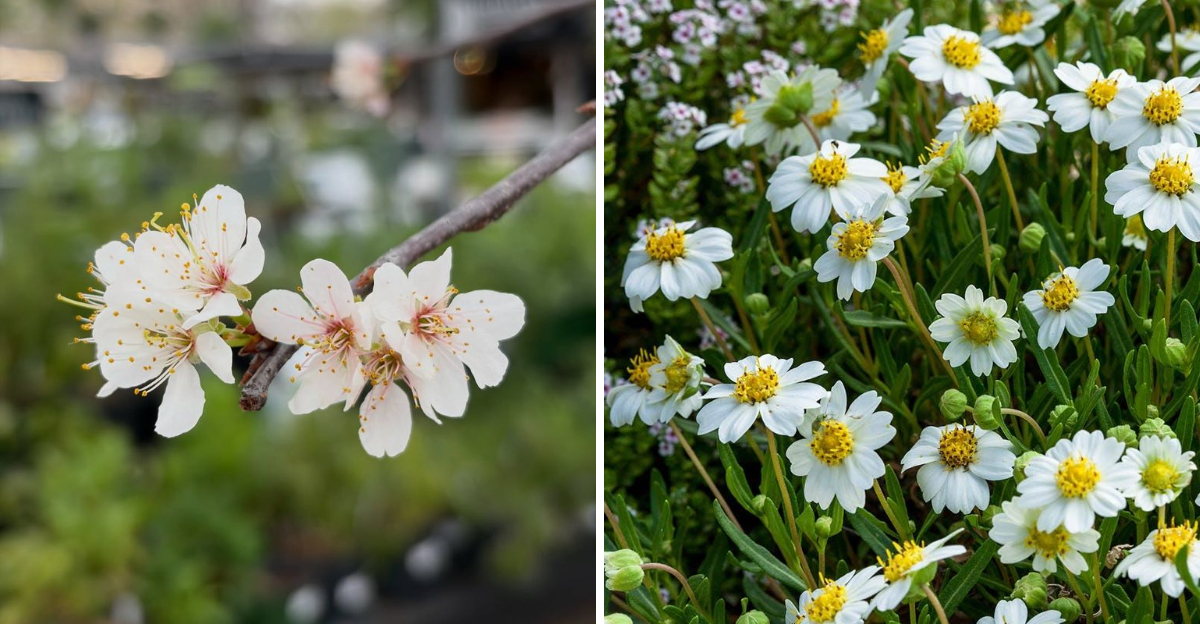
Long before most spring flowers open, the Mexican Plum is already doing its job. It blooms in late winter or very early spring, often while nights are still cold, making it one of the earliest nectar sources available for pollinators waking up after winter.
Bees that emerge on the first warm days of February will find this tree like a welcome gift. The white flowers are fragrant and appear in dense clusters all along the branches before the leaves come out.
Your Texas Garden Changes Every Week. Your Plan Should Too.
Gardening in Texas changes quickly throughout the season. Every Friday you’ll receive a simple weekly plan showing exactly what to plant, prune, fertilize, harvest, and protect so you never miss the right timing.
That timing is important because pollinators have very few options that early in the year. Native bees, honeybees, and even some early butterflies will visit repeatedly throughout the short but sweet bloom period.
By summer, the tree produces small, round plums that range from yellow to deep purple. Birds absolutely flock to these fruits.
Cedar waxwings, mockingbirds, robins, and many other species rely on Mexican Plum as a food source during migration and nesting season. Even mammals like foxes and raccoons enjoy the fallen fruit.
Mexican Plum typically grows 15 to 25 feet tall with an attractive rounded shape. It tolerates a wide range of soil types, including the heavy clay that frustrates so many Texas gardeners.
It is also very drought-tolerant once established. The bark develops an attractive dark, scaly texture as the tree matures, adding year-round visual interest.
Fall color can be surprisingly pretty, with leaves turning shades of orange and red. For a single tree that feeds wildlife across multiple seasons, Mexican Plum is genuinely hard to beat in a Texas yard.
3. Mexican Buckeye
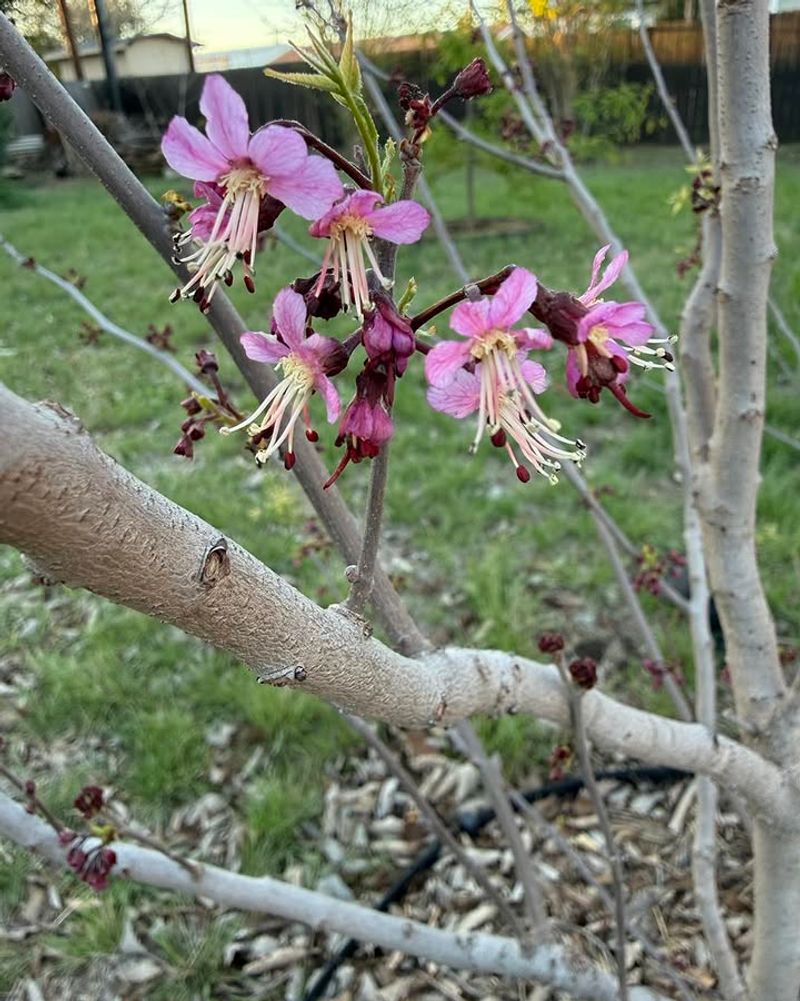
There is something almost magical about the Mexican Buckeye in spring. Pink flower clusters appear before or right alongside the new leaves, creating a soft rosy haze across the whole plant.
The blooms have a light, sweet fragrance that carries on the breeze, and bees seem to find it from a long way off.
Despite sharing a name with the Ohio Buckeye, this plant is not closely related. It is uniquely Texan, native to the Hill Country and Trans-Pecos regions.
Bees are the biggest fans of the nectar-rich flowers, but butterflies visit regularly too. The blooming period is relatively short, but it arrives at just the right time when pollinators need early spring food.
After the flowers fade, the plant produces distinctive leathery seed pods that split open to reveal shiny, dark brown seeds.
Birds and small mammals sometimes eat these seeds, though they are mildly toxic to humans and should not be eaten. The seeds are striking enough that people often collect them for crafts and decoration.
Mexican Buckeye grows as a large shrub or small multi-trunk tree, usually reaching 8 to 12 feet tall. It thrives in rocky, alkaline soils and handles drought extremely well once established.
The foliage stays attractive through summer, and fall color can range from yellow to orange. It works beautifully as a specimen plant, a natural screen, or part of a mixed native border.
Gardeners in the Hill Country and Central Texas find it especially easy to grow because the plant is perfectly matched to those tough conditions. It is a true Texas original.
4. Flame Acanthus
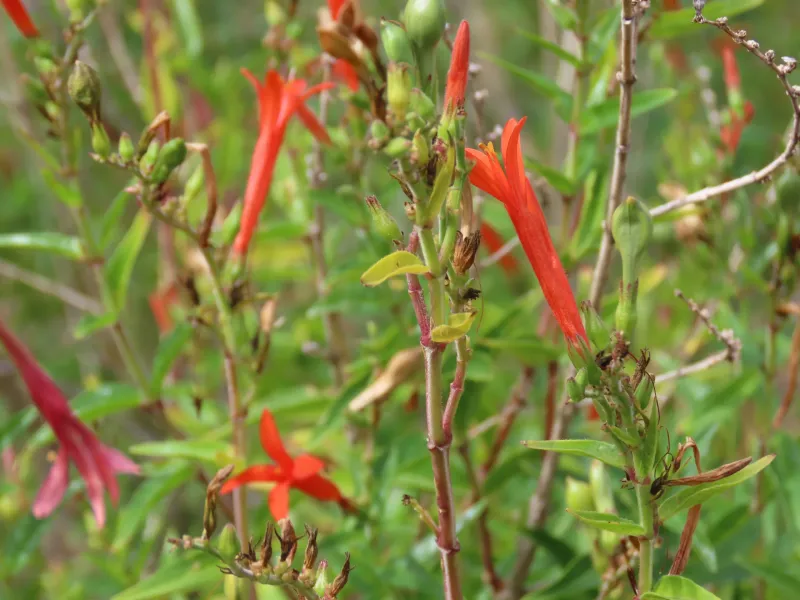
If hummingbirds had a favorite plant in Texas, Flame Acanthus would probably win the vote. Those narrow, tubular orange-red flowers are practically designed for a hummingbird’s long bill and tongue.
Watch this shrub on a warm summer morning and you will likely see multiple hummingbirds zipping back and forth between the blooms like tiny, feathered helicopters.
What makes this plant extra special is its timing. Most showy native plants bloom in spring, but Flame Acanthus fires up in summer and keeps going well into fall.
That covers a season when pollinators really need support and many gardens look tired and sun-scorched. Butterflies, including swallowtails and skippers, also visit the flowers regularly alongside the hummingbirds.
Heat and drought do not slow this plant down at all. In fact, it seems to bloom more intensely the hotter things get.
It is native to rocky slopes and canyon edges in West Texas and the Edwards Plateau, so it evolved to handle tough conditions without complaint. Even in the brutal heat of a Texas August, Flame Acanthus keeps producing flowers.
It grows as a rounded shrub, usually 3 to 5 feet tall and wide. It can be cut back hard in late winter to keep it tidy and encourage fresh, vigorous growth.
Well-drained soil and full sun are all it really asks for. It looks fantastic planted in masses along a fence line or mixed into a xeriscape garden.
For anyone who wants to attract hummingbirds without a lot of maintenance work, this plant is one of the most reliable choices available in the entire state of Texas.
5. Coral Honeysuckle
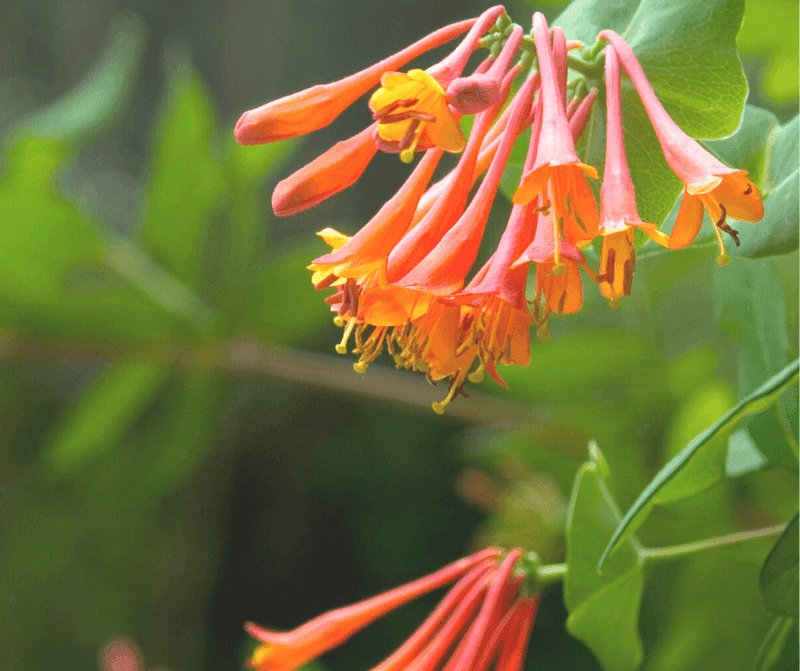
Not every wildlife-friendly plant has to be a tree or a shrub. Coral Honeysuckle is a climbing vine that brings serious hummingbird and butterfly action to fences, arbors, trellises, and pergolas.
It is native to the eastern half of Texas and much of the southeastern United States, which means it is already adapted to the climate and soils many Texas gardeners deal with every day.
The flowers are long, slender red tubes with yellow throats, and they are absolutely irresistible to Ruby-throated Hummingbirds. Those birds are built for exactly this flower shape.
Butterflies like the Giant Swallowtail and the Zebra Longwing also visit the blooms for nectar. After flowering, the plant produces small red berries that songbirds happily eat throughout the fall and winter months.
One important thing to know: Coral Honeysuckle is not the same as Japanese Honeysuckle, which is an invasive species that can take over wild areas.
Coral Honeysuckle is well-behaved, manageable, and actually supports native wildlife instead of crowding out native plants. It is a responsible choice for any Texas garden.
It grows best in full sun to partial shade and prefers moist, well-drained soil, though it handles short dry periods once established.
It is semi-evergreen in warmer parts of Texas, keeping its leaves through mild winters. Bloom time stretches from spring through summer and sometimes into fall.
Trained onto a simple wooden trellis or allowed to weave through an existing shrub, Coral Honeysuckle adds vertical interest, seasonal color, and a constant stream of wildlife visitors that make any garden feel wonderfully alive.
6. Desert Willow
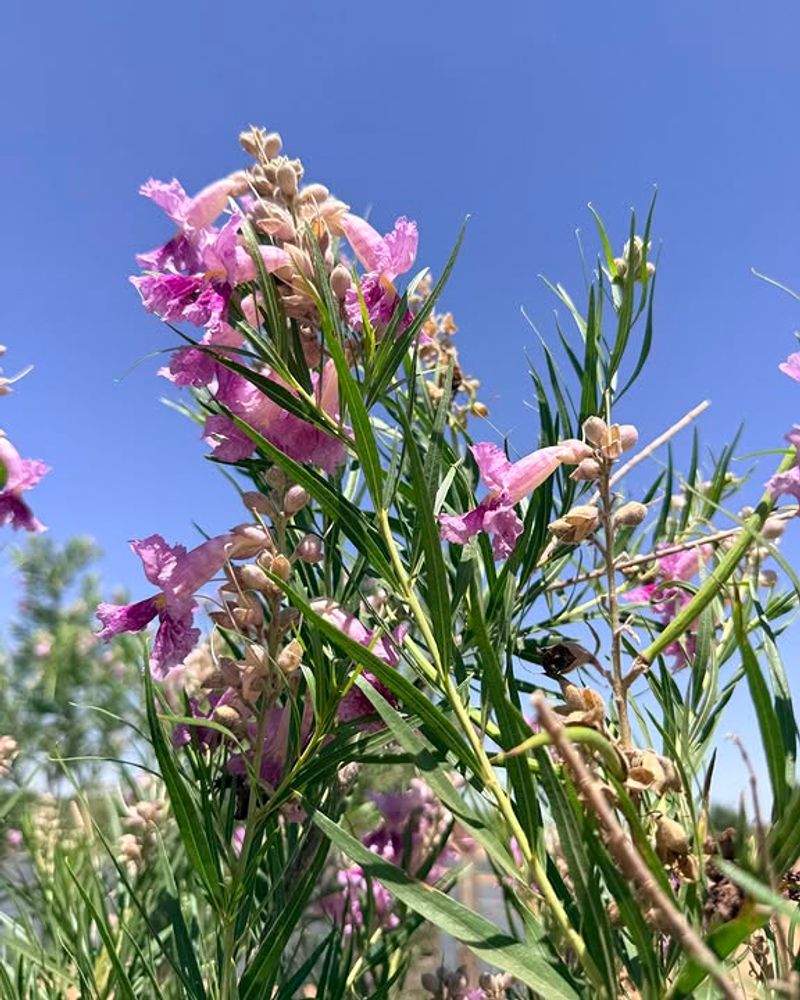
Desert Willow has a secret that most people do not find out until they plant one: it blooms for months.
Starting in late spring and continuing through summer and into early fall, this tree produces wave after wave of trumpet-shaped flowers in shades of pink, lavender, and sometimes deep purple or white. Very few trees in Texas offer that kind of long-season color.
Hummingbirds are devoted fans. They visit the flowers constantly throughout the long bloom season, treating the tree like a personal buffet.
Bees and butterflies join in too, drawn by the sweet fragrance and generous nectar supply. The flowers also develop into long, slender seed pods that hang on the tree through winter and provide visual interest even after the blooms are gone.
Despite its name, Desert Willow is not a true willow. It belongs to the Catalpa family and is native to the Chihuahuan Desert and dry creek beds of West Texas.
That heritage makes it one of the toughest trees you can plant in a Texas yard. Once established, it needs almost no supplemental watering and shrugs off intense summer heat without missing a beat.
It typically grows 15 to 25 feet tall with a graceful, somewhat open canopy. The long, narrow leaves give it a soft, willow-like appearance that works well in both formal and informal garden designs.
Full sun and excellent drainage are the main requirements. It performs especially well in Central and West Texas landscapes.
For gardeners who want a dramatic flowering tree that supports wildlife from spring through fall without demanding constant attention, Desert Willow is an outstanding choice.
7. Blackfoot Daisy
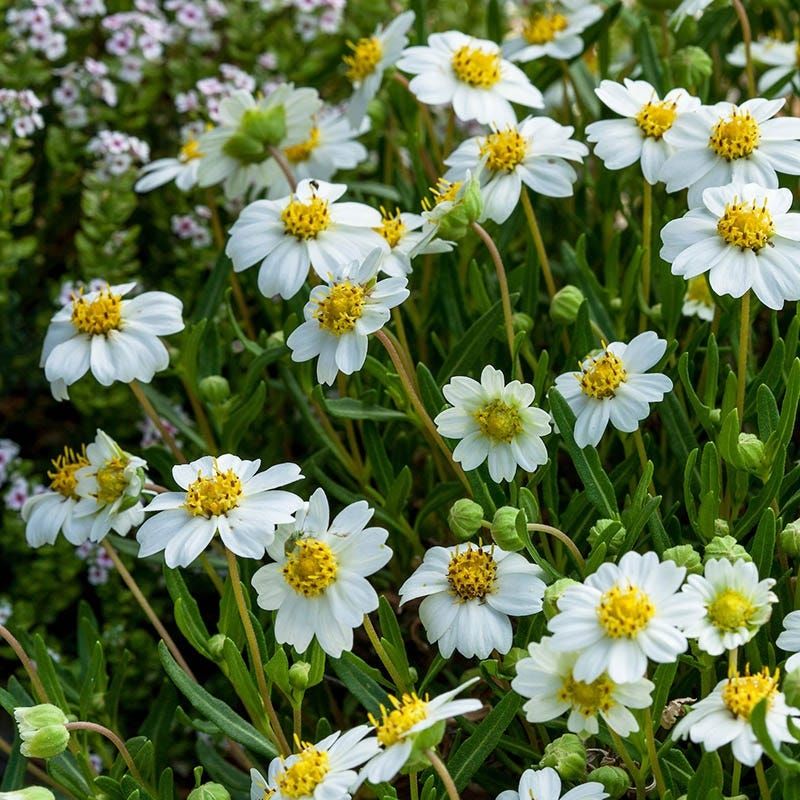
Small but mighty is the best way to describe Blackfoot Daisy. This low-growing perennial rarely gets more than a foot tall, but it covers itself in cheerful white daisy-like flowers with bright yellow centers from spring all the way through the first frost of fall.
Few plants bloom as consistently or as generously through the heat of a Texas summer. Pollinators love it. Native bees, honeybees, and a wide variety of butterflies visit the flowers constantly throughout the long blooming season.
Because it blooms for so many months, it serves as a reliable food source when other plants have already finished flowering. That kind of steady nectar production makes it genuinely valuable in a pollinator garden, not just decorative.
Fun fact: the name comes from the small black bracts at the base of each flower head, which look like tiny black feet. It is native to rocky, limestone-based soils across Central and West Texas, which explains why it handles drought and heat so effortlessly.
Poor soil does not bother it at all. In fact, overly rich or wet soil can actually shorten its lifespan.
Plant Blackfoot Daisy in full sun with excellent drainage and it will ask for almost nothing in return. It works beautifully along rock garden edges, in xeriscape plantings, or cascading over a low stone wall.
The honey-like fragrance of the flowers is a pleasant bonus that many gardeners do not expect.
For anyone building a pollinator-friendly yard on a budget with limited space, this little plant delivers an enormous amount of wildlife value packed into a very tidy, manageable package.