The Sneaky Problem Inside Ohio Arborvitae Rows That Most People Don’t Notice Until It’s Too Late
Arborvitae rows look great along an Ohio property line, and honestly, that thick evergreen privacy screen is hard to beat.
But here’s the thing about all that dense, layered foliage: it is really good at hiding problems.
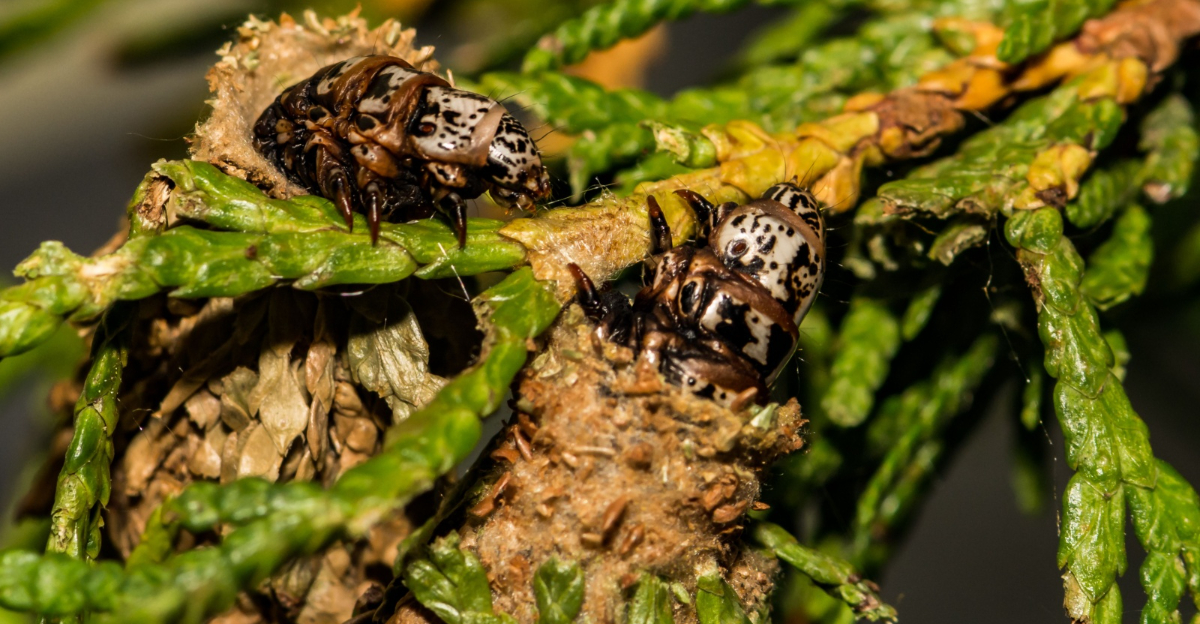
Bagworms are one of the most frustrating pests Ohio arborvitae owners deal with, and the genuinely sneaky part is that their small, camouflaged bags blend right into the branches like they were always supposed to be there.
By the time most homeowners notice something is wrong, the infestation has already been quietly building for weeks.
The good news is that catching bagworms early makes a significant difference in how easy they are to manage.
Small larvae, fresh feeding damage, early summer: that is the window that matters most.
Miss it and the rest of the season gets a lot more complicated.
1. Bagworms Blend Into Arborvitae Foliage
Walking past a row of arborvitae in an Ohio yard, most people would never spot a bagworm bag without looking very carefully.
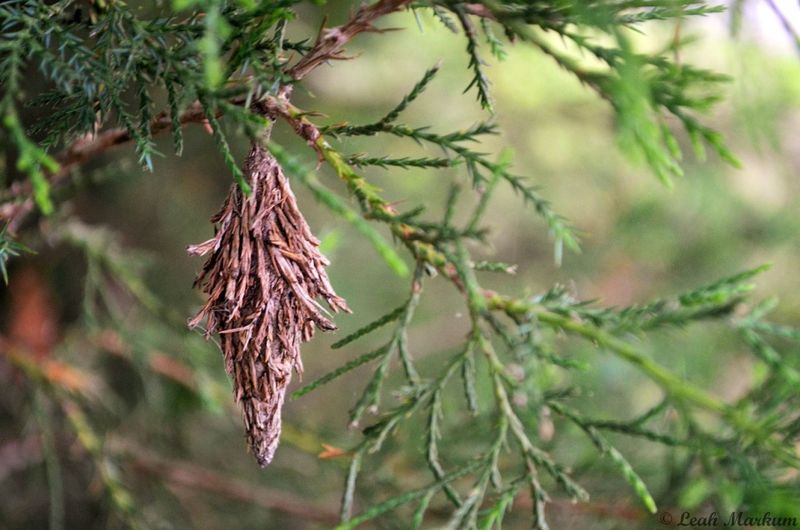
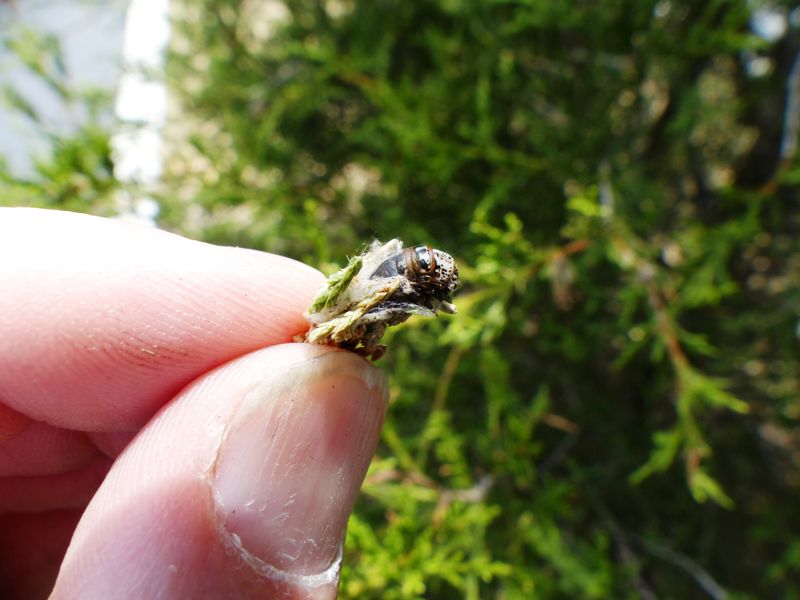
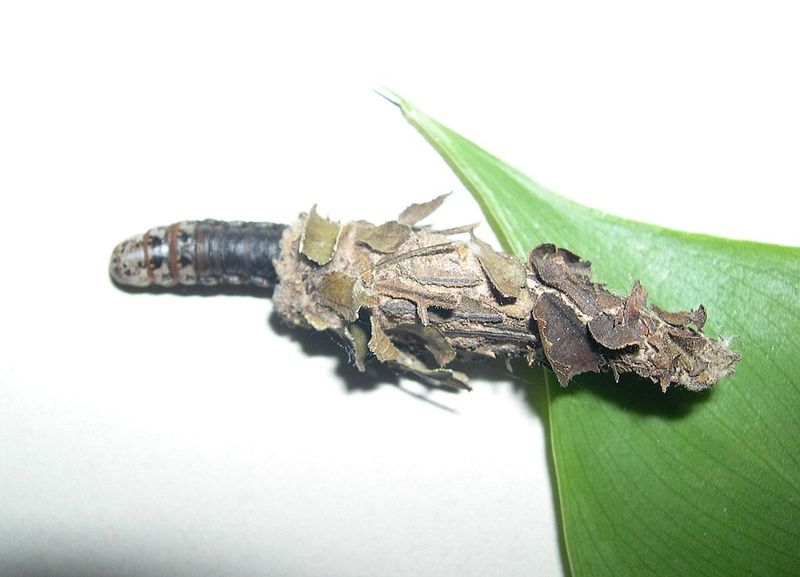
The bags that bagworms construct are covered with bits of foliage, twigs, and plant material from whatever host plant they are feeding on.
On arborvitae, those bags end up looking almost exactly like small clumps of damaged or compressed foliage, which makes them surprisingly easy to overlook during a quick walk-by.
Bagworms belong to the moth family Psychidae, and the larvae spend their entire feeding period inside a silken bag they build and expand as they grow. Because they use plant material from the host to decorate the outside of the bag, the camouflage is quite effective.
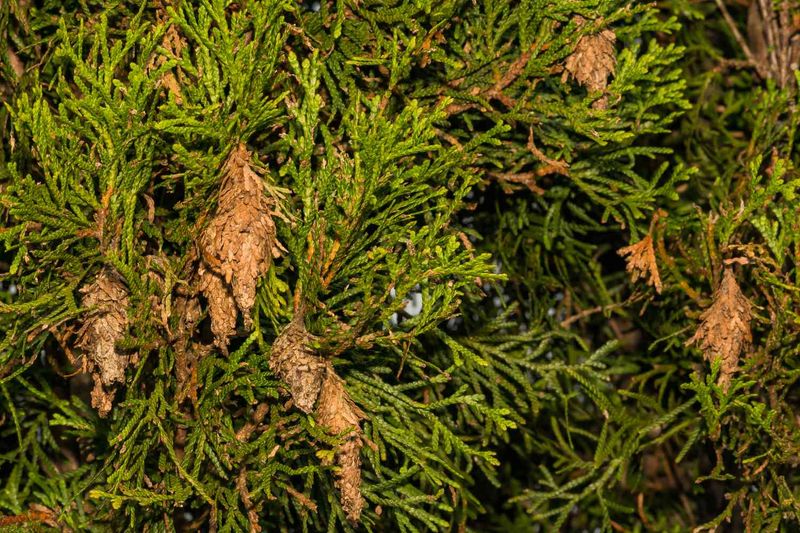
An arborvitae row with dozens of bags attached can still look relatively normal from a few feet away, especially if the infestation is spread across multiple plants.
Ohio homeowners who take time to part the outer branches and look inside the row will often find bags that were completely invisible from the outside.
The inner canopy of a dense arborvitae row tends to be shadowy and cluttered with older foliage, which gives bagworm cases even more cover.
Slowing down during a summer scouting walk and checking branch tips closely is one of the most useful habits for catching these pests before feeding damage becomes more noticeable.
2. Tiny Bags Can Look Like Plant Debris
Early in the season, when bagworm larvae have just hatched and started building their first bags, the cases are incredibly small – often no larger than a fingernail or even smaller.
At that size, they can look almost identical to a small piece of dried plant debris caught in the foliage.
Many Ohio homeowners walk right past them without a second glance, especially on arborvitae rows where there is always some amount of natural inner foliage shed.
The early bags are typically grayish-brown and covered with tiny fragments of arborvitae foliage. They hang from branch tips or rest along small stems, swaying slightly in a breeze.
Without knowing what to look for, it takes a trained or experienced eye to separate them from the normal clutter of a dense evergreen shrub.
Your Ohio Garden Changes Every Week. Your Plan Should Too.
Gardening in Ohio changes quickly throughout the season. Every Friday you’ll receive a simple weekly plan showing exactly what to plant, prune, fertilize, harvest, and protect so you never miss the right timing.
Spotting bagworms at this small stage is actually quite valuable because young larvae are generally easier to manage than older, larger ones.
Sprays tend to be more effective against small, actively feeding larvae than against mature caterpillars that are nearing the end of their feeding period.
Homeowners in Ohio who make a habit of checking their arborvitae rows in late spring and early summer, when bags are still tiny, give themselves a real advantage in slowing an infestation before it grows into a bigger problem across the entire privacy screen.
3. Feeding Damage Starts Deep Inside The Row
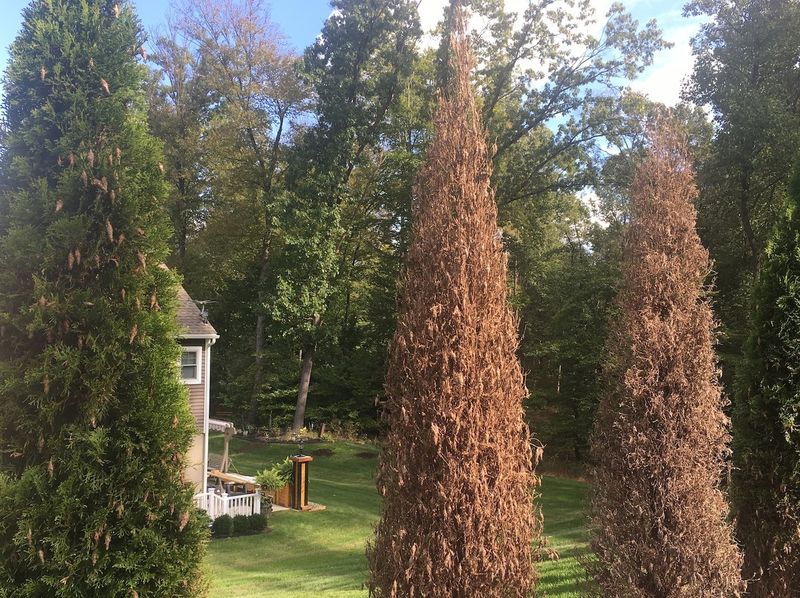
One of the trickier aspects of bagworm activity on arborvitae is that the feeding often begins in the interior of the plant, well away from the outer surface that homeowners see every day.
Bagworm larvae move along branches and feed on foliage as they go, and the dense inner canopy of a mature arborvitae row provides both shelter and plenty of food.
By the time the outer branches start showing stress, feeding may have already been going on inside for weeks.
The inner foliage of arborvitae is naturally older and sometimes less vigorous than the fresh growth at branch tips.
This can make it harder to tell at first whether browning deep inside the plant is from normal foliage turnover, drought stress, lack of airflow, or actual feeding damage.
A closer look, along with checking for the presence of bags, helps sort out the cause more reliably than a surface-level inspection.
Ohio privacy screens made up of tightly spaced arborvitae are especially prone to this hidden feeding pattern because the plants grow so close together that the inner canopy becomes a continuous shaded tunnel.
Bagworms can move from plant to plant along shared inner branches, spreading the infestation across a long row before the damage becomes visible from outside.
Parting branches and checking the interior of the row a few times during summer gives homeowners a much clearer picture of what is actually happening inside.
4. Dense Screens Hide Early Bagworm Activity
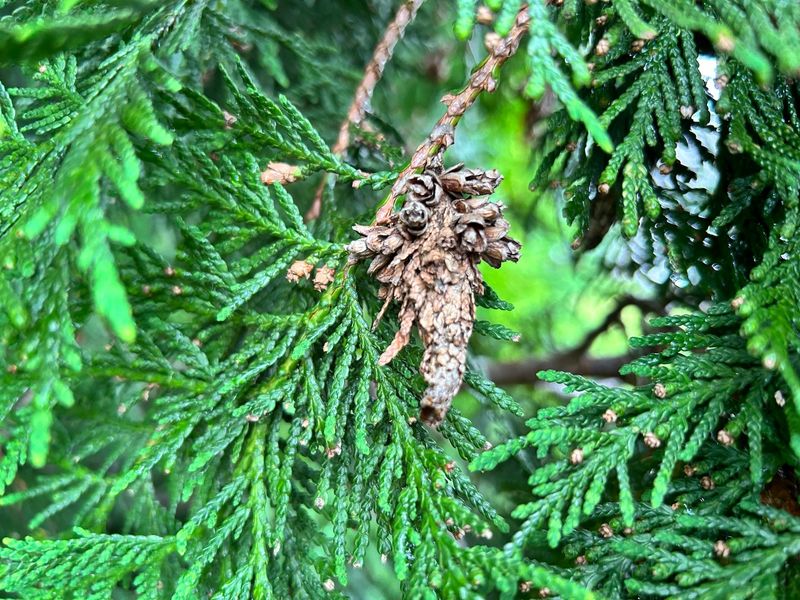
Privacy screens made from arborvitae are prized in Ohio yards precisely because they grow thick and full, blocking views and reducing wind. That same density, however, works against homeowners when it comes to spotting pest activity early.
A row of arborvitae that looks perfectly green and healthy from the street or patio can be harboring dozens or even hundreds of bagworm cases tucked inside its layered branches.
The outer shell of a well-established arborvitae screen is often quite solid, almost like a green wall. Checking inside that wall requires actively pushing branches aside and peering into the shadowy interior.
Most homeowners do not do this regularly, and many only look at their arborvitae from a distance while mowing or gardening nearby. That hands-off approach makes it easy for a bagworm population to grow through much of the summer without being noticed.
Dense rows also tend to have reduced airflow inside the canopy, which can contribute to other stress factors like moisture-related issues or mite activity.
When multiple stressors are present at the same time, figuring out the main cause of any browning or thinning becomes more complicated.
Getting into the habit of doing a brief, close-up inspection of Ohio arborvitae rows at least a couple of times between late spring and midsummer can go a long way toward catching bagworm activity while it is still relatively easy to address.
5. Brown Patches May Show Up Suddenly
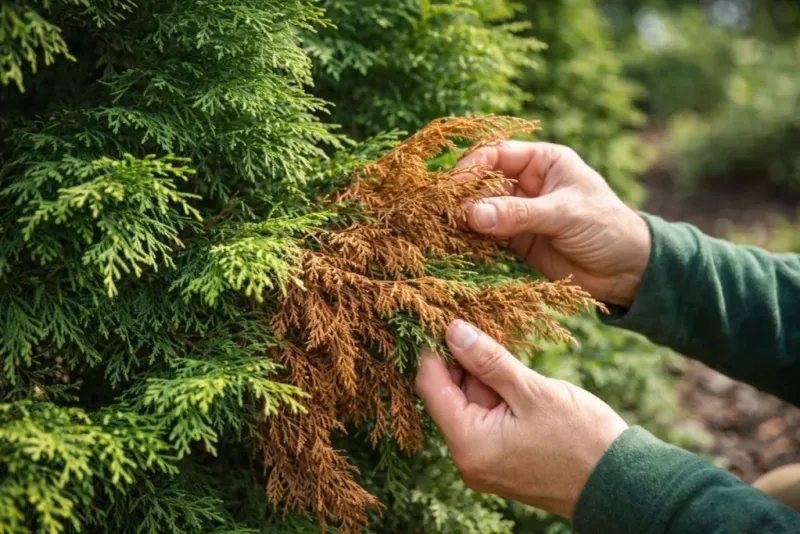
Sudden brown patches on arborvitae can feel alarming, especially when the rest of the row still looks green and healthy. Homeowners sometimes notice these patches after a stretch of hot, dry weather and assume drought stress is the culprit.
While drought can certainly cause browning, bagworm feeding is another possibility worth checking, especially in Ohio during the summer months when larvae are actively feeding.
Browning from bagworm activity tends to appear on sections of the plant where feeding has been heavy enough to strip the foliage from multiple branches.
Once arborvitae foliage is removed by feeding, it does not typically grow back on those older inner stems, which means the damage can look permanent even after the pest is no longer present.
That makes early detection even more useful, since stopping the feeding before too much foliage is lost gives the plant a better chance to stay full and attractive.
It is worth noting that arborvitae browning has several possible causes beyond bagworms. Winter injury, spider mite activity, root stress, natural inner foliage shedding, and salt damage can all produce similar symptoms.
Checking for the presence of bags before drawing any conclusions helps avoid misdiagnosis. If bags are present along with the browning, that points toward bagworm activity.
If no bags are found, other causes may be worth exploring, and a local Ohio Extension office or certified arborist can often help narrow things down.
6. Hand-Picking Bags Can Slow Small Infestations
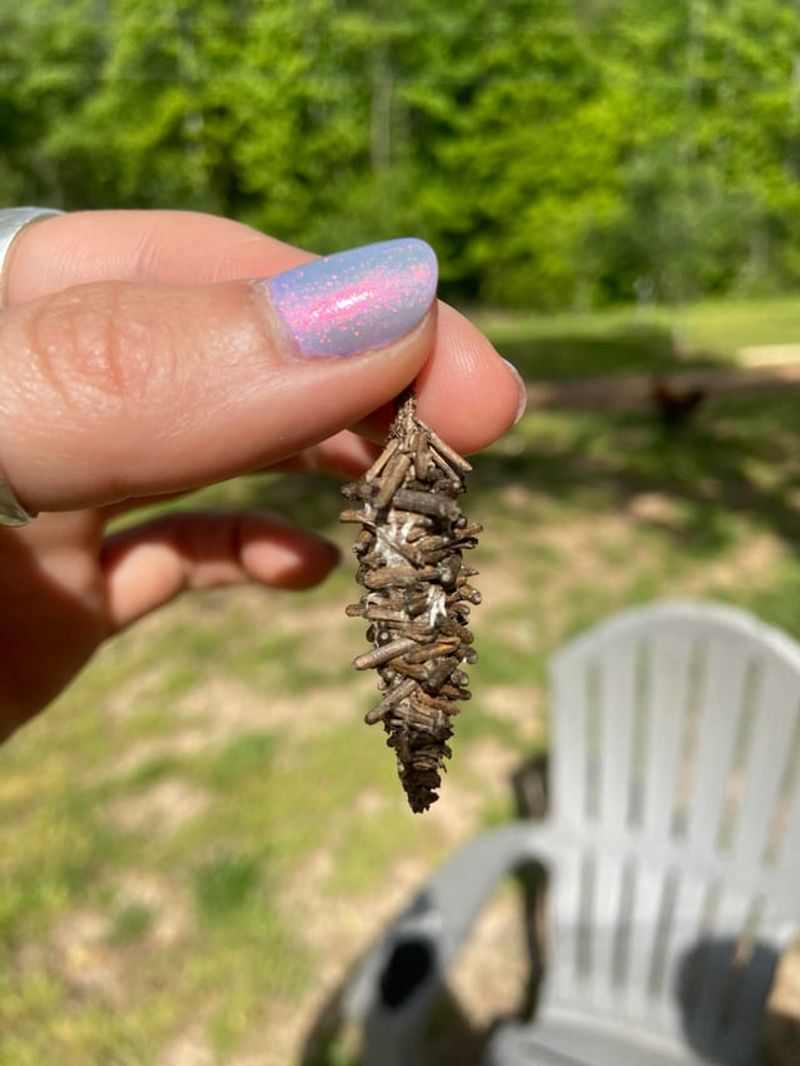
For homeowners dealing with a relatively small number of bagworm cases on their arborvitae, hand-picking is a straightforward and practical approach.
Going along the row and physically removing bags from branches, then placing them in a sealed bag or bucket of soapy water, can reduce the population without needing any sprays.
It takes patience and a careful eye, but it is a method that works reasonably well when the infestation is caught early and the number of bags is manageable.
The best time to hand-pick is before eggs inside overwintering bags have hatched in late spring, or during the early part of the season when larvae are small and bags are still easy to spot and remove.
Later in summer, bags become larger and more firmly attached, and larvae inside may have already finished feeding and begun the pupal stage.
Removing bags after larvae have matured and mated is still worthwhile for reducing next year’s population, since each female bag can contain hundreds of eggs.
Ohio homeowners with shorter arborvitae rows or foundation plantings often find hand-picking quite doable on their own. Longer property-line screens may take more time and effort, but even a partial removal pass can make a noticeable difference.
Wearing gloves and using small pruning snips to cut the silken thread that attaches each bag to the branch makes removal cleaner and reduces the chance of leaving part of the bag behind on the plant.
7. Young Larvae Are Easier To Manage
Timing matters quite a bit when it comes to managing bagworms on arborvitae, and the window when larvae are young and actively feeding near the surface tends to be the most effective period for intervention.
Young larvae have smaller bags, feed more openly on foliage, and have not yet moved deep into the plant’s interior where they are harder to reach.
Catching them during this stage, typically in late spring to early summer in Ohio, gives homeowners more options and generally better results.
Biological insecticides containing Bacillus thuringiensis var. kurstaki, commonly known as Btk, are often recommended for use against young bagworm larvae.
These products work best when larvae are small and actively feeding, since they need to ingest the material to be affected.
As larvae grow larger and their feeding slows or stops, the effectiveness of Btk and many other spray options tends to decrease.
This is why scouting early and acting while larvae are still in their young stages is so often emphasized in Extension guidance for Ohio landscapes.
Waiting too long into summer means dealing with mature larvae that are far less responsive to most management options.
By late summer, many larvae have already sealed their bags and entered the pupal stage, making sprays essentially pointless for that season.
Keeping an eye on arborvitae rows in late May and through June gives Ohio homeowners the best chance of finding larvae while management is still practical and worthwhile.
8. Late Checks Help Prevent Bigger Problems
Even after the main feeding season has wound down, doing a thorough check of Ohio arborvitae rows in late summer or early fall is a genuinely useful habit.
By that point, any bagworm larvae that completed their development will have sealed their bags and attached them firmly to branches.
Those overwintering bags contain eggs that will hatch the following spring, so finding and removing them before winter reduces the starting population for the next season.
A late-season inspection also helps homeowners assess how much feeding damage actually occurred during the summer.
Seeing brown patches more clearly after foliage has dried out can give a better sense of how widespread the infestation was, and whether the affected plants are likely to recover or may need extra attention going into the following year.
Some arborvitae that lose significant foliage from bagworm feeding may take a season or two to fill back in, while others may not recover full density at all if the damage was severe.
Combining late-season bag removal with a note to start scouting earlier the following spring creates a simple two-step routine that can make a real difference over time.
Ohio arborvitae rows that get regular attention tend to stay healthier and fuller than those that are only checked after a problem becomes obvious.
A little time spent walking the row and looking closely, even just a few times a year, goes a long way toward keeping a privacy screen in good shape for years to come.