Why Texas Petunias Look Thin And Leggy After Snipping, And What Is Going Wrong
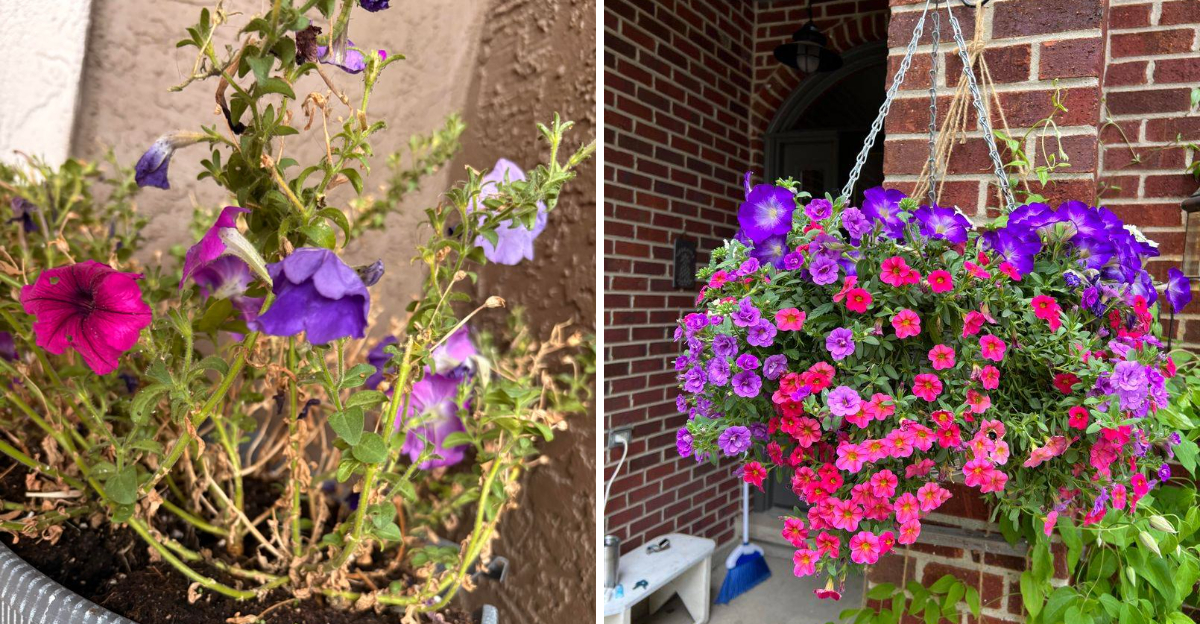
Texas petunias and disappointment go together more often than they should.
You do the trim. You step back. You expect that full, bushy comeback the gardening videos promised. Instead, the plant comes back looking like it went through something traumatic.
Many people blame the heat or the scissors. A few blame themselves. The real answer is usually more specific than any of those.
There is no magic cut that guarantees a perfect petunia every time. Texas summer is demanding, containers are complicated, and petunias have strong opinions about light, water, and personal space.
But there are specific reasons leggy comebacks happen, and most of them are fixable once you know which one is actually causing the problem in your yard.
The cut is rarely the whole story. What happens before the scissors come out, and what the plant is dealing with after, matters just as much as the technique itself.
These things send Texas petunias in the wrong direction after a trim. Some are about the cut. Some are about the conditions the plant was already managing before you touched it.
1. Pinching At The Wrong Spot Weakens Stems
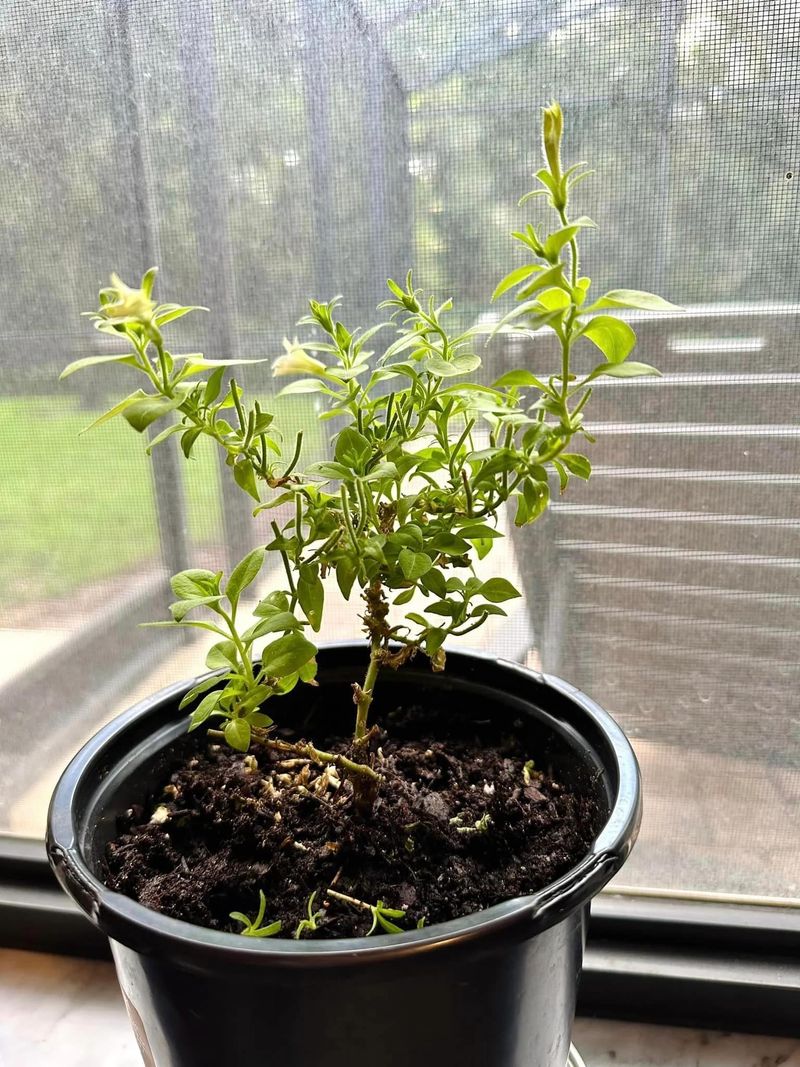
The location of the cut matters more than most petunia growers realize.
A snip somewhere in the middle of a stem feels productive. The plant gets shorter. The scissors did their job. But the plant’s response depends entirely on where that cut landed relative to a very specific point on the stem.
Petunia stems have nodes, the small bumps or joints where leaves meet the stem. That point is where the plant stores energy and sends signals for new branching.
Cut just above a node and the plant pushes out two or more new shoots from that spot. Cut below it, in bare stem with no node nearby, and the stem has nowhere to branch from.
Do you know where the nodes are on your petunia stems right now? Take a look at any stem and find where a leaf attaches. The slight bump just above that attachment point is the target.
Use clean, sharp scissors or pruning snips rather than tearing with fingernails on thicker stems. A clean cut heals faster and reduces the entry point for fungal problems, which Texas heat and humidity make a genuine concern throughout the season.
Cut at a slight angle just above the node. The plant responds by branching from that point within days.
Practice on one stem first and watch what happens over the following week. Once two new shoots appear at the cut point, the geometry of petunia pruning makes complete sense.
It ruins random snipping permanently. That is exactly the outcome worth having.
2. Insufficient Light Causes Stretching
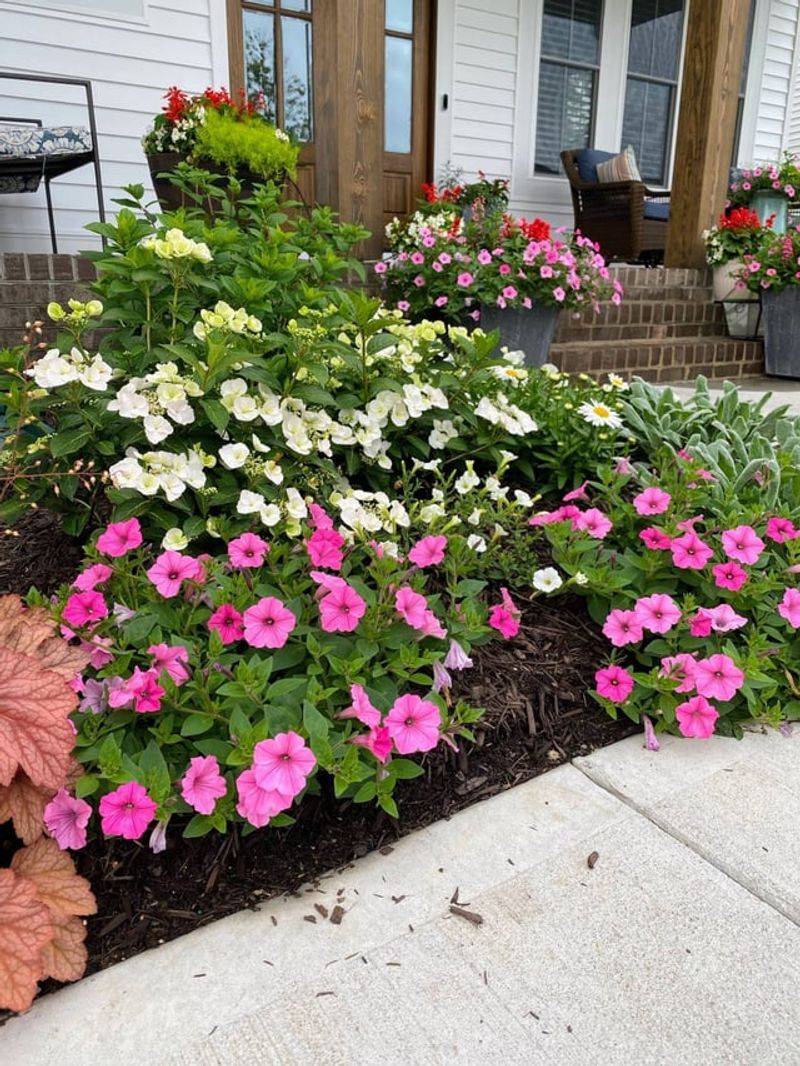
Petunias stretch toward light when they cannot find enough of it. The stems get taller. The leaves get further apart.
The whole plant looks less like a flowering display and more like something searching for better real estate.
This response is not a personality flaw. It is a functional plant behavior called etiolation. When light intensity drops below what petunias need, they redirect energy into extending stems rather than branching and producing flowers.
Your Texas Garden Changes Every Week. Your Plan Should Too.
Gardening in Texas changes quickly throughout the season. Every Friday you’ll receive a simple weekly plan showing exactly what to plant, prune, fertilize, harvest, and protect so you never miss the right timing.
In Texas, full sun means six to eight hours of direct sunlight daily. Covered patios, north-facing walls, and the shade cast by trees or shrubs that have grown since last season all reduce that number.
Even partial shade through key daylight hours triggers the stretch response.
Have you checked whether something nearby is casting new shade on the petunia bed this season? Shrubs grow. Trees fill out.
A spot that had full sun in spring may have shifted into partial shade by summer without anyone noticing until the plant starts responding.
South-facing and west-facing positions in Texas provide the most consistent light. Morning sun is the priority.
A location with strong morning exposure and some afternoon shade during peak July heat suits summer blooming well without encouraging the stretch.
Container petunias benefit from a quarter-turn every few days so all sides receive equal exposure.
The plant will find the light one way or another. The goal is making sure it finds it from every direction at once.
3. Crowded Pots Limit Growth
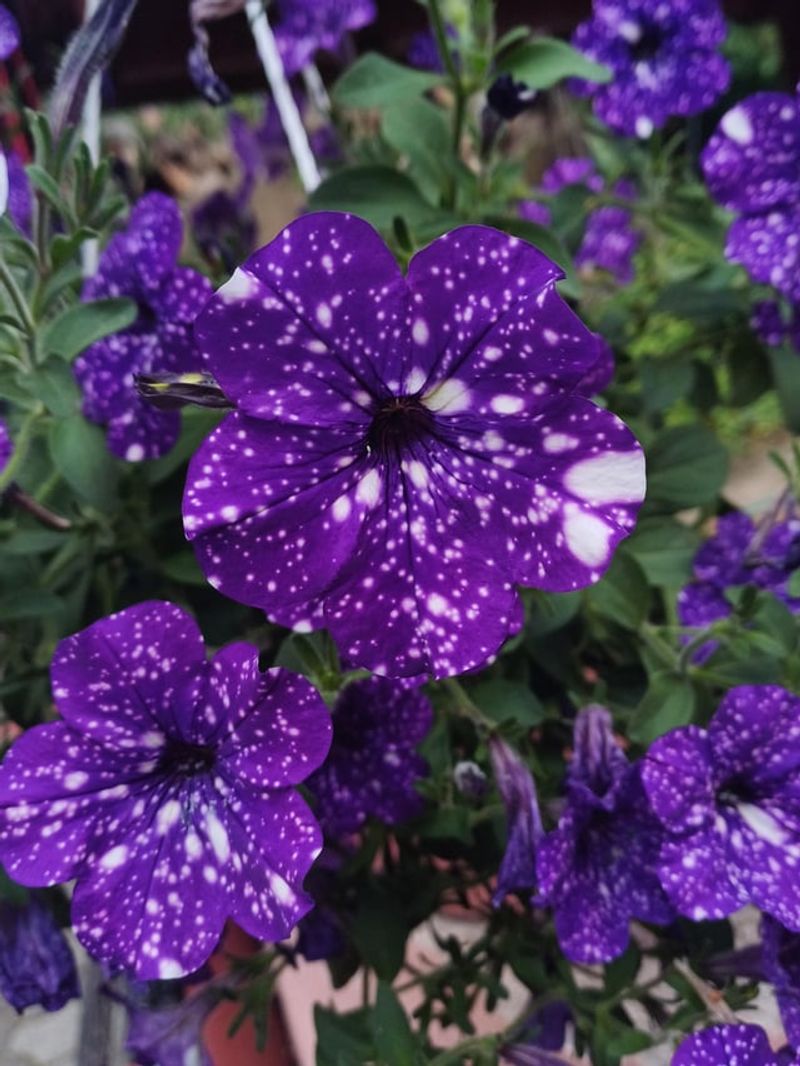
More plants in a pot should mean more blooms. That logic is understandable and consistently incorrect when applied to petunias.
When petunias are planted too close together, each plant competes for water, nutrients, light, and root space simultaneously. The competition produces a specific result.
Each plant extends a single narrow stem upward trying to reach light past its neighbors rather than spreading into the bushy, branching shape petunias produce when they have adequate space.
Root crowding is the part most gardeners never see but always feel the effects of. When roots run out of room in the container, the plant cannot absorb enough water or nutrients to support full branching growth.
The stems get narrow and tall because the plant is managing a resource deficit, not because it is thriving.
Are you noticing that the pot which looked perfect at planting now feels uncomfortably tight? That is the sign root space has been exhausted faster than expected.
Repotting into a larger container mid-season is a genuine option. Gently loosen the roots, add fresh potting mix with slow-release fertilizer, and give each plant significantly more room. Visible improvement typically follows within two to three weeks.
For hanging baskets, a basket at least twelve to fourteen inches wide suits two or three plants. Anything smaller creates the same crowding issue in a suspended format.
Petunias perform better with personal space. They are not a team sport.
4. Irregular Watering Leads To Sparse Foliage
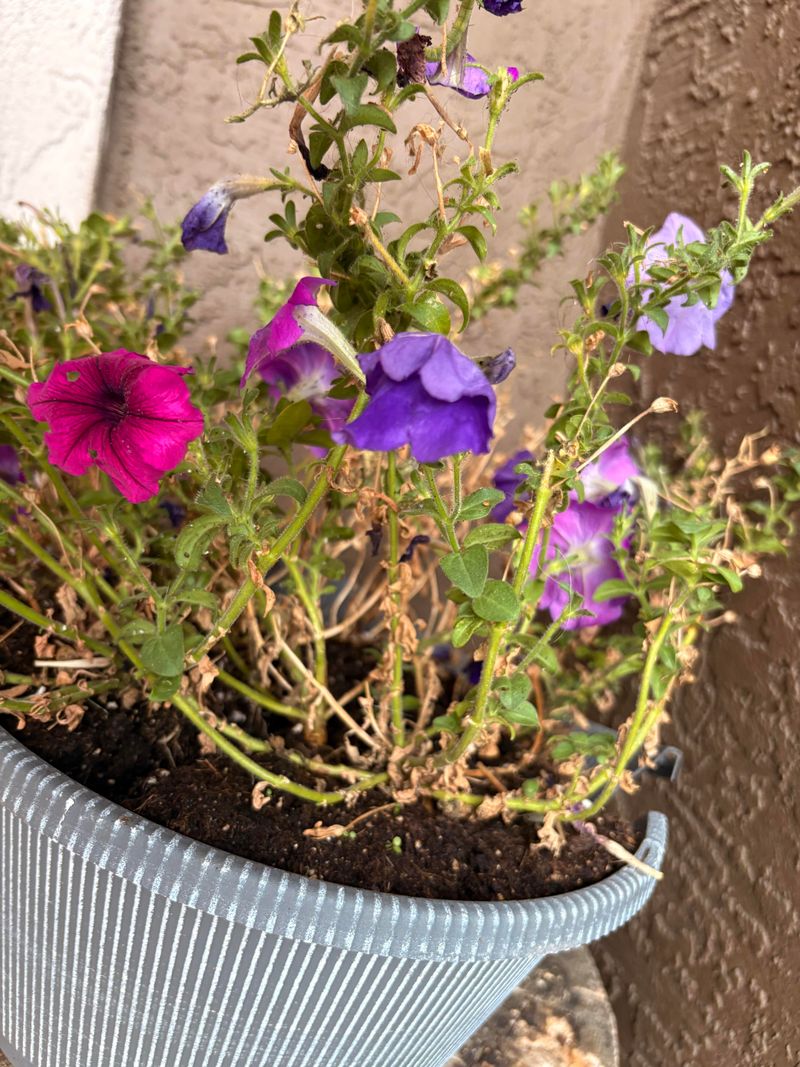
Petunias on an inconsistent watering schedule survive. They do not flourish.
Irregular moisture creates stress cycles that show up directly in the plant’s structure. When petunias dry out completely between waterings, they shed lower leaves and slow new growth significantly.
When they receive a large drink after extended dryness, the plant prioritizes recovery over branching. That alternating pattern produces exactly the sparse, leggy growth that follows a pruning session and refuses to fill back in.
In Texas containers, this problem intensifies during summer temperatures that can dry out a pot in a single afternoon.
The window between adequate moisture and drought is much smaller during peak heat than most watering schedules account for.
It’s best if you check the soil before watering, or water on a fixed schedule regardless of current conditions. Checking the top inch of soil takes five seconds and prevents both overwatering and the drought stress that causes structural decline.
The goal is consistent moisture, not saturated soil. Water deeply when the top inch feels dry so moisture reaches the full root zone.
Shallow watering encourages shallow roots, which makes the plant more vulnerable to heat stress between cycles.
Mulching around ground-planted petunias slows moisture loss. A two-inch layer makes a measurable difference in retention during peak Texas summer heat.
Self-watering containers maintain consistent moisture from below and suit anyone whose schedule makes daily soil checks unrealistic.
Consistent petunias require consistent water. The plant is not asking for much.
5. Late Feeding Affects Strength
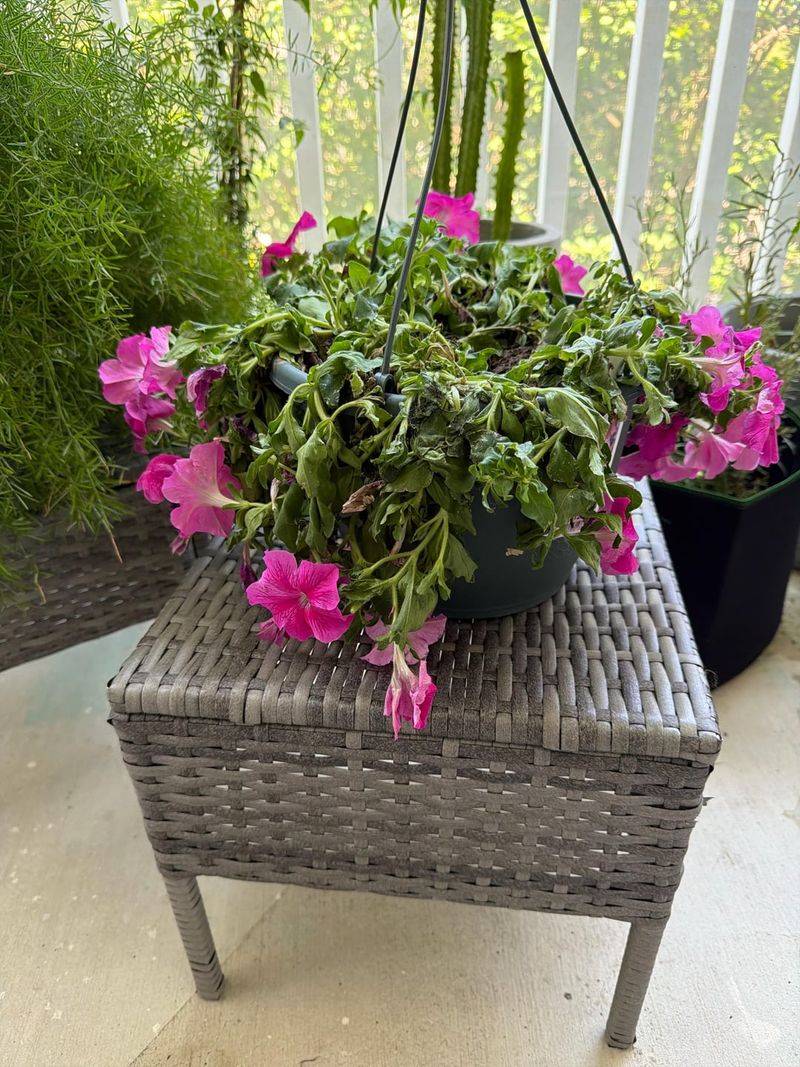
Petunias are committed feeders. Skip fertilizer or apply it too late in the growing cycle and the stems reflect that deficit directly.
Plants without adequate nutrients direct their limited energy toward basic survival rather than the branching structure that makes post-pruning recovery look full and lush.
A balanced water-soluble fertilizer applied every one to two weeks through the growing season supports the stem strength and flower production petunias are capable of when properly maintained.
A product with higher phosphorus relative to nitrogen supports root development and bloom production. Too much nitrogen without phosphorus tips the balance toward soft, leafy growth with minimal flowering structure behind it.
Timing matters considerably. Starting fertilization at planting in spring and maintaining a consistent schedule through fall produces significantly different results than starting when the plant already shows weakness.
At that point recovery is slower and the improvement less dramatic.
Are you fertilizing on a schedule or waiting until the plant signals hunger? Yellowing leaves between feeding sessions indicate the plant has been waiting longer than it should.
Avoid heavy fertilizer applications during heat waves consistently above one hundred degrees. The stressed plant cannot absorb nutrients efficiently at those temperatures, and concentrated fertilizer in hot, dry soil creates root burn risk.
Slow-release granular fertilizer mixed into potting soil at planting provides a foundation. Liquid feeding through the season builds on that consistently.
The petunia is not asking for excessive attention. Just regular, reliable nutrition from the moment it goes in the ground.
That is not an unreasonable arrangement from a plant that blooms for eight months.
6. Neglecting Airflow Encourages Weak Stems
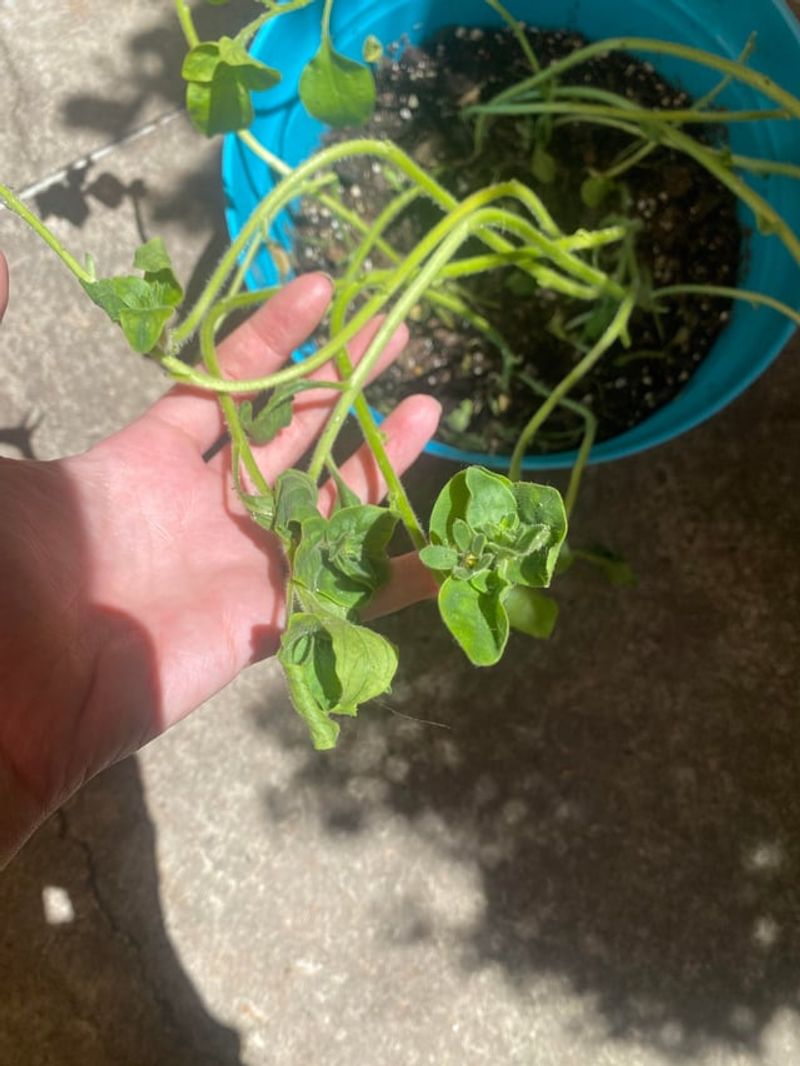
Plants that grow in still air develop weaker stems than plants that grow with regular air movement around them. This is not a minor observation. It reflects a real physiological process that petunia growers in dense, sheltered Texas spaces miss consistently.
Air movement creates gentle physical resistance against stems as it passes. That resistance signals the plant to build stronger, thicker stem tissue over time.
Plants in still, protected corners miss that signal entirely and produce the soft, flopping stems that collapse after a pruning session rather than standing upright and branching outward.
In Texas, humidity along the Gulf Coast adds a layer to this problem. When air cannot move freely through a planting, moisture accumulates against foliage and stems. Fungal problems follow, and affected stems weaken further.
If you have petunias positioned against a fence, wall, or in a sheltered corner with limited air circulation, that placement may be contributing more to the leggy outcome than the pruning technique itself.
Leaving clearance between plantings and nearby structures allows air to reach all sides of the plant. Even a foot of gap between a wall and a container changes the airflow environment measurably.
Pruning itself improves airflow by opening the canopy. After cutting, remove any crossing or overlapping stems that block light and air from reaching the center of the plant. That thinning step takes two minutes and changes how the plant recovers.
Petunias grow stronger when the breeze can find them.
Moving a container one foot away from the wall is a low-effort solution the plant acknowledges immediately.
7. Not Supporting Trailing Varieties
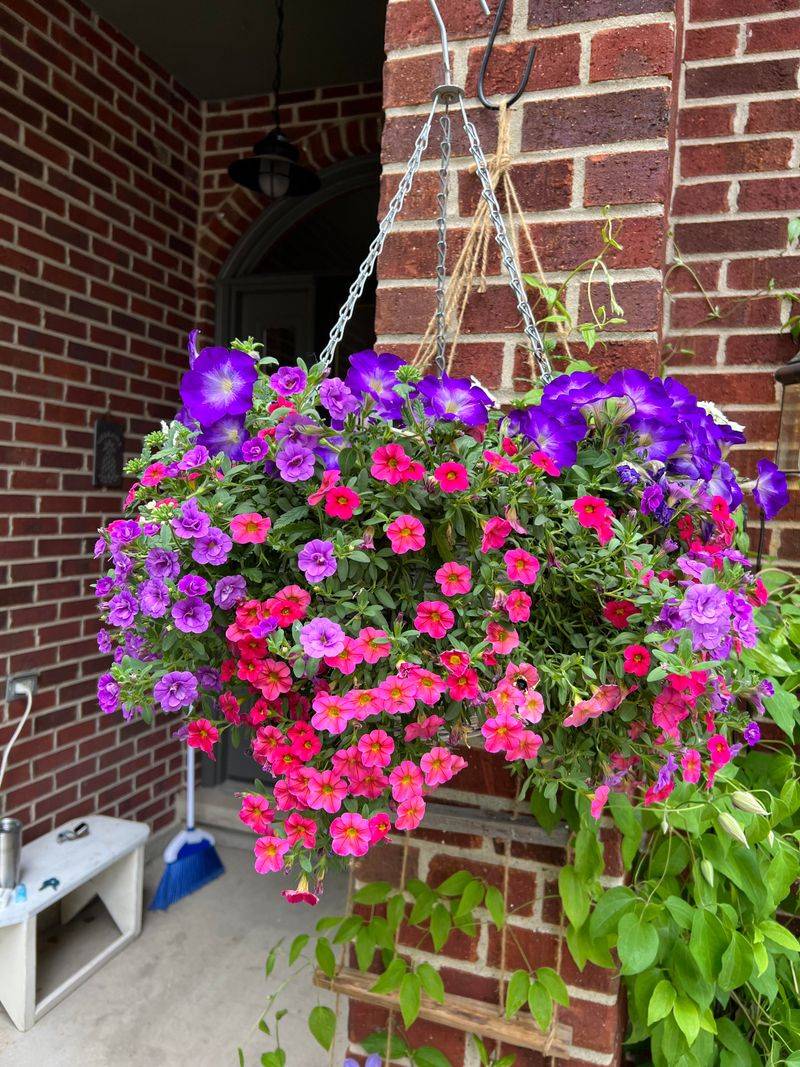
Trailing petunias were developed to spill and cascade. That tendency is the point.
But the setup those varieties need to express that habit correctly is specific, and without it the trailing stems pile up, tangle, and produce the bare, scraggly middle that no amount of pruning fully corrects.
Wave petunias and similar trailing varieties grow fast and spread wide, sometimes reaching two to three feet across in a single season.
When planted in standard ground-level pots without elevation, those stems hit soil and struggle. Stem sections in contact with consistently moist soil develop problems that work back toward the crown and reduce overall vitality.
Hanging baskets solve this directly by allowing stems to flow freely in all directions. Elevated planters, window boxes, and tall urns work equally well.
The requirement is elevation. Getting the plant high enough that its natural trailing direction leads to open air rather than pot edges and soil surface changes the outcome completely.
Do you have trailing petunias in ground-level containers right now? Moving them to a hanging basket or elevated planter produces an immediate visible result within days of repositioning.
After pruning a trailing variety, the stems look sparse for a week or two before the rebound arrives. During that recovery window, full morning sun and adequate air movement support faster fill-in.
Resist tucking trailing stems back into the pot to create a temporarily fuller appearance. That traps moisture, blocks light, and delays actual recovery.
Let them hang. The cascade returns on its own schedule and looks considerably better for not being forced.
8. Failing To Trim Properly
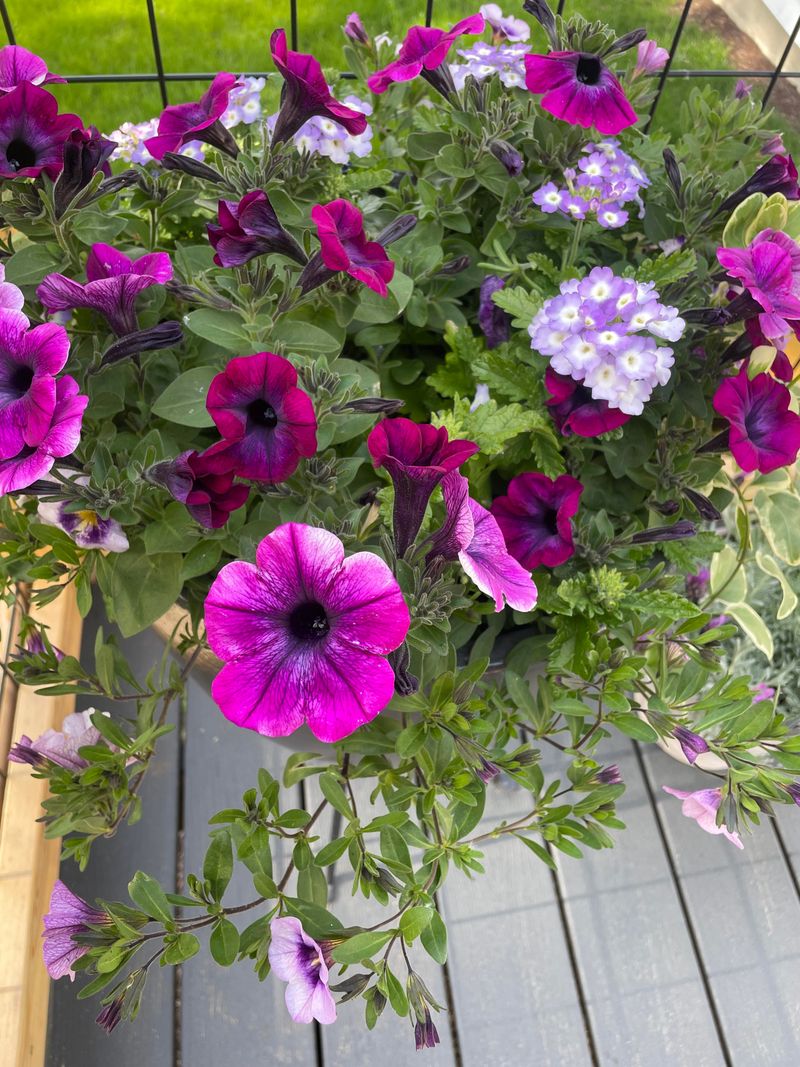
Skipping trimming or doing it incompletely sends the petunia a very specific signal.
The plant interprets the presence of developing seed pods as a directive to continue seed production rather than redirecting energy toward new stems and blooms.
The whole plant slows down, thins out, and produces the tired, sparse appearance that follows a season without consistent maintenance.
Many gardeners remove faded petals and consider the job complete. The critical step is what follows. A small, sticky green bump sits at the base where the bloom attached to the stem. That is the seed pod.
Leaving it behind tells the plant that seed production is still underway. Remove it along with the faded flower and the plant’s energy shifts immediately toward new growth.
Are you removing the seed pod along with the faded petals, or stopping at the visible flower? Look at the base of any spent bloom and you will see the firmer green bump beneath the soft petal material. That bump is the decision point.
In Texas, petunias can bloom from early spring through late fall with consistent trimming. That is an eight-month performance window that requires regular maintenance to stay open.
Plan a quick pass every few days during peak bloom time. Combine it with a light pinch of any stems getting too long.
Removing spent flowers including seed pods plus light stem management keeps the plant compact and continuously productive.
Sharp fingernails or small snips handle the task in five minutes. The petunia will bloom for eight months if given a reason to keep going. Removing the seed pod is that reason.