Carpenter Bees Are Taking Over Kentucky Porches And There Is A Reason For That
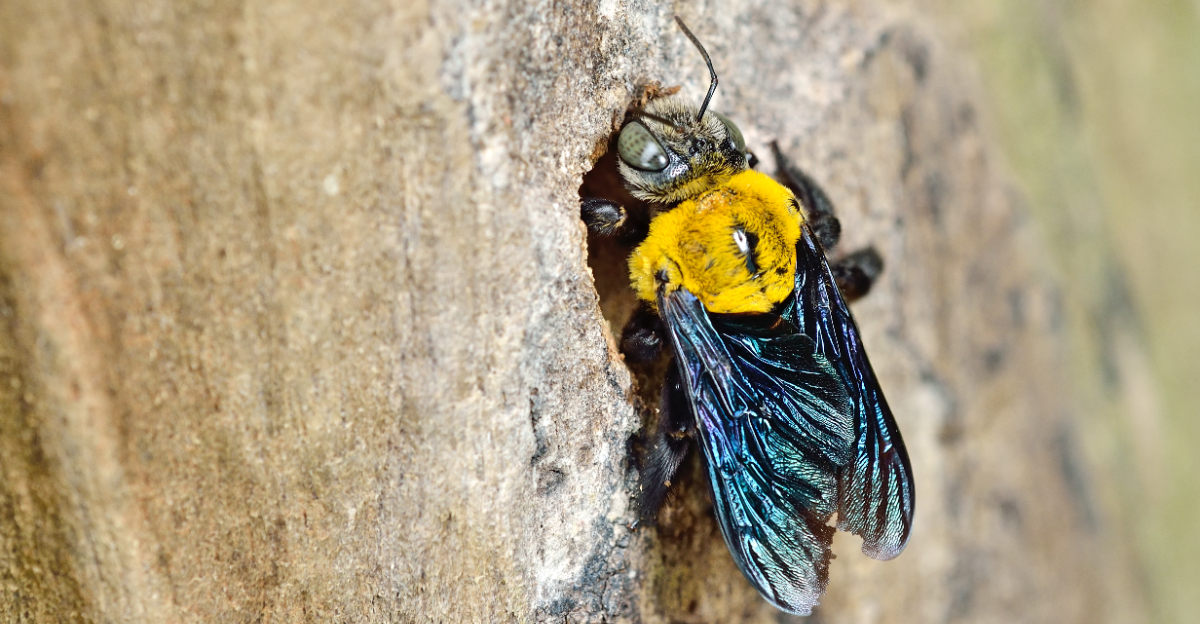
If your Kentucky porch has started feeling like a bee hangout, you are not imagining things. Those big bees hovering around your trim are carpenter bees, and they are not just passing through.
They are scouting. Kentucky’s warm springs and older wooden porches make it a prime destination, and once they find a spot they like, they come back every single year.
The same porch, the same beams, sometimes even the same holes. What looks like a minor nuisance in April can turn into a structural headache by August.
Carpenter bees are not random about where they set up shop. They show up for specific reasons, and those reasons are usually sitting right on your porch.
Knowing what they are after is half the work.
Your Porch Wood Is Basically An Open Invitation
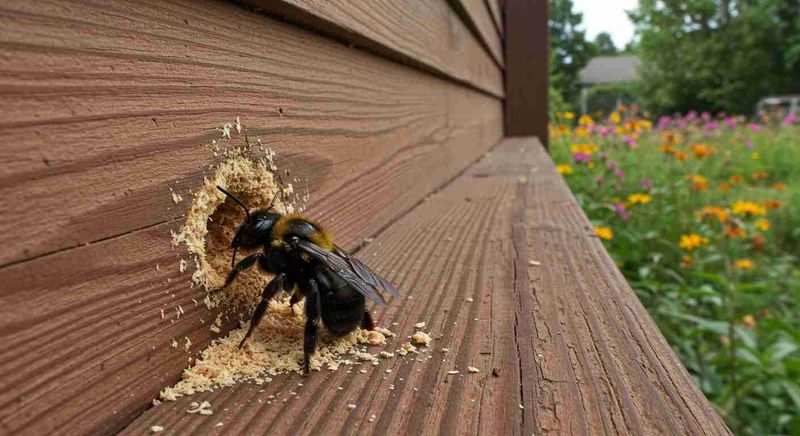
Soft, untreated wood is basically a five-star hotel for carpenter bees. They are not chewing through concrete or brick. They are zeroing in on exactly the kind of wood most Kentucky porches are built from.
Cedar, pine, and redwood are the top targets. These softwoods are easy to tunnel through, and many older Kentucky homes use them for fascia boards, deck rails, and porch ceilings.
Unpainted or weathered wood is even more attractive to them. The outer surface breaks down over time, making it softer and easier to excavate without much effort.
South-facing porches get the worst of it. Sun exposure dries out the wood faster, speeds up weathering, and leaves it in exactly the condition carpenter bees prefer.
Carpenter bees keep coming back to Kentucky porches partly because so many homeowners skip the sealant step. Paint and stain act as a physical barrier that discourages nesting.
Bare wood sends a completely different message. Rough-cut lumber is especially vulnerable.
Smooth, finished surfaces are harder to grip and drill into. Rough grain gives bees the traction they need to get started.
Staining or painting your porch wood every few years is one of the simplest defenses available. A fresh coat of exterior paint can redirect bees toward easier targets. Think of it as closing the front door before they knock.
The Nesting Season That Brings Them To Your Door
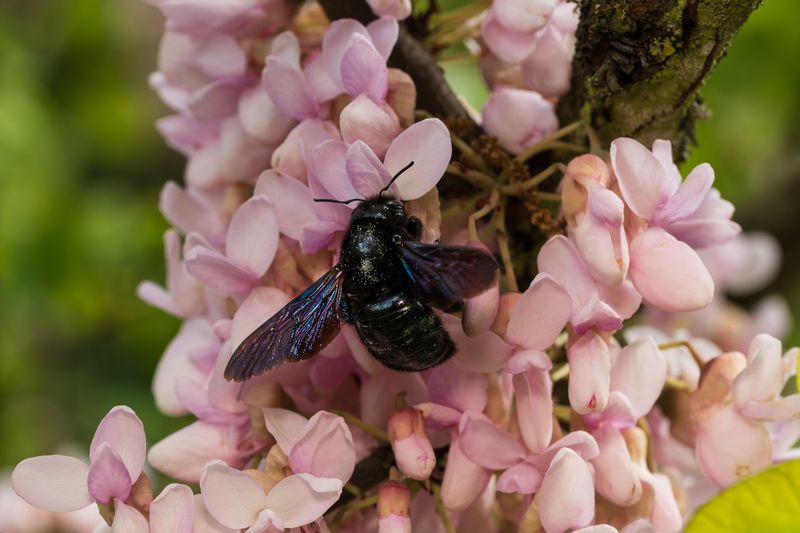
Spring in Kentucky does not just bring wildflowers and warm weekends. It also signals the start of carpenter bee nesting season, and your porch is in the crosshairs.
Carpenter bees become most active between April and June. That window lines up perfectly with when most Kentucky homeowners crack open their windows and start spending time outside again.
Female bees do the drilling work. They bore perfectly round holes, usually about half an inch wide, into wood surfaces to create nesting tunnels. Males hover nearby but cannot sting.
One female can drill several inches into a beam within a week or two. What looks like a small entry hole on the surface often connects to a tunnel that runs six inches or more straight into the wood.
The timing matters a lot. Bees that nest in spring lay eggs that hatch by late summer. Those offspring then overwinter in the same tunnels and emerge the following spring, often expanding the existing damage.
Your Kentucky Garden Changes Every Week. Your Plan Should Too.
Gardening in Kentucky changes quickly throughout the season. Every Friday you’ll receive a simple weekly plan showing exactly what to plant, prune, fertilize, harvest, and protect so you never miss the right timing.
Catching the problem early in the season is critical. A single nest in April can become a cluster of tunnels by August. The longer you wait, the more expensive the repair becomes.
Watching for hovering bees near your eaves or railings in early spring is your best early warning system. Sawdust-like shavings below a wood surface are another giveaway. Spotting these signs fast means you can act before eggs are even laid.
Why Kentucky’s Climate Is A Carpenter Bee Dream
Kentucky sits in a sweet spot for carpenter bees. The state’s humid subtropical climate creates warm, moist conditions that soften wood faster than drier climates do.
High humidity causes untreated wood to swell and crack over time. Those tiny cracks become entry points that bees exploit before homeowners even notice the damage starting.
Winters in Kentucky are mild enough that many carpenter bees survive without heading far underground. They shelter inside existing wood tunnels and emerge earlier in the year than bees in colder northern states.
That early emergence gives them a head start. By the time most homeowners notice the activity, nesting is already underway.
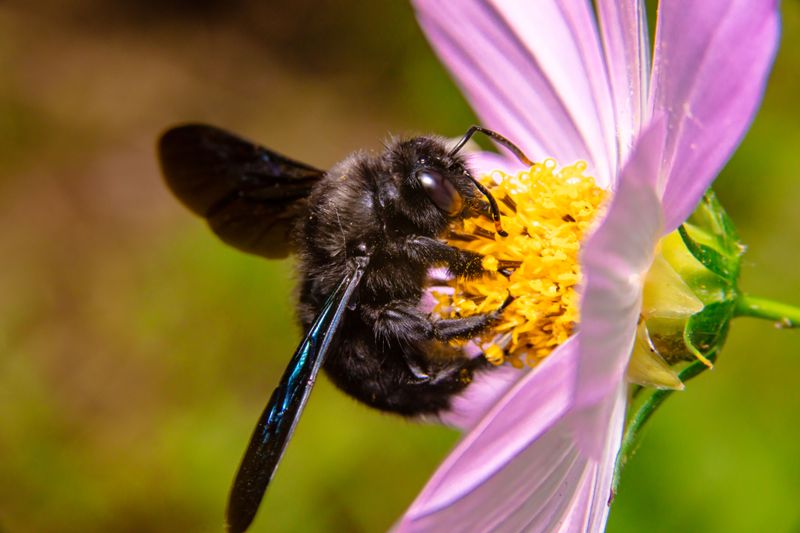
The long growing season also means more flowering plants nearby. Carpenter bees are pollinators, and a yard full of blooms keeps them fed and motivated to stay close to their nesting sites.
Rainfall levels across the state contribute to faster wood decay on exposed surfaces. A porch that gets rained on regularly without proper sealing becomes noticeably softer within a few seasons.
Carpenter bees are taking over Kentucky porches in part because the environment does half their work for them. The climate primes the wood, and the bees just show up to finish the job. Knowing this gives homeowners a real advantage when planning prevention strategies.
Signs You Already Have Carpenter Bee Damage
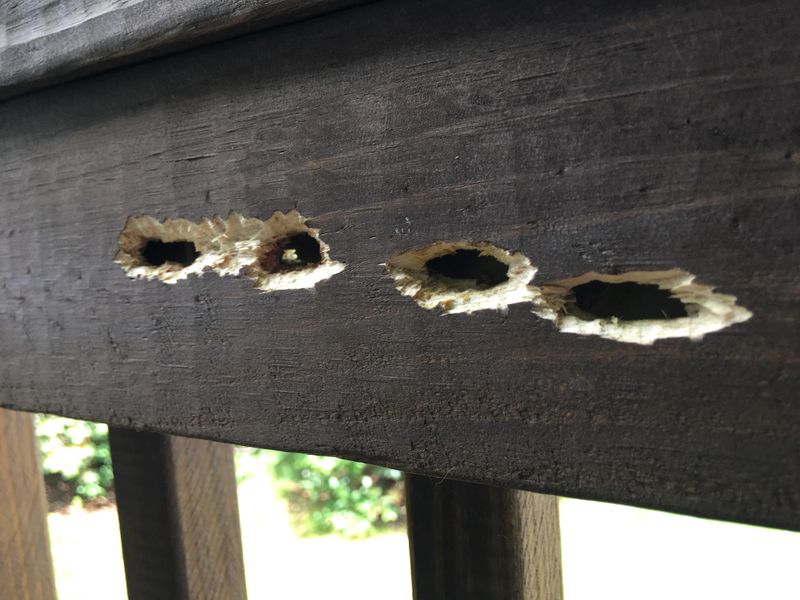
Round holes in your wood are the most obvious sign. They look almost too perfect, like someone drilled them with a half-inch bit on a slow afternoon.
Below those holes, you will often find a yellowish-brown stain. That discoloration comes from bee waste and pollen being pushed out of the tunnel as the bee works inside.
Sawdust-like frass is another clue. Fresh shavings piling up beneath a wood surface mean active tunneling is happening right now, not last season.
Tapping on a suspected area can also reveal damage. A hollow sound where solid wood should be means tunnels have already been carved out beneath the surface.
Woodpeckers are an unexpected warning sign too. They love to tear into wood searching for carpenter bee larvae. If a woodpecker is hammering your porch rail, something is already living inside it.
The combination of bee tunnels and woodpecker damage can weaken a board faster than either would alone. Two problems feeding off each other is never a good sign.
Structural damage is not always visible from the outside. A board that feels soft or slightly springy underfoot may have tunnels running through it. Checking porch boards annually for soft spots can catch problems before they compromise the frame.
Catching carpenter bee damage early saves real money. A single board replacement costs far less than rebuilding a section of porch. Stay sharp, and your porch stays standing.
How Bad Can The Damage Actually Get
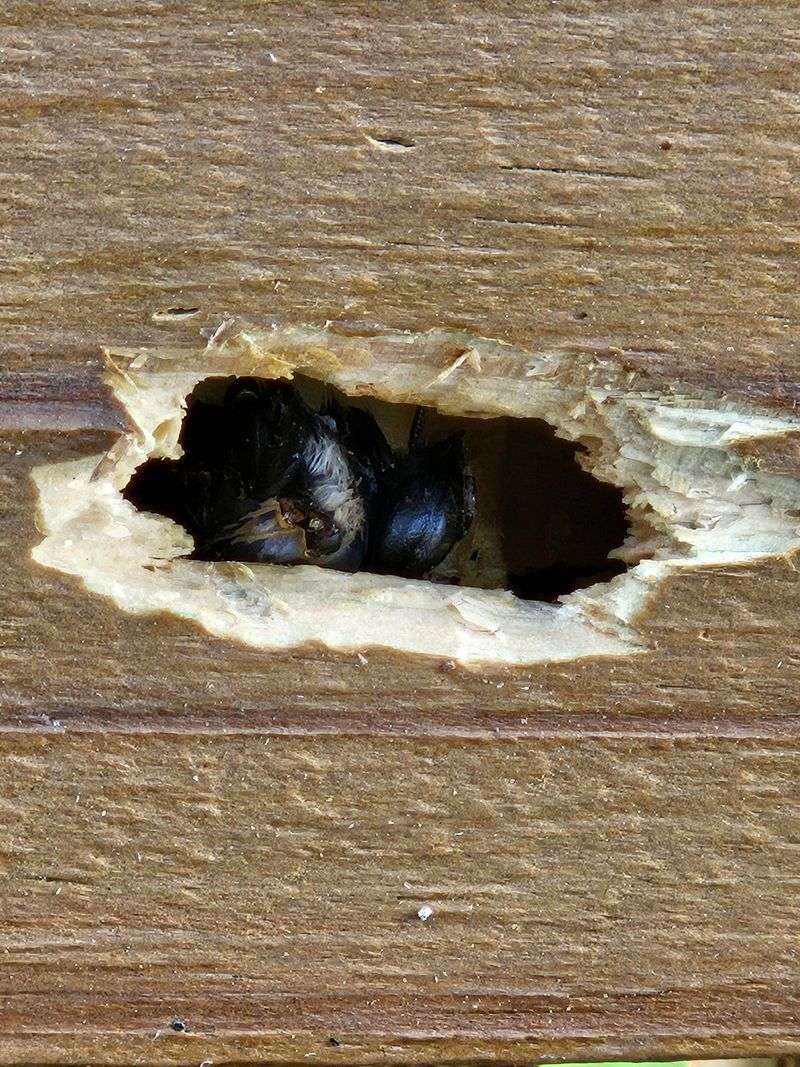
One tunnel is annoying. Twenty tunnels running through the same board is a structural problem. Carpenter bee damage compounds fast when left unaddressed.
A single female bee can carve a tunnel up to ten inches long. She then creates side chambers where she lays eggs and packs in pollen for her larvae to feed on.
When multiple bees target the same board over several seasons, the wood becomes honeycombed with channels. At that point, the board loses most of its load-bearing ability.
Porch ceilings, fascia boards, and deck railings are the most commonly damaged areas. These are not decorative pieces. They hold up rooflines, shed water, and keep the structure sound.
Water intrusion makes things worse. Once a tunnel is open to the elements, rain gets in and accelerates rot from the inside out. What started as a bee problem becomes a moisture problem layered on top.
Replacement costs for heavily damaged porch components can run into the hundreds or even thousands of dollars depending on the scope. A small infestation ignored for two or three seasons can escalate quickly.
Carpenter bees move through Kentucky porches one small hole at a time, but the cumulative effect is anything but small. Treating this as a minor nuisance is exactly how major repairs sneak up on you.
When To Call A Professional And When To Handle It Yourself
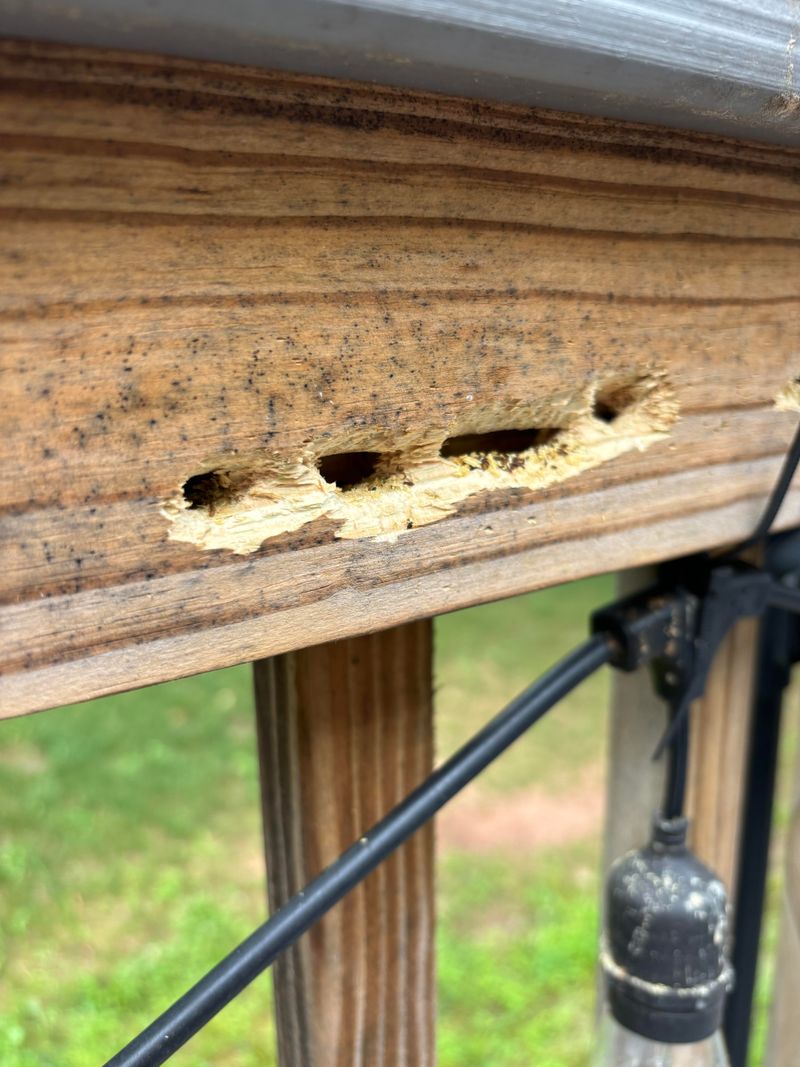
Small infestations with one or two entry holes are usually manageable on your own. A can of bee spray rated for wood-boring insects and some wood filler can handle early-stage problems.
Timing matters when treating yourself. Applying treatment at night, when bees are inside the tunnel, gives the product the best chance of reaching the nest directly.
Larger infestations spread across multiple boards or multiple seasons are a different story. At that scale, a professional pest control service has the equipment and access to treat the problem thoroughly.
Professionals can also assess structural damage that homeowners might miss. A pest inspector and a carpenter working together can identify which boards need treatment and which ones need full replacement.
If you have tried DIY methods for two seasons without success, that is a clear signal to bring in outside help. Repeated failed attempts often mean the infestation is deeper or more widespread than it appears.
Cost is a real consideration. Professional treatment for carpenter bees typically runs between one hundred fifty and five hundred dollars depending on the scope. That is still far less than major structural repairs down the road.
Knowing when to hand off the problem is not admitting defeat. It is smart homeownership, and it is the fastest way to stop carpenter bees from making your porch their permanent address.