The Meaning Behind Seeing A Black Swallowtail Butterfly In Your Ohio Garden
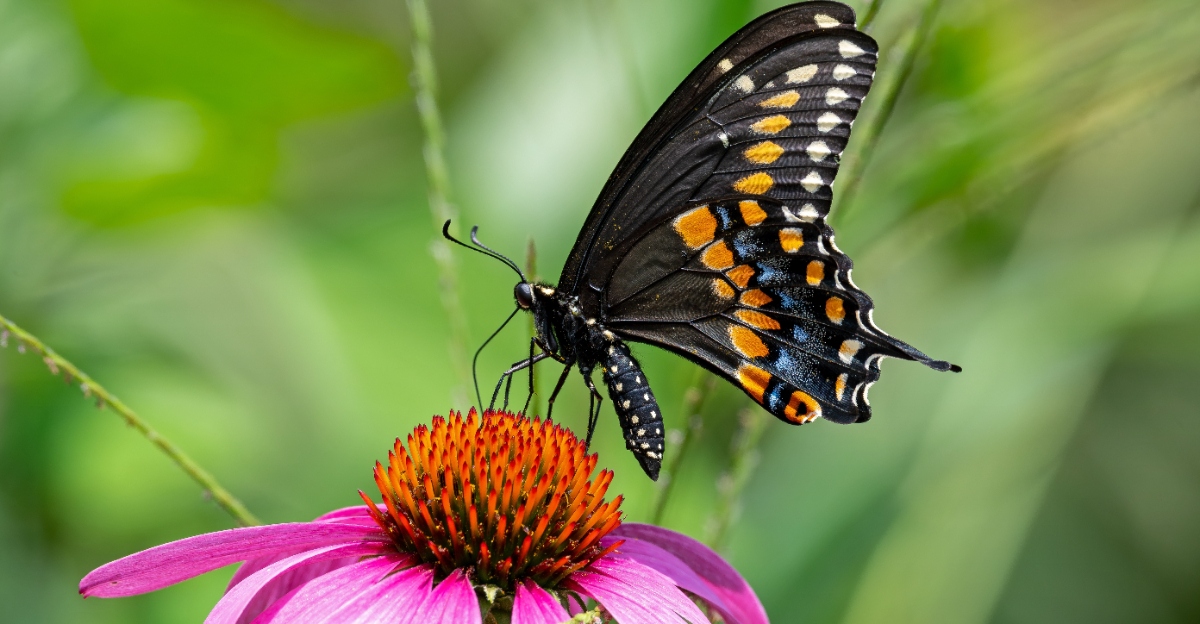
A black swallowtail landing in your garden has a way of making everything else stop. That slow, deliberate flight, the bold pattern on the wings, the way it takes its time moving from flower to flower like it has nowhere more important to be.
It is one of those moments that reminds you why you planted the garden in the first place. But black swallowtails are not random visitors.
They show up for reasons. What they do in your garden, where they land, how long they stay, and what they are looking for tells you something real about the health and makeup of your outdoor space.
For a lot of Ohio gardeners, a black swallowtail sighting carries a meaning that goes beyond the moment itself. Part natural history, part garden feedback, part something harder to put into words but worth exploring anyway.
Here is what that visit might actually mean.
1. A Black Swallowtail Means Your Garden Has Something To Offer
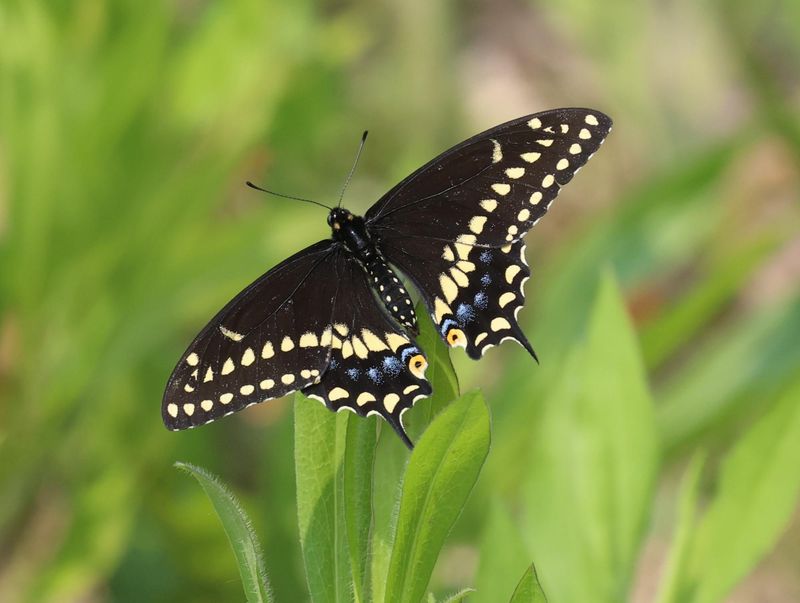
Watching a black swallowtail glide into your yard is one of those moments that feels quietly significant. It does not happen by accident.
Adult butterflies are constantly moving through neighborhoods and landscapes, searching for resources that will keep them alive and allow them to reproduce.
A visit often suggests your garden is providing at least one of those resources. That could be a blooming nectar flower, a patch of carrot family herbs, or simply a corner of the yard that is less disturbed than the surrounding area.
Butterflies are sensitive to their environment, and they tend to linger where conditions feel right.
That said, one butterfly does not confirm that everything in your garden is perfectly balanced. It is a signal worth noticing, not a full report card.
The exciting part is that you can look around and start asking what the garden already has to offer. You might find a dill plant, a clump of Queen Anne’s lace nearby, or a patch of wildflowers you had not thought much about.
Each of those details matters to a butterfly moving through the landscape. A single visit can be the beginning of a longer conversation between your garden and local wildlife.
2. Parsley Dill Or Fennel May Be Bringing Them In
A parsley pot can turn into a tiny nursery before anyone realizes what is happening. Black swallowtail caterpillars rely on plants in the carrot family, known to botanists as Apiaceae.
Common garden herbs like parsley, dill, and fennel are all members of this family, making them reliable targets for egg-laying females.
When you spot an adult black swallowtail hovering slowly near your herb bed, she may not just be passing through. Female butterflies often inspect host plants carefully before deciding to lay eggs.
That low, deliberate flight pattern near your dill or fennel is a behavior worth recognizing.
Gardeners in this state who grow these herbs for cooking often discover that their plants become shared spaces. A few chewed leaves on a fennel stalk or a dill stem is usually the first sign that caterpillars have arrived.
Your Ohio Garden Changes Every Week. Your Plan Should Too.
Gardening in Ohio changes quickly throughout the season. Every Friday you’ll receive a simple weekly plan showing exactly what to plant, prune, fertilize, harvest, and protect so you never miss the right timing.
This is not damage in the harmful sense. It is the herb bed doing double duty as a food source and a habitat.
Planting a little extra parsley or dill each season is an easy way to share the harvest with caterpillars while still having plenty left for the kitchen.
3. Tiny Eggs Could Be Hiding On Carrot Family Plants
Before caterpillars appear, there is a quieter stage happening right on your herb plants. A female black swallowtail lays small, round eggs on the leaves and stems of suitable host plants.
The eggs are tiny, pale, and easy to overlook if you are not looking carefully.
Knowing this changes how you approach routine garden tasks. Trimming back a fennel plant or harvesting a large bunch of parsley without checking the stems first could accidentally remove eggs that were placed there on purpose.
A quick scan before cutting takes only a few seconds and can make a real difference.
Ohio State University Extension notes that black swallowtails use plants in the carrot family as their primary larval hosts.
That means any time you are working around parsley, dill, fennel, carrots, or even wild plants like Queen Anne’s lace, it is worth pausing to look.
Turn a few leaves over. Check the undersides of stems near the top of the plant.
Eggs are most likely found on young, fresh growth. Getting into this habit costs nothing and keeps you more connected to what is actually happening in your garden between visits.
4. Striped Caterpillars May Be The Next Garden Surprise
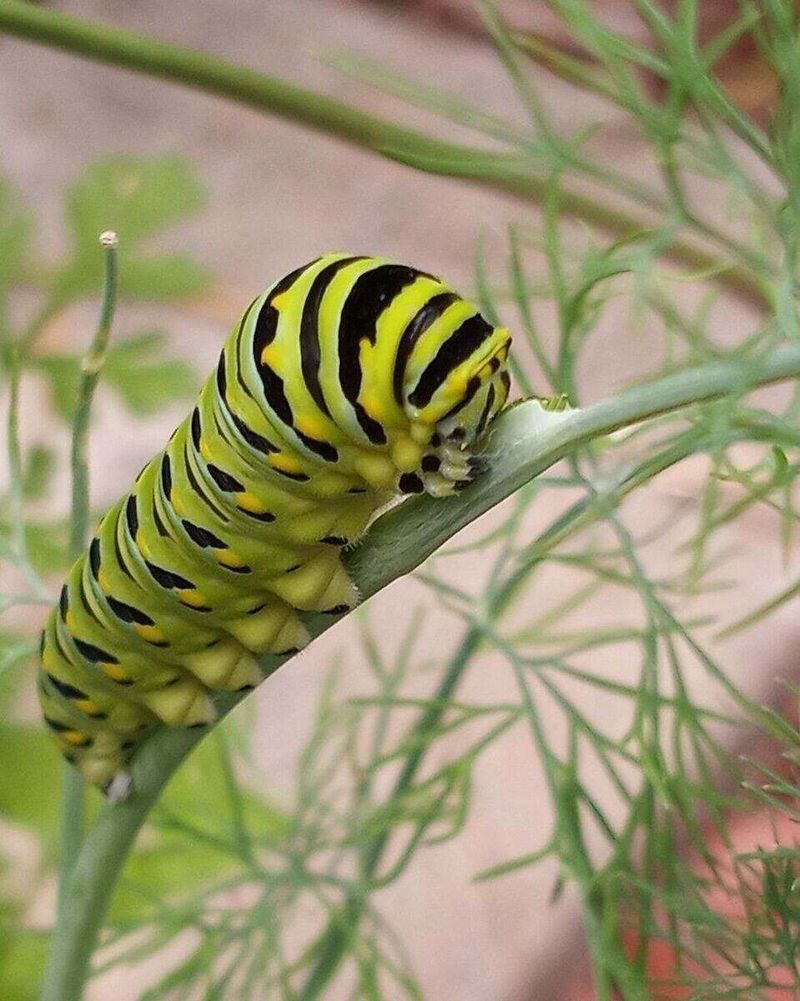
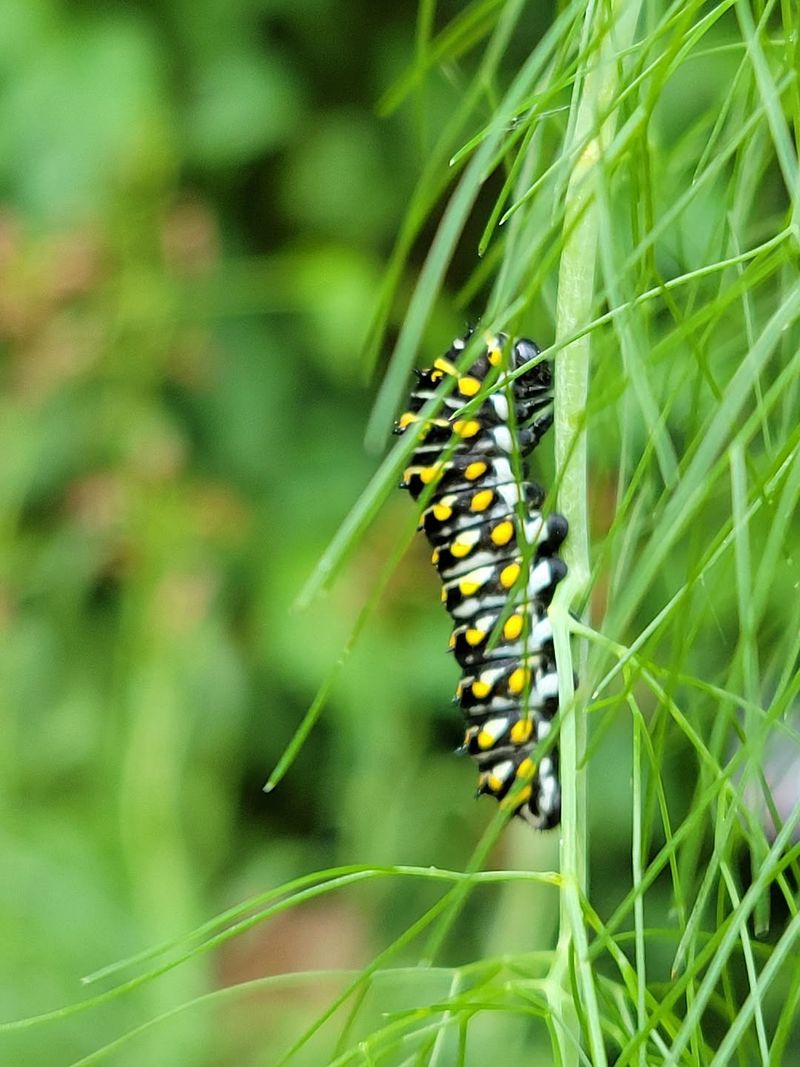
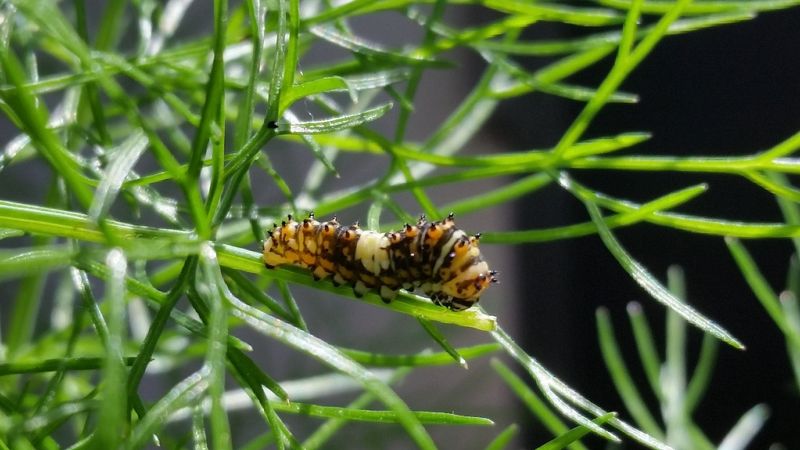
Finding a boldly patterned caterpillar on your parsley is one of those garden moments that stops you in your tracks. Young black swallowtail caterpillars start out small and dark, but as they grow, they develop green and black bands with small yellow spots.
They are striking once you know what to look for.
These caterpillars feed on the foliage of their host plants, which means you will notice some chewing on your dill, fennel, or parsley. For gardeners who grow these herbs mainly to eat, that can feel frustrating at first.
But the amount of foliage a few caterpillars consume is usually manageable, especially if you plant generously from the start.
A practical approach is to designate at least one herb plant as a caterpillar plant each season. Let that one go without harvesting, and use the others for cooking.
This way, both needs are met without conflict. University extension resources often encourage this kind of shared-use planting in home gardens.
Watching a caterpillar grow through its stages on your own parsley is also genuinely fascinating, especially for kids. It turns an ordinary herb bed into something much more alive and interesting throughout the summer months.
5. Nectar Flowers Can Turn A Quick Visit Into A Longer Stay
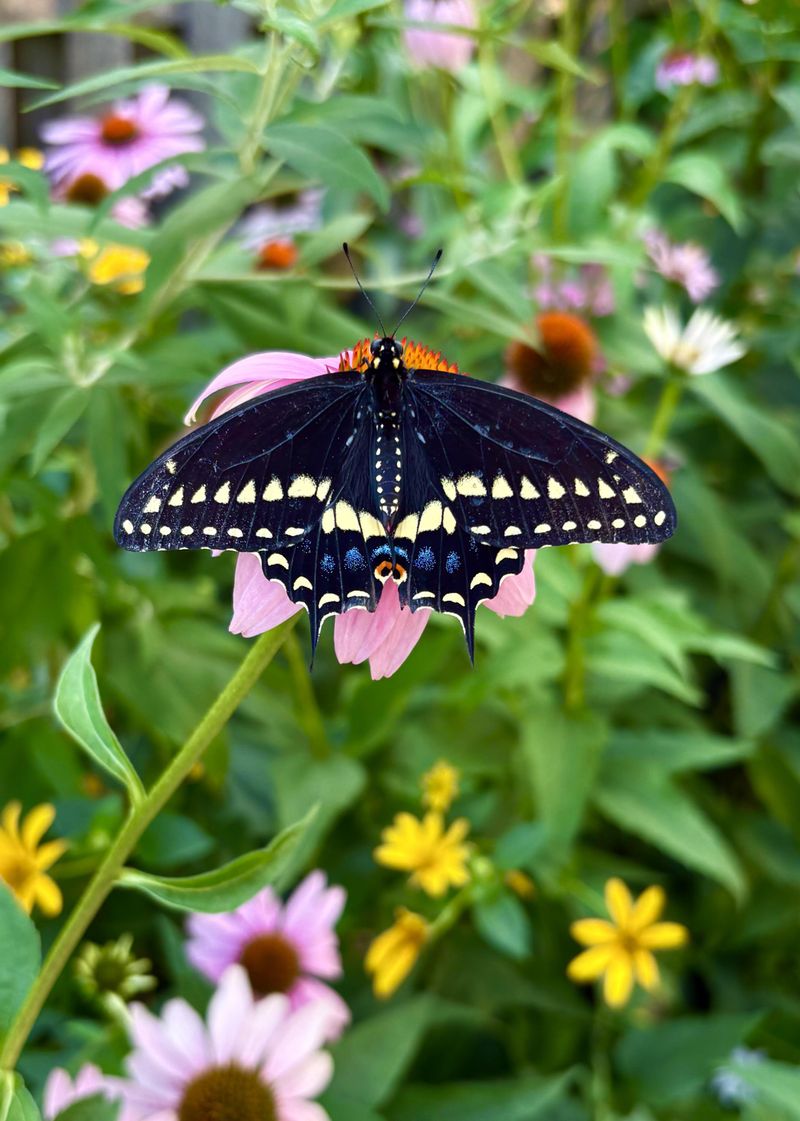
Adult black swallowtails do not stick around a garden just because they spotted a host plant. They also need nectar, and the flower choices you make have a real effect on how long they linger.
A garden with only one or two blooming plants at a time may attract a brief visit. A garden with a variety of flowers blooming across the season gives butterflies a reason to return.
Some reliable nectar sources for adult black swallowtails include purple coneflower, milkweed, phlox, zinnia, and clover. These are flowers that tend to produce accessible nectar and offer a landing surface large enough for a butterfly to rest while feeding.
Mixing annuals and perennials helps extend the blooming window from late spring through early fall.
No single flower guarantees that black swallowtails will visit on any given day. Weather, population levels, and surrounding habitat all play a role.
But a diverse planting gives you better odds and also supports a wider range of pollinators beyond just one species. Think of the flower bed as a general invitation rather than a targeted lure.
The more varied and continuous the bloom, the more likely your Ohio garden becomes a regular stop along a butterfly’s daily route through the neighborhood.
6. A Chemical-Free Corner Gives Caterpillars A Better Chance
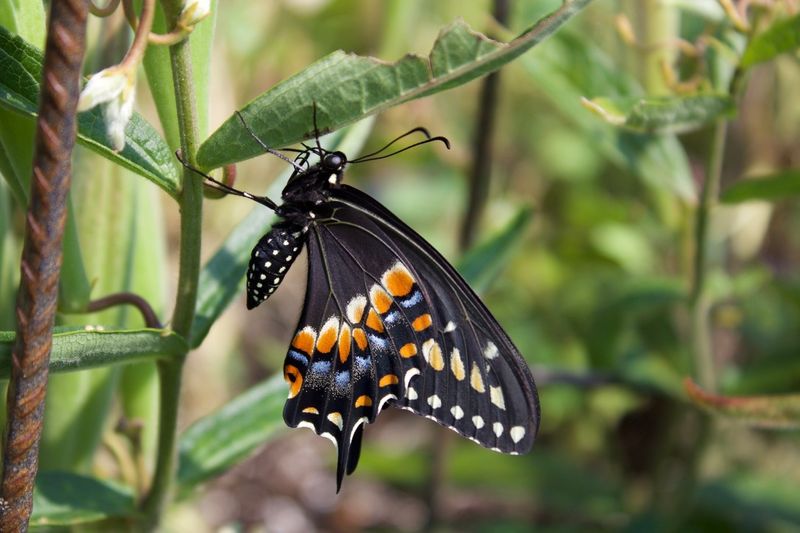
Broad-spectrum insecticides do not distinguish between a pest and a caterpillar that will one day become a butterfly. When sprays are applied to or near host plants, they can affect caterpillars at any stage of development.
This is one of the most straightforward ways that well-meaning garden care can work against butterfly habitat without anyone intending it to.
The practical step is simple. If you know you have parsley, dill, fennel, or other carrot family plants in the garden, avoid applying insecticides to those plants.
Avoid spraying the flowers immediately surrounding them too. Spot-treating specific pest problems on other plants is a more targeted approach than blanket spraying across the whole bed.
This does not mean abandoning pest management altogether. It means being intentional about where and when sprays are used.
Many Ohio gardeners find that keeping one section of the yard lower-input creates a useful buffer zone. With fewer products and less intervention, caterpillars and other beneficial insects can complete their life cycles there.
Even a small, untreated corner near your herb bed can make a difference. The goal is not a perfectly managed garden but a garden that leaves room for the insects doing quiet, useful work in the background every single day.
7. Native Host Plants Make The Visit More Meaningful
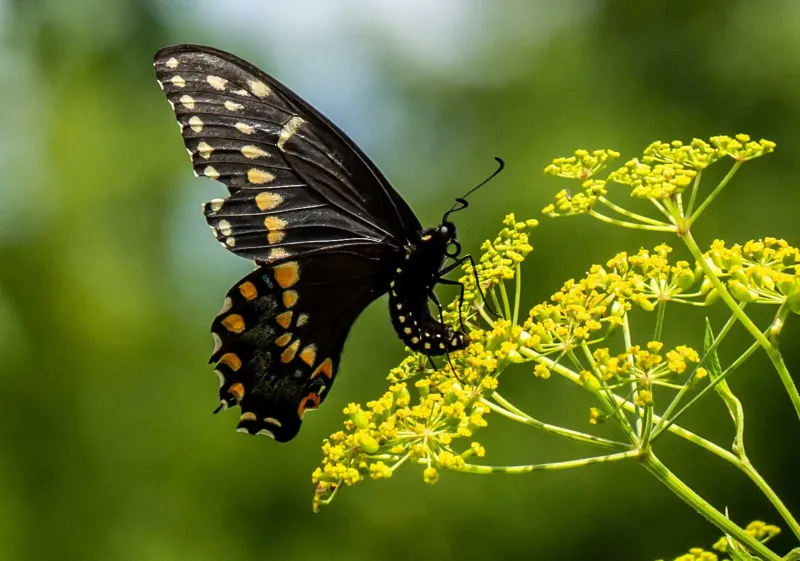
Golden alexanders might not be the first plant that comes to mind for a home garden. But it is one of the native carrot family plants that black swallowtails can use as a larval host.
Unlike introduced herbs such as parsley and dill, golden alexanders is a plant that evolved alongside local insects in this region. That connection runs deeper than just food.
Native plants support a more complex web of relationships in the garden. When caterpillars feed on locally evolved plants, they are participating in a broader food web.
That web also includes native birds, spiders, and other insects that rely on those caterpillars as a food source. Planting golden alexanders or allowing Queen Anne’s lace to grow in a naturalized corner adds another layer to that web.
This does not mean every native plant in the carrot family will automatically attract black swallowtails. Host plant use depends on local populations, plant availability, and habitat conditions.
But adding even one or two native options alongside your herb garden gives butterflies more choices. It also connects your yard more directly to the regional landscape.
Resources from ODNR and university extension programs can help identify which native plants are well-suited to your specific area of the state.
8. Every Flutter Points To A Working Pollinator Garden
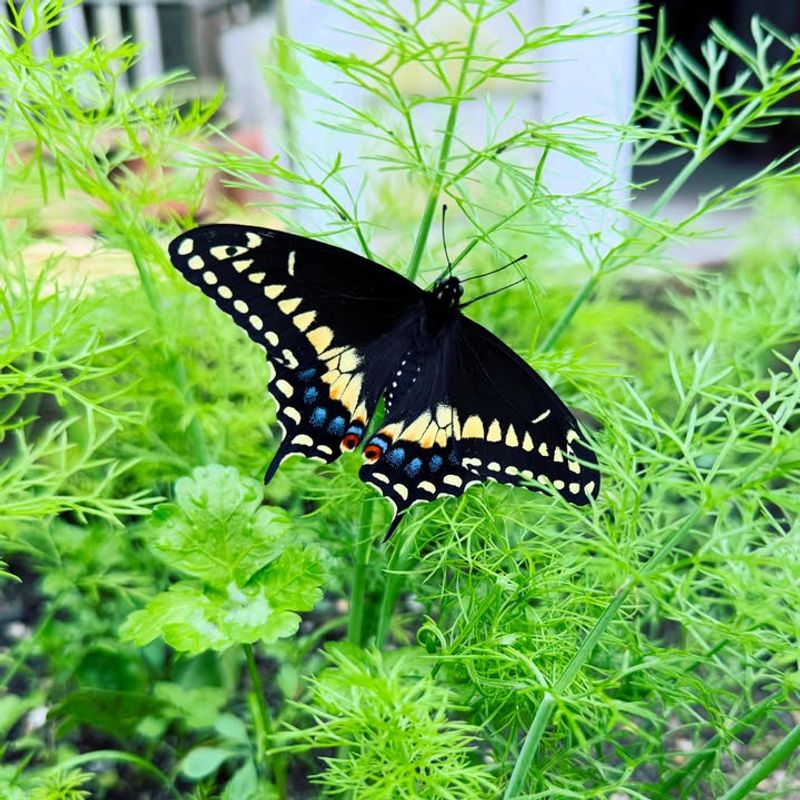
A black swallowtail passing through your garden is doing more than providing a pleasant view. It is a sign that the garden is functioning as habitat, even if that habitat is still developing.
Adult butterflies pollinate flowers as they feed. Caterpillars become part of the food web.
Each stage of the butterfly’s life connects to something else happening in the yard.
Seeing a black swallowtail regularly across a season suggests that multiple needs are being met. There may be nectar flowers in bloom, host plants available for egg-laying, and enough undisturbed space for caterpillars to grow.
That combination does not happen by accident in most yards. It takes some intentional planting and a willingness to leave parts of the garden a little less tidy.
The takeaway is not that your garden needs to be a certified wildlife sanctuary to matter. Small choices add up.
An extra pot of dill, a row of coneflowers, and one pesticide-free corner can collectively turn an ordinary yard into a meaningful stop for pollinators. Every flutter you notice is a small piece of feedback from the local ecosystem.
Pay attention to it, build on what is already working, and the garden will keep rewarding that effort season after season.