Take Immediate Action If Your Pennsylvania Hydrangea Leaves Look Like This In June
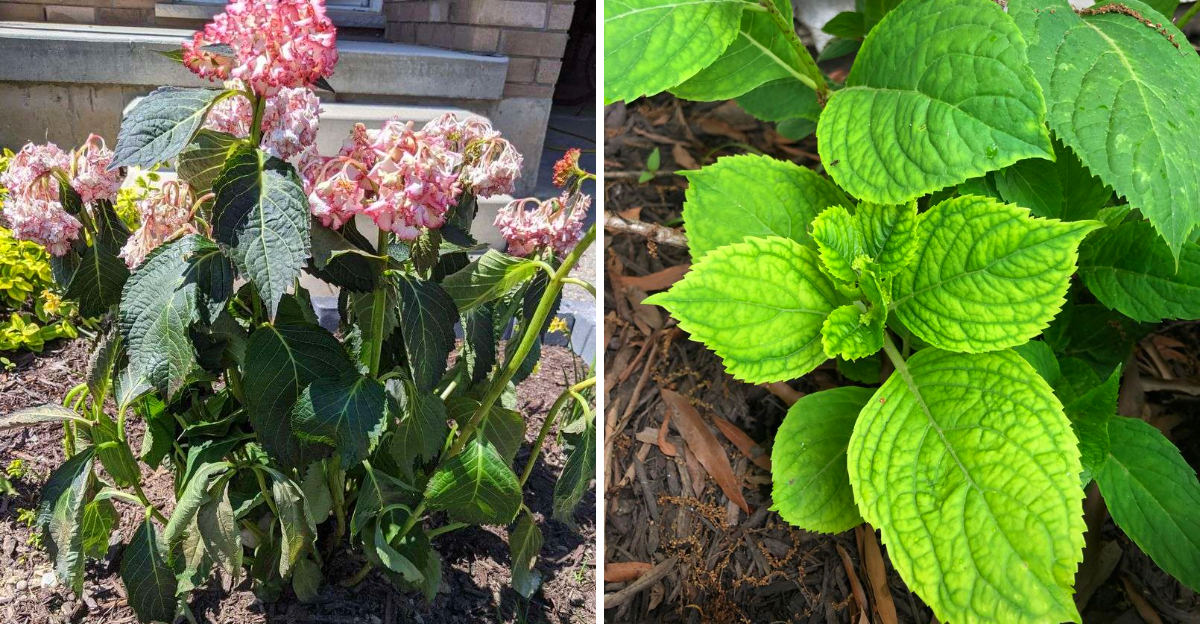
Hydrangeas have a talent for looking magnificent in June, and they also have a talent for making Pennsylvania gardeners nervous the moment something looks slightly off on the leaves.
A spot here, some yellowing there, a little browning on the edges, and suddenly you are deep in a gardening forum at midnight trying to figure out what went wrong.
Sound familiar? Here is the reassuring part: not every imperfect hydrangea leaf is a cause for concern.
But some symptoms genuinely are worth catching early, especially in June when Pennsylvania’s warm days, humid nights, and frequent rain create ideal conditions for fungal issues and pest pressure to build quietly in the background.
Knowing what you are actually looking at makes a real difference, and most of the fixes are a lot simpler than a midnight forum spiral would suggest.
1. Brown Spots With Red-Purple Halos
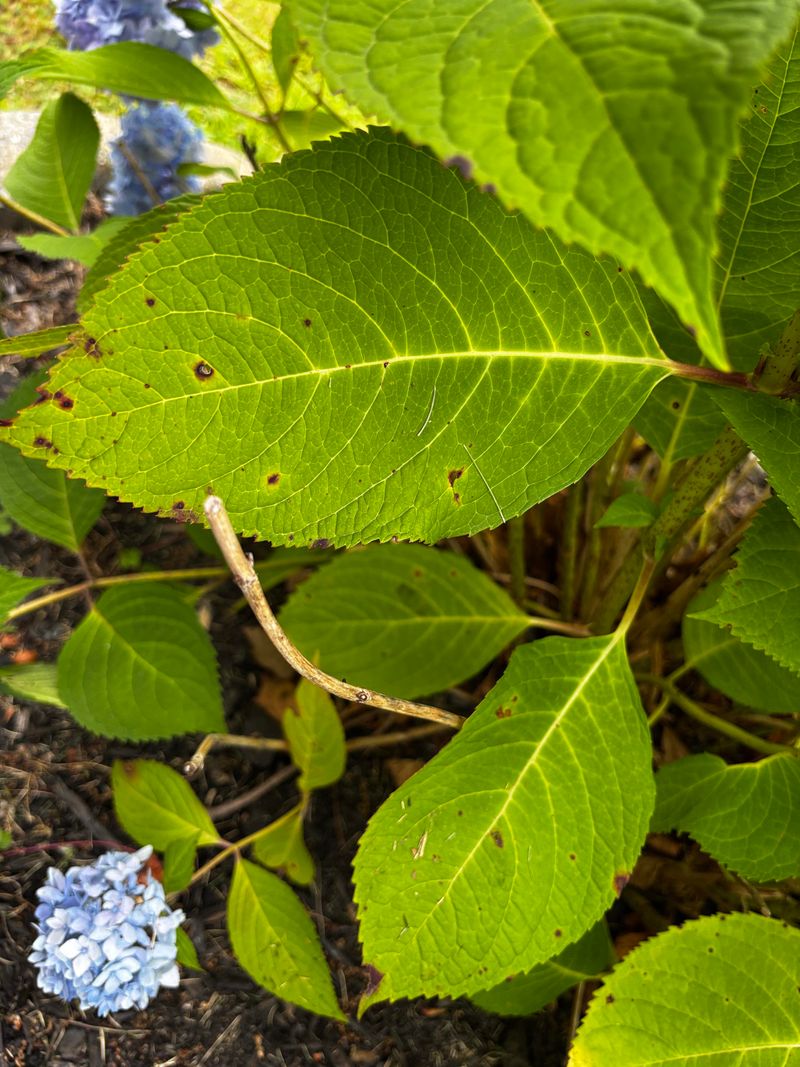
On a wet June morning in Pennsylvania, those small brown spots ringed with reddish or purple borders can stop you in your tracks.
What you may be looking at is Cercospora leaf spot, a fungal issue that tends to show up when moisture stays on leaf surfaces for extended periods.
Pennsylvania’s humid summers give this fungus plenty of opportunity to get started, especially in shaded foundation beds where air movement is limited.
The spots often begin small and scattered, mostly appearing on lower leaves first. As the season continues, they can grow and merge if conditions stay wet and airflow stays poor.
Leaves that develop heavy spotting may eventually turn yellow around the affected areas and drop earlier than they should.
Removing fallen leaves from around the base of the shrub is a reasonable first step since spores can linger in leaf litter on the soil. Thinning nearby plants or shrubs to improve airflow around your hydrangea can also help reduce moisture buildup on the foliage.
Watering at the base of the plant rather than overhead keeps leaves drier and less hospitable to fungal growth.
If spotting is widespread across multiple shrubs, a fungicide labeled for ornamental use may be worth considering, though improving growing conditions is often the more lasting approach for Pennsylvania home gardens.
2. Yellow Patches With White Powder Under Leaves
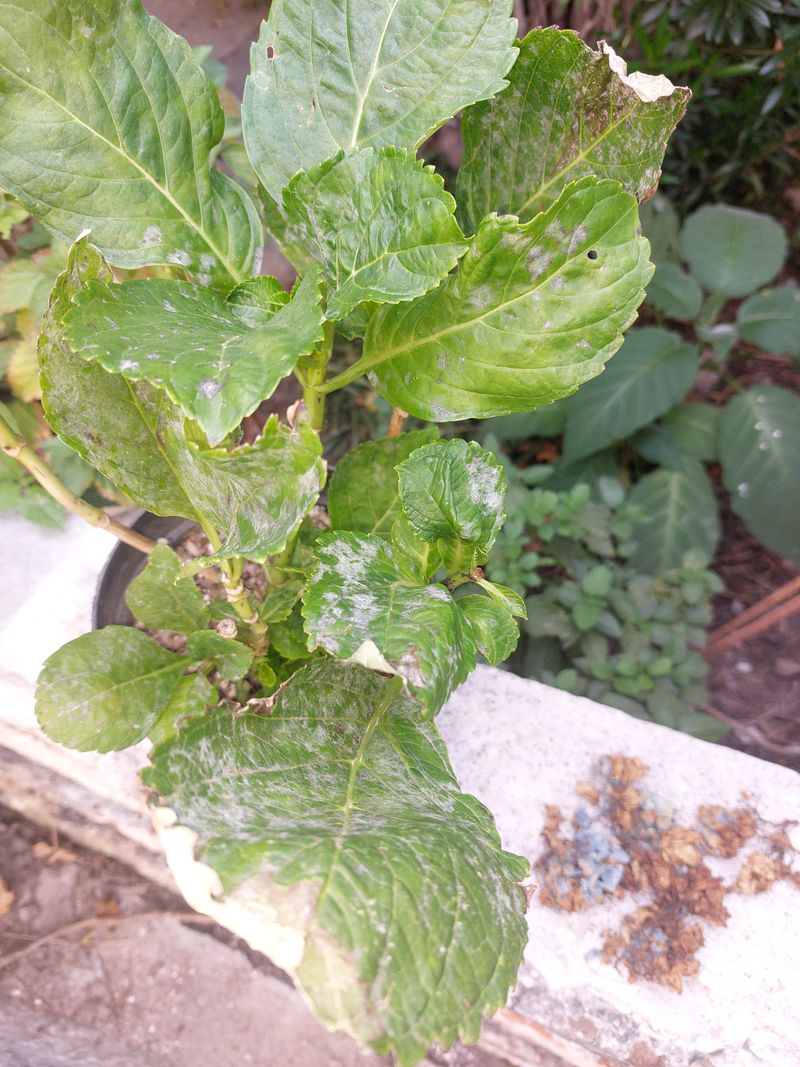
Pale yellow areas on the upper side of hydrangea leaves paired with a white or grayish powder on the underside are a fairly recognizable combination in Pennsylvania gardens come June.
Powdery mildew is the likely explanation, and while it sounds alarming, it is one of the more common fungal conditions affecting ornamental shrubs in humid climates.
Pennsylvania’s warm, humid evenings combined with moderate daytime temperatures create a comfortable window for this fungus to spread.
Unlike some other fungal issues, powdery mildew does not actually need standing water on the leaf surface to get established. It tends to thrive when days are warm, nights are cool and moist, and air circulation around the shrub is limited.
Hydrangeas tucked against house foundations or nestled in dense shrub borders in Pennsylvania yards are particularly prone to this kind of problem.
Your Pennsylvania Garden Changes Every Week. Your Plan Should Too.
Gardening in Pennsylvania changes quickly throughout the season. Every Friday you’ll receive a simple weekly plan showing exactly what to plant, prune, fertilize, harvest, and protect so you never miss the right timing.
Improving airflow by trimming back nearby plants can make a noticeable difference over time. Avoid overhead watering in the evening since wet foliage sitting overnight gives the fungus a better chance to spread.
Some hydrangea varieties show more resistance to powdery mildew than others, so future plant choices can factor this in.
For existing plants showing significant coverage, a fungicide labeled for powdery mildew on ornamentals may help slow the spread when applied according to product directions.
Catching it in June gives you more of the growing season to work with.
3. Wilting Leaves In Damp Soil
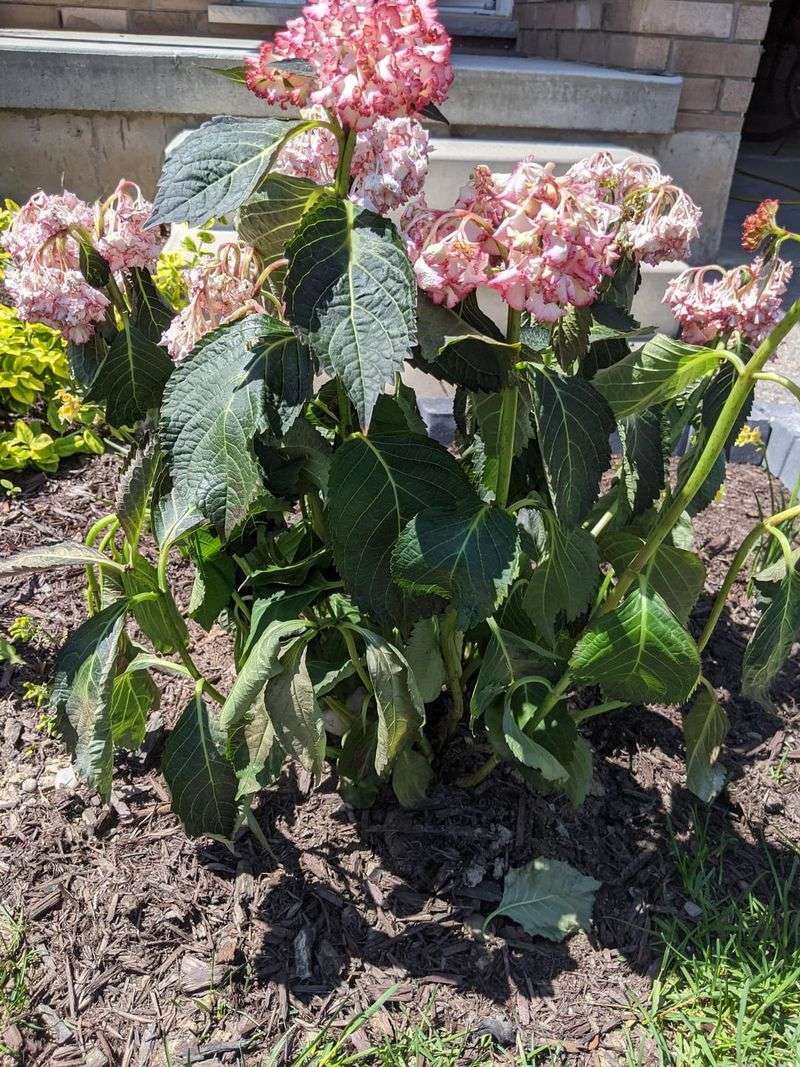
Wilting hydrangea leaves when the soil around them feels damp or even soggy is one of those symptoms that can genuinely confuse Pennsylvania gardeners. The natural instinct is to water more, but in this case, adding water may actually make things worse.
Wilting in wet soil often points to a root or drainage problem rather than a lack of moisture.
When roots sit in saturated soil for too long, they struggle to take up oxygen and water effectively. This can lead to a condition where the plant looks thirsty even though the ground is wet.
Pennsylvania clay-heavy soils are especially prone to holding too much water after the heavy June rains that roll through the region, and hydrangeas planted in low spots or near downspouts can be particularly affected.
Checking soil drainage around the shrub is a good starting point. If water pools near the base after rain and stays for more than a few hours, improving drainage by amending the soil or adjusting the planting site may be worth the effort.
For container-grown hydrangeas on Pennsylvania patios or porches, checking that drainage holes are clear and not blocked can help right away.
Avoid watering on a fixed schedule and instead check the soil by pressing a finger a couple of inches down before deciding whether moisture is actually needed.
Responding to what the soil tells you rather than the calendar tends to serve hydrangeas better.
4. Crispy Brown Leaf Edges
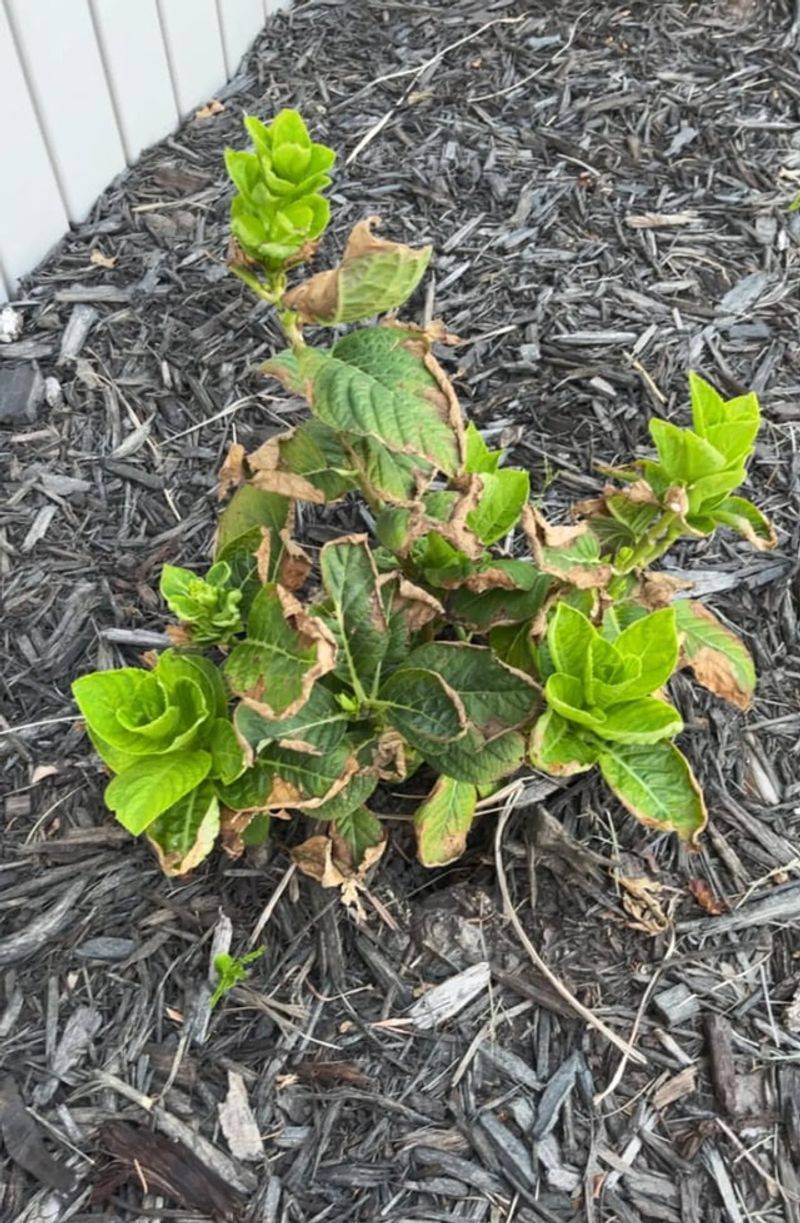
Dry afternoon heat in Pennsylvania can leave its mark on hydrangea leaves fairly quickly, and crispy brown edges are one of the clearest signs that the shrub is under some kind of stress.
Leaf scorch often shows up along the outer margins of leaves, sometimes spreading inward as conditions continue.
It can look a bit like the leaf was lightly toasted around the edges, and it tends to affect the largest, most exposed leaves first.
Several things can contribute to this kind of browning. Too much direct sun during the hottest part of the day is a common factor, especially for hydrangea varieties that prefer partial shade.
Inconsistent watering is another contributor since roots that swing between too dry and too wet have a harder time keeping foliage hydrated during warm spells.
Reflected heat from nearby pavement, walls, or light-colored surfaces can also intensify the problem for Pennsylvania plantings in tight urban or suburban spaces.
Mulching around the base of the shrub helps retain soil moisture and keeps roots cooler during hot stretches. A two-to-three inch layer of organic mulch pulled a few inches away from the main stem is a reasonable approach.
If the hydrangea is getting more than five or six hours of direct afternoon sun, some added shade from nearby plants or structures may reduce scorch over time.
Giving the shrub a deep, slow watering during dry spells rather than frequent shallow watering also supports more consistent leaf hydration.
5. Pale Leaves With Green Veins
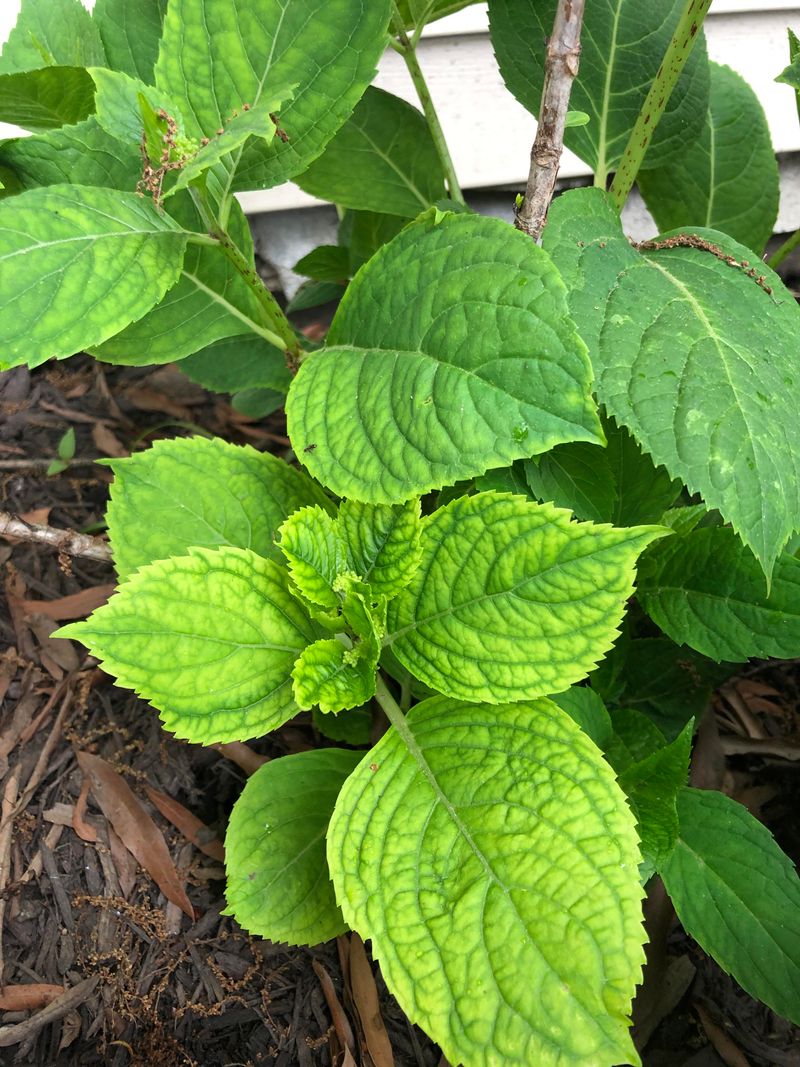
Pale new growth where the leaf tissue fades to yellow or light green while the veins stay noticeably darker green is a pattern worth paying attention to on Pennsylvania hydrangeas in June.
This symptom, called chlorosis, typically points to a nutrient uptake issue, and iron chlorosis is among the more common versions seen in ornamental shrubs.
The plant is not producing enough chlorophyll in the leaf tissue between the veins, which gives it that washed-out, streaky look.
Soil pH plays a big role here. When soil is too alkaline, iron and other micronutrients become less available to plant roots even if they are technically present in the soil.
Some Pennsylvania soils, particularly those near concrete foundations or in areas with naturally higher pH, can push conditions in a direction that makes nutrient uptake harder for acid-preferring shrubs like certain hydrangea species.
Getting a basic soil test is one of the most practical steps a home gardener can take when chlorosis appears.
Pennsylvania State University Extension offers soil testing resources that can give you a clearer picture of pH and nutrient levels before you make any amendments.
If the test confirms high pH, acidifying the soil gradually over time is generally a safer approach than making large, sudden changes. Using a fertilizer formulated for acid-loving plants may also help support better nutrient availability during the growing season.
Consistent monitoring of new leaf growth through summer will show whether the adjustment is working.
6. Speckled Leaves With Fine Webbing
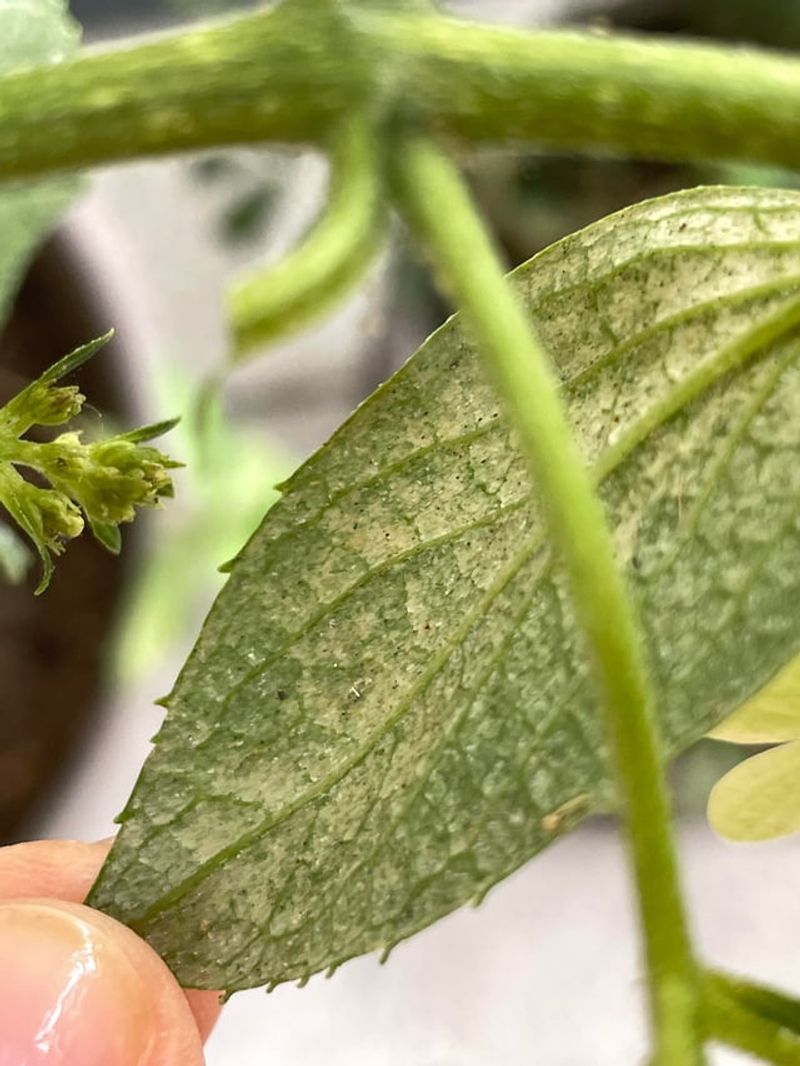
Fine webbing stretched across the underside of hydrangea leaves is one of those things that is easy to overlook until a good stretch of dry, hot weather reveals just how active spider mites have been.
These tiny pests are not actually insects but rather arachnids, and they feed by piercing leaf tissue and drawing out plant fluids.
The result is a stippled or speckled pattern across the leaf surface that can make foliage look dusty or faded from a distance.
June in Pennsylvania can bring the kind of warm, dry spells between rain events that spider mites find particularly favorable.
Shaded shrub borders that also have good airflow may see less activity, but hydrangeas growing near heat-absorbing walls or in spots that dry out quickly between rains can become more attractive to mite populations.
The webbing itself is a confirmation sign that mites are present rather than some other pest or environmental issue.
A strong spray of water directed at the undersides of leaves can knock mite populations down and is often a reasonable first response for moderate cases.
Checking for natural predators like ladybugs or predatory mites before reaching for a pesticide is worth a moment of observation since these beneficial insects can help manage mite numbers on their own.
For heavier infestations, a miticide or insecticidal soap labeled for spider mites on ornamentals can be applied following label directions carefully.
7. Chewed Or Folded Leaves
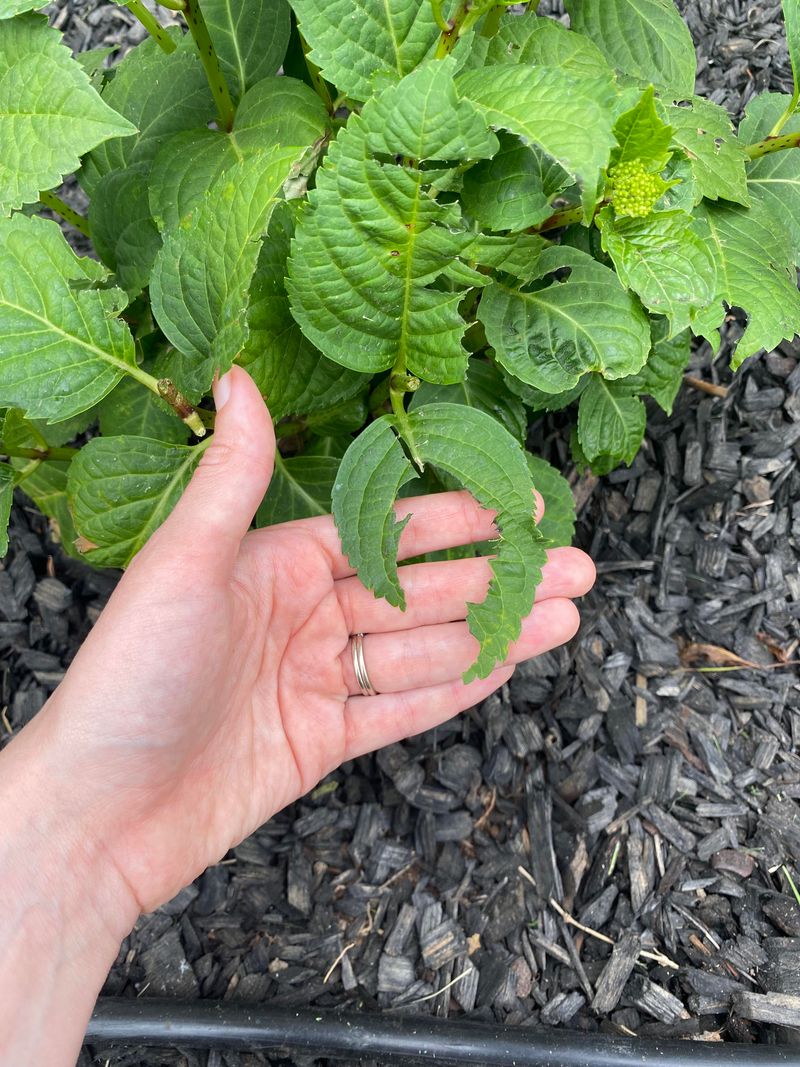
Folded leaf tips and ragged chewed edges on hydrangea foliage in June are usually the work of insects rather than disease, and spotting them early can make a real difference in how well the shrub holds its appearance through the rest of summer.
Leafrollers, which are the caterpillars of certain small moths, are one of the more common culprits in Pennsylvania gardens.
They fold or roll leaf edges and secure them with silk, creating a sheltered spot where they feed and develop.
Japanese beetles, slugs, and caterpillars of various kinds can also produce chewed leaf edges with a less uniform pattern.
The damage tends to look rougher and more scattered than leafroller activity, and you may find the insects themselves if you check the undersides of leaves or the soil around the base of the shrub in the evening when slugs are more active.
For leafrollers, unrolling the folded leaves and removing the caterpillars by hand is a practical approach for small infestations. Dropping them into soapy water is an effective way to handle them without chemicals.
Japanese beetle traps can attract more beetles to your yard than they catch, so hand-picking them into soapy water in the early morning when they are slower is often recommended instead.
Keeping the area around your hydrangeas clear of debris reduces shelter for slugs and other ground-dwelling pests that contribute to leaf damage through the Pennsylvania summer season.
8. Spots Spreading After Wet Weather
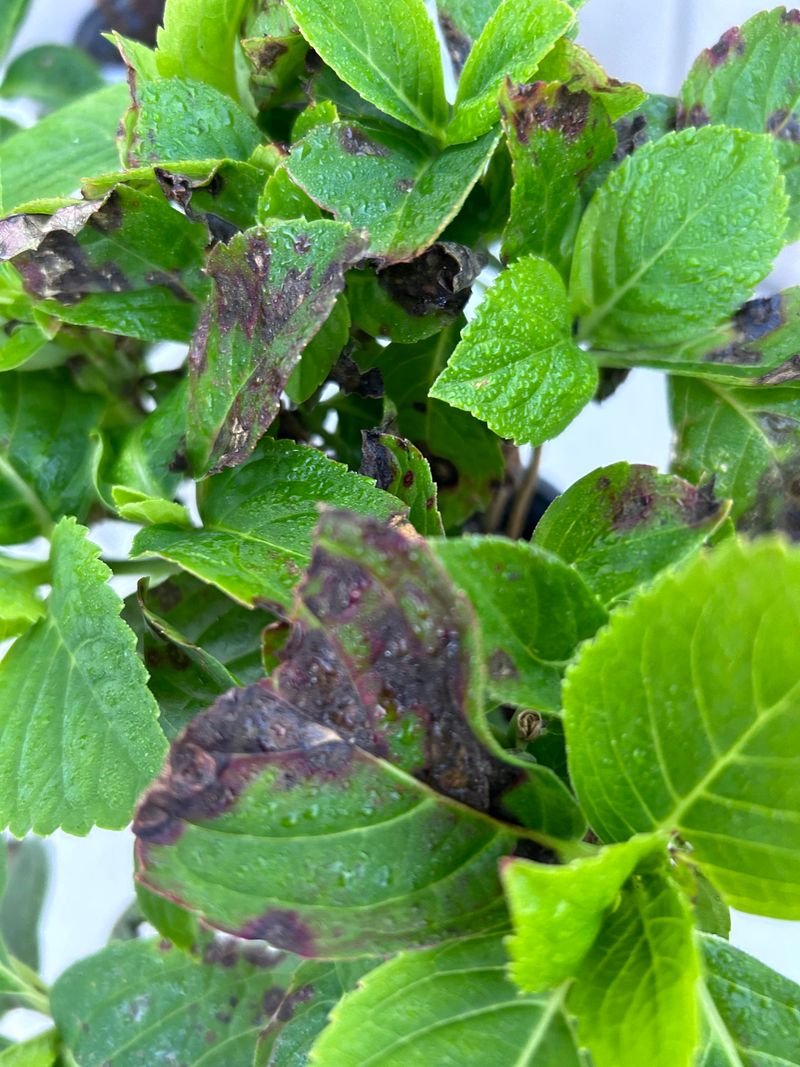
Spots that seem to appear out of nowhere after a stretch of rainy Pennsylvania weather and then spread quickly to neighboring leaves are worth examining closely.
Anthracnose is one fungal condition that fits this pattern, producing irregular brown or tan spots that can grow larger and sometimes develop lighter centers with darker borders as the infection progresses.
Warm, wet conditions in June are particularly favorable for this kind of fungal activity on hydrangeas.
The shrubs most likely to show rapid spot spread are those with dense canopies where leaves stay wet longer after rain and those planted in spots with limited airflow.
Pennsylvania’s June weather can bring several rainy days in a row, and a hydrangea that never fully dries out between events gives fungal spores a much easier time moving from leaf to leaf.
Removing affected leaves and disposing of them away from the garden rather than composting them is a practical early step. Raking up fallen spotted leaves around the base of the plant also helps reduce the number of spores available to reinfect the shrub.
Pruning to open up the interior of the plant improves airflow and helps leaves dry more quickly after rain.
If spotting is spreading aggressively across the whole shrub, a fungicide labeled for the specific pathogen and for use on ornamental hydrangeas may help slow progression when applied according to label guidance.
Consistent monitoring after wet spells gives you a better chance of catching new outbreaks before they become harder to manage.