Replace Your Thirsty Lawn With These No-Fuss Arizona Native Ground Covers
Keeping a lawn green through summer can start feeling like a project that never really ends. Watering becomes part of the routine, dry patches demand attention, and the grass often seems to need more care just when temperatures are at their highest.
After dealing with the same cycle year after year, it is natural to start wondering whether there is a simpler way to fill those spaces.
Landscaping priorities have changed for many homeowners in recent years. More attention is being given to plants that fit local conditions and require less maintenance over time.
The goal is still an attractive outdoor space, but many people are looking for options that demand less water and less effort to maintain.
Arizona has no shortage of plants suited to those needs. Native ground covers are becoming more popular as alternatives to traditional lawns.
1. Frog Fruit Spreads Quickly Across Bare Ground
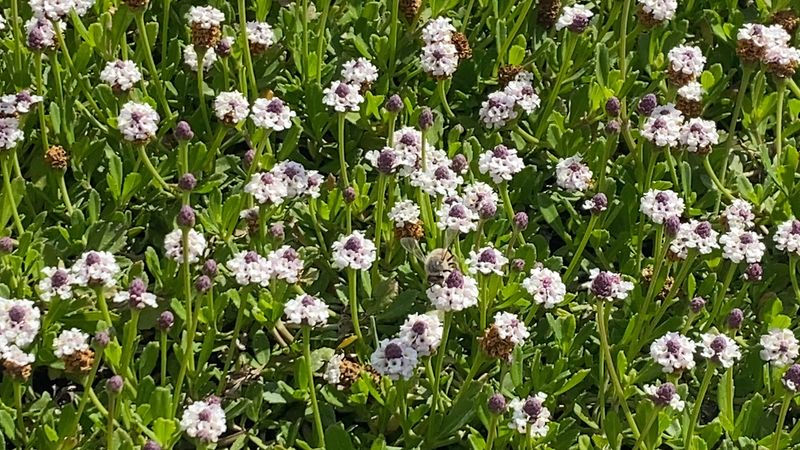
Bare dirt does not stand a chance once Frog Fruit moves in. Known scientifically as Phyla nodiflora, this tough little creeper spreads fast and fills open ground with a dense, mat-like cover that stays low to the soil.
It works beautifully in spots where nothing else seems to want to grow.
Tiny white and purple flowers appear from spring through fall, drawing in butterflies and native bees regularly. Gardeners in the desert Southwest have found it especially useful along walkways, around boulders, and in areas with compacted or poor soil.
It handles foot traffic better than most ground covers its size.
Frog Fruit needs very little water once it roots in. During the first season, occasional deep watering helps it get established.
After that, rainfall alone is often enough to keep it spreading steadily through most of the warm months.
It does go dormant in winter, turning tan and dry-looking when temperatures drop. That is completely normal behavior.
Come spring, it bounces back quickly and resumes spreading without any help from you.
Mowing or trimming once or twice a year keeps it tidy if it starts creeping beyond where you want it. No fertilizer is needed.
No special soil prep is required. Just plant it, water it through the first summer, and watch it take over the bare spots you never wanted to look at again.
2. Spreading Fleabane Covers Open Areas With Ease
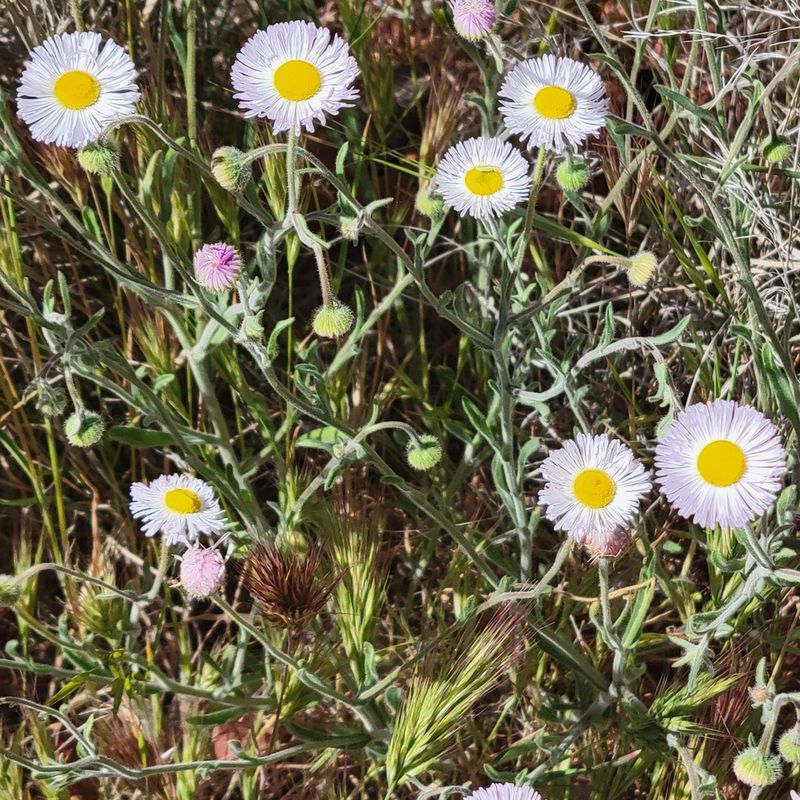
Walk past a patch of Spreading Fleabane on a warm morning and you will likely stop to look twice. Erigeron divergens covers open ground with dozens of small, white daisy-like flowers that bloom from late winter all the way into summer.
It looks delicate but acts tough.
Pollinators love it. Bees, butterflies, and small native insects visit the blooms constantly during peak flowering.
For gardeners trying to support local wildlife while reducing lawn space, this plant earns its keep without demanding much in return.
Sandy or gravelly soil suits it best. It does not like sitting in wet or clay-heavy ground for long.
Good drainage is the one condition it really needs to perform well across seasons.
Water it lightly during establishment, then back off. Overwatering is one of the few ways to set it back.
Your Arizona Garden Changes Every Week. Your Plan Should Too.
Gardening in Arizona changes quickly throughout the season. Every Friday you’ll receive a simple weekly plan showing exactly what to plant, prune, fertilize, harvest, and protect so you never miss the right timing.
Once rooted, it handles dry spells without complaint and reseeds itself naturally, filling in gaps over time.
Height stays between six and twelve inches depending on conditions, which makes it a practical choice for low borders, open slopes, or areas between larger shrubs. It spreads without becoming aggressive, so neighboring plants are not crowded out.
Cutting plants back after the main bloom period encourages fresh growth and keeps the patch looking neat. No complicated care routine is required.
Spreading Fleabane simply grows, blooms, and quietly does its job season after season in warm, dry landscapes.
3. Southwestern Mock Vervain Brings Color To Sunny Spaces
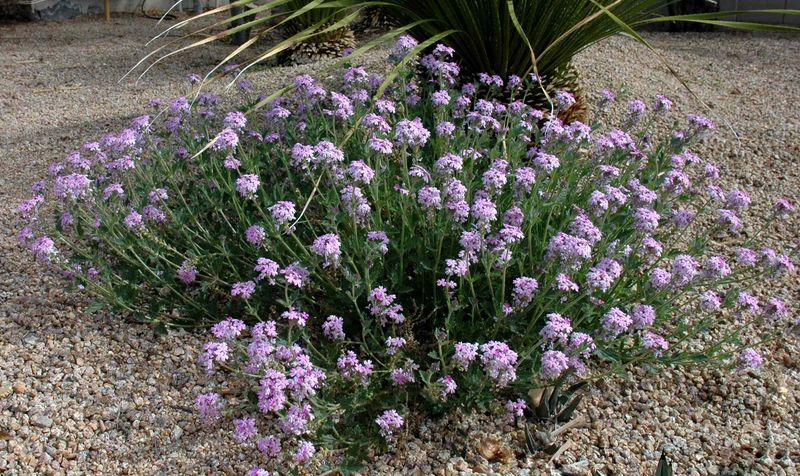
Few native ground covers pack as much color into such a small footprint as Southwestern Mock Vervain. Glandularia gooddingii produces clusters of vivid pink-purple flowers that pop against pale desert soil and sun-bleached rock.
It is the kind of plant that makes neighbors stop and ask what it is.
Bloom time runs from late winter through late spring, with some plants pushing out flowers again in fall if monsoon rains arrive. That extended color window makes it one of the more rewarding low-water choices for front yards and visible garden beds.
Full sun is where it thrives. Partial shade tends to reduce flowering and can cause leggy, weak growth over time.
Plant it where it gets at least six hours of direct sunlight daily for the best results.
Soil drainage matters more than soil richness. Sandy, rocky, or decomposed granite beds work perfectly.
Heavy clay soil holds too much moisture and tends to cause root problems, so amend or avoid those spots.
Established plants need water only every one to two weeks during hot, dry stretches. During cooler months, natural rainfall usually handles things on its own.
Supplemental irrigation should be reduced, not increased, once plants are settled in.
Butterflies flock to the blooms consistently. Hummingbirds also visit during peak flowering.
Spreading slowly by trailing stems, Mock Vervain fills gaps without taking over. It is a well-behaved, colorful, and genuinely useful plant for sunny desert spaces.
4. Whitemargin Sandmat Grows Close To The Soil Surface
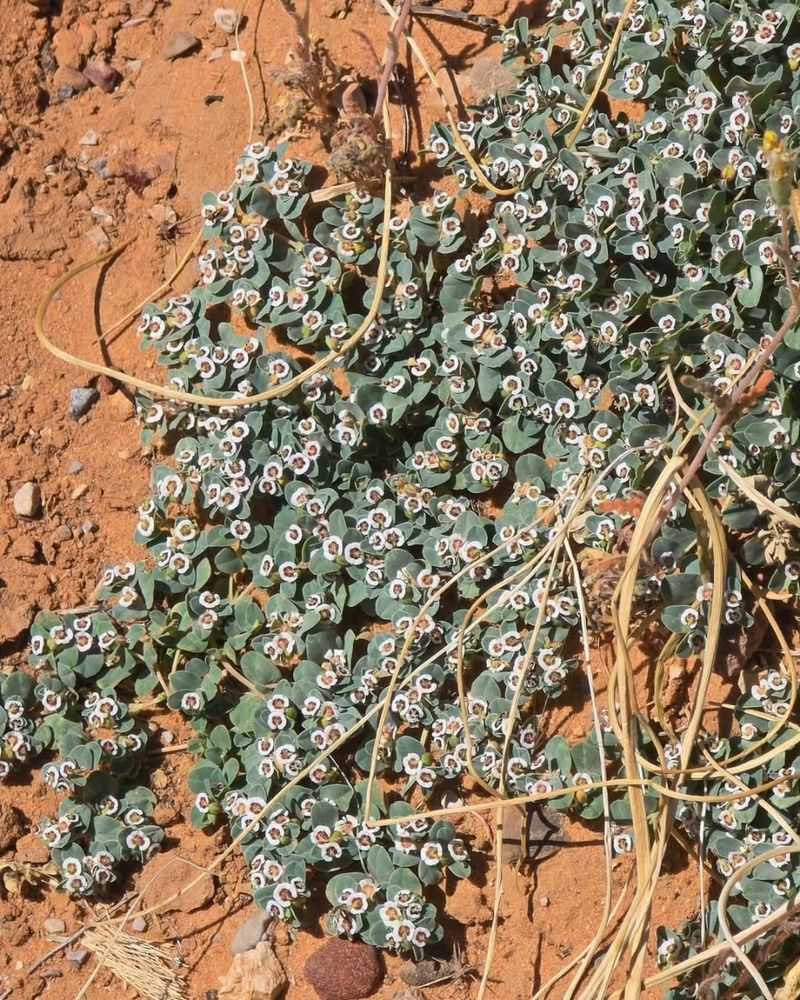
Pressed flat against the ground like a living tile, Whitemargin Sandmat barely rises above the soil surface. Euphorbia albomarginata grows in tight, spreading mats with small oval leaves edged in white, creating a subtle but interesting pattern across bare ground.
It is one of the most compact native ground covers available in dry desert regions.
Sandy or gravelly soil is where it performs best. It handles compaction and poor fertility without complaint.
Spots along driveways, between stepping stones, or at the base of walls are ideal placements where other plants tend to struggle.
One thing worth knowing upfront: Whitemargin Sandmat produces a milky sap when stems are broken. That sap can irritate skin, so wear gloves when handling or trimming it.
Keep that in mind if you have children or pets who play near the planting area.
Watering needs are minimal once established. During the monsoon season, it often gets all the moisture it needs from natural rainfall alone.
Supplemental irrigation in dry stretches should be light and infrequent.
Tiny white flowers appear throughout the warm season, attracting small native insects. It is not a showy bloomer, but the flowers are present and active for pollinators throughout spring and summer.
No pruning is needed. No fertilizer is required.
It simply stays low, spreads slowly, and covers the ground in a clean, flat mat.
5. Prostrate Spurge Fills Gaps Between Larger Plants
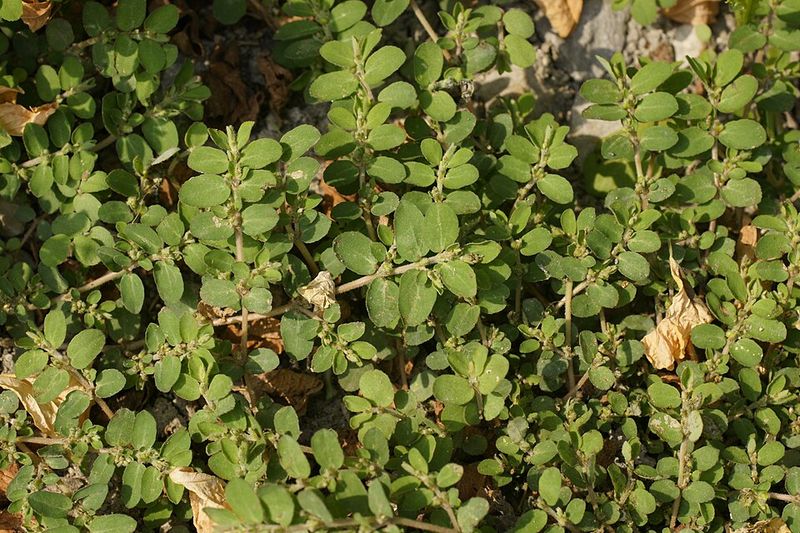
Gaps between larger desert plants are an open invitation for weeds. Prostrate Spurge, Euphorbia prostrata, moves into those spaces and closes them off before unwanted plants get a foothold.
It grows flat and fast, which makes it surprisingly useful as a living mulch between established shrubs and cacti.
Stems radiate outward from a central root, hugging the ground closely as they spread. Leaves are small, oval, and slightly reddish at the edges, giving the mat a warm tone against pale gravel or soil.
It is not a dramatic plant, but it does its job quietly and effectively.
Like other members of the spurge family, it produces a milky sap when cut or broken. Handling with gloves is a smart habit.
Beyond that precaution, it requires very little attention once it roots into the ground.
Heat and drought do not slow it down. In fact, Prostrate Spurge tends to spread more actively during the hottest, driest stretches of the year when other plants pull back.
That growth pattern makes it a dependable gap-filler through summer.
Watering is minimal. Established plants survive on natural rainfall in most warm desert climates.
During extended dry periods, a single deep watering every few weeks keeps it moving.
Reseeding happens naturally, so coverage expands from year to year without replanting.
6. Birdcage Evening Primrose Thrives In Dry Sandy Soil
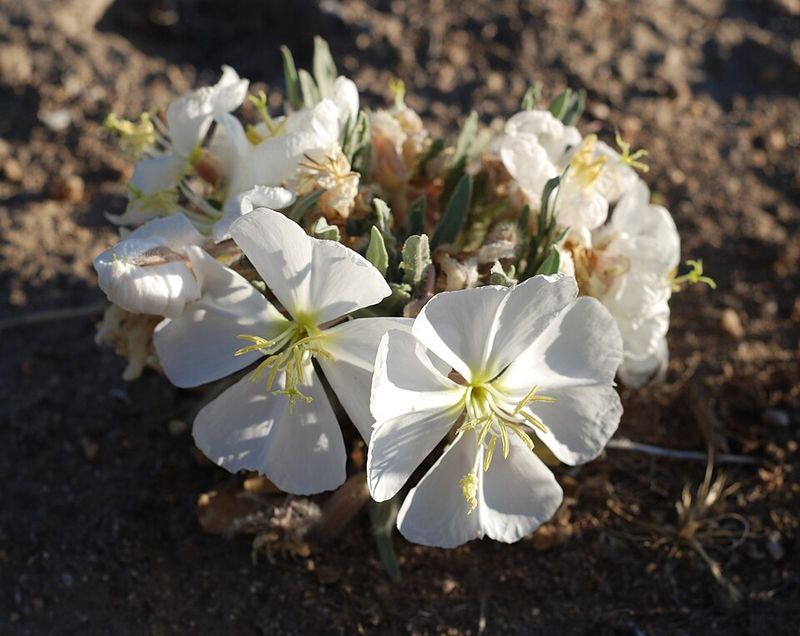
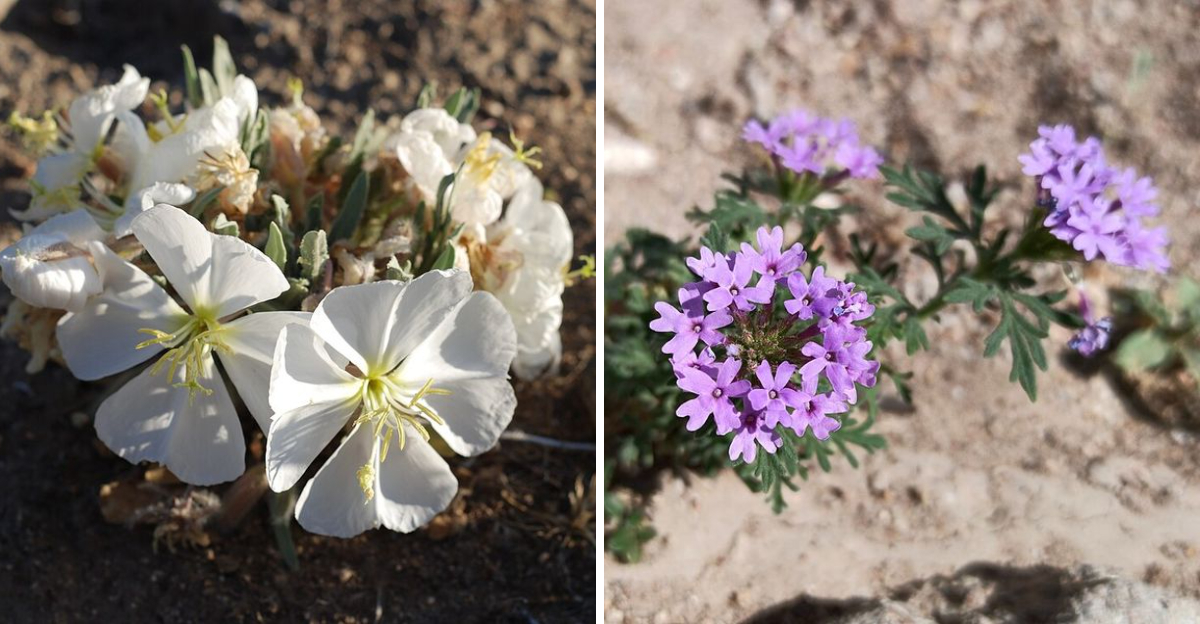
White flowers the size of a silver dollar opening at dusk is a sight worth planning a garden around. Birdcage Evening Primrose, Oenothera deltoides, puts on exactly that kind of show from late winter through spring.
Blooms open in the evening and close by midday, which means the display happens on a schedule that surprises first-time growers.
Sandy, loose soil is its preferred home. Rocky desert washes, open sandy flats, and well-drained garden beds all suit it well.
Clay soil or areas with standing water after rain are not good placements. Drainage is non-negotiable for this plant to perform correctly.
It grows low and spreading, typically reaching six to twelve inches tall. At the end of the season, dried seed pods remain on the plant and resemble small birdcages, which is exactly where the common name comes from.
Those pods add visual interest even after blooming ends.
Seeds disperse naturally from those pods, and new plants often appear nearby the following season. Establishing a patch once often means having plants return year after year without replanting.
That self-sustaining quality is a genuine advantage in a low-maintenance landscape.
Irrigation needs are very low. During the growing season, one or two waterings per month is usually sufficient.
Overwatering causes root problems and reduces flowering noticeably.
7. Stemless Four-Nerve Daisy Handles Heat With Minimal Care
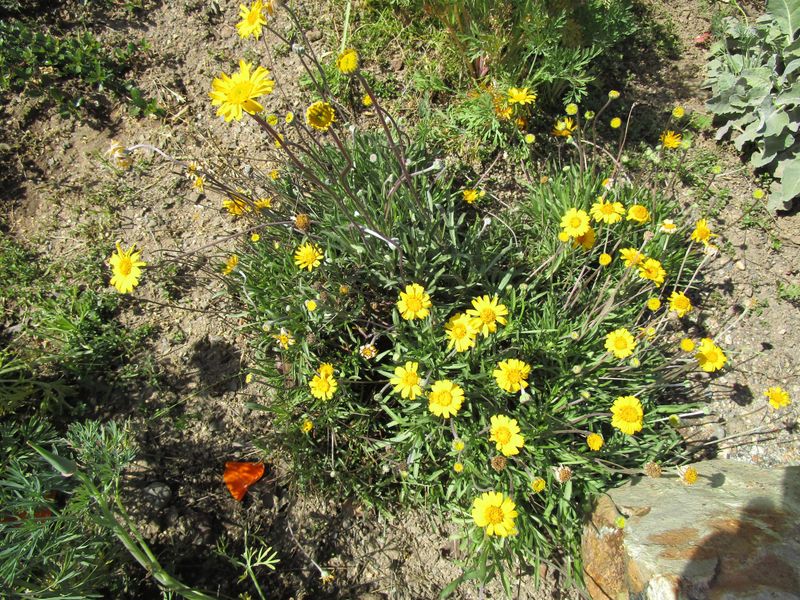
Yellow flowers rising straight from the ground with no visible stem is one of the more striking things a small plant can do. Stemless Four-Nerve Daisy, Tetraneuris acaulis, does exactly that.
Bright yellow blooms emerge directly from a low rosette of narrow leaves, creating a cheerful, compact display that works in even the harshest spots.
Rocky, well-drained soil is ideal. Decomposed granite, caliche-heavy ground, or thin native soils are all acceptable growing conditions.
It does not need amended or enriched soil to bloom consistently. In fact, overly rich soil can reduce flowering and cause the plant to grow floppy.
Full sun exposure is essential. Shade reduces bloom production and weakens the overall plant over time.
South-facing slopes or open, unshaded garden beds are perfect placements for steady performance through the warm season.
Blooming can occur from late winter all the way through fall in warmer desert climates, with peaks in spring and again after monsoon moisture arrives. That extended bloom window makes it one of the more reliable sources of long-season color in dry landscapes.
Water every two to three weeks during the growing season once established. Rainfall during monsoon months often covers most of the plant’s water needs on its own.
Cutting back irrigation after plants are rooted in is the right move.
8. Dakota Mock Vervain Forms A Low-Spreading Cover
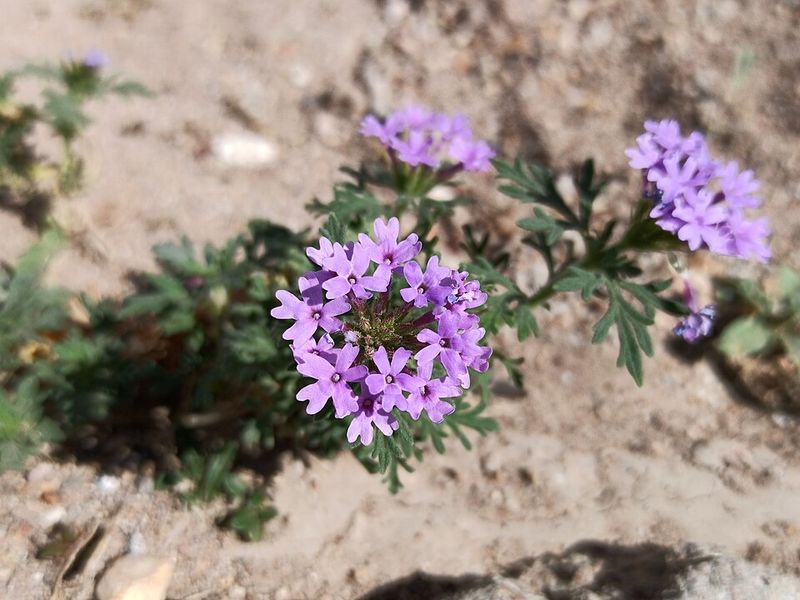
Purple flowers on a plant that practically takes care of itself sounds too good to be true. Dakota Mock Vervain, Glandularia bipinnatifida, delivers exactly that without requiring much from the gardener at all.
It spreads low across the ground and blooms generously from late winter through early summer.
Unlike its close relative the Southwestern Mock Vervain, this species tends to have finer, more deeply cut leaves that give it a feathery texture. Side by side, the two plants look similar from a distance but feel different up close.
Both are excellent, but Dakota Mock Vervain tends to reseed more readily.
Reseeding is actually one of its best qualities. Once established, it fills in surrounding bare spots on its own over one or two growing seasons.
Gardeners who want coverage without replanting year after year appreciate this habit.
Hot, dry, rocky spots suit it well. It does not need rich soil or regular feeding.
Planting in decomposed granite or native soil and watering lightly through the first summer is usually all the setup it needs.
After establishment, cut back irrigation significantly. Too much water through summer can weaken the plant and shorten its lifespan.
Let it dry out between waterings and it will reward you with consistent bloom and spread.
Pollinators visit the blooms heavily during peak season. Small butterflies in particular seem drawn to the clusters of purple flowers.
It is a reliable, low-effort plant that earns its space in any dry-climate garden.