More Native Shrubs In Your Texas Garden Less Deer Damage – Here Is What To Plant
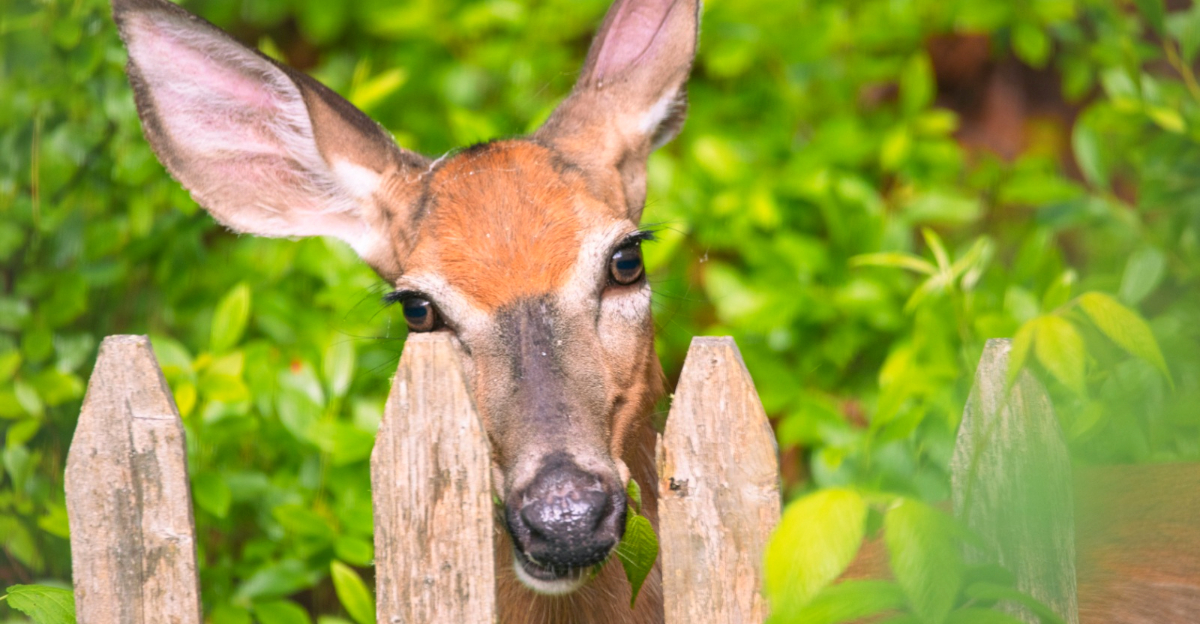
There are few things more disheartening in the gardening world than walking outside on a beautiful Texas morning to find that something you carefully planted, watered, and loved has been completely demolished overnight.
And if you live near a greenbelt, a rural edge, or anywhere in the Hill Country, you already know exactly who the culprit is.
Deer browse freely, confidently, and with absolutely zero apology, and dry spells make it even worse because hungry deer get a lot less picky about what they eat.
The good news is that smarter plant choices can genuinely change the situation.
Native Texas shrubs that deer find less appealing are out there, and they do not require sacrificing beauty, color, or variety to make the swap. Just keep in mind that deer-resistant is not the same as deer-proof.
Realistic expectations plus the right plants equals a lot fewer heartbreaking mornings.
1. Agarita For High Deer Resistance
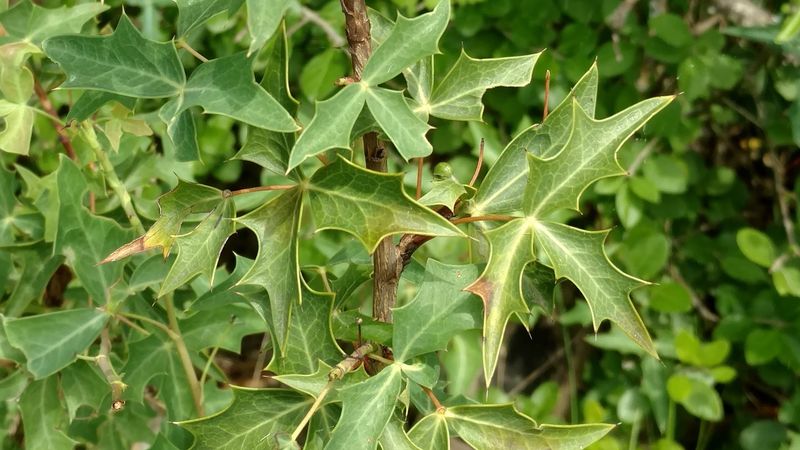
Few native Texas shrubs earn their reputation the way Agarita does, and that reputation starts with its fierce, spiny leaves that make deer think twice before browsing.
This low-growing evergreen shrub is a staple in Hill Country yards, rocky fence lines, and dry native plantings across central and west Texas.
The sharp three-pointed leaflets create a natural deterrent that most deer avoid, even during drought when food options get scarce.
Agarita blooms in late winter to early spring with small, fragrant yellow flowers that attract pollinators before most other shrubs have woken up. Those flowers are followed by bright red berries that birds absolutely love.
The shrub typically reaches four to six feet tall and wide, making it useful as a natural barrier or informal hedge in full sun to partial shade.
Rocky, well-drained soil suits Agarita best, and it handles Texas heat and dry spells with minimal fuss once established. Young plants may benefit from some protection in the first season while roots settle in.
Overall, Agarita is one of the most reliable deer-resistant native shrubs available for Texas landscapes looking for structure, seasonal interest, and low-maintenance performance.
2. Texas Mountain Laurel For Tough Evergreen Structure
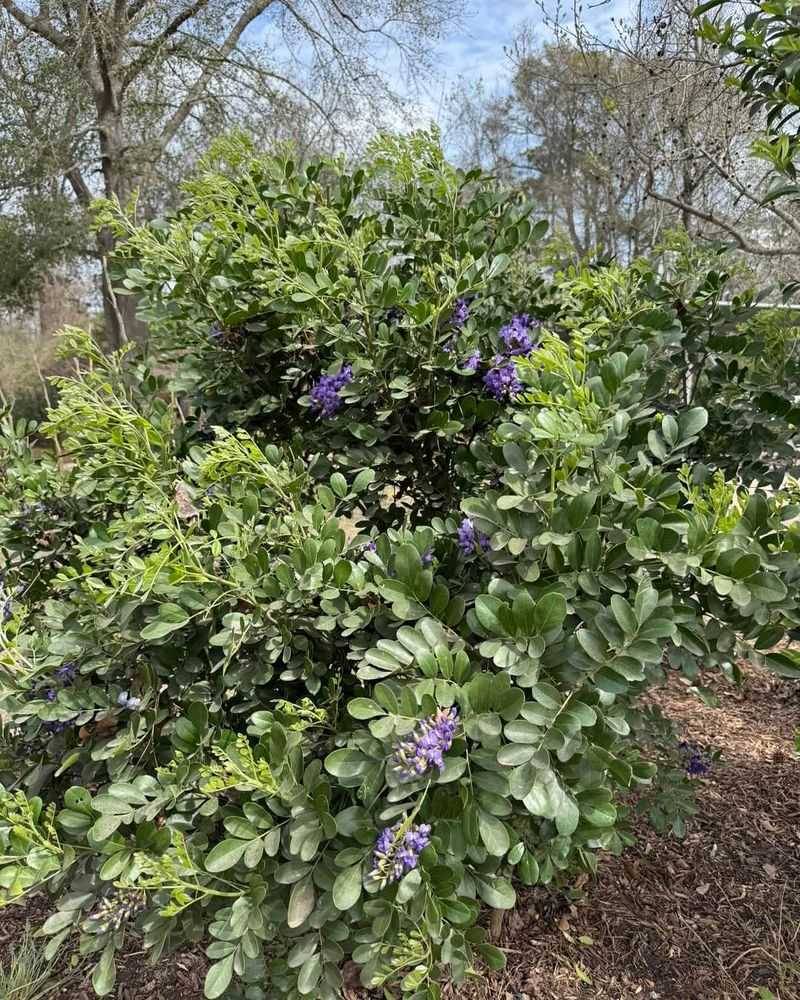
Walking past a Texas Mountain Laurel in full bloom is an experience that stays with you, partly because of those stunning purple flower clusters and partly because of the sweet grape-soda scent drifting through the yard.
Beyond the spring show, this evergreen shrub brings year-round dark green structure to Texas landscapes, and deer generally leave it alone thanks to its toxic foliage and seeds.
Texas Mountain Laurel grows slowly but rewards patience with a dense, rounded form that can reach ten feet or more at maturity.
It thrives in rocky, alkaline soils common across the Hill Country and many urban Texas yards, needing very little supplemental water once it has settled in.
Full sun brings out the best bloom performance, though partial shade is tolerated.
Because the seeds and foliage are considered toxic, this shrub should be placed thoughtfully in yards with children or pets. That same toxicity, however, is a big reason deer tend to avoid it.
Your Texas Garden Changes Every Week. Your Plan Should Too.
Gardening in Texas changes quickly throughout the season. Every Friday you’ll receive a simple weekly plan showing exactly what to plant, prune, fertilize, harvest, and protect so you never miss the right timing.
As a foundation planting, hedge, or specimen shrub, Texas Mountain Laurel adds dependable evergreen presence without demanding much in return.
Young plants establish slowly, so some patience and occasional watering in the first year or two is worthwhile.
3. Texas Sotol For Spiky Deer-Resistant Texture
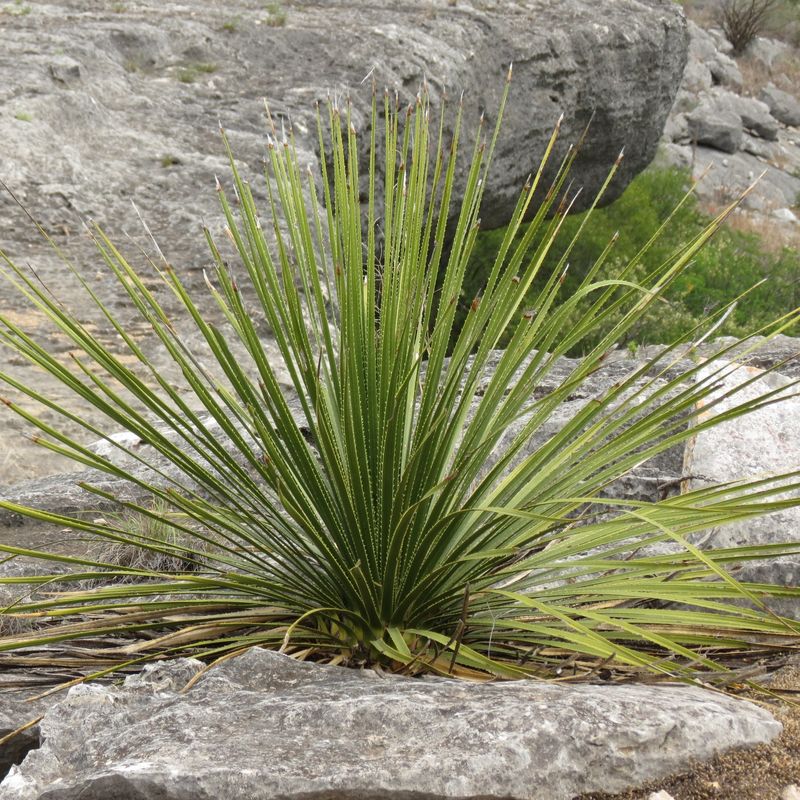
Sotol brings a striking, architectural presence to Texas landscapes that few other native plants can match, and its sharp-toothed leaf margins send a clear message to browsing deer.
Native to west Texas, the Trans-Pecos region, and dry areas across the state, Texas Sotol thrives in full sun and rocky, well-drained soil where many conventional shrubs would struggle.
It is a plant built for Texas conditions.
The rosette of long, narrow, blue-green leaves creates a bold texture contrast in shrub beds, dry borders, and xeriscape designs. Mature plants can spread four to five feet wide, so spacing matters when planning a planting.
In summer, established plants send up a tall flower stalk that can reach fifteen feet, attracting hummingbirds and other pollinators.
Sotol is technically not a true shrub but behaves like one in the landscape and fits naturally alongside deer-resistant native plantings.
It handles drought exceptionally well once roots are established, needing little supplemental water in most Texas regions.
Young plants appreciate some irrigation during the first dry season to help them settle. Deer tend to avoid the sharp leaf edges, making Sotol a smart textural choice for sunny, low-water gardens where deer pressure is a regular concern.
4. Cenizo For Sunny Low-Water Shrub Beds
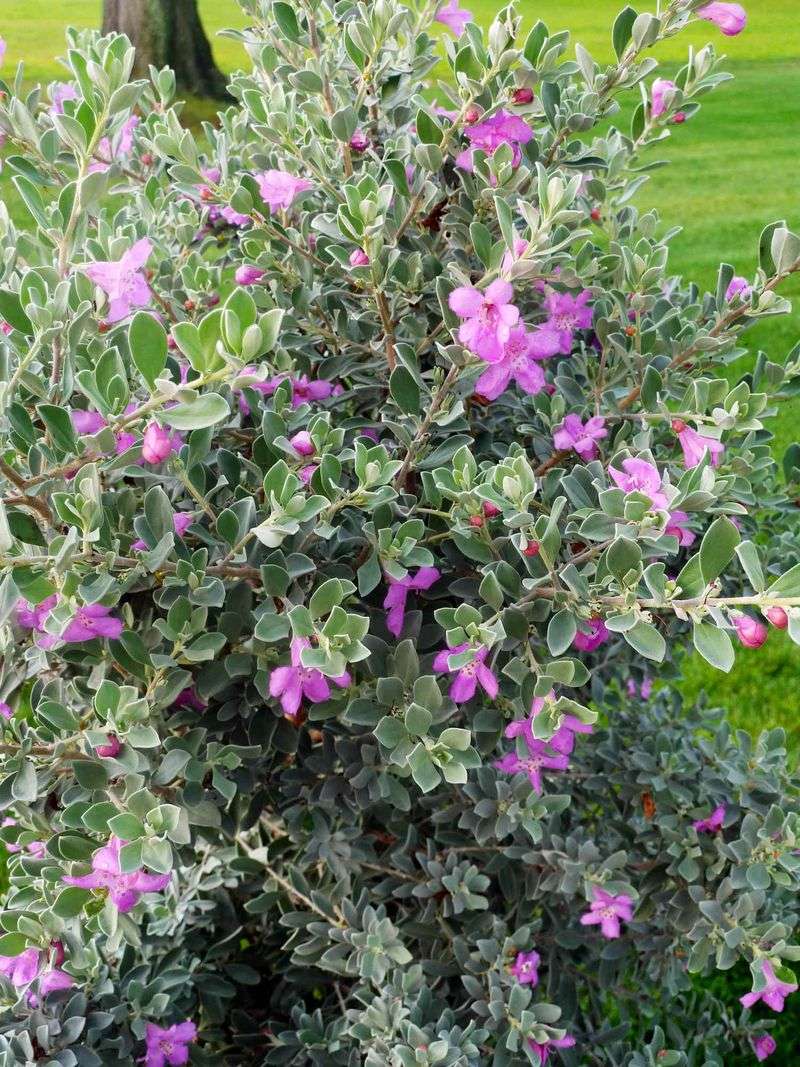
Silver-gray leaves that shimmer in the afternoon sun and sudden bursts of lavender-pink blooms after summer rains make Cenizo one of the most recognizable native shrubs in Texas.
Also called Texas Sage or Purple Sage, this drought-hardy shrub is a natural fit for sunny low-water beds, dry fence lines, and xeriscape borders across the state.
Deer generally browse it lightly if at all, especially when other food is available.
Cenizo grows best in full sun and well-drained, alkaline soils, which describes a good portion of Texas yards. It dislikes heavy clay and overwatering, so placement in a raised bed or rocky slope suits it well.
Mature plants typically reach four to eight feet tall depending on the variety, and there are compact selections available for smaller spaces.
The blooms appear most reliably after humidity spikes or rain events, which is why many Texans call it the Barometer Bush. That unpredictable but showy flowering habit adds seasonal excitement to the garden.
Cenizo is evergreen in mild winters and semi-deciduous in colder areas of the state. Once established, it is one of the lowest-maintenance native shrubs you can grow in a Texas landscape with deer pressure and limited rainfall.
5. Flame Acanthus For Heat-Loving Flowers
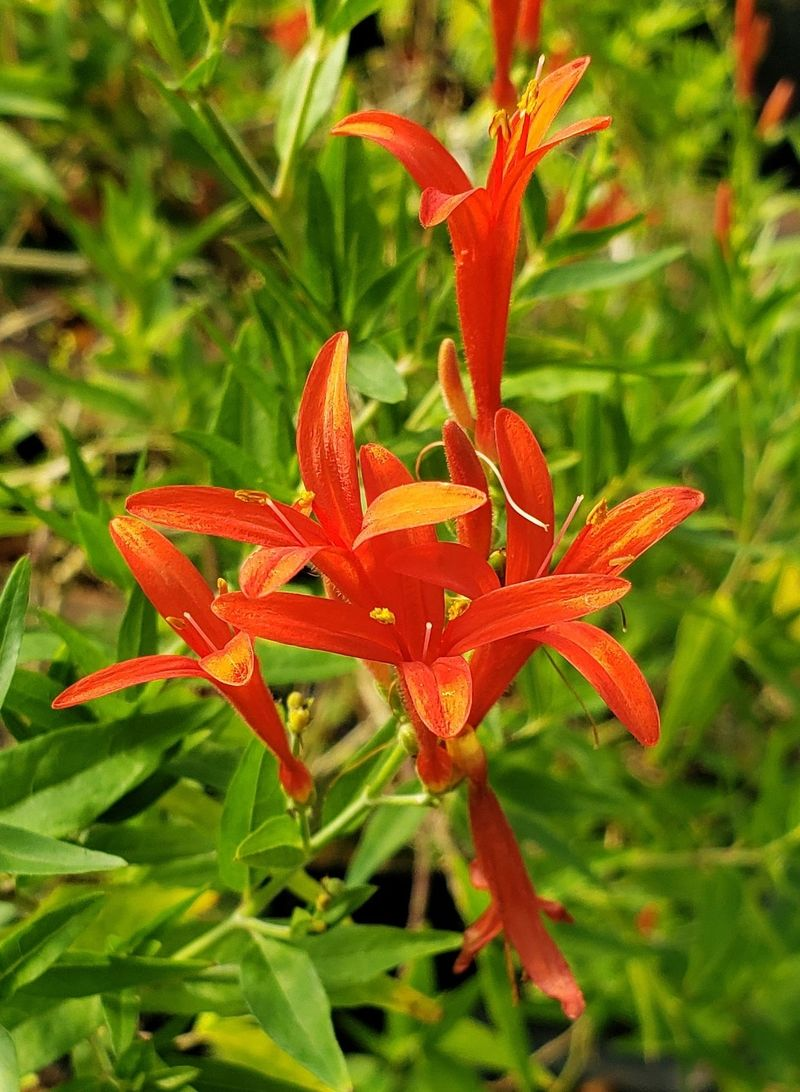
Hot summers that send most gardeners indoors are exactly when Flame Acanthus hits its stride, covering itself in clusters of bright red-orange tubular flowers from summer through fall.
Hummingbirds are drawn to those blooms like a magnet, making this native Texas shrub a favorite in wildlife-friendly landscapes.
Deer tend to avoid it, which is a welcome bonus in neighborhoods and rural edges where browsing pressure is consistent.
Flame Acanthus grows as a rounded, multi-stemmed shrub reaching three to five feet tall and wide in full sun to light shade.
It handles rocky, poor soils and dry conditions well once established, fitting naturally into Hill Country yards, sunny borders, and low-water native plantings.
The plant may freeze back in colder parts of Texas but typically rebounds from the roots in spring.
One thing to appreciate about Flame Acanthus is how forgiving it is with minimal care. It does not need rich soil or frequent watering to perform, and it spreads gradually over time to fill in a bed.
Young plants benefit from occasional watering during their first summer, but established clumps are impressively tough.
For a summer-to-fall flowering shrub that handles heat, drought, and deer pressure in Texas landscapes, Flame Acanthus is hard to overlook.
6. Texas Lantana For Sunny Deer-Resistant Color
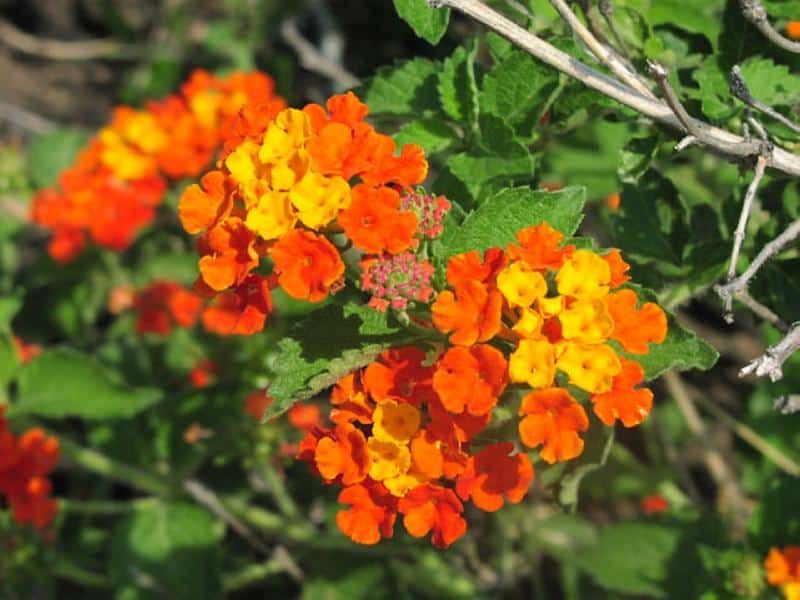
Color-packed and practically indestructible in the Texas heat, Texas Lantana brings cheerful yellow and orange flower clusters to sunny beds from spring through the first frost.
Butterflies flock to the blooms, and hummingbirds visit regularly, making this native shrub a lively addition to wildlife-friendly landscapes.
Deer largely avoid it, likely due to the strong aromatic foliage that most browsing animals find unappealing.
Native Lantana differs from the more common tropical Lantana varieties sold at garden centers, and it tends to be better suited to Texas conditions including rocky soils, heat, and dry spells.
It typically grows two to four feet tall and spreads wider than it is tall over time.
Full sun is where it performs best, though it can handle a bit of afternoon shade in hotter regions.
Texas Lantana is semi-woody and may freeze back in colder winters but usually returns reliably from the roots in spring. It is worth noting that the unripe berries can be harmful to children and pets, so placement should be considered carefully.
For a sunny, low-water shrub bed with deer pressure, Texas Lantana offers reliable seasonal color, wildlife value, and strong heat tolerance that few other native shrubs can match in the same compact package.
7. Fragrant Sumac For A Larger Native Shrub
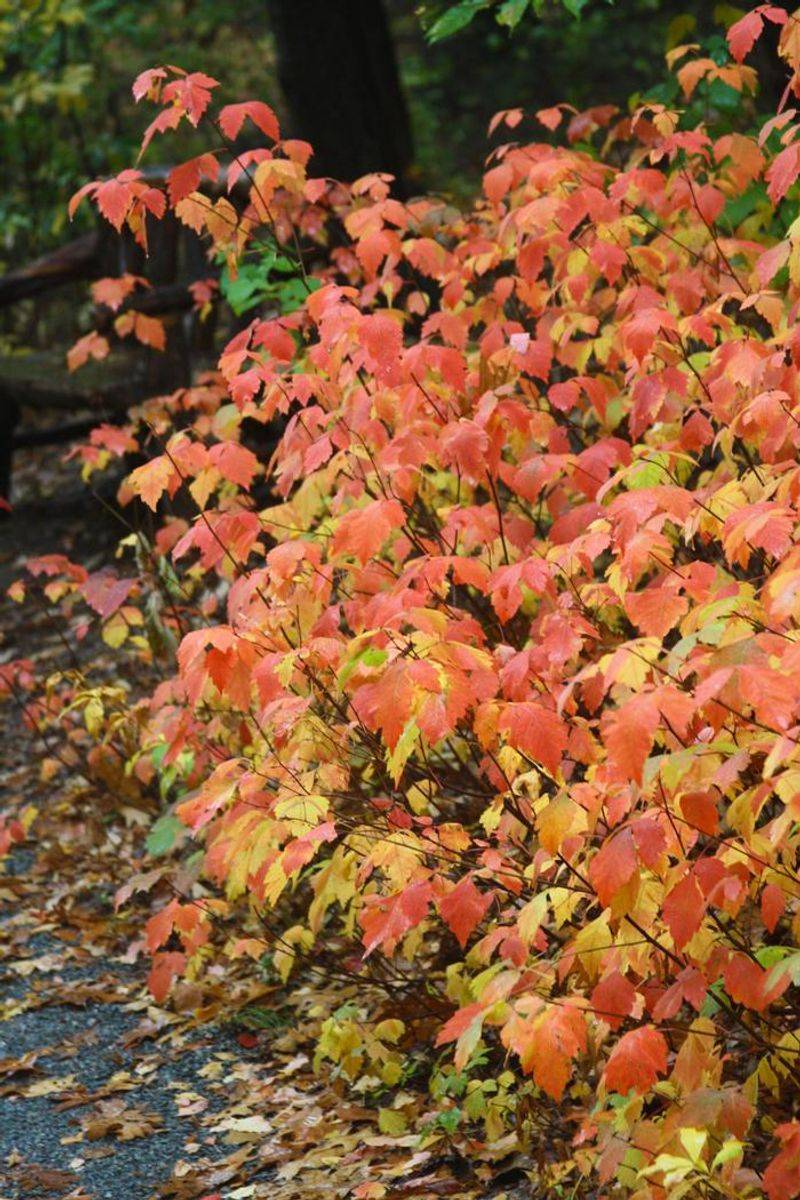
Gardeners looking for a larger native shrub that pulls double duty with deer resistance and seasonal interest should give Fragrant Sumac a serious look.
This multi-stemmed native grows six to twelve feet tall and wide, making it useful as a screening plant, informal hedge, or naturalized border along fence lines and property edges in Texas landscapes.
The aromatic foliage is one reason deer tend to pass it by.
Spring brings small yellow flower clusters before the leaves fully emerge, providing early-season interest and forage for pollinators.
Summer foliage is a clean medium green, and fall is where Fragrant Sumac really shines with brilliant red and orange color that rivals many non-native ornamentals.
Small red berries follow the flowers and attract birds through the colder months.
Fragrant Sumac adapts to a range of Texas soils including rocky, sandy, and clay-heavy ground, and it handles dry conditions well once established.
Full sun to partial shade suits it, and it can spread by root suckers to form a colony over time, which works well in naturalized areas but may need managing in tighter spaces.
Young plants establish fairly quickly with regular watering in the first season. For a native shrub with real presence and deer resistance, Fragrant Sumac earns its place in the Texas landscape.
8. Yaupon Holly For A Native Hedge Option
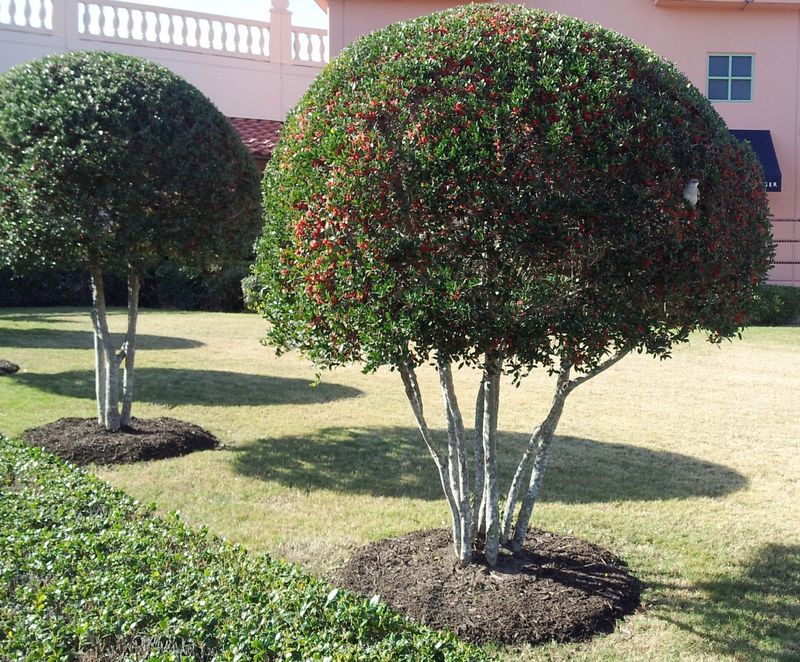
Reliable, adaptable, and genuinely versatile, Yaupon Holly is one of the most useful native shrubs for gardeners trying to build structure into a deer-resistant landscape.
It grows as a dense evergreen shrub or small tree that can be shaped into a formal hedge or left to grow naturally as a wildlife-friendly planting.
Deer resistance is generally good, though hungry deer during drought may occasionally sample it.
Yaupon Holly produces small red or yellow berries in fall and winter that birds love, adding wildlife value through the colder months when food is scarce.
The glossy dark green foliage holds its color year-round, making it one of the more dependable evergreen options for Texas hedges, foundation plantings, and screening borders.
It handles full sun to partial shade with ease.
One of the great strengths of Yaupon Holly is its adaptability. It grows in clay, sand, rocky soil, and everything in between, and it tolerates both drought and occasional wet conditions better than most native shrubs.
Multiple cultivars are available, ranging from compact dwarf forms to larger upright selections, so there is likely a size that fits most planting situations.
Young plants establish quickly with regular watering in the first year, after which they become impressively self-sufficient in the Texas landscape.
9. Rock Rose For A Flowering Native Shrub
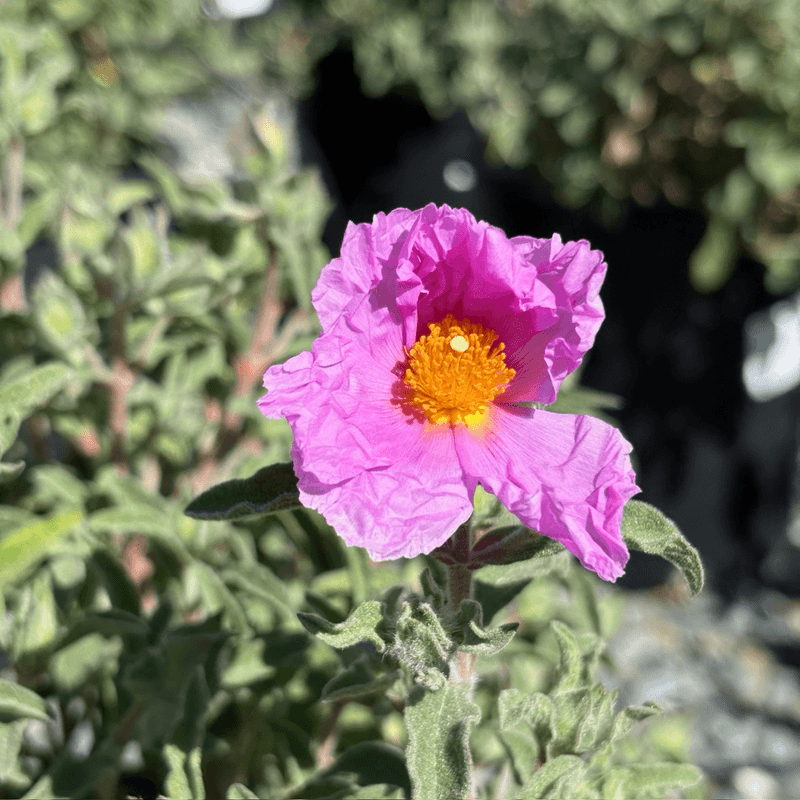
Soft crinkled pink flowers the size of a silver dollar blooming against gray-green woolly foliage make Rock Rose one of the more visually striking native shrubs for sunny Texas gardens.
Also known as Pavonia, this flowering native is a strong performer in hot, dry conditions and is generally left alone by deer, likely due to its fuzzy leaf texture and aromatic qualities.
It brings genuine flower power to a deer-resistant planting.
Rock Rose grows three to five feet tall in full sun and well-drained soil, fitting comfortably into mixed shrub borders, dry garden beds, and low-water native plantings.
Blooms appear from late spring through fall, providing months of color that attracts butterflies and hummingbirds.
The plant may freeze back in colder Texas winters but tends to return from the roots once temperatures rise again in spring.
Because Rock Rose thrives in rocky, alkaline soils, it is a natural fit for Hill Country yards and urban Texas gardens with challenging ground conditions.
Overwatering or heavy clay soil can cause problems, so sharp drainage matters most with this shrub.
Young plants benefit from regular irrigation during establishment, but once settled in, Rock Rose becomes a low-maintenance, high-reward flowering native that earns its spot in any garden where deer pressure is an ongoing concern.
10. Turk’s Cap For Shady Deer-Resistant Color
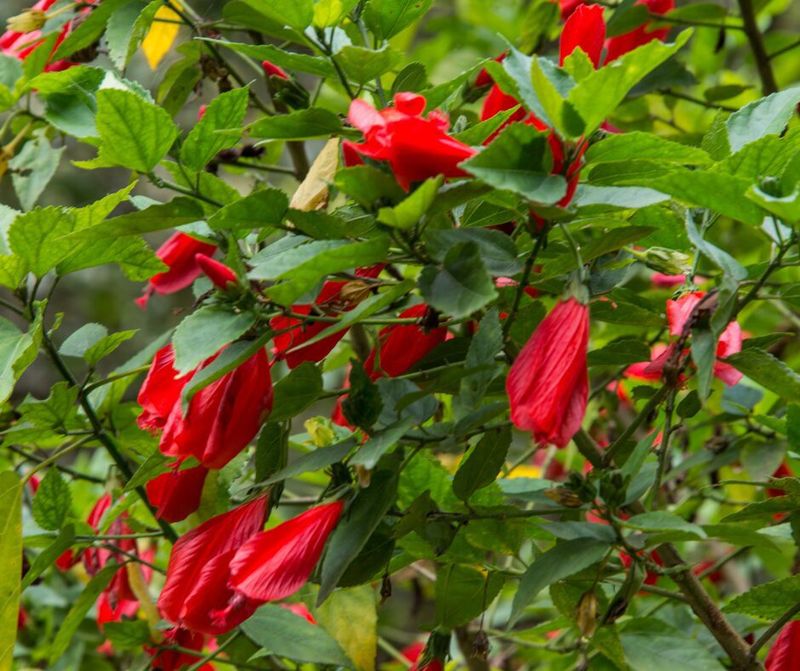
Shaded garden corners in Texas can be tricky spots to fill with something colorful and deer-resistant, but Turk’s Cap handles both challenges with a casual confidence that earns it loyal fans across the state.
The bright red, twisted blooms resemble a little turban and attract hummingbirds and butterflies from summer through fall, bringing genuine life to areas under trees or along shaded fence lines.
Deer generally avoid it.
Turk’s Cap grows two to nine feet tall depending on light and moisture conditions, with the largest growth happening in shadier, moister spots. It spreads over time to form a colony, which works beautifully in naturalized areas or woodland garden edges.
The large, soft leaves give it a lush tropical look that contrasts nicely with spiky or fine-textured native plants nearby.
This native shrub is adapted to a wide range of Texas soils and handles summer heat well, especially in partial to full shade where many sun-loving plants would struggle.
It may freeze back in winter but returns reliably from the roots each spring across most of the state.
Small red fruits follow the flowers and are edible, attracting birds as a bonus. For gardeners dealing with both shade and deer pressure, Turk’s Cap is one of the most practical and rewarding native shrubs available.
11. Esperanza For Warm-Region Native Blooms
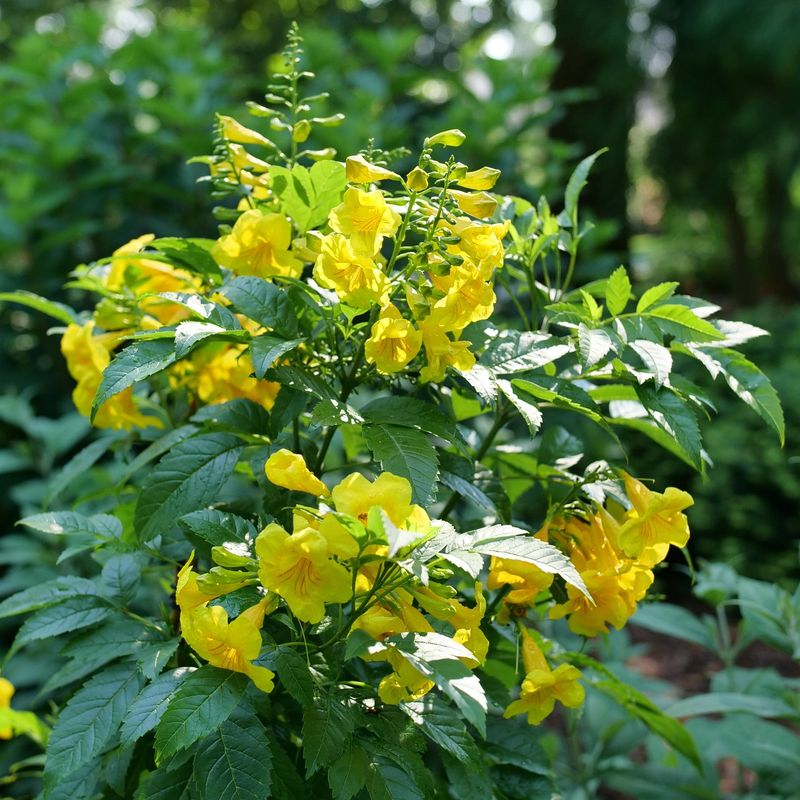
Bright yellow trumpet-shaped flowers clustered at the tips of arching branches make Esperanza one of the most eye-catching native shrubs for warm-region gardens.
Also called Yellow Bells, this shrub blooms from summer through fall and handles intense heat, dry conditions, and deer pressure with impressive ease.
The strong, slightly musky scent of the foliage is thought to be part of why deer tend to move past it without much interest.
Esperanza grows four to eight feet tall and wide in full sun with well-drained soil, thriving in south Texas, the Gulf Coast region, and warmer urban yards across the state.
In frost-prone areas it may freeze back to the ground in winter, but established plants usually return from the roots when spring temperatures rise.
In truly warm coastal regions it can behave almost like a semi-evergreen shrub.
Hummingbirds are especially fond of the tubular yellow blooms, and the long flowering season makes Esperanza a standout in wildlife-friendly plantings.
It does not need rich soil or heavy watering once established, fitting well into low-water native gardens and sunny borders.
Young plants appreciate consistent moisture during their first warm season to get roots established. For warm-region Texas gardens seeking late-season color with strong deer resistance, Esperanza delivers reliably and with real visual impact.