The Wildfire-Resistant Plants California Counties Are Now Recommending For Defensible Space
Defensible space is getting a fresh look in many California communities, and plants are a big part of the conversation. A yard does not have to be bare to be safer, but it does need smarter choices.
The plants near a home can affect how fire moves, especially during hot, windy weather. That is why counties are paying closer attention to what gets planted in key zones.
The best options are not magic shields. They are plants with habits that make them easier to manage and less likely to add extra risk when cared for well.
Moisture, spacing, and cleanup still matter. So does choosing plants that fit your area.
For gardeners, this can feel like a big shift. But it also opens the door to landscapes that look good, use water wisely, and support a safer home.
1. California Fuchsia Works In Low, Lean Plantings
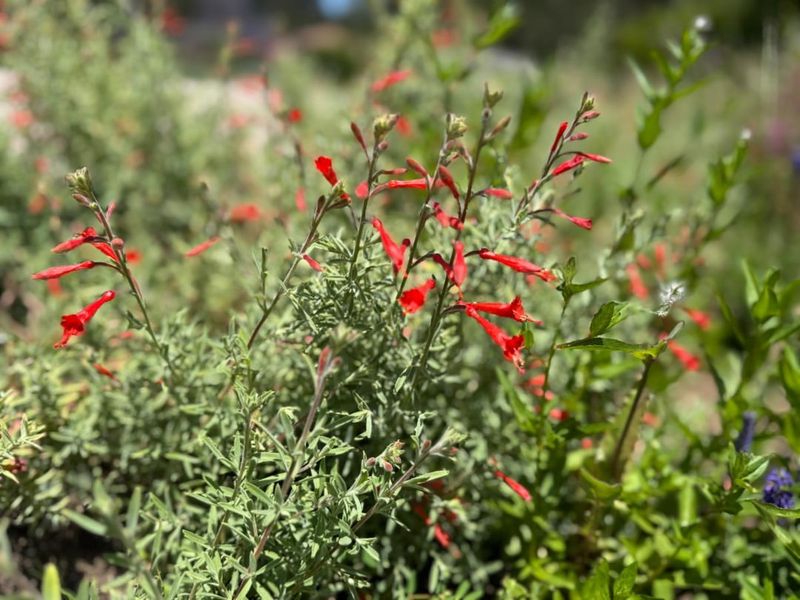
Bright and bold without being bulky, California Fuchsia is one of the most talked-about plants on county fire-safe plant lists right now.
Its vivid red-orange blooms show up in late summer and fall, right when most other plants look tired and dry. That timing matters because late summer is also peak fire season.
This plant stays low to the ground, usually growing only one to two feet tall. That low profile is exactly what fire agencies want to see near homes.
Low plants do not carry flames up into trees or onto rooftops the way tall shrubs can. Keeping fuel low and sparse is one of the core ideas behind defensible space.
It spreads slowly by underground runners, which means it fills in gaps between rocks or stepping stones without piling up thick, dry stems. Pruning it back hard in late winter keeps it tidy and prevents woody buildup.
Woody buildup is one of the things that makes plants more flammable over time.
Hummingbirds absolutely love it, so you get wildlife value along with fire safety. It handles drought well once it is established and thrives in sandy or rocky soil.
Many counties in the foothills and coastal regions include it in their Zone One planting guides. Zone One is the area within thirty feet of your home, where plant choice matters most.
2. Hummingbird Sage Covers Soil Without Getting Woody
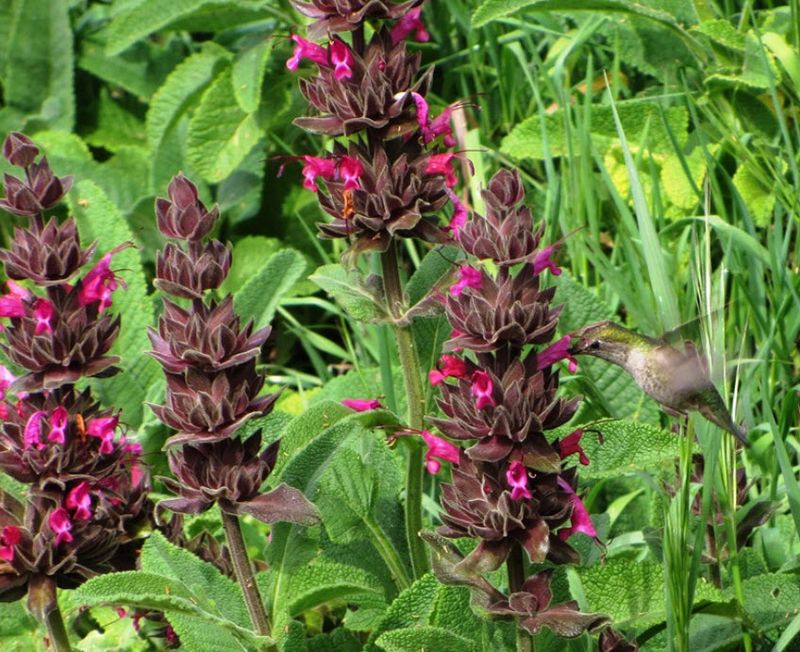
There is something almost effortless about the way Hummingbird Sage does its job. It spreads across bare soil, holds moisture in the ground, and keeps weeds from taking over, all while staying soft and flexible rather than stiff and woody.
Woody plants burn hotter and faster, so this matters a lot for fire safety. Known scientifically as Salvia spathacea, this plant produces tall spikes of deep pink flowers that smell faintly of fruit.
It is a native sage, but unlike many sages, it prefers part shade and can grow under oak trees or along the shadier side of a building.
That flexibility makes it useful in spots where other plants struggle. County fire advisors like it because it stays relatively low and does not build up thick layers of withered material.
Your California Garden Changes Every Week. Your Plan Should Too.
Gardening in California changes quickly throughout the season. Every Friday you’ll receive a simple weekly plan showing exactly what to plant, prune, fertilize, harvest, and protect so you never miss the right timing.
When plants hold onto damaged stems and leaves, that dry material becomes fuel. Hummingbird Sage tends to stay cleaner and more open as it grows.
It spreads by underground rhizomes, meaning it fills in an area gradually without you having to replant every year. Water it through the first summer to help it get established, and then you can mostly leave it alone.
It is a strong performer in the areas between thirty and one hundred feet from the house, which fire agencies call Zone Two. A simple annual trim keeps it looking fresh and fire-smart.
3. Yarrow Stays Low And Easy To Maintain
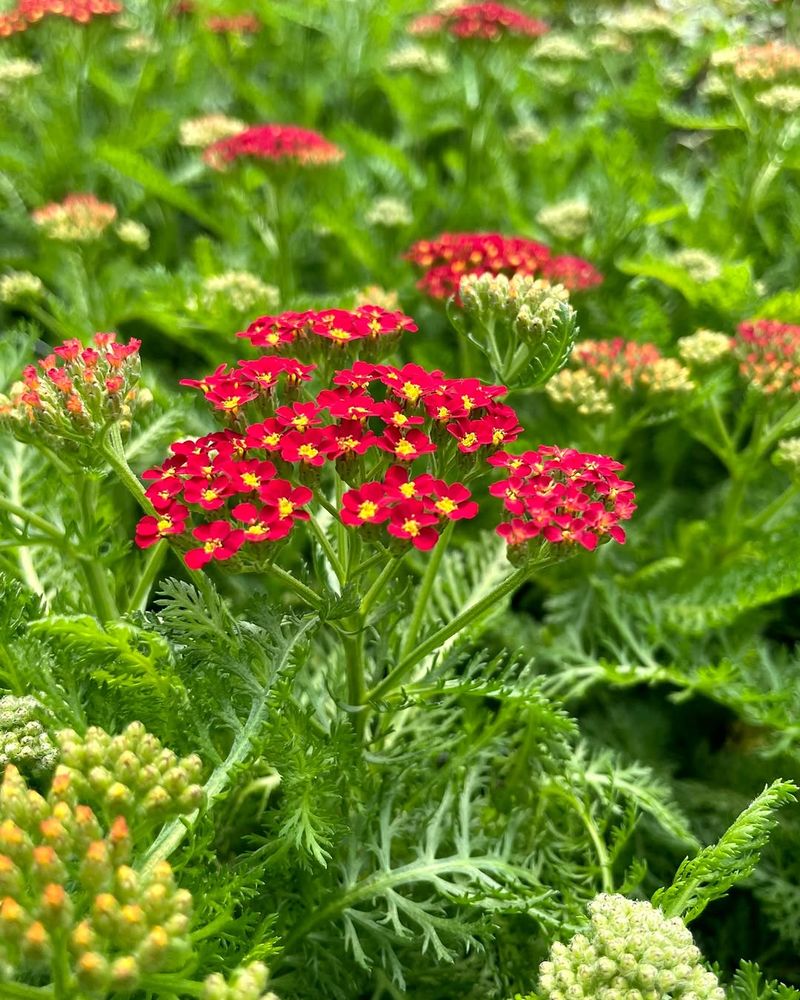
Few plants earn as many compliments from fire-safety experts as yarrow. It has been used in gardens for centuries, but its role in defensible space planning is getting fresh attention.
County advisors point to it often because it checks nearly every box on the fire-safe plant checklist.
Yarrow grows in flat clusters, rarely getting taller than two feet. Its leaves are feathery and soft, not stiff or resinous.
Resinous plants, like some junipers and rosemary varieties, release flammable oils when they burn.
Yarrow does not have that problem, which is one reason it keeps showing up on recommended plant lists.
It blooms in white, yellow, or soft pink depending on the variety. Native yarrow, Achillea millefolium, is the one most often recommended for California because it is already adapted to local soils and rainfall patterns.
It needs very little water once established and can handle poor, dry soil without complaint. Maintenance is genuinely simple. Cut it back after it blooms and it will often flower again.
Remove old stems in late winter to keep things tidy. Because it stays low and does not build up heavy woody growth, it does not create the kind of fuel ladder that lets fire climb from the ground into taller plants.
Planting it in drifts between pathways or rocks gives you attractive coverage that is also smart from a fire-safety standpoint.
4. Douglas Iris Adds Green Clumps Without Heavy Fuel
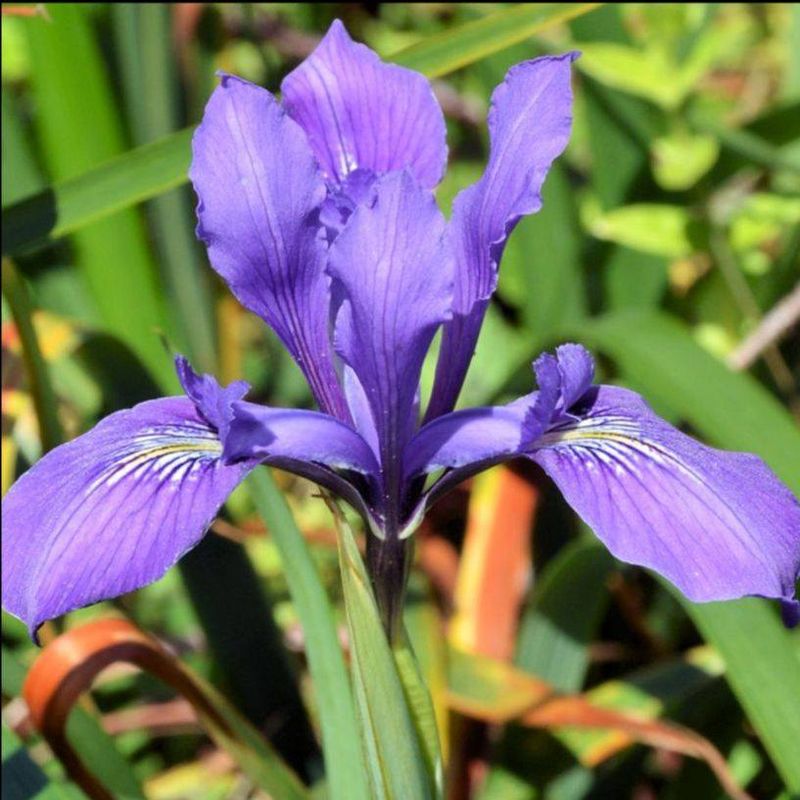
Walk past a patch of Douglas Iris in bloom and it is hard not to stop. The flowers come in shades of purple, lavender, cream, and deep violet, often with intricate veining on the petals.
But beyond its good looks, this plant has a practical quality that fire safety planners appreciate: it grows in neat, contained clumps that do not pile up heavy fuel.
Douglas Iris, or Iris douglasiana, is native to the coastal ranges and northern regions of California. It forms dense, low clumps of narrow, strap-like leaves that stay green through much of the year.
Green, moist plants are harder to ignite than dry, brown ones. That is the basic logic behind keeping plants well-hydrated close to structures.
It does well in part shade, which makes it useful under oaks or along the north-facing side of fences and buildings.
In those shadier spots, soil stays cooler and moister, which helps keep the plant from drying out in summer. Less dry material means less fuel.
Minimal care is needed once it gets going. Remove old or brown leaves to keep clumps looking clean and to reduce dry material.
It does not need regular watering after its first year in the ground. Several Bay Area and North Coast counties specifically mention Douglas Iris in their Zone One plant guides.
Its compact size and low fuel load make it a reliable choice for planting close to the house.
5. Blue-Eyed Grass Keeps Borders Soft And Low
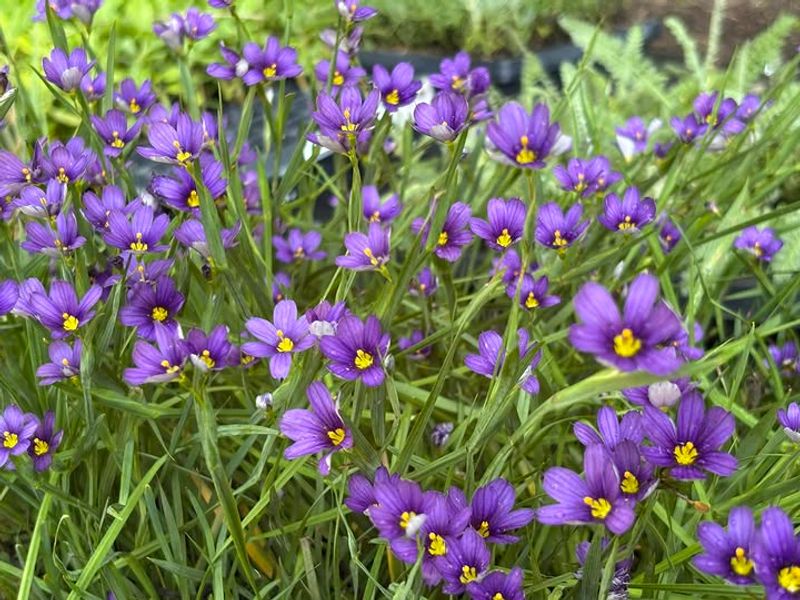
Do not let the name fool you. Blue-Eyed Grass is not actually a grass at all.
It belongs to the iris family and produces tiny, star-shaped blue-violet flowers with a bright yellow center.
That cheerful bloom pops up in spring and early summer, giving borders a soft, meadow-like feel without adding any serious fuel load.
Sisyrinchium bellum is the native species most commonly found in California, and it is the one that county fire-safe councils tend to recommend.
It grows in small, tufted clumps that rarely get taller than twelve to eighteen inches.
That compact size makes it ideal for Zone One planting, where keeping plants low and lean is the goal.
It thrives in full sun with little to no summer water once it is established. In fact, too much summer water can shorten its life.
Dry summers suit it just fine, which aligns perfectly with the water-wise approach that defensible space planning encourages.
Planting it along pathways, at the edges of rock gardens, or between stepping stones gives you a soft, natural look that does not sacrifice safety. The thin, grass-like leaves do not accumulate in thick mats, so there is not much dry material building up at the base.
A light trim after flowering keeps clumps tidy. Several coastal and foothill counties list it as a top pick for low-water, low-fuel border planting near homes.
6. Redbud Gives Fire-Smart Structure Away From The House
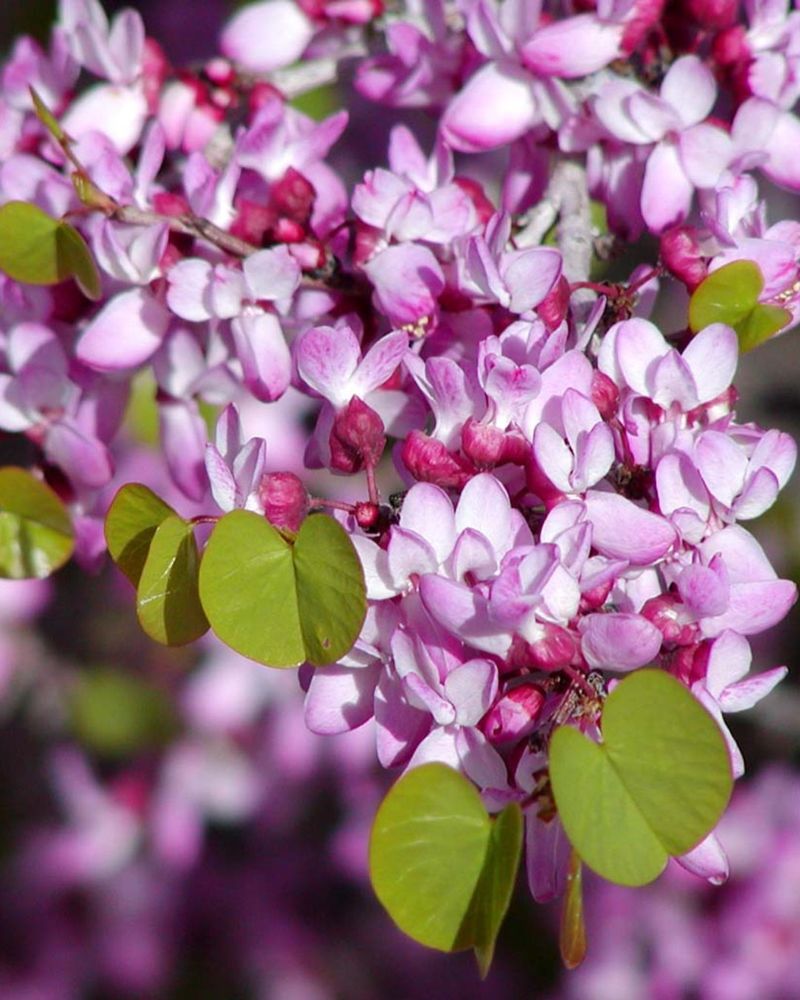
Every defensible space plan needs some structure, and Western Redbud delivers that in a way that is both beautiful and practical. In late winter, before the leaves even open, the bare branches are completely covered in magenta-pink blooms.
It is one of the most stunning sights in any native garden, and it signals that this plant has a lot to offer beyond just good looks.
Cercis occidentalis is a small, multi-trunked tree or large shrub native to the foothills and inland valleys of California.
It typically reaches ten to fifteen feet tall, which puts it in a useful size range for Zone Two planting.
Zone Two is the area between thirty and one hundred feet from the house, where taller plants are acceptable as long as they are well-spaced and maintained.
Fire agencies recommend it partly because it has a relatively open branching structure. Open structure means air can move through the plant and flames have fewer pathways to travel.
Dense, thickly branched plants tend to trap heat and spread fire more easily.
It is drought-tolerant once established and needs little care beyond occasional pruning to maintain its shape and keep lower branches off the ground.
Raising the canopy by removing branches below knee height reduces the chance of ground-level fire climbing up into the tree.
Plant it in groups with good spacing between each one to keep fuel from connecting across the landscape.
7. Toyon Works Best When Pruned Open
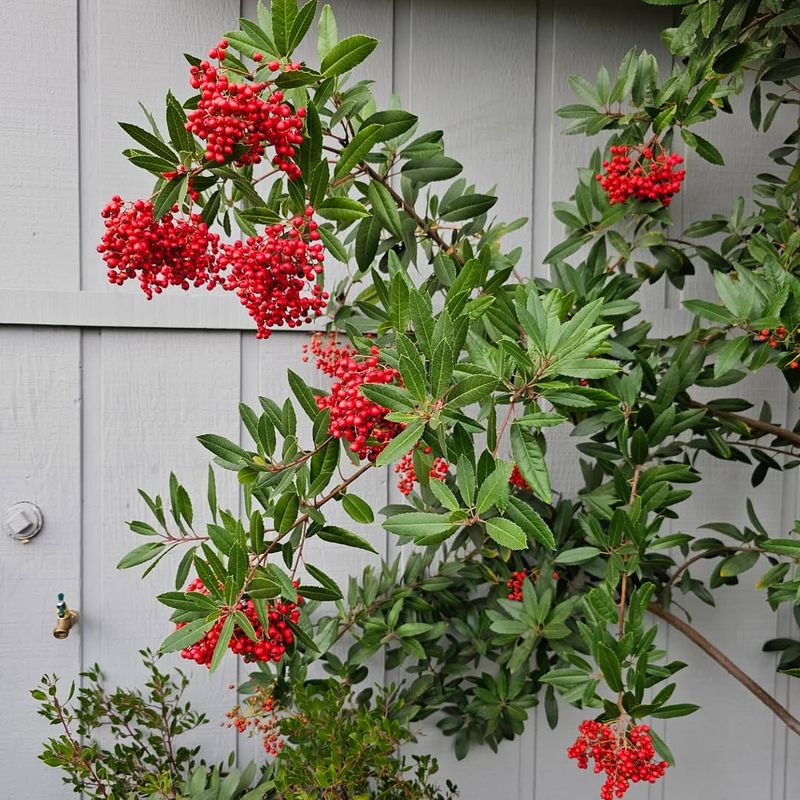
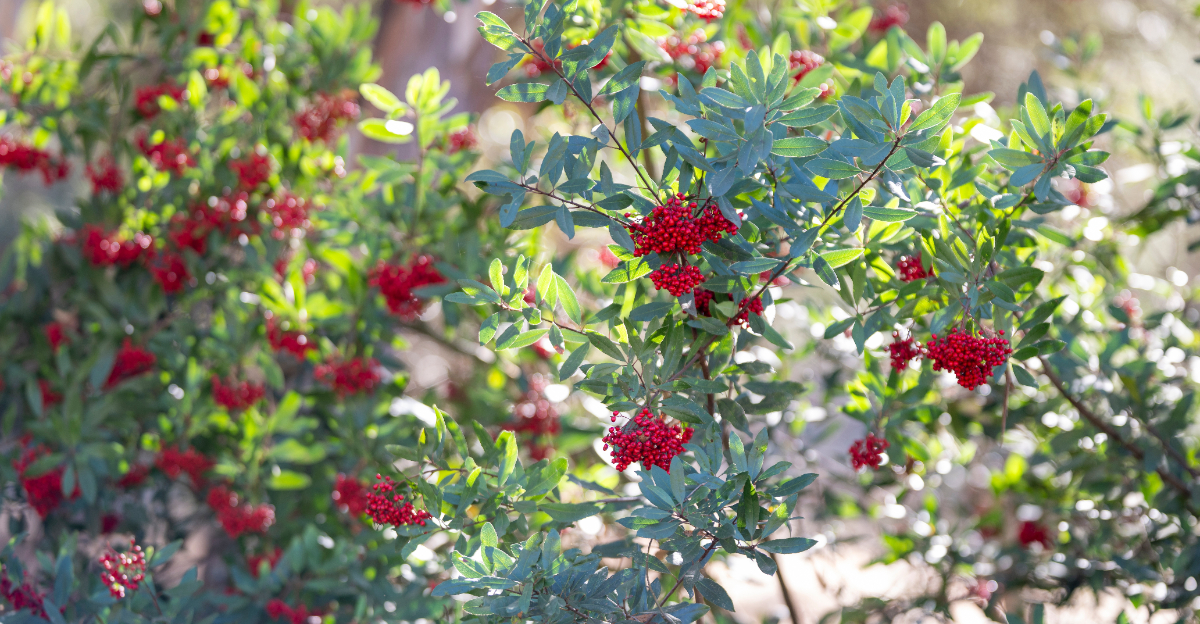
Toyon is sometimes called California Holly because of the clusters of bright red berries it produces in winter.
Those berries feed birds through the lean months, and the dark green leaves stay on the plant year-round.
It is a native shrub with deep roots in this landscape, and it has earned a solid reputation as a fire-safe choice when managed correctly.
The key phrase there is managed correctly. Left unpruned, Toyon can grow into a dense, multi-stemmed mass that holds a lot of dry material inside.
That kind of dense interior is exactly what fire agencies want homeowners to avoid. But with regular attention, Toyon becomes one of the most useful plants in a defensible space plan.
Pruning it to an open, tree-like form removes the thick interior and lets air move through freely.
Limbing it up off the ground, removing branches from the lower third of the plant, reduces the chance of ground fire reaching the canopy.
Spacing multiple plants at least ten feet apart prevents fire from jumping between them.
Several Southern and Central Coast counties specifically call out Toyon in their fire-safe plant guides, noting that proper pruning transforms it from a fire risk into a fire-smart asset. It handles drought well and attracts birds, bees, and butterflies.
Once it is established and shaped correctly, it is a long-lived, low-maintenance plant that earns its place in any fire-conscious landscape plan.
8. Bush Anemone Adds Evergreen Cover With Careful Spacing
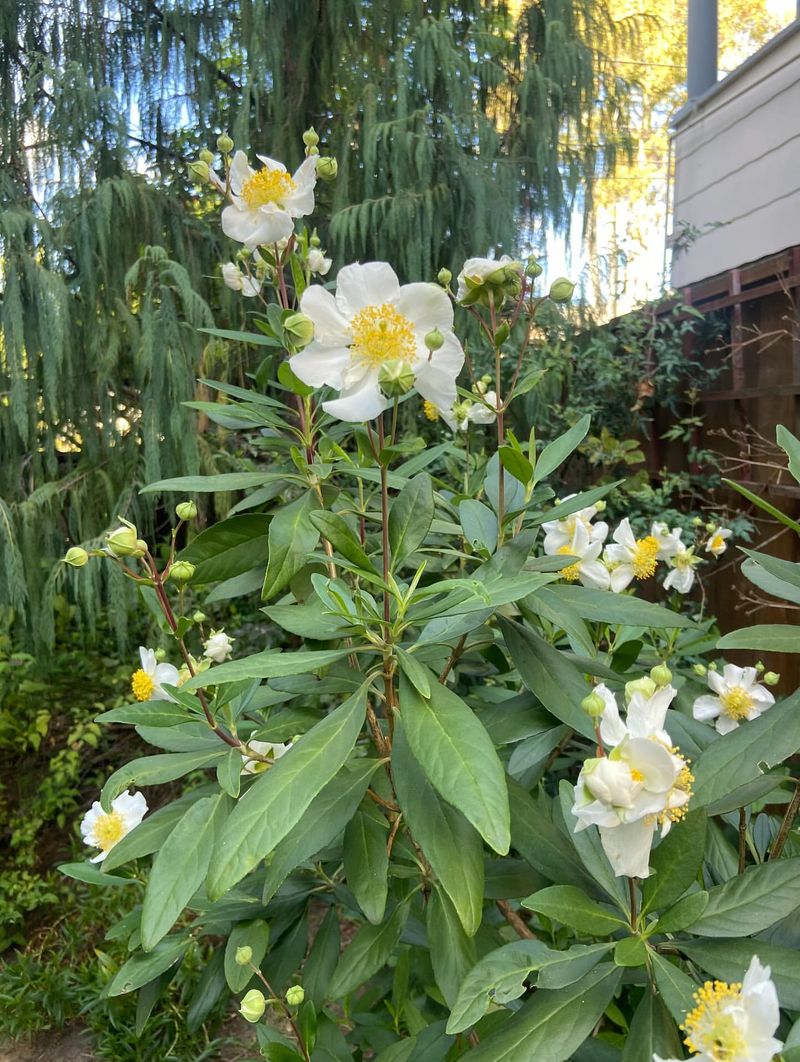
Not many shrubs can offer large, showy flowers and fire-safe credentials at the same time, but Bush Anemone manages both.
Its blooms are white and poppy-like, appearing in late spring and early summer on a compact, mounding shrub with soft gray-green leaves.
It catches the eye without overwhelming the landscape. Carpenteria californica is native to a small region in the Sierra Nevada foothills, which makes it a true California original.
Despite its limited native range, it adapts well to gardens across much of California, especially in areas with good drainage and full to part sun.
County fire advisors have started recommending it more often because of its manageable size and relatively low fuel load.
The plant typically grows four to six feet tall and wide, which puts it in a useful size range for Zone Two planting. Spacing plants at least eight to ten feet apart is important.
When plants touch or overlap, they create connected fuel that fire can travel across easily. Good spacing interrupts that connection.
Remove old wood every few years to keep the interior open and airy. An open interior dries out faster after rain, which reduces the time the plant spends holding moisture, but it also reduces the buildup of withered material inside the canopy.
It is drought-tolerant once established and does not need much fertilizer. For homeowners who want an evergreen shrub that looks good and fits into a fire-smart plan, Bush Anemone is a strong and underappreciated option worth considering.