What Extreme Heat Really Does To Palm Trees In Florida And How To Save Them
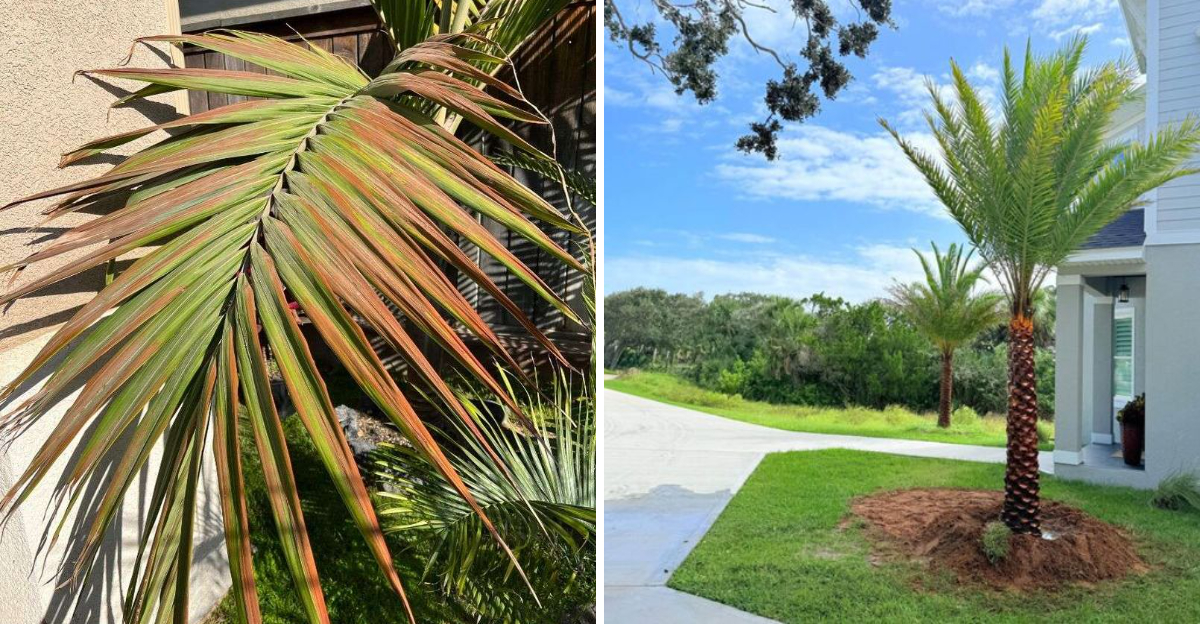
Palm trees are supposed to be Florida’s most heat-tolerant plants. That reputation is mostly earned, but mostly is doing a lot of work in that sentence.
When Florida heat crosses into the kind of extreme that has become more common in recent summers, even palms start showing signs that something is wrong. Most homeowners are not prepared to recognize those signs.
The damage does not always look dramatic at first. A little discoloration here, some frond tip burn there, easy to chalk up to normal summer stress and move on.
By the time the real trouble becomes obvious, the window for a straightforward fix has often already closed. Extreme heat puts palms under a specific kind of pressure that requires a specific response.
The instincts most Florida gardeners reach for in a plant crisis, more water, more fertilizer, do not always apply here and can sometimes make things considerably worse.
1. Extreme Heat Shows Up First In Palm Fronds
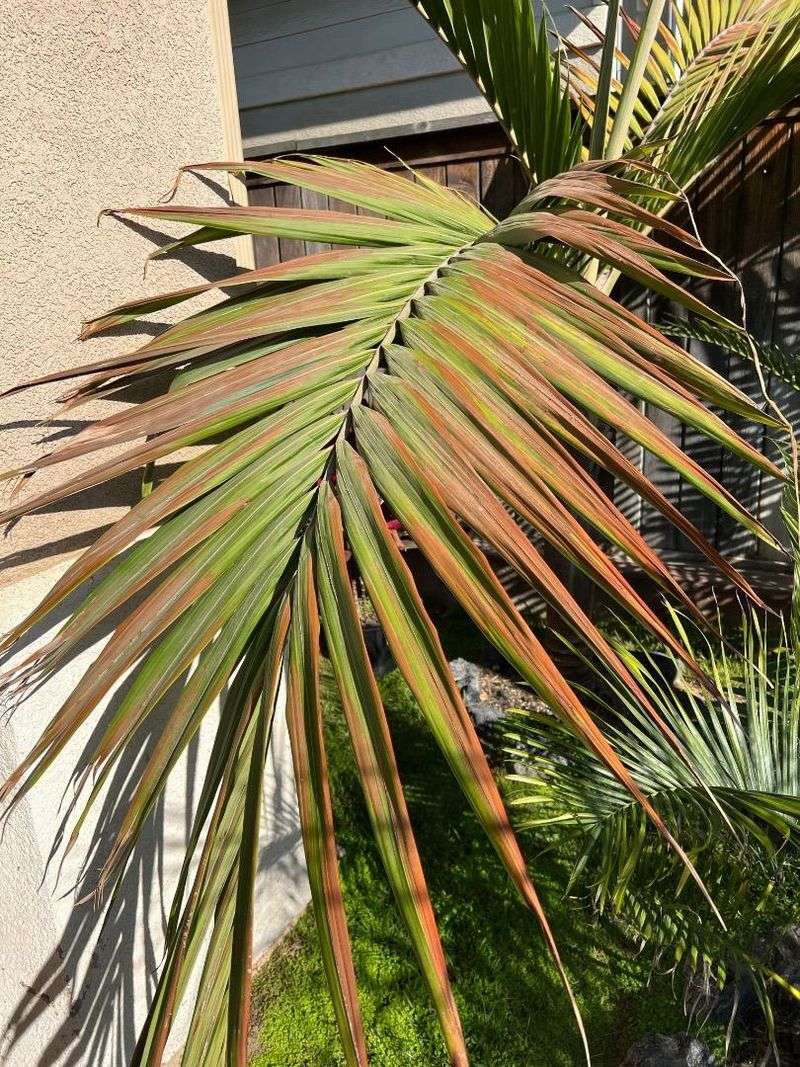
Walk up to a heat-stressed palm and the fronds are always the first place to look. Browning tips, scorched-looking leaflets, yellowing, and faded green color are all common signs that a palm is struggling under extreme heat.
Leaflets may fold inward or droop, almost like the tree is trying to protect itself from the sun.
The tricky part is that these same symptoms can show up for a whole list of other reasons. Drought stress, nutrient deficiencies, salt injury, disease, transplant shock, or even normal frond aging can all produce similar-looking damage.
A single brown tip does not automatically mean heat damage.
That is why it is so important to look at the full picture before drawing any conclusions. Check the soil moisture, recent weather patterns, fertilization history, and the palm’s overall environment.
New growth slowing down or the spear leaf looking pale or stuck are additional warning signs worth noting. Frond symptoms tell you something is wrong, but they rarely tell you the whole story on their own.
Take notes, look carefully, and avoid jumping to one diagnosis when multiple stressors are often working together against your palm at the same time.
2. Some Palms Are More Vulnerable To Heat Damage
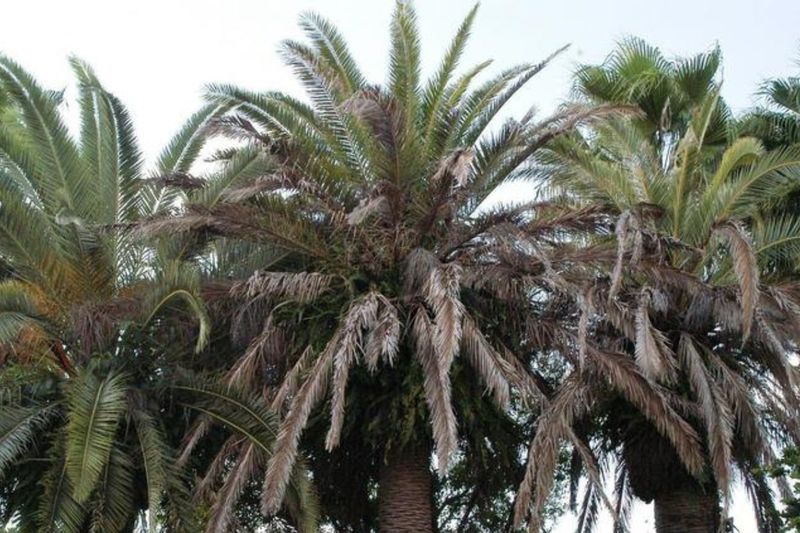
Not every palm handles Florida’s brutal summer heat the same way. Some species are naturally more sensitive, especially when planted in spots that do not match their needs.
Lady palm [Rhapis excelsa], majesty palm [Ravenea rivularis], parlor palm [Chamaedorea elegans], and kentia palm [Howea forsteriana] are all shade-loving and moisture-loving palms. They can really struggle when placed in full afternoon sun or reflected heat from concrete and asphalt.
Container-grown palms and newly planted palms face extra risk during intense heat events. Their root systems are still too limited to pull enough water from the soil.
Sandy Florida soils drain fast, which makes the problem worse. Exposed sites with no shade buffer and high wind can dry out fronds even faster than the roots can keep up.
Even the toughest heat-adapted palms, like Sabal palmetto or Washingtonia robusta, can show heat stress symptoms.
Your Florida Garden Changes Every Week. Your Plan Should Too.
Gardening in Florida changes quickly throughout the season. Every Friday you’ll receive a simple weekly plan showing exactly what to plant, prune, fertilize, harvest, and protect so you never miss the right timing.
That can happen if they were planted poorly, placed in compacted soil, or left without adequate irrigation during the establishment period.
The species matters. But site conditions and planting quality often determine whether a palm thrives or suffers when the temperatures push past 95 degrees for days on end.
3. How Reflected Heat And Pavement Make Things Worse
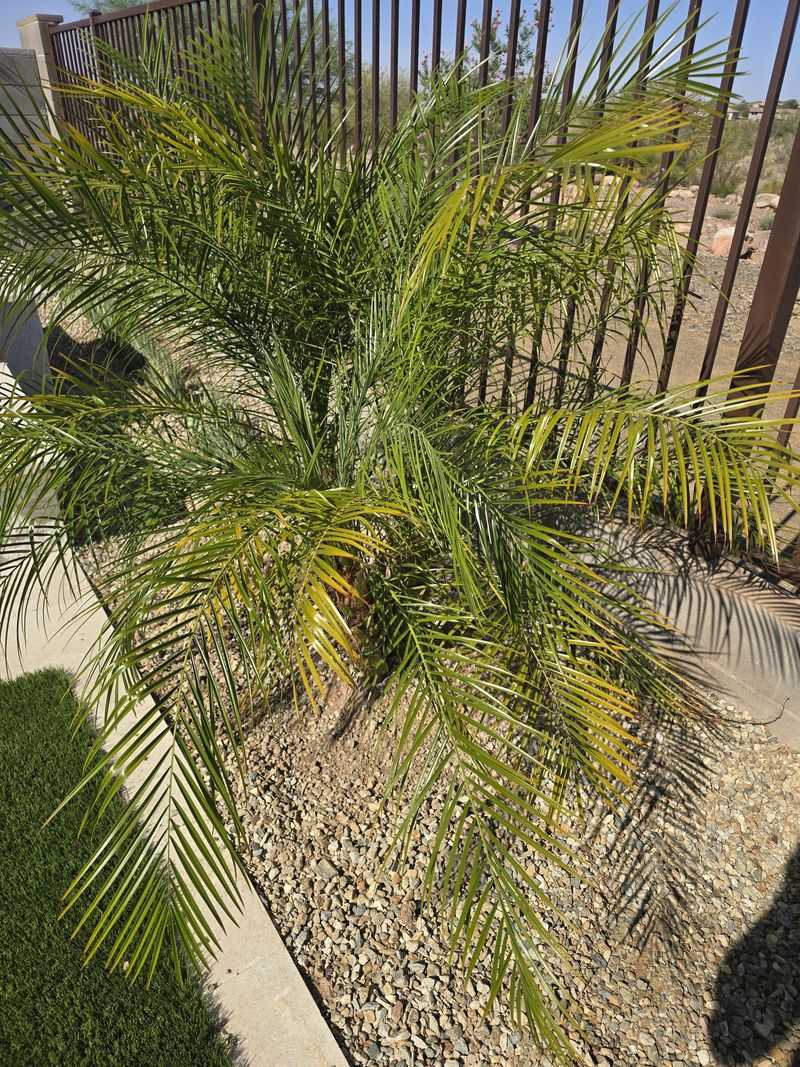
Here is something many Florida homeowners never think about: the ground around a palm tree can actually be hotter than the air temperature. Concrete driveways, asphalt surfaces, pool decks, and brick pavers absorb heat all day long and then radiate it back upward.
On a hot summer afternoon, they can sometimes reach surface temperatures well above 130 degrees Fahrenheit.
Palms planted right next to these surfaces get hit from both directions at once. The air above is scorching, and the ground below is radiating stored heat back up through the root zone.
This combination accelerates moisture loss from both the soil and the fronds, stressing the tree much faster than open-ground palms experience.
If you have a palm planted close to a south-facing wall, a reflective white fence, or a large concrete surface, watch it more carefully during heat waves. Adding a thick layer of organic mulch around the base can help insulate the soil.
Keep it several inches away from the trunk to reduce ground temperature without creating trunk problems.
Pulling back reflected heat is not always possible, but managing soil moisture and shading the root zone with mulch gives the palm a fighting chance even in tough spots.
4. Water Stress And Heat Are A Dangerous Combination
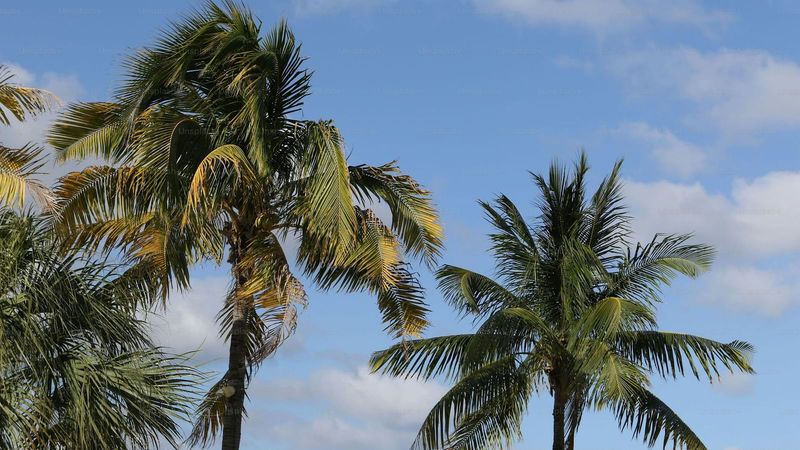
Think of heat stress and water stress as a tag team working against your palm at the same time. When temperatures are extreme, palms lose moisture through their fronds much faster than usual.
If the soil is already dry or draining too fast, the roots simply cannot replace that lost moisture quickly enough, and the palm starts shutting down.
Florida’s sandy soils are notorious for poor water retention. A quick thunderstorm might seem like enough, but the water often drains past the root zone before the tree can absorb a meaningful amount.
Palms planted in these conditions during a heat wave are especially vulnerable, particularly in their first two years when the root system is still getting established.
Deep, slow watering is far more effective than frequent shallow watering. Running a hose slowly at the base of the tree for twenty to thirty minutes, two or three times a week during extreme heat, encourages roots to grow deeper.
Deeper soil stays cooler and holds more moisture. A soil moisture meter can take the guesswork out of the process.
Drought and heat together can destroy a palm faster than either problem alone, so treating both at the same time is always the smarter approach.
5. The Role Soil Quality Plays In Palm Survival
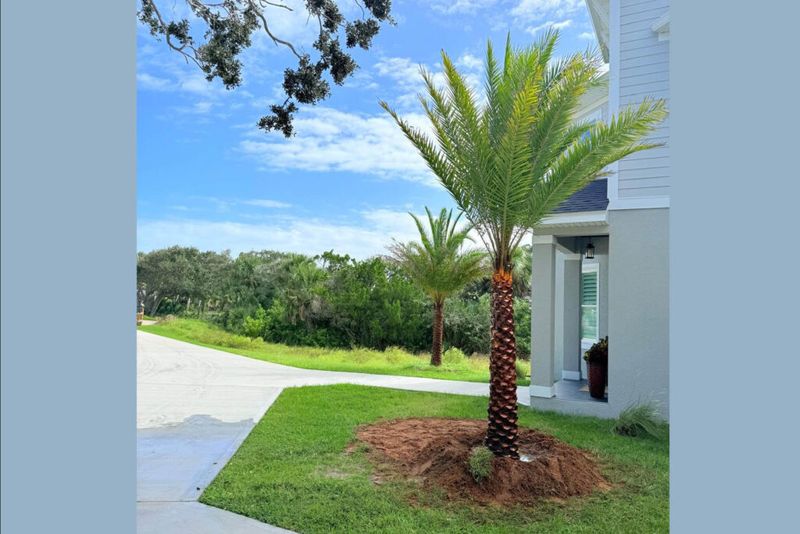
Soil is the foundation everything else depends on, and in Florida, poor soil quality is one of the most overlooked reasons palms struggle during extreme heat. Most of Florida sits on sandy, fast-draining soil that does very little to hold nutrients or moisture.
During a heat wave, that same sandy soil can dry out completely within a day or two of the last rain or irrigation cycle.
Compacted soil creates a different but equally serious problem. When soil is too dense, water cannot penetrate deeply, and roots are forced to stay shallow where they are more exposed to heat and drought.
Palms planted in compacted areas near construction zones or high-traffic spots often show chronic stress symptoms that look a lot like heat damage.
Improving soil quality around established palms is possible with patience. Top-dressing with compost, applying a generous layer of wood chip mulch, and avoiding foot traffic over the root zone all help over time.
For new plantings, mixing organic matter into the backfill soil and choosing planting sites with naturally better soil structure gives the palm a much stronger start.
Healthy soil holds water longer, keeps roots cooler, and supports the nutrient uptake that palms need to recover from heat stress.
6. Fertilizing During A Heat Wave Can Backfire
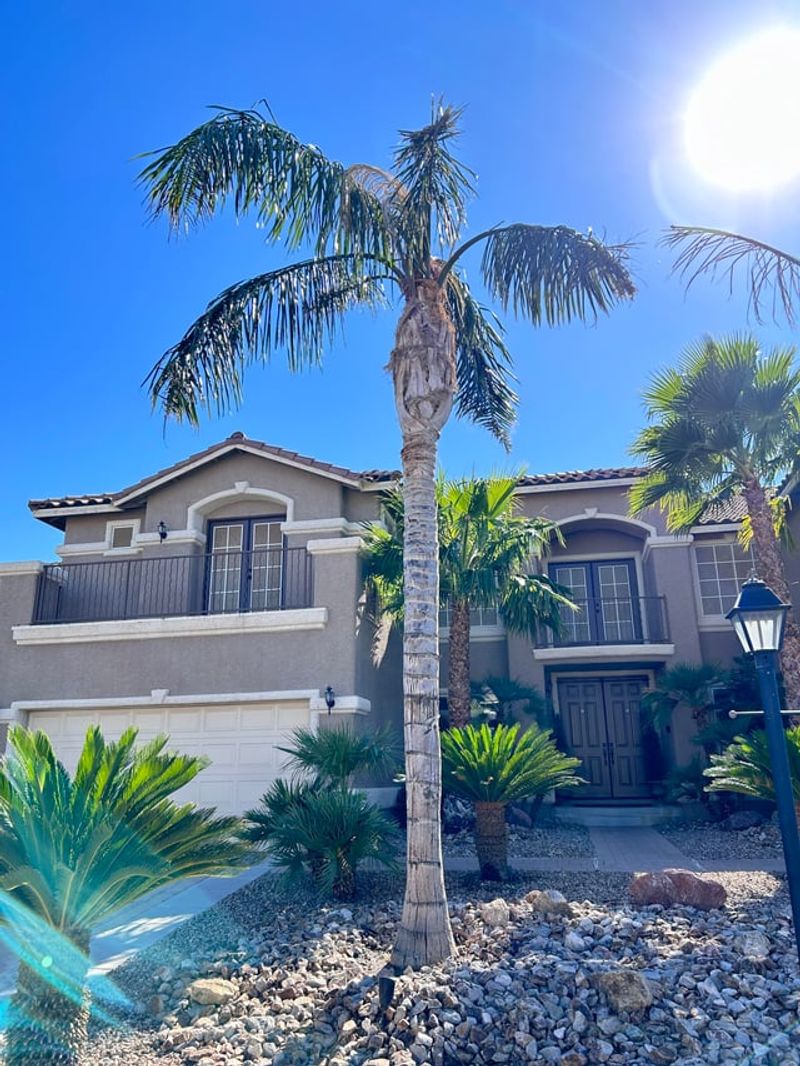
When a palm looks sick, the instinct is often to feed it. More fertilizer feels like more help, but during extreme heat, fertilizing can actually make things significantly worse.
Palms that are already under heat stress have slowed metabolic activity. Their roots are not actively taking up nutrients the way they normally would during cooler, wetter conditions.
Applying fertilizer to dry, heat-stressed soil can burn the roots and push the palm further into decline. High-nitrogen fertilizers are especially risky because they push new growth at a time when the tree cannot support it.
That forced new growth becomes soft, weak, and even more vulnerable to heat and moisture loss than mature fronds would be.
Hold off on any fertilizer applications when temperatures are consistently above 95 degrees and the palm is showing visible stress symptoms.
Wait until the heat breaks, the tree shows signs of recovery, and soil moisture is adequate before resuming a regular fertilization schedule.
When you do fertilize again, use a slow-release palm-specific fertilizer. Choose one with the right micronutrient balance for Florida soils, including magnesium, manganese, and potassium.
Timing fertilizer correctly is just as important as choosing the right product for the job.
7. Pruning Mistakes That Hurt Heat-Stressed Palms
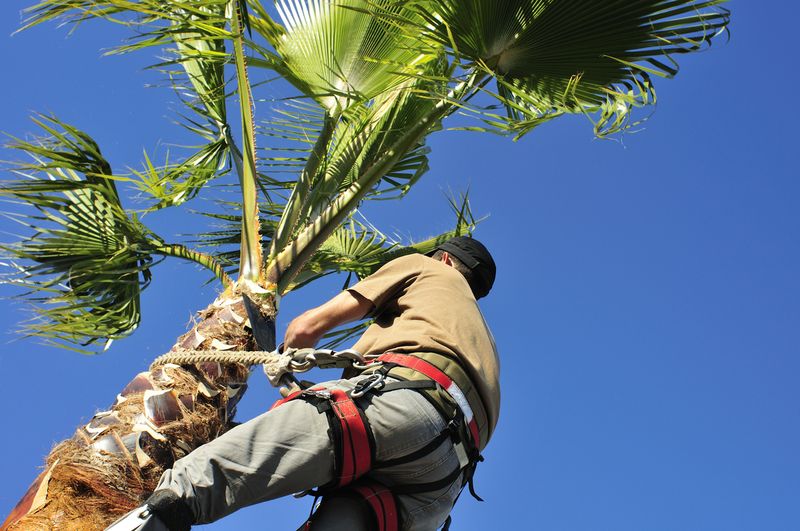
Over-pruning is one of the most common and damaging mistakes Florida homeowners make with their palms, and heat stress makes it even more destructive.
Green fronds, even if they look a little ragged or slightly yellow, are still photosynthesizing and pulling nutrients back into the trunk.
Removing them during a heat wave strips the palm of its ability to recover.
Hurricane cuts, where nearly all the fronds are removed to create a bare trunk with just a tiny tuft at the top, are especially harmful. Palms pruned this way have far less capacity to manage heat, produce energy, or fight off disease.
Studies from the University of Florida IFAS Extension consistently show that heavy pruning weakens palm structure. It also increases vulnerability to pests and nutrient deficiencies.
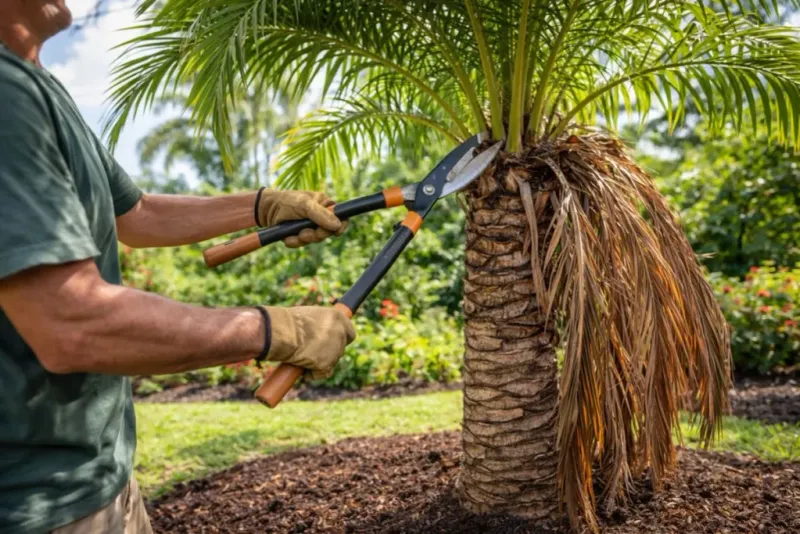
During extreme heat, only remove fronds that are completely brown, withered, and hanging down below horizontal. Leave any frond that still has green color, even partially.
Never remove more fronds than have naturally withered in the same growing period. Avoid pruning during the hottest parts of summer whenever possible.
Always use clean, sharp tools to make smooth cuts that minimize wound size and reduce the risk of fungal entry during stressful conditions.
8. Signs A Palm Tree Might Be Beyond Saving
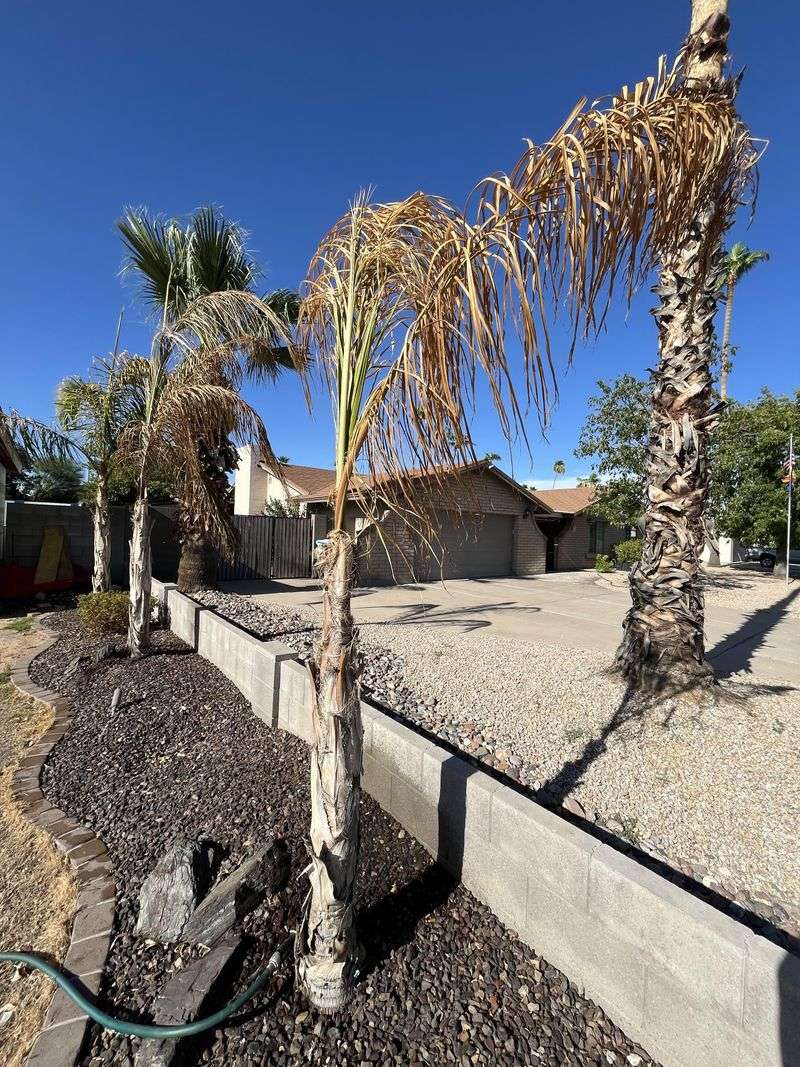
Some palms can bounce back from heat stress with the right care, but others are too far gone to recover, and recognizing the difference matters.
The spear leaf, which is the newest, tallest, unopened frond at the very top of the palm, is the most critical indicator of a palm’s health status.
If the spear leaf pulls out easily with a gentle tug and smells foul or slimy at the base, that is a serious warning sign of crown rot.
A palm that has lost all green color across every frond, including the youngest ones, is likely in terminal decline. That is especially true if there are no signs of new growth pushing up from the center.
Trunk damage that looks sunken, cracked, or discolored at the base can indicate irreversible internal rot or root system failure. No amount of watering or fertilizing will fix that kind of damage.
Consulting a certified arborist, specifically one with palm experience and an ISA certification, is always worth the cost when you are unsure about a palm’s condition.
A professional can assess the trunk integrity, root zone, and crown health in ways that are hard to evaluate from the ground.
Removing a withered or deceasing palm promptly also reduces the risk of disease spreading to nearby healthy trees in your landscape.
9. Practical Steps To Help A Heat-Stressed Palm Recover
Recovery from heat stress is absolutely possible for palms that still have a living crown and some green fronds remaining. The most immediate step is getting moisture back into the root zone with deep, slow watering rather than quick surface sprays.
Soaking the area from the trunk out to the drip line, which is the outer edge of the canopy, gives roots the best chance to rehydrate efficiently.
Applying a three-to-four-inch layer of organic wood chip mulch over the root zone dramatically reduces soil temperature. Keep it a few inches away from the trunk itself so it can slow moisture evaporation without causing trunk issues.
This single step can make a measurable difference within just a few days of application. Avoid black rubber mulch or rock mulch near heat-stressed palms, as both materials absorb and radiate heat rather than insulating against it.
Give the palm time before expecting visible improvement. New frond growth in palms develops slowly, and it may take several weeks or even a full growing season before a recovering palm looks healthy again.
Be patient, keep watering consistently, hold off on fertilizing until conditions improve, and avoid any unnecessary pruning. Steady, low-stress care over time is almost always more effective than aggressive interventions when a palm is working hard to recover.