Wet Winters And Dry Summers Do Not Intimidate These 7 Oregon Garden Plants
Oregon gardening is not for the faint of heart.
The winters are relentlessly wet. The summers flip to dry and hot with almost no transition. Most plants pick one season to look good and spend the other one struggling to hold it together.
Oregon gardeners who have been at this for a while stop fighting that pattern. They start working with it instead.
The plants that actually belong in an Oregon garden do not need a protective schedule of watering and intervention to survive both halves of the year.
They evolved here, or close enough to here that the climate reads as familiar rather than hostile. Wet winters are not a problem for them. Dry summers are not an emergency.
If you have been replacing the same struggling plants every few years because nothing seems to last through both seasons, these plants handle Oregon’s full climate swing without asking the gardener for much in return.
Some of them have been growing here longer than any garden has existed.
1. Oregon Grape
Many gardeners walk past Oregon Grape at the nursery without a second glance. The prickly leaves read as uninviting and the compact form does not announce itself the way showier plants do.
That first impression costs gardeners one of the most useful plants available for Pacific Northwest landscapes.
Mahonia aquifolium is the official state plant of Oregon for good reason. It grows naturally across the region from shady forest understories to open rocky slopes, which tells you everything about how adaptable it actually is.
Wet winters are routine for it. Dry summers, once the plant is established, barely register as a challenge.
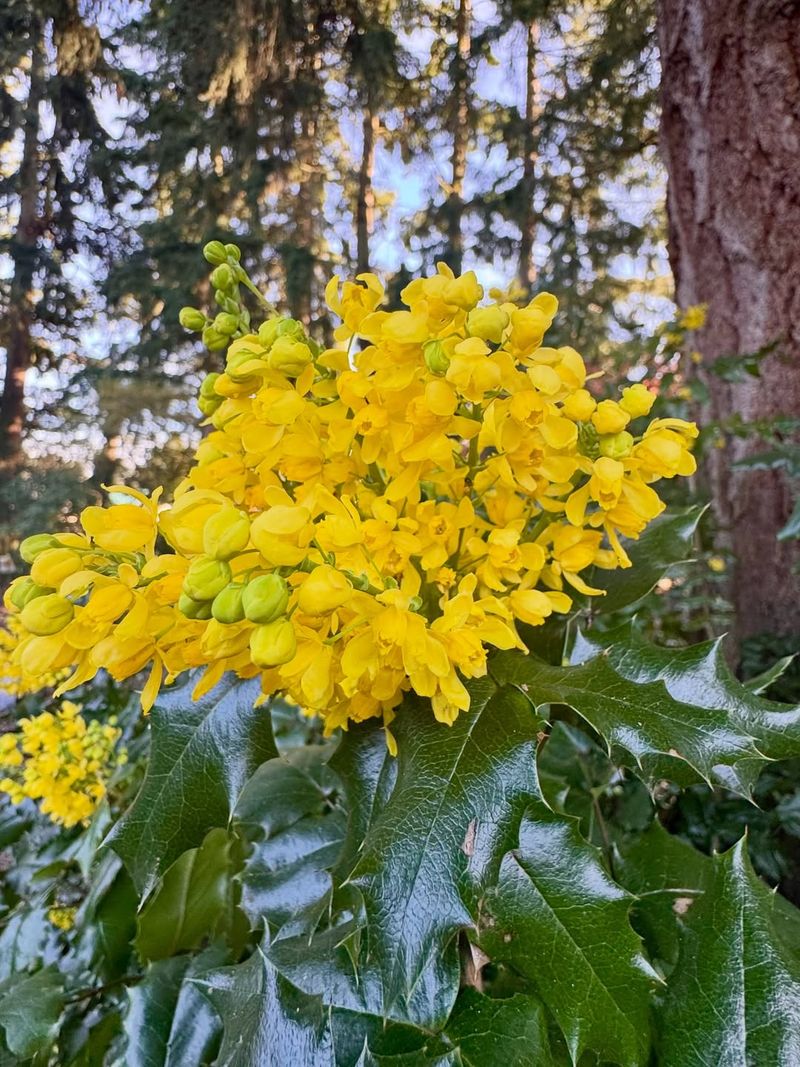
The glossy holly-like leaves stay green through every season, giving the garden structure and color when most other plants have gone dormant or disappeared entirely.
Late winter and early spring bring clusters of small yellow flowers that arrive before almost anything else in the garden. Deep blue-purple berries follow the flowers, and birds find them immediately.
Plant it in well-drained soil during fall so roots can settle during the rainy season before summer arrives. First year growth is slow while the root system builds itself out. After that first full year, this shrub becomes genuinely self-sufficient.
Sun or partial shade both work fine. Pest problems are rare. Pruning is rarely needed beyond the occasional shape.
Oregon Grape is the plant that handles whatever Oregon throws at it without making the gardener feel responsible for the outcome. That is a rare and valuable quality in a landscape plant.
2. Salal
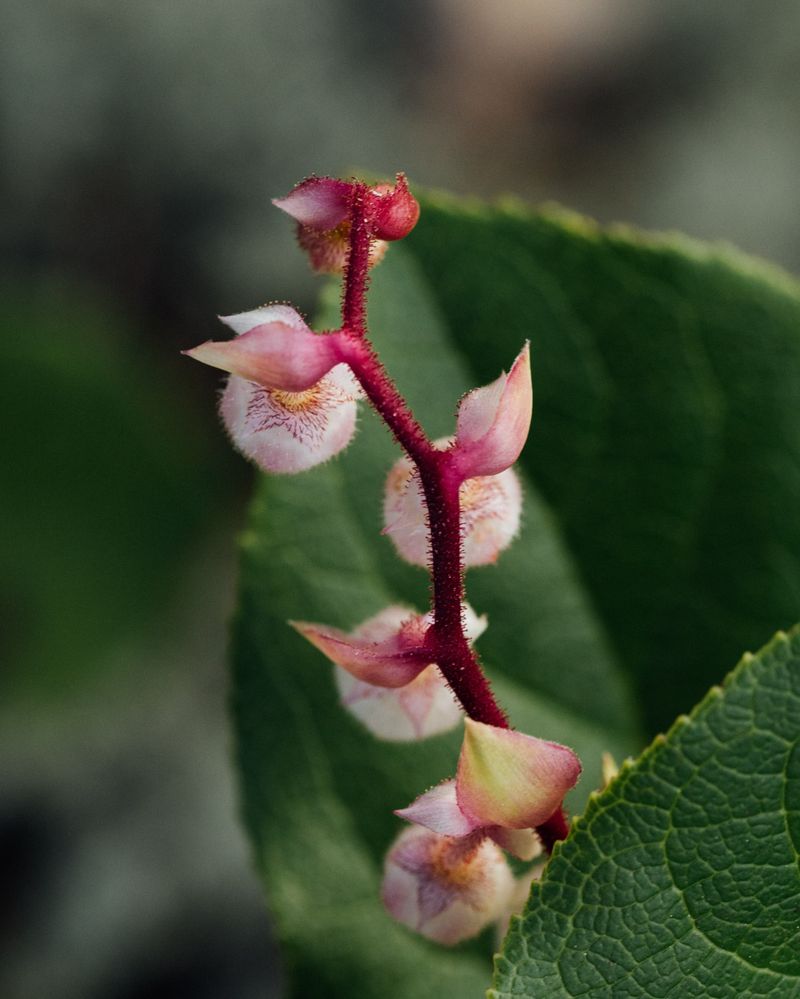
That shaded corner where grass refuses to grow and bare soil washes downhill every winter has a natural solution, and it has been growing in Oregon forests for a very long time.
Gaultheria shallon is native to the coastal forests and mountain foothills of the Pacific Northwest. Wet winters are the environment it evolved in.
The thick, waxy leaves shed rain naturally and resist rot through extended soggy stretches that would compromise most ornamental groundcovers.
Come summer, established Salal pulls back its water needs and handles dry months without supplemental irrigation.
Your Oregon Garden Changes Every Week. Your Plan Should Too.
Gardening in Oregon changes quickly throughout the season. Every Friday you’ll receive a simple weekly plan showing exactly what to plant, prune, fertilize, harvest, and protect so you never miss the right timing.
The plant spreads through underground stems, forming a dense mat that suppresses weeds and stabilizes slopes without any ongoing maintenance.
That spreading habit makes it genuinely practical for erosion-prone banks and shaded areas where mowing is difficult or impossible.
Growth is gradual, so patience is part of the arrangement. The long-term payoff is a low-maintenance carpet of green that keeps improving every year.
Small pinkish-white bell flowers appear in spring, followed by dark berries that local wildlife appreciate through fall and into winter.
The plant performs best in filtered light with organic-rich, well-drained soil that mimics its native forest environment.
Skip the fertilizer. Skip the extra attention. Plant Salal in fall, water it through the first summer, and then largely leave it alone.
Salal does not need encouragement. It needs space and time, and Oregon winters handle the rest.
3. Red Flowering Currant
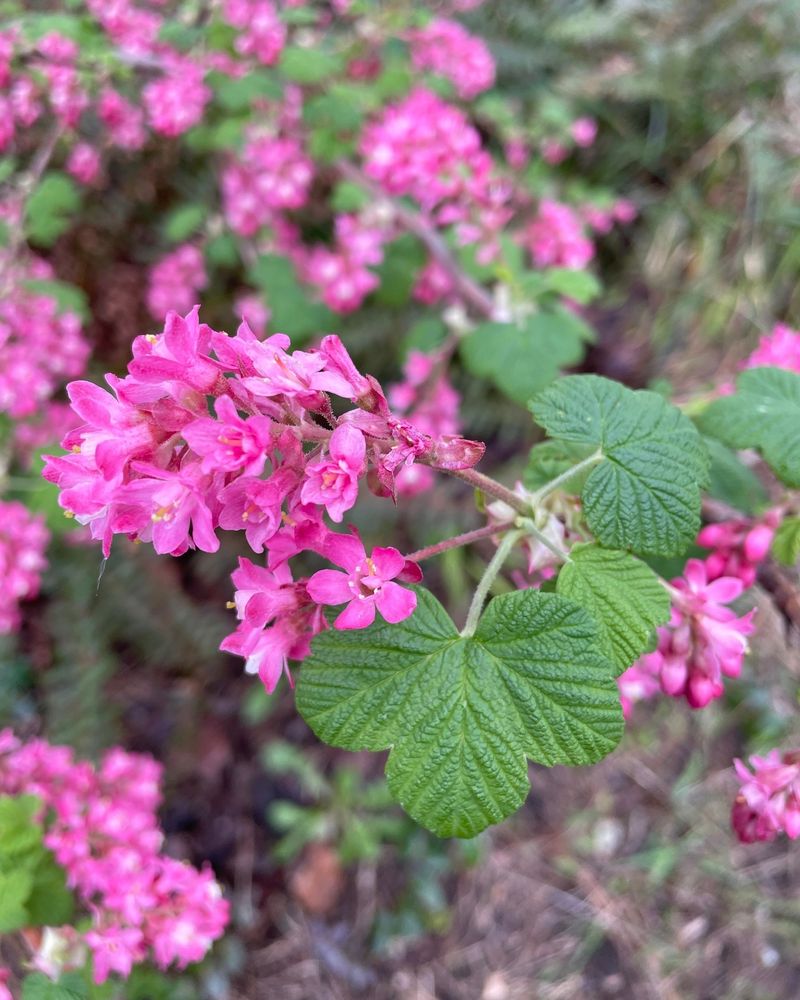
Before most of the garden even considers coming out of winter dormancy, Red Flowering Currant is already putting on a show.
Deep pink to red tubular flowers drape the bare branches in late winter and early spring, sometimes as early as February in the Willamette Valley. It is the plant that makes February feel like it might be worth something after all.
Ribes sanguineum grows naturally across western Oregon and into British Columbia. It is well adapted to the wet-then-dry cycle that defines Oregon seasons.
During rainy months it takes what it needs. When summer arrives and rainfall disappears, established plants handle the transition without visible stress.
Hummingbirds arrive with the blooms, often before any other nectar source is available in the garden. Native bees and early pollinators depend on those flowers.
Later in the season, small dark berries attract songbirds and extend the plant’s usefulness well beyond the bloom window.
Plant it in fall so roots can establish during the rainy season. The first summer may need occasional deep watering while the root system finishes spreading. After that, supplemental irrigation is rarely necessary.
The shrub reaches six to ten feet tall over time. Light pruning after flowering maintains shape without sacrificing next year’s blooms.
Red Flowering Currant feeds the earliest visitors to an Oregon garden while the rest of the landscape is still figuring out its plans for the season.
4. Oceanspray
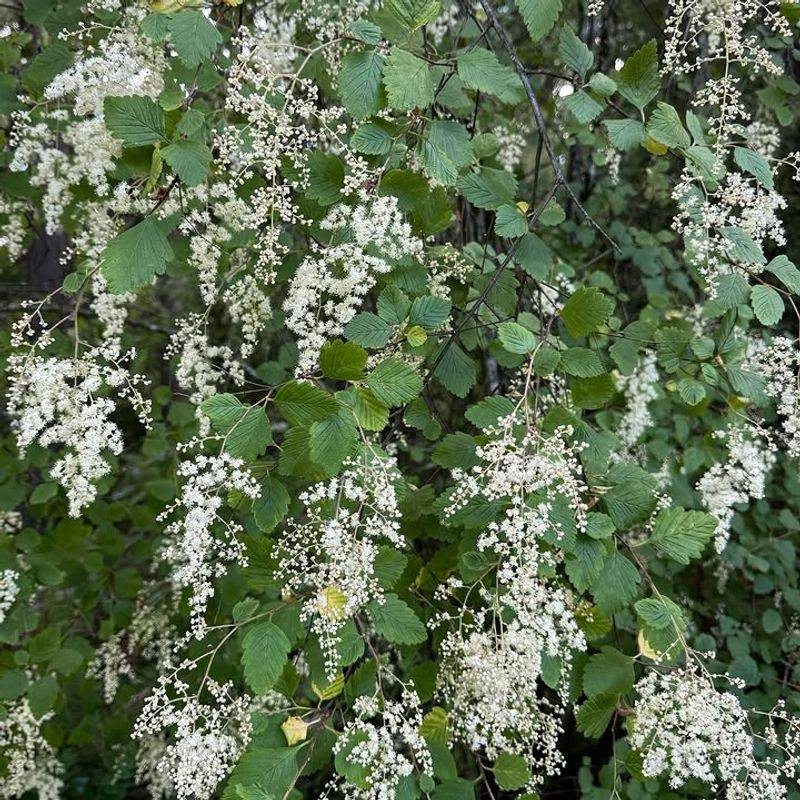
Dry, sun-baked slopes are some of the hardest spots in any Oregon garden to work with. Irrigation is difficult, erosion is a persistent problem, and most ornamental shrubs look stressed by July regardless of how much attention they receive.
Oceanspray handles all of that while looking genuinely graceful at the same time.
Holodiscus discolor is a native deciduous shrub found across Oregon from coastal hillsides to inland foothills.
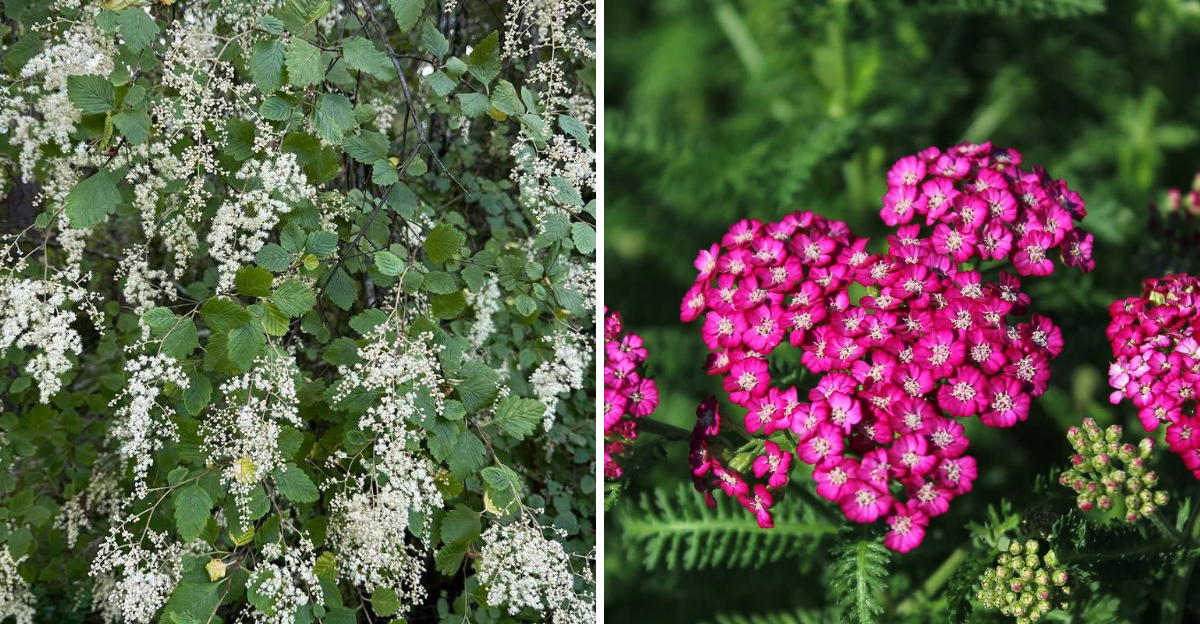
In early summer, it produces large creamy white plumes of flowers that cascade from arching branches. The effect is airy and light, which is a surprising contrast to how rugged this plant actually is.
Dried flower clusters persist into fall and winter, adding texture long after the blooms have finished.
Once established after one to two full growing seasons, Oceanspray becomes one of the most drought-tolerant native shrubs available for Oregon landscapes.
It performs well in poor, rocky, or well-drained soils that challenge most other plants. No rich soil required. No regular fertilizing needed. The shrub grows eight to fifteen feet tall and wide, so giving it adequate room upfront matters.
Plant in fall or early spring and water through the first summer. After that, step back considerably.
Birds use the dense branching for shelter through winter. Native insects visit the flowers regularly through bloom season. The slope that looked like a problem to solve becomes a landscape feature worth keeping.
Oceanspray was handling dry Oregon slopes long before anyone was planting garden beds nearby.
5. Kinnikinnick
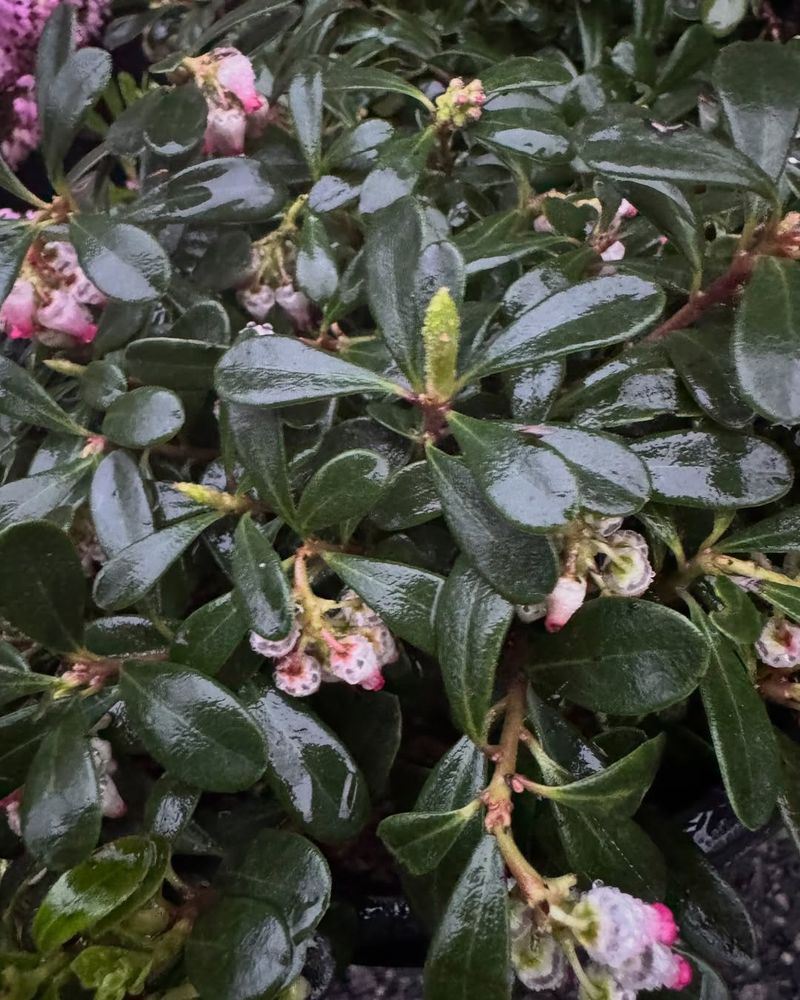
Sandy, gravelly, nutrient-poor soil is a frustrating situation for most plants. For Kinnikinnick, it is the preferred address.
Arctostaphylos uva-ursi is a mat-forming evergreen that stays low to the ground, rarely exceeding six inches tall, and spreads steadily outward across bare ground.
Small, glossy leaves create a dense carpet over time. Pink bell-shaped flowers appear in spring, followed by bright red berries in late summer and fall that birds find consistently appealing.
Drainage is the single most important variable for success with this plant. Oregon winters bring heavy and sustained rainfall, and Kinnikinnick will not perform well in soggy conditions.
Sandy or gravelly slopes, raised beds with gritty soil, or any site where water moves through quickly are the right placements. Once drainage is handled properly, the plant takes care of itself through summer without supplemental watering.
Full sun and lean soil are where this plant genuinely shines. Rich, amended soil actually works against it by encouraging weak, floppy growth that loses the compact form that makes Kinnikinnick attractive in the first place.
Skip the fertilizer entirely. Do not amend the soil generously before planting. Plant it in the worst-draining-sunny spot in the garden and let it do what it was designed to do.
Kinnikinnick is genuinely excellent at being planted somewhere difficult and left completely alone. Most plants cannot make that claim.
6. Yarrow
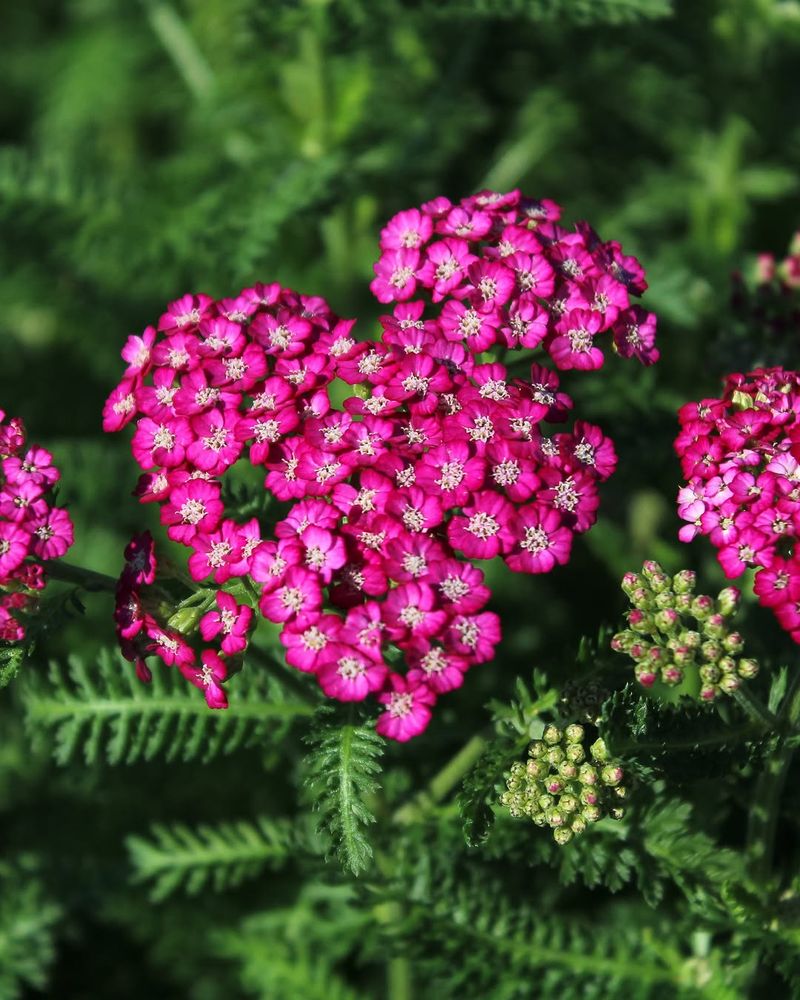
Some plants pretend to handle drought. Yarrow actually handles drought. There is a meaningful difference between the two, and an Oregon July makes that difference impossible to ignore.
Achillea millefolium grows natively across much of North America, including Oregon, and has been used in gardens for centuries across climates considerably harsher than the Willamette Valley.
Flat-topped flower clusters appear in late spring and continue well into summer in shades of white, yellow, gold, pink, and red depending on the variety. Deadheading spent flowers encourages a second blooming wave later in the season.
The feathery, aromatic foliage is part of what makes Yarrow drought-resilient. Those finely divided leaves reduce water loss in hot, dry conditions, letting the plant push through summer stretches that would visibly stress less adapted perennials.
Full sun and well-drained soil are the basic requirements. Once established, supplemental irrigation is rarely necessary.
Pollinators genuinely respond to this plant. Native bees, butterflies, and beneficial predatory insects visit the flowers consistently through the blooming season.
The ecological productivity of a single established Yarrow clump is considerably higher than its modest appearance suggests.
Dividing clumps every few years keeps the spreading habit in check and refreshes the plant’s vigor at the same time.
Yarrow rewards minimal care with maximum return, which is exactly the kind of plant that makes an Oregon summer garden feel manageable rather than exhausting.
7. Vine Maple
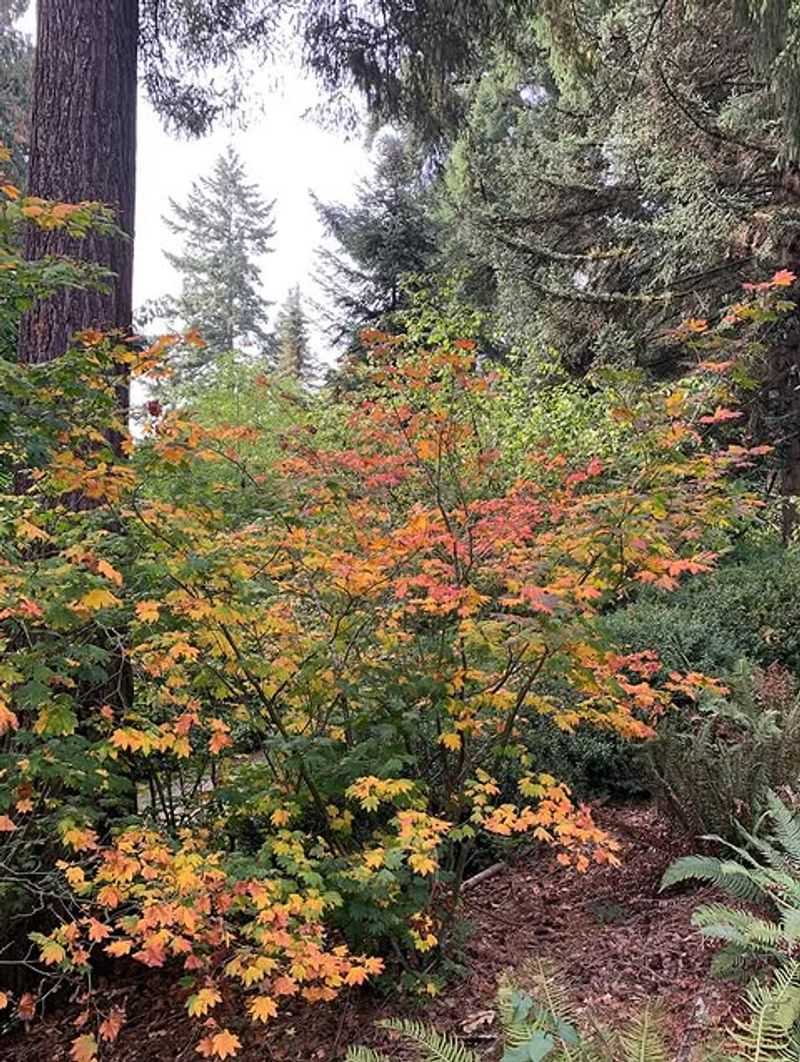
Fall color in an Oregon garden does not get better than Vine Maple in October. Leaves shift from green to orange, red, and gold in combinations that make the whole plant look like it has been deliberately lit from the inside.
Getting that performance, though, depends entirely on where it gets planted.
Acer circinatum is a native understory tree that grows naturally beneath taller conifers and deciduous trees throughout western Oregon.
That native habitat communicates its preferences clearly. Filtered light, protection from harsh afternoon exposure, and shelter from drying winds are the conditions where it performs best.
Planted in full exposure without protection, Vine Maple can show leaf scorch and stress by August in dry years.
In a sheltered spot with partial shade, the story changes completely. The plant stays hydrated longer through summer, foliage stays clean and healthy, and the fall color display is noticeably richer when the plant has not spent three months in survival mode.
Vine Maple typically grows ten to twenty-five feet tall with a graceful multi-stemmed form that adds natural character to shaded corners and woodland-style garden areas.
Spring brings small reddish-purple flowers and attractive winged seeds. The branching structure remains interesting through winter after the leaves drop.
Water regularly through the first two summers to help roots establish. After that, a protected shaded site dramatically reduces supplemental watering needs.
Vine Maple is the kind of plant that makes October in Oregon feel like a reward for everything that happened in July.