What Carpenter Bee Activity Around An Indiana Porch Is Really Telling You
One smooth, dime-sized hole in your porch wood is easy to brush off. Two or three, and something is clearly going on.
That something is a carpenter bee, and it has likely been at work longer than you realize. What looks like minor surface damage often hides tunnels stretching several inches deep into your wood.
And carpenter bees are creatures of habit, once they find a porch they like, they come back. Season after season, new females return to expand old galleries or drill fresh ones right alongside them.
The sawdust collecting below the hole, the yellowish staining on the wood, the woodpeckers suddenly pecking at your railing, none of it is random. It all points to the same thing.
Carpenter bee activity around an Indiana porch is your home sending you a message. Here is what it is actually telling you.
Your Indiana Porch Wood Is At Risk
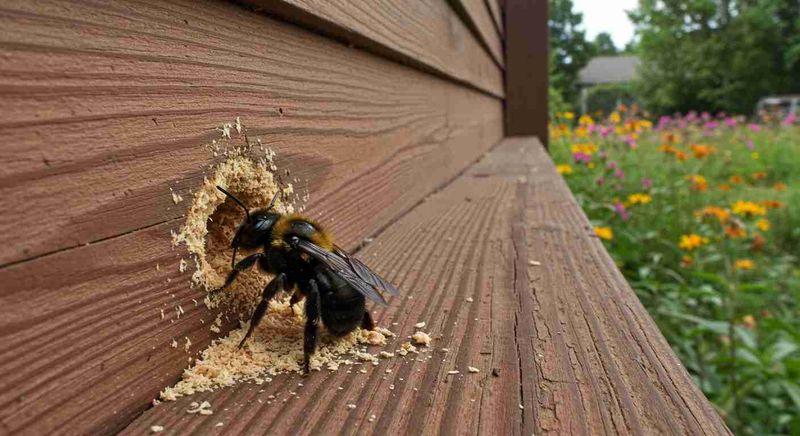
That smooth, round hole in your porch railing is not a coincidence. Carpenter bees target soft, untreated, or weathered wood with almost surgical precision.
In Indiana, the most common porch materials are pine, cedar, and pressure-treated wood. These woods are easy to chew through, making your porch a prime destination every spring.
Carpenter bee activity around an Indiana porch often starts with just one or two holes. Left alone, those holes multiply fast over multiple seasons.
The bees are not eating the wood like termites do. They are excavating tunnels to lay their eggs inside, which means structural damage can build up quietly.
Unpainted or unstained wood is one of the biggest risk factors. A fresh coat of paint or stain can deter these bees, since they tend to prefer raw, exposed grain.
Check your fascia boards, porch beams, and deck railings every spring. Catching early holes before they become tunnel networks can save you a serious repair bill later.
Your porch wood is essentially an open invitation if it has not been sealed. Treating it proactively is one of the most effective steps a homeowner can take.
Those Holes Are Not Random
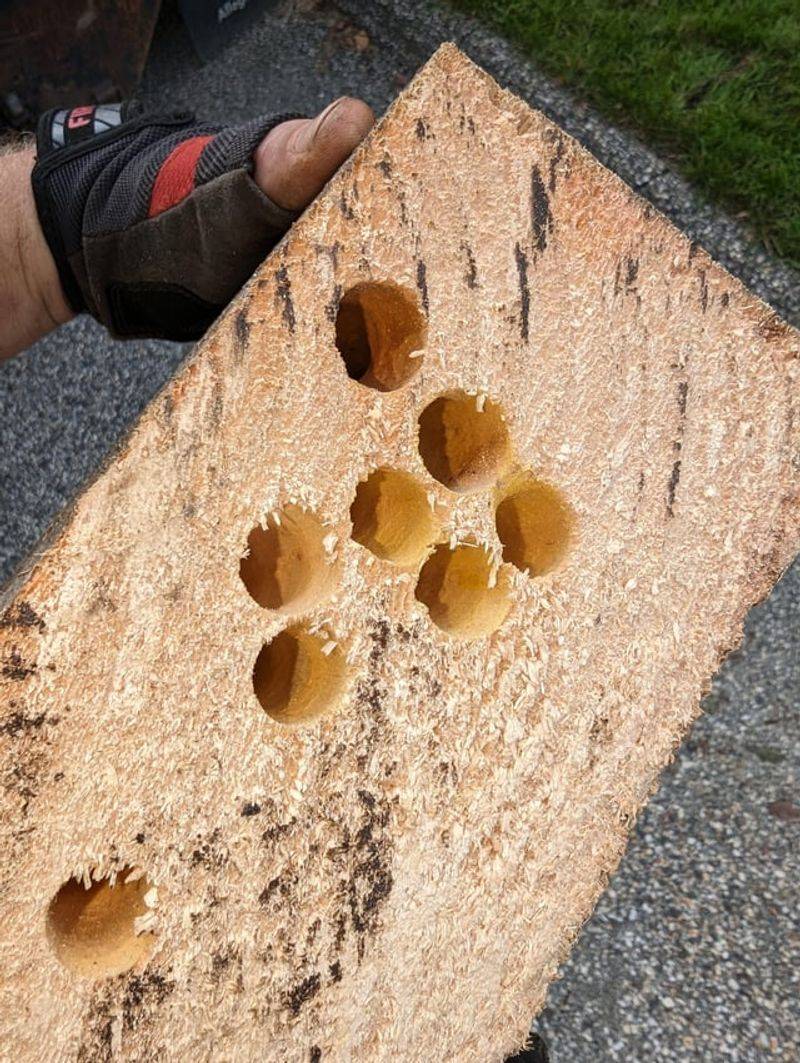
Spot a perfectly round hole about half an inch wide in your porch wood and your gut says something chewed through it. You are right, and the precision is almost unsettling.
Carpenter bees do not drill randomly. They seek out the end grain of wood, the underside of boards, or any spot where the wood grain runs horizontally.
Those locations make tunneling easier and faster for the bee. A female can excavate about an inch of tunnel per day once she finds the right spot.
The entry hole is typically vertical at first, then the tunnel turns sharply and runs parallel to the wood grain. That right-angle turn is the bee’s signature move.
Each tunnel can stretch six to ten inches long inside your porch beam or railing. The female divides it into small chambers, each holding one egg and a ball of pollen.
You might notice yellow or brownish sawdust piling up below the holes. That frass is fresh evidence the bee is actively working and has not finished yet.
Your Indiana Garden Changes Every Week. Your Plan Should Too.
Gardening in Indiana changes quickly throughout the season. Every Friday you’ll receive a simple weekly plan showing exactly what to plant, prune, fertilize, harvest, and protect so you never miss the right timing.
Seeing multiple holes clustered together usually means a returning female. Carpenter bees have strong homing instincts and come back to the same wood year after year.
Indiana Porches Are A Prime Target
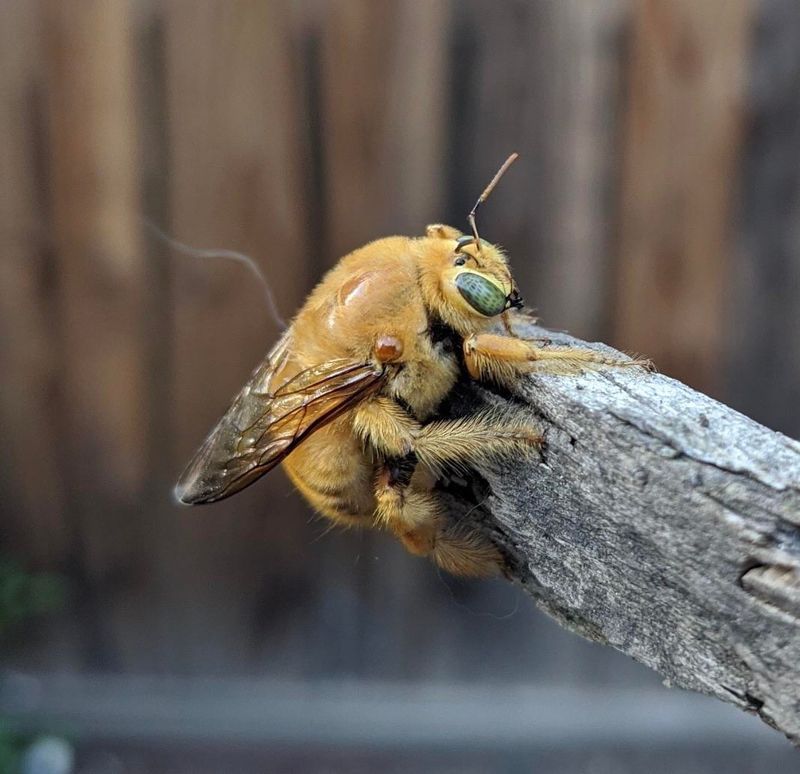
Indiana summers are warm and humid, and that climate is practically a welcome mat for wood-boring insects. Carpenter bee activity around an Indiana porch peaks between April and June each year.
The Hoosier State has no shortage of older homes with beautiful wood porches. Many of those porches have not been repainted or sealed in years, which is exactly what these bees look for.
Porches that face south or west get the most sun exposure. Warm, sun-baked wood can become more appealing to a female carpenter bee looking for a good drilling site.
Shaded porches are not off the hook either. Moisture from Indiana’s spring rains can soften wood grain, making it just as attractive to a searching bee.
Homes near wooded areas or tree lines see more carpenter bee pressure. The bees naturally nest in fallen or decaying tree limbs, and a wooden porch is just a convenient substitute.
Older neighborhoods in cities like Indianapolis, Bloomington, and Fort Wayne tend to have more reported carpenter bee problems. The aging wood stock in those areas makes a big difference.
Protecting your porch is not just about aesthetics. It is about staying ahead of a pest that has a clear preference for exactly the kind of wood most Indiana porches are built from.
Inside The Tunnels, It Gets Worse
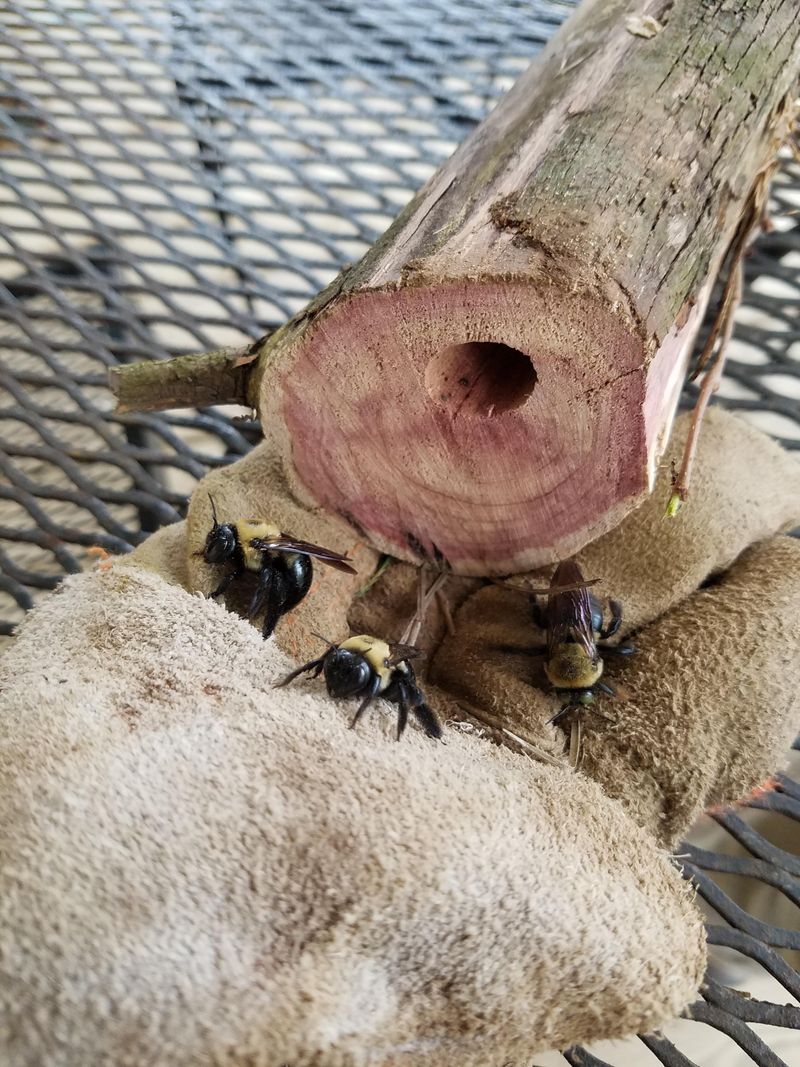
What happens inside those tunnels is something most homeowners never think about. Once the female seals her eggs inside, the damage does not stop there.
Each tunnel is divided into chambers using a mixture of chewed wood pulp. The female deposits one egg per chamber along with a pollen ball as a food source for the larva.
By late summer, those larvae have hatched and grown into adult bees. They chew their way out through the sealed chambers, often widening the tunnel as they exit.
Woodpeckers in Indiana actually make the damage worse. They can hear the larvae moving inside the wood and will hammer through your porch boards to get to them.
A porch beam with several seasons of tunneling can start to feel spongy underfoot. The internal structure weakens even if the surface still looks mostly fine from the outside.
Moisture also enters through those open holes. Once water gets inside a tunnel, it accelerates wood rot, which can spread far beyond the original bee damage.
What started as a small round hole can eventually compromise an entire section of railing or beam. The inside of your porch wood can be far more compromised than the surface suggests.
Signs The Damage Is Spreading Season To Season
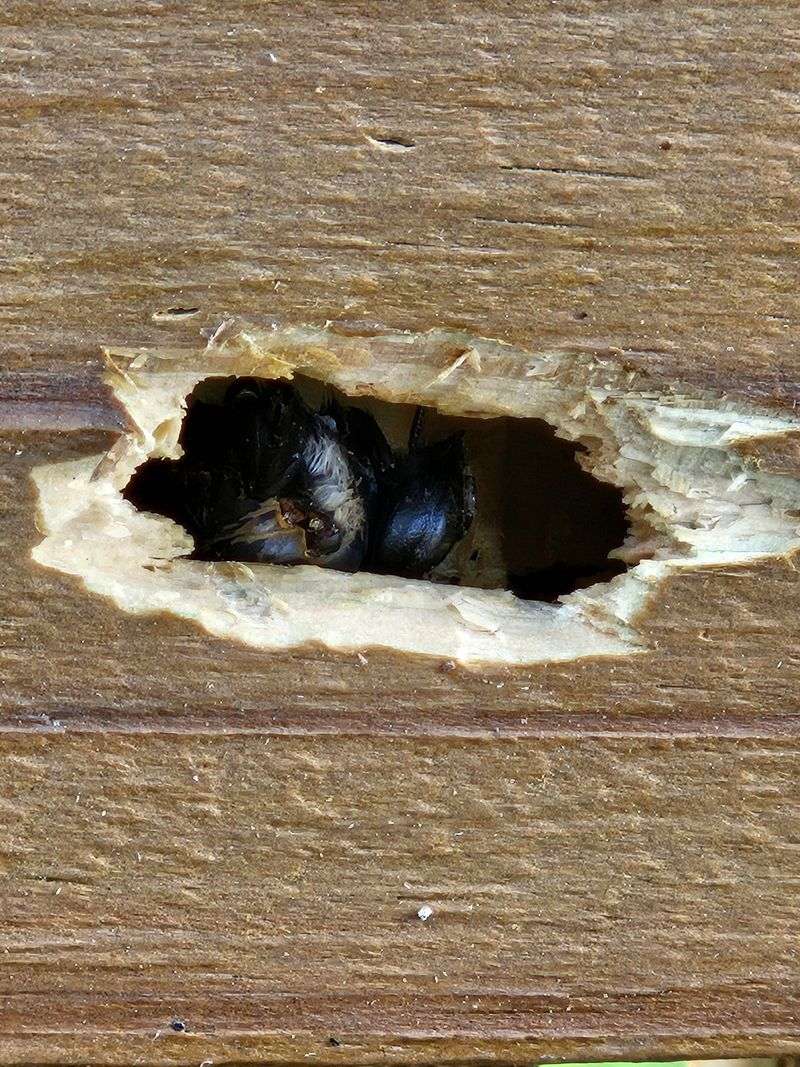
Fresh holes have crisp, clean edges and pale wood coloring around the opening. Older holes look darkened and weathered, almost like the wood has been stained around the rim.
If you see both types on the same board, that porch has been under attack for more than one season. That is a red flag worth taking seriously.
Carpenter bees return to previous nest sites with impressive loyalty. A daughter bee will often expand her mother’s tunnel rather than starting a new one from scratch.
Over time, a single tunnel can branch into a network stretching a foot or more. That kind of internal maze weakens the structural integrity of the wood significantly.
Check for soft spots by pressing your thumb firmly against the wood near old holes. Any give or sponginess means the damage has already spread beyond what you can see.
Yellow staining on the wood surface just below an entry hole is another clue. That coloring comes from a mix of bee waste, pollen, and frass, and indicates the tunnel has been occupied recently.
Catching spreading damage early is the difference between a simple patch job and replacing an entire porch section. Seasonal inspections in early spring give you the best chance of staying ahead of it.
Carpenter Bees Vs. Bumblebees
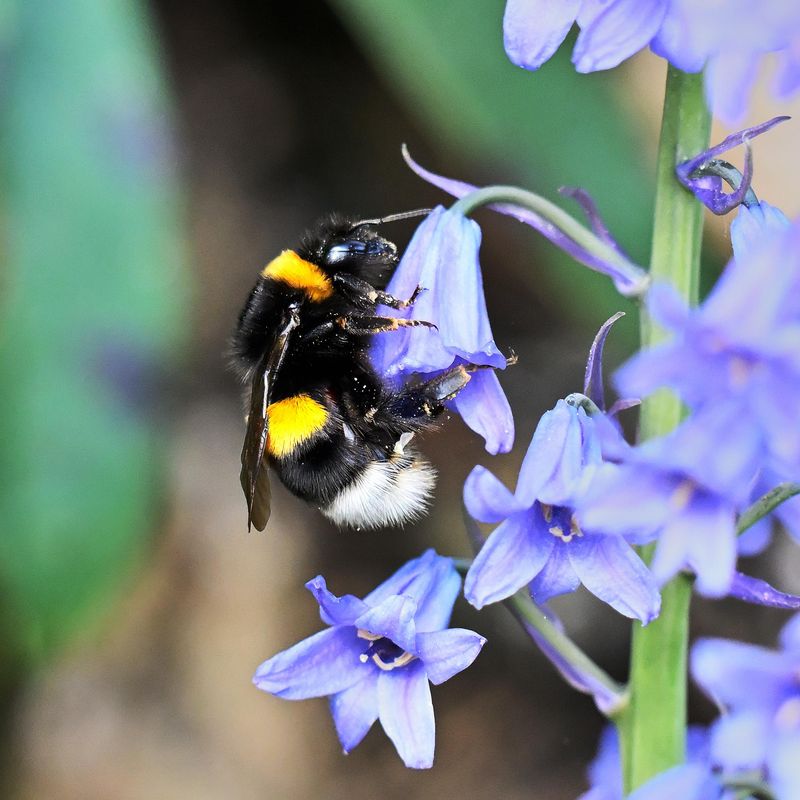
Most people see a big, buzzing bee near their porch and assume it is a bumblebee. The two look similar at a quick glance, but they behave completely differently.
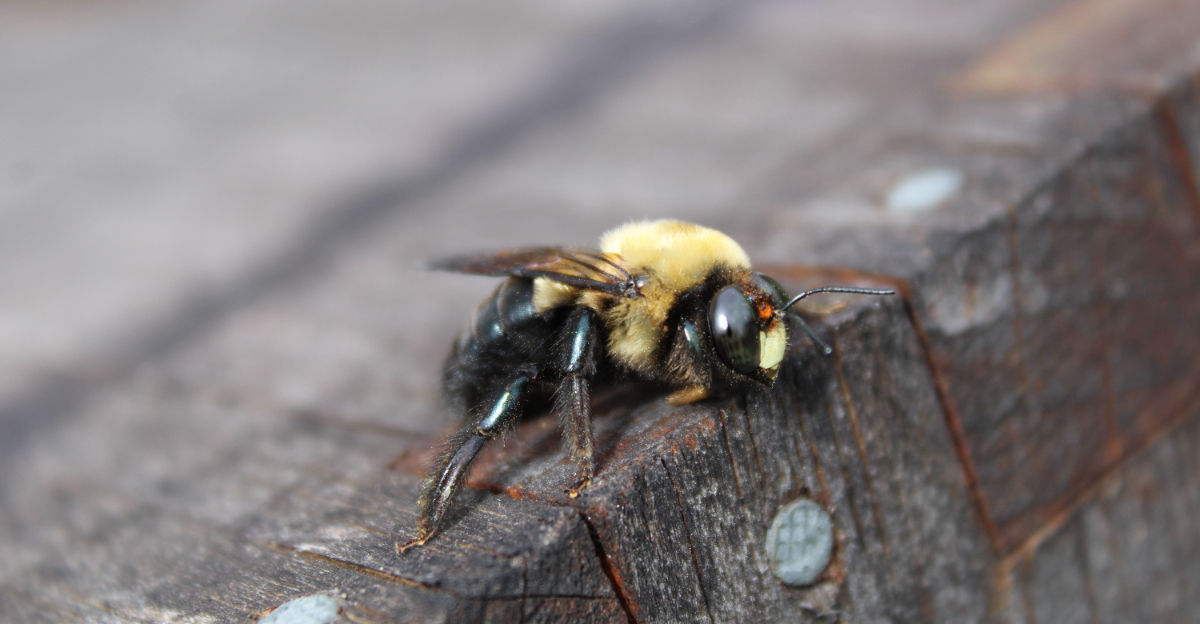
A carpenter bee has a shiny, hairless black abdomen. A bumblebee’s abdomen is fuzzy and covered in yellow and black hairs, giving it a rounder, fluffier appearance.
Bumblebees nest in the ground or in old rodent burrows. They do not drill into your porch wood, so spotting one near your railing is not a cause for alarm.
Male carpenter bees are the ones you see hovering aggressively near the porch. They dart at people and other insects, but they cannot sting since males have no stinger.
Female carpenter bees are the actual drillers. They are less showy than the males but far more destructive, spending their energy excavating tunnels and laying eggs.
Knowing the difference helps you react correctly. Swatting at a bumblebee and ignoring the real carpenter bee nearby means the actual problem goes unaddressed.
Next time a big bee hovers near your porch, take a closer look at the abdomen. That one detail tells you everything about whether your wood is at risk or not.
Fresh Drilling Activity Needs Immediate Attention
Sawdust beneath a hole that was not there yesterday is about as clear a warning sign as your porch can give you. Fresh drilling means the female is still active and the tunnel is growing right now.
Spring is when carpenter bee activity around an Indiana porch hits its highest point. Acting fast in April or May can prevent an entire season of tunneling from taking hold.
Plug fresh holes with steel wool before applying wood filler or caulk. Steel wool is typically too rough for the bees to chew through, while filler alone can sometimes be excavated again.
After sealing, paint or stain over the repaired area immediately. Bare wood patches are almost as attractive to a returning bee as the original hole was.
Some homeowners apply citrus-based sprays around entry points to discourage new activity. Results vary, but the strong scent may encourage bees to move on.
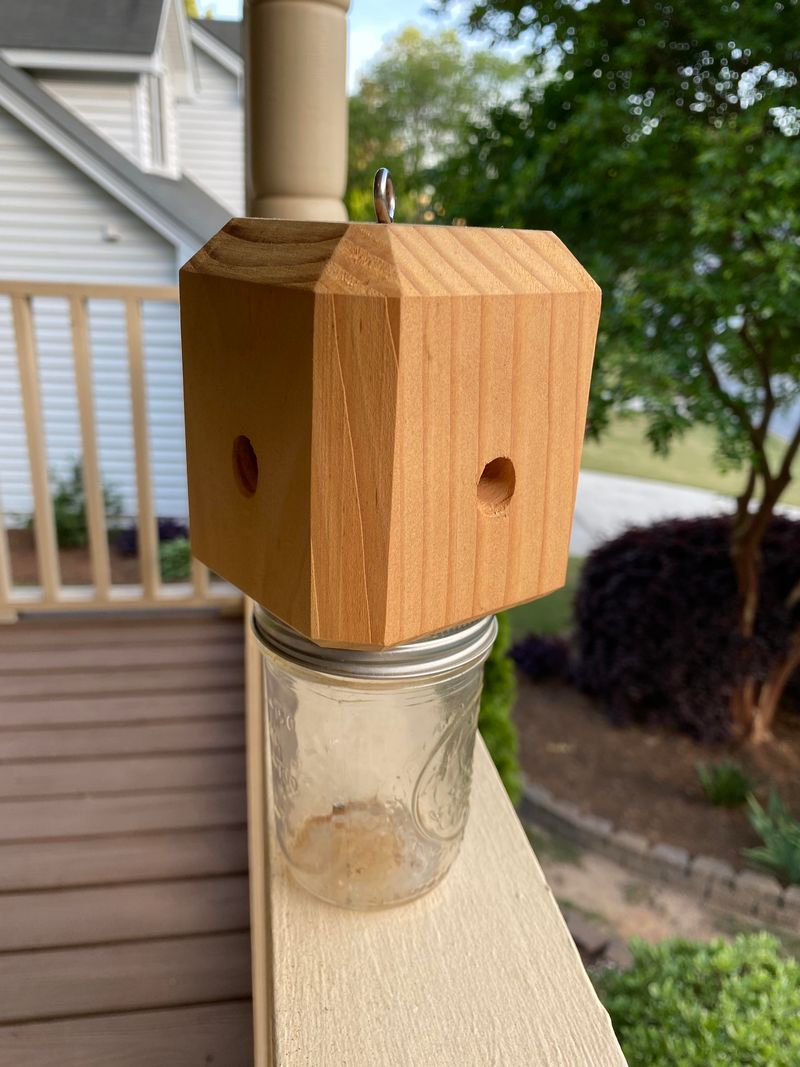
Hanging decoy wasp nests near the porch is a low-effort option some homeowners try. Carpenter bees may avoid areas where they sense competition, though results are not guaranteed.
Carpenter bee activity around an Indiana porch is your home asking for help. The sooner you respond to fresh drilling, the less work you will face come summer.