The Invasive Vine Quietly Destroying Pennsylvania Garden Borders In One Season
Some invasive plants make themselves known gradually, spreading a little further each year in a way that stays manageable as long as someone is paying attention. The vine at the center of this article does not work that way.
It moves through a Pennsylvania garden border with a speed and coverage that can genuinely transform a planting area within a single season, climbing over shrubs, smothering perennials, and establishing itself so thoroughly that removal becomes a serious project rather than a quick afternoon task.
Pennsylvania’s warm summers and moist conditions give this vine exactly what it needs to reach its full potential for damage, and many gardeners do not realize what they are dealing with until the takeover is already well underway.
Knowing what this plant looks like, where it tends to show up first in a garden border, and what removal actually requires gives Pennsylvania gardeners the best possible chance of catching it before it changes the entire character of their outdoor space.
Meet Oriental Bittersweet
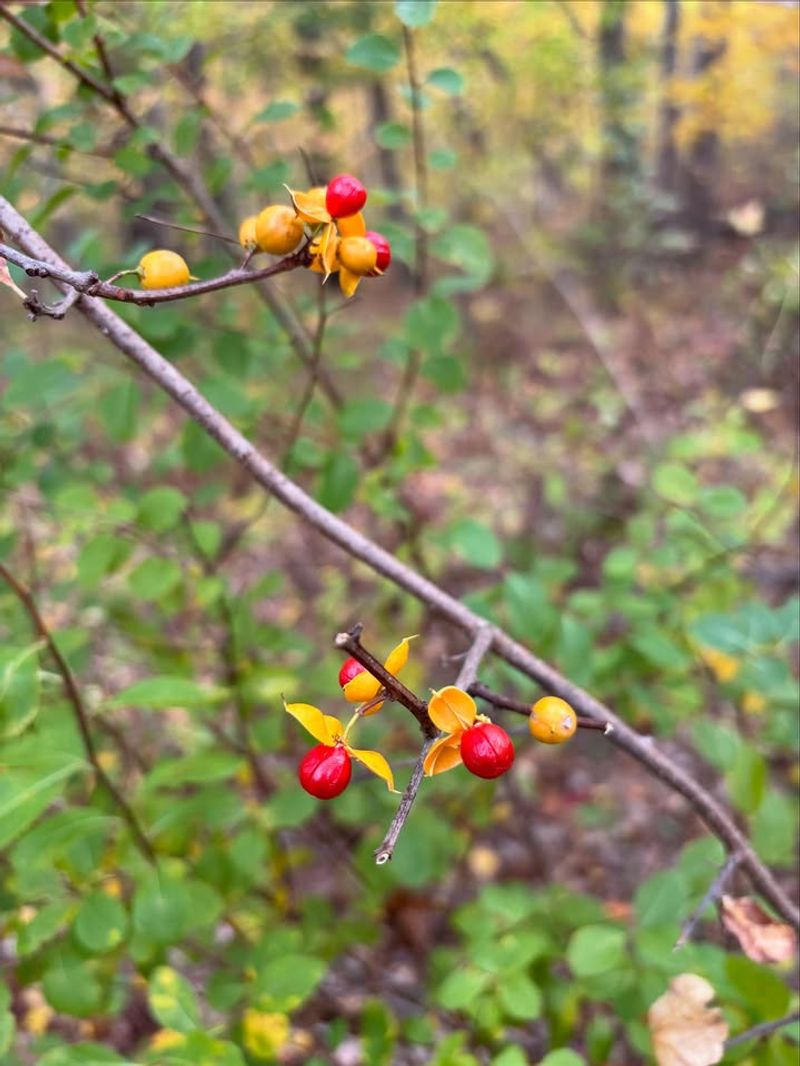
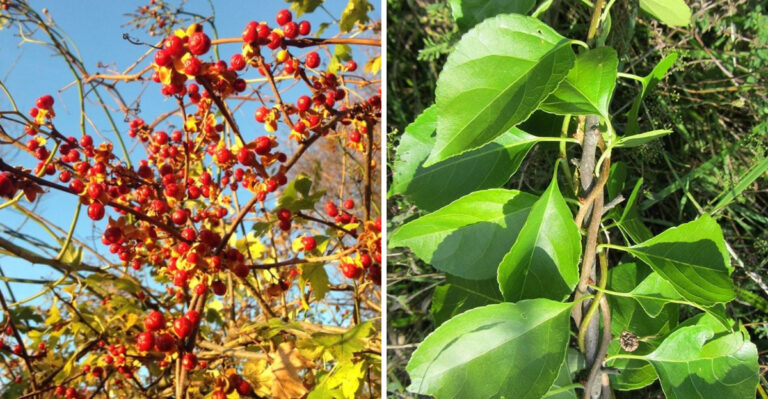
Walk through almost any Pennsylvania neighborhood in fall, and you might spot a vine covered in cheerful clusters of yellow and red berries. That eye-catching plant is Oriental Bittersweet, known by its scientific name Celastrus orbiculatus.
It originally came from eastern Asia and was brought to the United States in the 1860s as an ornamental plant. People loved the colorful berries and used the vines in wreaths and decorations.
Back then, nobody realized just how much trouble this plant would cause. Oriental Bittersweet is a woody, twining vine that wraps itself around everything in reach.
It is incredibly strong and flexible. Young vines look harmless at first, but they grow fast and become thick, rope-like stems over time.
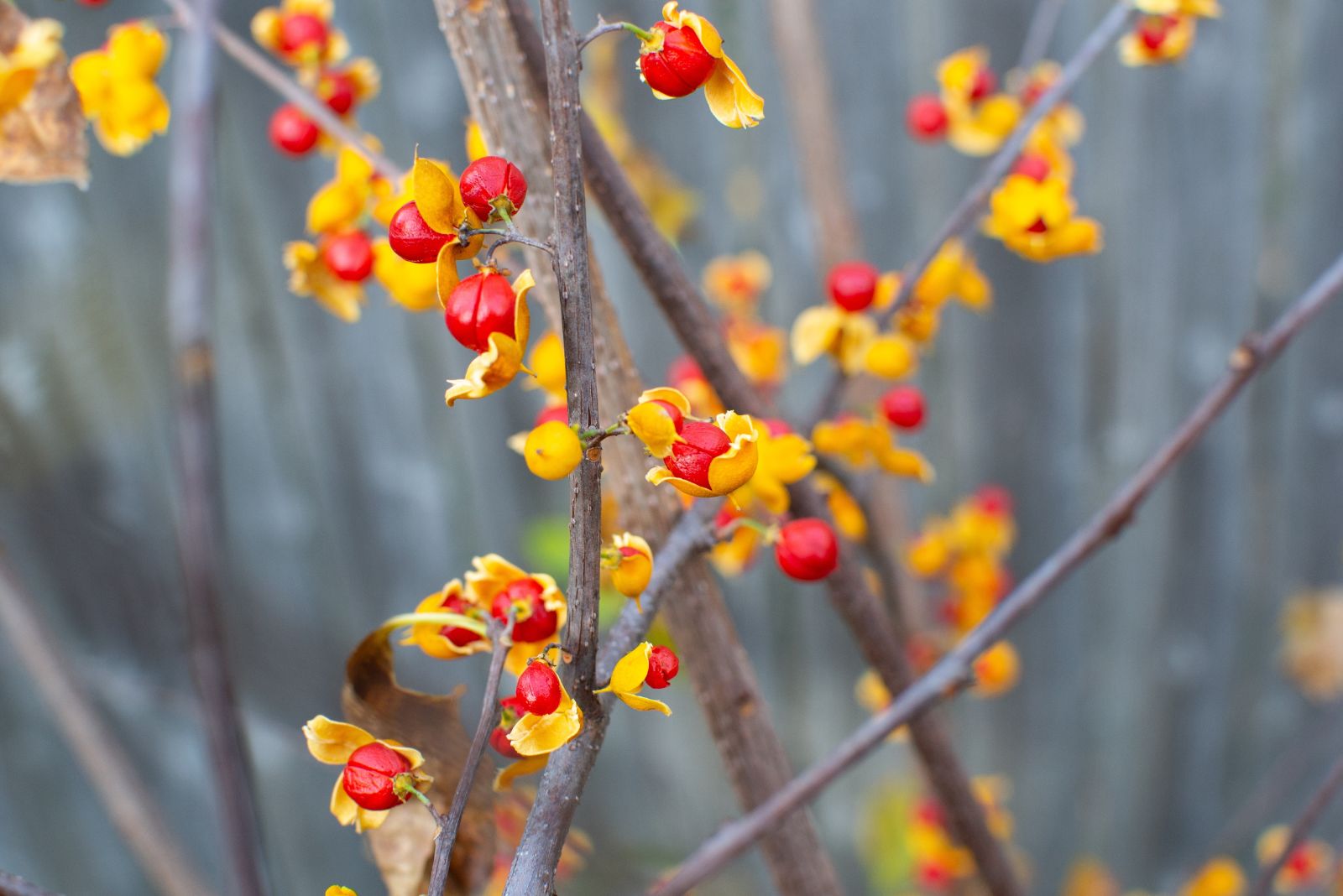
The berries are honestly quite beautiful. They start out as small yellow capsules that split open in fall to reveal bright red seeds inside.
Gardeners and crafters still find them attractive today, which is part of why the plant keeps spreading. People sometimes unknowingly carry cuttings or wreaths to new locations.
Oriental Bittersweet is classified as an invasive species in Pennsylvania and many other states. It is not a plant you want anywhere near your garden borders.
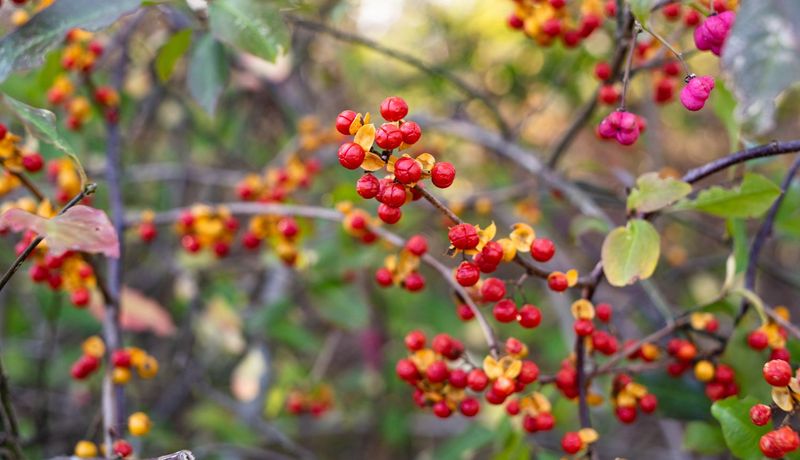
Unlike native bittersweet, which produces berries only at the tips of branches, Oriental Bittersweet produces berries all along its stems. That detail is a key identification clue.
Learning to recognize this vine early is your best defense against losing your garden to one of the most aggressive invaders Pennsylvania gardeners face today.
Aggressive Growth Habit
Honestly, the growth speed of Oriental Bittersweet is shocking once you see it in action. A single vine can grow anywhere from 8 to 10 feet in just one season.
That means by the time summer ends, a tiny seedling you ignored in spring could already be wrapping itself around your favorite shrub or climbing your garden fence.
The way this vine grows is part of what makes it so destructive. It twines tightly in a spiral pattern around any support it can find.
Your Pennsylvania Garden Changes Every Week. Your Plan Should Too.
Gardening in Pennsylvania changes quickly throughout the season. Every Friday you’ll receive a simple weekly plan showing exactly what to plant, prune, fertilize, harvest, and protect so you never miss the right timing.
Shrubs, young trees, fence posts, and even other vines become targets. As the vine wraps tighter and tighter, it cuts off the flow of water and nutrients through the bark of the host plant. Over time, the host plant weakens significantly.
Larger, established vines become incredibly heavy. When multiple vines combine on a single tree or shrub, the added weight can cause branches to snap under the strain, especially during ice storms or heavy snow in Pennsylvania winters.
The plant does not need much help to cause serious damage. Garden borders are especially vulnerable because they often contain a mix of shrubs, ornamental grasses, and small trees that provide perfect climbing structures.
Once Oriental Bittersweet establishes itself along a border, it can spread horizontally and vertically at the same time.
Removing it becomes a much bigger job with every passing week. Catching it early, before it gets a grip on your plants, is the smartest move any Pennsylvania gardener can make. Regular inspection of garden edges is worth every minute you spend on it.
Ecological Impact
Few invasive plants cause as much ecological damage as Oriental Bittersweet, and the effects go far beyond one garden border. When this vine takes over an area, it forms a thick, leafy canopy that blocks sunlight from reaching the plants below.
Native wildflowers, groundcovers, and young trees cannot get the light they need to grow. Over time, entire plant communities can be wiped out in a single location.
Pennsylvania is home to a rich variety of native plants that local wildlife depends on for food and shelter. When Oriental Bittersweet crowds them out, birds, butterflies, and other animals lose important resources.
Native plants have evolved alongside local insects and animals over thousands of years. Replacing them with an invasive vine breaks those relationships in ways that ripple through the whole ecosystem.
Small trees and shrubs face a particularly tough situation when Oriental Bittersweet moves in. The vine wraps so tightly around trunks and branches that it literally girdles the plant, cutting off circulation.
Young saplings rarely survive a full takeover. Even mature shrubs can be severely weakened within a few seasons.
There is also a soil impact worth knowing about. Oriental Bittersweet roots release chemicals that may suppress the growth of nearby plants, giving the vine an extra advantage in competition.
Research on this is still ongoing, but early findings suggest the vine may actively alter soil conditions to favor its own growth.
For Pennsylvania gardeners trying to maintain healthy, diverse garden borders, understanding this ecological impact makes it clear why managing Oriental Bittersweet promptly and carefully really matters.
How It Spreads
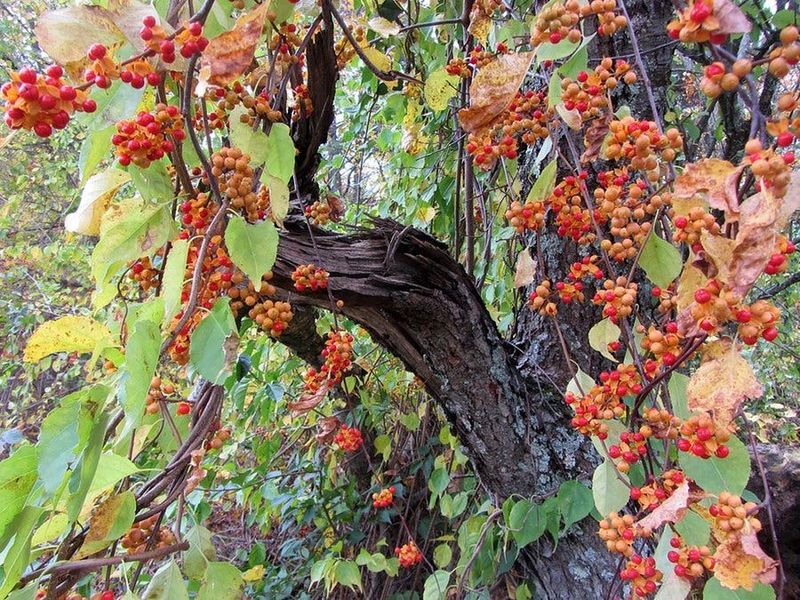
One reason Oriental Bittersweet is so hard to contain is the sheer number of ways it can spread from one place to another. Birds are probably the biggest factor.
Robins, starlings, and other birds love the bright red berries and eat them eagerly in fall and winter. Seeds pass through the birds unharmed and get deposited far from the parent plant, sometimes miles away.
A single bird can spread seeds across an entire neighborhood in one afternoon. Wind also plays a role. The lightweight seeds can be carried by breezes, especially once the yellow capsules split open in fall.
Water runoff carries seeds along drainage ditches, stream banks, and wet garden areas. Anywhere water flows after a rainstorm becomes a potential new location for Oriental Bittersweet to sprout the following spring.
Human activity is another major spreader that often goes unnoticed. Contaminated garden soil, mulch, or compost can contain seeds.
Decorative wreaths made with bittersweet vines are a classic example of how seeds travel. Someone hangs a beautiful wreath on a front door, the berries dry out and fall, and by spring, new seedlings are popping up in the flower bed below.
Mowing or cutting vines without removing the roots can actually make the problem worse. Oriental Bittersweet resprouts vigorously from root fragments left in the ground.
Even a small piece of root left behind can generate a new plant quickly. Composting cut vines is also risky since seeds may survive the composting process.
Bagging all plant material in sealed trash bags is the safest disposal method for Pennsylvania gardeners dealing with this persistent invader.
Identification Tips
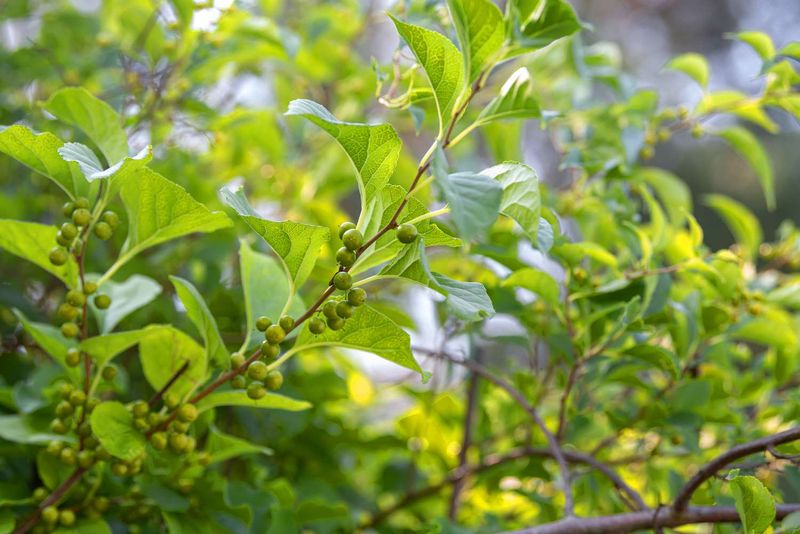
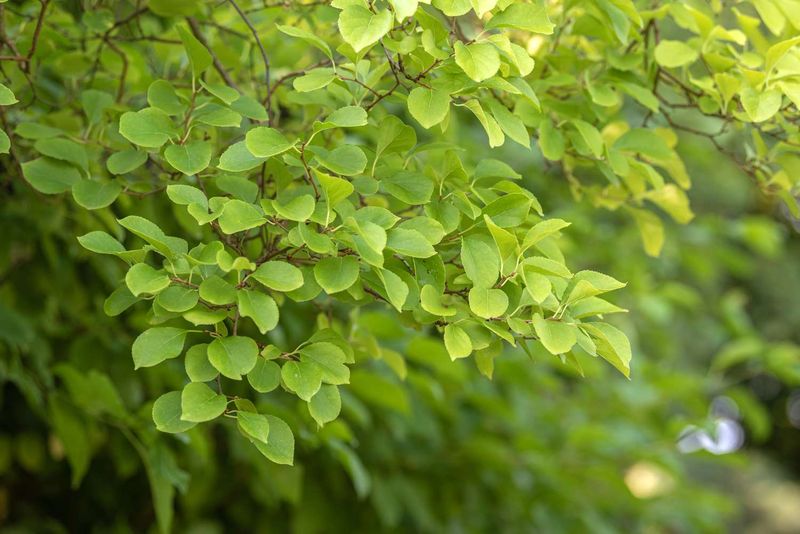
Catching Oriental Bittersweet before it takes over starts with knowing exactly what to look for. The leaves are one of the first clues.
They are simple and alternate along the stem, meaning they grow one at a time on opposite sides. Each leaf is broadly oval, or ovate, with clearly toothed or serrated edges.
The leaf tips come to a gentle point. In spring and summer, the leaves are a shiny medium green that can look quite attractive.
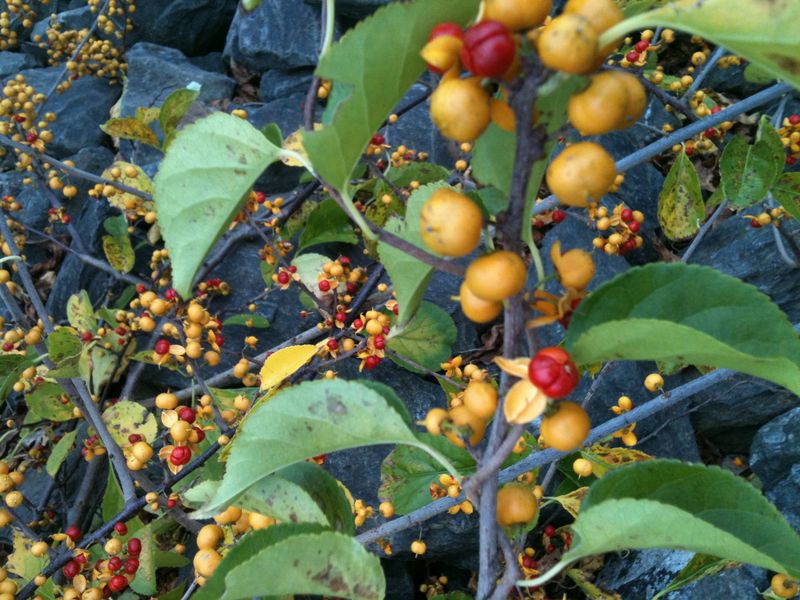
The berries are the most distinctive feature and the easiest way to confirm your identification in fall. Look for small, round yellow capsules clustered all along the length of the vine, not just at the tips.
This is a key difference from native American Bittersweet, which only produces fruit at the branch ends. When the yellow capsules split open, they reveal fleshy red seeds inside that are impossible to miss.
The vines themselves are woody and flexible. Young vines may look like thin, twisting threads, but older vines develop a rough, grayish-brown bark and can become as thick as a garden hose or larger over several years.
Run your hand along one carefully and you will feel how tightly it wraps in a consistent spiral pattern around its host.
In Pennsylvania, you are most likely to spot Oriental Bittersweet along roadsides, at the edges of wooded areas, along fences, and in neglected garden corners. If you find a vine that matches these features, do not wait to act.
The sooner you confirm the identification and start removal, the easier your job will be and the healthier your garden will stay.
Management And Prevention
Getting rid of Oriental Bittersweet takes patience and consistency, but it is absolutely doable with the right approach. Young seedlings and small vines are the easiest to handle.
Pull them out by hand as soon as you spot them, making sure to remove the entire root system.
Leaving even a small piece of root in the ground means the plant will come back stronger than before. Wear gloves since the sap can irritate sensitive skin.
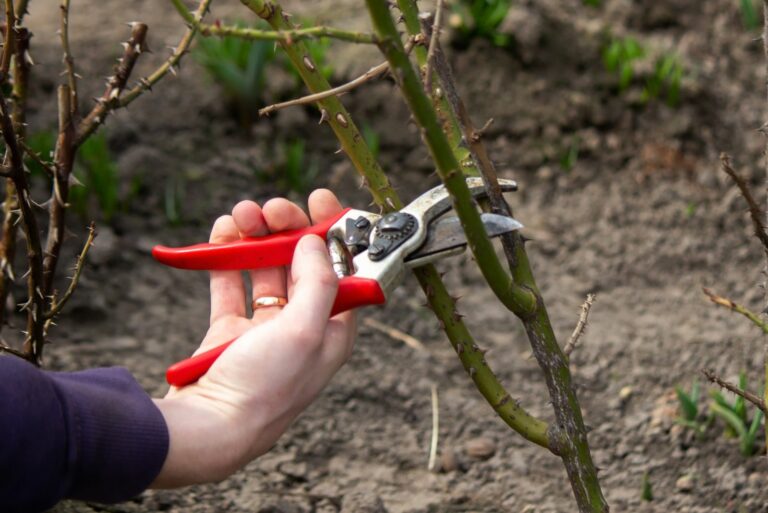
For larger, established vines, the most effective first step is cutting them at the base as close to the ground as possible. Once cut, the vine above the cut will gradually weaken as it loses its connection to the root.
However, the root will still resprout, often sending up multiple new shoots. Applying a systemic herbicide directly to the freshly cut stump can help prevent regrowth.
Always follow label directions carefully and choose a product appropriate for use near garden plants and water sources.
Prevention is honestly the most powerful tool available. Never plant Oriental Bittersweet intentionally, even if you find it sold at a market or garden sale.
Avoid transporting vines, berries, or wreaths made from this plant to new locations. Check new soil, mulch, and plant purchases for hitchhiking seeds or root fragments before adding them to your garden.
If you want a beautiful native vine for your Pennsylvania garden border, consider Coral Honeysuckle, also known as Lonicera sempervirens, or Trumpet Honeysuckle.
Both offer stunning flowers, attract hummingbirds and butterflies, and support local ecosystems without threatening the plants around them.
Choosing native alternatives is one of the best things you can do for your garden and your local environment.