Carpenter Bees Are Targeting Indiana Porches Again, And There’s A Reason
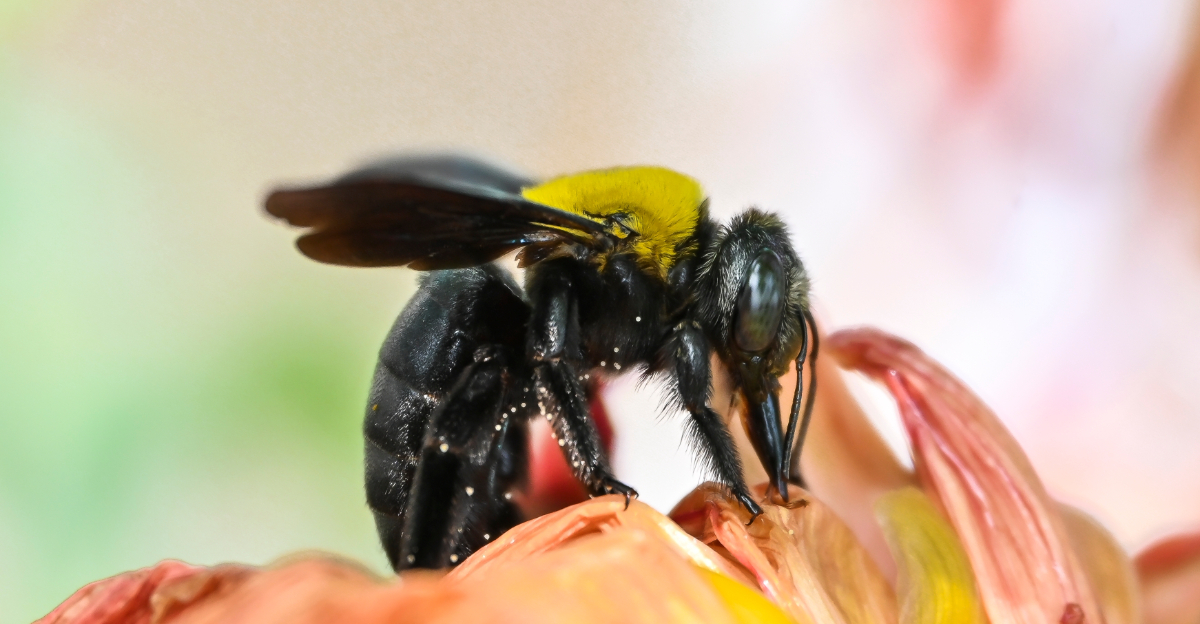
That hovering bee outside your front door is not lost. It is sizing up your porch.
Carpenter bees are one of Indiana’s most persistent warm-weather visitors, showing up each spring with one goal: find soft wood and drill into it.
They are not aggressive, but they are destructive and remarkably loyal. Females return to the same porch year after year, expanding old tunnels or boring fresh ones right alongside them.
Indiana’s nesting season runs from early spring well into fall, giving carpenter bees more time to work than in most northern states. A single unprotected porch can accumulate serious damage within one season.
Indiana’s climate, common building materials, and typical landscaping habits all work in their favor. Here is exactly what they are looking for.
Bare And Untreated Wood Is What Carpenter Bees Are Really After
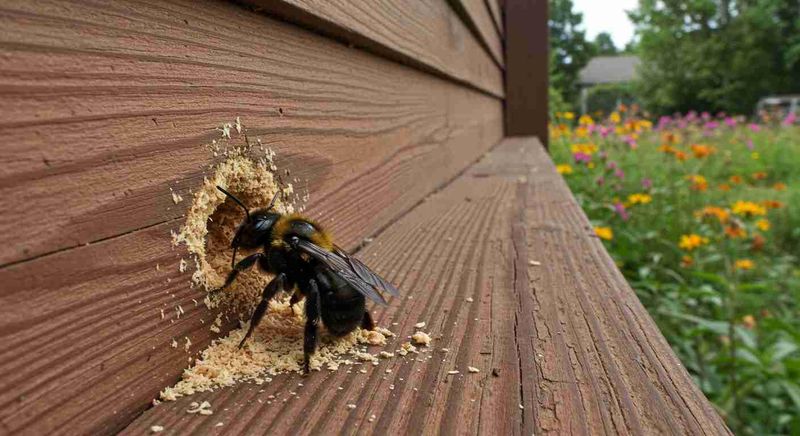
Bare wood is basically a welcome sign for carpenter bees. If your porch has unpainted or unsealed wood, these bees can detect it from a surprising distance.
Carpenter bees do not eat wood the way termites do. Instead, they chew through soft grain to carve out nesting tunnels where they lay eggs.
Untreated wood is softer and easier to excavate, making it far more attractive than painted or sealed surfaces. A freshly sanded railing or raw lumber board is practically irresistible to a nesting female.
The female does all the drilling work, and she is remarkably efficient at it. She can bore a half-inch entry hole in a matter of hours, then tunnel several inches deep over the following days.
Once the tunnel is complete, she stocks it with pollen and lays her eggs inside. The larvae hatch, feed, and eventually emerge as adults ready to repeat the cycle.
Painted wood is not completely immune, but bees strongly prefer bare surfaces whenever possible. Cracked or peeling paint exposes raw wood underneath, which quickly becomes a target.
Cedar and pine are two of the most commonly used porch woods in the Midwest. Both happen to be among carpenter bees’ top choices because of their soft, workable grain.
Hardwoods like oak or pressure-treated lumber are much harder to drill through. Switching materials or applying a quality sealant can make your porch significantly less inviting to these persistent insects.
Indiana’s Climate Gives Carpenter Bees A Long Nesting Window
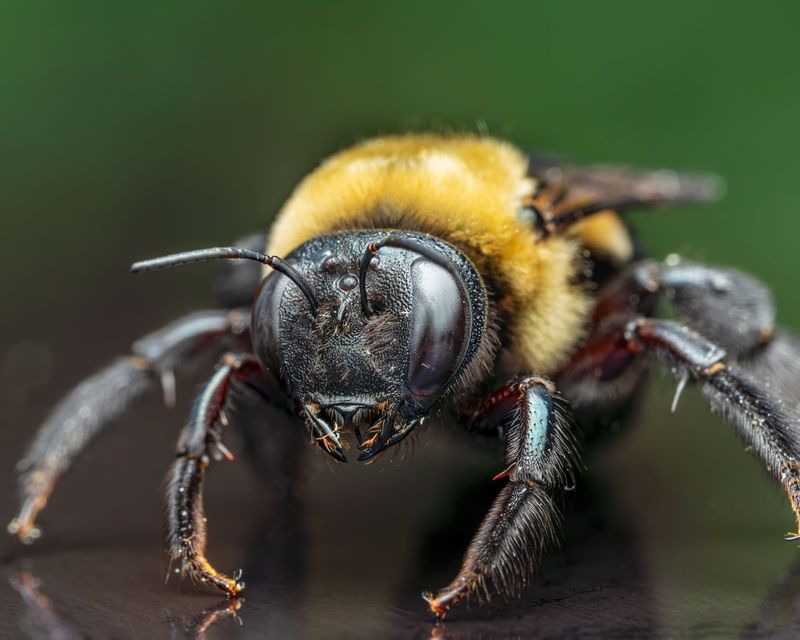
Spring arrives in Indiana with warm, humid air that wakes carpenter bees right up. These insects emerge from their overwintering spots as early as March, once temperatures consistently climb above 50°F.
The state’s long warm season stretches their active period well into September. That gives them months to nest, reproduce, and scout new wood targets.
Unlike colder northern states where the season cuts short, Indiana’s long warm season gives a single generation enough time to cause significant damage before winter sets in.
Humidity plays a role too, because it softens wood fibers slightly. Softer wood means faster excavation, which makes nesting easier and more efficient for the female.
Your Indiana Garden Changes Every Week. Your Plan Should Too.
Gardening in Indiana changes quickly throughout the season. Every Friday you’ll receive a simple weekly plan showing exactly what to plant, prune, fertilize, harvest, and protect so you never miss the right timing.
Mild winters in Indiana also allow more adults to survive until spring. A hard freeze might reduce the population, but most years the bees come through just fine.
The transition from March to May is peak scouting season. You will often see males hovering aggressively near your porch, acting territorial even though they cannot sting.
Females are quieter but far more dangerous to your wood. While the male buzzes around looking intimidating, the female is quietly drilling behind a fascia board or under a railing cap.
Knowing the seasonal timeline helps homeowners take action before damage begins. Treating and sealing wood in late winter gives you a head start before the first scouts arrive each spring.
Older Homes In The Hoosier State Are Especially Vulnerable
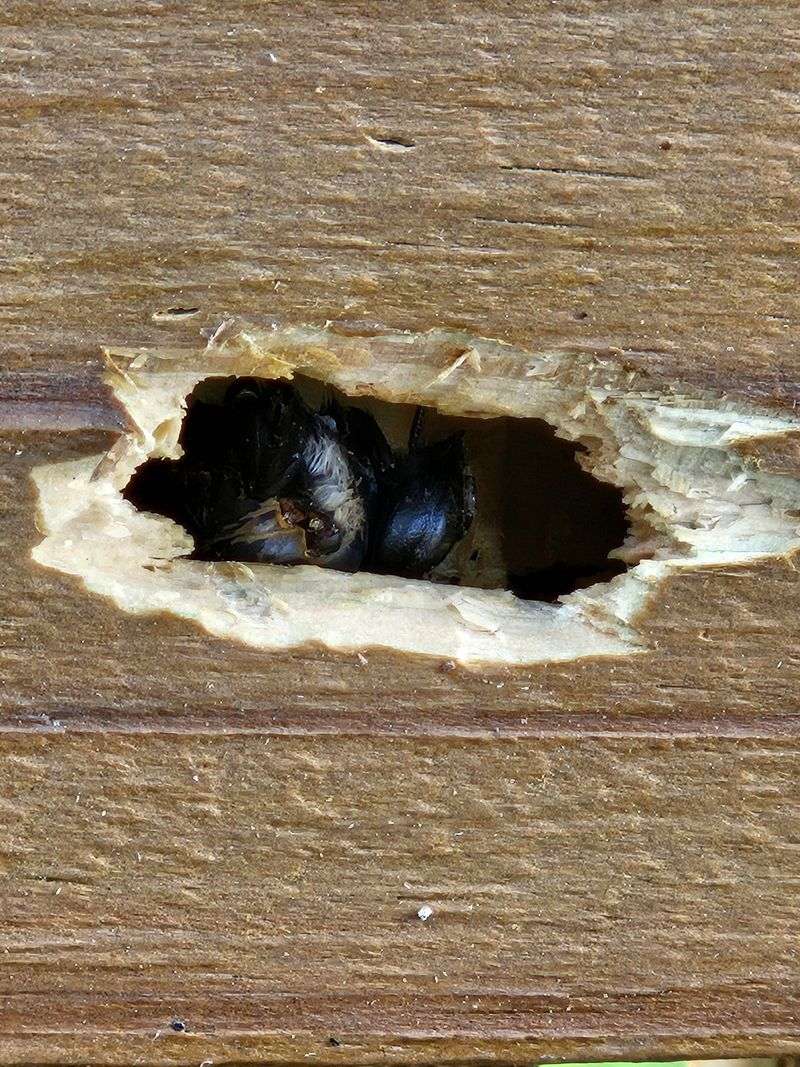
Older homes have character, charm, and unfortunately, a lot of soft, aging wood. Many houses built before the 1970s used untreated lumber that has had decades to weather and soften.
Weathered wood is a dream scenario for carpenter bees. The grain opens up over time, making excavation faster and less effort for a nesting female.
Older porches often have original fascia boards, decorative trim, and railings that have never been replaced. These pieces may look structurally fine but are deeply weathered beneath the surface.
Paint on aging wood tends to crack and peel faster than on newer materials. Every chip of paint reveals fresh bare wood that sends a signal to nearby carpenter bees.
Historic neighborhoods across central and northern Indiana are especially full of these vulnerable structures. Homes in places like Fountain Square or older suburbs outside Indianapolis often show heavy bee activity.
Repeated nesting over the years also weakens wood structurally. A beam that hosts tunnels for three or four seasons can develop real integrity problems over time.
Homeowners sometimes patch old holes with caulk without treating the surrounding wood. That quick fix rarely stops the bees, who simply drill an inch away from the sealed spot.
Restoring older wood properly takes more effort, but it pays off. Sanding, priming, and applying a durable exterior paint or stain is the most effective long-term solution for aging porch structures.
Flowering Plants Near The Porch Pull Them In Even Closer
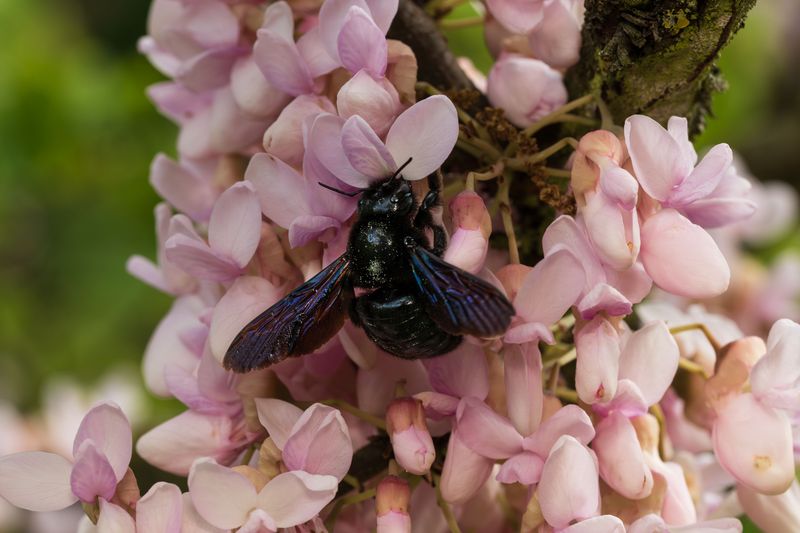
Carpenter bees are pollinators first and nesters second. Before a female ever starts drilling, she needs a steady food source nearby.
Flowering plants close to your porch create an irresistible combination of food and shelter in one convenient spot. The bee gets her pollen and her nesting site without traveling far at all.
Popular Indiana garden plants like wisteria, black-eyed Susans, and coneflowers are among their favorites. Wisteria in particular is notorious for drawing carpenter bees in large numbers every single season.
The proximity matters a great deal. A flower bed three feet from your porch railing is basically a dining room next to a hotel for these insects.
Carpenter bees practice something called buzz pollination, where they vibrate their bodies to shake loose pollen. This makes them efficient pollinators, but it also means they visit the same flowers repeatedly.
Once a bee establishes a foraging route that includes your porch plants, she begins noticing the wood structure nearby. The mental map she builds includes both the food source and the potential nesting site.
Moving flowering plants further from the porch can reduce the initial attraction. Even shifting a planter ten feet away disrupts the convenient food-plus-shelter equation these bees seek.
You do not have to give up your garden to protect your porch. Strategic placement of blooms, combined with treated wood, creates a much less appealing setup for carpenter bees looking to settle in.
Once They Find Your Porch, They Come Back Every Season
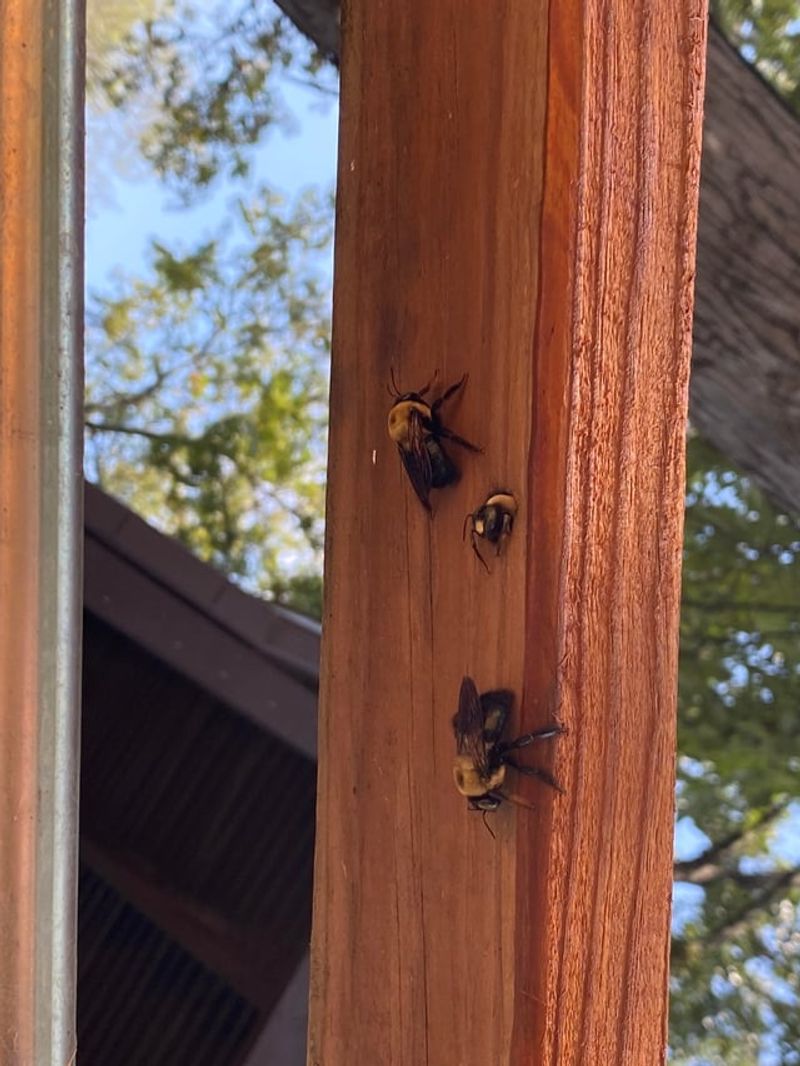
Carpenter bees have an impressive memory for nesting sites. Once a female finds a good spot, she returns to that exact location the following spring.
Even more striking, her offspring often return to the same structure. The next generation inherits the location like a family property, expanding existing tunnels or drilling fresh ones nearby.
This return behavior is one of the biggest reasons porches seem to attract more bees each year. What started as one hole can turn into a network of tunnels across an entire beam.
Carpenter bees are known to reuse tunnels that are several years old. The female will clean out old debris, add fresh pollen, and lay new eggs in familiar galleries.
Existing holes also attract new females who did not originally nest there. An already-drilled entry point lowers the workload, making it a shortcut that other bees are happy to exploit.
The sawdust you see beneath a hole is a visible advertisement to other carpenter bees. Fresh frass signals that the wood is soft and workable, drawing in scouts from around the yard.
Sealing old holes promptly is one of the most effective steps you can take. Plugging them in fall, after the bees have left, removes the invitation for next season’s arrivals.
Breaking the return cycle requires consistency over multiple years. One season of treatment rarely does the job, but two or three seasons of diligent sealing and painting can dramatically reduce repeat visits to your Indiana porch.
How To Make Your Indiana Porch Less Appealing To Carpenter Bees
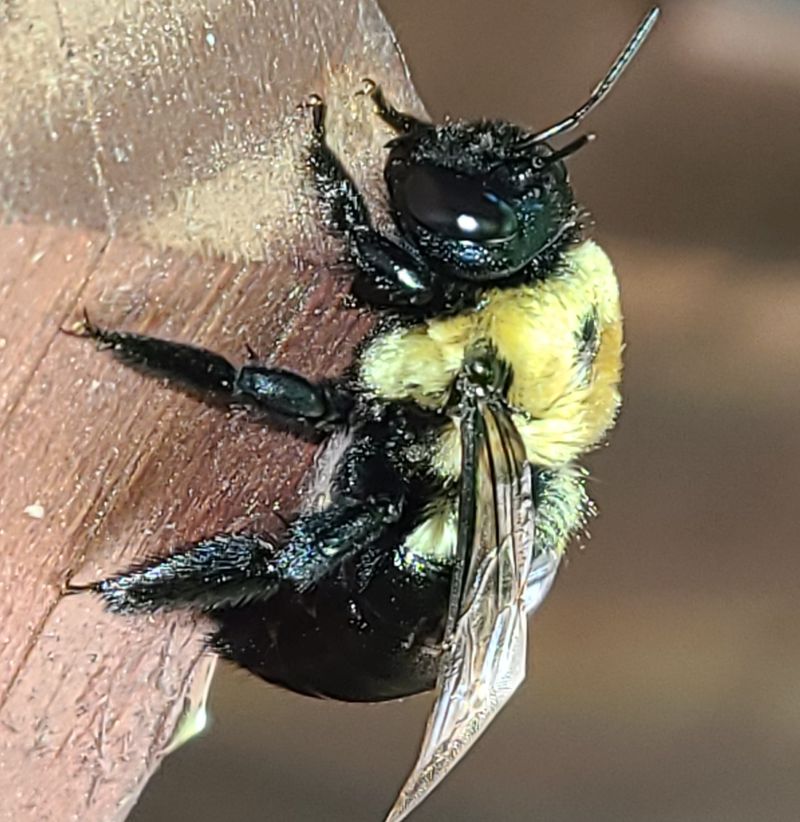
Prevention beats treatment every single time when it comes to carpenter bees. A few smart steps taken in early spring can save you from a summer full of drilling damage.
Start by painting or staining all exposed wood on your porch. Bees strongly avoid surfaces covered with a thick, durable coat of exterior paint or polyurethane.
Pay special attention to the undersides of railings, the edges of fascia boards, and any decorative trim. These hidden spots are where females prefer to start their tunnels away from foot traffic.
Almond oil and citrus-based sprays are natural deterrents that many homeowners swear by. Apply them to wood surfaces in early April before the first scouts appear each season.
Hanging carpenter bee traps near problem areas can reduce the local population noticeably. These wooden box traps mimic nesting sites and lure bees inside without chemicals.
Some homeowners report that wind chimes or reflective tape near the porch can discourage bees, though results vary. They prefer calm, undisturbed locations for nesting.
Replace badly weathered or soft wood sections with composite or PVC alternatives. These synthetic materials offer no appeal to a drilling bee and hold up far better over time.
Protecting your Indiana porch from carpenter bees is an ongoing commitment, not a one-time fix. Stay consistent with sealing and monitoring, and you will keep these determined insects from making your porch their permanent home.