Georgia Summers Destroy Ground Covers, But These 7 Fast-Growing Ones Treat The Heat Like A Promotion
Georgia summer sorts plants into two categories: the ones that make it and the ones that do not.
Many ground covers land firmly in the second group by August. Scorched edges. Sparse coverage. The same bare patches that were there before the planting, just with more disappointment attached.
A specific group of ground covers operates differently. Georgia heat does not slow them down. It accelerates them.
The same conditions that exhaust other plants send these ones spreading faster, rooting deeper, and filling in gaps that have been frustrating gardeners for entire seasons.
Slopes that wash out every summer. Shaded patches under oaks where nothing grows. Bare stretches along driveways that get remulched every single year out of habit.
Each of those situations has a ground cover that handles it specifically and handles it well. These ground covers treat Georgia summer like an invitation rather than an obstacle.
1. Asiatic Jasmine
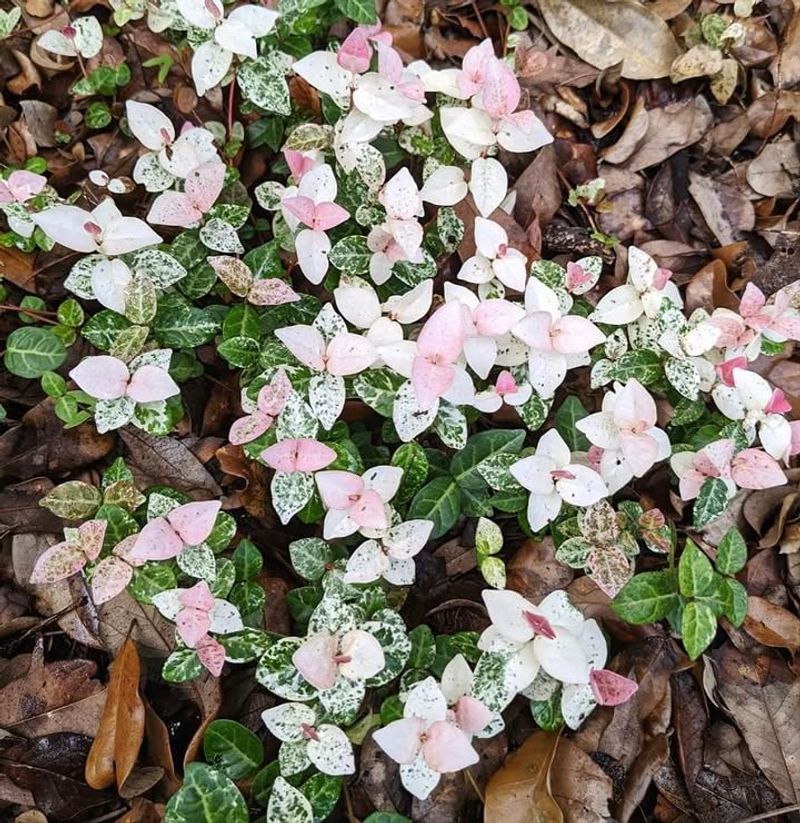
Asiatic jasmine is one of those plants that Georgia gardeners consistently underestimate right up until they see an established planting doing its thing in August.
Trachelospermum asiaticum handles full sun to partial shade without adjustment, which makes it genuinely flexible across most yard situations.
The vines stay low, typically six to twelve inches tall, which means no mowing once coverage fills in. That alone justifies the planting for most people.
The first season requires consistent watering while roots establish. After that, the plant develops reasonable drought tolerance despite the lush look it carries through summer.
Space transplants about twelve to eighteen inches apart and expect the coverage to fill in over two to three growing seasons.
The spreading habit is the part worth thinking about before planting. Asiatic jasmine travels aggressively once established, and it does not stop at the edge of the bed without some encouragement to do so.
Physical edging along driveways, walkways, and garden borders manages the spread effectively. A sharp spade run along the perimeter once or twice a season handles the job without drama.
This plant resists most pests and diseases, tolerates compacted soil, and stays green through mild Georgia winters without complaint.
Large bare areas that need fast, reliable coverage without ongoing maintenance are exactly the situations Asiatic jasmine was designed for.
It is not flashy. It is just consistently excellent at the one job it was given.
2. Liriope
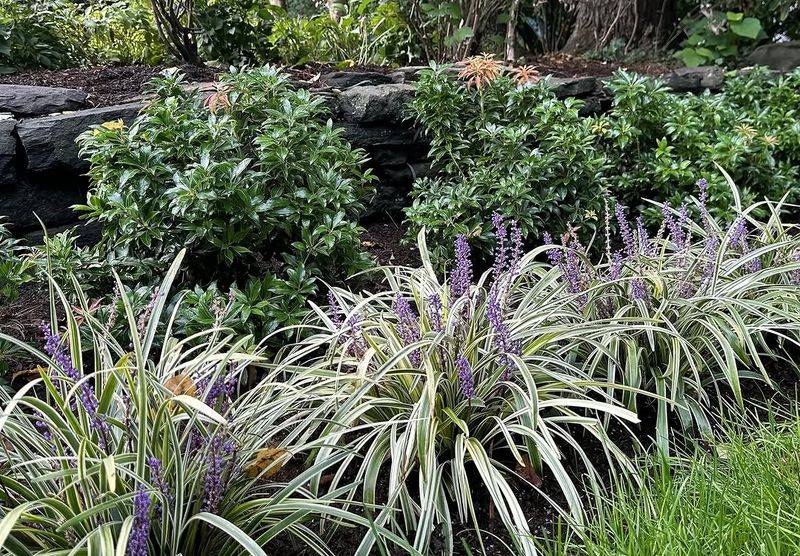
A sloped bed that washes out every time it rains hard is one of the more frustrating problems a Georgia yard produces.
Most ground covers planted on those slopes slide right along with the mud. Liriope muscari handles that situation differently.
The fibrous root system grips soil with real authority, making it one of the most dependable options for slopes, borders, and shaded edges that take regular punishment from Georgia weather events.
Liriope handles shade to part sun across a wide range, which makes it particularly useful under trees where grass struggles and most ground covers eventually give up.
It tolerates Georgia heat well with the caveat that afternoon shade during the most intense summer weeks improves performance noticeably. Once roots establish, supplemental watering becomes largely unnecessary.
Your Georgia Garden Changes Every Week. Your Plan Should Too.
Gardening in Georgia changes quickly throughout the season. Every Friday you’ll receive a simple weekly plan showing exactly what to plant, prune, fertilize, harvest, and protect so you never miss the right timing.
Plant clumps about twelve to eighteen inches apart. The arching mounds stay green nearly year-round in most Georgia regions.
Late summer brings spikes of purple or white flowers, which adds seasonal color at exactly the moment the rest of the yard looks most worn out.
Cut it back to about three inches in late winter before new growth pushes through. That annual reset keeps it looking sharp rather than ragged.
Thin established clumps every few years to maintain good airflow and prevent the leaf spot issues that develop in crowded, humid conditions.
For borders, slopes, and shaded zones that have defeated every other attempt, liriope is the plant that simply stays where it is planted.
3. Mondo Grass
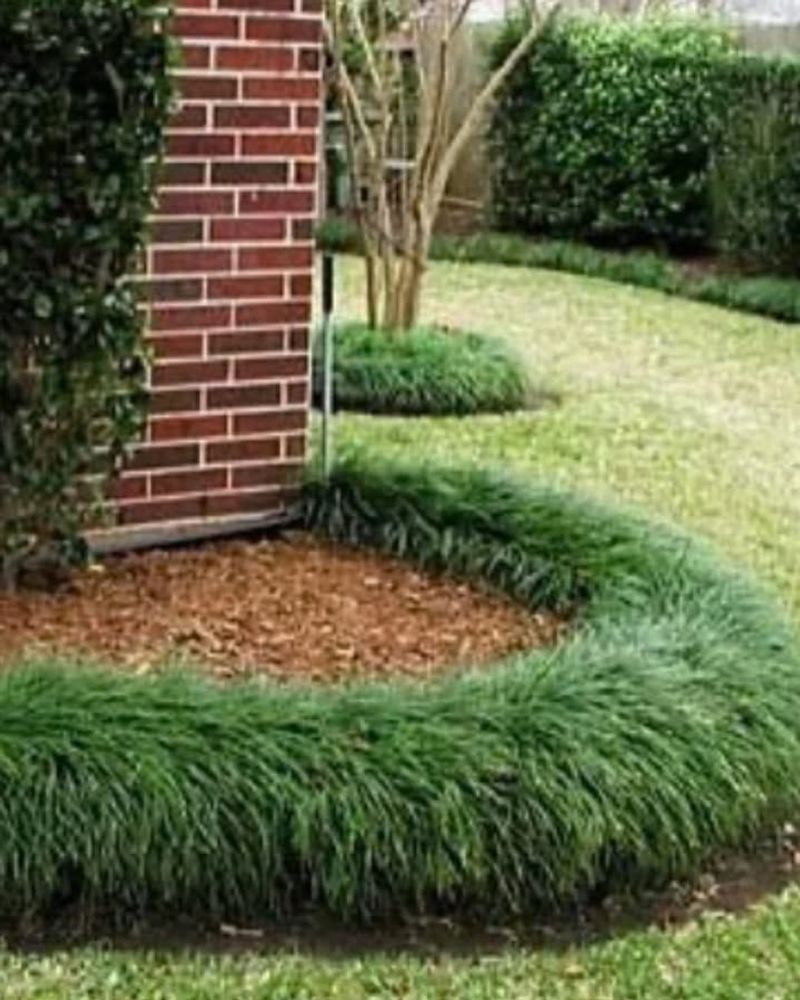
Shaded spots in Georgia are not automatically cool spots. Under a canopy of oaks or pines in July, the air still carries full Georgia humidity, and the soil can dry out faster than expected without direct sun to signal the problem.
Mondo grass, Ophiopogon japonicus, performs in exactly that difficult combination.
It grows more slowly than liriope, so patience is genuinely part of the arrangement. Spacing plants six to eight inches apart speeds coverage considerably.
Twelve-inch spacing works when budget is a constraint but extends the wait. Consistent moisture through the first growing season is the primary care requirement. After roots establish, the plant becomes considerably more independent.
The texture is what makes mondo grass worth the slower pace. It stays low, three to four inches typically, with a fine, dark green appearance that reads as a natural carpet rather than a plant covering.
No mowing is needed, which makes it the right choice for tight spaces between stepping stones, around tree bases, and along shaded walkways where a mower cannot operate comfortably.
Black mondo grass, a darker cultivar, brings dramatic visual contrast to shaded beds. Paired with light-colored mulch or stone, it creates a composition that looks completely intentional rather than accidental.
Neither variety performs well in harsh afternoon sun, so placement in genuinely shaded spots is the key to making mondo grass work at its best.
Speed is not this plant’s strength. Everything else about it is.
4. Creeping Juniper
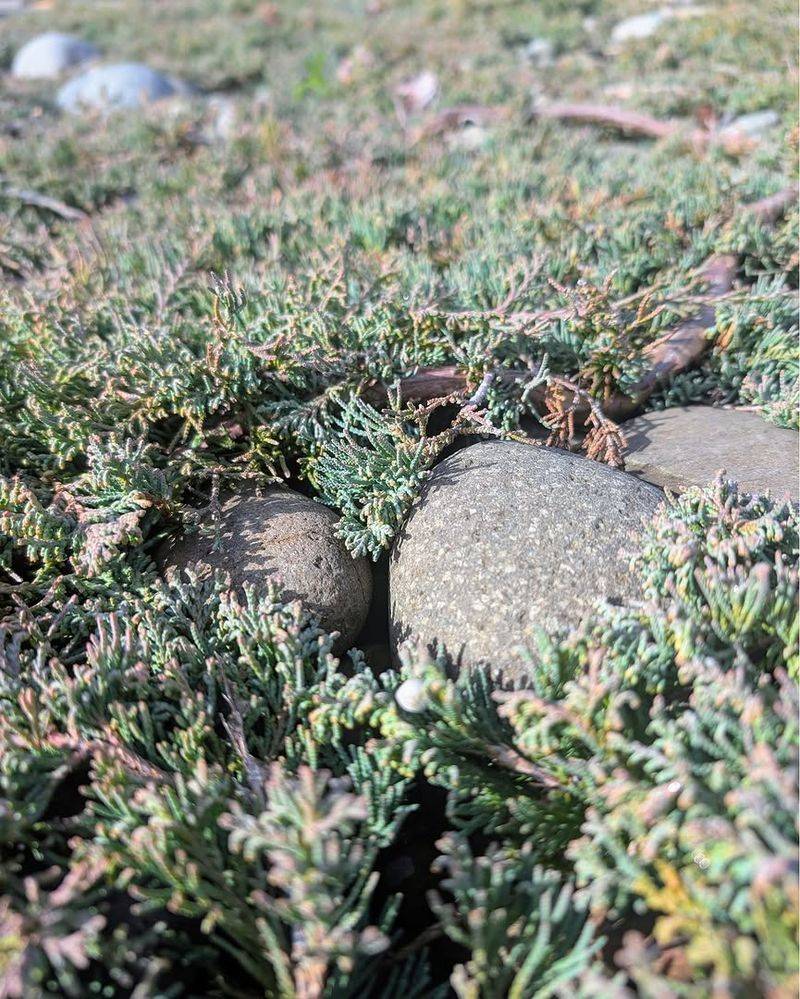
Sunny slopes in Georgia are genuinely difficult real estate. The soil drains fast. Heat reflects off the ground. Most plants placed there in good faith look stressed by early July regardless of how much water they receive.
Creeping juniper, Juniperus horizontalis, was designed for this situation. It spreads low and wide, hugging the ground and building a dense, woody mat that addresses erosion with real structural commitment.
Full sun and excellent drainage are the requirements. Do not place this plant in spots that collect water after rain or in low-lying areas with poor drainage.
On slopes, rocky banks, and raised beds with good sun exposure, it performs at a consistently high level.
Space plants five to eight feet apart because each one spreads six to eight feet wide over time. That eventual spread is the feature rather than a problem to manage.
The goal is coverage, and creeping juniper delivers it on a timeline that does not require constant intervention.
Once established, drought tolerance is excellent. Supplemental watering after the first season is rarely necessary.
The evergreen foliage shifts toward blue or purple tones in cooler months, which adds winter interest that most ground covers simply do not offer.
Maintenance involves removing crossing or damaged branches in early spring. Spider mites appear occasionally during hot, dry stretches and respond to a simple foliage rinse.
For slopes that have resisted every other attempt, creeping juniper is the plant that stays put and keeps the soil with it.
5. Creeping Phlox
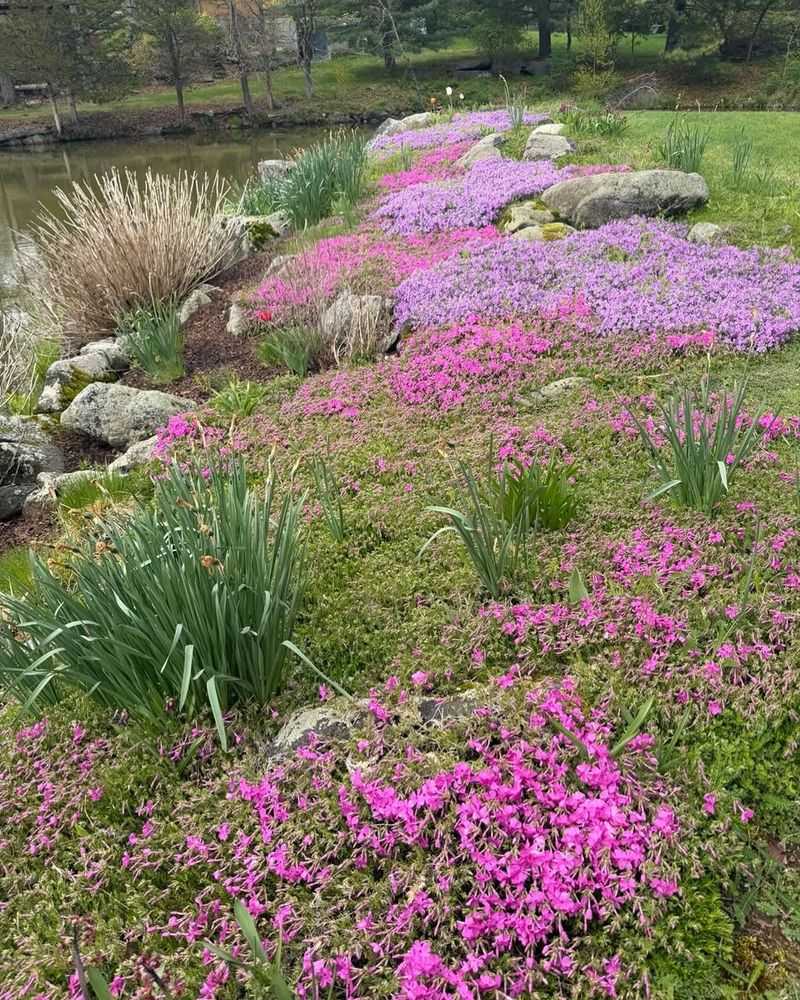
Creeping phlox has a deal it offers Georgia gardeners, and the terms are genuinely favorable.
From late March through early May, it covers the ground in waves of pink, purple, white, or lavender flowers that stop people mid-stride.
The spring display is genuinely striking, the kind of performance that draws questions from neighbors who have not seen it before.
Full sun produces the best flowering results. Light shade is tolerated but bloom intensity drops significantly in shadier conditions.
Well-drained soil is essential. This plant does not perform well in wet conditions, particularly during Georgia’s warm, humid stretches. Slopes, rock walls, and sunny bed edges are the locations where it consistently delivers.
Space plants about twelve to eighteen inches apart. After the bloom period ends, shear the plants back by about one-third to encourage compact regrowth and prevent the center from turning woody and sparse.
The foliage stays semi-evergreen through most Georgia winters, which gives the plant a head start when spring arrives.
The honest assessment of creeping phlox in Georgia is that midsummer is not its peak season. By July it shifts into maintenance mode, holding its ground rather than expanding noticeably.
That is a perfectly reasonable trade given the spring performance it provides.
Pairing it with summer bloomers in nearby spots keeps the bed visually interesting across the full season. Creeping phlox handles its role in spring without complaint and earns its garden space before the Georgia heat ever becomes a real factor.
6. Ajuga
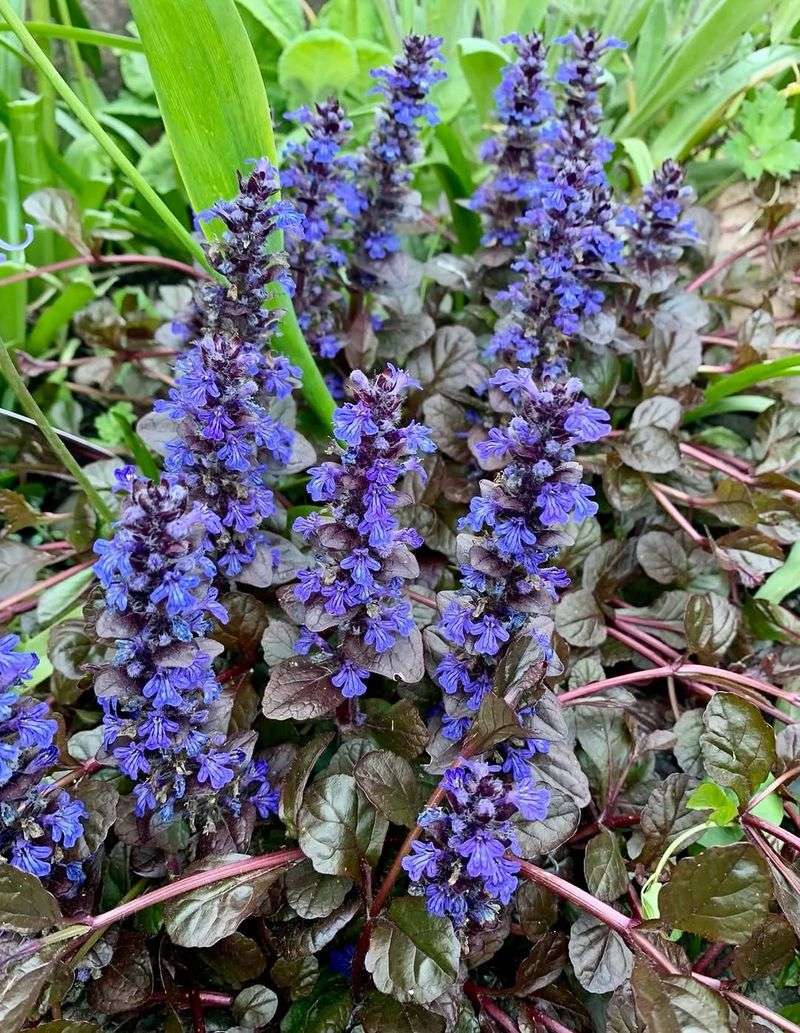
Not every corner of a Georgia yard bakes under full sun all day. Shaded, sheltered spots exist in most properties, and those are exactly where ajuga makes its strongest case.
Ajuga reptans spreads by runners, filling shaded beds with a colorful carpet of rosette-shaped leaves.
Foliage comes in deep green, bronze, burgundy, and variegated purple depending on the variety, which gives the planting visual interest beyond the simple green-on-green that most shade ground covers produce.
Partial to full shade with consistent moisture are the conditions where ajuga performs best. Brief dry spells after establishment are manageable.
Extended drought in open or sunny spots is not. Protected locations, north-facing beds, and areas under large trees with afternoon canopy coverage suit it well.
Space plants about six to twelve inches apart. Runners fill gaps quickly in good conditions, creating a dense mat that competes effectively with most weeds without chemical assistance.
Spring brings short spikes of blue, pink, or white flowers that attract early pollinators. Trimming spent spikes after the bloom period keeps the bed looking intentional rather than overgrown.
Crown rot develops when ajuga is planted too densely or in poorly drained soil. Giving plants adequate spacing and ensuring water does not pool around the crowns prevents the problem before it starts.
Dividing clumps every two to three years refreshes the planting and maintains the density that makes ajuga effective.
For protected shaded spots in Georgia, ajuga brings color, texture, and reliable coverage from a plant that requires minimal ongoing management.
7. Purple Heart
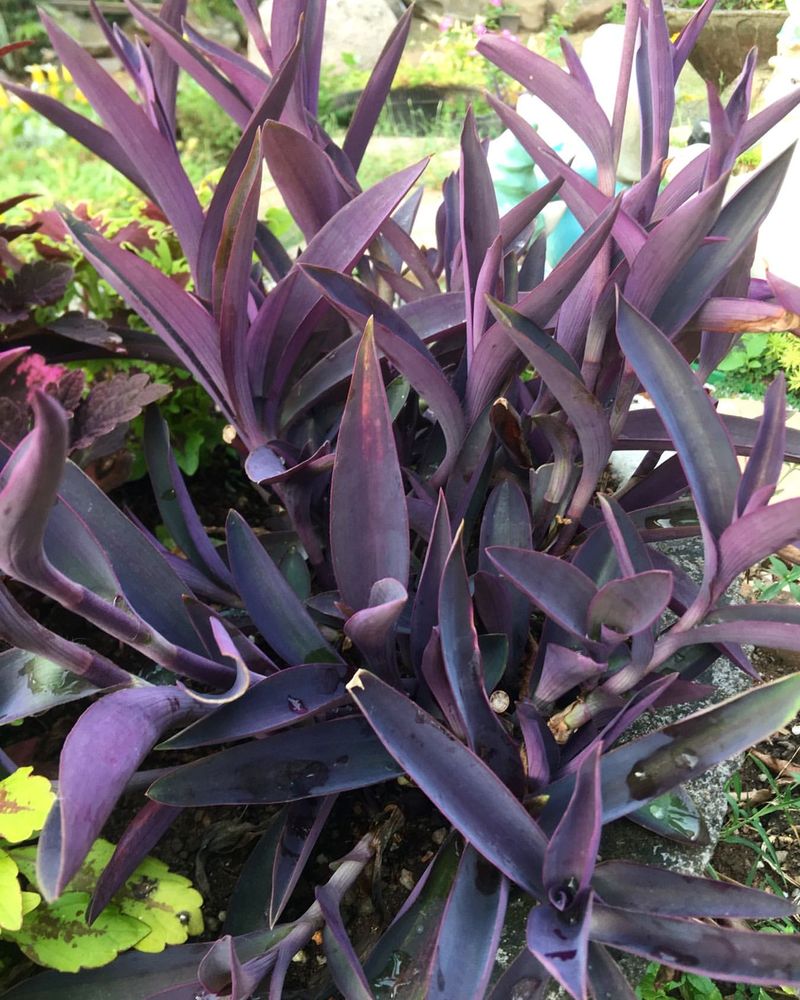
Many plants in a Georgia summer bed are working hard just to maintain their current appearance. Purple heart is not working hard. It is expanding.
Tradescantia pallida rolls out deep jewel-toned purple foliage from late spring through the first frost, staying vivid and bold during the exact months when most plants look washed out and tired. Georgia heat does not stress this plant. It intensifies the color.
Full sun produces the most saturated purple. Shade pushes the foliage toward green, which loses the dramatic effect entirely.
Plant in well-drained soil and give it room to spread. Each plant covers one to two feet wide in a single season under good conditions, making it one of the faster-spreading options available for warm-season coverage.
Watering needs after establishment are modest. Purple heart handles drought well, which is a meaningful advantage during Georgia’s dry summer stretches.
A good drink during establishment and occasional watering afterward is the maintenance the plant actually requires.
Pinching stem tips back a few times in early summer encourages bushier, fuller growth rather than long leggy stems that look sparse from a distance. That one habit makes a visible difference in the overall density of the planting.
In North Georgia, purple heart behaves as an annual or tender perennial, cutting back after hard freezes and returning from the roots in spring. In Central and South Georgia, it overwinters reliably.
Either way, it produces the boldest color in the summer garden with the least amount of effort attached to the outcome.