The Best Set-And-Forget Florida Shrubs For Under Trees Where Nothing Else Survives
Dry shade under Florida trees is where garden ambitions go to get humbled. The soil is full of competing roots, the light barely makes it through the canopy, and moisture disappears before most plants ever get a real foothold.
Homeowners try groundcovers, try mulch, try a rotating cast of shade plants from the garden center, and watch them fail one after another in the same spot. The problem is not the gardener.
It is the plant selection. Most common shade plants are not equipped for the specific combination of dry, root-choked, low-light conditions.
Mature Florida trees create those conditions directly underneath them. A handful of Florida shrubs handle this environment without complaint.
They establish without fussing, fill in over time, and stop requiring attention once they find their footing. Under-tree spaces that have defeated everything else tend to respond well to the right shrub in the right spot.
1. Wild Coffee Fills Shady Gaps With Glossy Native Cover
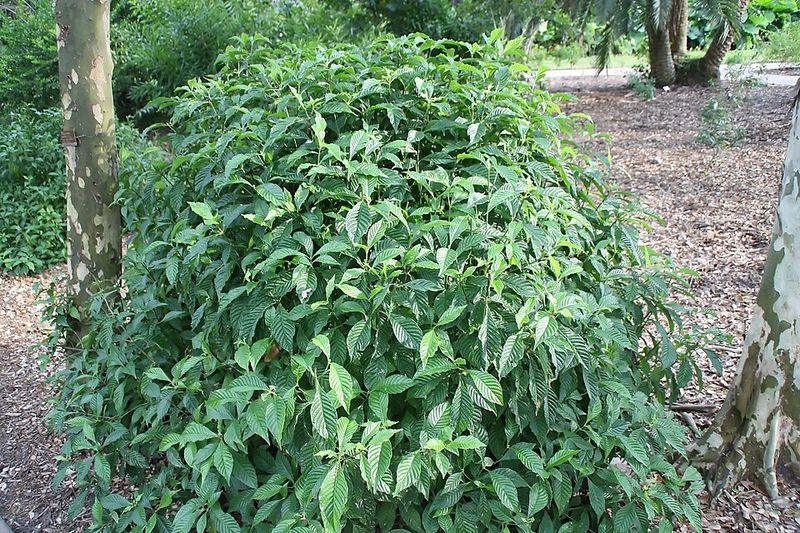
A bare patch beneath a high oak canopy is exactly where wild coffee earns its reputation. Psychotria nervosa is a Florida native understory shrub that naturally grows in the lower layer of warm, humid woodlands.
Its glossy, deeply veined leaves catch whatever filtered light filters through the canopy above, giving the planting bed a lush, polished look even in fairly deep shade.
Small white flower clusters appear periodically, followed by bright red berries that birds find irresistible. That wildlife value alone makes it worth considering in any layered shade planting.
It works well alongside other native understory plants and helps fill gaps that would otherwise stay bare and weedy.
Wild coffee is best suited to central and southern regions where winters stay mild. Cold snaps can damage or set it back significantly in northern areas, so site selection matters.
It needs genuine warmth, reliable moisture, and at least some organic matter in the soil to settle in well.
Root competition from large trees can stress it during dry spells, so supplemental watering during the first two growing seasons is important. Mulching around the base, without touching the trunk, helps retain moisture and moderate soil temperature.
Once established in a suitable spot, it fills in naturally, requires little pruning, and holds its ground through the rainy season and beyond.
2. Marlberry Handles Warm Understory Spots With Quiet Structure
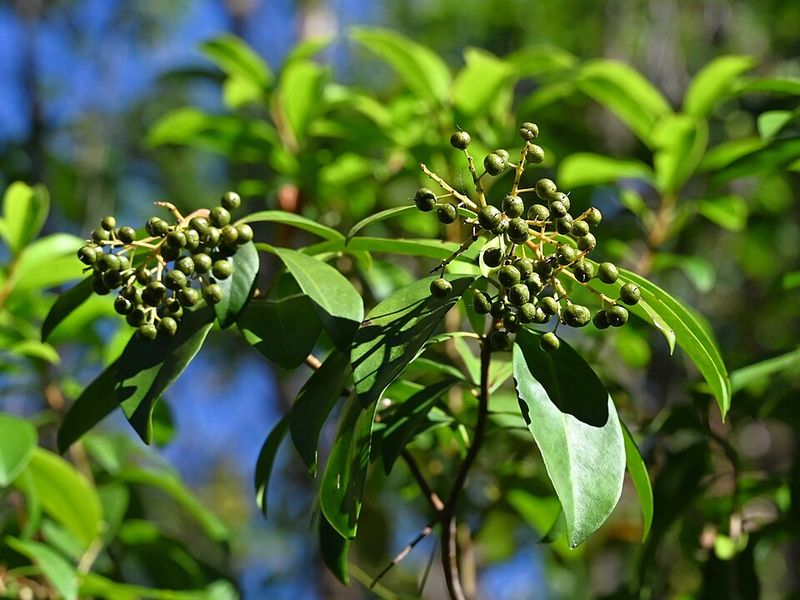
Some understory shrubs announce themselves loudly. Marlberry is not one of them.
Ardisia escallonioides brings a quiet, layered structure to shady spots that rewards patient gardeners more than impatient ones.
Its glossy, dark green foliage holds steady through the seasons, giving the understory a sense of calm fullness without demanding constant attention.
Clusters of small white to pinkish flowers appear in late summer or fall. The dark berries that follow are a reliable food source for mockingbirds, robins, and other fruit-eating birds.
That makes it genuinely useful in wildlife-friendly yards, not just ornamentally appealing. It fits naturally into layered plantings under taller canopy trees.
Your Florida Garden Changes Every Week. Your Plan Should Too.
Gardening in Florida changes quickly throughout the season. Every Friday you’ll receive a simple weekly plan showing exactly what to plant, prune, fertilize, harvest, and protect so you never miss the right timing.
Marlberry can reach eight to fifteen feet at maturity, so spacing matters from the start. Planting too close to walkways, structures, or other shrubs creates crowding problems later.
Give it room to develop its natural, multi-stemmed form and it will fill a shady corner gracefully over time.
Warmth is a real requirement. This shrub performs best in southern and central regions and can struggle where winters are cold and exposed.
It also needs reasonable moisture, especially during establishment. Bone-dry shade under shallow-rooted trees is a tough ask, so plan to water regularly for at least the first full year.
Organic mulch kept a few inches from the base helps hold soil moisture between rains.
3. Florida Anise Brings Lush Texture To Moist Shade
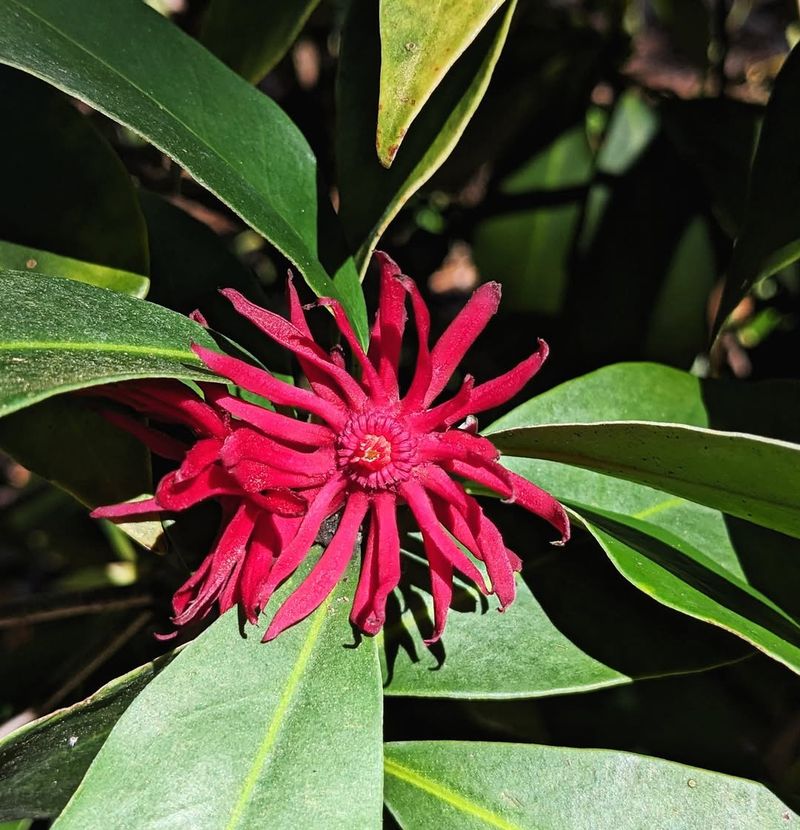
Few native shrubs bring the same rich, woodland atmosphere as Florida anise. Illicium floridanum is an evergreen native with large, aromatic leaves that release a distinctive scent when brushed or crushed.
That sensory quality alone sets it apart from most other understory options, and it looks genuinely lush in shaded beds where thinner-leaved plants tend to look sparse.
The flowers are unusual and striking, with narrow, strap-like dark red petals arranged in a star pattern. They bloom in spring and add an unexpected moment of interest to an otherwise quiet shade bed.
Birds and pollinators visit the planting area, and the dense foliage provides good cover for small wildlife throughout the year.
Moisture is the real key with this plant. Florida anise performs best in shaded spots with consistent soil moisture, organic-rich soil, and protection from drying winds.
It is not a good fit for hot, dry sand under thirsty trees unless irrigation can fill the gap reliably. Attempting to grow it in a bone-dry root zone usually leads to chronic stress and slow decline.
Mature plants can reach six to ten feet tall and nearly as wide, so plan spacing carefully from day one. Avoid planting too close to tree trunks or structures.
Water consistently for the first two seasons, mulch generously, and choose a spot with genuine shade. Once settled in the right conditions, it holds its form and color with minimal intervention.
4. Oakleaf Hydrangea Makes Dry Shade Feel More Designed
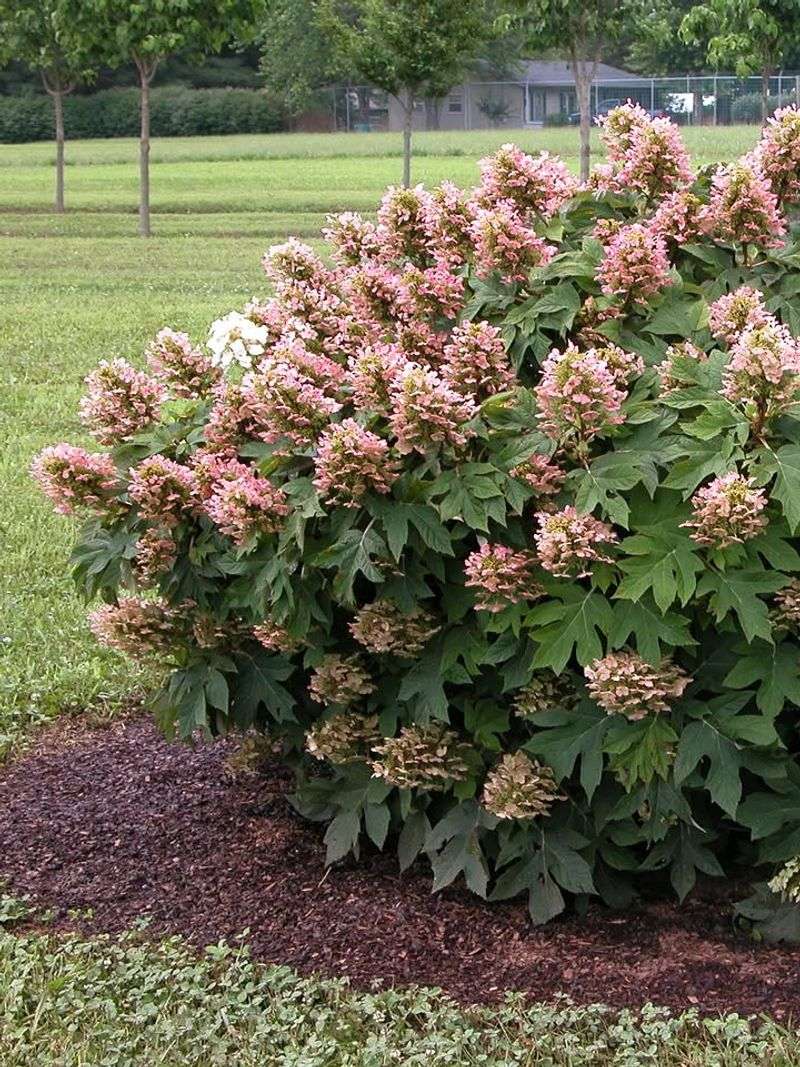
Root-filled beds under large oaks often look like a design problem without a solution. Oakleaf hydrangea is one of the few shrubs that can make those spots feel intentional.
Hydrangea quercifolia brings bold, deeply lobed leaves and large cone-shaped white flower clusters. Its peeling cinnamon-colored bark adds winter interest long after the blooms have faded.
The seasonal texture is genuinely impressive. Flowers emerge creamy white in late spring, age to parchment and then rose tones, and persist on the stems through fall.
Leaves turn burgundy and orange before dropping in winter, giving the planting bed four distinct seasonal looks. That kind of layered interest is rare in any shade shrub, native or otherwise.
Calling it a dry-shade plant requires some honesty, though. Oakleaf hydrangea can tolerate some drier conditions once fully established.
But it performs far better with organic soil, a consistent mulch layer, and reliable moisture during its first two to three years. Planting it in compacted, nutrient-poor sand under a thirsty tree and walking away is a recipe for chronic stress.
Mature size varies by cultivar, ranging from compact three-foot selections to large shrubs reaching eight feet or more. Choose a cultivar that fits the available space before planting.
Water deeply and regularly through the first growing season, keep mulch a few inches from the base, and avoid deep digging near existing tree roots. Northern regions of this state are well suited to this native shrub.
5. Beautyberry Adds Loose Cover Where Tree Shade Opens Up
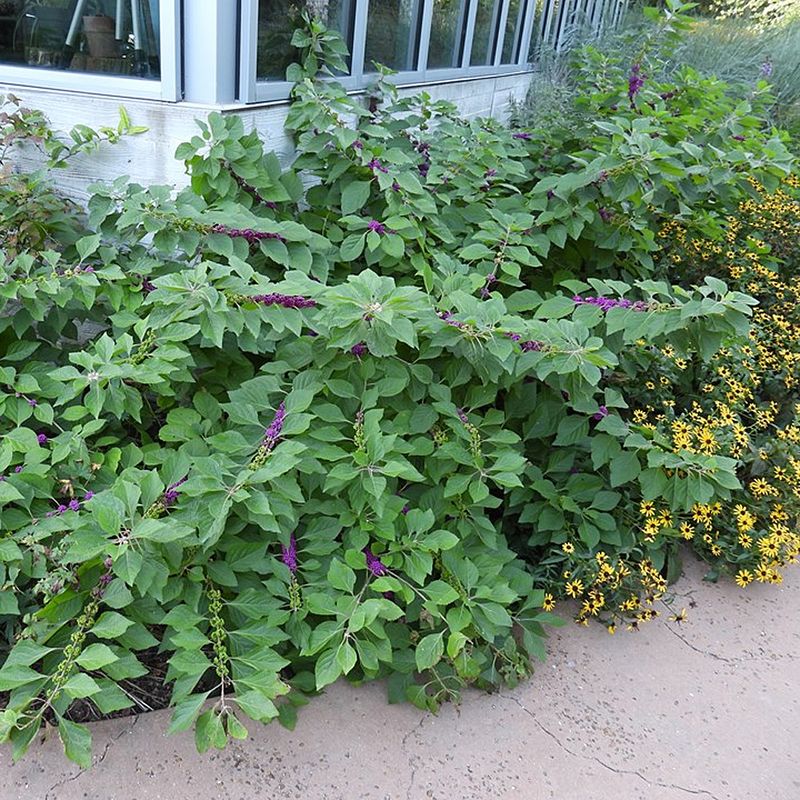
That open, dappled area where tree shade breaks and sunlight filters through in shifting patches is where American beautyberry truly shines.
Callicarpa americana is a native shrub with a loose, arching habit that suits informal understory plantings far better than clipped, formal beds.
Its long, flexible stems bend gracefully outward, giving it a relaxed presence that fits naturally in woodland-edge settings.
The berries are the real showstopper. Clusters of vivid, metallic purple fruit line the stems in late summer and fall, creating one of the most eye-catching displays in the native plant world.
Mockingbirds, catbirds, and robins move through quickly once the fruit ripens, making it a lively spot in the yard during migration season. Some cultivars produce white berries, which are equally striking against the foliage.
Deep, heavy shade is not where this plant performs at its best. Beautyberry needs open, dappled, or broken light to fruit well and hold a full, healthy shape.
In very dark understory spots, it can grow sparse and produce fewer berries. Think of it as a layered planting companion rather than a dense evergreen screen.
Plants can reach six to nine feet if left unpruned, but cutting them back hard in late winter keeps them compact and productive. New growth emerges quickly after pruning.
Water regularly during the first season, use mulch to hold moisture, and give it enough elbow room to arch naturally. It is deciduous, so expect a quiet winter before the spring flush returns.
6. Coontie Gives Evergreen Structure Beneath High Tree Canopies
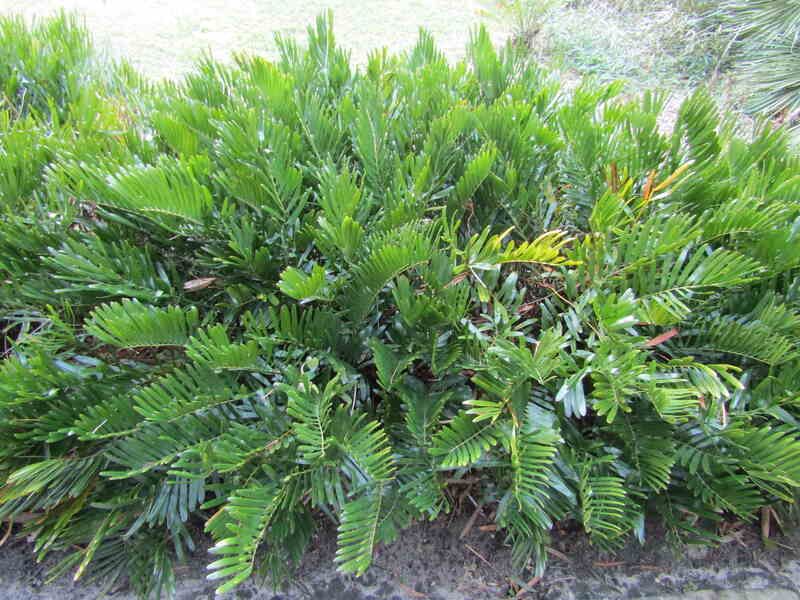
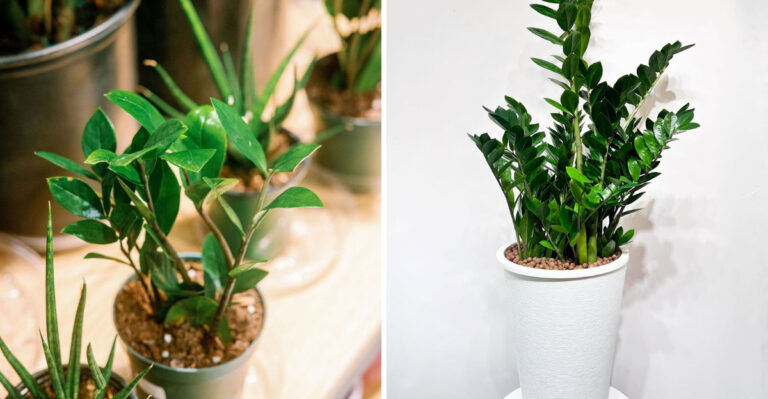
Not every plant that looks like a fern or a small palm actually belongs to those groups. Coontie is a cycad, Zamia integrifolia, and it is one of the most ancient plant lineages still growing in home landscapes across this state.
Its dark, glossy, feather-like fronds emerge from a low crown and give it a sculptural, almost architectural quality that holds up year-round without pruning or fussing.
One of its most practical qualities is drought tolerance after establishment. Once coontie roots into a well-drained spot, it handles dry periods with considerably more grace than most shade-tolerant shrubs.
That makes it genuinely useful under high pine or oak canopies where root competition pulls moisture away from the soil surface. It is not a solution for waterlogged spots or compacted clay.
Coontie also serves as the sole host plant for the Atala butterfly. This striking native species nearly vanished from this region and has made a comeback partly because of coontie’s use in home landscapes.
Planting it is a direct contribution to local butterfly conservation, not just a design choice. That dual value, structural beauty and ecological function, is hard to match in one low-growing plant.
Mature plants typically reach two to three feet tall and spread slowly over time, so spacing at planting should reflect eventual spread. Avoid deep digging near tree roots when installing.
Water during the first growing season, use mulch around the base, and allow leaf litter to break down naturally around the planting area.
7. Dwarf Yaupon Holly Works Where Shade Stays Bright
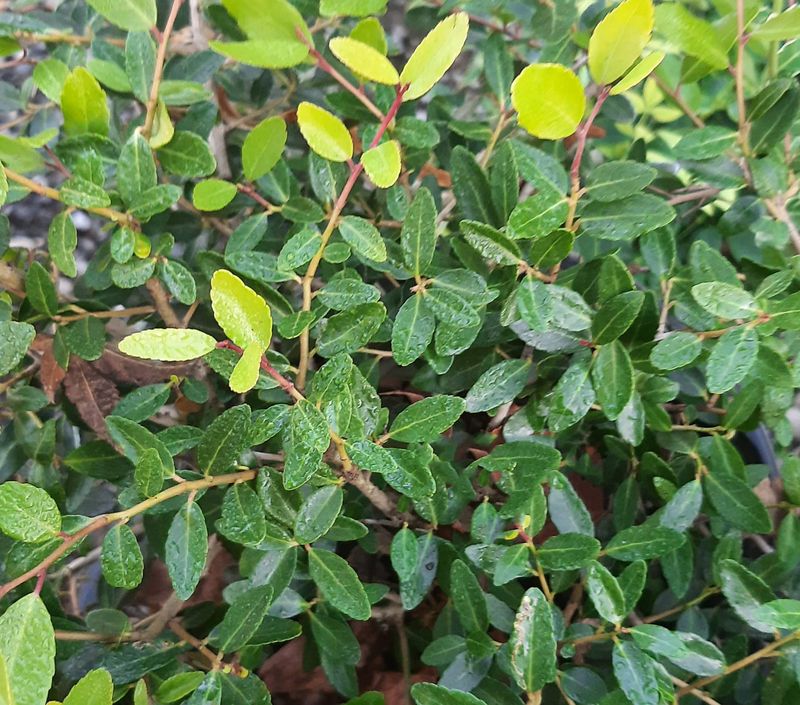
Compact yaupon selections have earned a loyal following in landscapes across the Southeast, and for good reason. Dwarf cultivars of Ilex vomitoria offer a tidy, evergreen form with small, dense leaves.
Those leaves hold their color through heat, cold, and the long dry spells between rainy seasons. That kind of reliable structure is hard to find in a shade-tolerant native shrub.
The key word with these plants under trees is bright. Dwarf yaupon holly performs well when shade is filtered, high, or dappled, not when it is deep, dark, and unrelenting.
Under a dense canopy that blocks most light, the plant tends to thin out, lose its compact shape, and look stretched and irregular over time.
A spot under a high pine canopy with good sky exposure works far better than a dark side yard surrounded by walls and overlapping branches.
Cultivar selection genuinely matters here. Some dwarf selections stay under three feet, while others push toward five or six feet at maturity.
Read the mature size on the tag before buying, and choose a cultivar that fits the space without requiring constant shearing. Over-pruning defeats the low-maintenance appeal entirely.
Yaupon holly is a Florida native with solid wildlife credentials, including berries that birds enjoy and flowers that attract pollinators in early spring. Plant it in well-drained soil, water consistently during the first season, and mulch carefully around the base.
Once settled into a bright shade spot, it holds its shape with minimal intervention and stays evergreen through winter.
8. Cast Iron Plant Survives Deep Shade With Polished Leaves
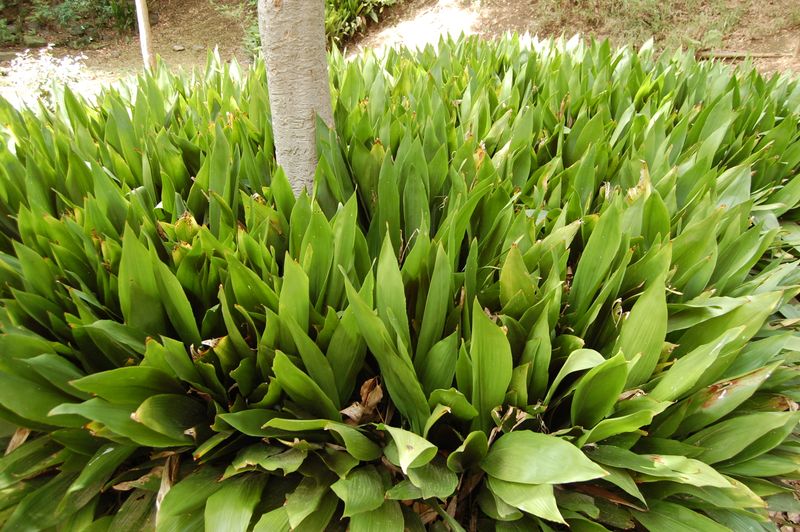
When every other option has struggled and the shade is genuinely deep, cast iron plant tends to be the answer experienced gardeners reach for. Aspidistra elatior is not a Florida native, and that distinction matters.
It comes from China and Japan and should be treated as a non-native ornamental. Use it thoughtfully in contained beds rather than allowing it to spread freely into natural areas.
What it offers is real. Broad, dark green, strap-like leaves grow in slow-spreading clumps that stay polished and upright even in very low light.
Few ornamental plants handle the combination of deep shade, dry spells, and root competition as calmly as this one does. It is commonly used under dense canopy trees, along shaded building foundations, and in containers placed in covered outdoor spaces.
Spread is slow and manageable in most landscape situations, but planting near natural areas or water features is not recommended.
Check with your local Extension office or consult UF/IFAS resources if you have concerns about invasive potential in your specific region before planting in open ground.
Established plants need very little water once they root in, but they still benefit from supplemental irrigation during prolonged dry periods. Avoid deep digging near tree roots when installing clumps.
A two-to-three-inch mulch layer, kept clear of both the plant crowns and the tree trunk, helps moderate soil moisture. Occasional removal of tattered leaves keeps the planting looking clean through the seasons.