7 Ohio Flowers That Self-Sow So Aggressively You’ll Never Have To Replant Them
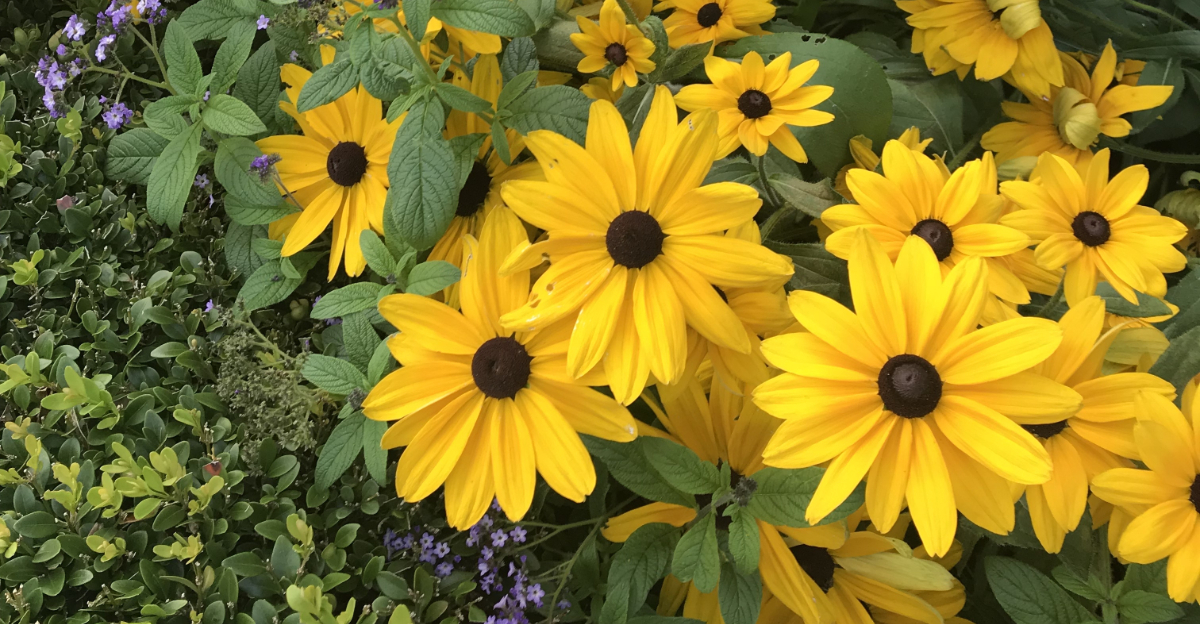
Plant them once and Ohio does the rest. That is the promise of a good self-sowing flower, and when it delivers, it is one of the most satisfying things a garden can do.
Seeds drop, winter passes, and come spring new plants appear exactly where you want them, and sometimes in spots you never would have thought to try. Self-sowing flowers are not all created equal though.
Some sprinkle a few seedlings around and call it done. Others take the job seriously, filling gaps, spreading into new areas, and quietly expanding a planting year after year without any help from you.
Ohio’s climate and soil suit certain self-sowers particularly well. Seven flowers have built a genuine reputation for coming back so reliably that replanting becomes a thing of the past.
A garden that regenerates itself is a different kind of garden altogether, and it starts with knowing which flowers to trust with the job.
1. Let Black Eyed Susan Scatter Seed For Next Year
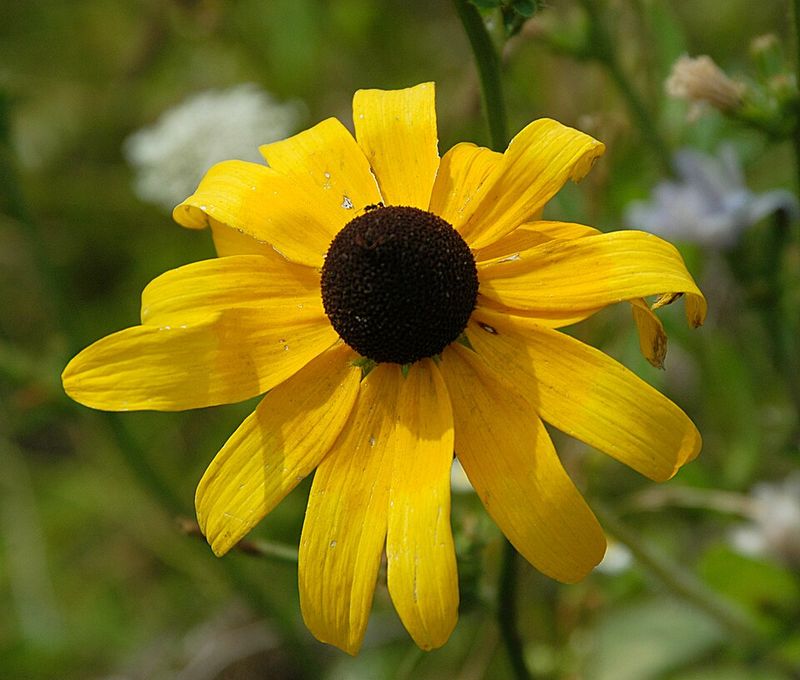
A few brown seed heads left standing in late summer can do more work than a fresh packet of seed ever could. Black eyed Susan, known botanically as Rudbeckia hirta, is a native wildflower that earns its place in sunny beds by reseeding when conditions are right.
It behaves as a short-lived perennial or biennial in many local gardens, meaning it may not return from the same root every year. Letting seed heads mature before cutting them back gives new seedlings a real shot at filling gaps the following season.
This plant thrives in full sun and tolerates dry, lean soil remarkably well. Bees, butterflies, and goldfinches all visit the seed heads, so leaving them standing through fall does double duty.
The bright yellow ray petals surrounding that dark central cone are easy to spot from across the yard, and they bloom from midsummer into early fall. That long bloom window gives pollinators a reliable food source during the hotter months.
Seedlings tend to appear in open soil rather than under thick mulch, so bare patches near established plants are often where new growth shows up first. If too many seedlings emerge, thin them in spring before they get established.
They transplant fairly well when young, so moving extras to other spots in the yard is a practical option. Avoid cutting stems to the ground too early in the season, because mature seed is the whole point.
A light hand with fall cleanup keeps this cheerful native cycling through your beds without any replanting effort on your part.
2. Grow Partridge Pea Where Sunny Beds Need A Reseeding Boost
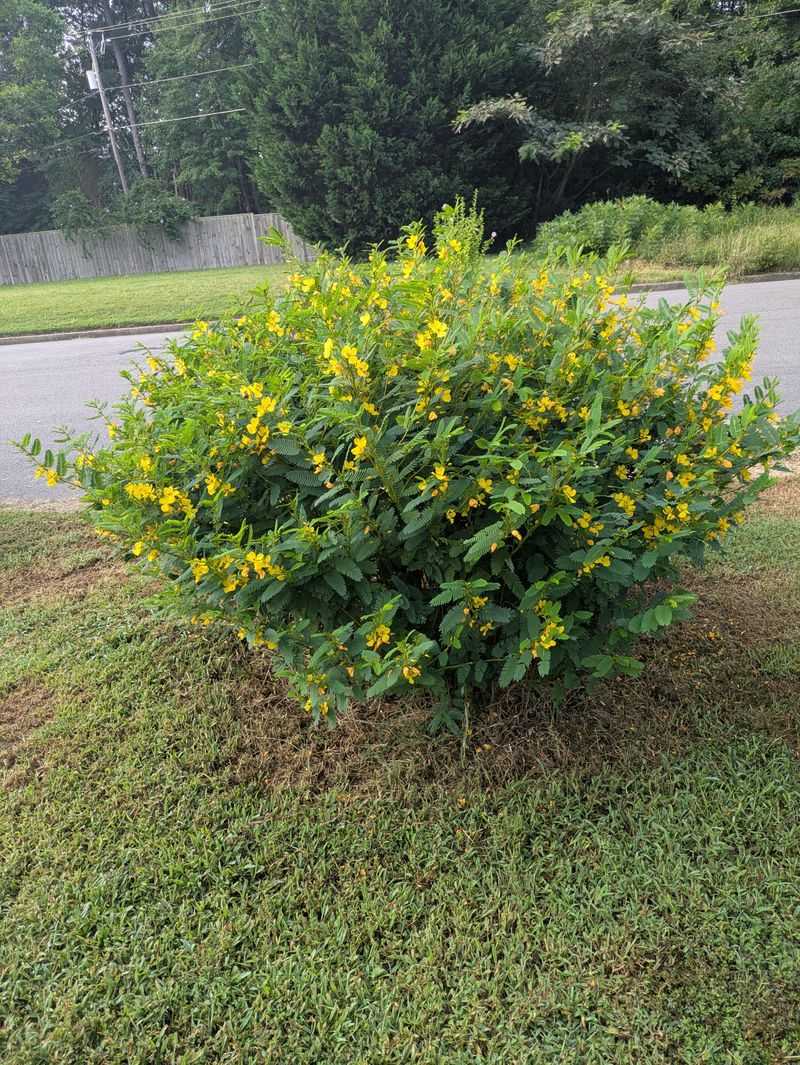
Not every reseeding flower looks delicate and cottage-garden soft. Partridge pea, Chamaecrista fasciculata, brings a bold, ferny texture and cheerful yellow flowers to sunny spots that might otherwise go bare.
It is a native annual, which means it completes its full life cycle in one season and returns only by seed. That reseeding habit is reliable in suitable sites, especially where the soil is sandy, dry, or disturbed and not buried under heavy mulch layers.
Your Ohio Garden Changes Every Week. Your Plan Should Too.
Gardening in Ohio changes quickly throughout the season. Every Friday you’ll receive a simple weekly plan showing exactly what to plant, prune, fertilize, harvest, and protect so you never miss the right timing.
The flowers are small but vivid, and several native bee species depend on them for pollen. Bumblebees are especially fond of this plant and will visit repeatedly throughout the blooming period.
Beyond the flowers, the seed pods are an important food source for bobwhite quail and other wildlife, which adds another layer of ecological value.
Gardeners interested in supporting wildlife corridors or naturalistic plantings will find partridge pea earns its space quickly.
Because it is an annual, placement matters more here than with longer-lived plants. Put it where reseeding is genuinely welcome, such as a meadow border, a sunny slope, or a wilder edge planting.
Once established in a spot it likes, it tends to return year after year without any help. Seedlings emerge in spring and grow quickly, reaching two to four feet tall by midsummer.
Thin or relocate extra seedlings if the patch gets crowded. This plant does not do well in shade or waterlogged soil, so stick to open, sunny, well-drained areas.
It rewards patient gardeners who let it find its own rhythm in the landscape.
3. Leave Coreopsis Seed Heads For Easy New Plants
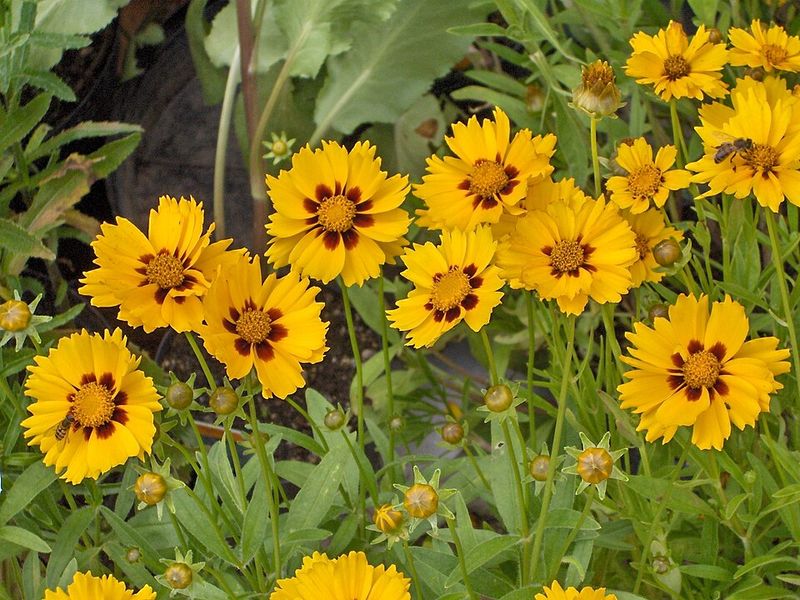
Late in the season, when most gardeners are reaching for the pruners, it pays to pause before cutting back every stem. Lanceleaf coreopsis, Coreopsis lanceolata, is a native Ohio species that can reseed when its seed heads are allowed to ripen fully.
The seeds are small and lightweight, designed to fall close to the parent plant and germinate in open, well-drained soil. Thick mulch can prevent germination, so leaving a few bare patches near established plants gives new seedlings a better chance.
This coreopsis does best in full sun and lean soil. Rich, amended beds can actually cause it to flop or become short-lived, so resist the urge to over-fertilize.
The bright yellow, daisy-shaped flowers bloom heavily in late spring and early summer, with a possible rebloom if some trimming is done.
Here is where balance matters: trimming encourages more flowers, but leaving some seed heads at the end of the season is what feeds the next generation of plants.
A practical approach is to trim through midsummer to extend blooming, then let the final flush of flowers go to seed in late summer and fall. Seedlings that appear in spring are easy to identify by their narrow, lance-shaped leaves.
Thin crowded seedlings to give each plant enough room to develop properly. Coreopsis lanceolata is listed as native to this state and is a solid choice for pollinator gardens, rain gardens, and naturalistic borders.
It attracts native bees and small butterflies reliably. Once a patch is established and seed heads are respected, this plant keeps going with very little intervention from the gardener.
4. Let Columbine Drift Through Beds On Its Own
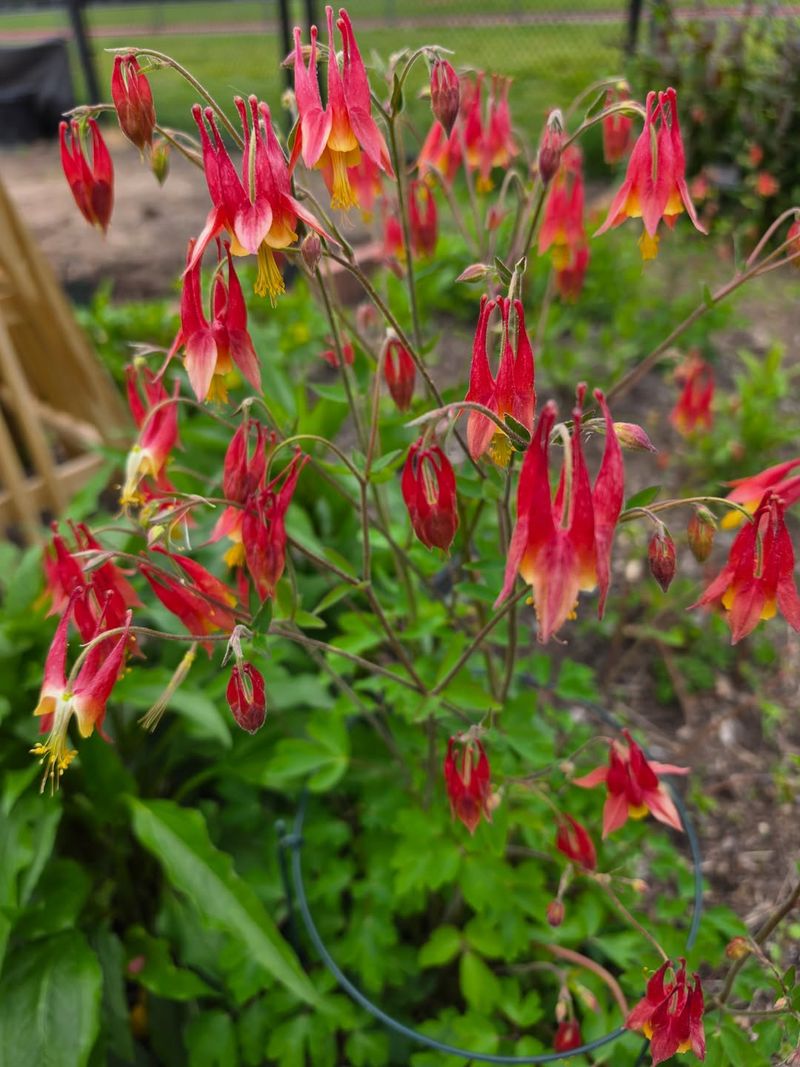
Finding a columbine seedling in an unexpected corner of the garden feels like a small gift. Wild columbine, Aquilegia canadensis, has a quiet talent for drifting through beds over time.
It pops up in cracks between stones, along shaded paths, and at the feet of shrubs. It self-sows gently to freely depending on conditions, and it tends to find its own best spots rather than needing gardeners to direct it.
The nodding red and yellow flowers appear in early to mid spring. That makes it one of the first native Ohio wildflowers to feed hungry hummingbirds and long-tongued native bees after winter.
This plant performs well in part shade to full shade, especially along woodland edges, under open tree canopies, or in north-facing beds. It tolerates a range of soils but tends to reseed most readily in loose, undisturbed ground with some leaf litter.
Mulch that is too thick can block germination, so a light hand with bark or wood chips near established plants helps seedlings emerge.
The foliage is attractive even when the plant is not blooming, with blue-green, rounded leaflets that stay tidy through much of the season.
Wild columbine is short-lived in many gardens, lasting two to four years before fading, which makes its reseeding habit genuinely important for keeping it present.
Edit out seedlings that appear in inconvenient spots while they are young and easy to move.
They transplant well in early spring with a little root ball intact. Letting a few seed heads ripen each year keeps the colony refreshed without any extra effort.
This plant rewards gardeners who are comfortable with a little natural movement in their beds.
5. Use Purple Coneflower Where Seedlings Are Welcome
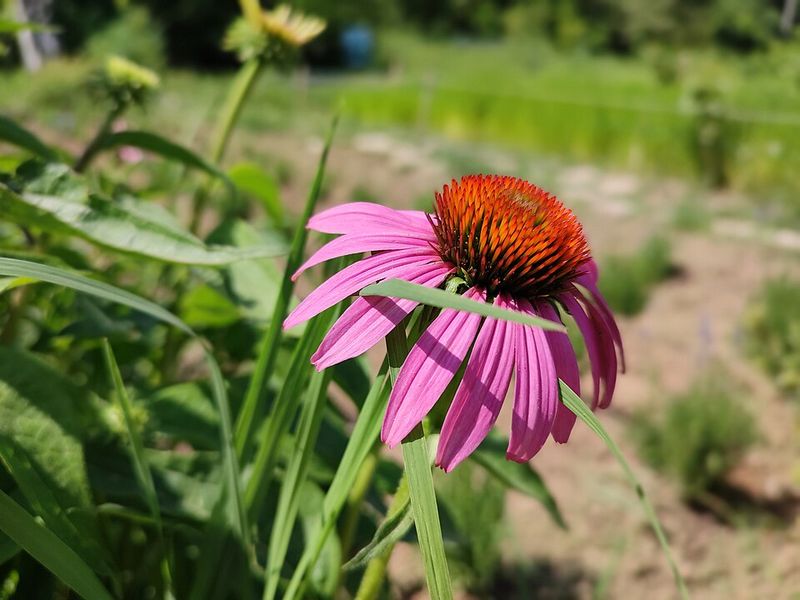
Purple coneflower has a reputation that sometimes overpromises. Echinacea purpurea can absolutely reseed in open soil.
But results vary widely depending on site, soil, mulch depth, and how much wildlife is nibbling the seed heads before seeds ever hit the ground.
Goldfinches, in particular, are enthusiastic eaters of coneflower seed and can clean out a seed head in a matter of days.
Gardeners who want reseeding should leave some seed heads intact while accepting that birds will take their share.
This plant is native to parts of Ohio and does best in full sun with good drainage. It handles summer heat and short dry spells without much complaint.
The large, rosy-purple ray flowers surrounding the spiky orange-brown central cone are unmistakable. They attract a long list of pollinators from midsummer through early fall.
Leaving the seed heads standing through winter also provides structural interest in the garden when most other plants have gone dormant.
Seedlings tend to appear in spring in spots with bare or lightly covered soil. They grow as a rosette the first year before sending up flowering stems the second year, so patience is part of the deal.
Thin crowded seedlings to at least twelve to eighteen inches apart to give each plant room to develop a strong root system. Purple coneflower does not always reseed in every yard, so do not count on it to fill a large area quickly.
Use it where a gradual, natural spread is welcome, and treat any seedlings that appear as a bonus rather than a guarantee. The birds and bees will thank you either way.
6. Plant Wild Bergamot Where A Bigger Patch Makes Sense
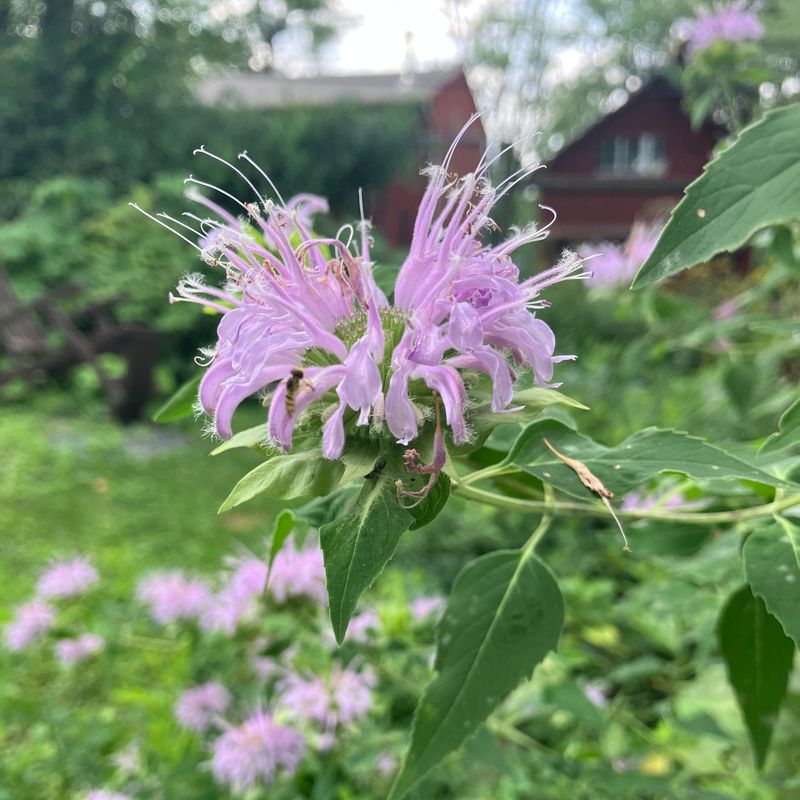
Some plants are honest about their ambitions from the start. Wild bergamot, Monarda fistulosa, is one of them.
It spreads by underground rhizomes and can also reseed, which means a single plant can become a substantial patch over a few seasons.
That is genuinely useful in the right setting, such as a meadow border, a rain garden buffer, or a large naturalistic bed where a bigger colony is exactly what is needed.
In a small, tidy perennial border, it may need more frequent editing to stay in bounds.
Full sun to light part shade suits this plant well, and it prefers average to dry soil rather than consistently moist ground. Good airflow around the plants matters because Monarda species can develop powdery mildew in humid summers, especially when crowded.
Spacing plants generously and thinning the colony every few years helps keep the foliage looking clean. The lavender-purple flower heads bloom in midsummer.
They attract an impressive range of pollinators, including bumblebees, hummingbird moths, and several species of native bees.
Wild bergamot is native to this state and has a long history of use by Indigenous peoples for both culinary and medicinal purposes. The leaves have a strong oregano-like fragrance when crushed, which is where the common name comes from.
Deer tend to avoid it, which is a practical bonus in suburban landscapes where browsing pressure is high. Let it spread where space allows, and use a sharp spade to slice off rhizome runners that stray beyond the intended area.
With honest management, this plant rewards gardeners with a reliable, wildlife-rich patch that returns and expands on its own schedule.
7. Let Brown Eyed Susan Fill Gaps Without Much Help
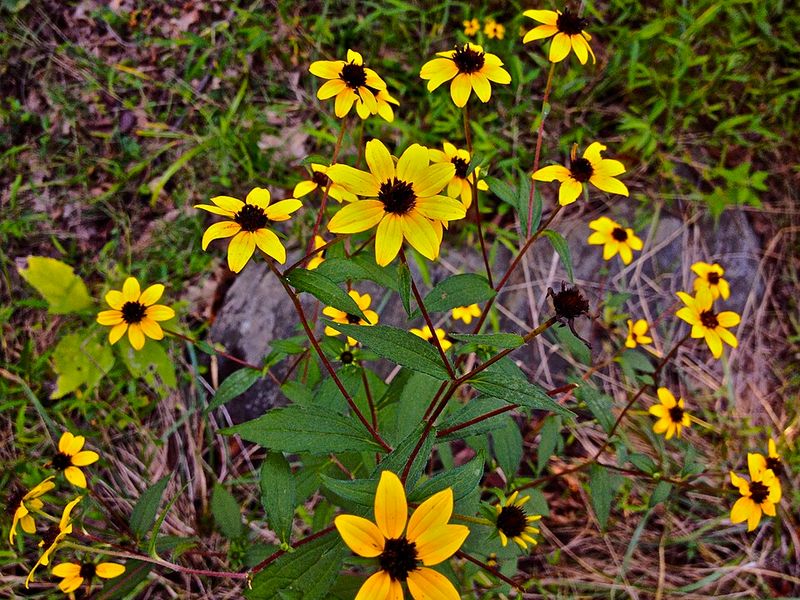
There is something satisfying about a plant that fills awkward gaps without being asked. Brown eyed Susan, Rudbeckia triloba, has that quality in abundance.
It is typically short-lived, lasting one to three years in most garden conditions, but it reseeds readily enough that a well-placed colony keeps renewing itself.
The smaller flowers, each with bright yellow petals around a dark brown center, appear in masses on branching stems from midsummer through fall.
They create an airy, wildflower-meadow effect that is hard to replicate with stiff, upright perennials.
This plant works especially well in informal beds, naturalistic borders, and transitional areas between a maintained garden and a wilder edge. It tolerates average to moderately fertile soil and handles both full sun and light part shade.
Reseeding happens most reliably in open soil with minimal mulch cover. If your beds are heavily mulched, consider leaving a few bare patches near established plants each fall to give seeds a place to land and germinate the following spring.
Seedlings emerge in early spring and are recognizable by their slightly rough, hairy leaves. They grow quickly and can reach three to five feet tall by midsummer, so give them room.
Thin crowded seedlings when they are a few inches tall to prevent the patch from becoming too dense. Plants that are too crowded tend to flop and lose the open, airy habit that makes this species so appealing.
Brown eyed Susan is native to this state and listed as a valuable plant for native bees, small butterflies, and seed-eating birds. It is a practical, low-fuss option for gardeners who want seasonal color without constant replanting effort.