Why Red Twig Dogwood Along A Fence Is The Smartest Thing An Ohio Gardener Can Plant
January in Ohio tends to expose almost every weakness in a garden.
The flowers are gone. The leaves dropped weeks ago. The fence line sits there doing nothing except reminding you that half the yard looks completely forgotten for four solid months.
Many gardeners accept this as part of Ohio winters. A temporary inconvenience to wait out until spring arrives and everything comes back.
The gardeners with the best-looking yards in January are not waiting. They planted something that specifically performs when everything else checks out for the season.
Do you know what plant turns a plain Ohio fence line into one of the most visually striking things in the neighborhood between November and March?
It thrives in Ohio’s heavy, wet soil without any special treatment. It feeds dozens of bird species through fall. It contributes something genuinely beautiful in all four seasons, not just the warm ones.
It gets more dramatic looking with almost every year you leave it in place.
Many Ohio gardeners walk right past it at the nursery without stopping. That is a significant missed opportunity, and here’s why.
1. Red Stems Turn A Plain Fence Into Winter Color
Bare fences, brown mulch, and gray soil look especially uninspiring once the last leaf falls in Ohio. That is exactly the moment red twig dogwood steps forward and earns its place.
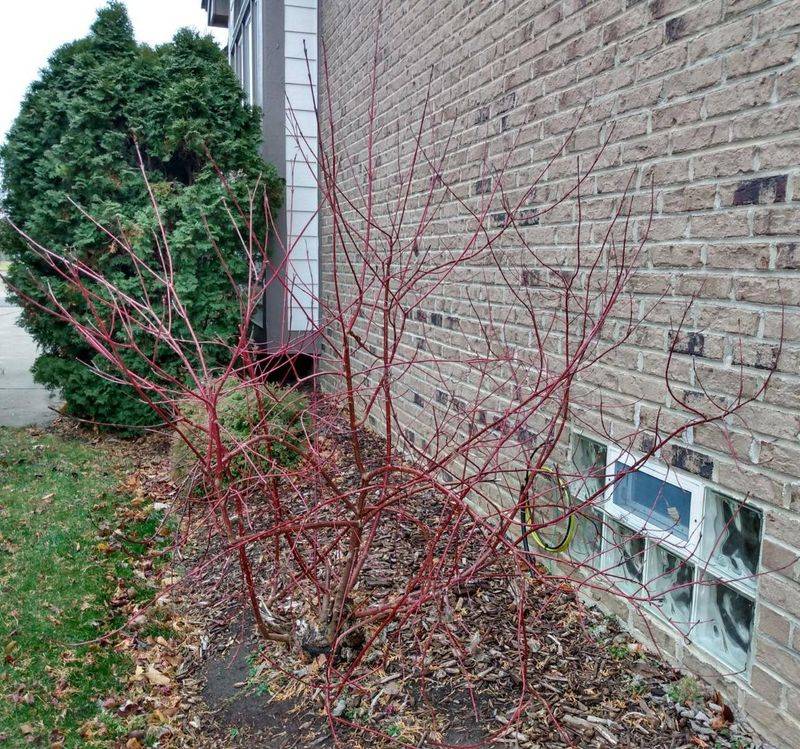
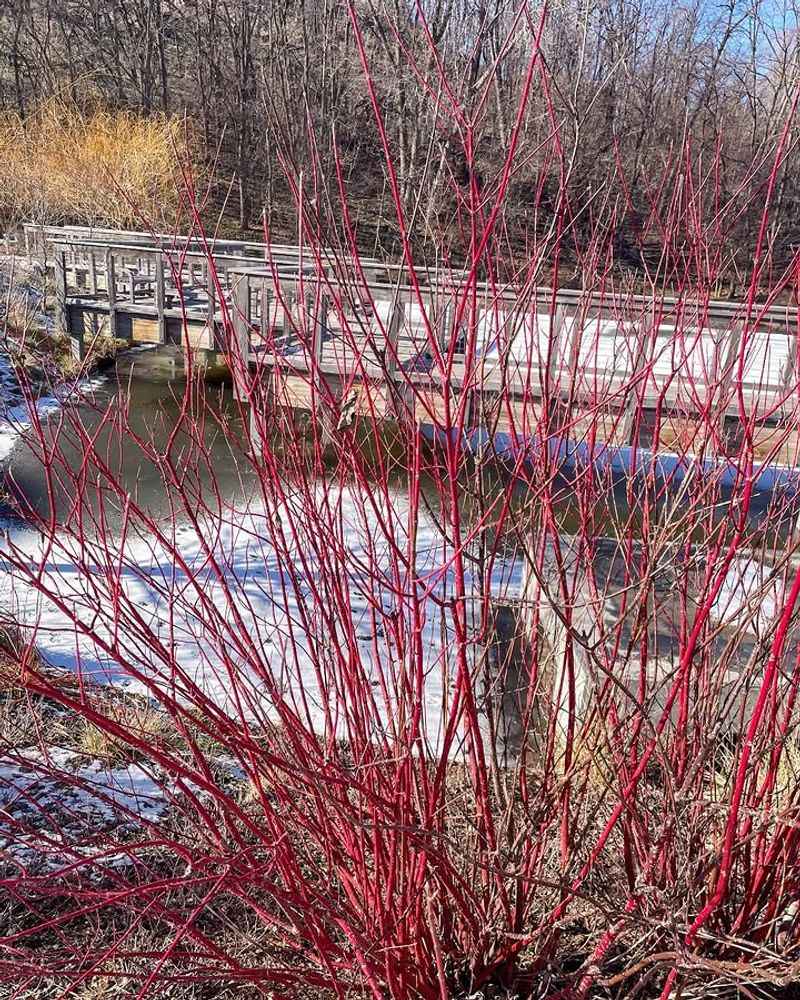
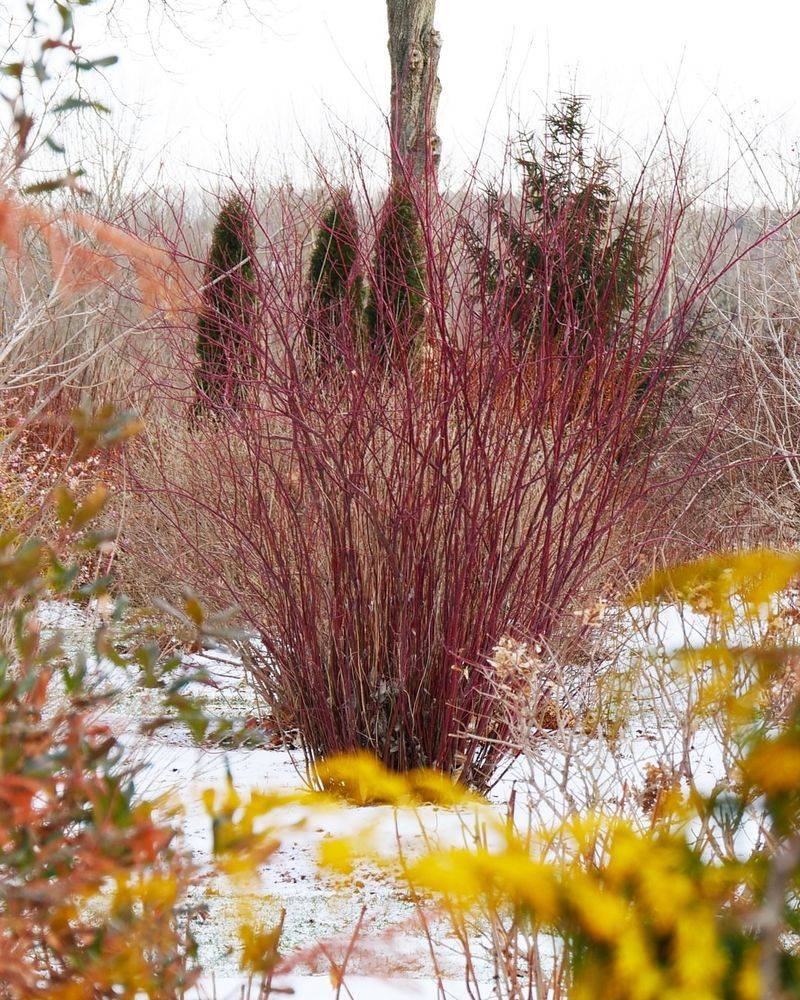
The stems of Cornus sericea shift from green to a deep, saturated red as temperatures drop in late fall. That color intensifies after the first hard frost and holds through the entire winter.
Planted along a fence, those crimson stems pop against white snow and brown wood in a way that looks completely deliberate.
A plain wood fence becomes a backdrop that actually works in your favor. A vinyl fence loses its flat, plastic quality.
Even a chain-link fence starts to read as an intentional design choice when bright red stems weave in front of it. The contrast is striking without being excessive.
For the boldest display, plant red twig dogwood on the north or west side of a fence where winter afternoon sun catches the stems at a low angle.
That light turns each stem into something almost luminous. Ohio gardeners who have used this placement report that neighbors regularly stop to ask what is growing there.
Positioning shrubs about two to three feet from the fence lets the structure act as a visual anchor while the stems handle the color.
One plant handles structure, color, and winter interest simultaneously. It is doing more work in January than most plants do all year.
2. Dense Growth Softens Hard Fence Lines Fast
A fence without plants divides space without improving it. Red twig dogwood changes that dynamic quickly because it grows with real speed and fills in with genuine density.
Cornus sericea typically reaches six to nine feet tall and spreads just as wide. That spread is exactly what a fence line needs.
The multi-stemmed growth habit creates a layered, natural look that no amount of staining or painting achieves. Within two to three growing seasons, a young plant converts a bare fence into a full green border.
Your Ohio Garden Changes Every Week. Your Plan Should Too.
Gardening in Ohio changes quickly throughout the season. Every Friday you’ll receive a simple weekly plan showing exactly what to plant, prune, fertilize, harvest, and protect so you never miss the right timing.
Wood fences read softer. Vinyl fences lose their plastic quality. Chain-link fences, notoriously difficult to disguise, practically disappear behind the dense summer foliage.
The shrub also works as a visual screen and a modest sound buffer in neighborhoods where yards sit close together.
For a more layered effect, place shorter perennials like coneflowers or black-eyed Susans in front of the dogwood.
The taller shrub anchors the back of the border while the shorter plants add ground-level interest through the season. That layered approach is a classic technique that consistently outperforms a single-species planting.
Space individual plants about five to six feet apart along the fence. They fill the gaps naturally within a few seasons without crowding or requiring constant trimming.
Red twig dogwood turns a fence line from a boundary into a border. Those are very different things, and the distinction shows up every time someone walks past your yard.
3. Moist Ohio Soil Helps Dogwood Fill In Strong
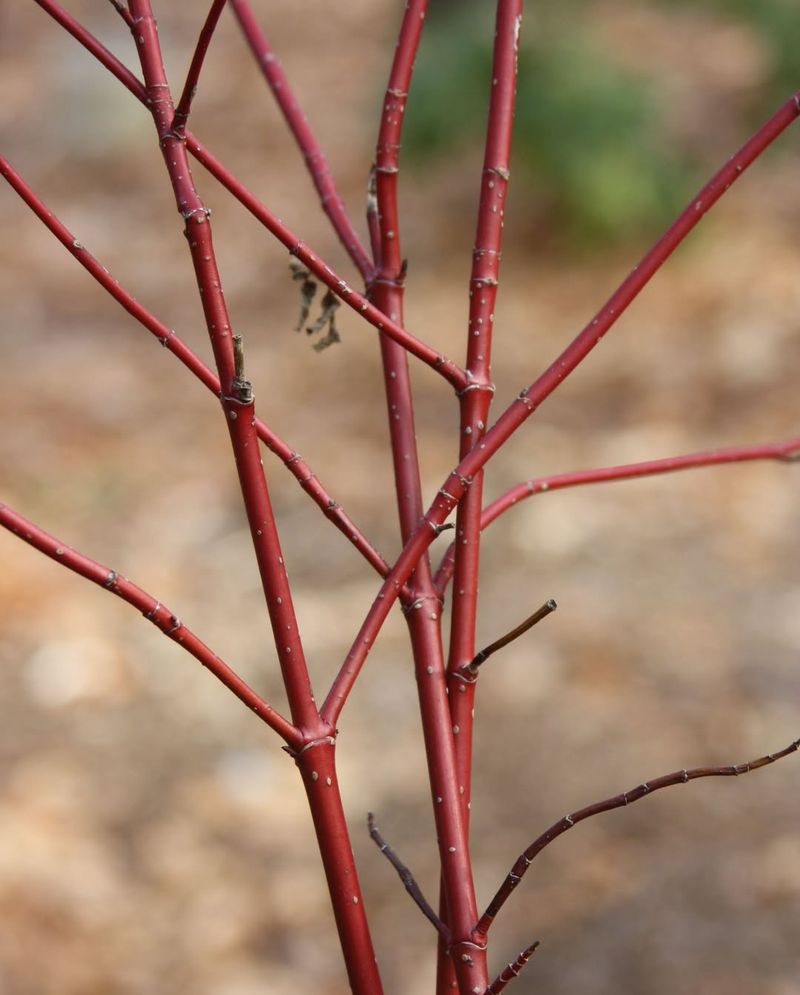
Ohio soil has a reputation for being heavy, wet, and slow to drain. For most shrubs, that combination creates ongoing frustration. For red twig dogwood, it is genuinely preferred growing conditions.
Cornus sericea grows naturally along stream banks, pond edges, and low-lying areas throughout the Midwest.
It evolved in consistently moist to wet soils and performs best in Ohio yards where water tends to collect along fence lines after heavy rain.
Red twig dogwood is also reasonably adaptable in average garden soil as long as it does not dry out completely through summer.
Steep slopes or fast-draining sandy spots are not ideal. Fence lines work well specifically because they often occupy the lowest point of a yard where water naturally gathers.
A two to three inch layer of mulch around the base of each plant helps retain moisture and keeps roots cool through Ohio’s humid summers. Shredded wood mulch or leaf compost both perform well and improve soil structure as they break down.
For fence lines that stay soggy for extended stretches after rain, this shrub does not just tolerate those conditions. It actively thrives in them, spreading steadily and filling the space with healthy growth season after season.
Many gardeners spend years trying to fix drainage problems. Red twig dogwood is one of the few plants that makes the drainage problem irrelevant.
4. White Berries Bring Birds To The Border
Fence lines are often the first place birds scan for food and cover when moving through a neighborhood.
A bare fence gives them nothing to work with. A fence lined with red twig dogwood gives them exactly what they are looking for.
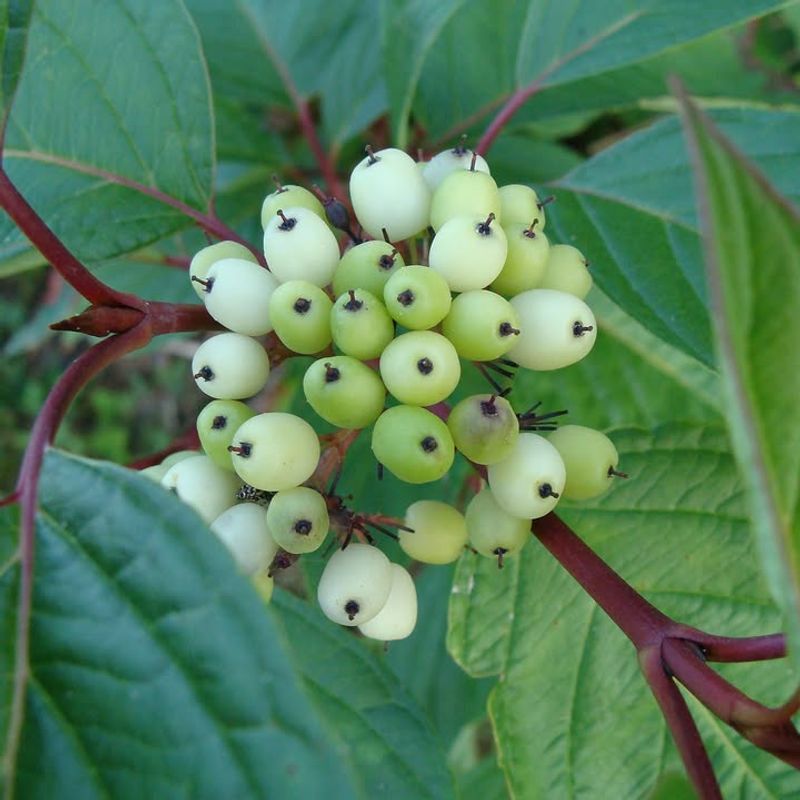
Cornus sericea produces clusters of small white berries that ripen in late summer and persist into fall. These berries are a significant food source for a wide range of bird species, including robins, cedar waxwings, bluebirds, and wood thrushes.
The berries develop after small white flower clusters fade in late spring and early summer. By August they turn creamy white and begin drawing early migrating birds. By October, the shrubs attract steady activity as birds fuel up for seasonal movement.
Beyond food, the dense branching structure provides nesting and roosting cover. Birds actively prefer layered shrub borders over open space, which means a dogwood-lined fence functions as a wildlife corridor running directly through the backyard.
For gardeners who want more bird activity without maintaining feeders, this shrub handles the work naturally. The plant provides. The birds respond. The gardener watches.
For everyone who has ever bought a feeder, hung it from a shepherd’s hook, and wondered why nothing showed up, the answer was probably the fence line.
5. Fall Leaves Add Color Before The Stems Take Over
Many people think of red twig dogwood as a winter plant. The stems pull most of the attention and most of the conversation. But fall deserves credit too.
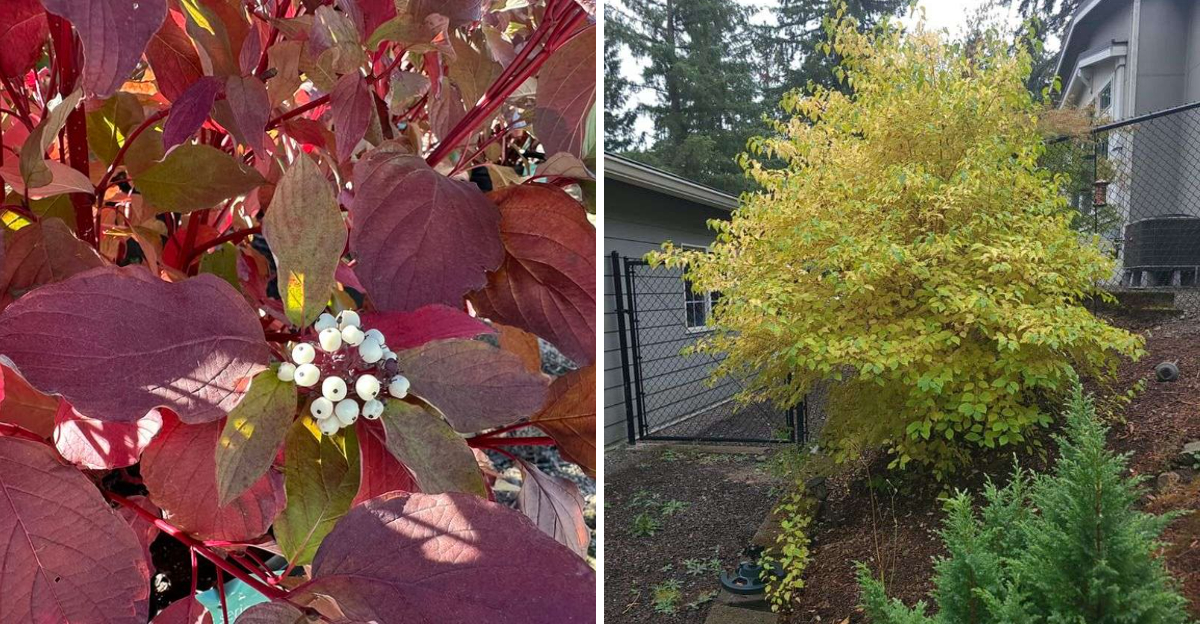
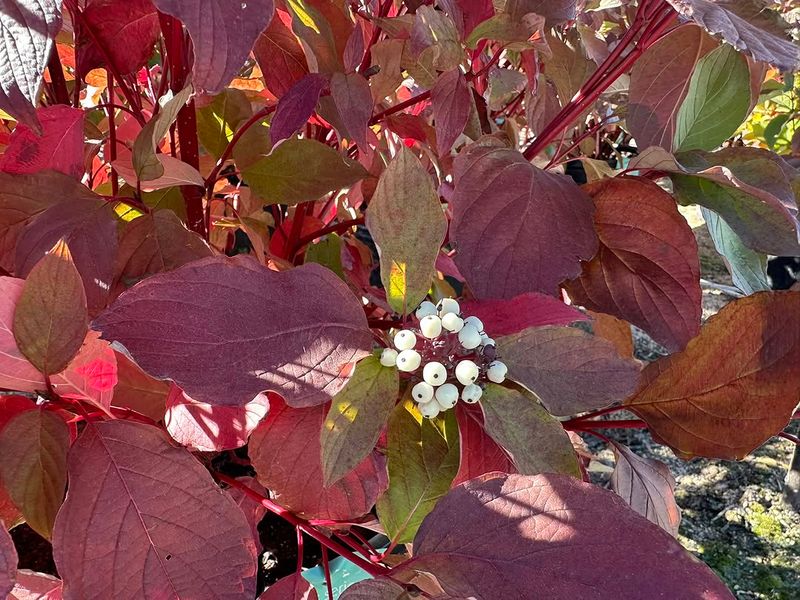
As temperatures cool through September and October, the foliage shifts into shades of reddish-purple and deep burgundy.
The color is not as bold as a red maple, but it adds genuine warmth to a fence line at exactly the moment when most other shrubs are simply fading to brown. It is a quiet transition that rewards observation.
The timing works out well. Foliage color peaks in mid-October as fall interest elsewhere in the garden starts to wind down.
Then, as leaves drop through late October and into November, the red stems begin to assert themselves. The shrub hands off one form of color to another across the full autumn season without a visual gap between them.
Spring brings white flowers. Summer delivers lush green foliage and developing berries. Fall adds leaf color. Winter showcases the stems. Very few shrubs cover all four seasons that thoroughly without demanding significant maintenance in exchange.
Pairing red twig dogwood with ornamental grasses along the fence extends the effect. Grasses turn golden while dogwood goes burgundy, creating a layered warm-toned combination that looks professionally considered without the professional budget.
Four seasons of interest. One plant. Zero design credentials required.
6. Mass Planting Makes The Red Color Look Bolder
One red twig dogwood is attractive. Five together is a design decision. Ten along a fence line is the kind of thing that makes people slow down on the street to look more carefully.
Mass planting is one of the most reliable techniques in landscape design, and it performs especially well with shrubs that carry strong seasonal color.
Grouping plants in odd numbers, threes, fives, or sevens, creates a natural, flowing composition rather than a rigid formal row. The repetition of color and form is what shifts a planting from incidental to intentional.
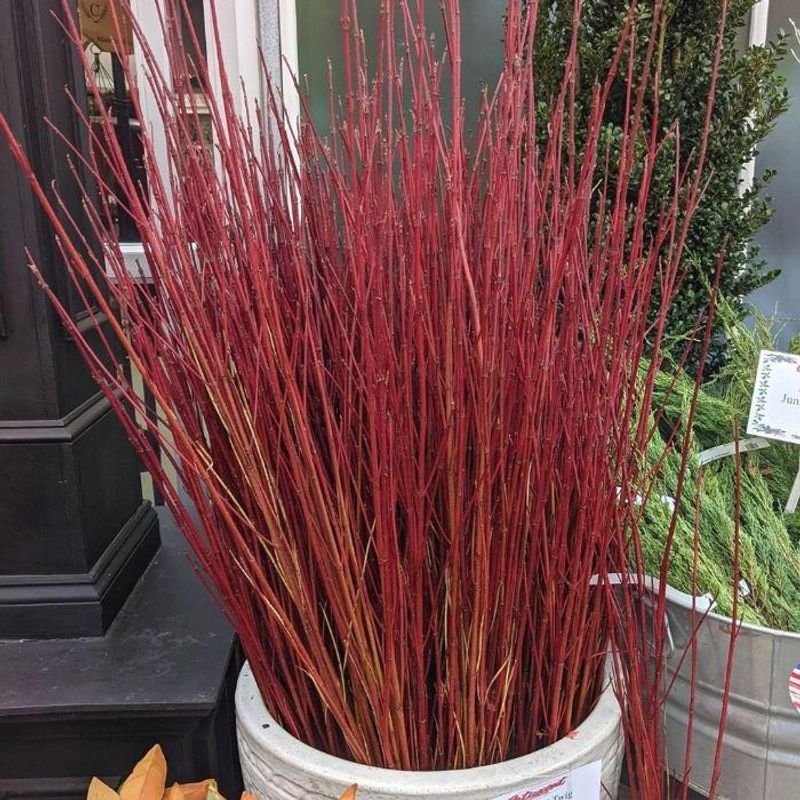
With red twig dogwood, the mass planting effect peaks in winter. A single stem reads as a thin accent. A grouped mass of stems reads as a sweeping band of red that anchors the fence line and gives the dormant garden a visual spine worth looking at.
Spacing plants five to six feet apart allows each shrub to reach its full spread without crowding. Within three to four years the individual plants grow together into a continuous, hedge-like border that looks full and deliberate from every angle.
For maximum intensity, the Arctic Fire variety offers especially vivid stems and a slightly more compact form that suits tighter fence lines.
One plant is a nice addition. Ten in a row is a reason the neighbors keep asking who does your landscaping.
7. Spring Pruning Keeps Young Stems Bright
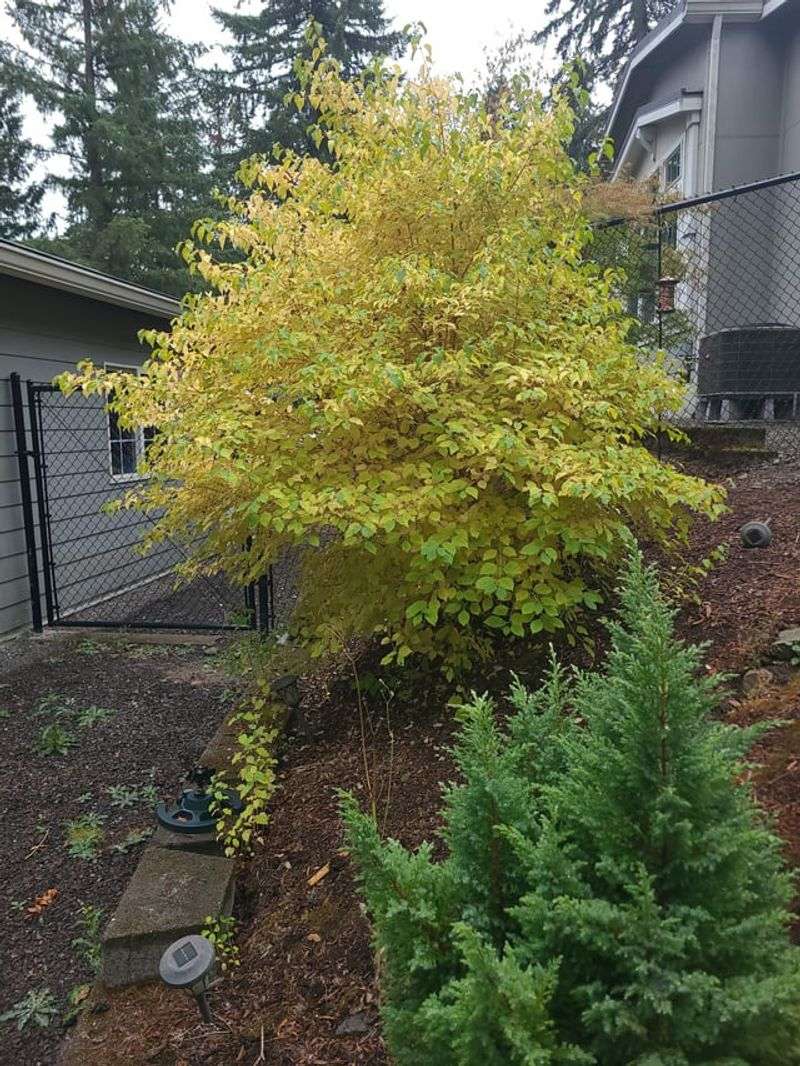
Here is something many first-time red twig dogwood growers discover later than they should. Older stems lose their color.
A shrub left unpruned for several years transitions from vibrant red to a dull gray-brown, and the entire reason for planting it gradually disappears.
The brightest red usually comes from young first and second year stems. Renewal pruning, removing the oldest stems at or near ground level each spring, signals the plant to push out vigorous new growth that returns to brilliant red by the following winter.
It is one of the more immediately satisfying pruning tasks available because the results show up clearly and quickly.
Late winter to early spring is the right window, just before new growth begins. In Ohio that typically means late February through March.
Cut the oldest, thickest stems, the ones that have already gone grayish or brownish, down to about four to six inches from the ground. Leave the younger red stems in place.
The plant responds quickly with a flush of new shoots.
A rotation approach removes roughly one third of the oldest stems each spring. Over three years, the old wood cycles out completely while the shrub stays full and well-shaped throughout.
This process is sometimes called coppicing, and it keeps red twig dogwood performing at its best indefinitely.
The shrub will keep its color as long as someone keeps removing the stems that have lost it.
8. Fence Lines Give This Shrub Room To Spread
Foundation beds and tight corners are the wrong places for red twig dogwood. The shrub spreads generously, and a fence line is one of the few spots in a typical Ohio yard that genuinely accommodates that habit.
Mature plants commonly reach six to nine feet wide, and some cultivars spread further through natural suckering.
That spreading tendency makes the shrub a poor fit for small beds near house foundations where it quickly outgrows its space and requires constant cutting back. Along a fence, the same spreading habit becomes an advantage rather than a management problem.
A fence line gives the shrub a clear direction and a defined boundary. It fills in along the fence without pushing into walkways, foundation plantings, or other beds.
The structure keeps the planting organized while allowing the shrub to express its full natural form. Plant and site are genuinely compatible in a way that rarely works out this cleanly.
When spacing plants, plan for the mature width. Five to six feet between shrubs allows full development without crowding while still filling the fence line solidly within a few seasons. For a faster screen, four feet of spacing works but requires more attention to thinning as plants mature.
Avoid planting too close to gates, corners, or utility boxes where spread creates ongoing maintenance obligations.
Red twig dogwood needs a long, open fence run. Give it that and it practically manages itself for years.
It is the rare plant that improves with space instead of structure, which is an unusual trait worth appreciating.