Landscape Trees Arizona Residents Are Planting Instead Of Olive Trees
Olive trees have had a really long run in Arizona yards and honestly, they earned it. They’re tough, they look beautiful, and they handle the desert heat without much fuss.
But spend enough time dealing with fruit dropping all over your driveway, pollen counts that make allergy season genuinely miserable, and sidewalk stains that won’t budge, and the charm starts to fade pretty quickly.
Surface roots quietly working their way toward your patio don’t exactly help the situation either.
A lot of homeowners are at that exact point right now, quietly shopping for something better.
The good news is that better options absolutely exist, and some of them are spectacular. Trees with stunning spring blooms, wildlife-friendly canopies, cleaner habits, and shapes that actually fit the spaces Arizona yards are working with.
It turns out there’s a whole world of trees beyond the olive.
1. Desert Willow Brings Flowers Without The Olive Tree Look
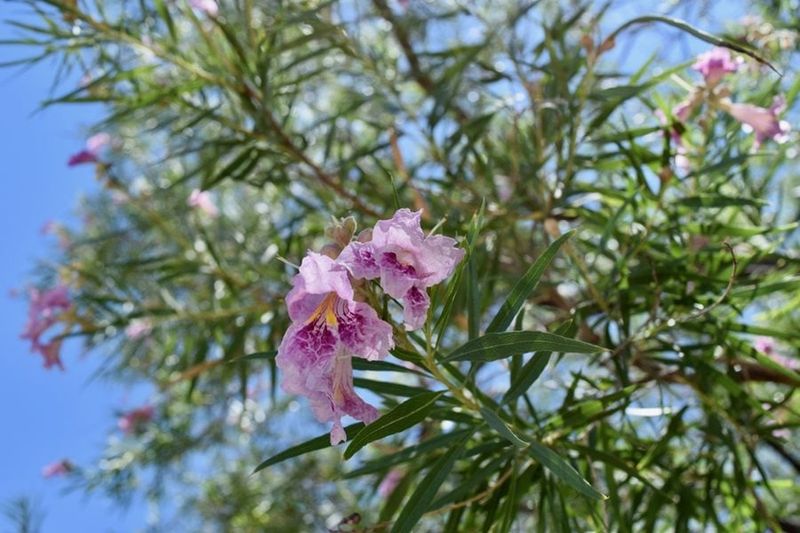
Few flowering trees in Arizona put on a show quite like the Desert Willow. Known for its long, narrow leaves and showy trumpet-shaped blooms in shades of pink, purple, lavender, and white, this tree turns heads from late spring through early fall.
It is a native of the Chihuahuan and Sonoran Desert regions, which means it is already well-suited to Arizona’s dry heat and rocky soils.
Unlike olive trees, Desert Willow produces no messy fruit and very little pollen that causes allergic reactions for most people.
It is deciduous, so it drops its narrow leaves in winter, but the trade-off is a long and colorful blooming season that olive trees simply cannot match.
Hummingbirds are frequently drawn to the flowers, adding extra life to any yard.
At maturity, Desert Willow typically reaches about 15 to 25 feet tall, making it a good fit for front yards, side yards, and areas near patios. It handles full sun well and needs only occasional deep watering once established.
Homeowners should note that it has a somewhat open, airy canopy rather than dense shade, so placement near a seating area benefits from thoughtful planning.
2. Ironwood Creates Long-Term Native Desert Shade
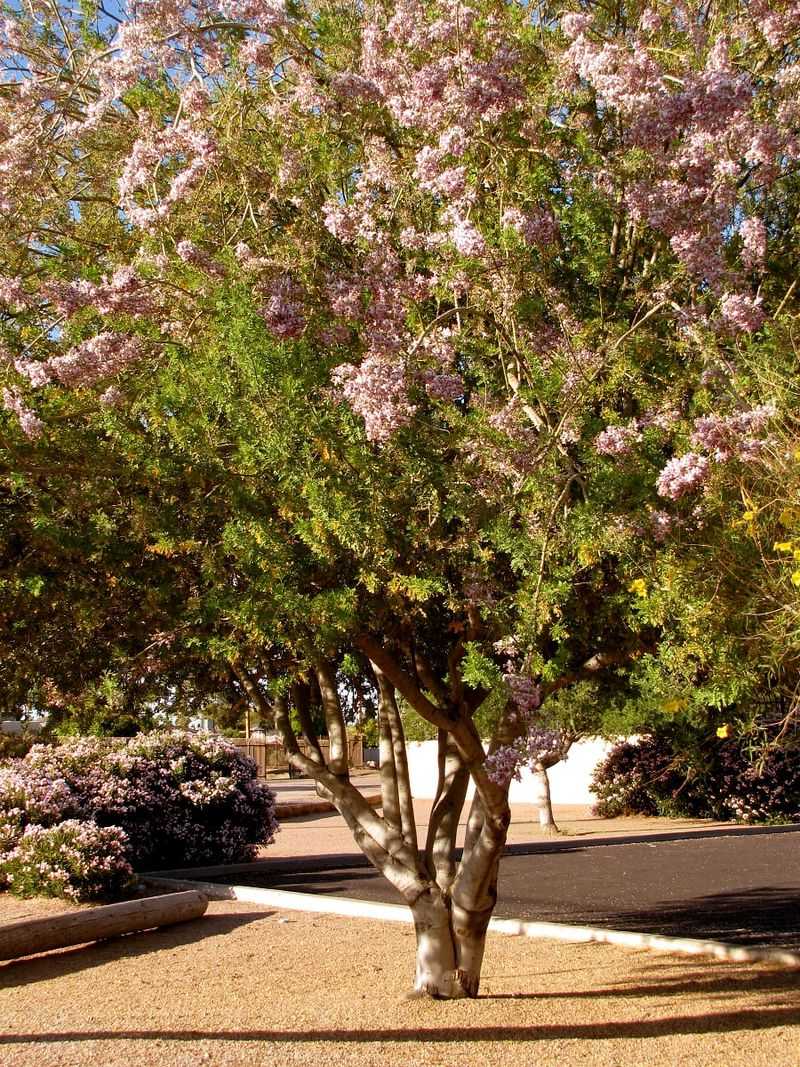
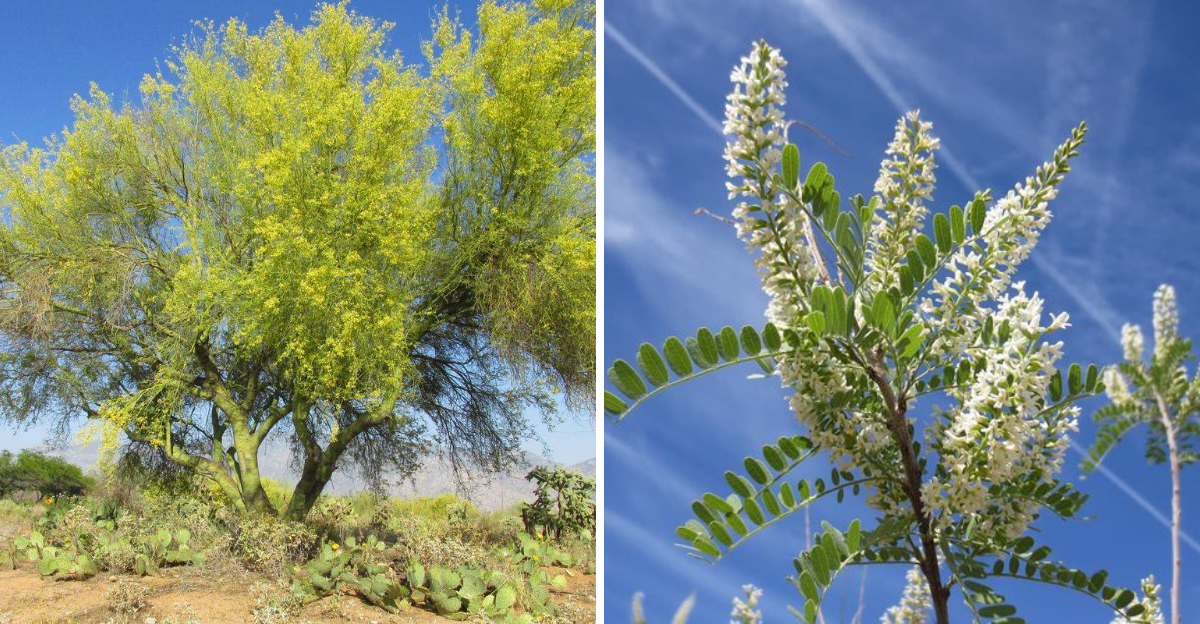
If you want a tree that feels like it truly belongs in an Arizona yard, the Desert Ironwood is hard to overlook. This slow-growing native evergreen is one of the longest-living trees in the Sonoran Desert, with some specimens estimated to be several hundred years old.
Its dense canopy and silvery-green foliage give it a rugged, natural appearance that fits well in desert-style landscapes.
Ironwood blooms in late spring with clusters of small lavender to pink flowers that attract native pollinators.
Because it is an evergreen, it provides year-round shade without significant seasonal leaf drop, which is something many Arizona homeowners appreciate when planting near patios or outdoor seating areas.
It also produces small edible seeds that wildlife, including doves and quail, tend to enjoy.
Growth is slow, so patience is needed, but the long-term payoff in shade and structure is worth it for homeowners who plan to stay in their homes.
Your Arizona Garden Changes Every Week. Your Plan Should Too.
Gardening in Arizona changes quickly throughout the season. Every Friday you’ll receive a simple weekly plan showing exactly what to plant, prune, fertilize, harvest, and protect so you never miss the right timing.
Ironwood typically reaches 15 to 30 feet at maturity and handles full sun with minimal supplemental water once established.
It does have small thorns along its branches, so placement away from high foot-traffic areas near walkways or children’s play spaces is a reasonable consideration.
3. Velvet Mesquite Offers Fast Shade For Open Yards
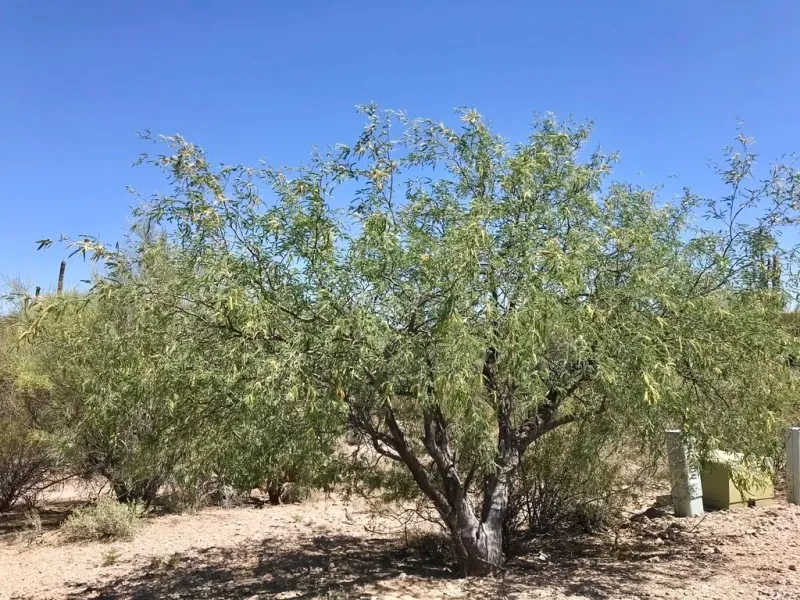
Homeowners who want shade sooner rather than later often find Velvet Mesquite to be a reliable choice. Compared to slower-growing native trees, Velvet Mesquite puts on noticeable size within a few years when given enough space and occasional deep watering.
Its wide, spreading canopy can eventually cover a large portion of a backyard, making it one of the more impressive shade providers available in Arizona landscapes.
Velvet Mesquite is native to the Sonoran Desert and tolerates the intense summer heat that defines Arizona summers without much complaint.
Its feathery, finely divided leaves filter sunlight rather than block it entirely, creating a dappled shade that many desert plants and grasses can still thrive beneath.
In spring, it produces fragrant yellow catkin-like flowers that attract bees and other beneficial insects.
One thing to keep in mind is that Velvet Mesquite can grow quite large, sometimes reaching 30 feet or more in height with an equally wide canopy spread.
It also produces seed pods that drop seasonally and has thorns, so it works better in open backyards or large side yards than in tight spaces near walkways or patios.
Thoughtful placement makes a real difference with this tree.
4. Hybrid Palo Verde Adds Bright Color And Light Shade
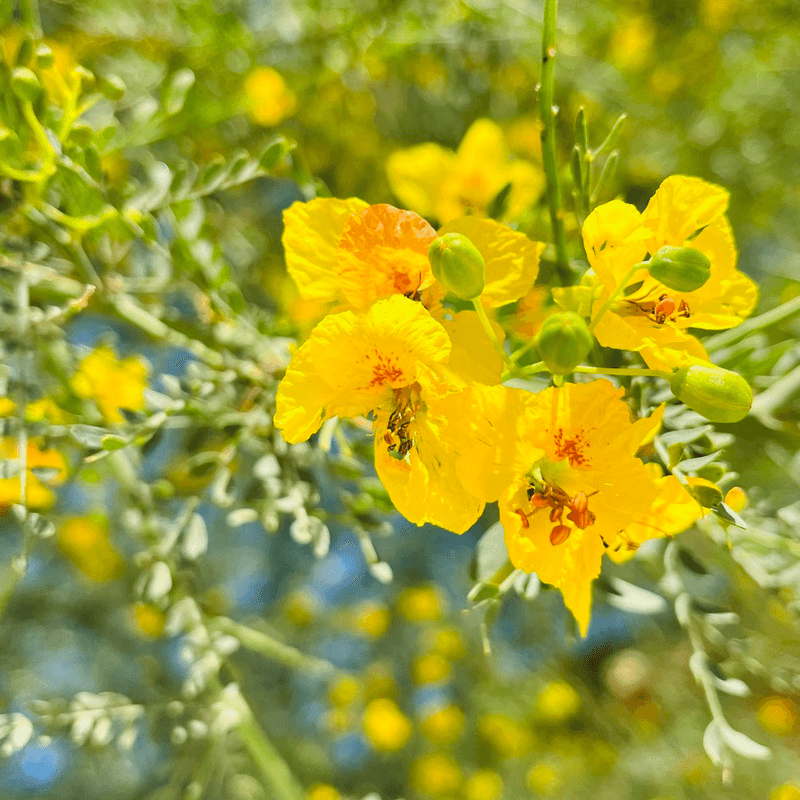
Walk through almost any newer Arizona neighborhood in spring and you are likely to spot the bright yellow blooms of a Hybrid Palo Verde, often called the Desert Museum Palo Verde.
Developed as a thornless hybrid, this tree has become a popular landscape choice across the state for good reason.
It blooms heavily in spring, offers filtered shade through summer, and requires far less water than many non-native shade trees.
One of the biggest advantages over olive trees is that Hybrid Palo Verde produces no messy fruit and very little litter beyond seasonal leaf and flower drop.
Its green bark photosynthesizes even when the tree is not in full leaf, giving it a distinctive look that stands out in desert-style planting beds.
The canopy is airy enough to allow light through, which works well over patios where you want shade without total darkness.
Hybrid Palo Verde typically reaches 20 to 30 feet tall and wide at maturity, so it needs adequate space. Because it is thornless, it is more manageable near walkways and driveways than some other desert trees.
It is also notably fast-growing for a desert tree, which appeals to homeowners who want results within a few seasons of planting.
5. Blue Palo Verde Brings Classic Arizona Spring Color
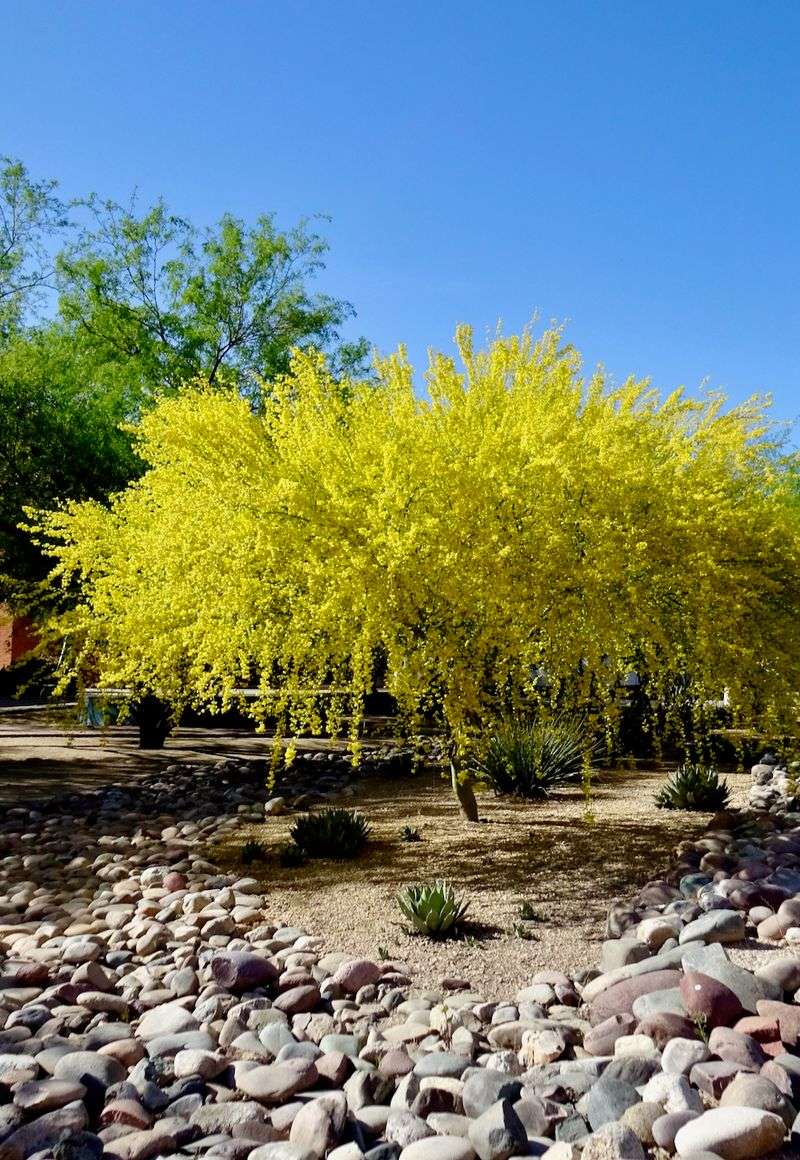
There is something genuinely exciting about watching a Blue Palo Verde burst into bloom each spring. The entire canopy transforms into a cloud of bright yellow flowers, creating one of the most recognizable seasonal displays in Arizona residential landscapes.
This native tree has been a fixture in the Sonoran Desert long before landscaping trends came and went, and it continues to earn its place in modern yards.
Blue Palo Verde gets its name from the blue-green color of its bark and stems, which carry out photosynthesis even during dry periods when the tree sheds its small leaves to conserve moisture.
This adaptation makes it exceptionally well-suited to Arizona’s summer heat and periods of low rainfall.
Compared to olive trees, it produces no fruit litter and its pollen load is generally considered lower for most residents.
Mature size typically ranges from 15 to 30 feet tall with a similar spread, and the tree does have thorns, which is worth considering when planting near play areas or narrow walkways.
Blue Palo Verde tends to work well as a canopy tree in front yards or as a focal point in open desert-style beds.
It supports native bees and other pollinators during its spring bloom, adding ecological value to any yard.
6. Foothills Palo Verde Fits Natural Desert Landscapes
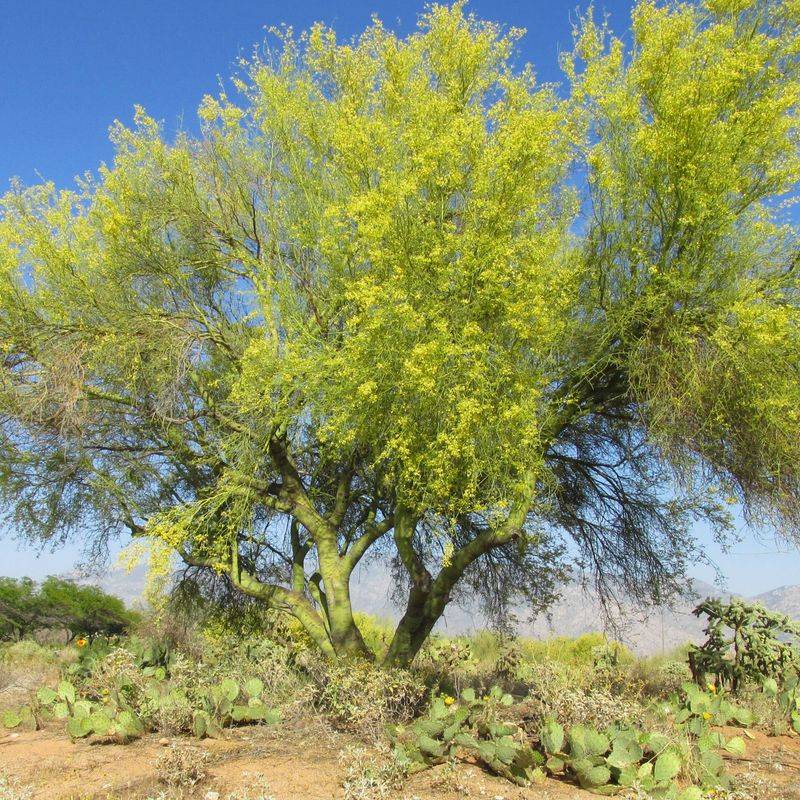
Among the native trees that feel most at home in an Arizona desert yard, Foothills Palo Verde has a quiet, understated character that suits naturalistic landscapes especially well.
It grows more slowly and stays smaller than Blue Palo Verde or Hybrid Palo Verde, which makes it a better fit for compact front yards, side yards, or planting areas where a smaller canopy is preferred.
Its yellow-green bark gives it a slightly warmer tone than its blue-green relative.
Foothills Palo Verde blooms in spring with pale yellow flowers, though the bloom is typically less dense than the showier Hybrid variety.
What it lacks in floral drama it makes up for in drought tolerance, as it is one of the most water-efficient trees available for Arizona landscapes.
Once established, it can go extended periods without supplemental irrigation, making it a practical choice for low-water front yards and xeriscape planting beds.
Like other Palo Verdes, it has thorns and a somewhat open, irregular canopy. Mature height generally ranges from 15 to 20 feet.
For homeowners aiming for a landscape that looks naturally desert-inspired rather than formally planted, Foothills Palo Verde blends in beautifully with boulders, native grasses, cacti, and other Sonoran Desert plants without requiring much intervention.
7. Canyon Hackberry Supports Wildlife-Friendly Shade
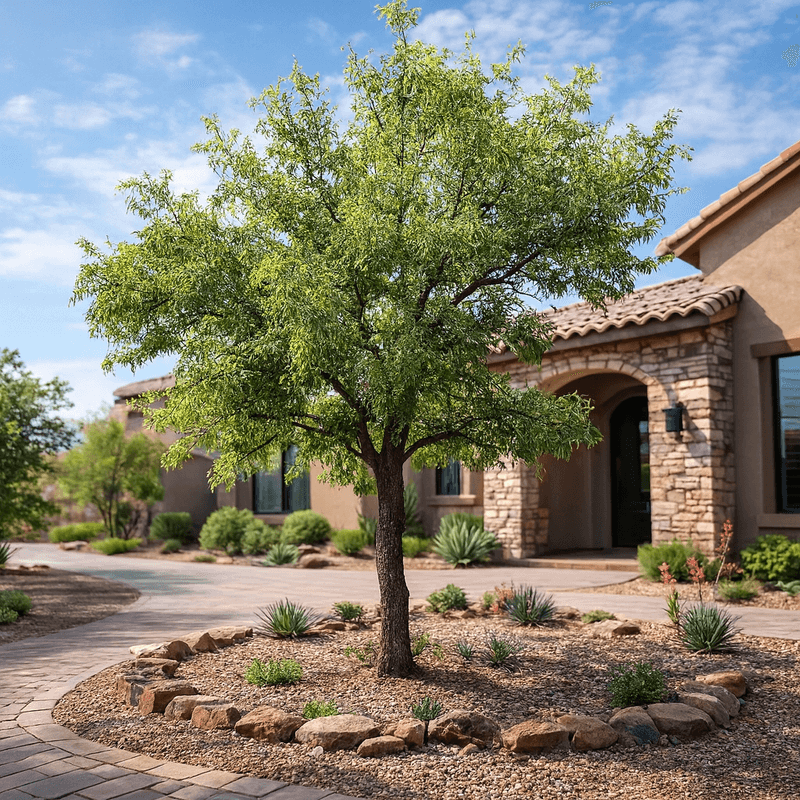
Yards that feel alive with birds and butterflies often have one thing in common – a tree that provides more than just shade. Canyon Hackberry is one of those trees.
Native to canyons, washes, and rocky slopes across Arizona, it produces small orange-red berries in fall that attract a variety of birds, including cedar waxwings, robins, and mockingbirds.
For homeowners who enjoy watching wildlife from a back patio, this tree is worth serious consideration.
Canyon Hackberry is semi-evergreen in warmer parts of Arizona and deciduous in cooler zones, so seasonal behavior can vary depending on elevation and microclimate.
It grows at a moderate rate and can reach 20 to 30 feet tall with a rounded, spreading canopy that provides genuine shade over outdoor seating areas.
Its dense leaf cover during summer makes it noticeably cooler beneath its canopy compared to some of the airier desert natives.
Unlike olive trees, Canyon Hackberry does not raise pollen concerns for most residents, and its berry litter is generally much less disruptive than olive fruit staining on patios or driveways.
It performs well in full sun and tolerates reflected heat from walls and hardscape, which is a meaningful advantage in many Arizona yards where heat buildup near structures can stress less-adapted trees.
8. Texas Ebony Adds Dense Evergreen Structure
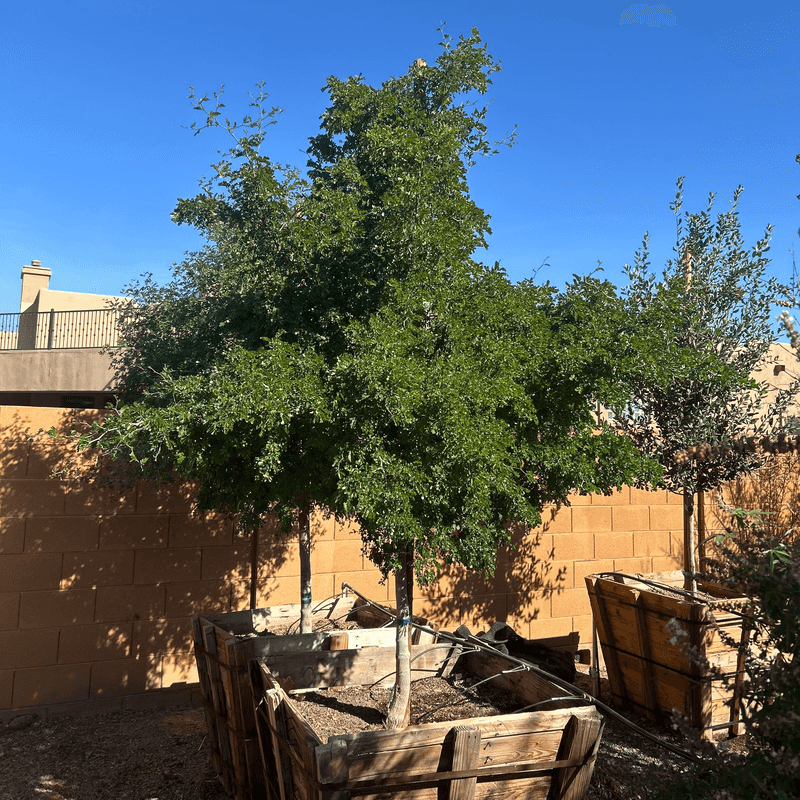
When dense, year-round canopy is the goal, Texas Ebony earns serious attention as an olive tree alternative for Arizona yards.
Its dark green, fine-textured evergreen foliage stays on through winter, which gives it a lush, full appearance even during cooler months when many other trees look bare.
It has a naturally rounded form and can be used as a shade tree, a privacy screen, or a structural anchor in a larger planting bed.
Texas Ebony is native to the Chihuahuan Desert and southern Texas, which means it handles the dry heat of Arizona without much difficulty.
It blooms in late spring to early summer with fragrant cream-colored flowers that attract pollinators, adding seasonal interest beyond its foliage value.
Mature trees typically reach 15 to 25 feet tall, though growth is slow to moderate depending on water availability and soil conditions.
One thing to keep in mind is that Texas Ebony has thorns, sometimes quite prominent ones, so placement near high-traffic areas like entryways or children’s play spaces deserves careful thought.
It works especially well along property edges, near block walls, or in backyard settings where its dense canopy can provide shade and structure without being in the way.
Water needs are low once the tree is established in Arizona soil.
9. Palo Blanco Works In Narrow Landscape Spaces
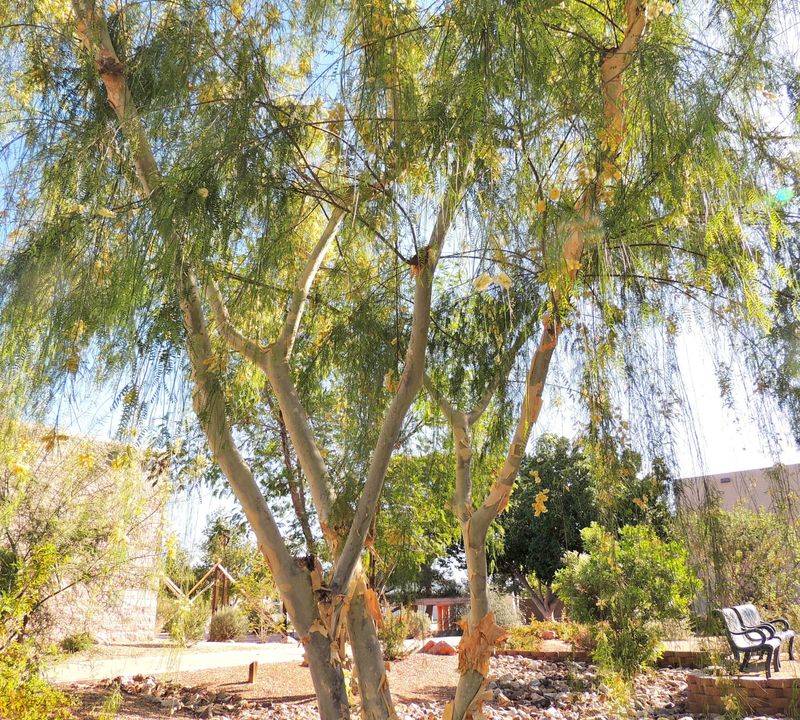
Not every Arizona yard has room for a wide-spreading shade tree, and that is exactly where Palo Blanco earns its reputation.
This tree is known for its striking white bark, fine feathery leaves, and a naturally upright, somewhat narrow growth habit that makes it a strong candidate for side yards, narrow planting strips, and spaces where width is limited but vertical interest is welcome.
It is a visually distinctive tree that tends to draw compliments from neighbors and visitors.
Palo Blanco is native to the Sonoran Desert of Mexico and southern Arizona, and it handles full sun and reflected heat with ease.
It produces small white flowers in spring that attract pollinators, and the white bark remains attractive throughout the year, giving the landscape a clean, architectural quality.
Compared to olive trees, it creates far less litter and no fruit drop concerns on driveways or walkways.
Mature height can reach 20 to 30 feet, and while the canopy is lighter and more open than a traditional shade tree, it still provides meaningful filtered shade for seating areas or desert planting beds.
Water needs are moderate when young and low once established.
Homeowners looking for something visually interesting that works in tight spots will find Palo Blanco to be a genuinely useful option.
10. Kidneywood Brings Light Shade And Soft Summer Flowers
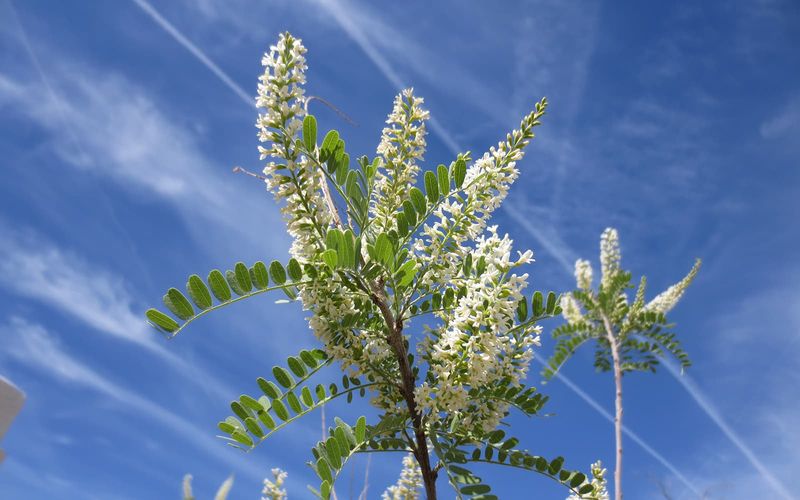
Choosing a tree that blooms in summer rather than spring can help extend the season of color in an Arizona yard, and Kidneywood does exactly that.
This lesser-known native tree produces clusters of small, fragrant white flowers during summer, which is a time when most other flowering trees in the desert have already finished their show.
The blooms attract butterflies and bees, bringing extra movement and life to outdoor spaces during the hottest months.
Kidneywood is native to the Chihuahuan Desert and rocky slopes of southern Arizona and western Texas, making it well-adapted to dry, rocky, or caliche-heavy soils that challenge many landscape trees.
It grows at a moderate rate and typically reaches 10 to 20 feet tall, which keeps it manageable in smaller yards, near patios, or along property borders where a medium-sized tree fits better than a large canopy tree.
Its light, airy canopy provides filtered rather than dense shade, so it works best in spots where some sunlight reaching the ground is acceptable. Litter is minimal, and the tree has no significant fruit drop or pollen reputation that raises concerns.
For Arizona homeowners wanting something a little different from the usual desert tree lineup, Kidneywood offers a quiet charm and a summer bloom that is genuinely hard to find elsewhere in the landscape palette.