These Arizona Flowers Stay Colorful In Containers Even During Dry Summer Weeks
Container flowers can look amazing at the start of summer, then suddenly lose their color once dry weather settles in. Blooms fade quicker, pots need water constantly, and plants that looked full in spring can start looking worn out by midsummer.
That is when the toughest flowers begin standing out from the rest.
A handful of blooms keep pushing through heat without losing their color nearly as fast. Certain varieties continue flowering even when containers warm up quickly during the day.
Others stay bright and healthy with far less effort than people expect during long dry stretches.
The difference becomes obvious once summer fully settles in. One patio still looks fresh and colorful while another already feels faded from the heat.
Arizona gardeners usually figure out quickly which flowers are reliable in containers and which ones struggle too soon. Picking the right ones can keep patios and entryways colorful much longer through summer.
1. Angelonia Keeps Blooming Through Long Dry Spells
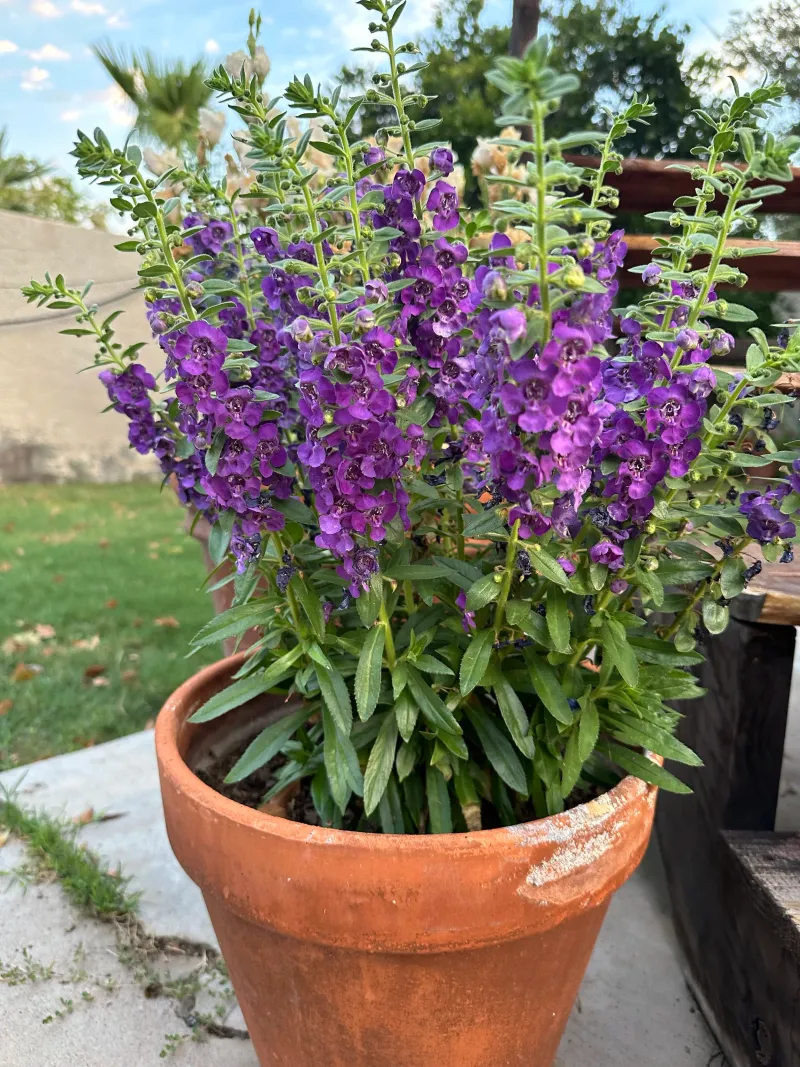
Angelonia earns its nickname “summer snapdragon” honestly. It blooms without stopping even when rainfall disappears for weeks at a time.
In hot desert climates, that kind of reliability is rare and genuinely useful.
Each flower spike carries small, orchid-like blooms in shades of purple, pink, white, or bicolor. Plants stay upright and compact, making them ideal for container edges or center placements.
They rarely flop or sprawl, which keeps pots looking tidy throughout the season.
Watering needs are moderate once established. Letting the soil dry slightly between waterings actually encourages stronger root development.
Overwatering is a bigger risk than underwatering with this plant.
Full sun is where Angelonia performs best. Partial shade can reduce bloom count noticeably.
Place containers where they receive at least six hours of direct light daily for the strongest results.
Deadheading is not required, which saves time during busy summer weeks. Old blooms drop cleanly, and new ones follow quickly.
A light trim every few weeks keeps growth dense and flowering consistent.
Fertilizing every two to three weeks with a balanced liquid fertilizer supports continuous blooming. Skip heavy feeding during extreme heat spikes, since roots are more sensitive when temperatures peak.
Angelonia stays colorful in containers from late spring well into fall across hot Southwest regions.
2. Moss Rose Opens Best Once Full Sun Arrives
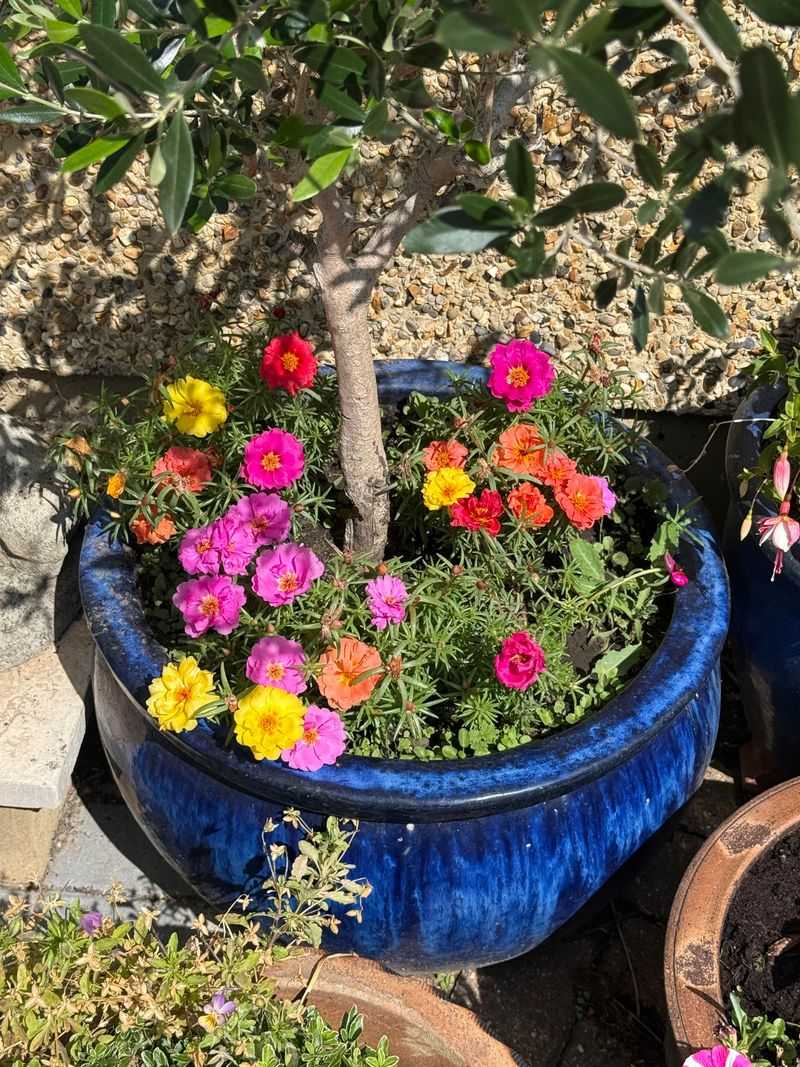
Moss Rose does something most flowers refuse to do: it gets more vibrant as temperatures rise. Cool mornings keep blooms closed, but once the sun climbs, flowers burst open in brilliant reds, oranges, pinks, and yellows.
Portulaca grandiflora, its botanical name, stores water in its thick, needle-like leaves. That built-in reserve system lets it push through days without irrigation without showing visible stress.
Containers dry out fast in desert heat, and Moss Rose handles that reality better than almost anything else.
Sandy or gritty potting mix suits it well. Heavy soil that retains too much moisture can cause stem rot near the base.
Adding perlite to standard potting mix improves drainage significantly.
Plant it in shallow containers where roots stay warm. Deep pots hold excess moisture that Moss Rose does not need.
Your Arizona Garden Changes Every Week. Your Plan Should Too.
Gardening in Arizona changes quickly throughout the season. Every Friday you’ll receive a simple weekly plan showing exactly what to plant, prune, fertilize, harvest, and protect so you never miss the right timing.
Shallow terracotta or clay pots work especially well because they dry evenly and breathe naturally.
Blooms self-seed generously if left to mature. Collecting seeds at the end of season is easy, and they germinate reliably the following spring.
Starting from transplants gives faster results in short growing windows.
No deadheading needed here either. Spent flowers close up and fall away on their own.
New buds replace them within days, keeping the color display strong through even the harshest dry stretches of summer.
3. Vinca Keeps Flowering Even In Reflective Heat
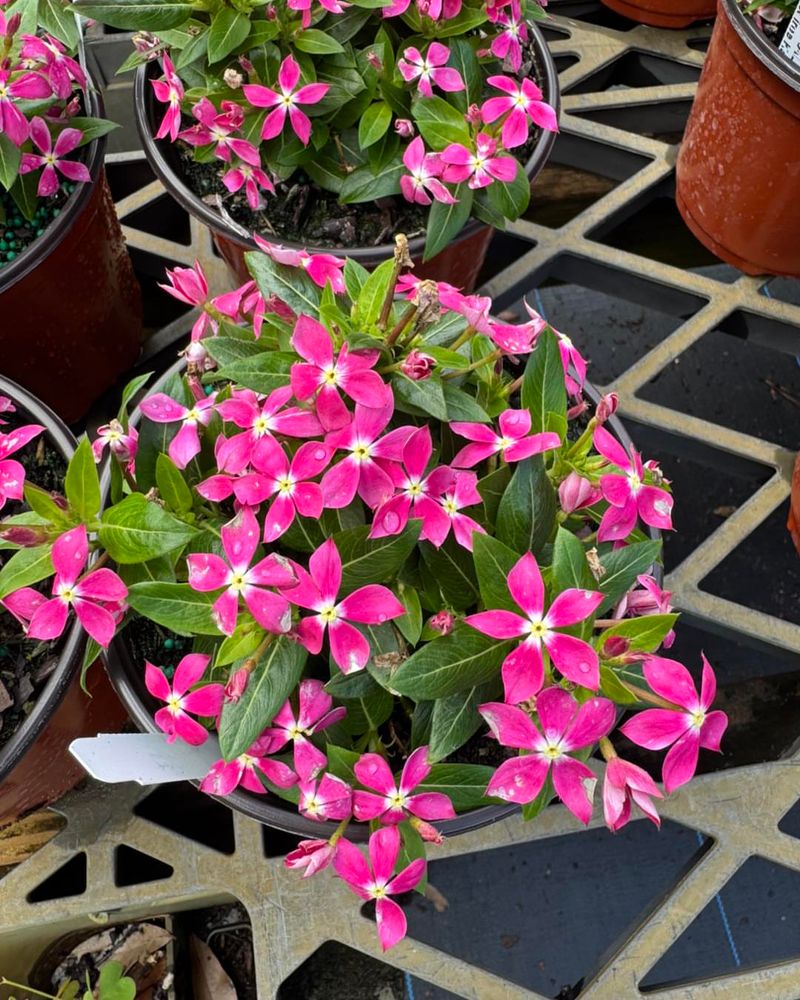
Reflected heat off walls, concrete, and pavers pushes temperatures near containers well past what a thermometer reads in the shade. Vinca, also called Catharanthus roseus, handles that reflected intensity without flinching.
Blooms appear in clean, flat rounds of pink, red, white, coral, and bicolor combinations. Each flower sits cleanly against dark green, glossy foliage that stays attractive even between bloom cycles.
The contrast makes containers look polished with minimal effort.
Vinca prefers well-draining soil and does not appreciate sitting in wet conditions for extended periods. Root rot is a real concern if drainage holes are blocked or pots sit in standing water.
Elevating containers slightly improves airflow and drainage around the base.
Once established, Vinca tolerates skipped waterings better than many annuals. It sends out a mild stress signal through slightly drooping leaves before any real damage occurs.
That early warning gives gardeners time to water before the plant suffers.
Fertilize monthly rather than weekly. Too much nitrogen pushes leaf growth and reduces flower production.
A bloom-boosting fertilizer with higher phosphorus content keeps flowering consistent through summer.
Vinca handles full sun exposure for eight or more hours daily without showing sun scorch on leaves. That tolerance makes it ideal for south-facing patios and west-facing walls where heat builds up fastest.
Containers stay colorful from spring planting through the first cool nights of fall in hot desert locations.
4. Globe Amaranth Holds Its Color For Weeks
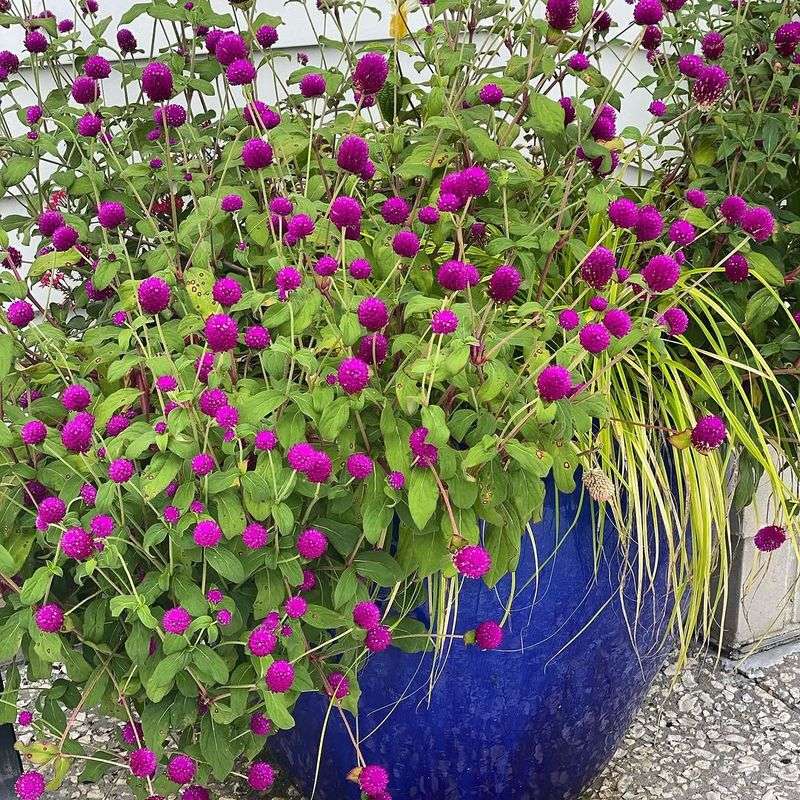
Globe Amaranth looks like someone pressed the color into permanent form. Its round, clover-shaped blooms resist fading even after weeks of relentless sun and dry air.
Most flowers lose intensity as summer drags on, but this one holds firm.
Colors range from deep magenta and purple to orange, white, and pale lavender. Blooms keep their appearance so well that they are commonly dried for arrangements without losing much color.
Fresh or dried, they stay visually strong for an unusually long time.
Heat tolerance in Globe Amaranth comes from its tropical origins. It evolved in warm, dry regions and adapted to conditions that stress most ornamental plants.
Container gardeners in hot desert climates benefit directly from that natural resilience.
Soil moisture matters less to Globe Amaranth than to most annuals. Watering every few days during extreme heat is usually enough.
Between waterings, the plant stays upright and keeps producing new buds without visible stress.
Plants grow to about twelve to eighteen inches tall in containers. That moderate height works well as a center planting surrounded by lower-growing trailers.
Compact varieties stay even shorter and suit smaller pots nicely.
Deadheading spent blooms encourages faster new bud production. Pinching back tips early in the season creates bushier plants with more branching.
More branches mean more bloom sites, which extends the colorful display well into the later weeks of summer across desert Southwest gardens.
5. Trailing Verbena Spreads Quickly Around Pot Edges
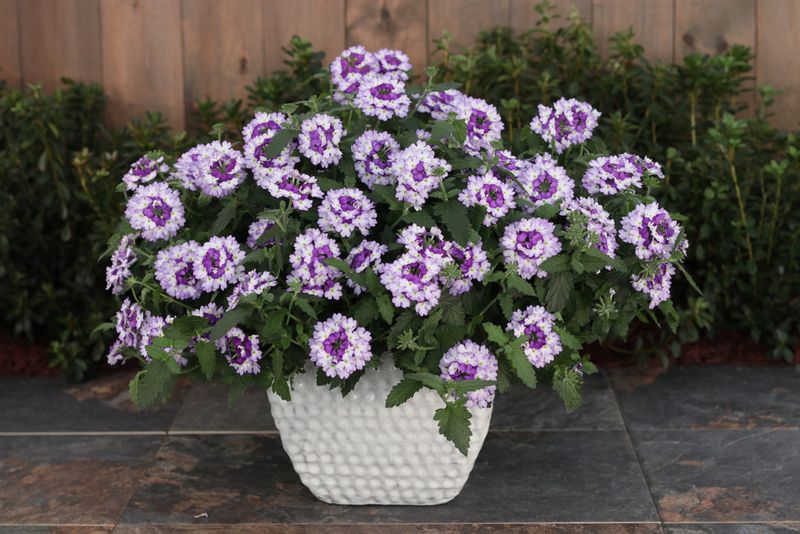
Trailing Verbena does not sit politely in a container. It spreads outward, spills over edges, and covers bare pot sides with clusters of small, bright flowers in a matter of weeks.
That spreading habit is exactly what makes it so useful for container displays.
Colors include purple, pink, red, coral, and white. Many varieties offer two-toned blooms with contrasting centers that add visual depth.
Planted alone or combined with upright flowers in the center of a pot, Verbena creates a finished, layered look quickly.
Heat tolerance varies slightly by variety. Look for varieties specifically labeled as heat-tolerant or bred for warm climates.
Standard Verbena hybrids bred for cooler regions may struggle in intense desert summer conditions.
Water regularly but allow the top inch of soil to dry between sessions. Verbena is more sensitive to overwatering than underwatering once roots are established.
Good drainage prevents the crown rot that can develop in wet, compacted soil.
Pinching back trailing stems by a few inches every couple of weeks encourages denser growth and more bloom sites. Left untrimmed, stems can become bare at the base with flowers only at the tips.
A quick trim keeps the whole plant looking full and colorful.
Fertilize every two weeks with a balanced liquid formula. Verbena is a moderate feeder and rewards consistent nutrition with stronger color and faster regrowth after trimming.
It stays attractive on patios and balconies across hot desert regions all season long.
6. Cuphea Keeps Hummingbirds Returning During Hot Weather
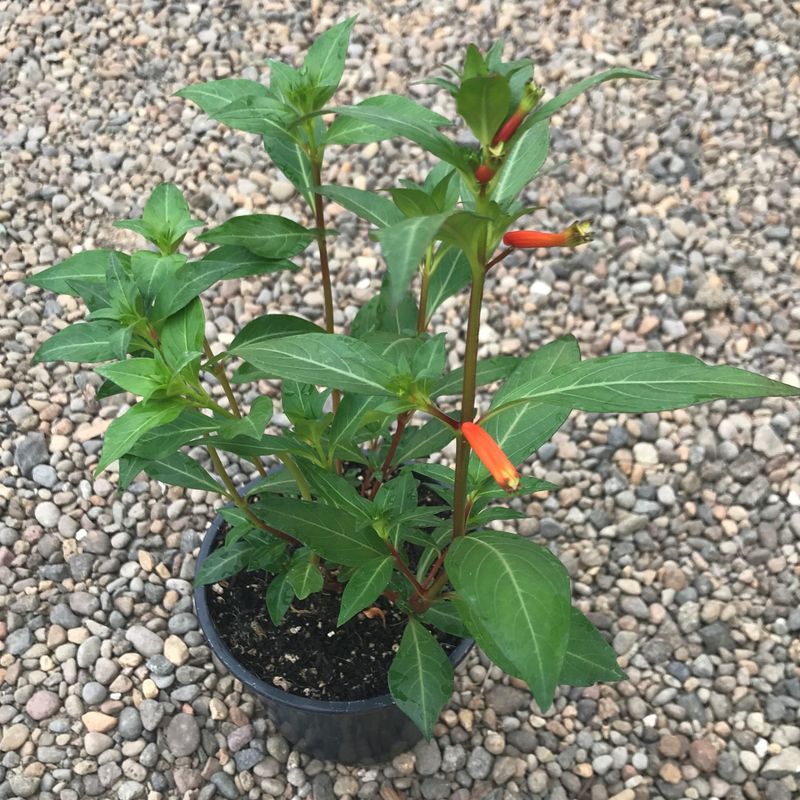
Cuphea is not flashy from a distance, but up close it rewards attention with tiny, tubular flowers that look almost crafted by hand. Hummingbirds figure this out fast and return to containers repeatedly once they find it.
Two popular types suit hot desert conditions well. Cigar plant, Cuphea ignea, produces red-orange tubes tipped in white and purple.
Bat-faced Cuphea, Cuphea llavea, offers larger blooms in deep red and purple with a distinctive face-like appearance that draws curious looks from visitors.
Both types handle heat without major stress once established in containers. Root systems are relatively compact, making mid-sized pots appropriate for most plantings.
Larger containers allow for fuller growth and more bloom sites overall.
Watering every two to three days during peak summer heat keeps Cuphea performing well. Soil should not stay soggy, but it also should not dry completely between waterings the way drought-tolerant succulents can.
A balance of consistent moisture without saturation works best.
Trim plants back by about a third if they start to open up and lose density. New growth fills in quickly, and fresh blooms appear on new stems within a couple of weeks.
Regular light trimming keeps plants compact and productive through the hottest stretch of the season.
Fertilize every two to three weeks with a bloom-focused formula. Cuphea responds well to consistent feeding and maintains strong flower production from late spring through early fall in hot, dry locations across the desert Southwest.
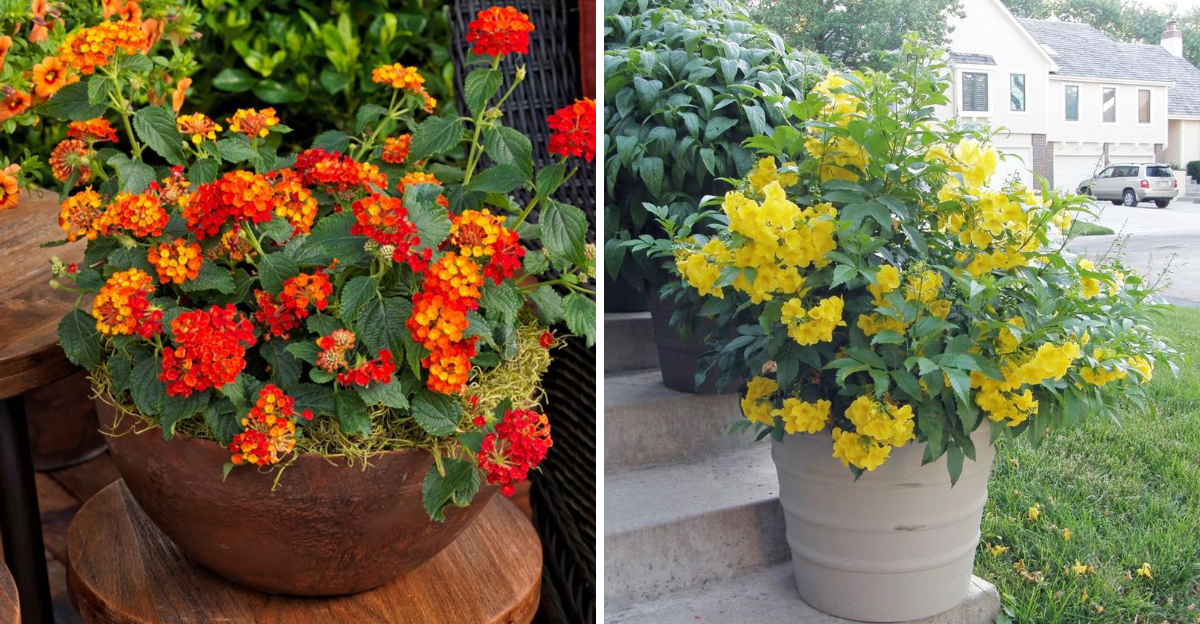
7. Lantana Handles Hot Containers Better Than Many Flowers
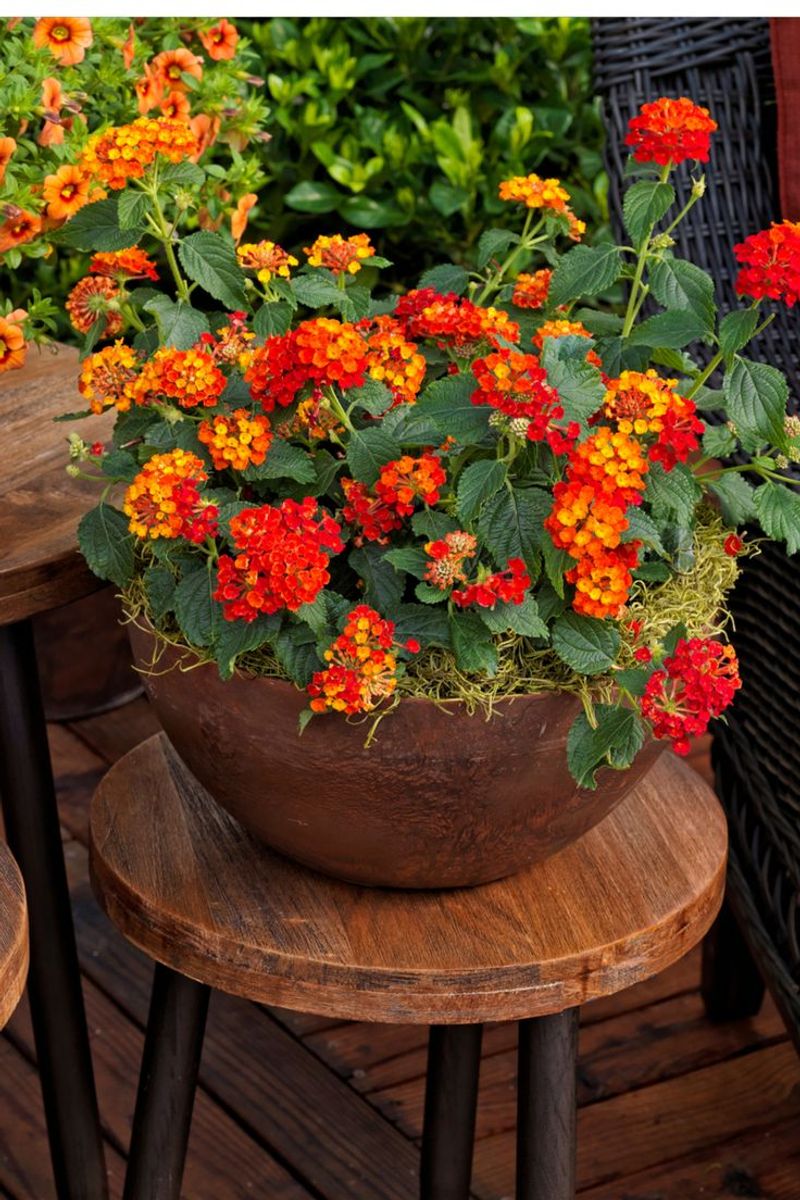
Lantana laughs at heat. Seriously, the hotter and drier conditions get, the more it seems to thrive.
Other plants retreat during peak summer weeks, but Lantana keeps producing tight clusters of color without skipping a beat.
Bloom clusters shift color as they age, which creates a multi-toned effect on a single plant. Combinations of orange, yellow, pink, and red appear simultaneously on the same flower head.
That natural variation makes containers look more dynamic than a single-color planting would.
Root-bound conditions in containers actually encourage more flowering. Lantana does not need a huge pot to perform well.
A moderately sized container keeps roots slightly restricted, which pushes the plant toward blooming rather than excessive leafy growth.
Water deeply but infrequently. Letting soil dry out between waterings mimics its native tropical and subtropical habitat.
Consistent moisture encourages leaf growth at the expense of flowers.
Butterflies and bees visit Lantana constantly during warm months. Placing containers near seating areas adds movement and life to outdoor spaces.
Hummingbirds also stop by, especially when red or orange varieties are planted.
Trim plants back by about a third in midsummer if they start looking leggy. New growth follows quickly and brings a fresh flush of blooms.
Lantana bounces back fast after pruning, which makes it easy to manage in containers across hot Southwest patios and courtyards.
8. Yellow Bells Keep Producing Flowers Through Summer
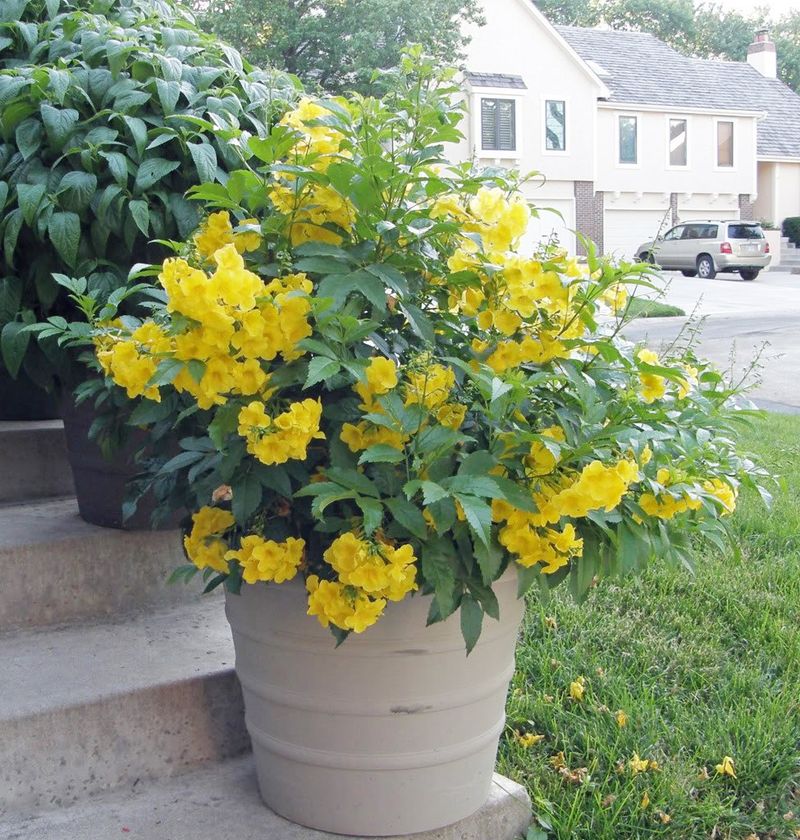
Yellow Bells bring a bold, shrubby presence to containers that most annuals simply cannot match.
Tecoma stans, its botanical name, pushes out trumpet-shaped yellow flowers in waves from late spring through fall without much encouragement.
Native to the Sonoran Desert region, it evolved specifically for dry, hot conditions. That origin story means it does not need babying.
It grows in rocky, nutrient-poor soils in the wild and performs well in containers with standard potting mix and good drainage.
Container size matters with Yellow Bells. A large pot gives roots space to develop and supports the plant’s naturally vigorous growth.
Smaller pots restrict it more aggressively and may require more frequent watering to compensate for limited soil volume.
Flowers attract hummingbirds reliably throughout the warmer months. Placing a Yellow Bells container near a window or seating area creates a natural wildlife viewing spot.
Bees visit frequently as well, adding extra movement to the garden space.
Prune back after each major bloom flush to encourage fresh branching. New growth appears quickly after trimming, and flower buds follow within a few weeks.
Skipping pruning leads to leggy, open growth that looks less full in containers.
Fertilize monthly with a balanced formula to support consistent flowering. Avoid heavy nitrogen applications, which push leaf growth over blooms.
Yellow Bells stays productive through the longest and driest stretches of desert summer with minimal intervention from the gardener.