8 Reasons North Carolina Blueberries Stop Producing After A Few Years (And The Fixes That Work)
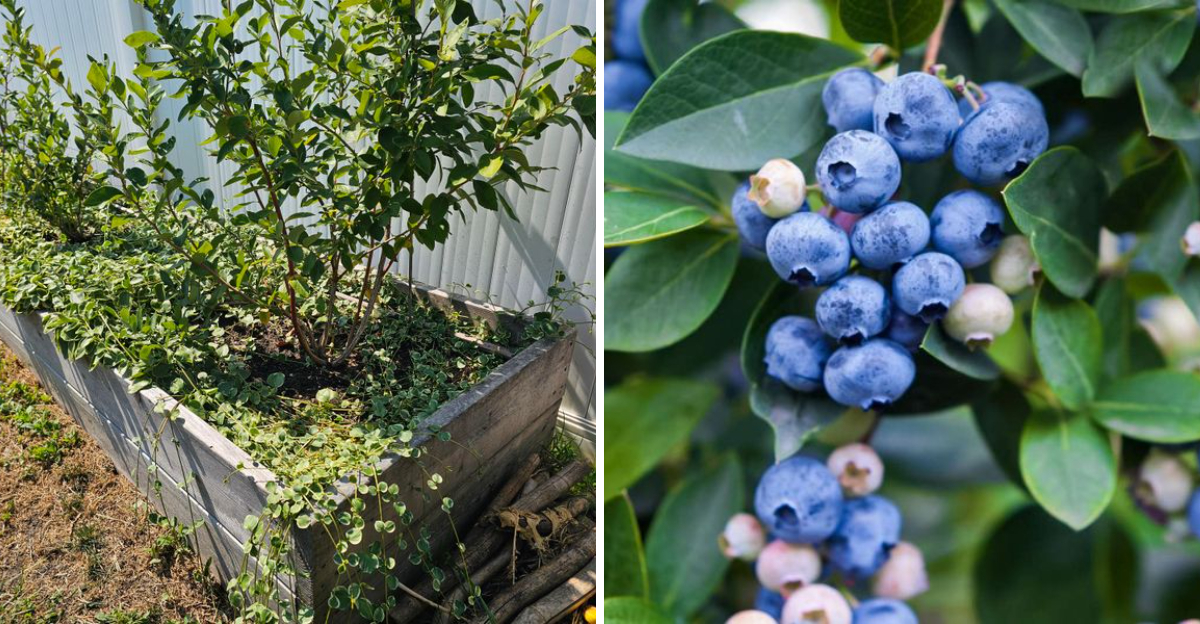
The blueberry bushes look healthy.
Full leaves. No obvious stress. No visible pests. The kind of plants that should be producing bowls of berries every summer without much complaint.
And yet the harvest keeps shrinking. The berries get fewer. The seasons pass without the easy production those first years seemed to promise.
North Carolina blueberry growers know this pattern well. Plants that started strong can plateau, then slowly pull back, and nothing above the soil line explains why.
The soil looks fine. The watering seems steady. The fertilizer went in on schedule.
The real reasons usually hide in pH numbers, cane age, mulch depth, variety choice, and drainage. Small shifts change the whole growing environment long before the plant looks like it is asking for help.
The good news is that each problem has a specific fix. Most patches do not need to be replaced. They need the right clue followed in the right direction.
That is where the real blueberry comeback begins.
1. Start With Soil pH Drift
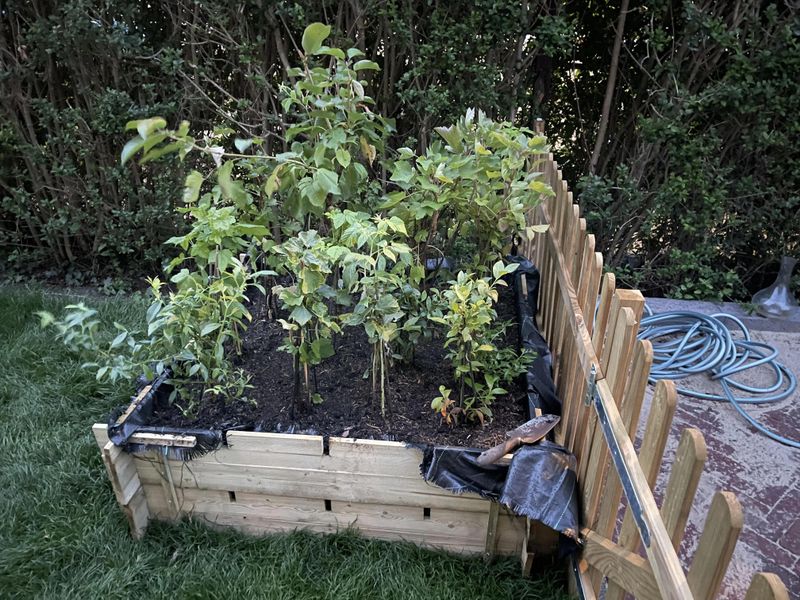
The blueberry patch looks green and full. The canes are upright and leafy. Nothing appears to be wrong from a distance.
But the harvest keeps shrinking, and the explanation is happening underground where no one can see it without a test kit.
Blueberries need a soil pH between 4.5 and 5.5 to absorb nutrients properly.
When that number climbs toward 6.0 or higher, iron, manganese, and other essential minerals become chemically unavailable to the roots even when they are physically present in the soil. The plant is surrounded by food it cannot eat.
North Carolina soils drift in this direction for completely ordinary reasons. Irrigation water, rainfall, and routine fertilizing all push pH upward gradually over years.
The shift is slow enough that growers rarely notice until production has already dropped significantly across multiple seasons.
This drift is the most common reason established North Carolina blueberry plantings slow down after three to five years.
There is no dramatic event that signals the problem. Yields just shrink quietly, year after year, until the gap between expectation and harvest becomes impossible to ignore.
The encouraging part is that pH drift is completely normal and completely reversible. Bringing the number back into the right range restores nutrient availability and typically improves berry set within one to two growing seasons.
Before reaching for any amendment, though, the actual pH number needs to be confirmed.
Guessing and adding sulfur blindly can push the soil too far in the wrong direction, which creates an entirely new set of problems for the root system waiting just below the surface.
2. Test Soil Before Any Fix
Fixing blueberry problems without a soil test is like trying to navigate without knowing the starting point. The destination might be correct, but the route is a series of expensive guesses that can make the situation worse before it gets better.
A soil test from the NC Department of Agriculture and Consumer Services costs very little and returns precise numbers for pH, phosphorus, potassium, calcium, and magnesium.
Your North Carolina Garden Changes Every Week. Your Plan Should Too.
Gardening in North Carolina changes quickly throughout the season. Every Friday you’ll receive a simple weekly plan showing exactly what to plant, prune, fertilize, harvest, and protect so you never miss the right timing.
That single report tells exactly what the soil needs and, just as importantly, what it already has too much of.
Collecting samples correctly matters for accurate results. Pull soil from several spots around the blueberry patch and mix them together before sending the sample in.
Sample at a depth of four to six inches where most feeder roots are actively working. Testing every one to two years for fruit crops gives a running picture of how soil conditions are shifting across seasons.
Over-application of lime is one of the most frequently seen mistakes in struggling North Carolina blueberry patches.
A grower assumes the soil needs lime because vegetables respond well to it, adds too much, and pushes the blueberry pH well above the functional range. A soil test would have caught that error before a single bag was opened.
Test results from the state lab include specific amendment recommendations calibrated to the crop type selected.
When blueberries are listed, the report provides precise guidance on how much sulfur to add per thousand square feet based on the actual numbers rather than estimates.
Accurate information is always cheaper than correcting a mistake that accurate information would have prevented.
3. Lower pH With Sulfur Carefully
Elemental sulfur is the most reliable tool for lowering blueberry soil pH in North Carolina, but it operates on a timeline that requires patience rather than urgency.
Soil bacteria convert sulfur into sulfuric acid over weeks and months rather than days. Applying it and expecting immediate results leads to over-application, which can stress roots and slow growth significantly.
No more than one pound of elemental sulfur per hundred square feet should go down in a single application for established plants.
Bigger pH corrections should be split across two seasons rather than applied all at once. Fall is the best timing, giving the sulfur a full off-season to work before the next growing season begins.
Working sulfur lightly into the top two inches of soil and watering it in thoroughly gets the material moving toward the root zone without aggressive tilling.
Blueberry roots are shallow and fine. Deep tillage tears through root structure that the plant depends on for water and nutrient uptake, so a gentle rake-in is the correct technique regardless of how tempting a thorough soil turnover might look.
Wettable sulfur products can be applied as a drench for somewhat faster results, though the timeline still runs weeks rather than days.
Retesting soil three to six months after any sulfur application before deciding whether another round is needed is the only reliable way to know whether the correction is complete or still in progress.
The soil will confirm when it is ready. The soil probe gives that answer faster than the berry harvest will.
4. Refresh Pine Bark Mulch
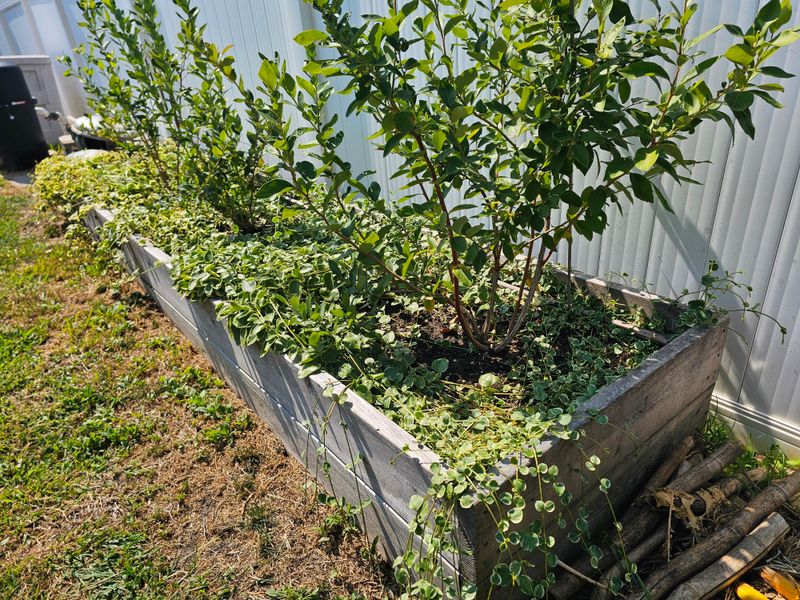
Pine bark mulch does more work around a blueberry planting than most growers credit it for.
A fresh four to six inch layer holds moisture, moderates soil temperature, suppresses competing weeds, and slowly releases organic acids that help maintain the acidic pH range blueberries require.
That combination of benefits is significant enough that neglecting the mulch layer affects the whole planting system.
After two or three years, the original mulch compacts and decomposes to a thin dark layer that retains almost none of its original volume or function.
Soil underneath dries out faster in summer, warms up more in winter, and drifts toward a higher pH without the buffering protection that fresh organic material provides.
Many growers do not realize the mulch has essentially vanished until they dig down and find almost nothing where there used to be several inches of material.
Pine bark nuggets and pine bark fines are both appropriate choices for blueberries. Pine needles work well and are widely available across North Carolina.
Dyed wood mulch, cypress mulch, and high-pH materials should all be avoided. The mulch layer needs refreshing every one to two years to maintain the depth that actually provides the benefits listed above.
Keeping mulch pulled back two to three inches from the main stem prevents moisture from sitting directly against the bark through wet seasons.
Mulch is doing more work in that bed than it gets credit for. Refreshing it is one of the simplest investments available in blueberry maintenance.
5. Prune Old Canes For New Growth
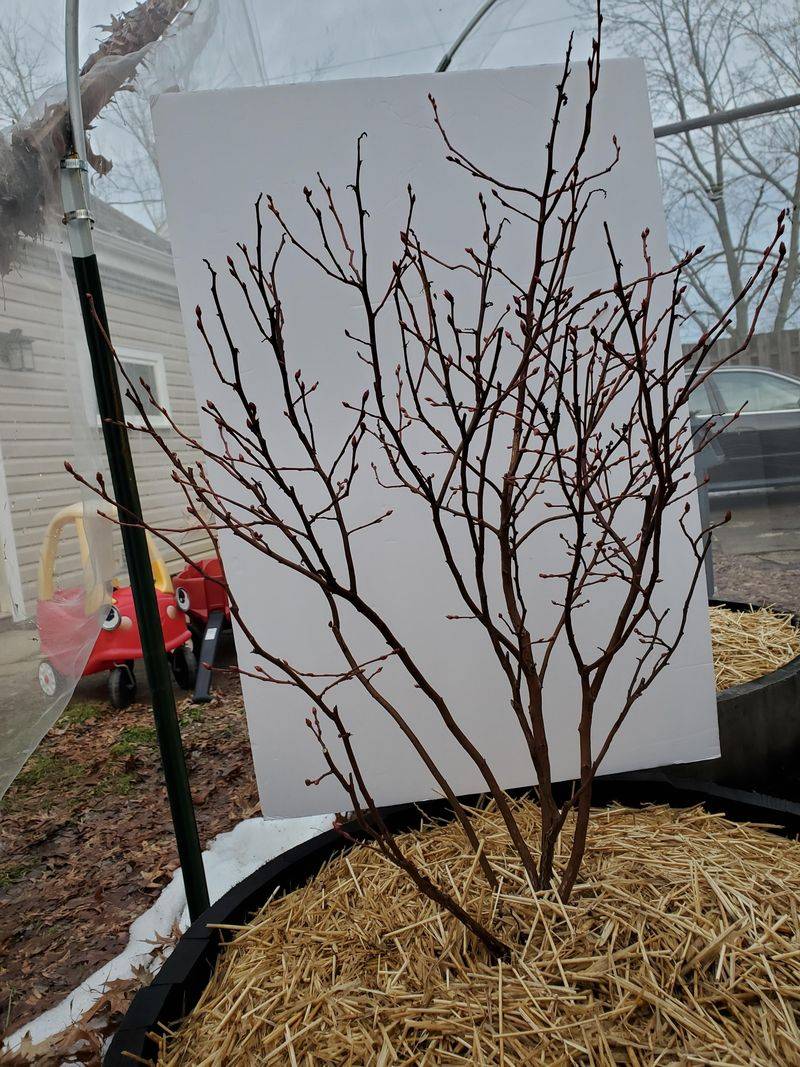
Old canes are productivity thieves with very good disguises. They look like productive parts of the bush. They are thick, established, and visually substantial.
What they are actually doing is consuming resources that should be going toward fruit production on the younger, more productive wood growing alongside them.
Blueberries produce their best fruit on canes that are two to five years old. Once a cane passes that age, it shifts energy toward maintaining itself rather than setting berries.
A bush full of thick, gnarled, six or seven-year-old canes will bloom sparsely and disappoint at harvest regardless of how carefully everything else is managed.
Late winter just before bud break is the correct pruning window for North Carolina blueberries. The thickest, oldest canes come out first.
Any cane exceeding about an inch in diameter at the base is a candidate for removal. Cut as close to the ground as possible.
Crossing branches, twiggy growth crowding the top of the plant, and canes growing horizontally along the ground all get removed in the same session.
A mature blueberry bush in good condition carries about six to eight healthy canes of varied ages. That structure keeps the plant continuously renewing itself.
New canes sprouting from the base each year are the future of the harvest, so protecting them as old growth comes out is just as important as the removal itself.
Sharp, clean bypass pruners make the work easier and leave cuts that seal over properly rather than tearing bark that takes longer to recover.
6. Add Acid Forming Fertilizer Correctly
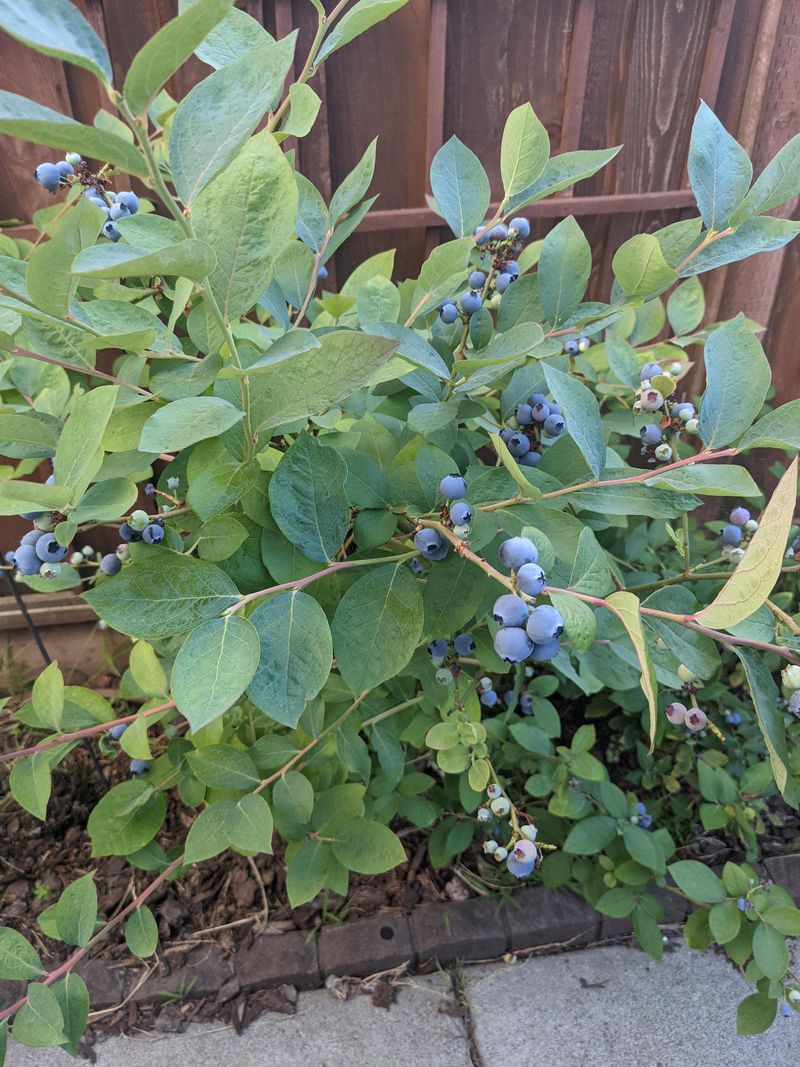
Not all fertilizers are compatible with blueberry chemistry.
Standard garden fertilizers that use nitrate-based nitrogen raise soil pH over time, which is the direct opposite of what a blueberry planting needs.
Applying them consistently while wondering why the pH keeps climbing is one of the more common circular problems in blueberry care.
Ammonium-based nitrogen is the correct choice, with ammonium sulfate being the most widely recommended product for North Carolina blueberries.
It feeds the plant while providing a mild acidifying effect on the soil over time, which works with the planting’s pH requirements rather than against them.
Starting with about one ounce per plant in the first year and increasing the rate gradually as the plant matures keeps fertilizer additions proportional to plant size.
Timing matters as much as product selection. One application in early spring as buds begin to swell and a second application four to six weeks later divides the feeding across the period when the plant can actually use it productively.
No fertilizer should go down after mid-July in North Carolina. Late-season nitrogen pushes soft new growth that has no time to harden before cooler weather arrives.
That tender late-season growth is vulnerable to cold injury, which weakens the plant heading into the dormant period and reduces the following season’s performance.
Spreading fertilizer evenly under the drip line rather than piling it against the stem and watering it in thoroughly after each application completes the process correctly.
More fertilizer has never produced more berries. Correct fertilizer at the correct time reliably does.
7. Improve Drainage With Raised Beds
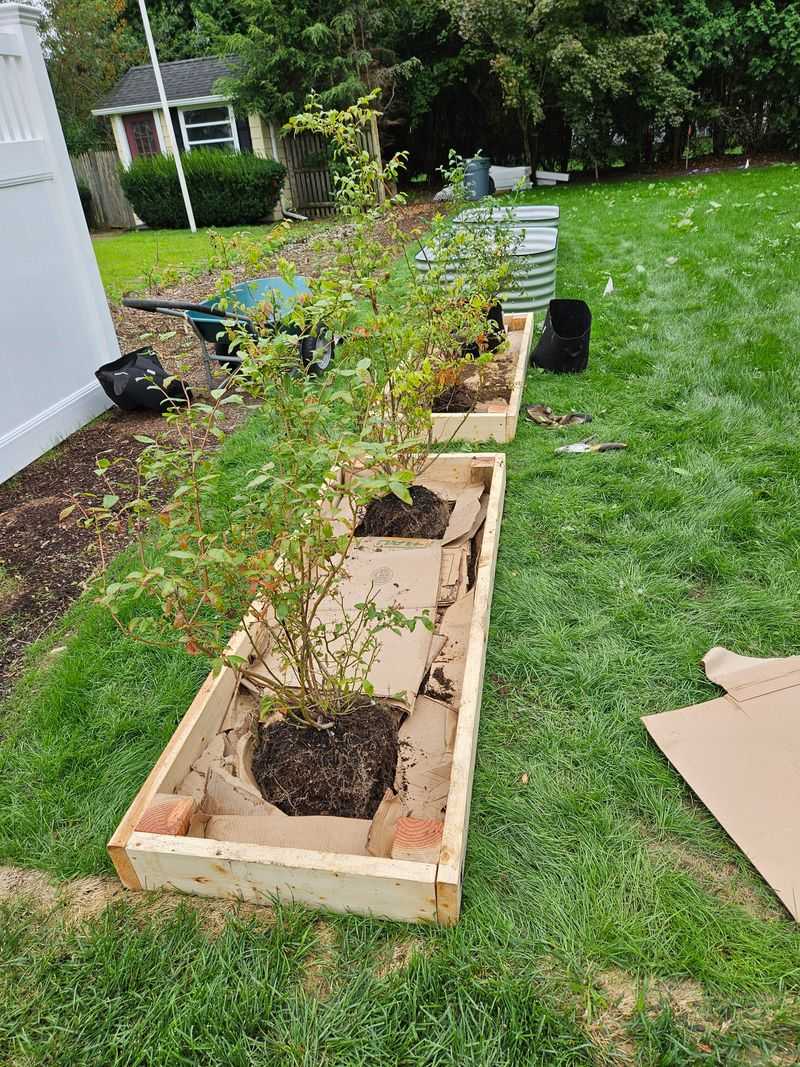
Waterlogged roots produce symptoms that look like nutrient deficiency, disease, or general decline.
The plants look stressed. The leaves lose color. The harvest shrinks. Growers address the visible symptoms with fertilizer and pH corrections while the actual problem sits in saturated soil below the root zone.
Blueberry roots need oxygen as much as they need water. Soil that stays saturated for extended periods cuts off that oxygen supply and breaks down root function progressively.
Nutrient uptake slows, energy shifts toward basic survival rather than fruit production, and the planting deteriorates despite everything happening above ground looking reasonable.
Heavy clay soils common across the North Carolina Piedmont hold water longer than blueberry roots can tolerate.
Raised beds built eight to twelve inches above grade provide the well-drained environment the root system requires. A blend of pine bark fines, coarse sand, and native topsoil creates the right growing medium.
Straight topsoil or clay fill compacts over time and recreates the drainage problem the raised bed was meant to solve.
Growers in the Coastal Plain sometimes use mounded rows rather than constructed beds, which achieves the same drainage benefit with considerably less physical construction involved.
For established plantings where rebuilding is impractical, working several inches of composted pine bark into the surrounding soil and maintaining a deep mulch layer on top creates meaningfully better conditions.
Drainage problems are quiet and slow-moving. By the time the harvest reflects the issue clearly, the roots have been struggling for longer than most growers realize.
8. Plant The Right Blueberry Type
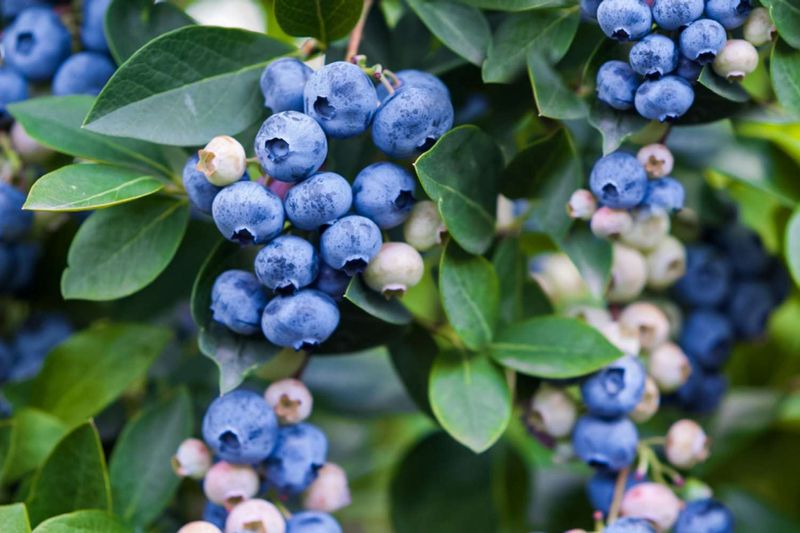
Variety selection is frequently the first mistake made in a blueberry planting and the last one diagnosed when production declines.
North Carolina spans multiple climate zones, and blueberry types respond very differently depending on where they are grown.
A variety perfectly suited to one part of the state underperforms or gradually declines in another.
Rabbiteye blueberries including varieties like Tifblue and Climax thrive in the warmer Piedmont and Coastal Plain regions.
Southern highbush varieties such as O’Neal and Reveille perform better in the cooler western areas of the state.
Northern highbush varieties suited to higher chill hour requirements consistently underperform in the Piedmont, where winters rarely deliver the extended cold those plants need to complete dormancy and bloom reliably.
Without adequate chill hours, northern highbush plants bloom erratically, set fruit poorly, and decline slowly across multiple seasons.
Growers working with these mismatched plants spend years trying to fix a fundamental compatibility problem through soil management and fertilizer adjustments that cannot address the underlying issue.
Rabbiteye varieties handle drought better and adapt more comfortably to the slightly higher pH soils found across much of the state.
They tend to be longer-lived and more productive once established, though cross-pollination with a second different compatible variety is required for good fruit set.
At least two compatible varieties planted in proximity is the standard recommendation.
Current variety performance data specific to North Carolina trial sites is available from the state extension system and is updated regularly as new information comes in.
Matching the variety to the region is the highest-value decision in blueberry planning. Everything else is much easier to fix than a fundamental mismatch between plant and place.