These Are The North Carolina Vines You Plant Once And They Cover Ugly Fences For Decades
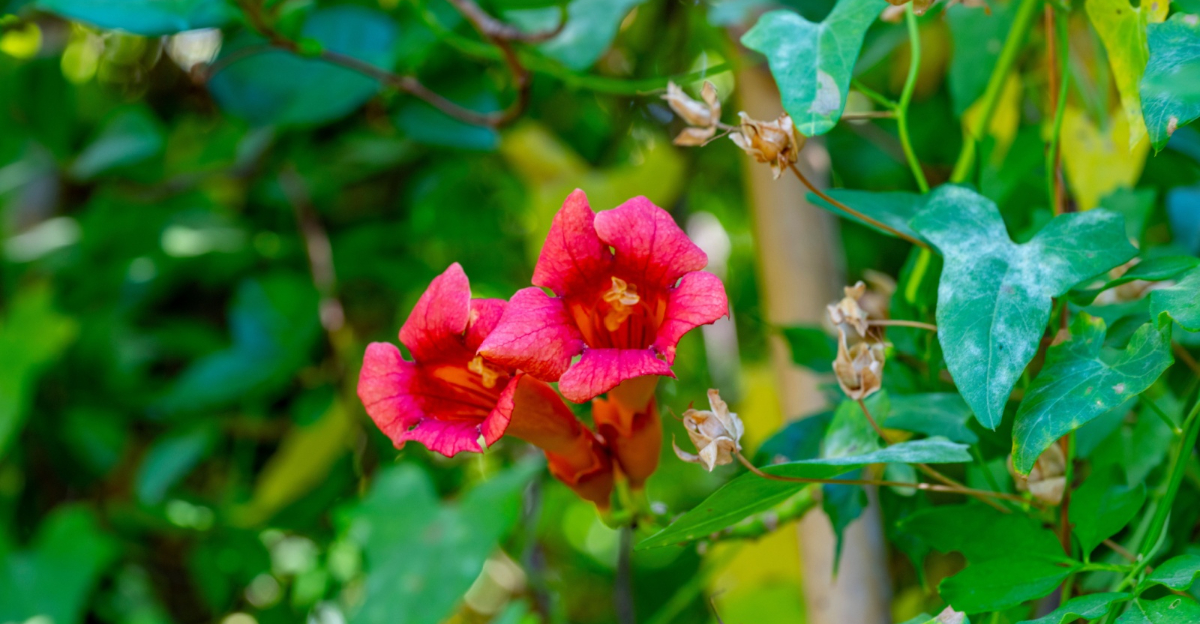
A bare fence or a chain-link situation in your North Carolina yard is one of those landscape problems that just sits there staring at you.
Paint does not really fix it. Decorations do not really fix it. But the right climbing vine absolutely can, and the transformation can be pretty spectacular.
North Carolina’s humid summers, mild winters, and rich soils give certain vines exactly what they need to grab hold, grow strong, and keep getting better looking year after year without needing to be replanted every season.
We are talking long-lived climbers that can soften harsh fence lines, add serious flower power or lush foliage, and build a privacy screen that genuinely improves with age.
How well any vine performs still depends on sunlight, soil drainage, and pruning habits, but the potential here is really exciting.
1. Crossvine Makes A Fence Look Better Fast
Few things are as satisfying as watching a vine grab onto a fence and actually start doing something visible within the first growing season.
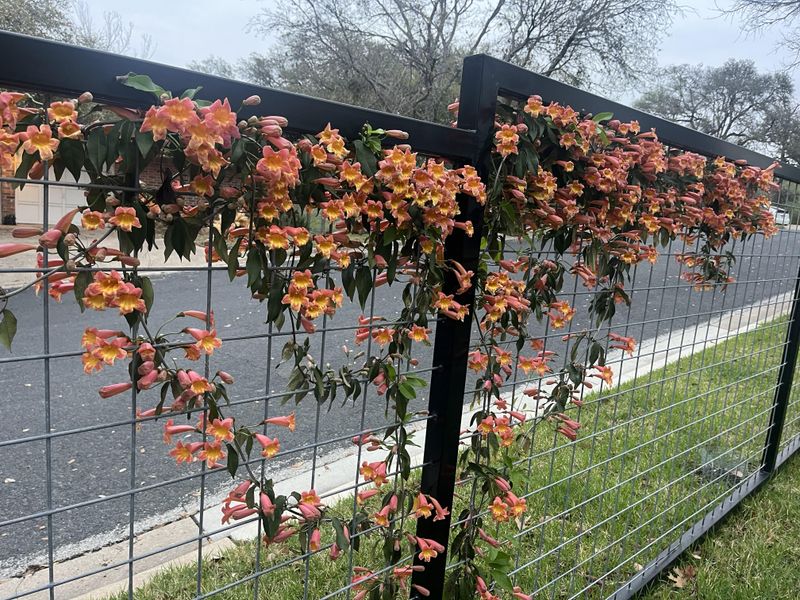
Crossvine, known botanically as Bignonia capreolata, is a native climbing plant that can cover a fence with remarkable speed compared to many other long-lived options.
It uses tendrils with adhesive discs to grip surfaces, which means it can cling to wood, wire, and other fence materials without much help.
In North Carolina, crossvine typically blooms in spring with clusters of tubular flowers that range from deep orange-red on the outside to yellow inside. That color combination is striking against a plain wooden fence or a metal privacy screen.
Hummingbirds are drawn to those flowers, which adds another layer of interest to the yard during warmer months.
One of the most practical things about crossvine is that it behaves as a semi-evergreen in many parts of North Carolina, holding onto its leaves through mild winters and offering some visual coverage even when other plants go bare.
In colder areas of the state, it may drop more leaves, but the woody stems still provide structure.
Crossvine can spread vigorously, so keeping it trimmed to stay on the fence rather than creeping into neighboring plants is worth doing once or twice a year.
Given proper support and some occasional pruning, this vine can provide reliable fence coverage for many years across a wide range of North Carolina landscapes.
2. Trumpet Honeysuckle Keeps The Color Coming Back
Gardeners who want color on a fence for more than just a couple of weeks each spring tend to appreciate trumpet honeysuckle more and more over time.
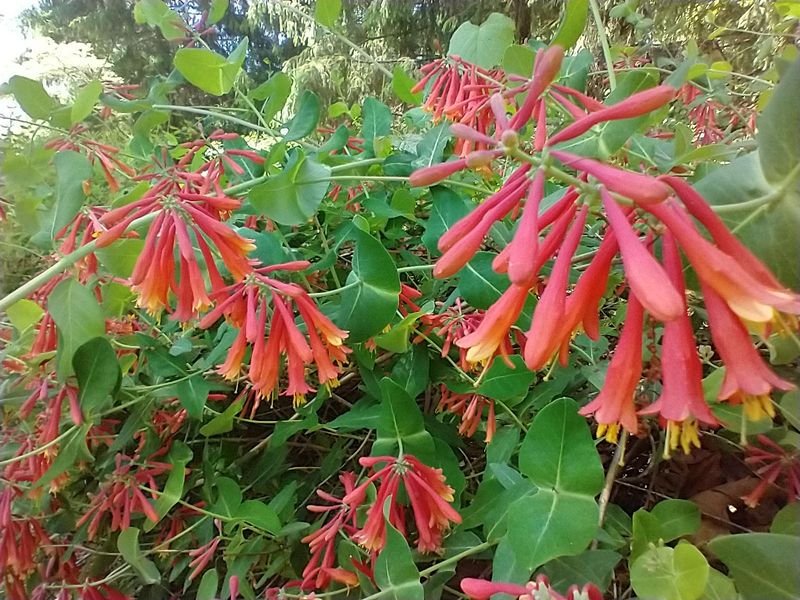
Unlike the invasive Japanese honeysuckle that can take over a yard, trumpet honeysuckle, or Lonicera sempervirens, is a well-behaved native vine that stays manageable while still delivering a long season of blooms.
It typically starts flowering in spring and can continue producing its slender red-to-orange tubular flowers well into summer, and sometimes beyond.
North Carolina landscapes benefit from this vine in several ways. It grows at a moderate pace, which means it gradually fills in a fence without suddenly overwhelming nearby plants or structures.
Your North Carolina Garden Changes Every Week. Your Plan Should Too.
Gardening in North Carolina changes quickly throughout the season. Every Friday you’ll receive a simple weekly plan showing exactly what to plant, prune, fertilize, harvest, and protect so you never miss the right timing.
The foliage stays semi-evergreen in warmer parts of the state, providing some year-round coverage along fence lines even after the flowers fade.
In the cooler mountain regions of North Carolina, it may behave more deciduously, losing leaves in winter but returning reliably each spring.
Support matters with trumpet honeysuckle. It twines its stems around whatever it can reach, so giving it a fence with horizontal rails, wire mesh, or lattice sections helps it climb more evenly.
Without something to grab, it tends to flop. Ruby-throated hummingbirds are frequent visitors during bloom time, which many gardeners consider a genuine bonus.
With light pruning after flowering to keep the shape tidy, trumpet honeysuckle can serve as a colorful, long-lived fence vine for many seasons without demanding excessive attention.
3. American Wisteria Grows Into A Big Long-Term Screen
Wisteria has a reputation for drama, and American wisteria, Wisteria frutescens, earns that reputation through sheer size and staying power rather than bad behavior.
Unlike its Asian relatives, American wisteria is a native species that tends to be far less aggressive.
That makes it a more practical choice for homeowners who want serious fence coverage without worrying about the vine tearing apart structures or spreading uncontrollably into neighboring yards.
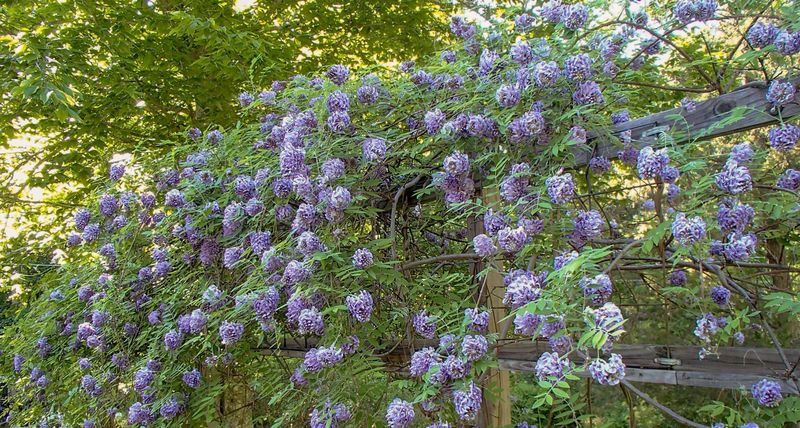
The flowers are one of the main reasons people choose this vine. Hanging clusters of fragrant lavender to purple blooms appear in late spring, and some cultivars rebloom lightly in summer.
That floral display on a fence or trellis can genuinely transform the look of an outdoor space.
Beyond the flowers, American wisteria builds a thick, woody framework over the years that creates real visual screening even when the leaves are present through the growing season.
Because American wisteria becomes a heavy, woody vine over time, the fence or support it climbs needs to be sturdy. A flimsy fence may need reinforcement before this vine reaches full size.
Pruning is also part of the long-term relationship with this plant. Trimming it back once or twice a year helps keep it shaped, encourages more flowering, and prevents it from overwhelming adjacent plants.
In North Carolina’s warmer coastal and piedmont areas, it tends to establish quickly. Given the right support and a bit of consistent maintenance, American wisteria can cover a fence impressively for decades.
4. Carolina Jessamine Covers With Lasting Evergreen Appeal
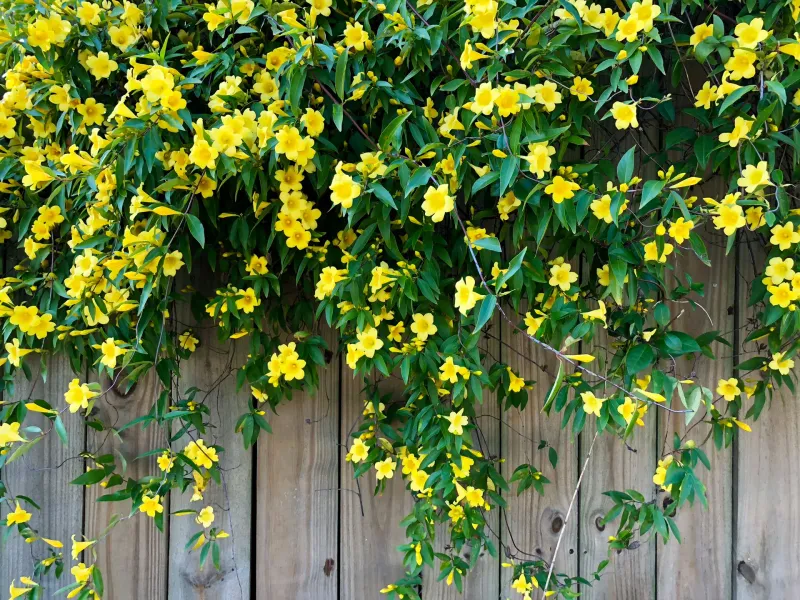
Seeing yellow flowers bloom on a fence in late winter feels like a small gift, especially in a yard that has been looking brown and bare for months.
Carolina jessamine, Gelsemium sempervirens, is the state flower of South Carolina and a beloved evergreen vine throughout the Southeast, including much of North Carolina.
It typically blooms from late winter into early spring, well before most other flowering vines wake up, which makes it genuinely useful for adding color during the quietest part of the gardening year.
The evergreen foliage is one of its strongest selling points for fence coverage. Even when the flowers are gone, the glossy dark green leaves stay on the vine through most of the year in the warmer parts of North Carolina.
This means the fence stays covered and visually interesting across all four seasons rather than going bare in fall and winter. In the cooler mountain regions of the state, some leaf drop may occur during harsh winters, but the vine typically returns well in spring.
Carolina jessamine twines its stems around a support, so a fence with wires, rails, or mesh works well for guiding it upward and outward. It grows at a moderate pace and is generally easier to manage than some of the larger, more aggressive vines.
It is worth noting that all parts of this plant are toxic if ingested, so placement near areas where young children or pets spend time is something to think through carefully.
With reasonable care, it can provide decades of evergreen fence coverage in North Carolina landscapes.
5. Woolly Pipevine Builds A Dense Green Wall Over Time
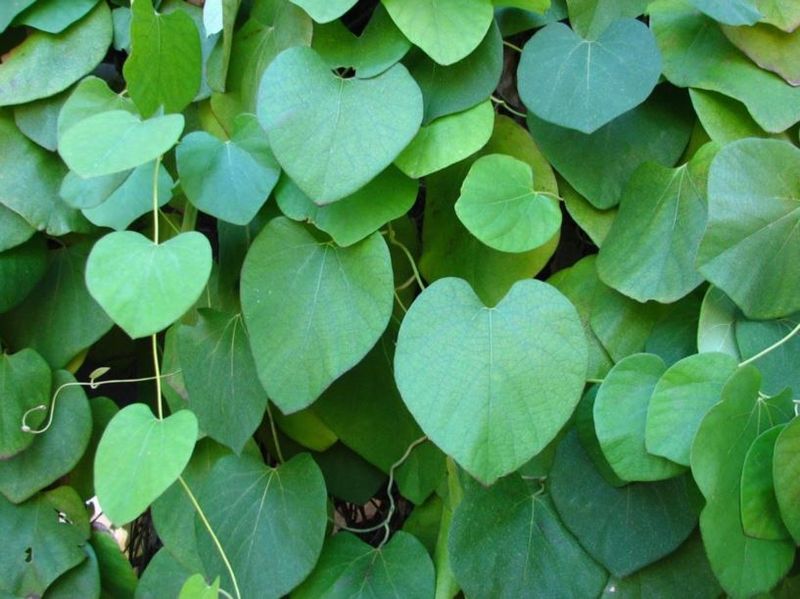
Some vines earn their place in a North Carolina yard through sheer leaf coverage rather than flashy flowers, and woolly pipevine does exactly that.
Aristolochia tomentosa is a native woody vine with large, soft, heart-shaped leaves that overlap densely as the vine matures, creating a thick green screen that can make a fence nearly invisible by midsummer.
For gardeners focused primarily on privacy and visual blocking rather than seasonal blooms, this vine delivers in a way that few others can match.
The flowers are unusual and interesting up close, small curved tubes that resemble a curved pipe, but they tend to be hidden beneath the large leaves and are easy to miss unless you look for them.
What most people notice first and appreciate most is the foliage.
The leaves can reach several inches across, and when the vine fills in along a fence line, the wall of greenery it creates is genuinely impressive. It is also the host plant for the pipevine swallowtail butterfly, which gives it ecological value beyond its visual appeal.
Woolly pipevine grows best in moist, well-drained soils with partial to full sun, and it performs well across much of the Piedmont and coastal plain regions of North Carolina.
It climbs by twining, so a fence with something for the stems to wrap around helps it establish more efficiently.
It takes a few seasons to really build up density, but once established, it fills in reliably each year. Patience in the early years tends to pay off with a remarkably lush and lasting green barrier.
6. Virginia Creeper Turns Bare Fences Into Living Backdrops
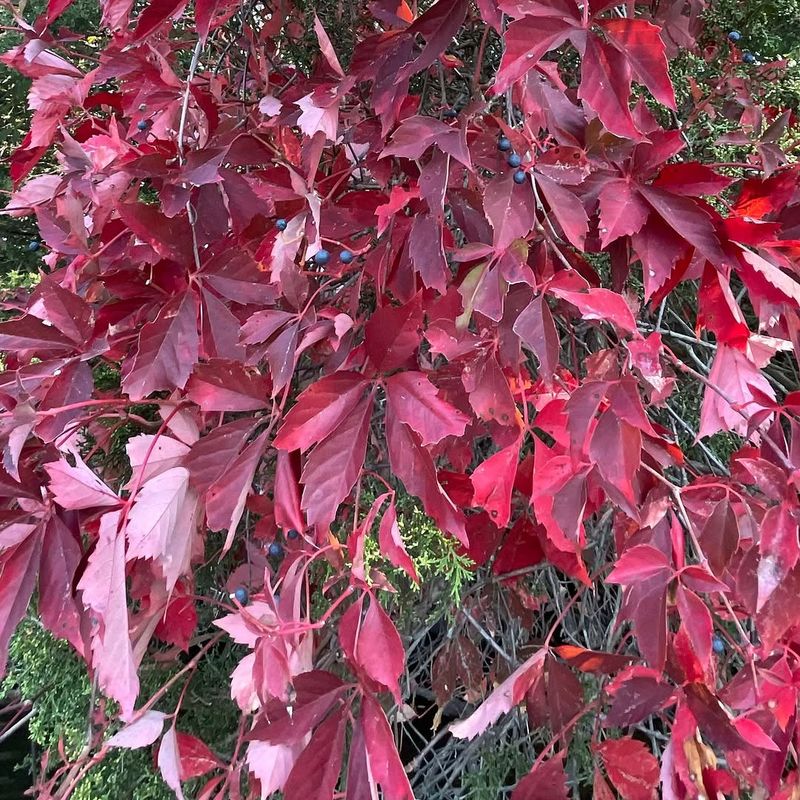
Walk through almost any older North Carolina neighborhood in October and you will likely spot Virginia creeper blazing red against a fence, wall, or tree trunk somewhere nearby.
Parthenocissus quinquefolia is one of the most visually dramatic native vines in the region, not because of its flowers, which are inconspicuous, but because of what happens to its foliage as temperatures drop in autumn.
The five-leaflet leaves turn shades of crimson, burgundy, and orange that can stop people in their tracks.
For fence coverage, Virginia creeper works through most of the growing season as a dense, leafy green vine, then transitions into that spectacular fall display before dropping its leaves for winter.
This means it functions as a seasonal privacy screen from late spring through fall rather than a year-round evergreen option.
In North Carolina’s warm climate, the leafy coverage typically lasts from late spring well into autumn, giving a fence months of visual softening before the winter bare period arrives.
Virginia creeper attaches to surfaces using adhesive-tipped tendrils, which allows it to grip wood, brick, stone, and wire fencing with minimal help.
It grows vigorously and can cover a large fence section within a few seasons under decent conditions, including reasonable sunlight and moisture.
Occasional pruning keeps it from spreading beyond the fence line into trees or shrubs nearby.
It tolerates a fairly wide range of North Carolina soils and light conditions, making it one of the more adaptable long-term fence vines available to gardeners across the state.