What Arizona Homeowners Should Look For On Saguaros After A Monsoon Storm
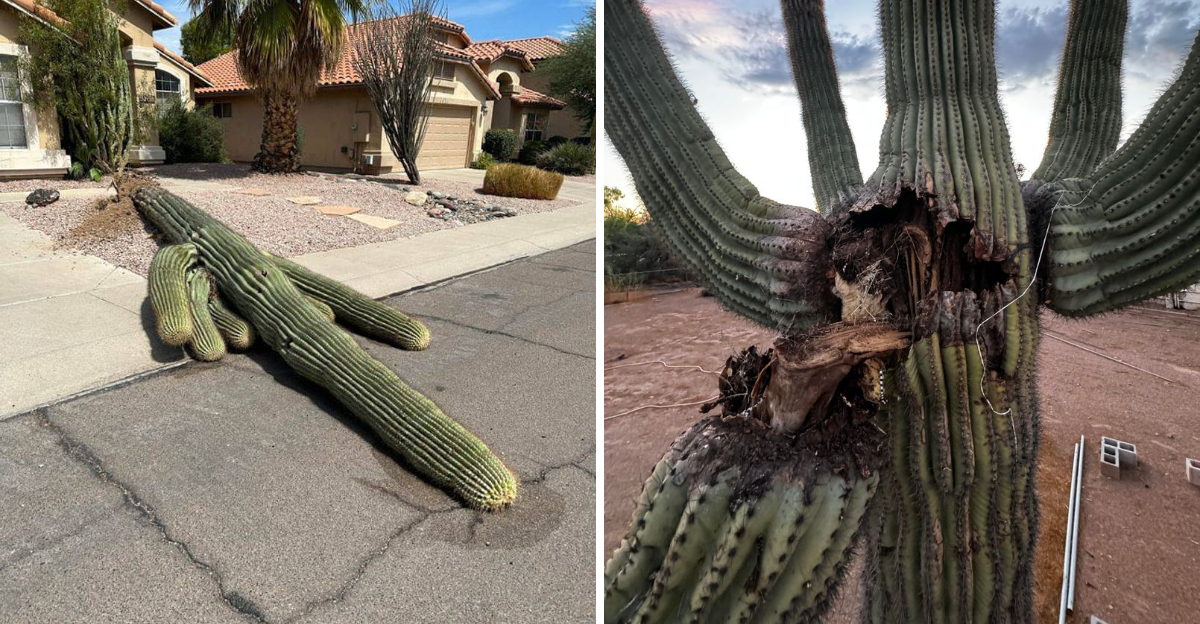
Some yard features become so familiar that they almost disappear into the background. A mature saguaro can be one of them.
You pass by it every day, admire it from a distance, and rarely think much about it because it always seems strong, steady, and unchanged.
Years go by without any obvious problems, which makes it easy to assume these iconic plants can handle almost anything nature throws at them.
Then monsoon season arrives. Strong winds, heavy rain, and blowing debris can leave homeowners walking around the yard the next morning to see what changed overnight.
Most attention naturally goes to fallen branches, damaged plants, or anything that looks out of place. A saguaro that remains standing may not seem like something that needs a closer inspection.
Appearances can be deceiving, though. Some storm-related issues are subtle at first and easy to overlook.
In Arizona, a few minutes spent checking a saguaro after severe weather can reveal signs that deserve a closer look.
1. Fresh Cracks Along The Main Trunk
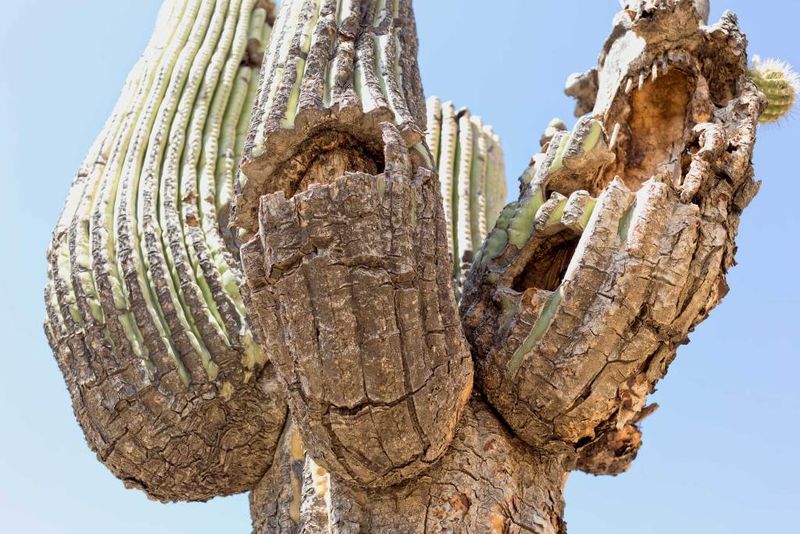
A crack you did not notice yesterday is worth paying close attention to today. Fresh cracks along a saguaro trunk often appear after strong monsoon winds force the cactus to flex beyond its normal range.
Saguaros are surprisingly flexible, but repeated stress can split the outer tissue.
Run your eyes slowly up and down the full length of the trunk. Look for any lines that appear darker or wetter than the surrounding skin.
Fresh cracks often ooze a clear or slightly brownish fluid in the hours right after a storm.
Vertical cracks are generally less alarming than horizontal ones. A horizontal crack can signal a structural break that puts the entire upper section at risk of separation.
If you spot one, keep your distance and contact a licensed arborist or cactus specialist.
Small surface cracks sometimes seal on their own as the cactus dries out over the following days. Do not attempt to tape or seal a crack yourself.
Trapping moisture inside the wound can speed up bacterial rot.
Photograph any crack you find and check it again after 48 hours. If it spreads, deepens, or begins to smell sour, the damage is likely progressing.
2. New Leaning After Strong Wind Gusts
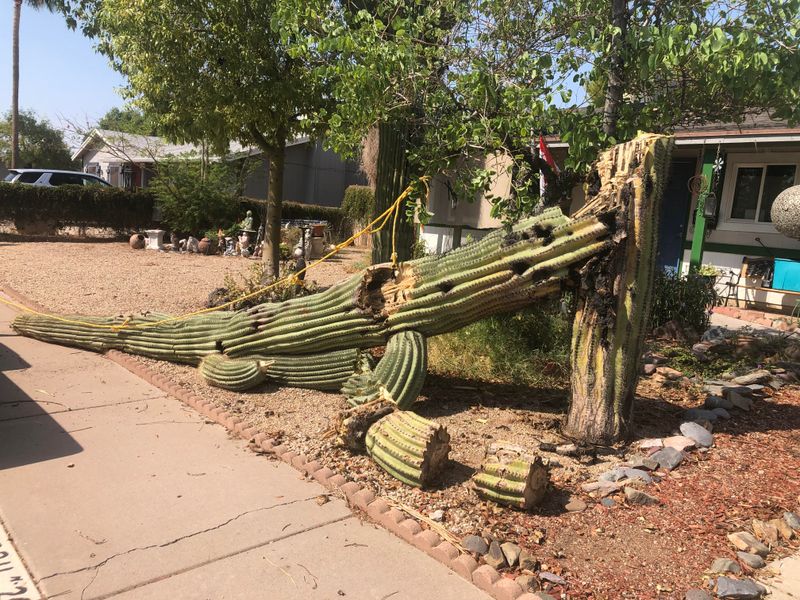
Even a slight new lean deserves your full attention after a monsoon. Saguaros that were perfectly upright before the storm should not be tilting in any direction afterward.
A new lean almost always means the root system was compromised during the high winds.
Stand back far enough to get a full view of the cactus. Use a nearby fence post or building edge as a reference point.
If the saguaro now angles away from where it used to stand, that lean is real and worth documenting.
Saguaro roots spread wide but stay surprisingly shallow. Sandy or loose desert soil offers less grip during saturated conditions.
When heavy rain soaks the ground right before strong gusts hit, roots lose their anchor faster than most people expect.
A lean of more than five to ten degrees is generally considered a concern by cactus professionals. Beyond that range, the risk of the cactus falling increases significantly.
Your Arizona Garden Changes Every Week. Your Plan Should Too.
Gardening in Arizona changes quickly throughout the season. Every Friday you’ll receive a simple weekly plan showing exactly what to plant, prune, fertilize, harvest, and protect so you never miss the right timing.
Falling saguaros can cause serious property damage and personal injury.
Do not try to stake or brace a large leaning saguaro on your own. Specialty equipment and expertise are needed to do it safely.
Contact a certified arborist who has experience with desert cacti in the Sonoran region.
3. Exposed Roots Following Heavy Rain
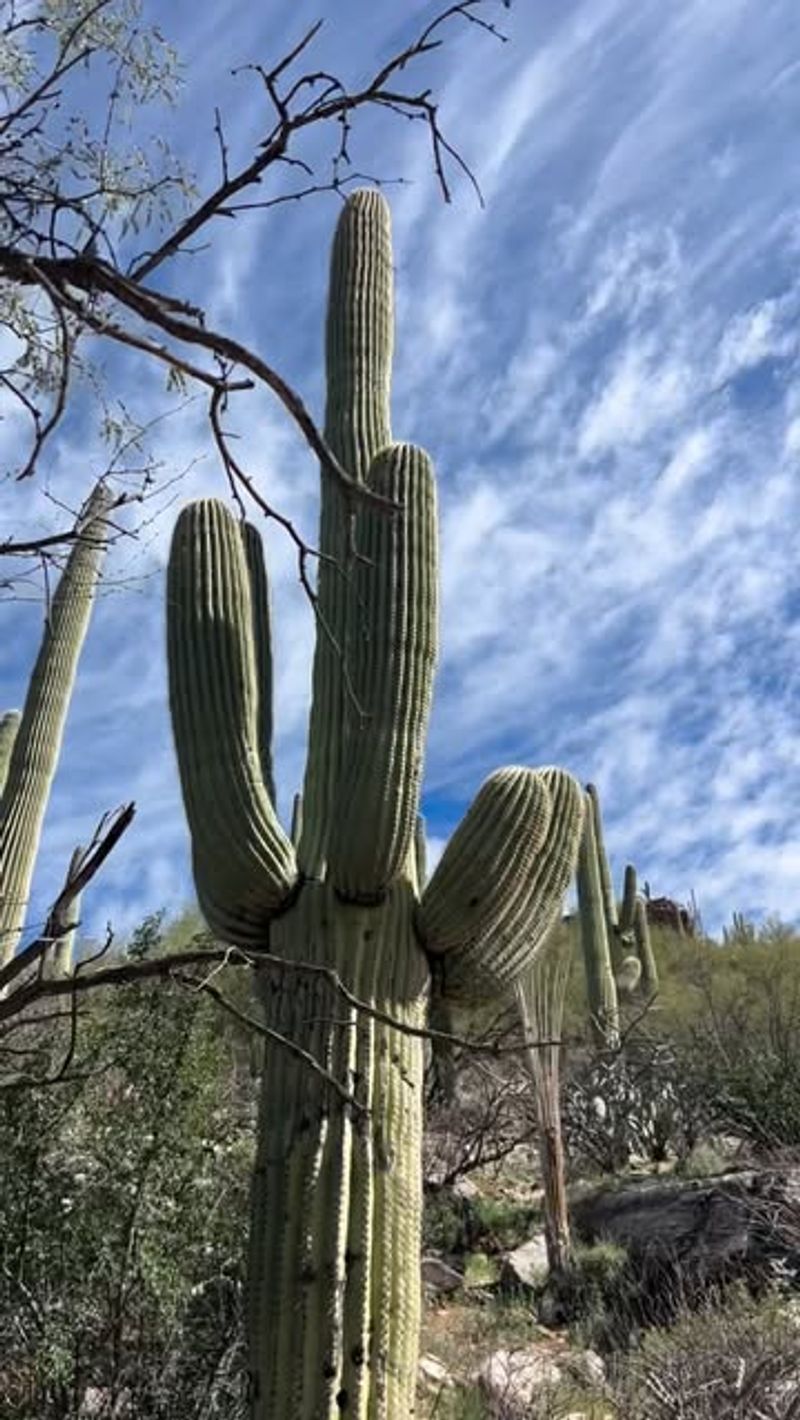
Heavy monsoon rain can strip away the soil around a saguaro base faster than you might expect. When that happens, roots that were previously anchored underground become exposed to air, heat, and further erosion.
Exposed roots are a clear warning sign that the cactus has lost some of its structural support.
Walk slowly around the entire base of each saguaro after a major rain event. Look for areas where soil has washed away, leaving pale or tan-colored roots visible at or above ground level.
Even partial exposure matters.
Saguaro roots are not designed to handle prolonged sun and dry air exposure. Once above ground, they can dehydrate and lose function relatively quickly in the desert heat.
A cactus with compromised roots absorbs water less efficiently, which affects its overall stability.
Avoid simply piling new soil back around exposed roots without guidance. If the original soil washed away due to poor drainage or grading, adding more soil temporarily may not solve the underlying issue.
A landscape professional can assess whether regrading or drainage correction is needed.
In some cases, exposed roots also signal that a saguaro is at higher risk of toppling in the next storm. Reduced root contact with stable soil means less resistance to wind loading.
4. Standing Water Around The Base
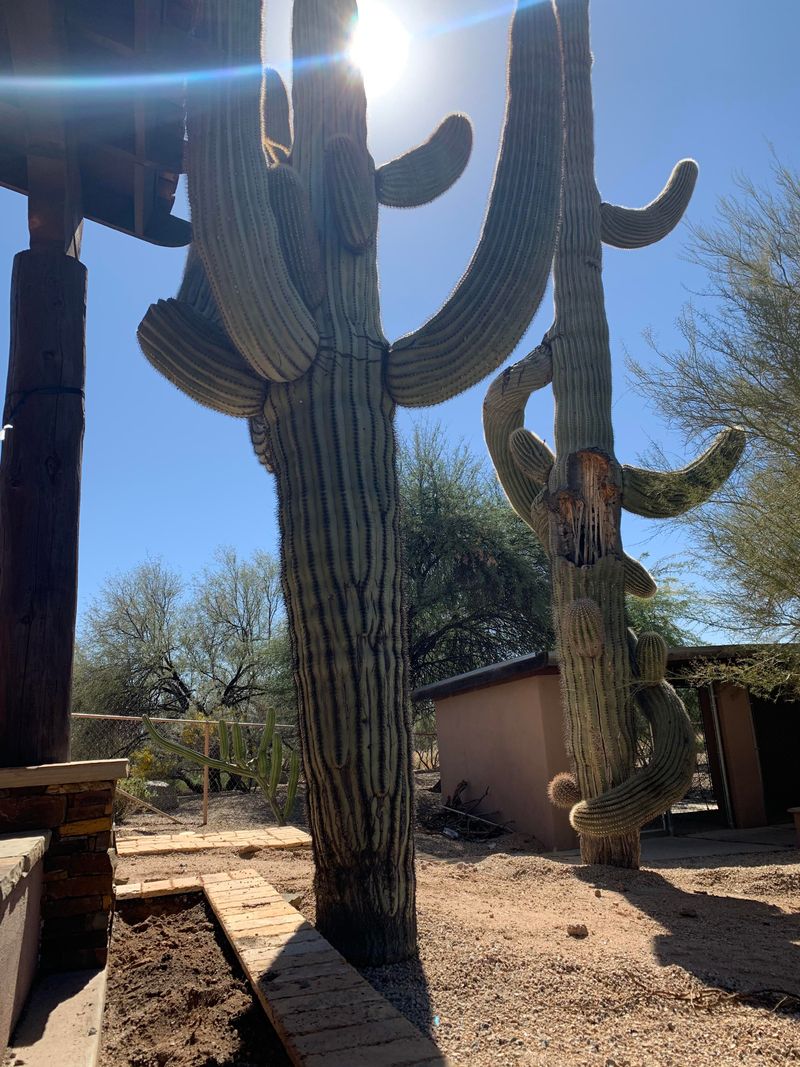
Puddles sitting around a saguaro long after the rain stops are a problem. Saguaros evolved in well-draining desert soil, not soggy conditions.
When water pools and lingers around the base, the roots sit in saturated ground that can accelerate rot at the root collar.
Check the area around each saguaro within a few hours after a monsoon. If water is still standing after two to three hours, your drainage situation needs attention.
Natural desert soil drains quickly, so persistent pooling usually points to compacted soil, hardpan layers, or poor yard grading.
Root rot in saguaros often starts silently. By the time external symptoms appear on the trunk or skin, the damage inside is already significant.
Repeated standing water events over multiple monsoon seasons compound the risk considerably.
Improving drainage around a saguaro does not always require major landscaping work. In some situations, adding decomposed granite or creating a gentle slope away from the base can redirect water effectively.
A landscape professional familiar with desert plants can give site-specific guidance.
Pay special attention to saguaros growing near paved surfaces, sidewalks, or walls. These structures can redirect runoff directly toward the cactus base.
Homeowners across the Sonoran Desert region often underestimate how much impervious surface changes natural drainage patterns.
5. Split Areas Where Arms Join The Cactus
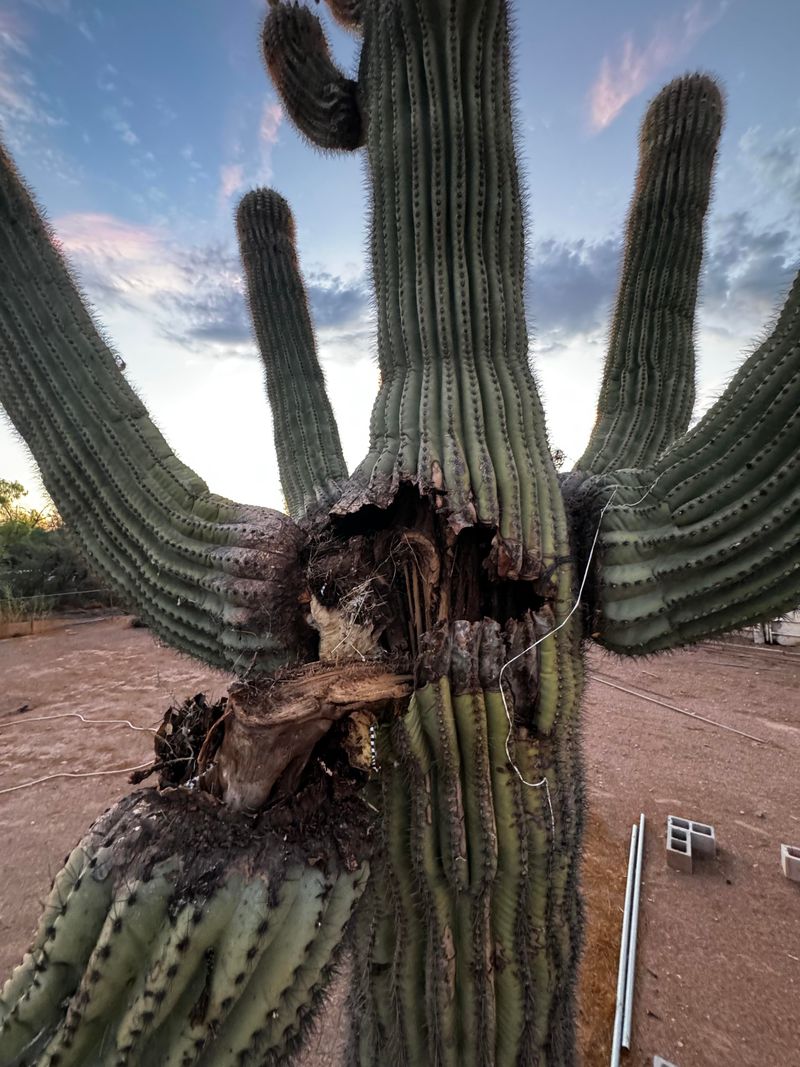
Arm joints are one of the weakest structural points on a saguaro. When monsoon winds whip from multiple directions, the stress concentrates right where the arms connect to the main body.
Splits at these junctions happen more often than most homeowners realize.
Look carefully at every arm connection point. You are watching for gaps, separations, or areas where the green outer skin has pulled away from the main trunk.
Even a small separation can allow bacteria and moisture to enter the core of the cactus.
Fresh splits often look wet or slightly darker than the surrounding tissue. In the hours after a storm, you might also notice a faint fermented smell near a damaged joint.
That odor signals that bacterial necrosis has likely already started inside.
Older, heavier arms are at the greatest risk. An arm that has grown large over many decades puts significant mechanical stress on its attachment point.
Wind loading during a monsoon can push that stress past the breaking point.
If an arm is hanging, partially detached, or visibly cracked at the joint, stay clear of the area. Partially attached arms can fall without warning.
A mature saguaro arm can weigh several hundred pounds depending on its water content at the time of the storm.
6. Soft Tissue That Was Firm Before The Storm
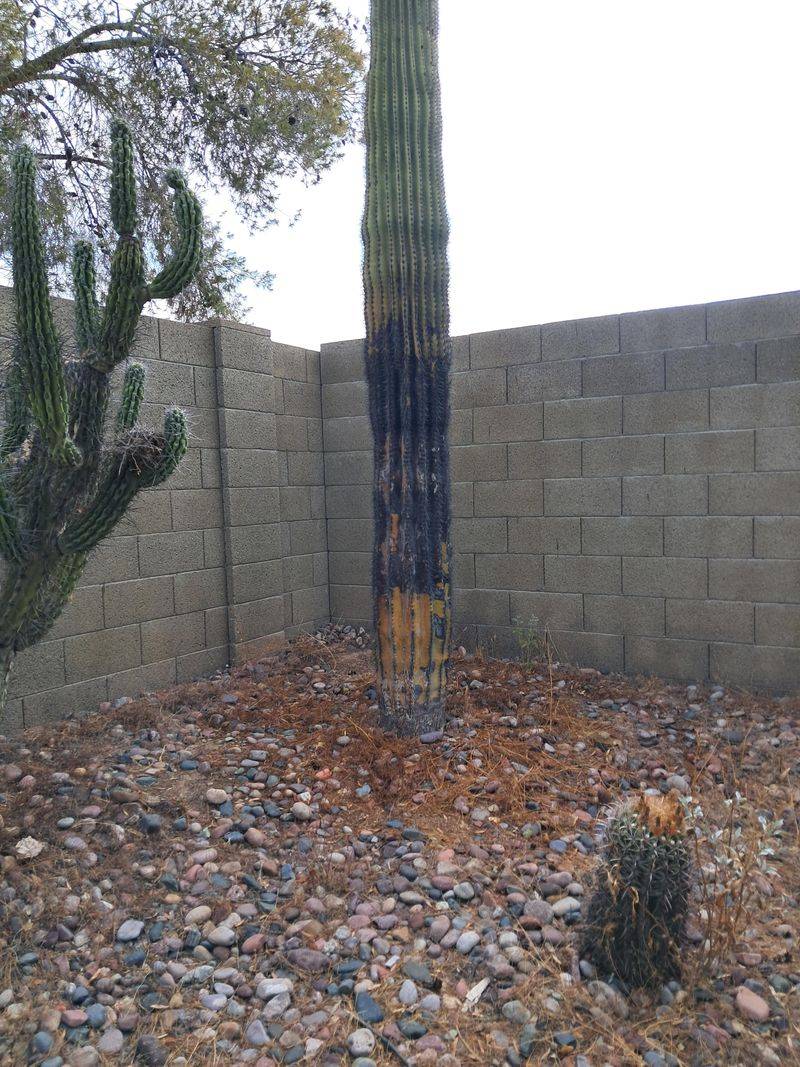
Softness where there used to be firmness is one of the most telling signs that something is wrong inside a saguaro. Healthy cactus tissue feels solid and slightly rigid to a gentle touch.
When it gives way under light pressure, that sponginess points to internal tissue breakdown.
Carefully press the flat of your hand against the trunk in several spots. You are not pushing hard, just applying light, steady pressure.
Healthy areas will feel dense and unyielding. Compromised areas will feel noticeably softer or even slightly hollow underneath the surface.
Soft tissue after a monsoon can result from a few different causes. Bacterial rot triggered by moisture intrusion is the most common culprit.
Freeze damage from a rare cold event earlier in the year can also weaken internal tissue that does not show externally until heat and humidity stress the cactus further.
Check along the entire trunk, not just the base. Soft patches sometimes appear higher up near arm junctions or around old woodpecker holes and other existing wounds.
Any opening in the outer skin can serve as an entry point for bacteria during wet monsoon conditions.
If you find a soft area, mark its location and size with a photo. Check it again in three to five days.
Growing soft zones need professional evaluation quickly.
7. Fallen Arms Or Cactus Sections Nearby
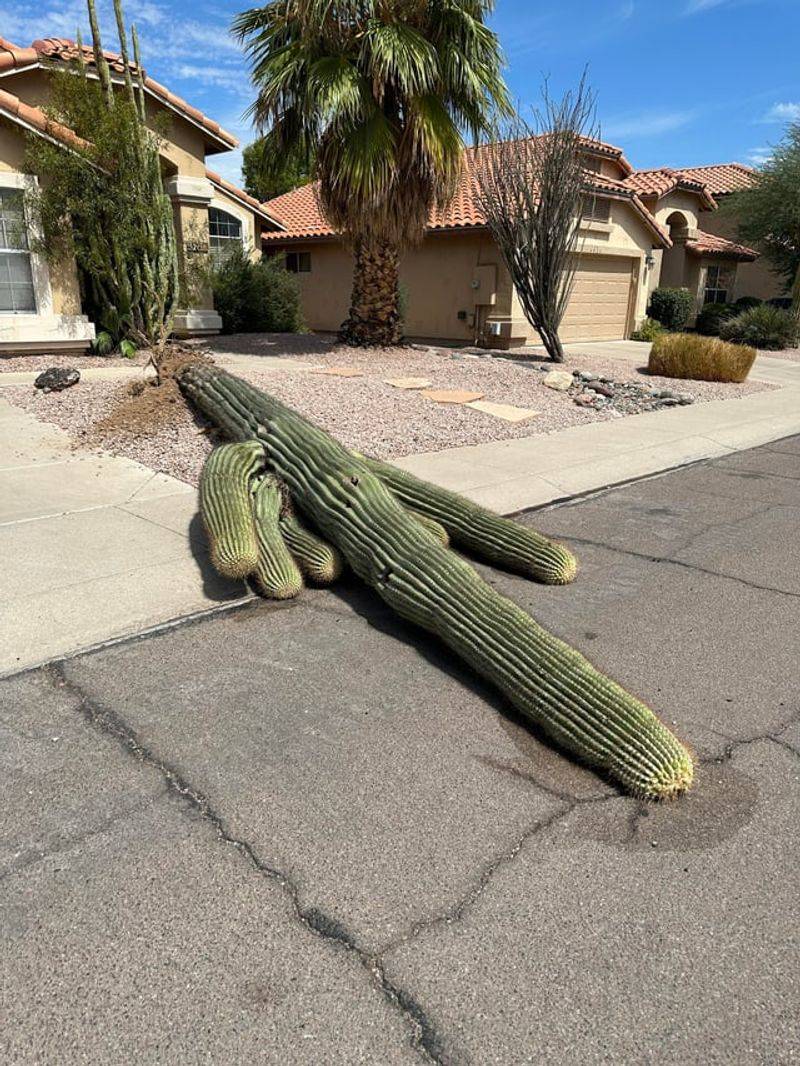
Finding a fallen arm or section on the ground after a monsoon is not just a cleanup issue. It is a clue about the overall health and stability of the saguaro that is still standing.
A dropped arm tells you that structural failure has already occurred at least once.
Look around the base and surrounding yard carefully. Fallen sections can land several feet away from the parent cactus depending on the wind direction during the storm.
Check under shrubs and along fence lines where debris tends to collect.
Once an arm falls, the exposed wound on the main trunk needs attention. Open wounds invite bacteria, insects, and moisture into the core of the cactus.
The wound should be assessed by a professional to determine if any treatment or protective measures are appropriate.
Do not handle fallen saguaro sections with bare hands. The spines are sharp and can cause serious puncture wounds.
Thick gloves and long sleeves are the minimum protection needed when working near dropped cactus material.
Fallen sections also raise a question worth asking: are other arms on the same cactus at risk? If one arm gave way under storm stress, neighboring arms attached to the same trunk may be under similar strain.
A professional inspection of the entire cactus after any arm loss is strongly recommended.