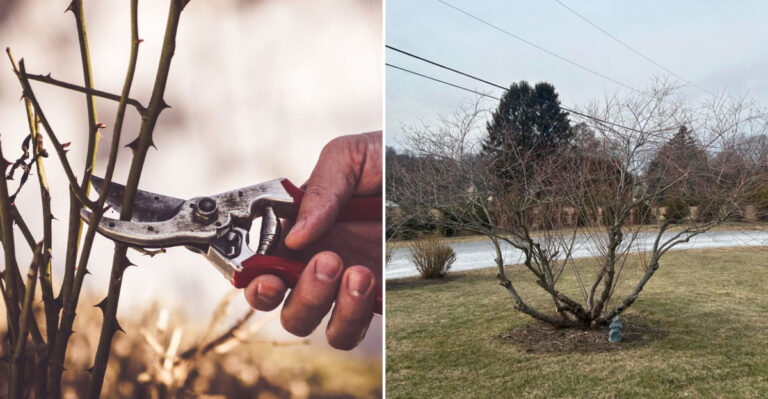
What Oregon Gardeners Should Do To Raspberries After The First Harvest
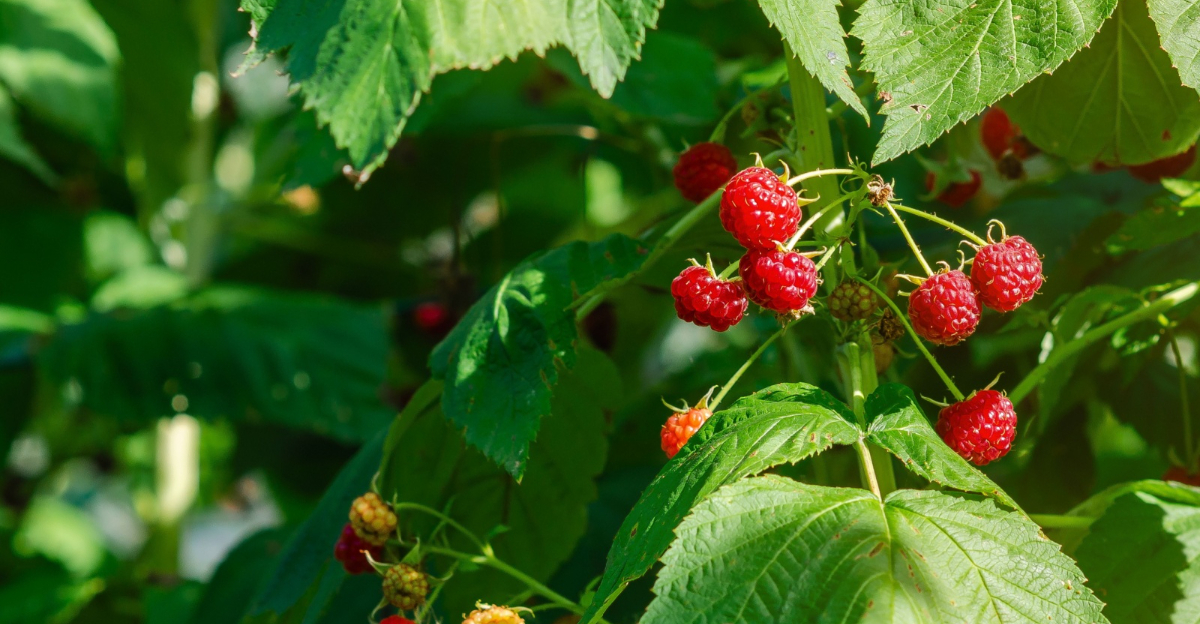
Picking that first flush of Oregon raspberries is one of summer’s genuinely satisfying moments. And then you look at the patch and realize the canes are a bit of a situation.
Some are spent, some are brand new, some are flopping sideways, and the whole thing needs attention before Oregon’s dry summer stretch makes everything harder to manage.
The good news is that post-harvest raspberry care is not as complicated as it looks once you understand what is actually going on in there.
Summer-bearing and everbearing types behave differently after that first pick, so the right approach depends on what you are actually growing.
Get this part right and you set yourself up for healthier canes, a much tidier patch, and a better harvest when the next fruiting window rolls around.
1. Identify The Raspberry Type Before Cutting
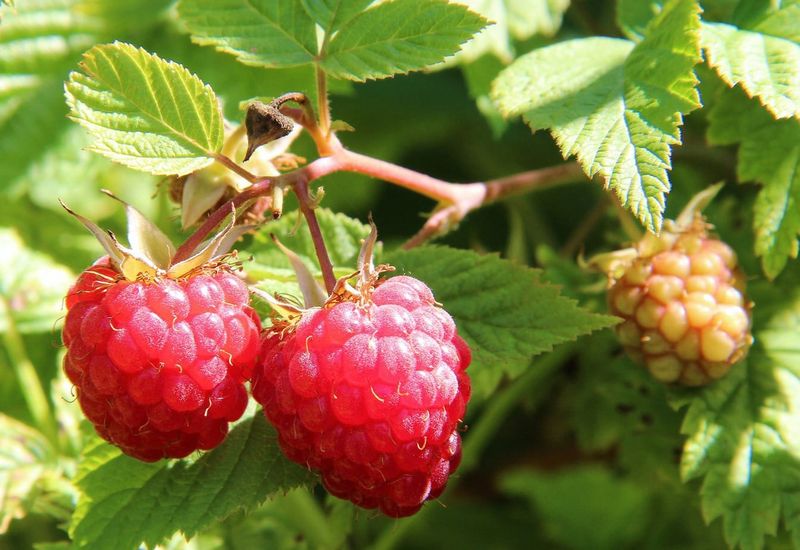
Not every raspberry row behaves the same after harvest, and cutting the wrong canes can set back production for an entire growing season.
The first step before reaching for pruning shears is figuring out whether the planting is summer-bearing or everbearing, also called primocane-fruiting.
Summer-bearing raspberries fruit on second-year canes, known as floricanes. Once those floricanes finish producing, they will not fruit again and can be removed.
Everbearing types, on the other hand, can produce a summer crop on floricanes and a fall crop on first-year primocanes, depending on how the patch is managed.
In Oregon backyard gardens, it is common for both types to grow side by side without clear labels. Checking old plant tags, reviewing purchase records, or observing cane behavior over a full season can help clarify what type is growing.
Some Oregon gardeners manage everbearing varieties for a single fall crop by mowing all canes to the ground in late winter, while others preserve floricanes for the summer flush. Knowing the type before cutting avoids costly mistakes.
2. Remove Spent Fruiting Canes After Harvest
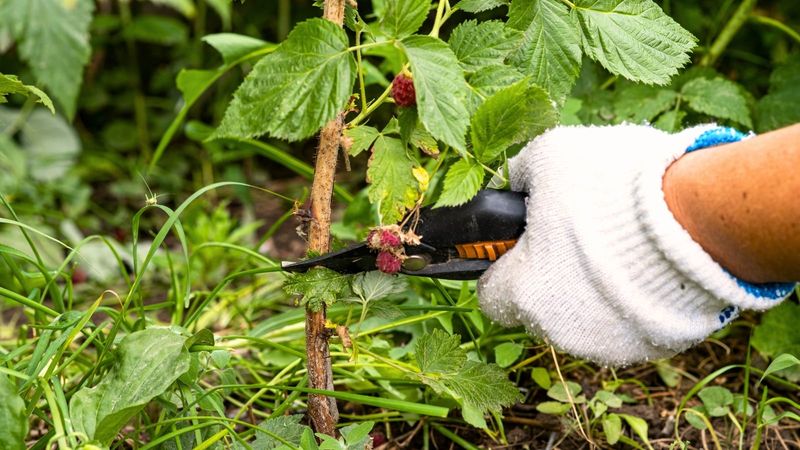
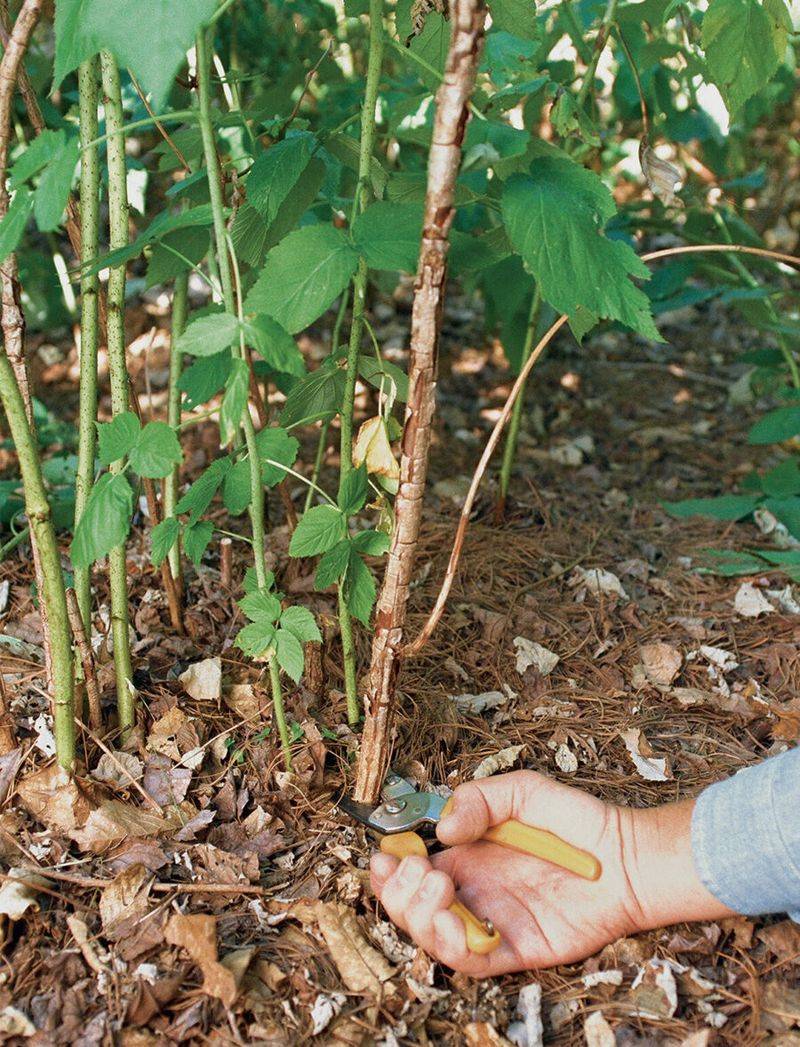
Brown, woody canes that just finished producing fruit have done their job.
For summer-bearing raspberries, those floricanes will not fruit again, and leaving them standing only adds clutter to the row and makes the patch harder to manage through the rest of Oregon’s summer.
Removing spent floricanes shortly after the last berry is picked helps free up space, allows more light to reach fresh primocanes, and reduces hiding spots for pests and disease.
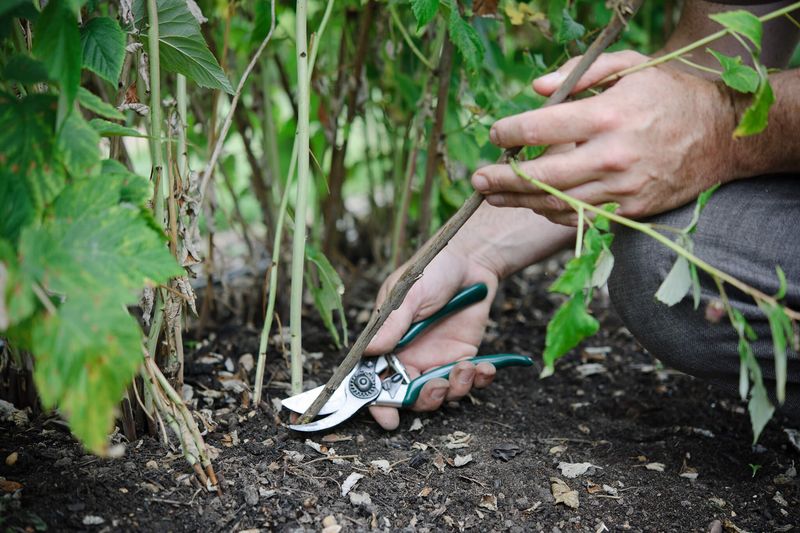
The cut should be made close to the crown or soil line, leaving a short stub or removing the cane cleanly depending on the condition of the base.
Using clean, sharp pruning shears makes the cut smoother and reduces the chance of tearing or damaging nearby healthy canes.
Wiping shear blades between cuts with a diluted bleach solution or rubbing alcohol is a good habit, especially when multiple canes are being removed at once.
In Oregon, where cane diseases like spur blight and cane botrytis can move through wet spring conditions, keeping tools clean during pruning is a simple step that pays off later in the season.
Your Oregon Garden Changes Every Week. Your Plan Should Too.
Gardening in Oregon changes quickly throughout the season. Every Friday you’ll receive a simple weekly plan showing exactly what to plant, prune, fertilize, harvest, and protect so you never miss the right timing.
3. Wait On Caning Out If New Canes Are At Risk
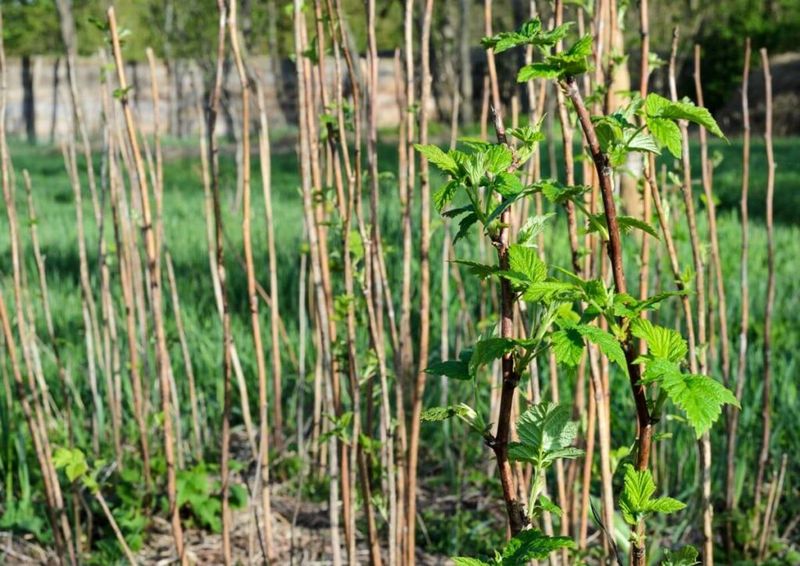
Everbearing raspberries managed for two crops require a little more patience after the summer harvest.
Rushing to remove spent floricanes when fresh primocanes are actively growing nearby increases the chance of accidentally snapping or bruising the new canes, which are still tender and easy to damage during summer growth.
If primocanes on everbearing varieties are already showing buds or early flower clusters at their tips, that is a sign the fall crop is forming. Disturbing those canes too aggressively at this stage can reduce the fall harvest before it even begins.
Waiting until the primocanes have hardened slightly and are easier to distinguish from spent wood makes the job cleaner and safer for the plant.
Oregon summers also bring some heat spikes that stress canes even when they look healthy. Doing heavy cane removal during a heat wave adds unnecessary stress to a patch that is already working hard.
Choosing a cooler morning for this task and working carefully through the row reduces the impact on new growth.
There is no strict deadline for removing spent floricanes on everbearing types, so giving the patch a few extra days when conditions are rough is a reasonable approach.
4. Keep Fresh Primocanes For Next Year
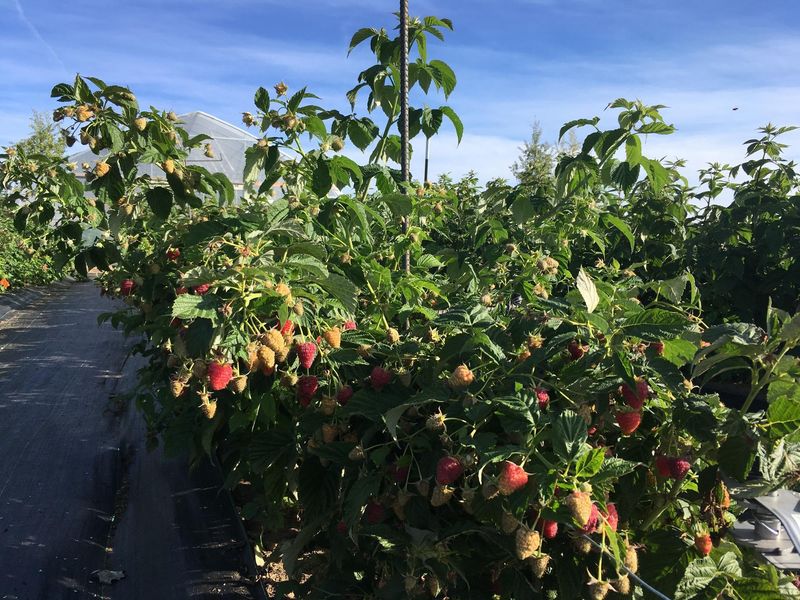
Those tall, green, first-year canes pushing up through the row after the summer harvest are not weeds, even when they look a little wild.
Primocanes are the canes that will become next year’s fruiting wood for summer-bearing raspberries, and accidentally removing them during post-harvest cleanup is one of the most common mistakes in backyard Oregon patches.
Healthy primocanes are typically green, smooth, and flexible compared to the older, woodier floricanes they grow alongside. They may still be shorter than the trellis wires in early summer but will continue growing through the rest of the season.
Protecting them during cane removal and row work keeps the next harvest on track.
Overcrowded patches sometimes make it hard to tell new from old, especially when both types of canes are tangled together.
Working slowly through the row and tracing each cane back to its base before cutting helps avoid removing something that still has a future in the patch.
Oregon gardeners who take their time during this step often notice a stronger stand of primocanes by fall, which translates directly into a better summer harvest the following year. Patience during this phase is genuinely worth it.
5. Narrow The Row Before It Gets Crowded
Raspberry patches have a natural tendency to spread outward, sending up suckers between rows and along the edges of the bed.
After the first harvest, when spent canes are being removed and fresh growth is visible, it is a good time to check whether the row has crept wider than intended.
A row that stays roughly 12 to 18 inches wide allows for better airflow through the canes, easier picking, and more manageable pruning.
Wider rows trap moisture, shade out lower cane growth, and make it difficult to work through the patch without stepping on new primocanes.
In Oregon, where humid spring conditions can leave cane disease pressure lingering into summer, good air circulation matters more than many gardeners realize.
Narrowing the row does not require removing a large number of canes all at once. Simply cutting or pulling suckers that have rooted outside the intended row boundaries keeps the spread in check without stressing the main planting.
A sharp spade or hoe works well for slicing off shallow suckers along the edges. Doing this in summer while the ground is still workable makes the task faster than waiting until fall when the soil in many Oregon gardens becomes wet and compacted.
6. Train New Canes Onto The Trellis
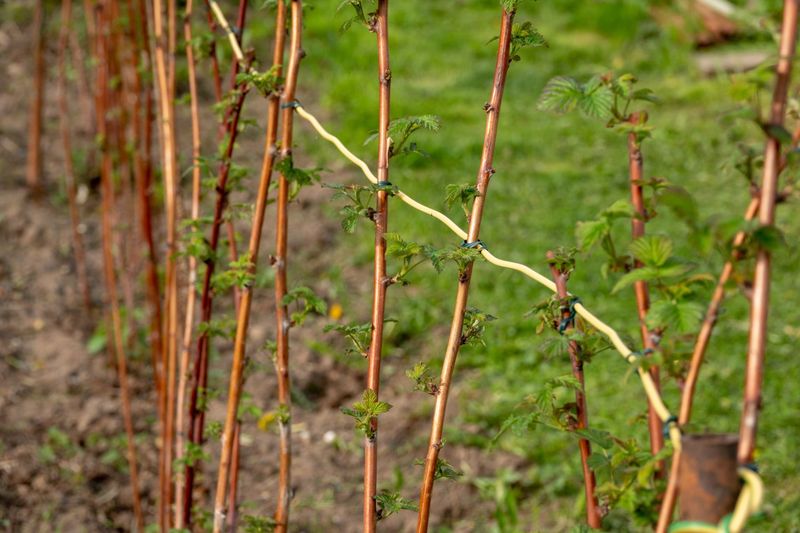
After spent floricanes come out, the row can look surprisingly open, which is actually the right moment to guide fresh primocanes into position on the trellis.
Canes that are left to flop or lean against each other tend to tangle as the season progresses, making fall and winter pruning much harder than it needs to be.
Tying new canes loosely to trellis wires with soft garden twine or twist ties keeps them upright without cutting into the bark.
The goal at this stage is not a perfectly spaced final arrangement but rather a general alignment that prevents canes from crossing over each other or falling outside the row.
Oregon summer winds, which can pick up in valley areas, are another reason to get canes secured to the trellis sooner rather than later.
Two-wire trellis systems work well for most backyard raspberry setups, with one wire positioned lower to catch mid-cane growth and another higher to support the tips.
As primocanes continue to grow through the rest of summer, checking ties every few weeks and adjusting where needed keeps the row tidy.
A well-trained trellis going into fall means less untangling during dormant pruning, which many Oregon gardeners appreciate when the weather turns wet.
7. Keep Watering Through Oregon Dry Spells
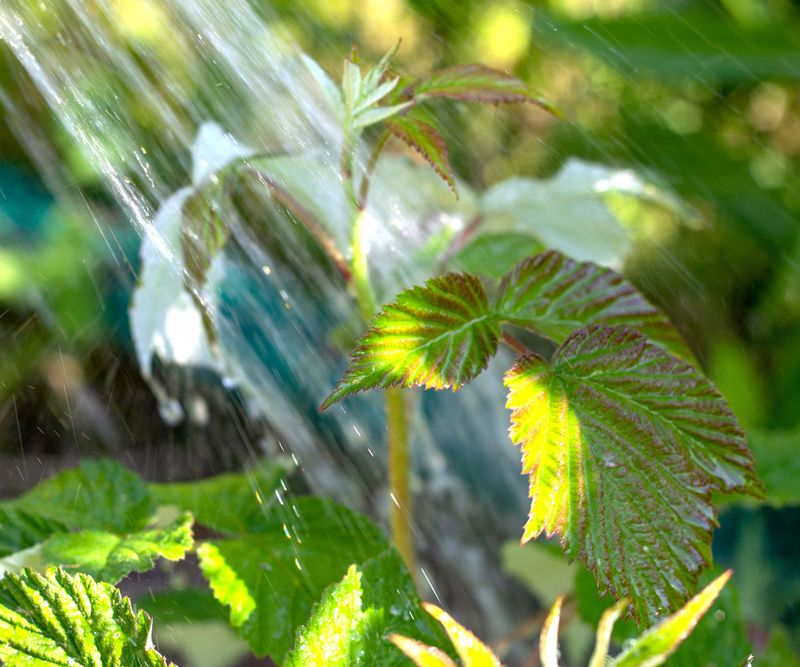
Oregon summers west of the Cascades are known for long dry stretches that can last weeks without meaningful rainfall. East of the Cascades, summer heat and low humidity make irrigation even more critical for berry production.
After the first harvest, it can be tempting to ease off watering once the berries are gone, but the raspberry patch still needs consistent moisture during this period.
Primocanes developing through summer are building the root reserves and cane strength that will support next year’s crop. Water stress during this phase can result in weaker canes, reduced bud development, and smaller harvests the following season.
Most raspberry plantings benefit from roughly one to two inches of water per week during the growing season, including the post-harvest stretch.
Drip irrigation or soaker hoses are popular choices in Oregon home gardens because they deliver water directly to the root zone without wetting the canes themselves.
Wet foliage and canes can encourage fungal issues, which are already a concern in some Oregon growing regions.
Mulching around the base of the row with wood chips or straw helps retain soil moisture between watering sessions and keeps roots cooler during late summer heat, giving primocanes a steadier environment to develop through the rest of the season.
8. Remove Problem Canes Promptly
Spotted, discolored, cracked, or wilting canes standing in the row after harvest are worth addressing sooner rather than later.
Cane diseases common in Oregon raspberry patches, including spur blight, anthracnose, and cane botrytis, can spread to nearby healthy canes if infected wood stays in the row through the rest of the season.
Weak, spindly canes that produced poorly or were shaded out during the season are also candidates for removal. Keeping obviously struggling canes in the row does not improve the patch, and removing them opens space for stronger primocanes to develop.
The goal is not to thin aggressively at this stage but to clear out canes that are clearly not contributing to future production.
When removing diseased canes, cutting below any visible lesion or discoloration and cleaning shear blades between cuts reduces the chance of spreading the problem.
Wiping blades with isopropyl alcohol or a diluted bleach solution takes only a moment but makes a real difference when working through a row with mixed cane health.
Oregon’s cool, wet springs create favorable conditions for several raspberry cane diseases, so any summer cleanup that reduces infected material in the patch helps lower pressure for the following growing season.
9. Save Heavy Thinning For Dormant Season
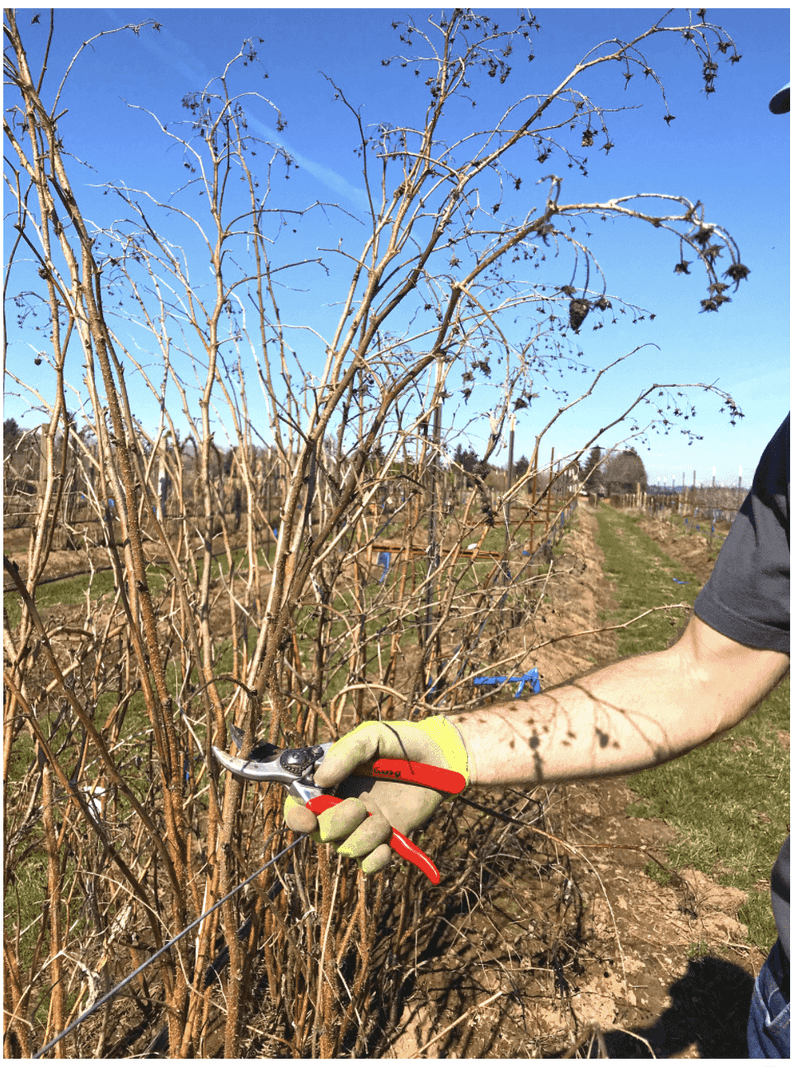
Post-harvest cleanup in summer is about removing what clearly needs to go, not about reshaping the entire patch.
Major decisions about how many canes to keep per foot of row, which primocanes are strongest, and how to space the final selection for next year’s production are generally better made during the dormant season.
Late winter or early spring, just before new growth begins, gives Oregon gardeners a clearer view of cane health after the plants have gone through fall and winter conditions.
Canes that looked strong in August may show winter injury or disease damage by February, while others that seemed unremarkable in summer may have developed well.
Waiting allows for a more accurate selection of the best canes to carry into the next growing season.
Thinning too aggressively right after the summer harvest also removes canes that are still photosynthesizing and moving energy into the root system. That late-season energy transfer supports the plant through fall and into the following spring.
Keeping a reasonable number of healthy primocanes standing through the rest of summer, even if the final thinning will happen in dormancy, gives the raspberry patch a better energy foundation.
Oregon gardeners who follow this approach tend to see more consistent production year after year.